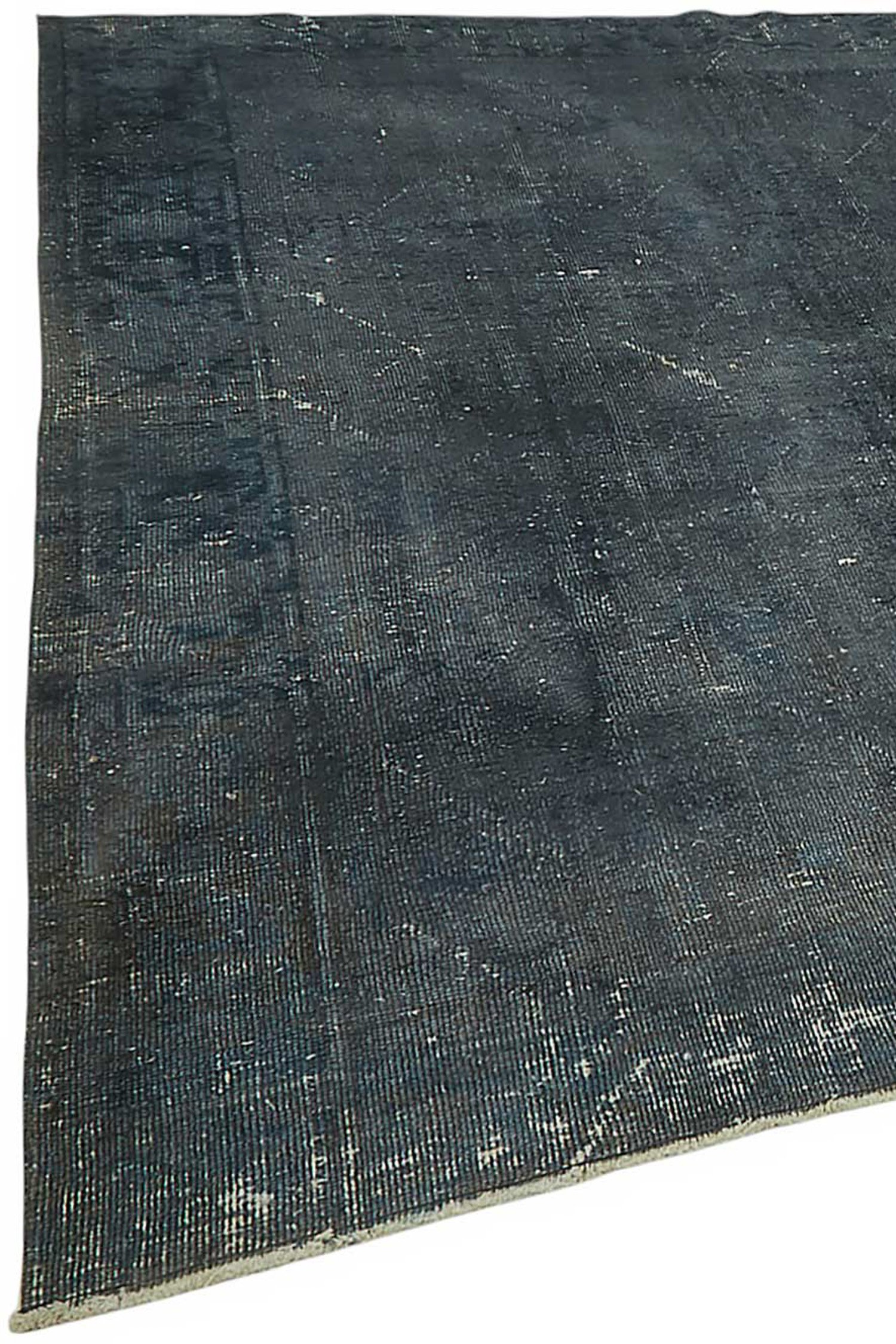
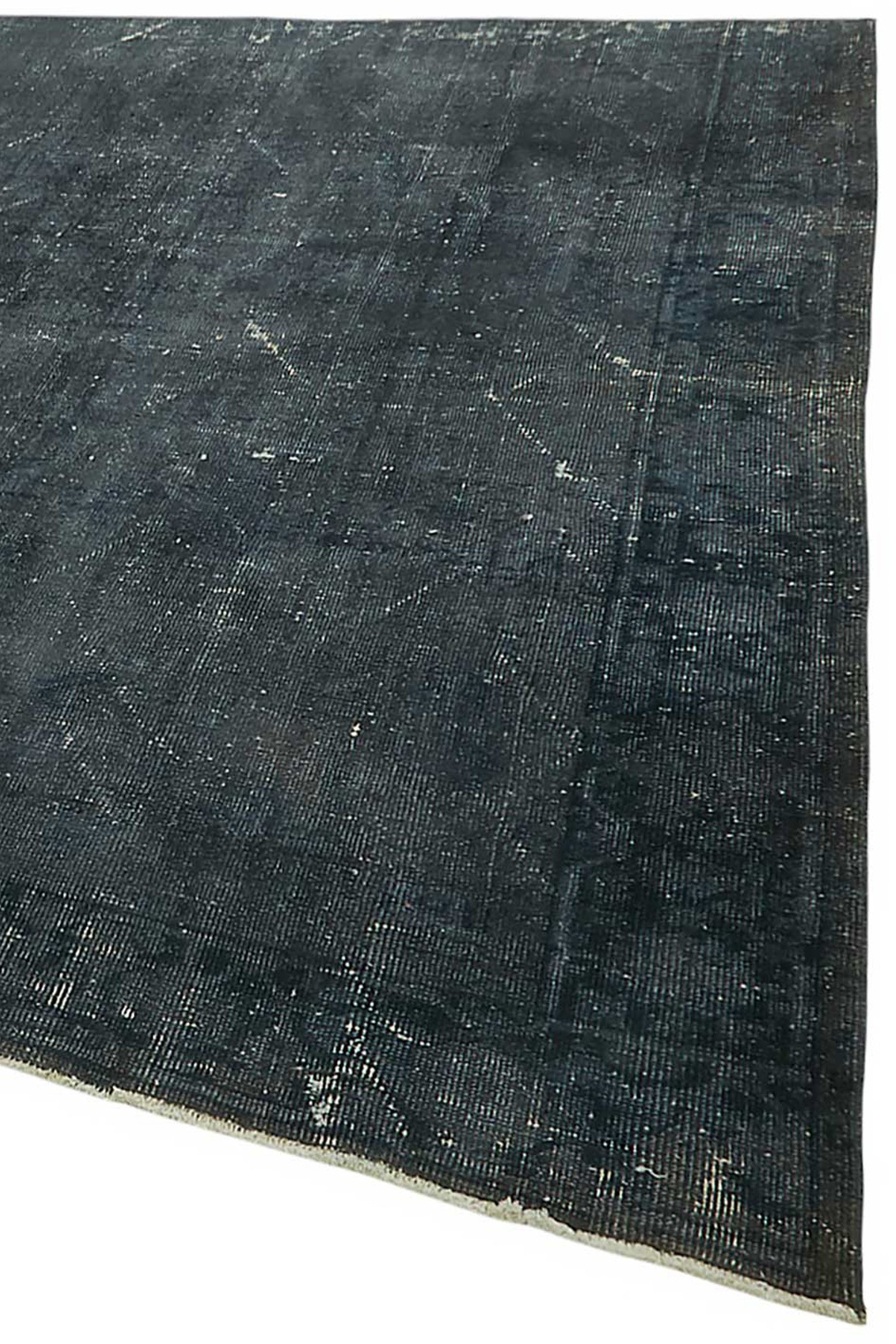
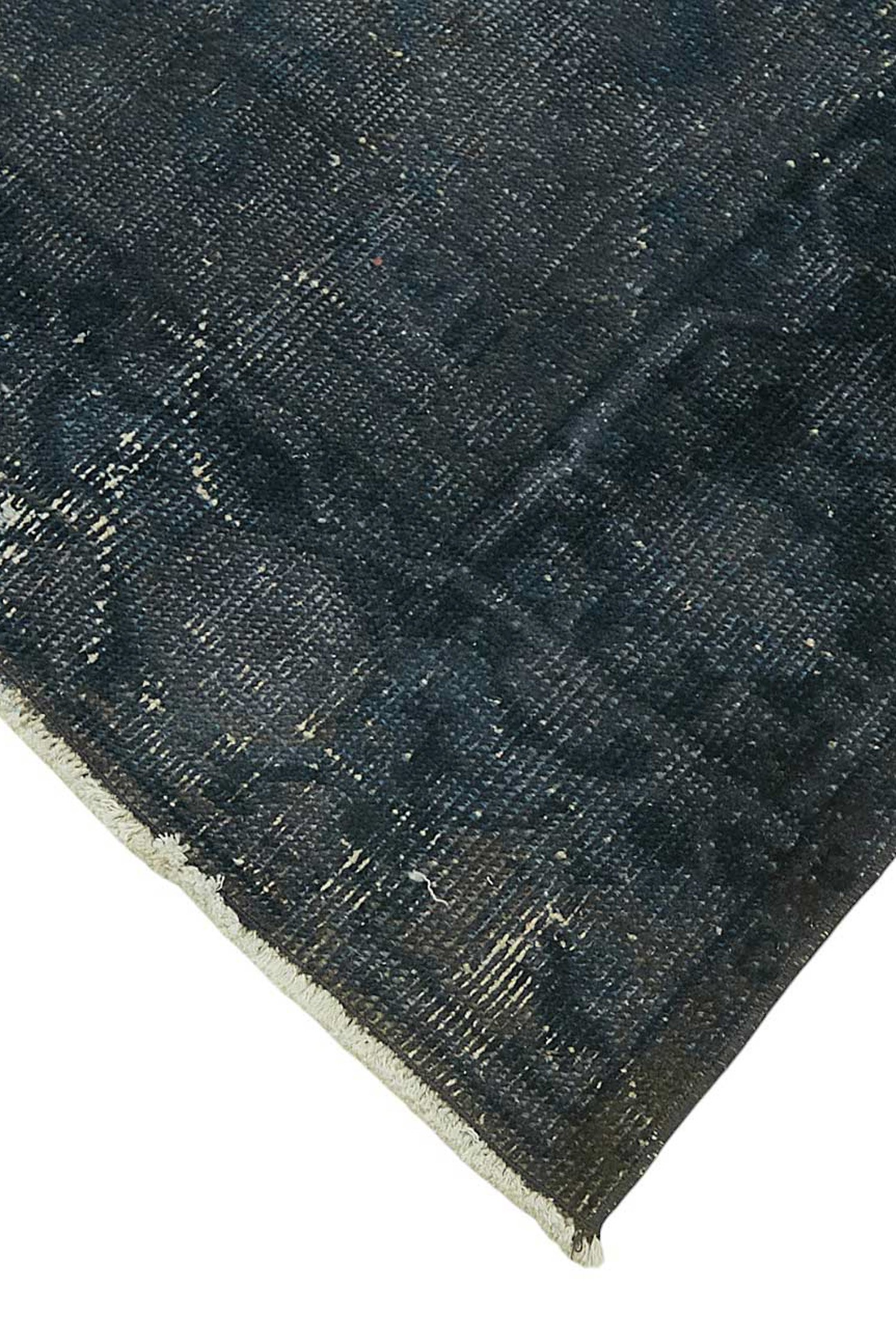
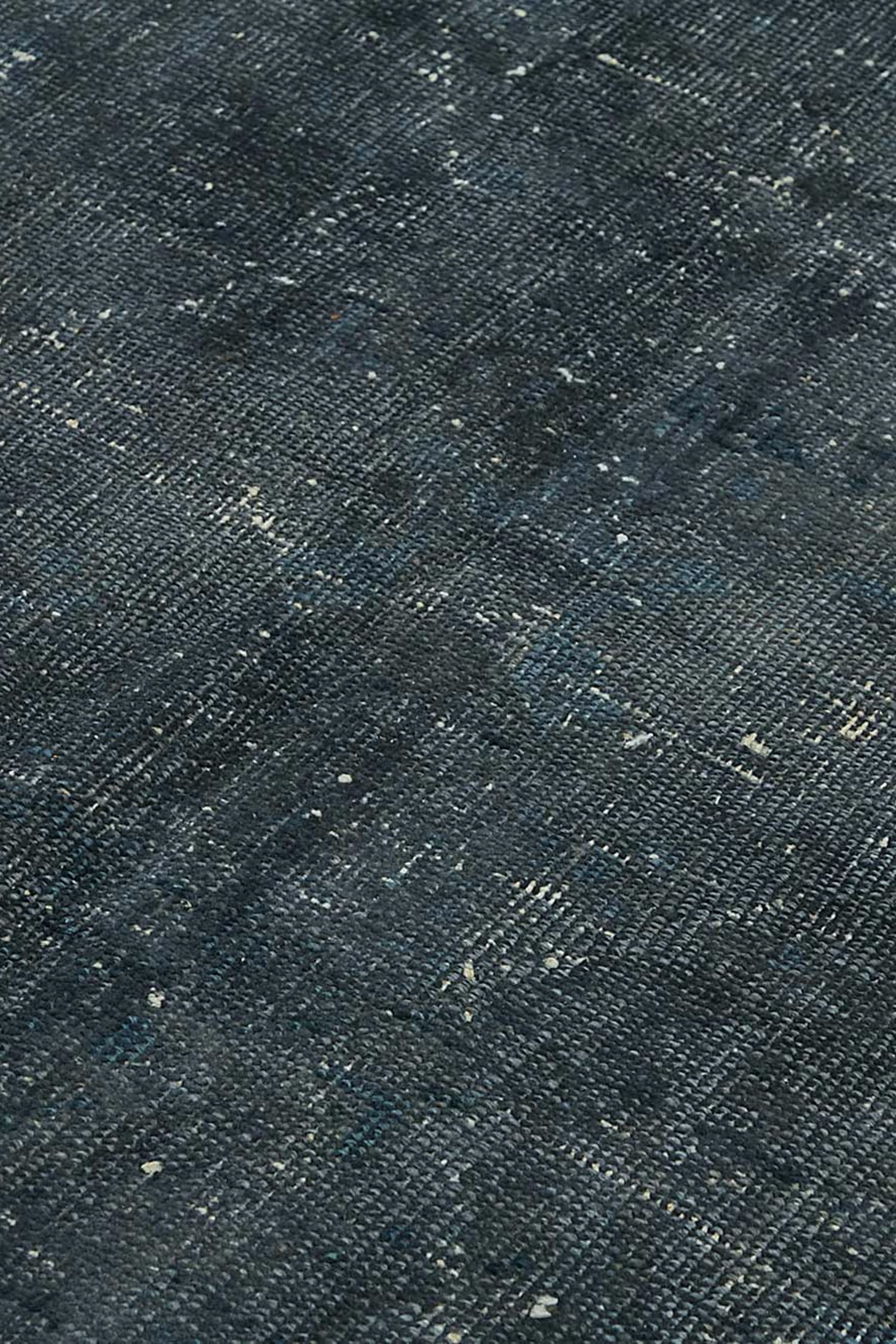
 Image 1 of 6
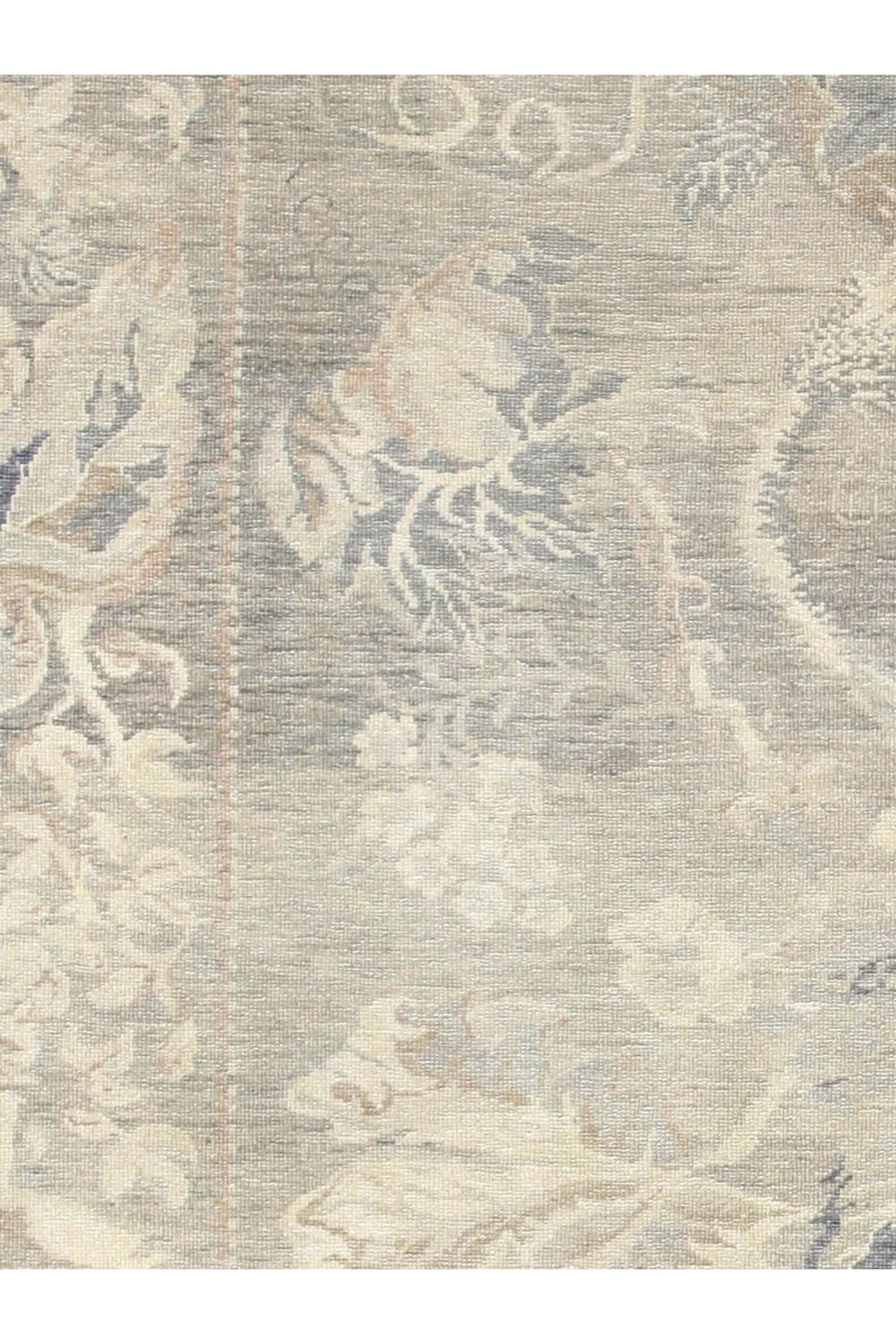 Image 2 of 6
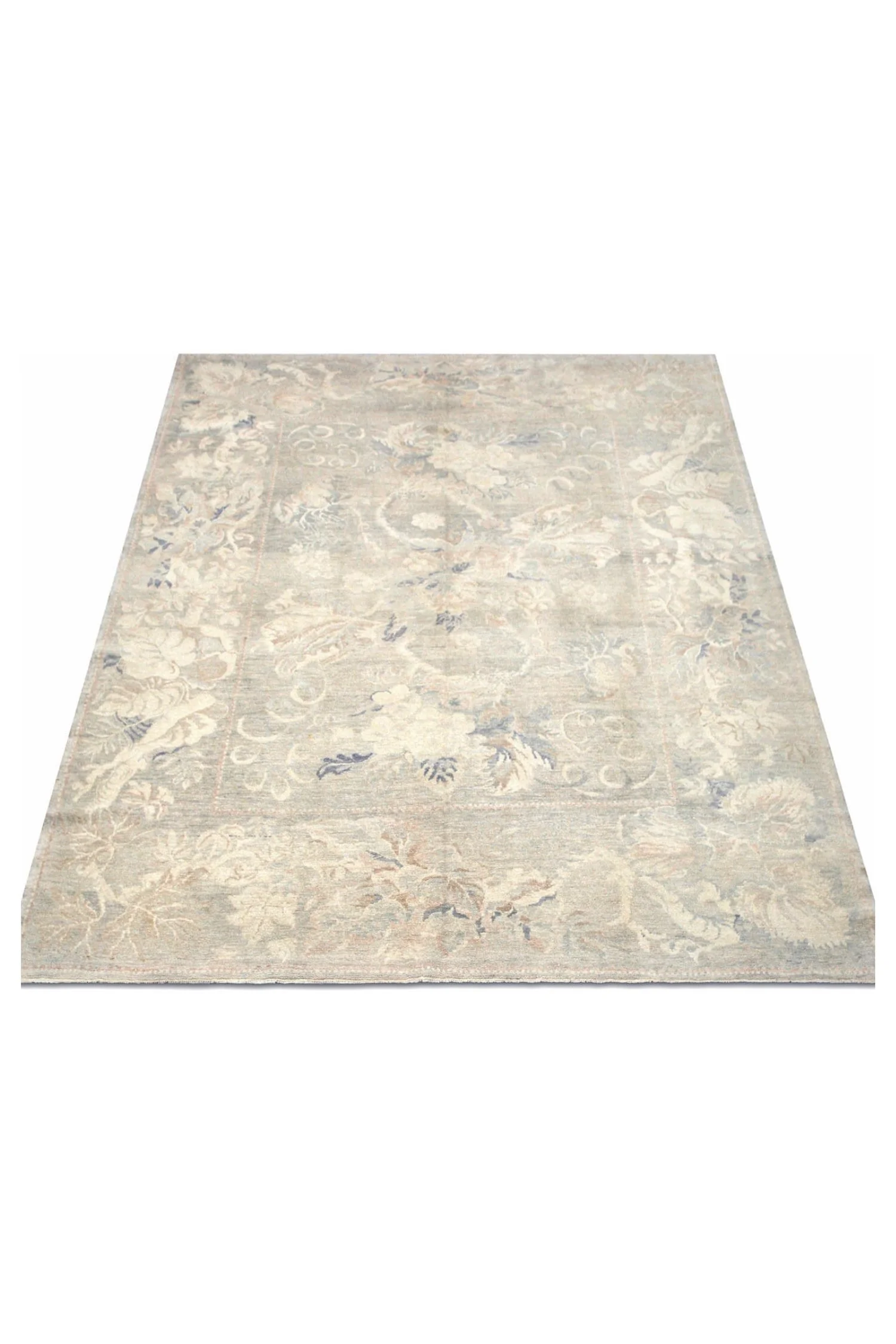 Image 3 of 6
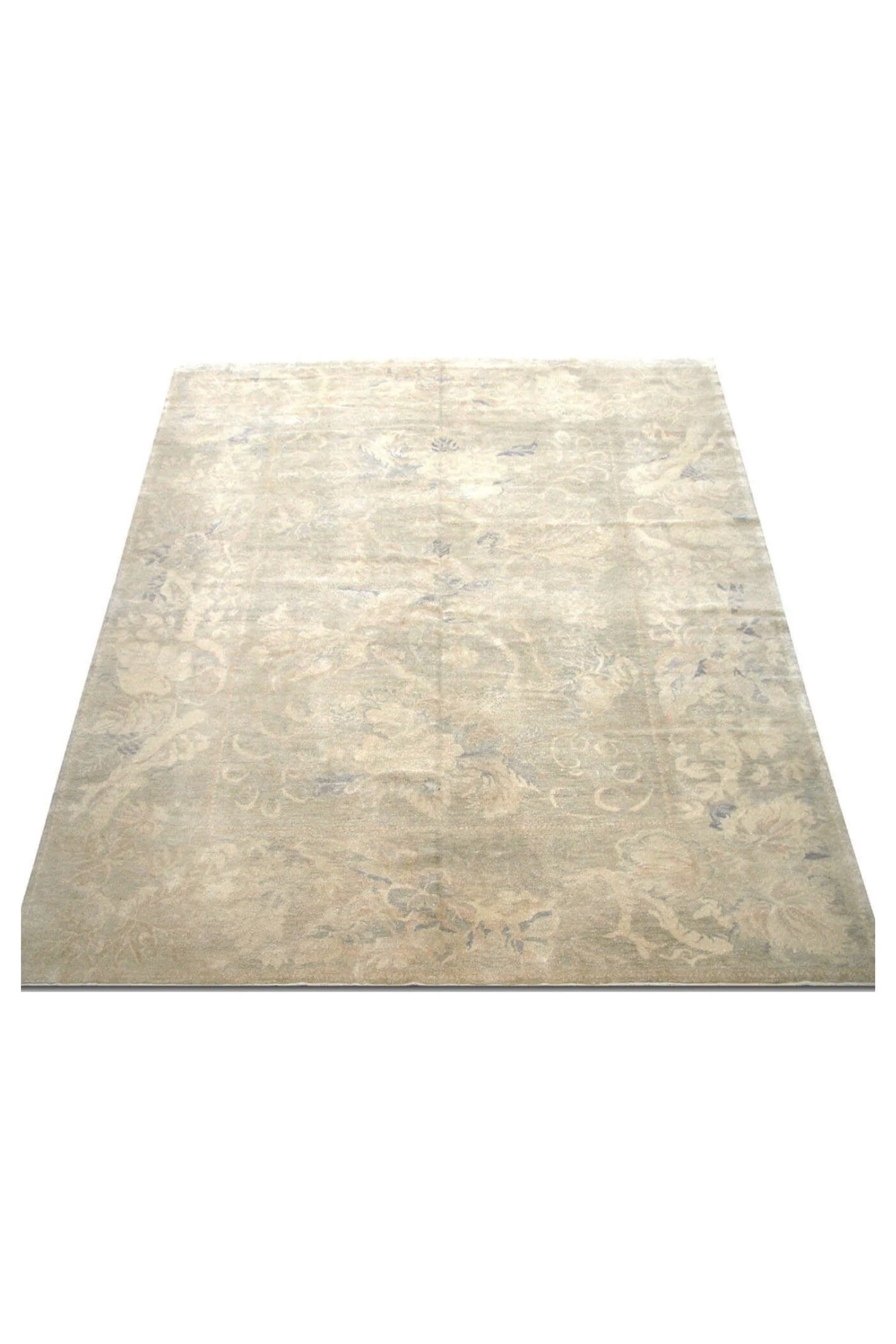 Image 4 of 6
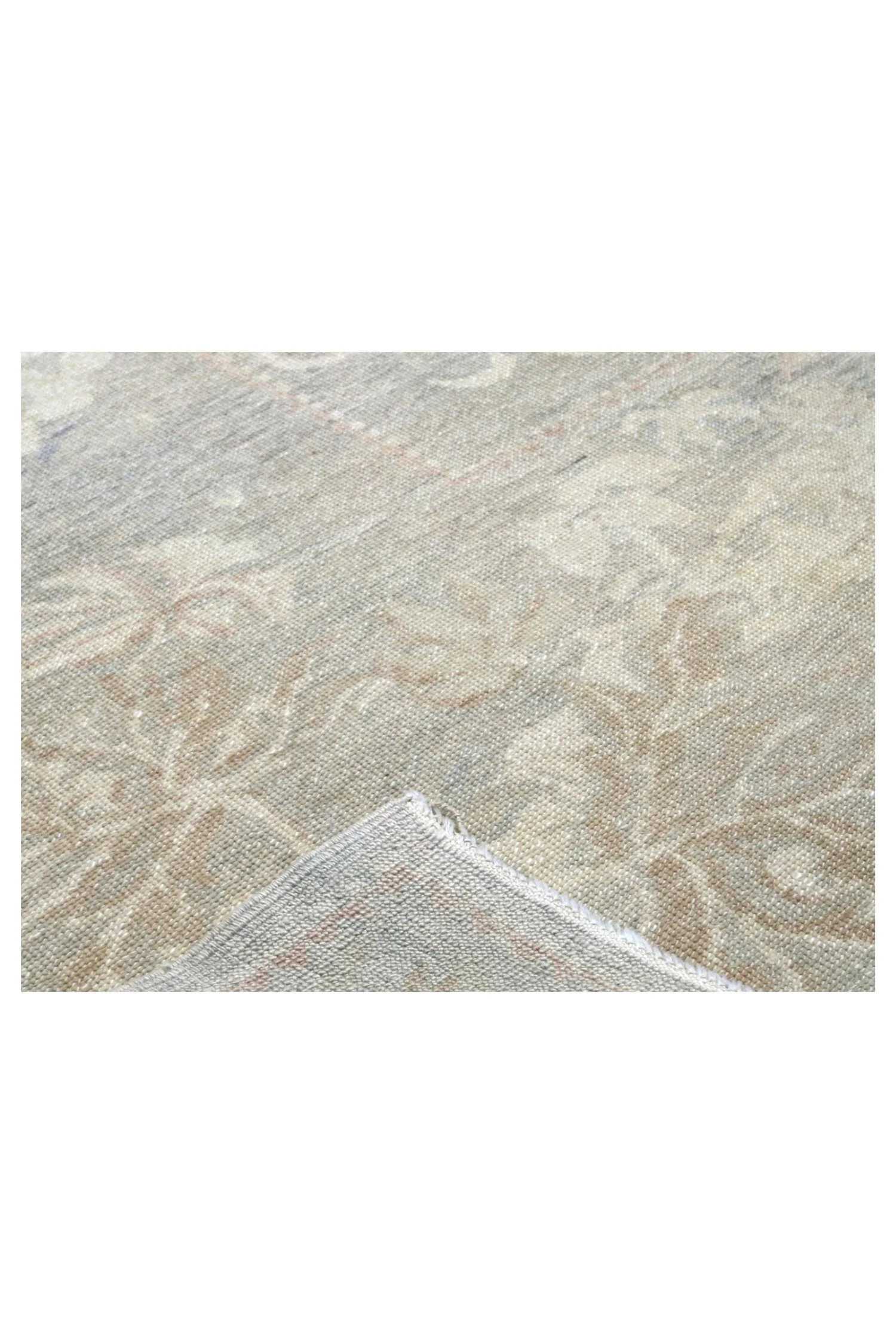 Image 5 of 6
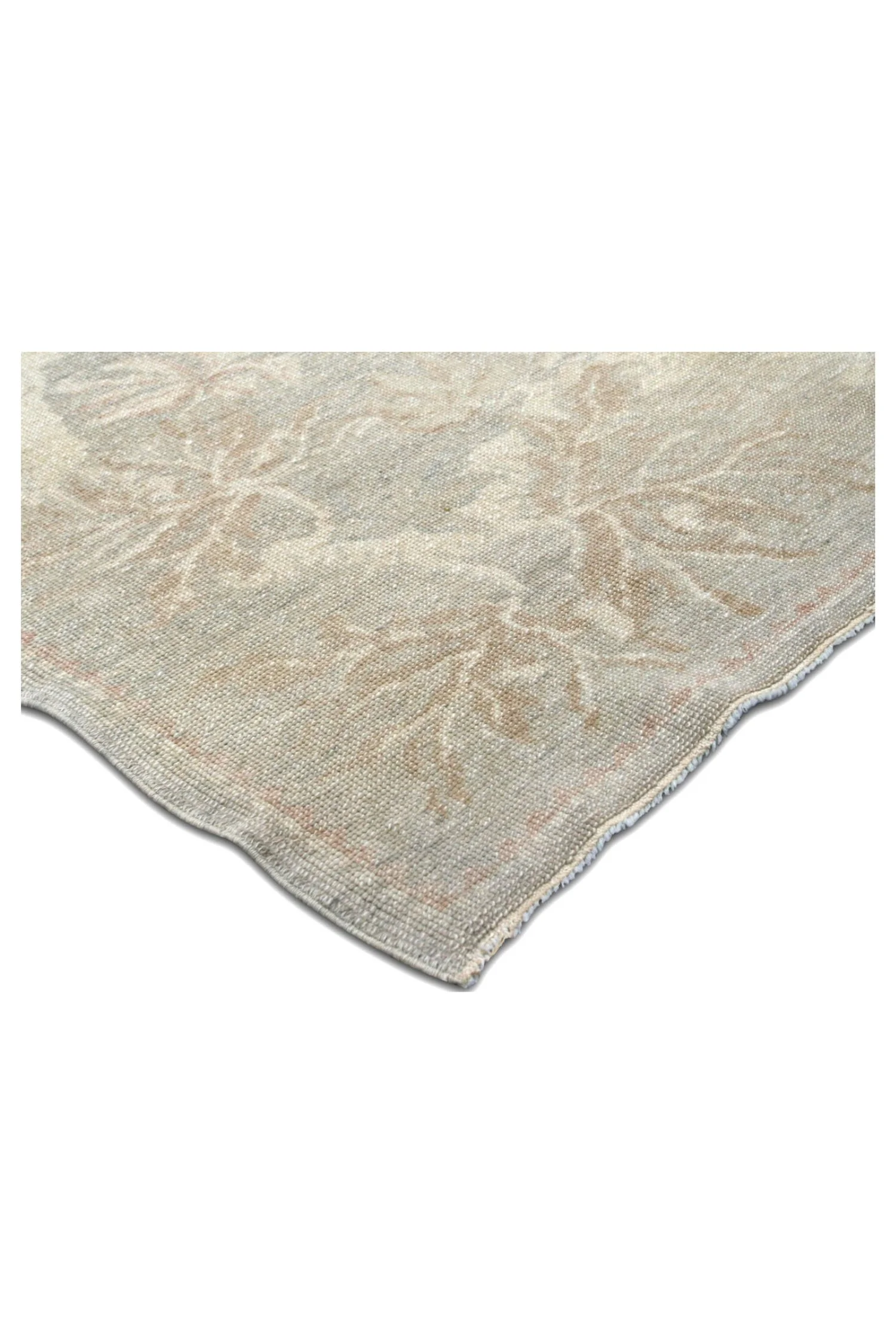 Image 6 of 6
Heritage and Craftsmanship
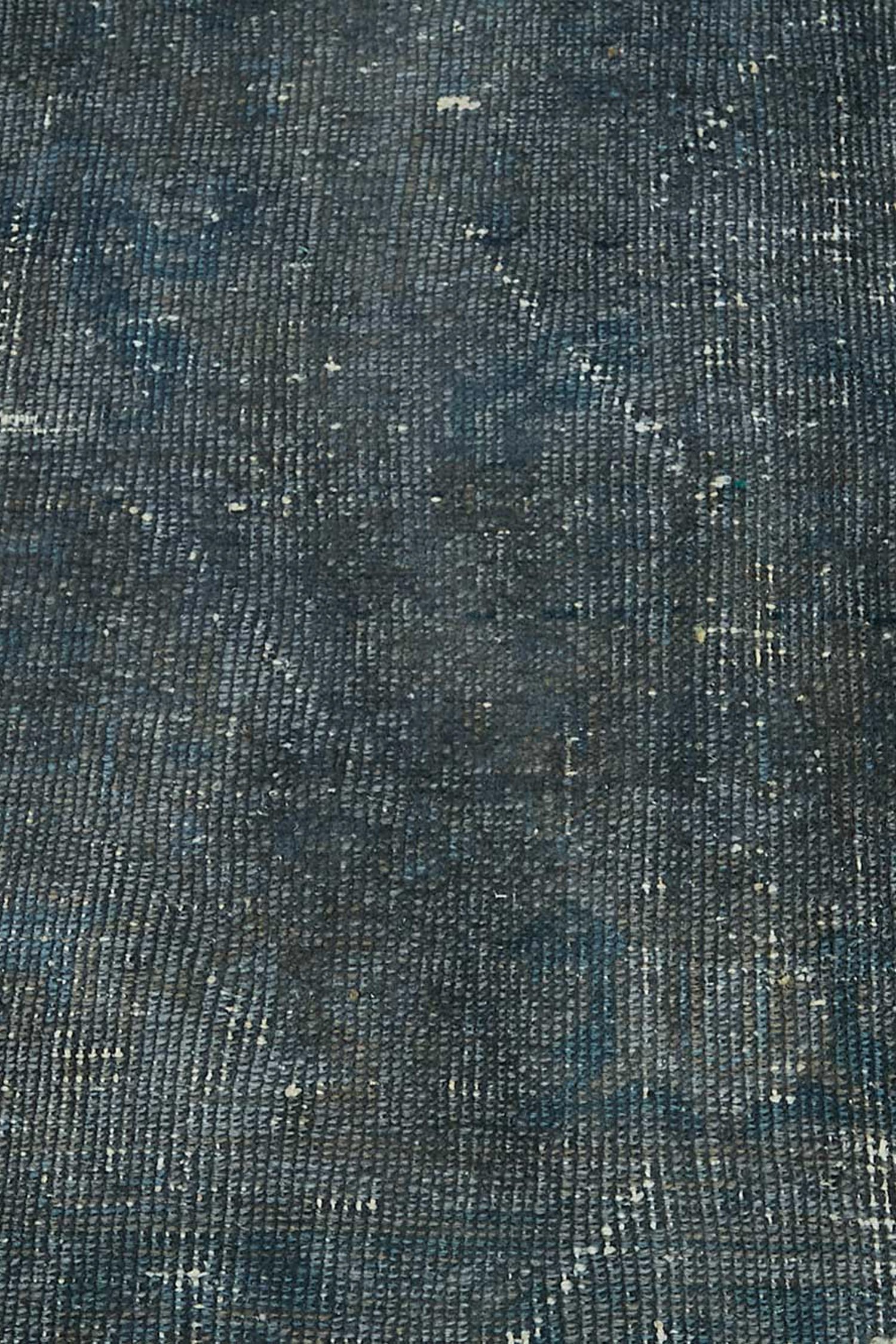
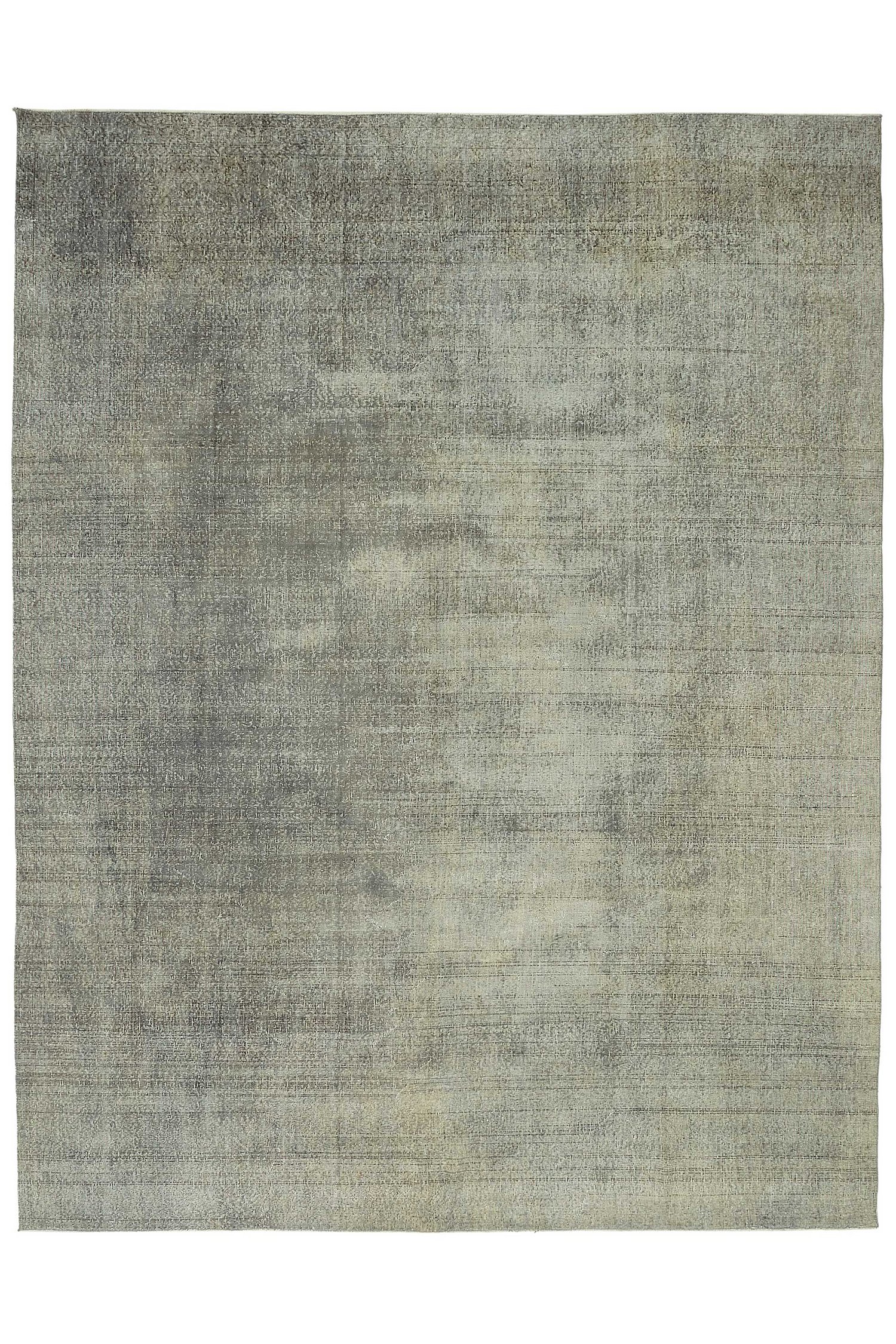
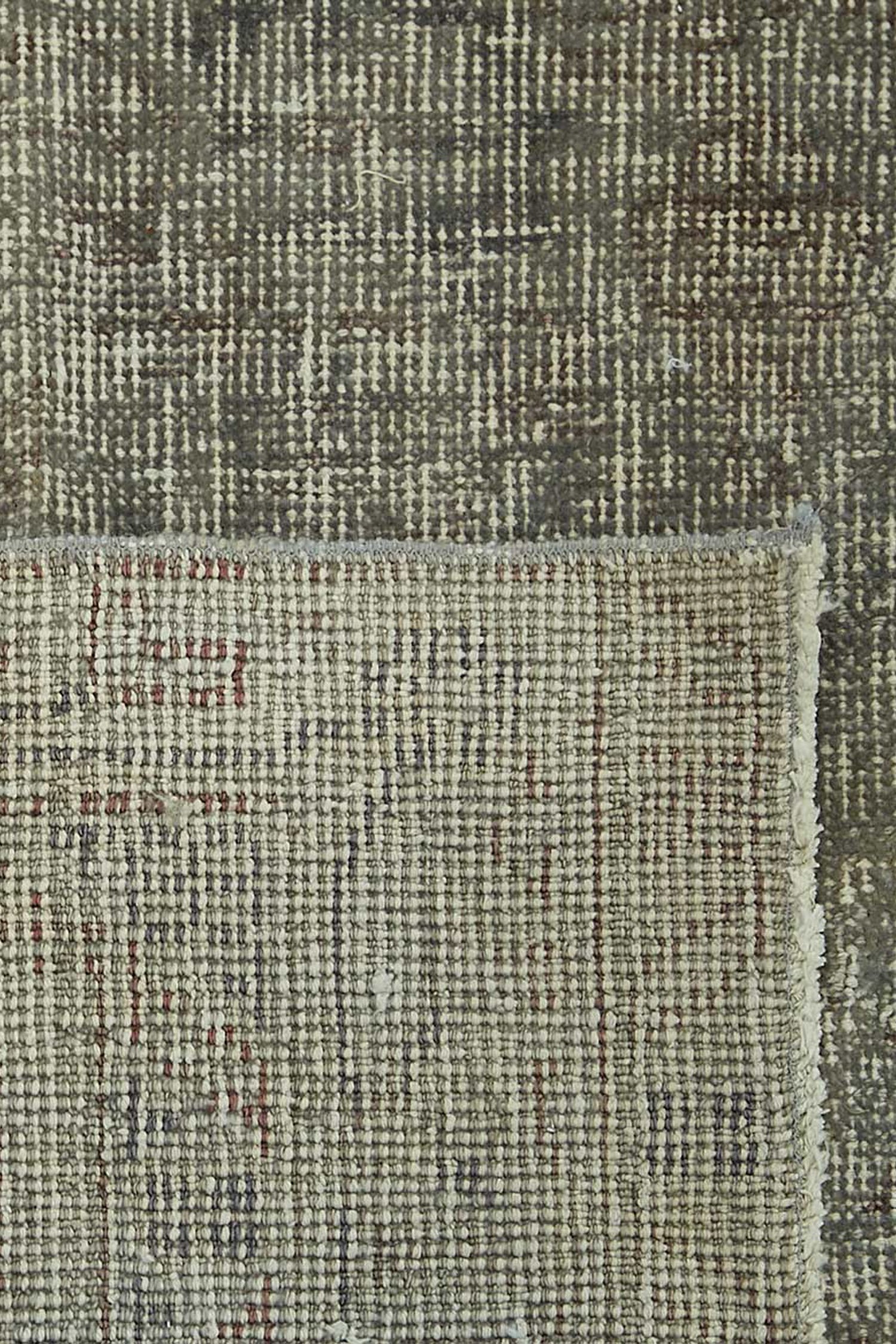
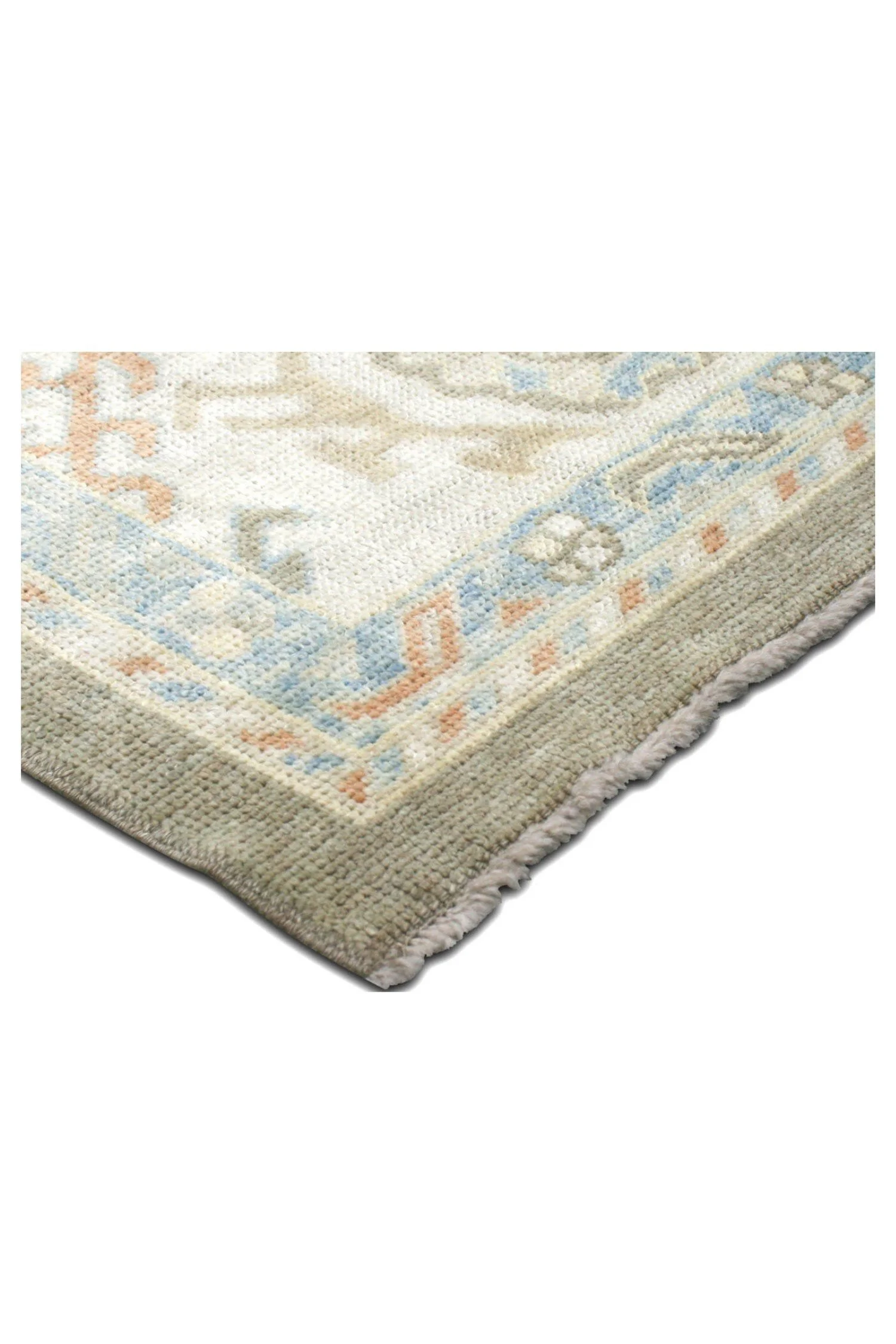
Oushak in the mid-20th century represented a shift from the saturated jewel tones of earlier Turkish weaving traditions. The region's weavers had spent centuries supplying European markets and understood how to balance Ottoman heritage with evolving Western tastes. By the 1950s, this meant softer palettes and more spacious compositions that spoke to postwar sensibilities.
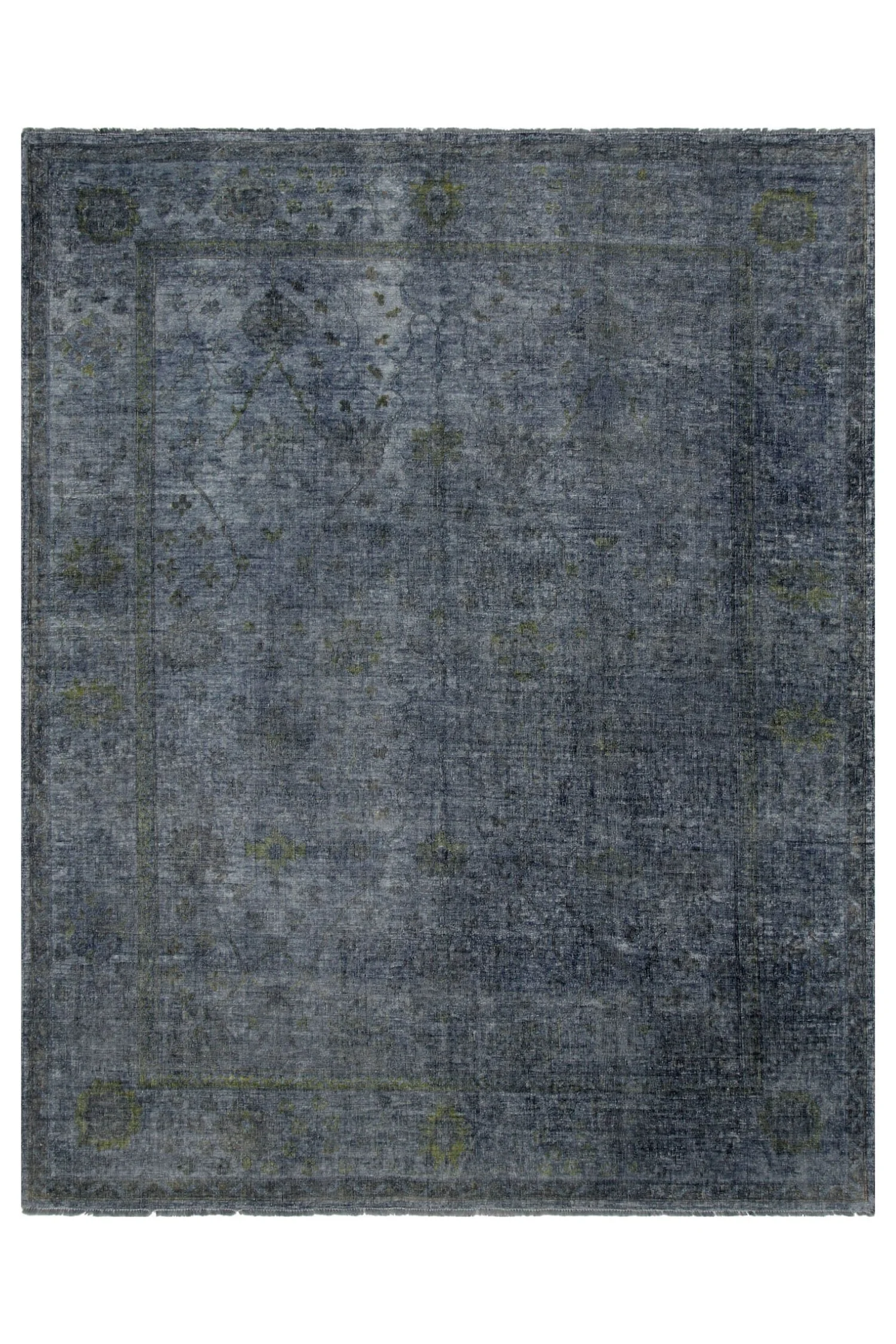
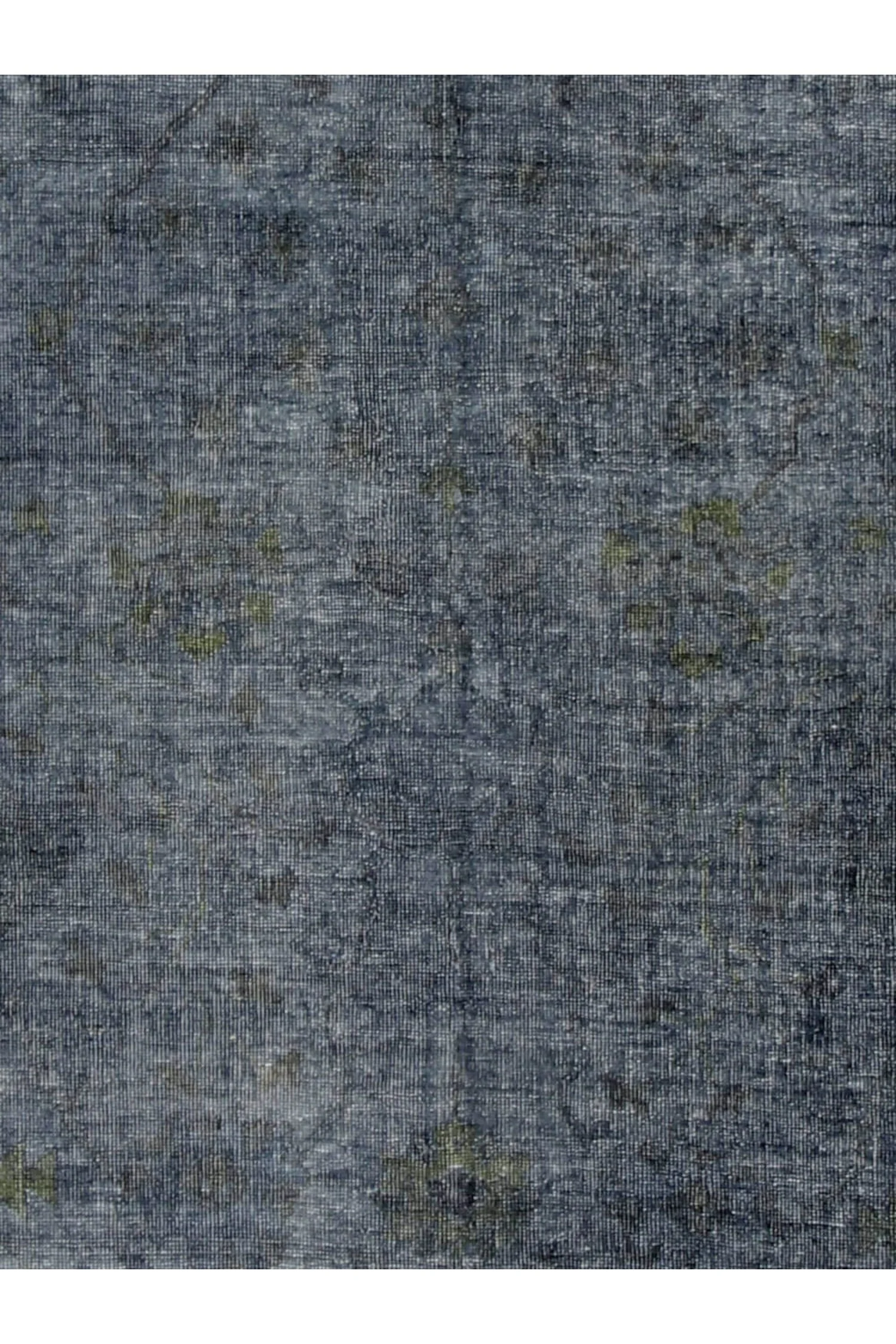
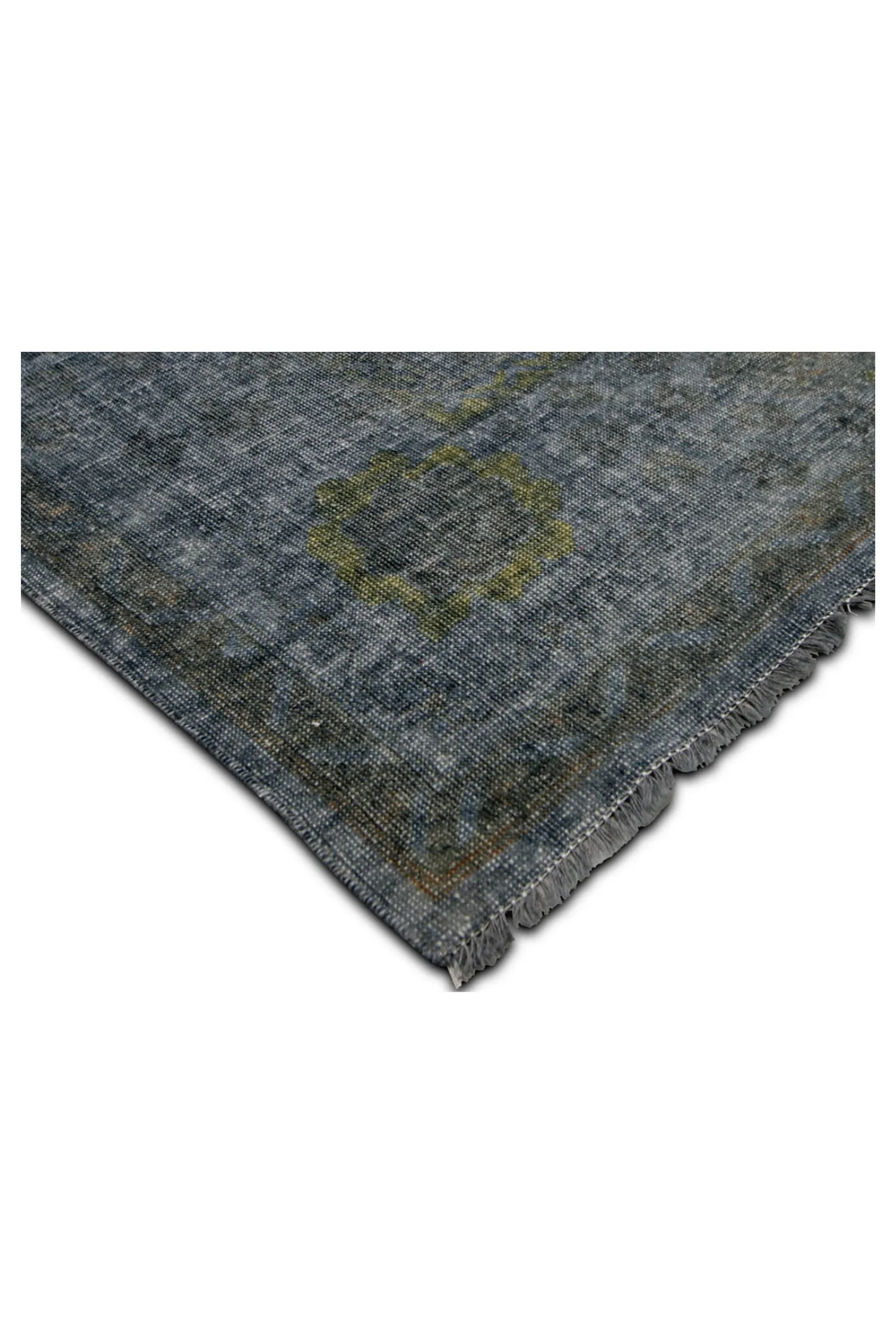
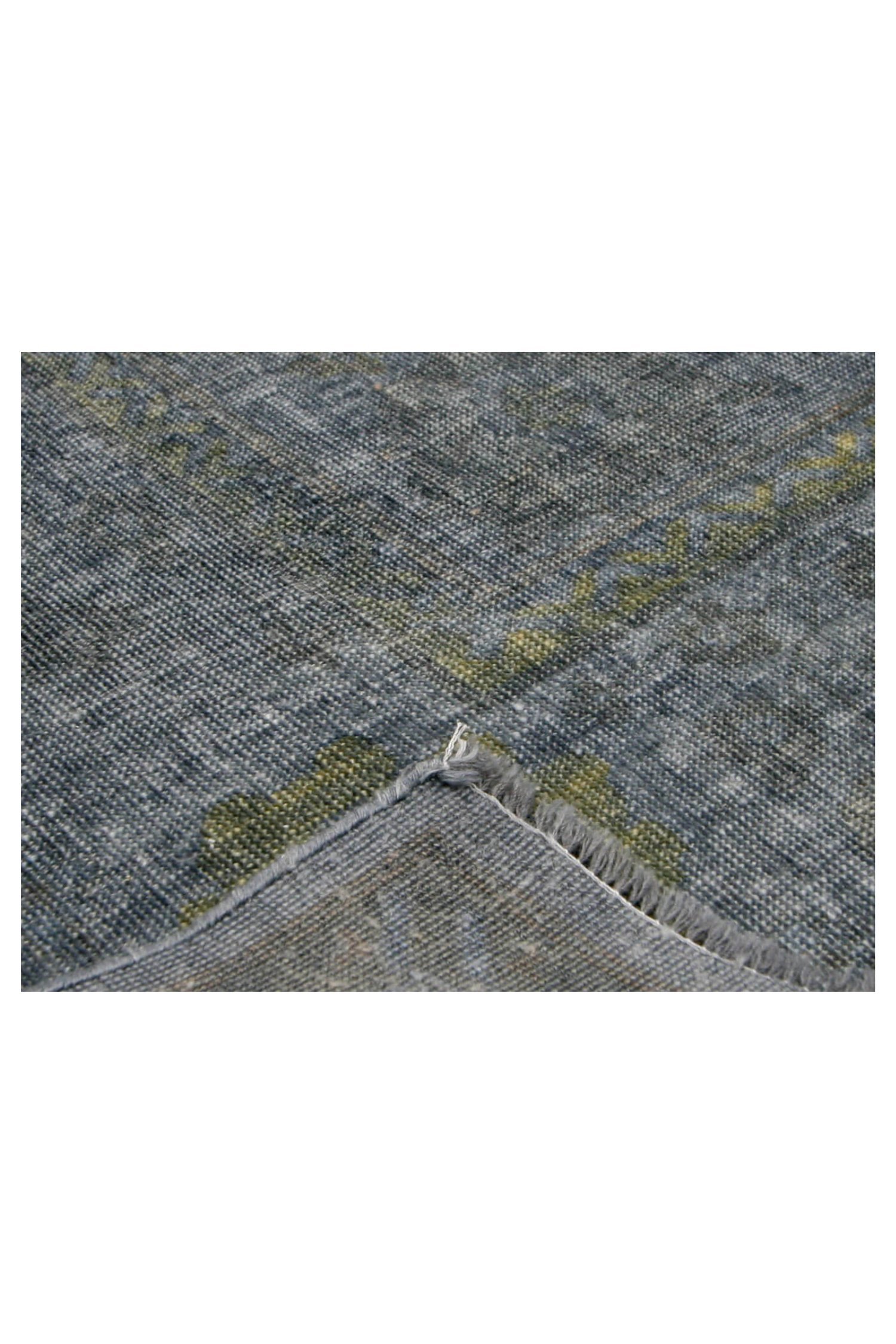
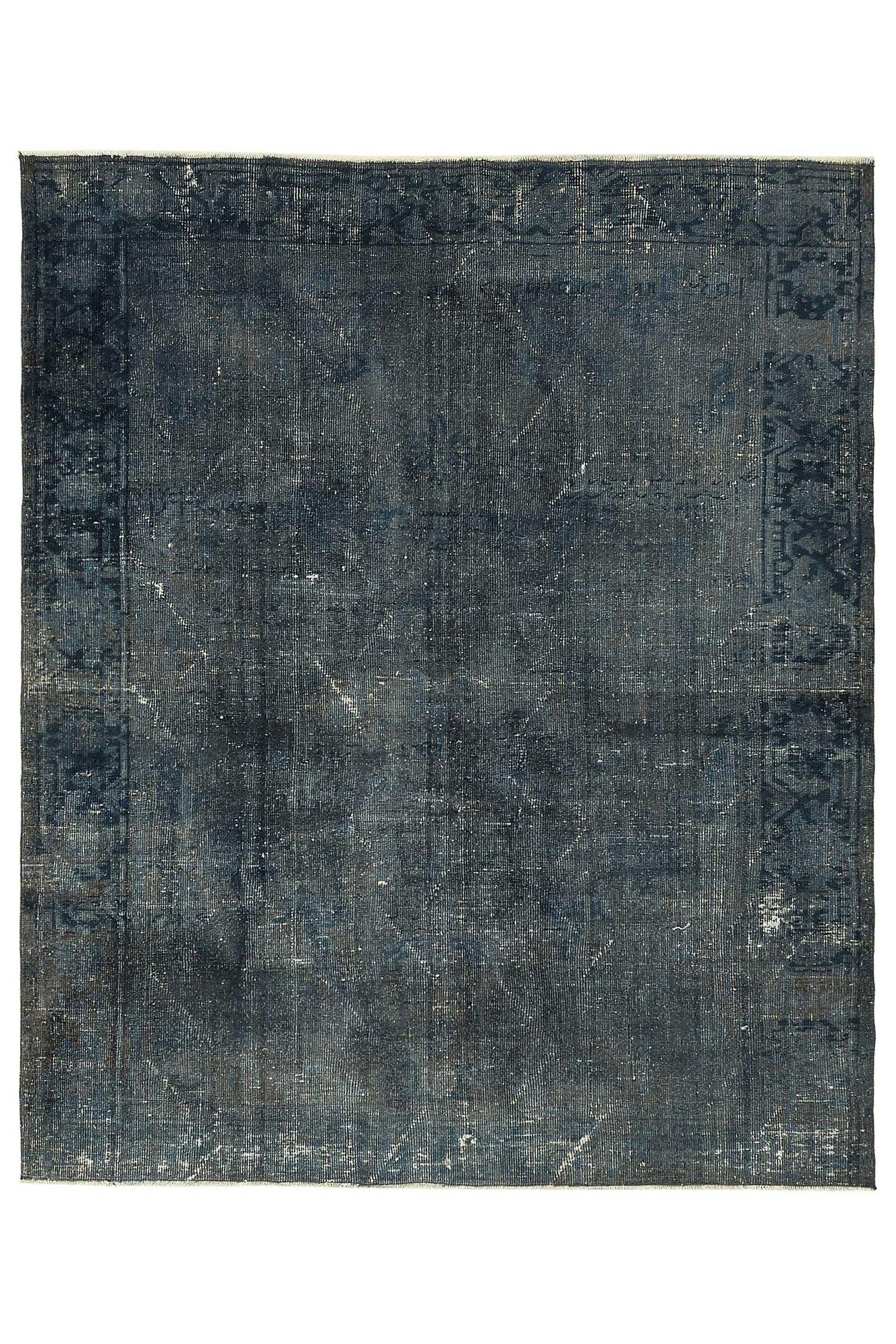
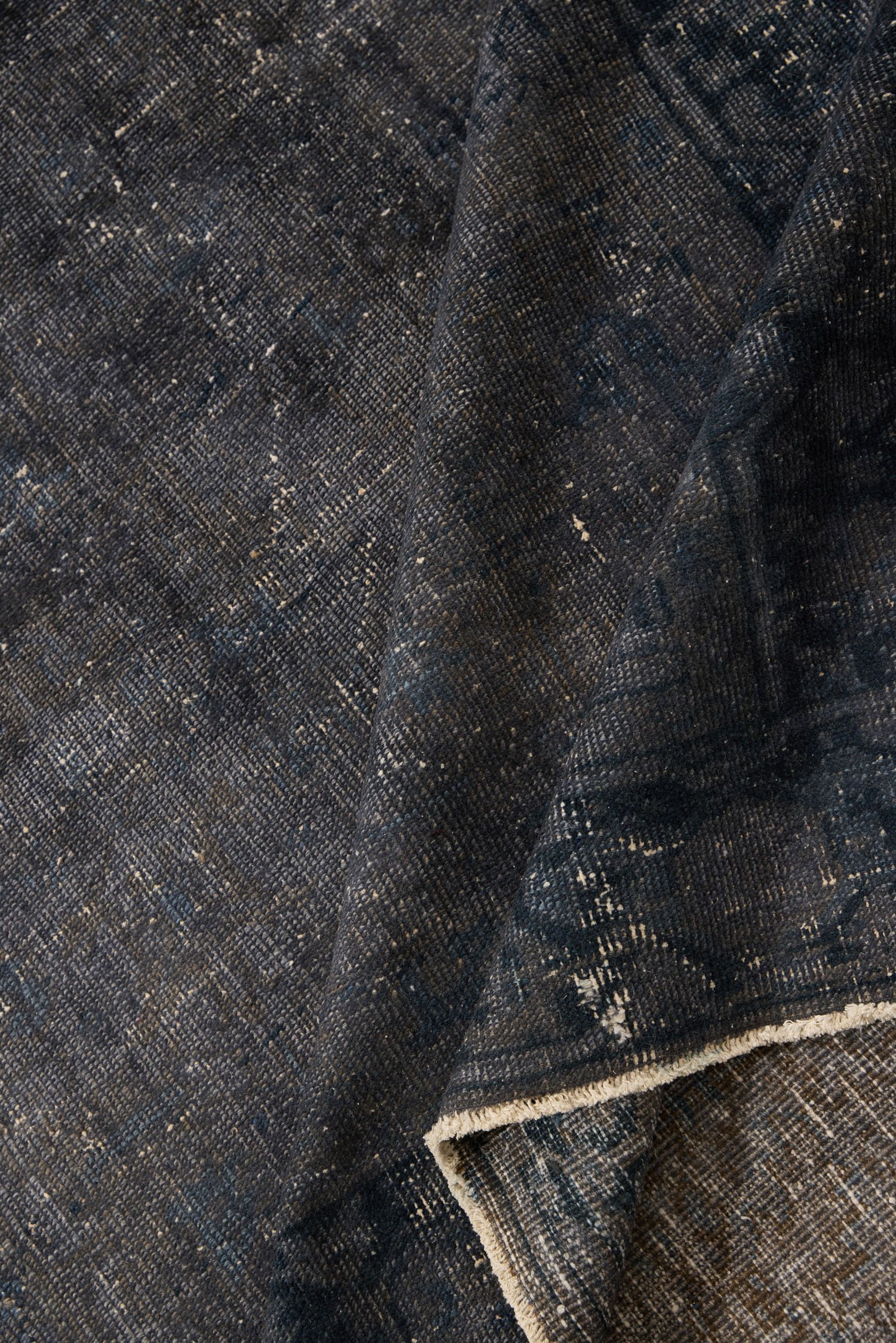
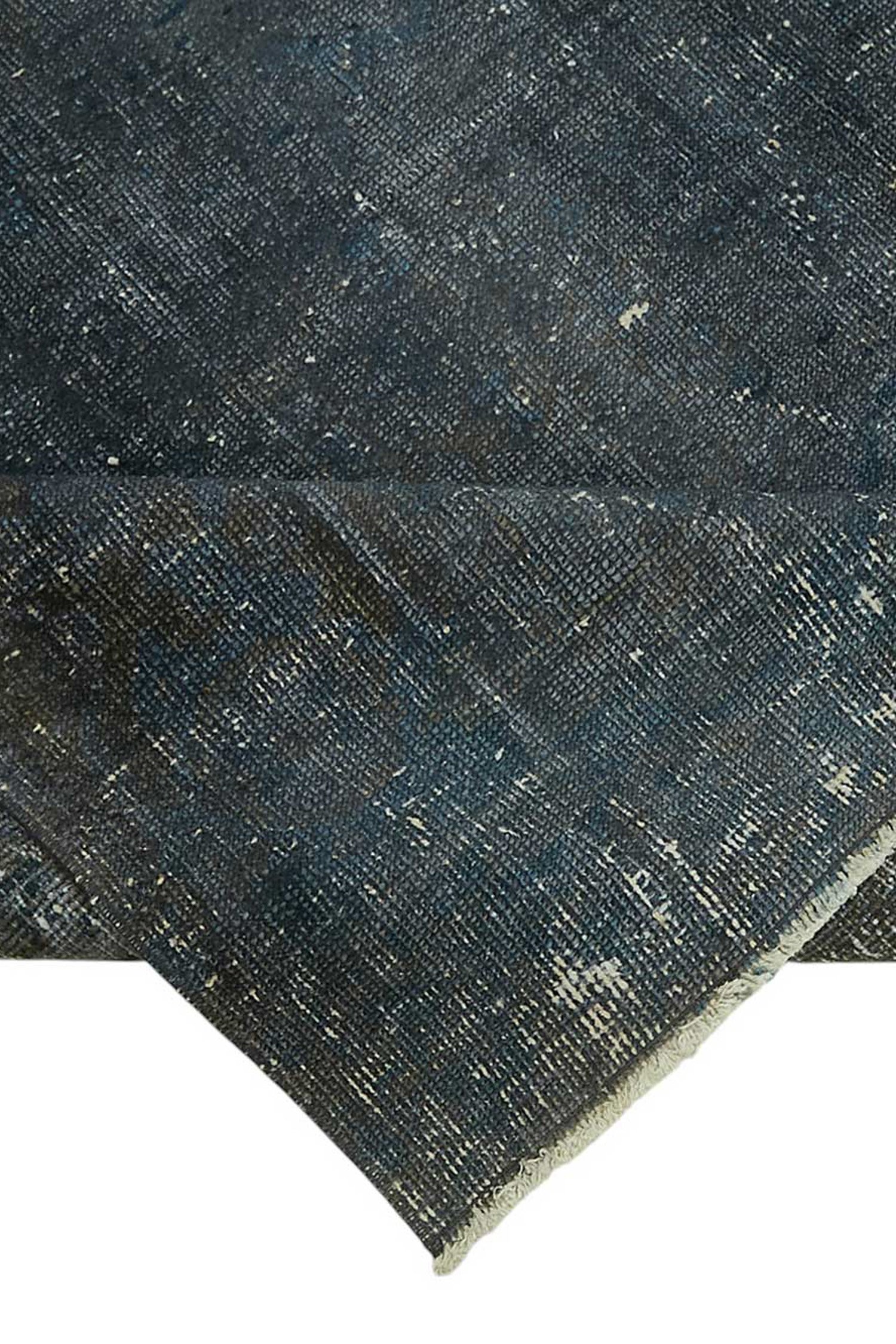
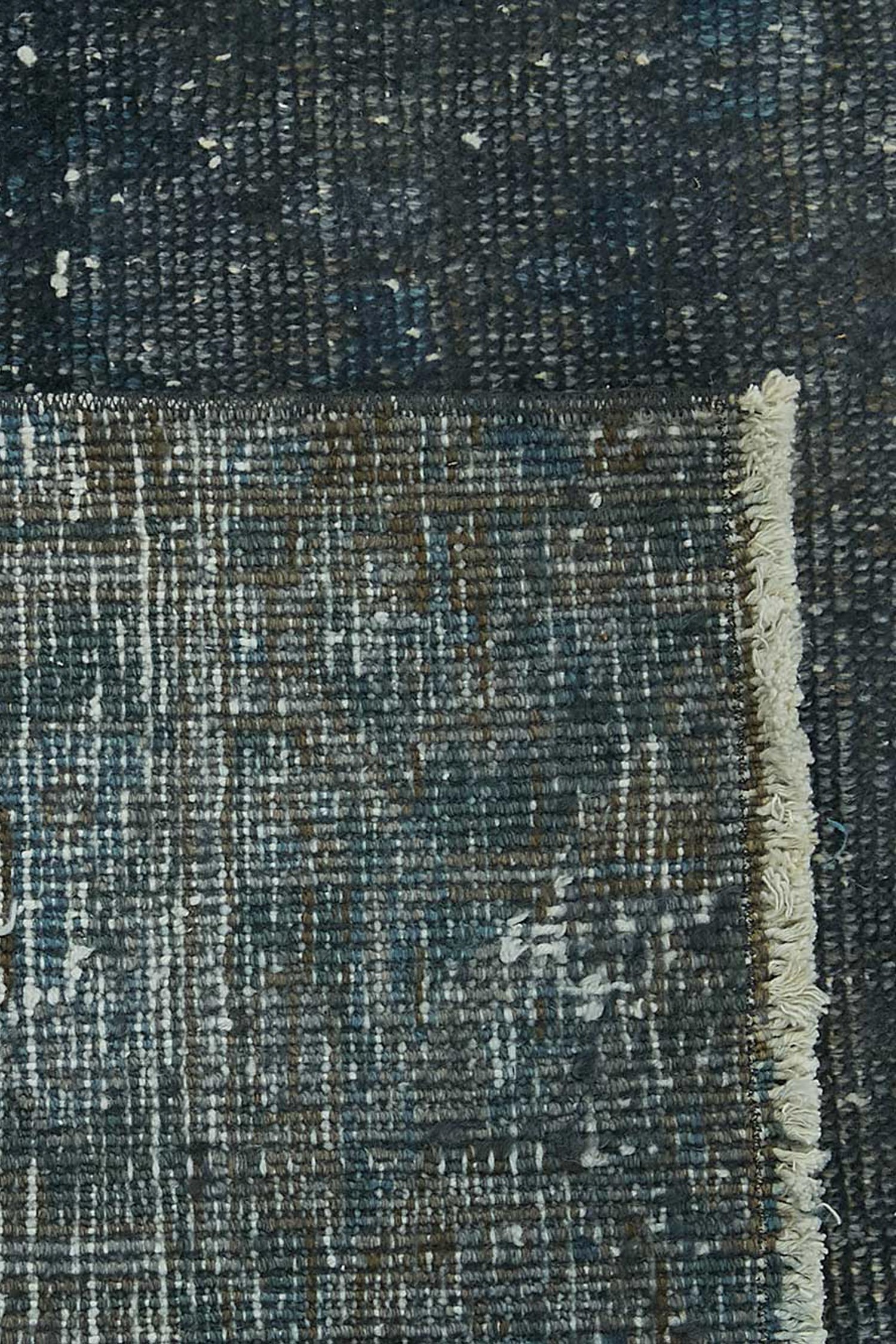
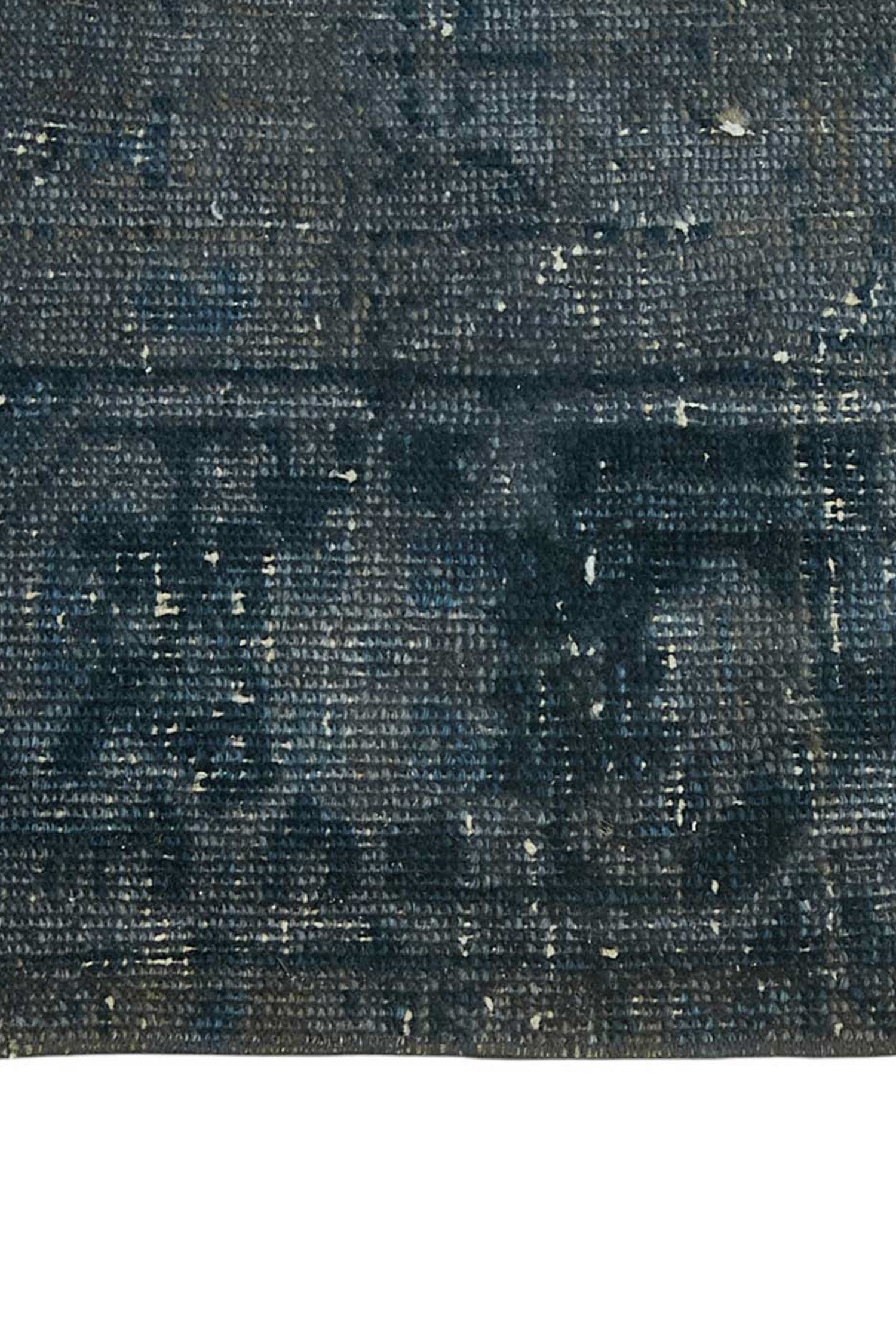
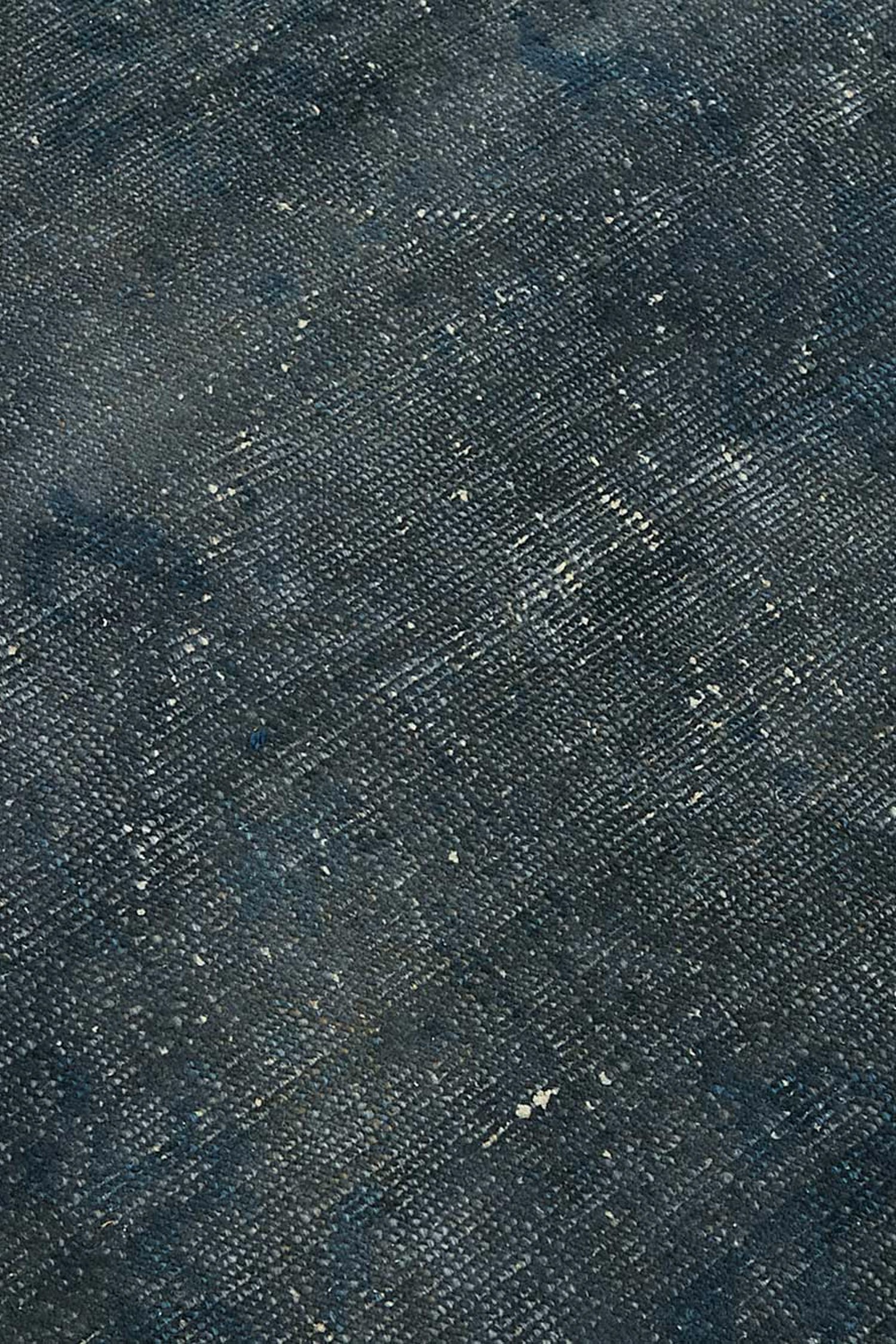
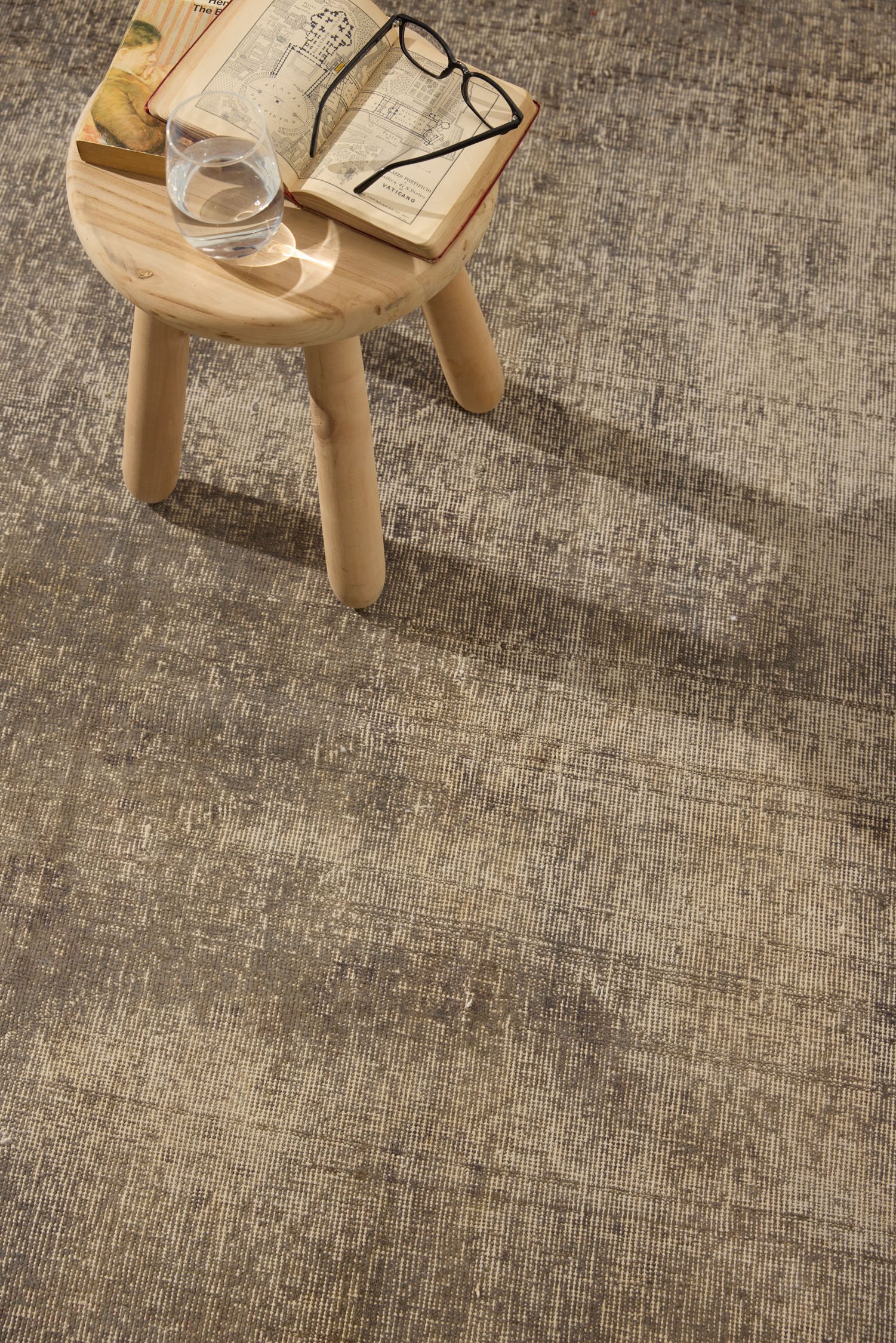
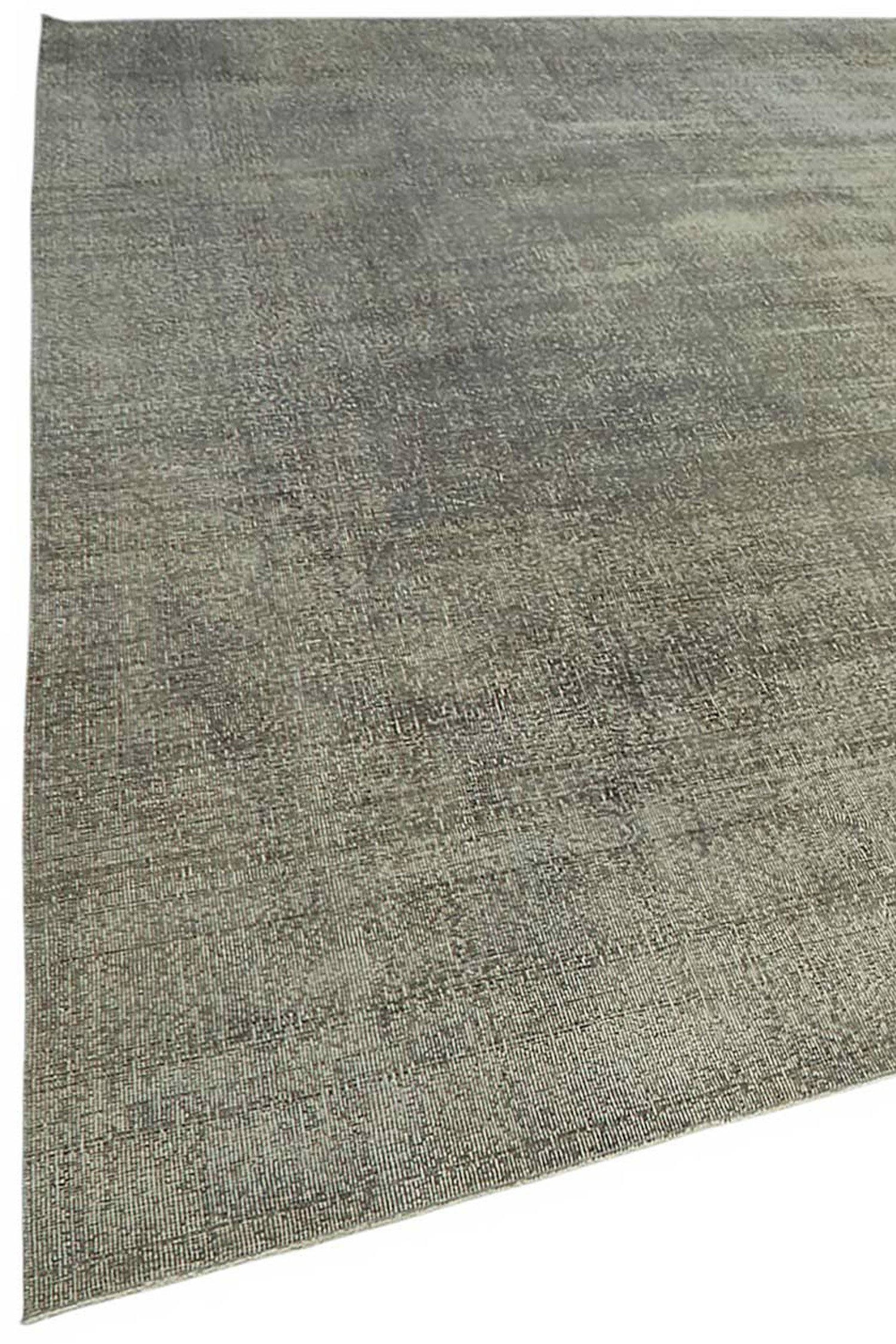
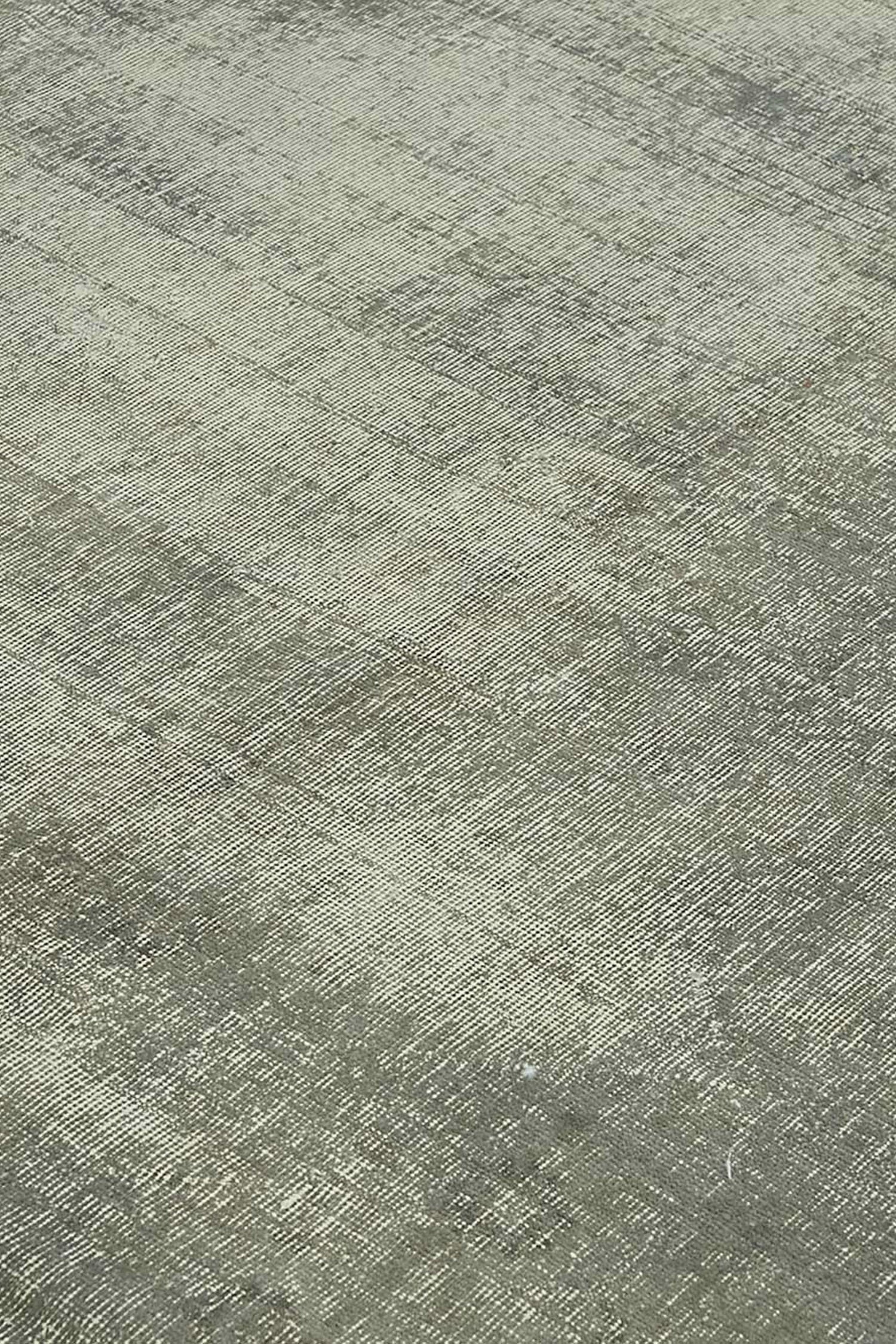
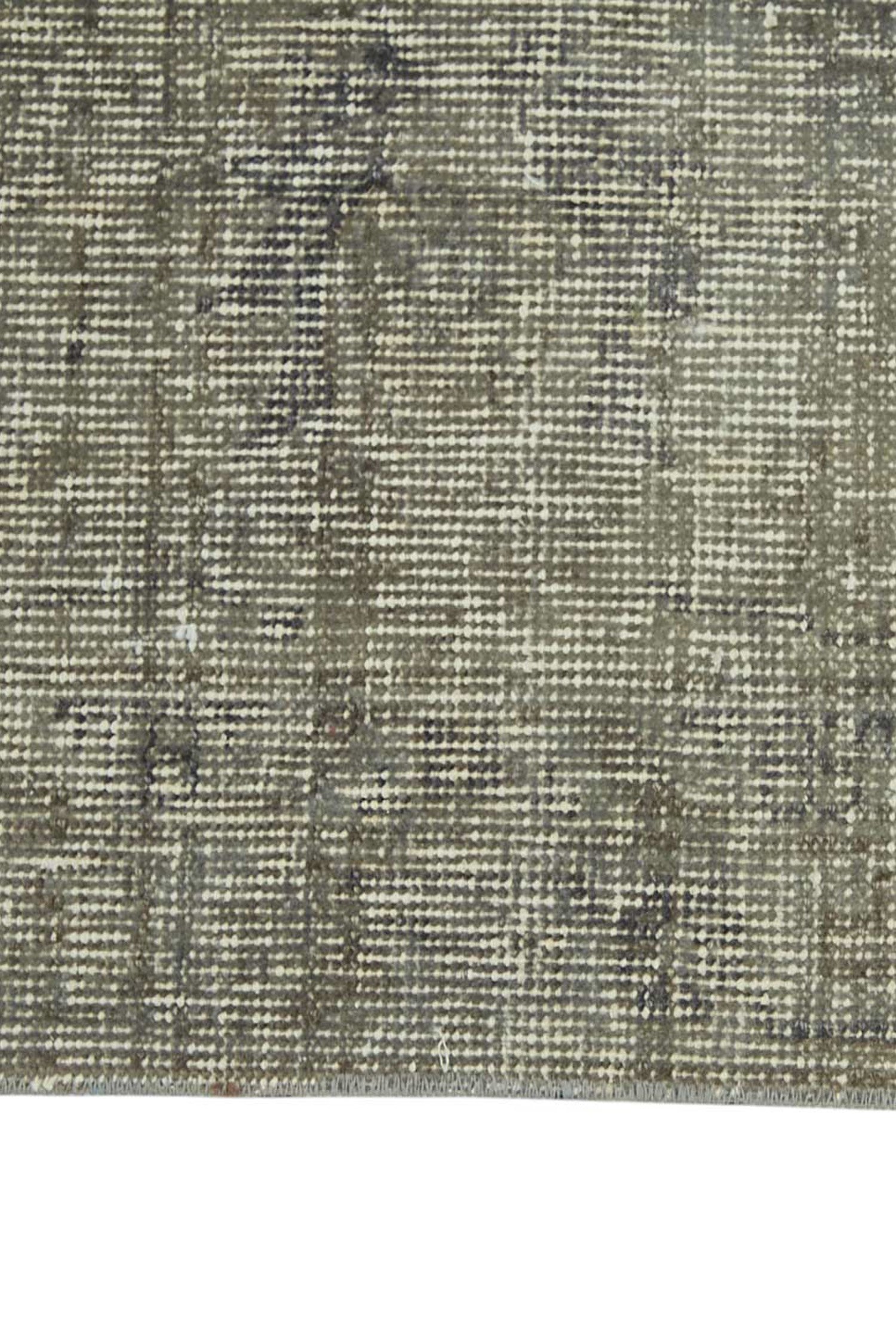
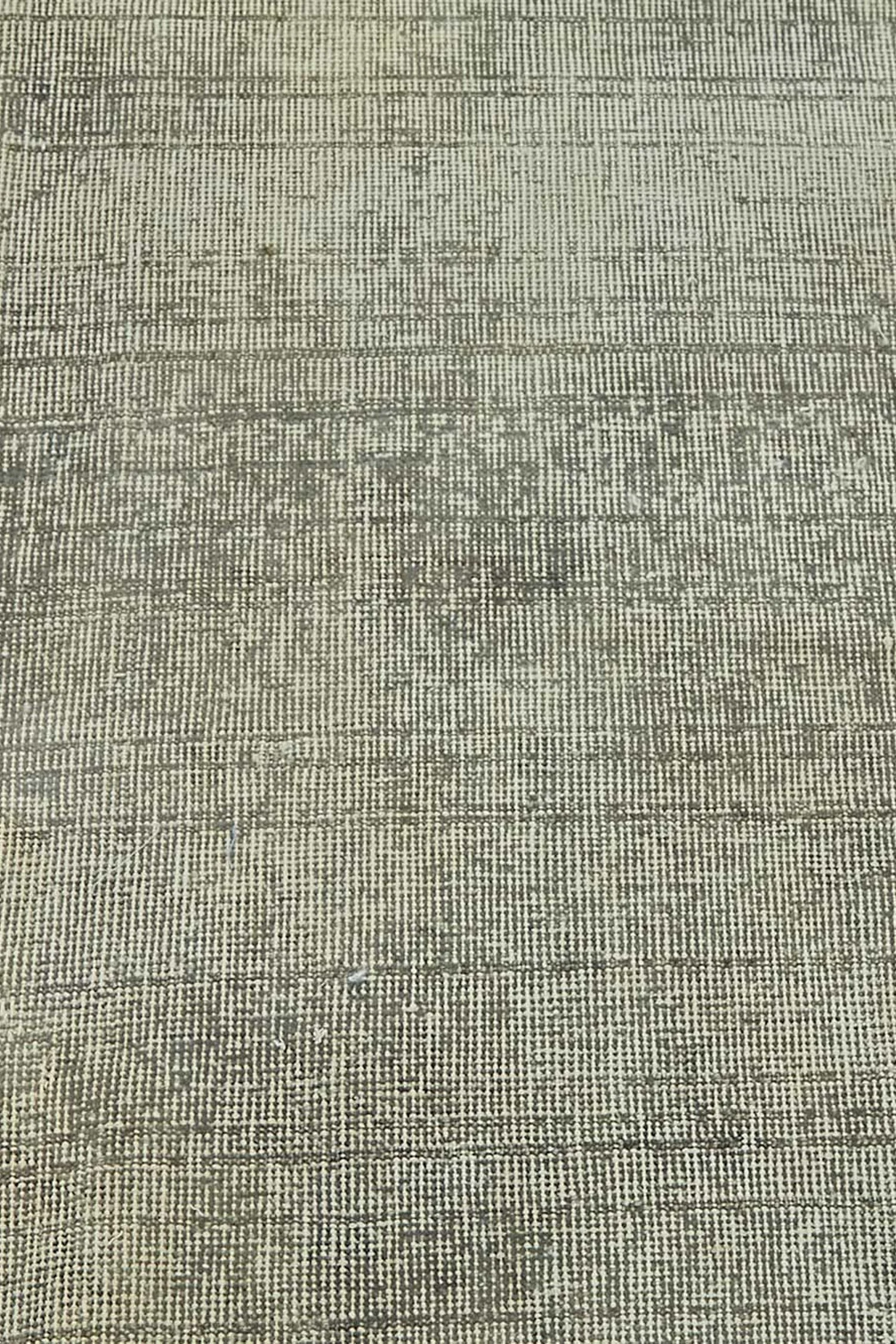
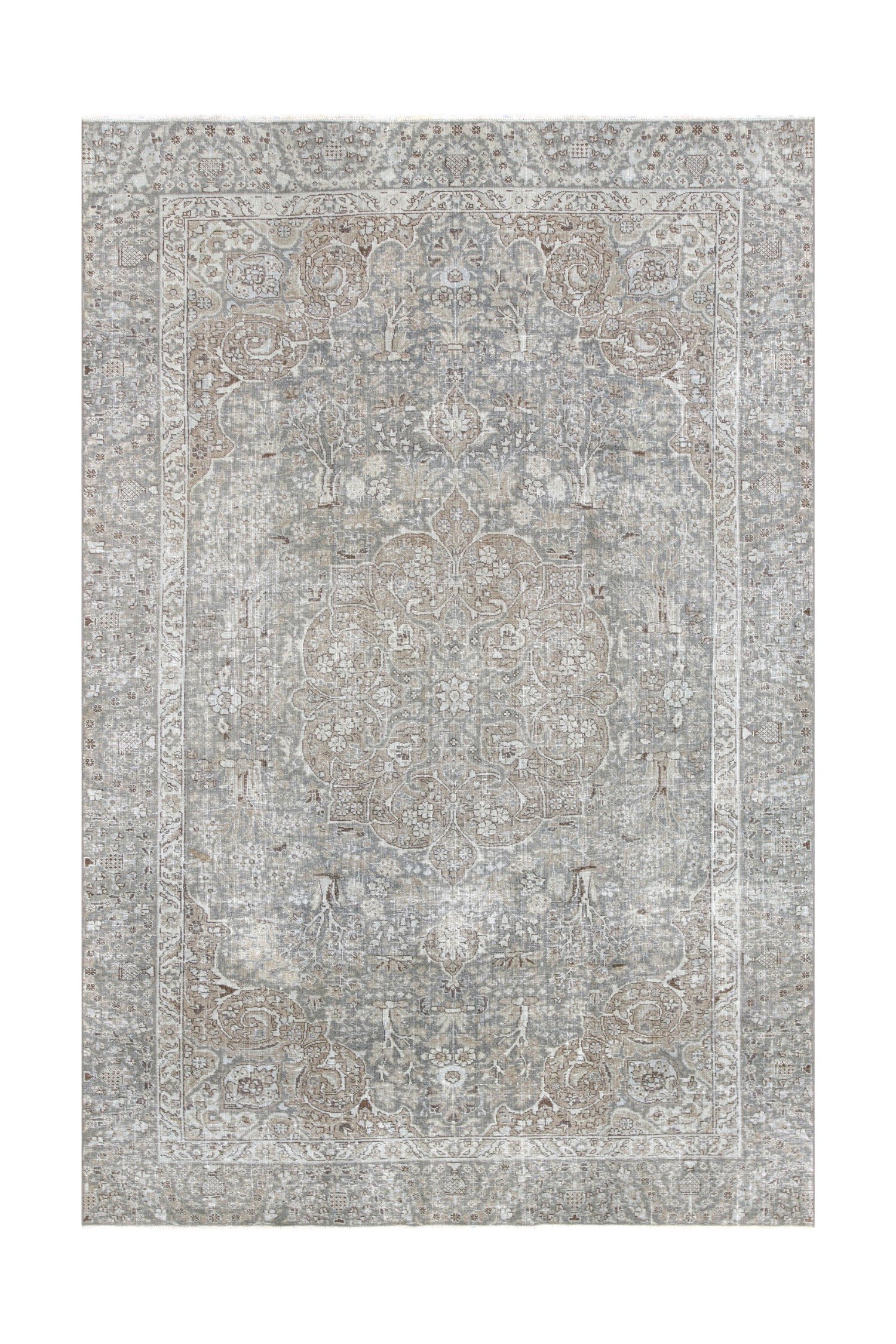
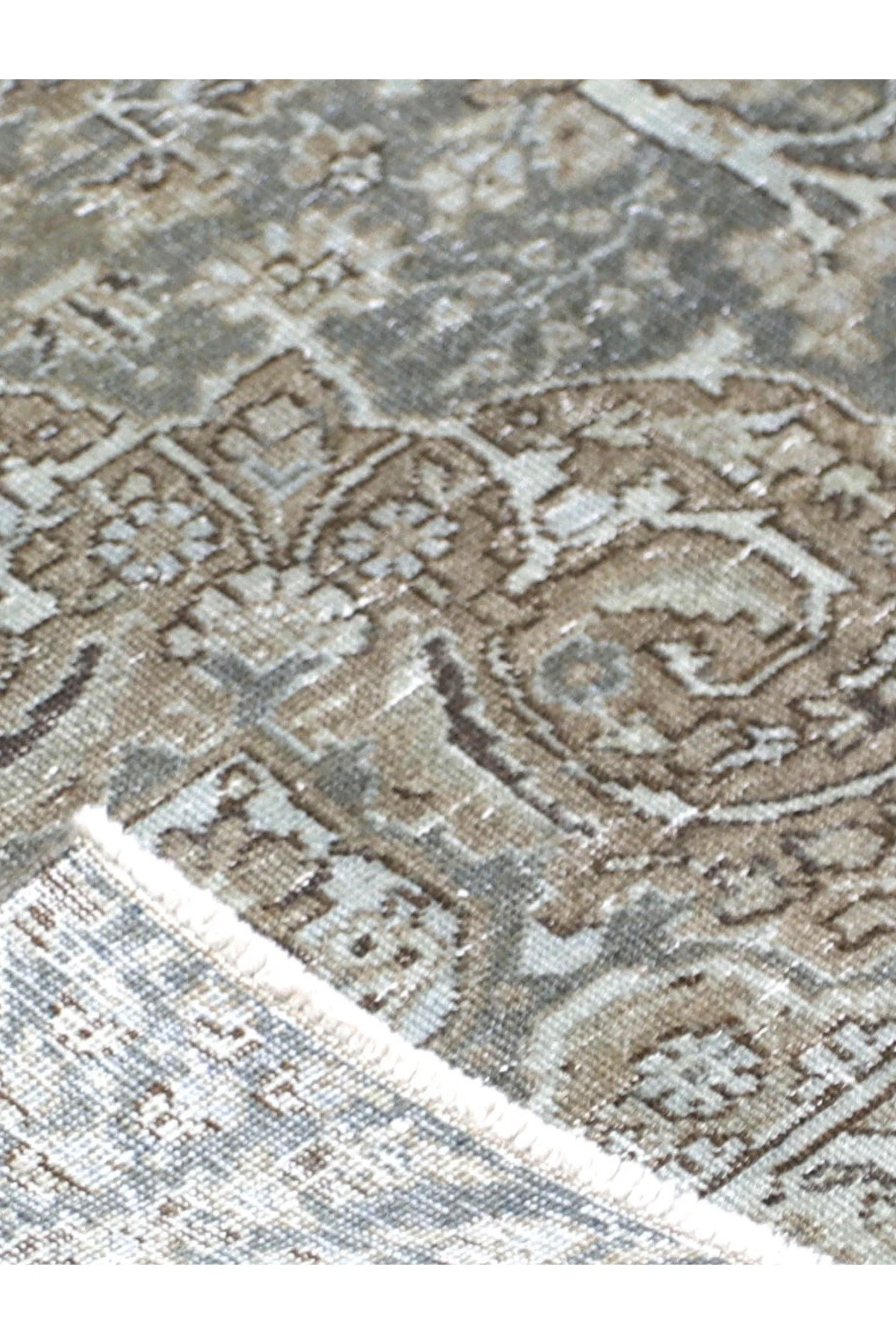
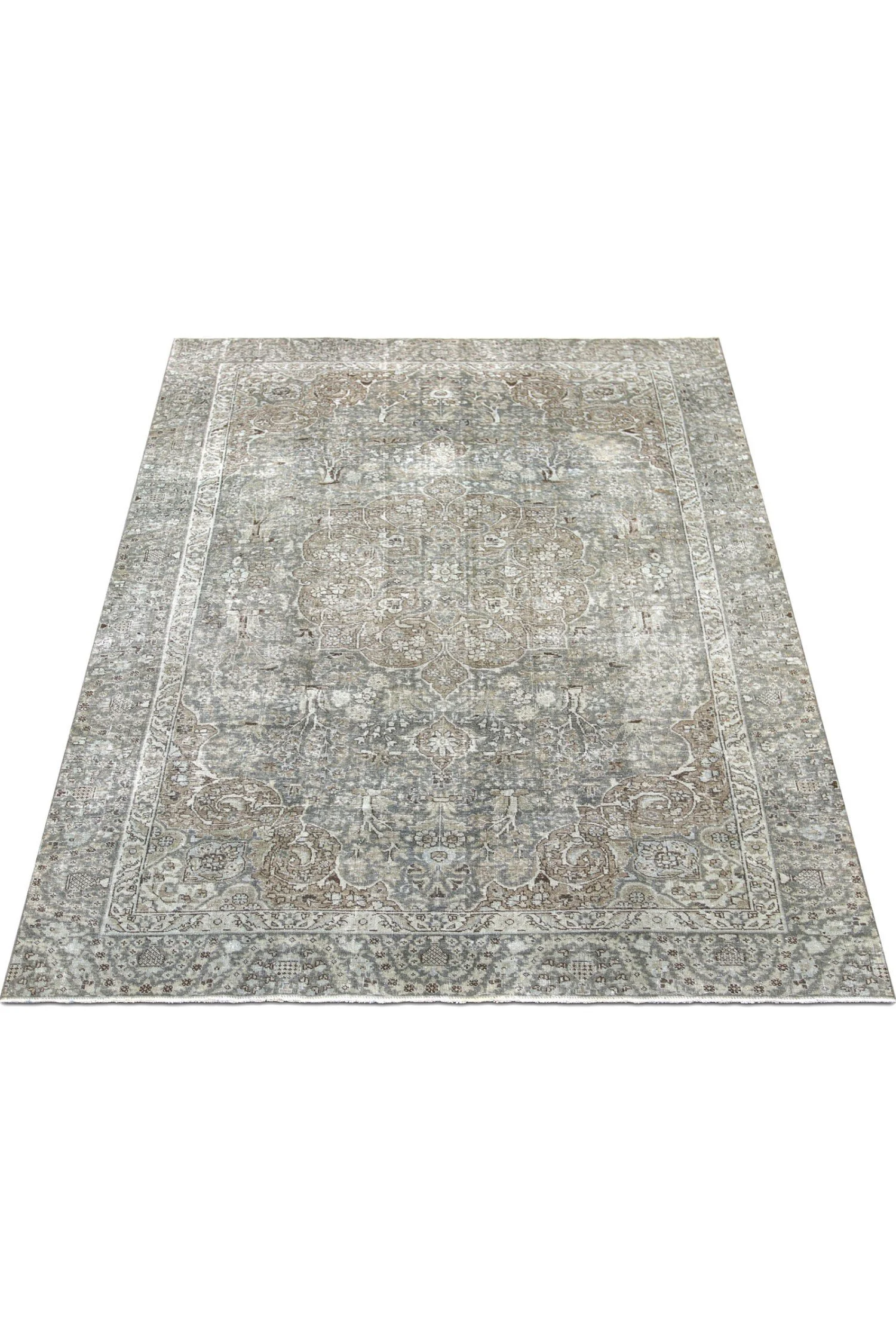
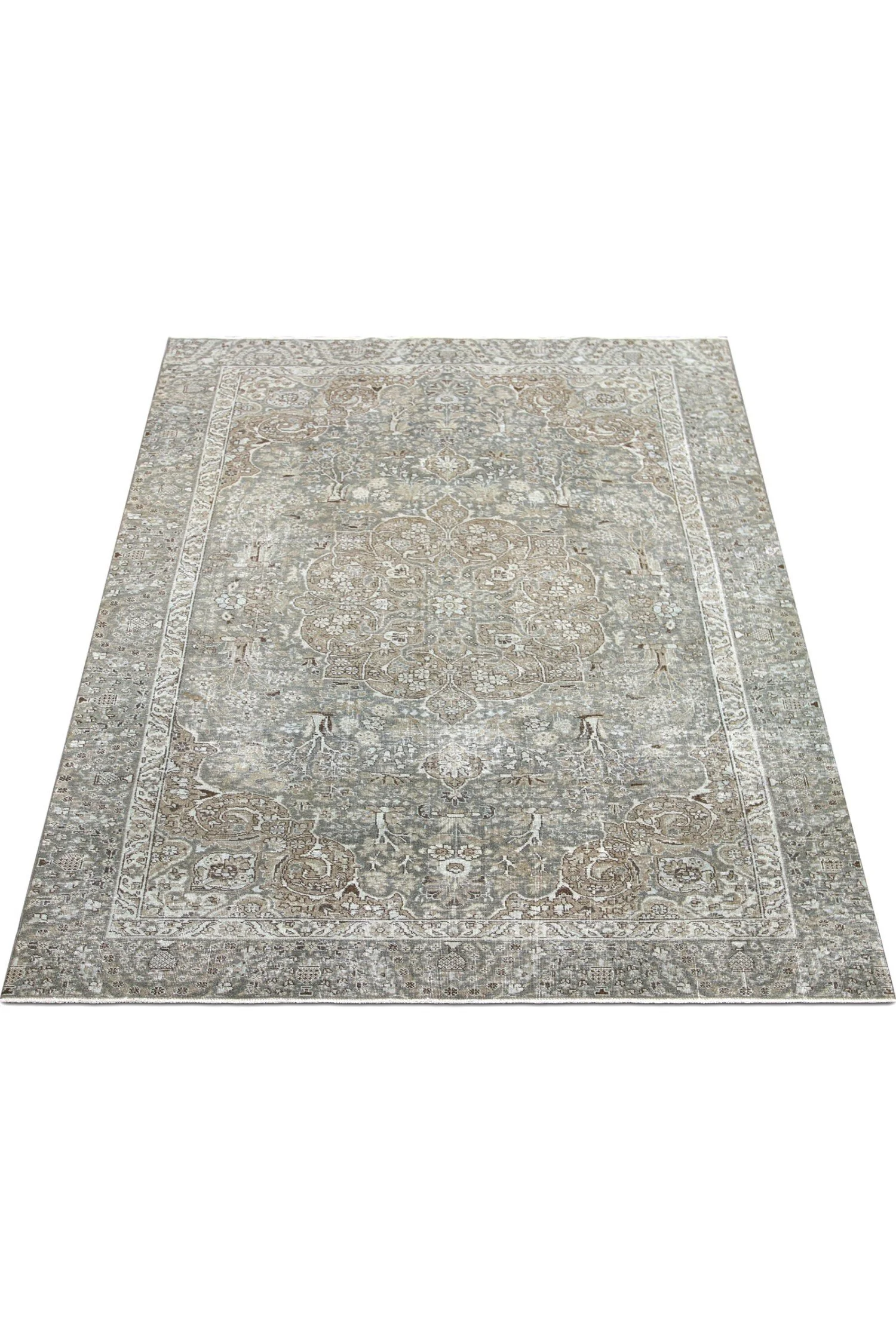
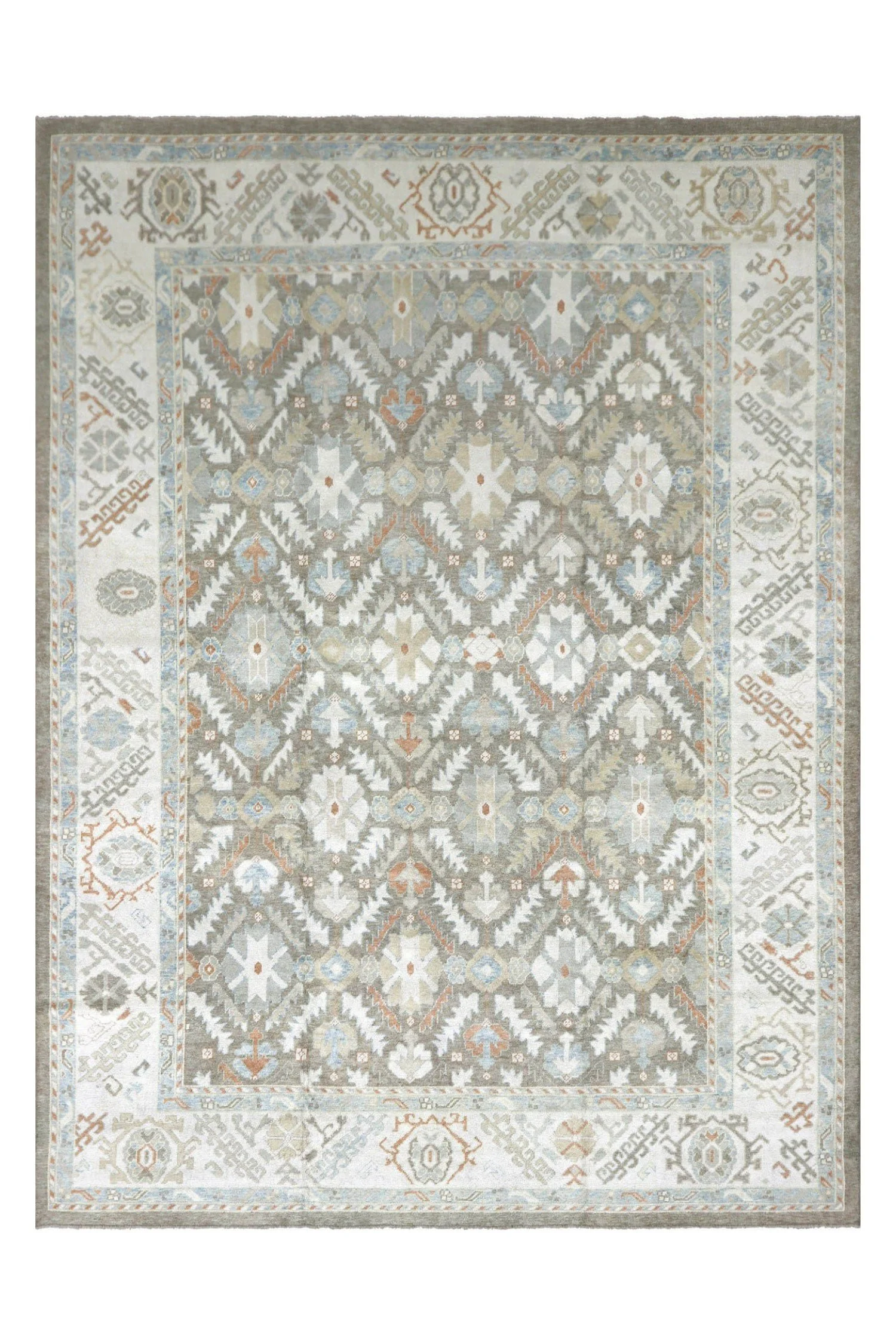
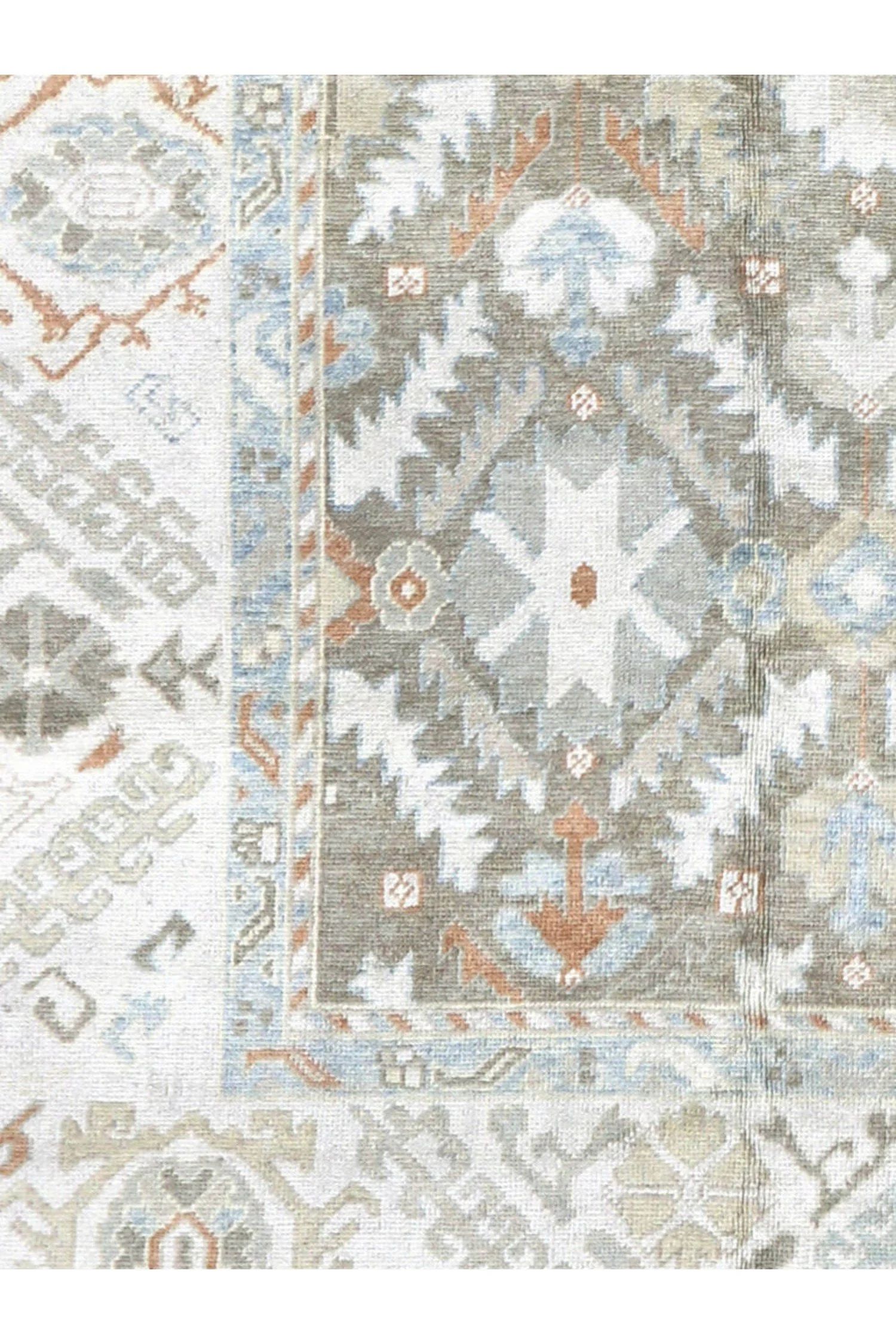
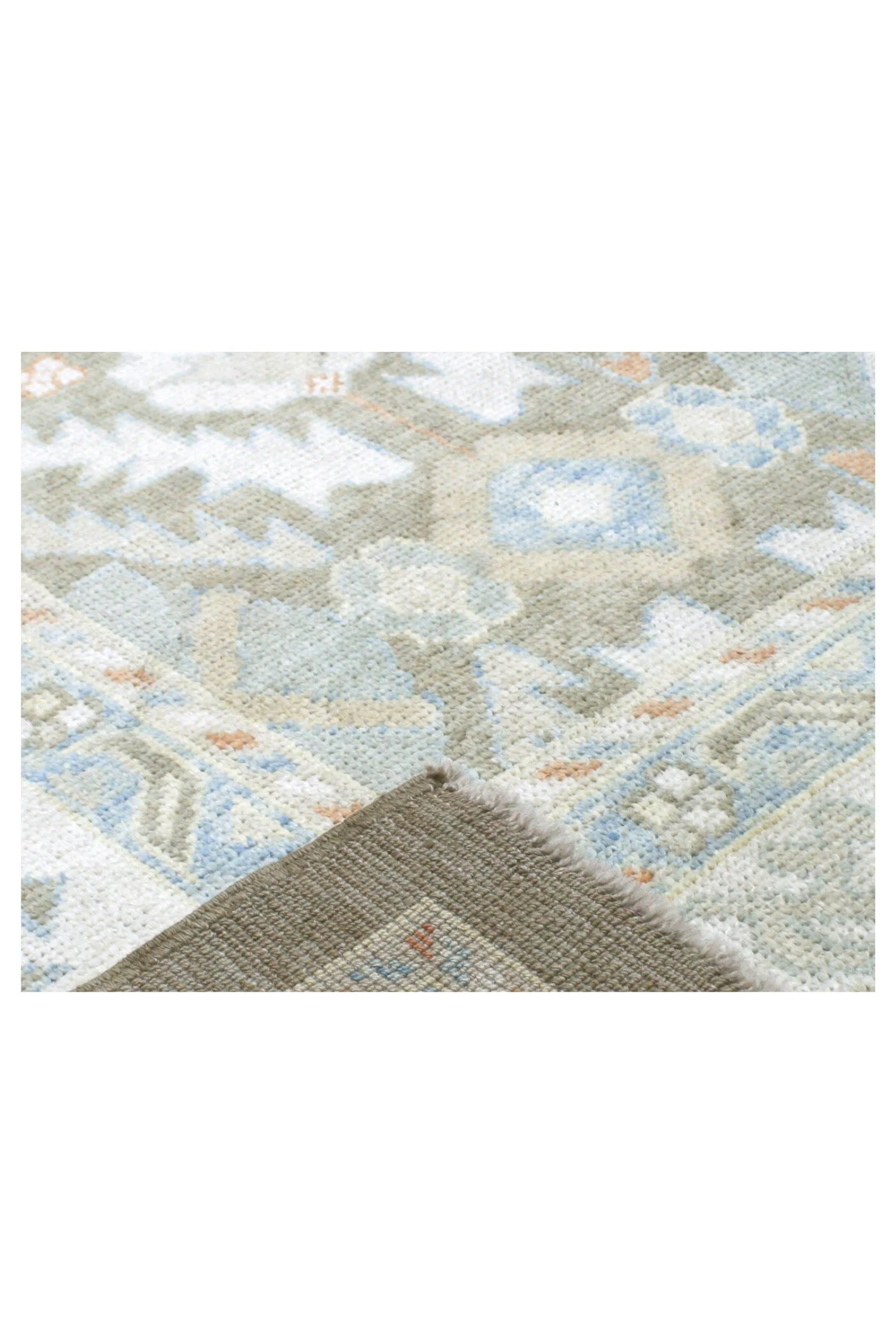
These rugs emerged from workshops where dyers had learned to coax subtler shades from their materials, creating the muted tones that now define vintage Oushak character. The gray grounds weren't common in earlier periods but became signatures of mid-century production, offering alternatives to the creams and tans that dominated the market.
Design Elements
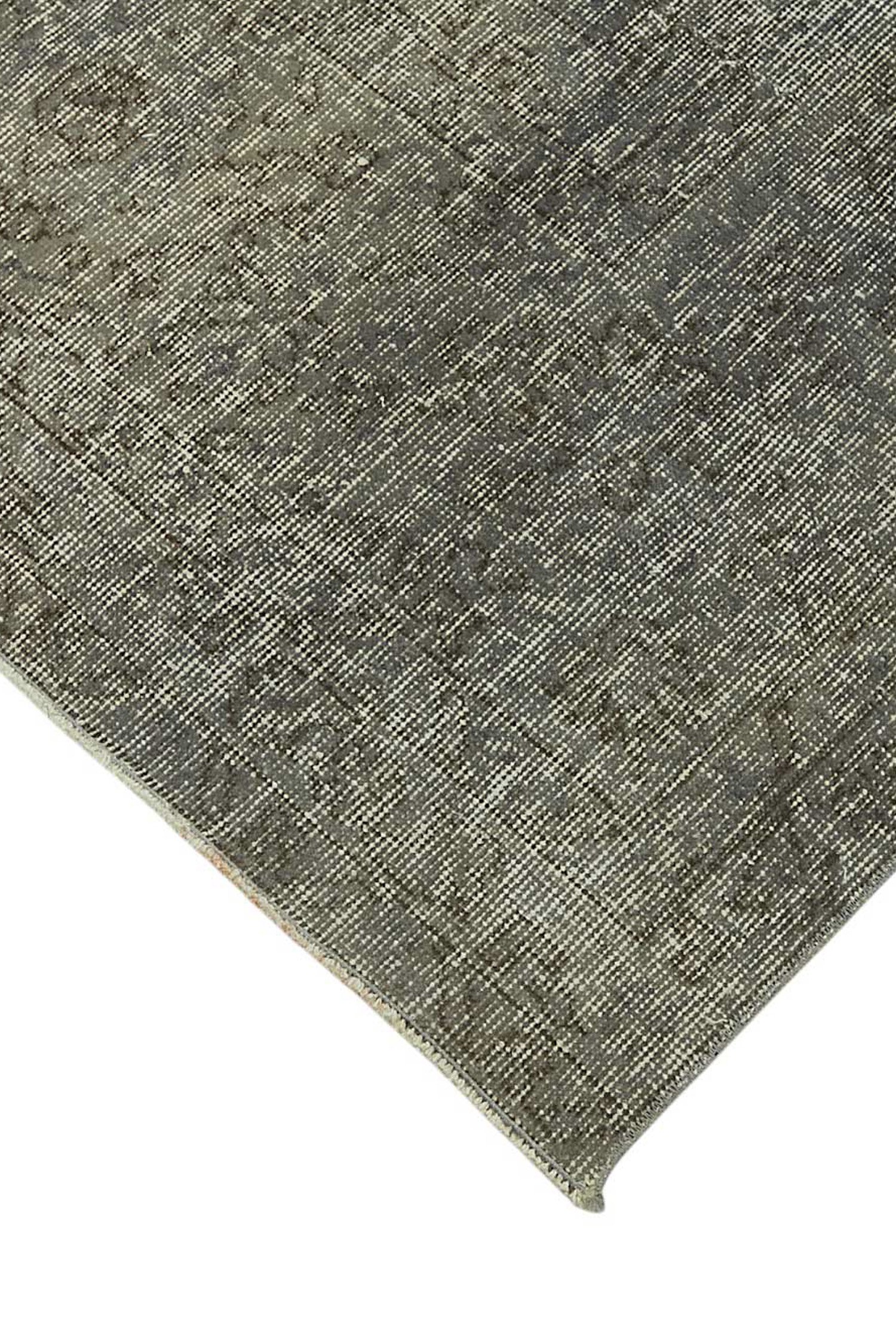
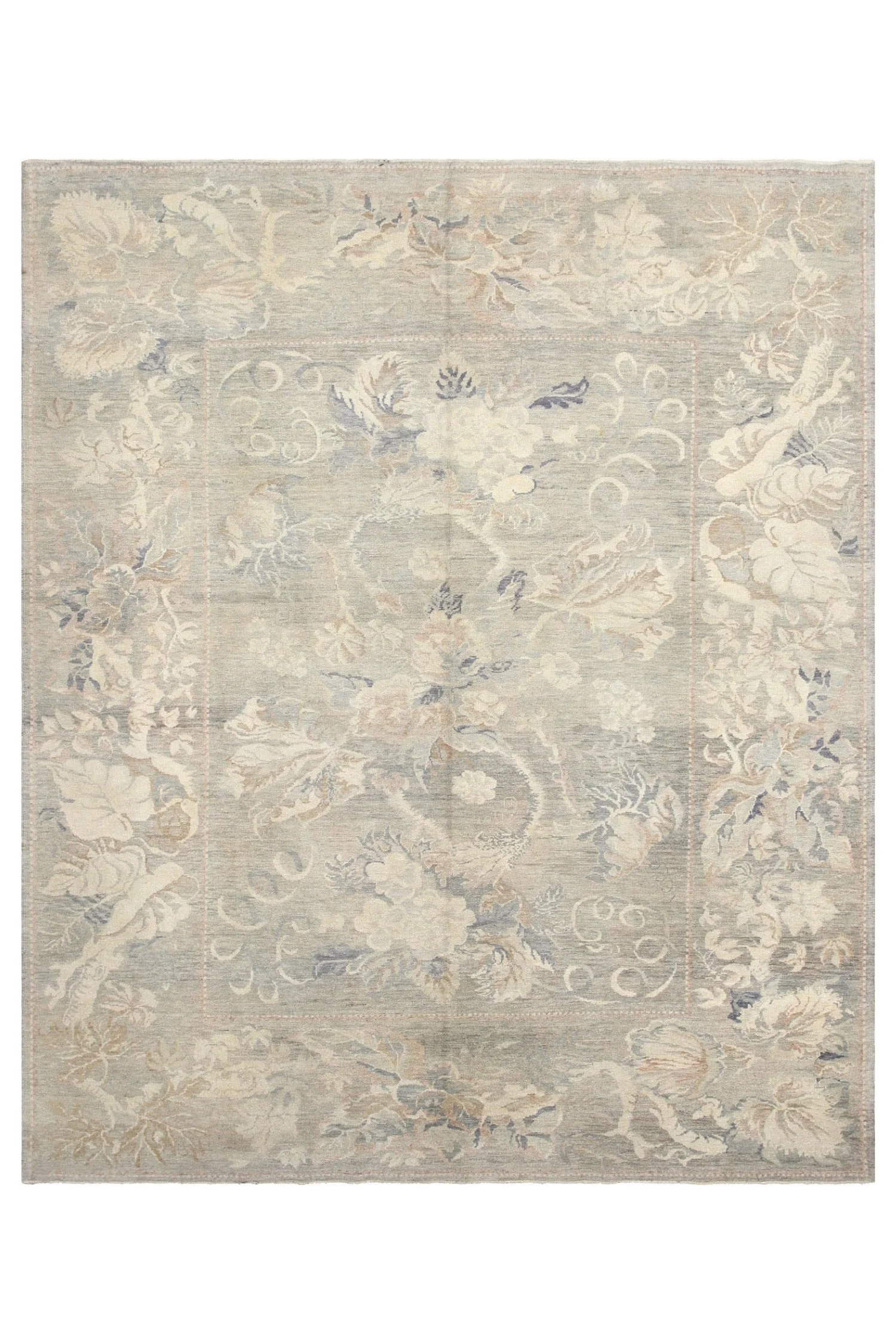
The allover floral pattern draws from Persian influences filtered through Turkish interpretation. Rather than the dense, structured gardens of Isfahan or the geometric precision of Caucasian work, Oushak weavers favored loose, organic arrangements. Blossoms overlap without crowding, vines meander without strict symmetry.
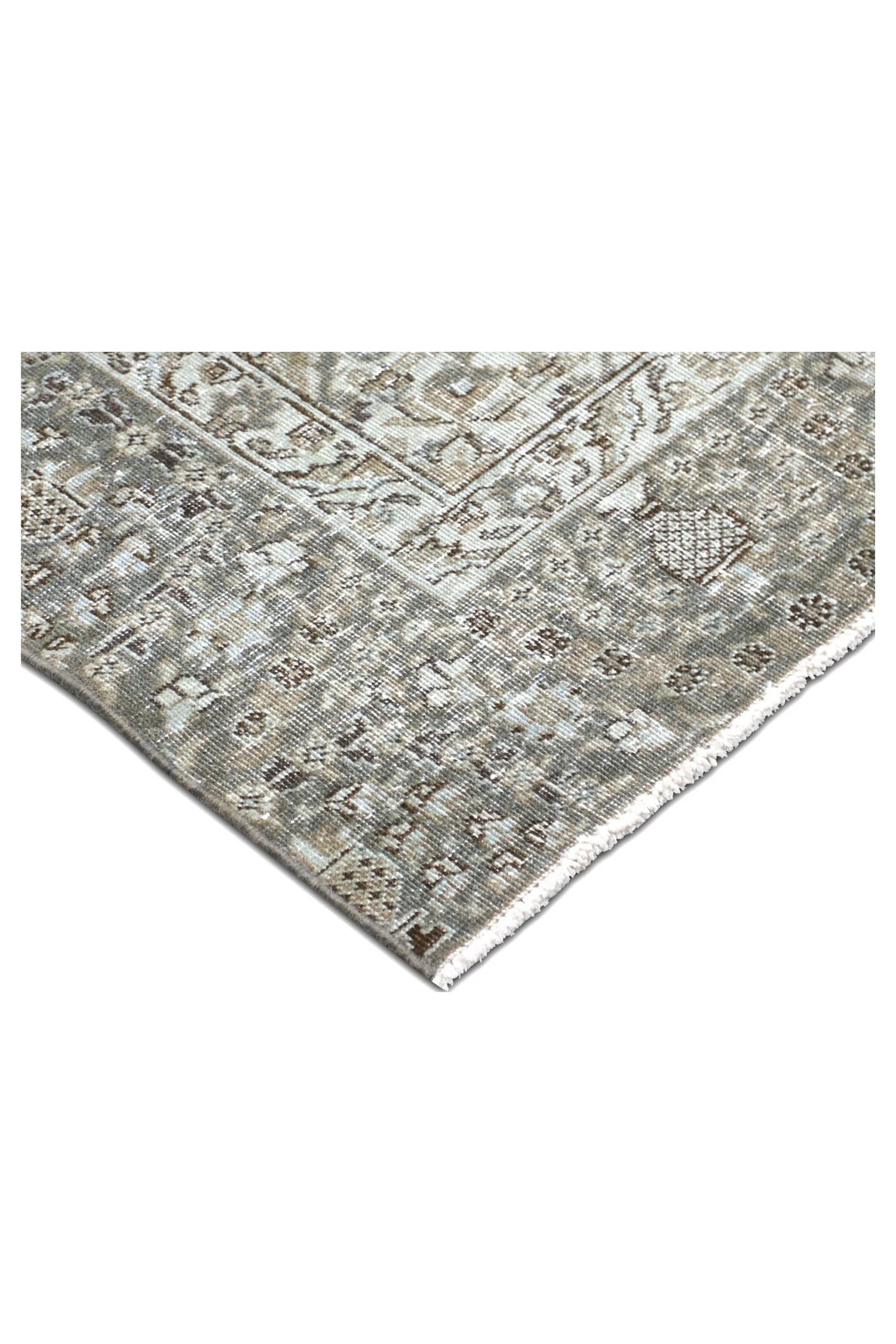
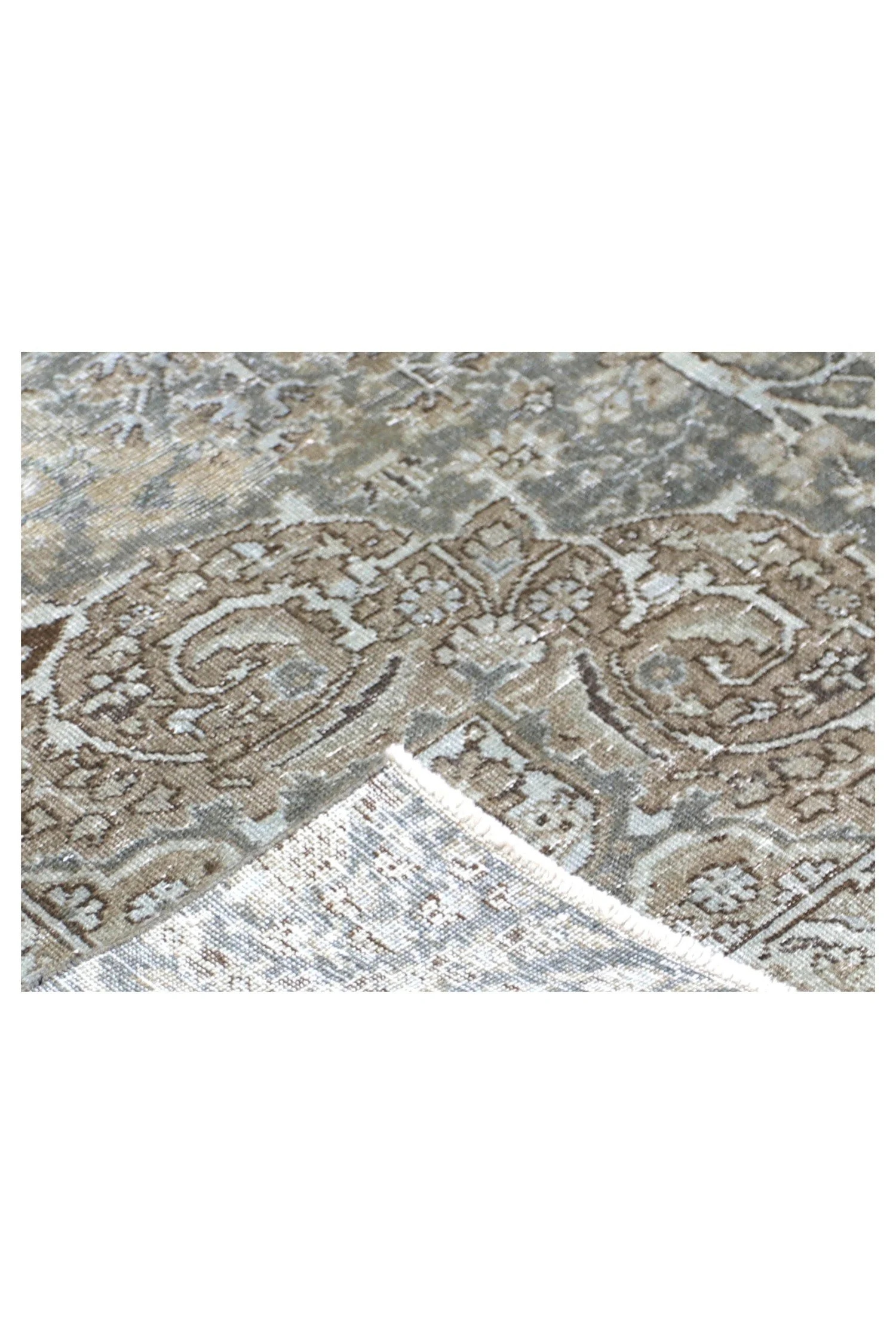
This approach created rugs that function more like textured backdrops than focal points. The pale blue accents prevent monotony without introducing contrast sharp enough to fragment the visual field. It's design that knows when to step back.
Placement
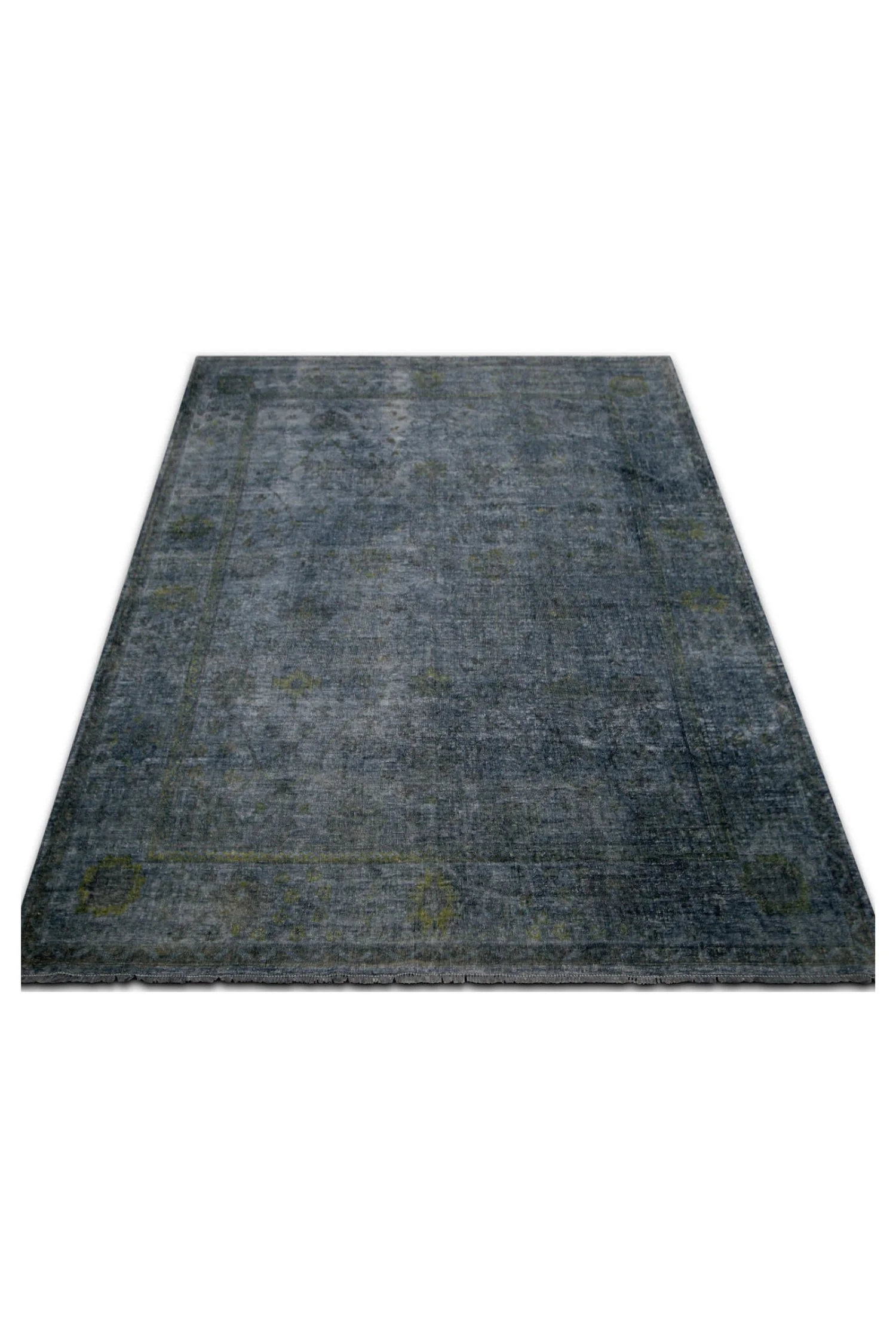
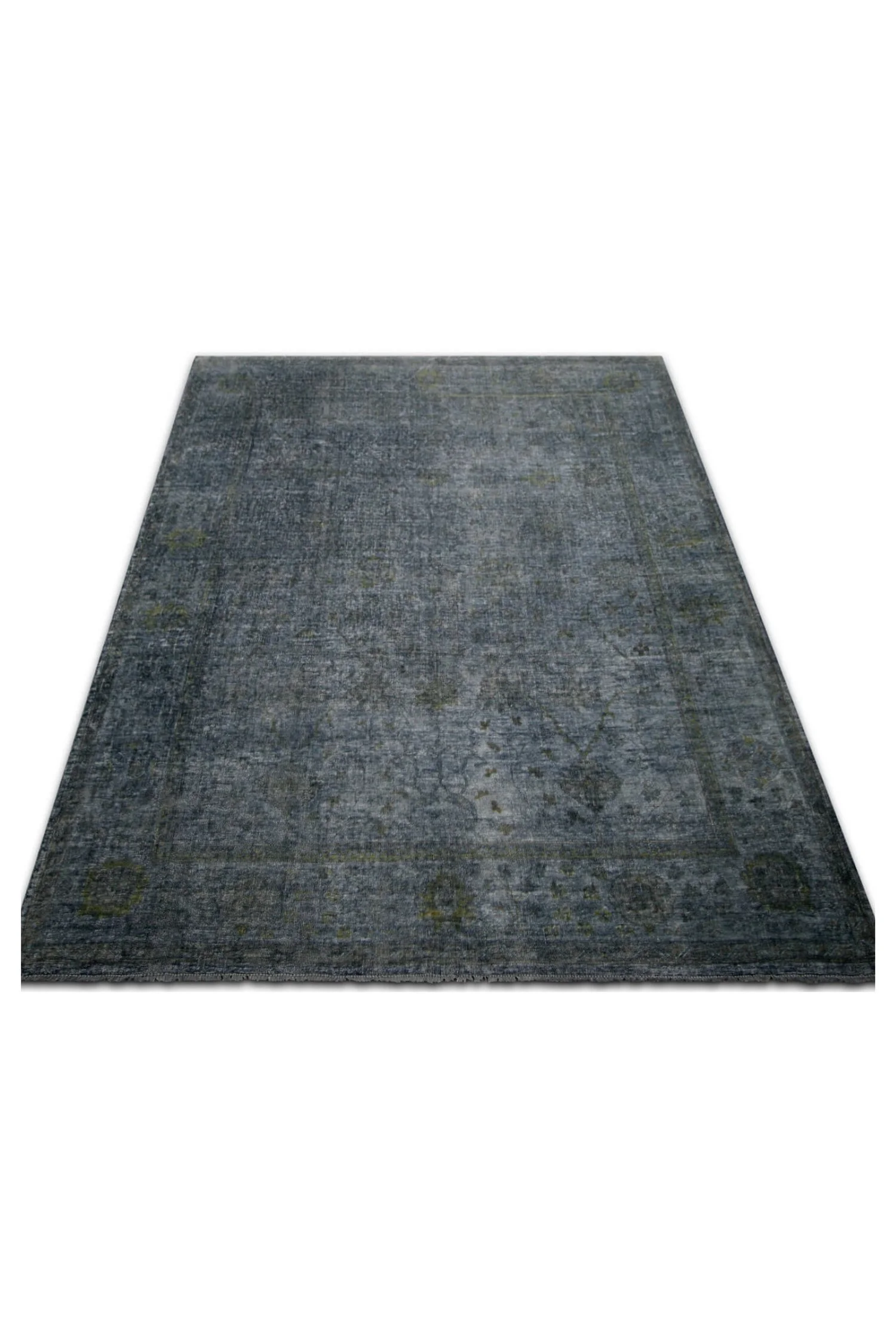
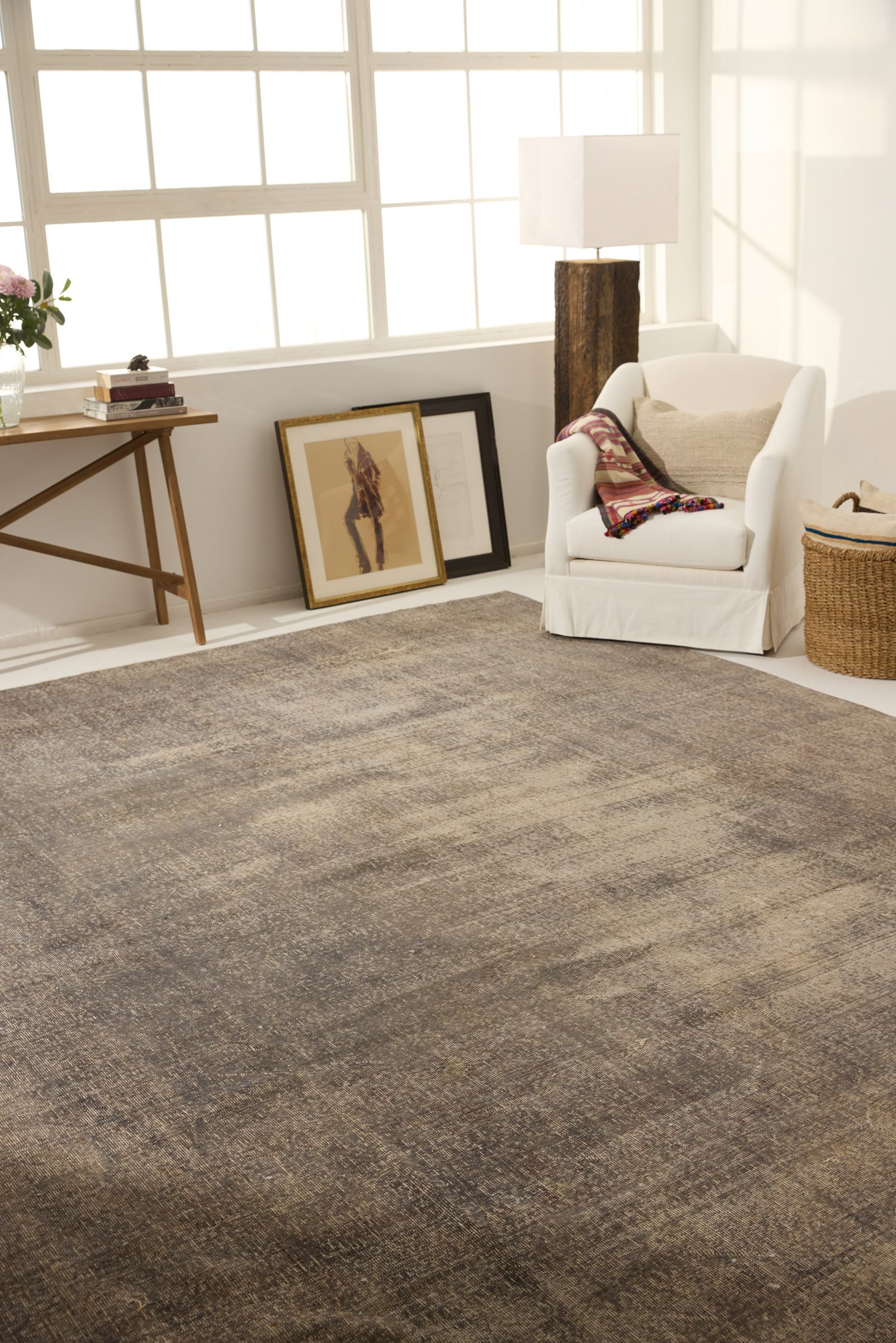
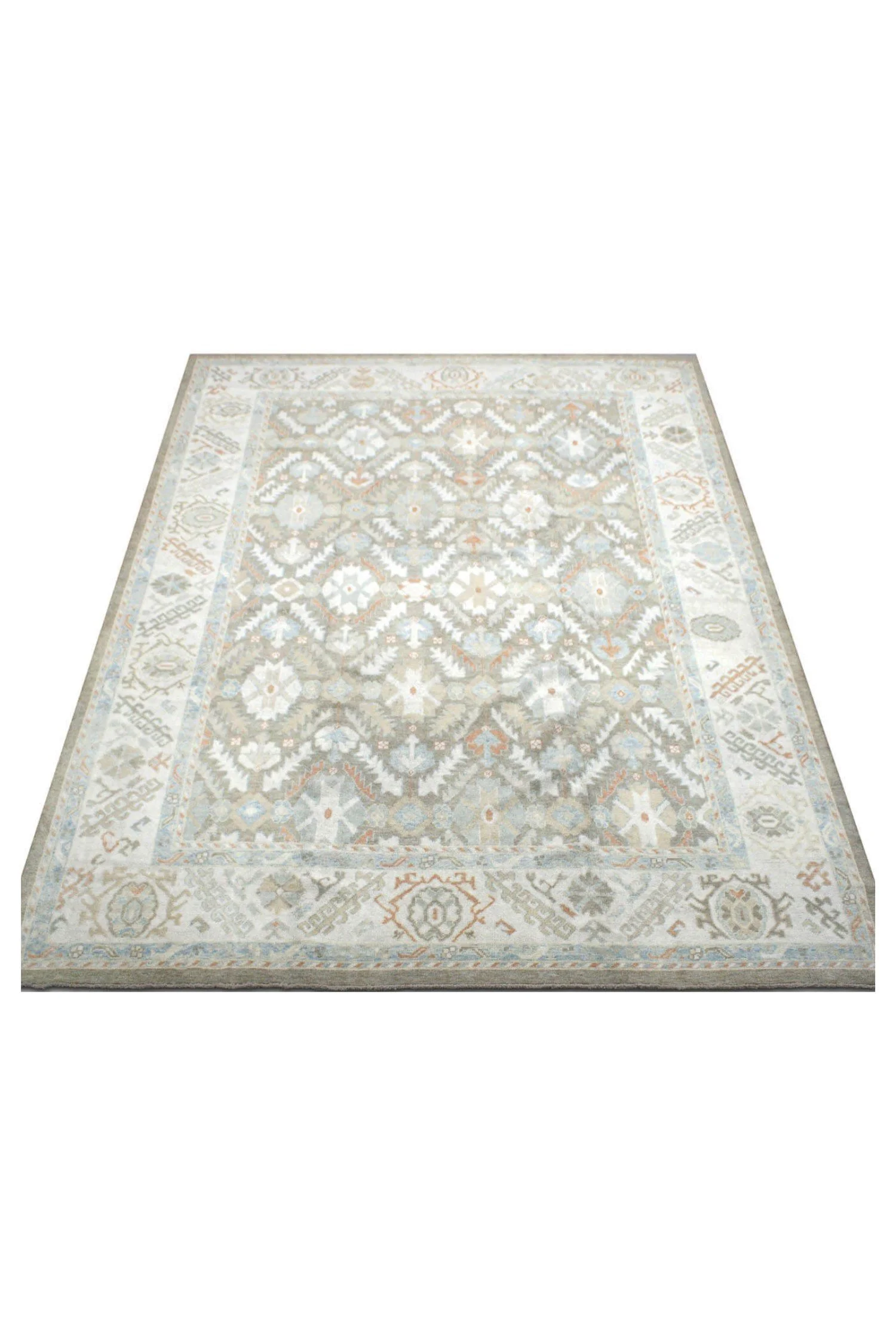
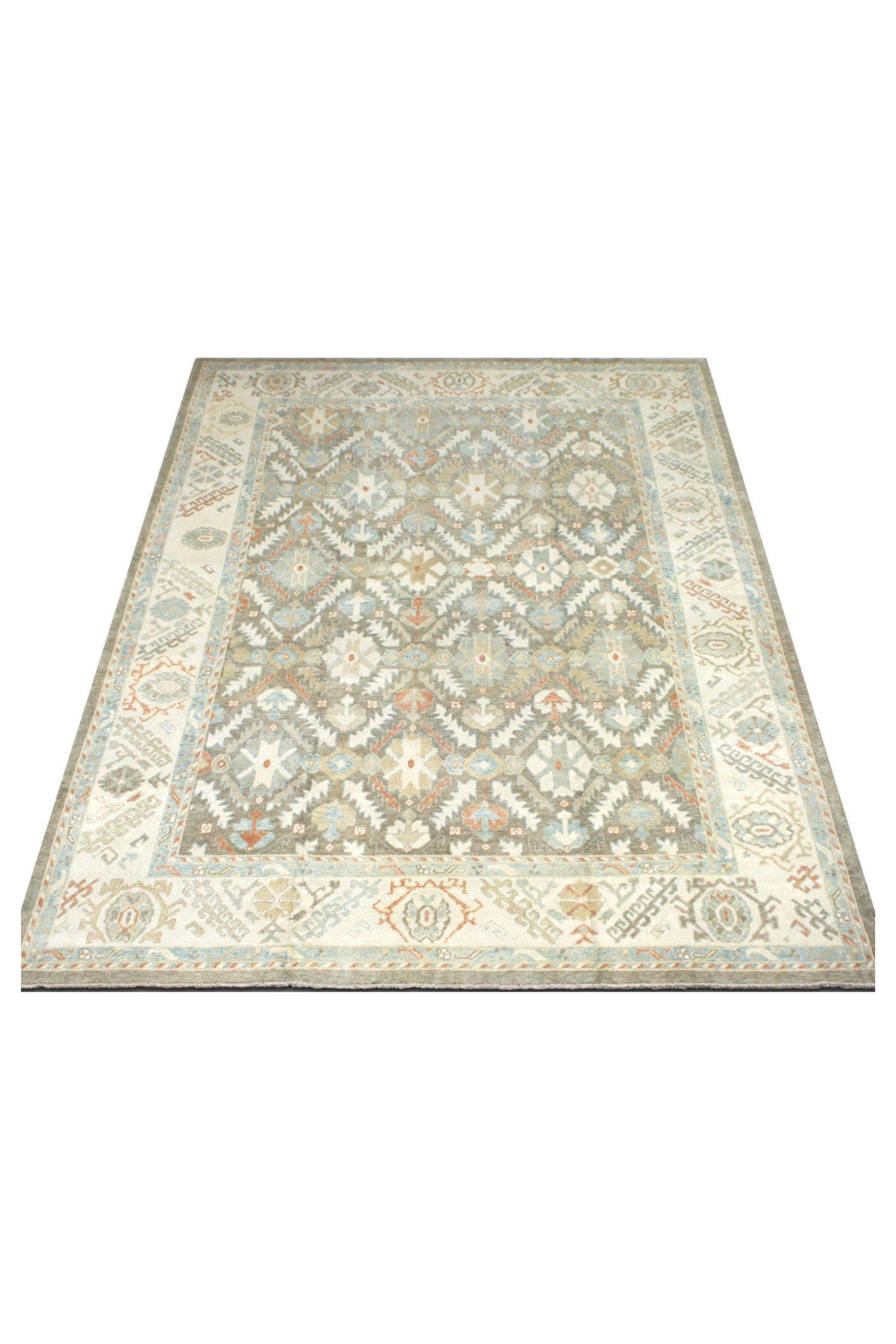
At just over eight by nine and a half feet, this works beautifully in living rooms where furniture groupings need grounding without overwhelming the space. Dining rooms benefit from its neutral sophistication, particularly in settings where the rug needs to support rather than compete with the table and chairs.
The cool gray base pairs naturally with contemporary interiors, while the floral elements provide enough traditional detail to bridge modern and vintage aesthetics. Bedrooms accommodate this size comfortably, creating a soft landing that extends beyond the bed on three sides.
Care Recommendations
To preserve the rug's beauty:
Rotate periodically for even wear
Vacuum regularly using a suction-only setting
Address spills immediately by blotting, never rubbing
Professional cleaning recommended annually
Avoid direct sunlight to maintain color integrity
Gray grounds weren't common in earlier Oushak production, but by the 1950s, they'd become signatures of a particular moment in Turkish weaving.