 Image 1 of 6
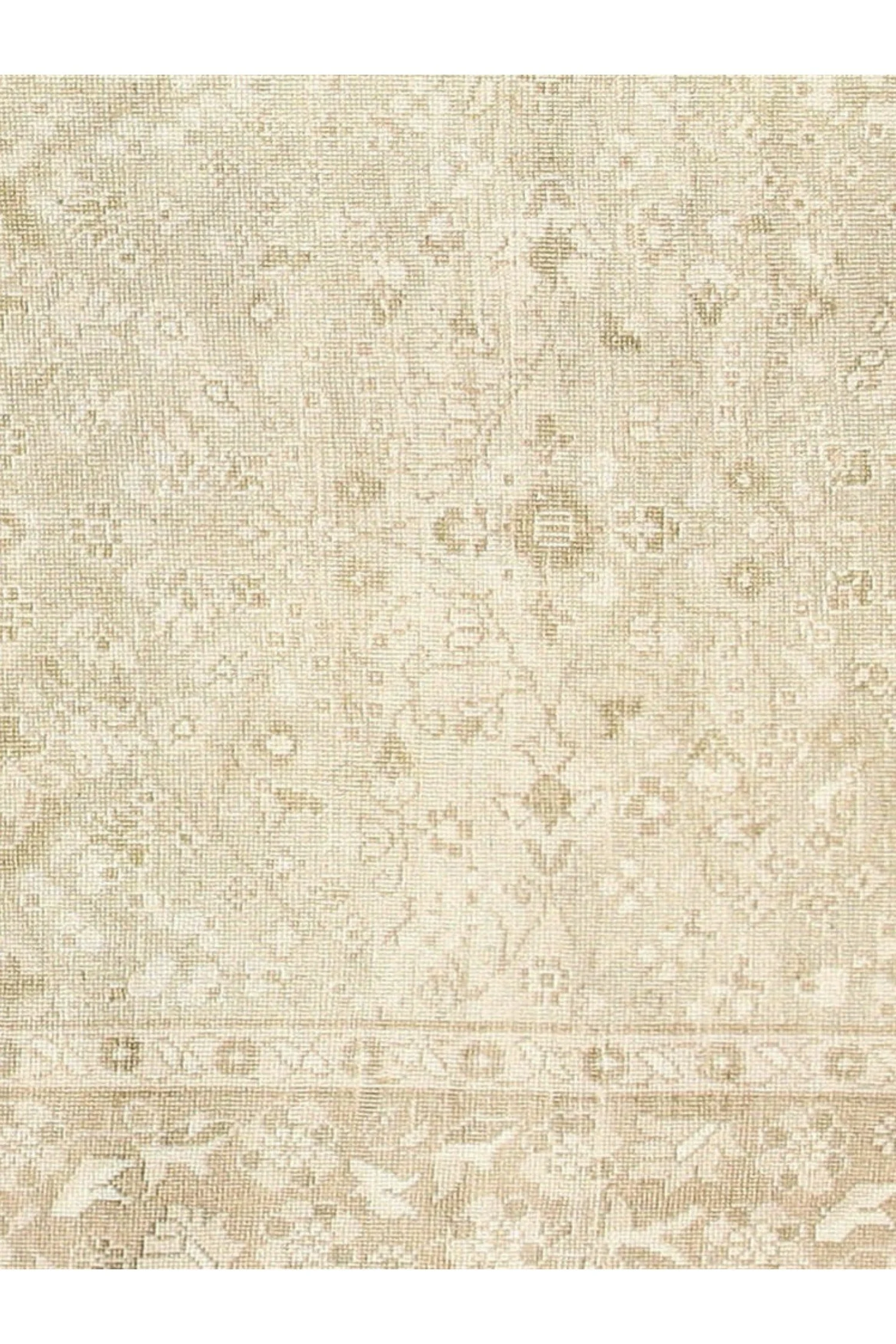 Image 2 of 6
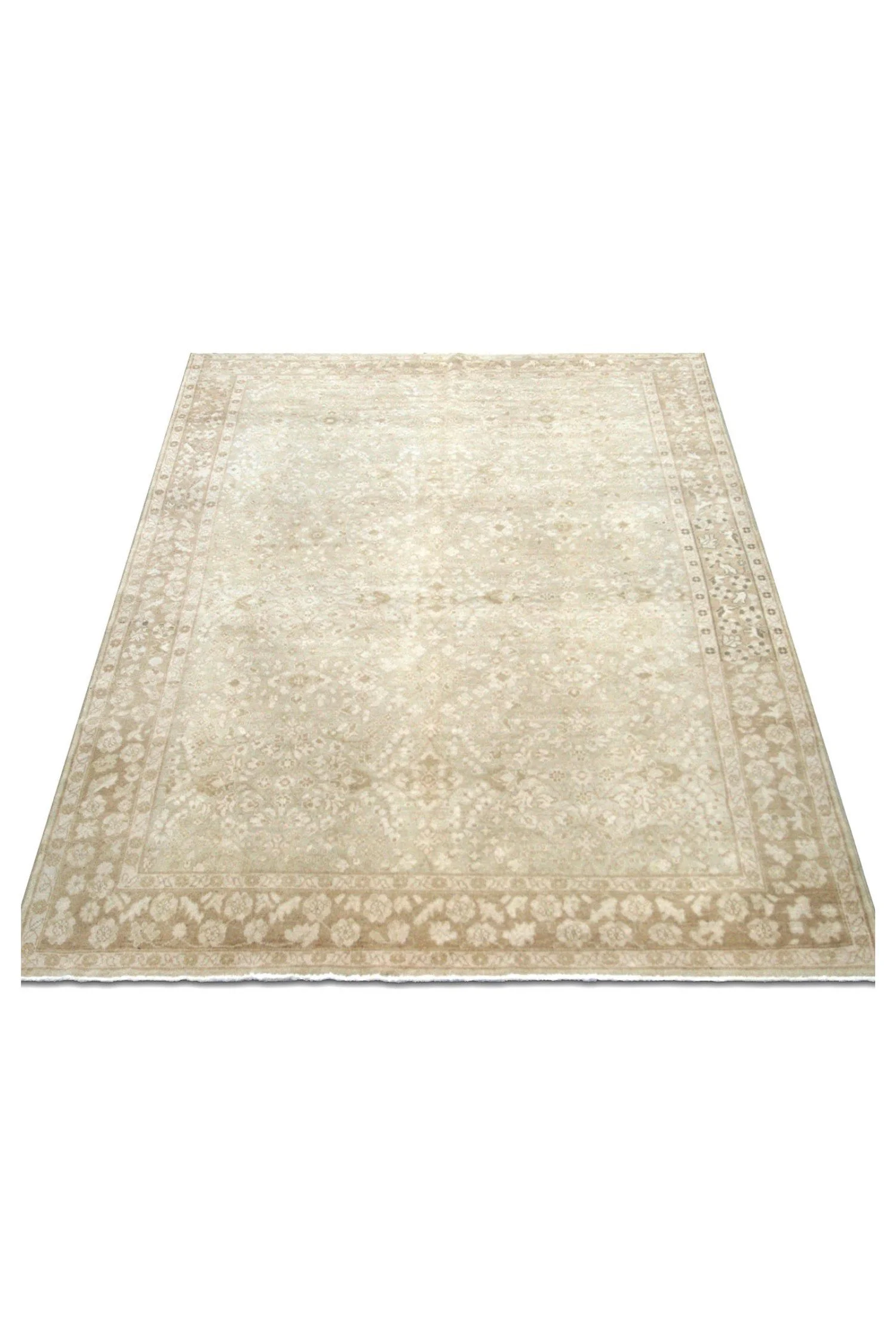 Image 3 of 6
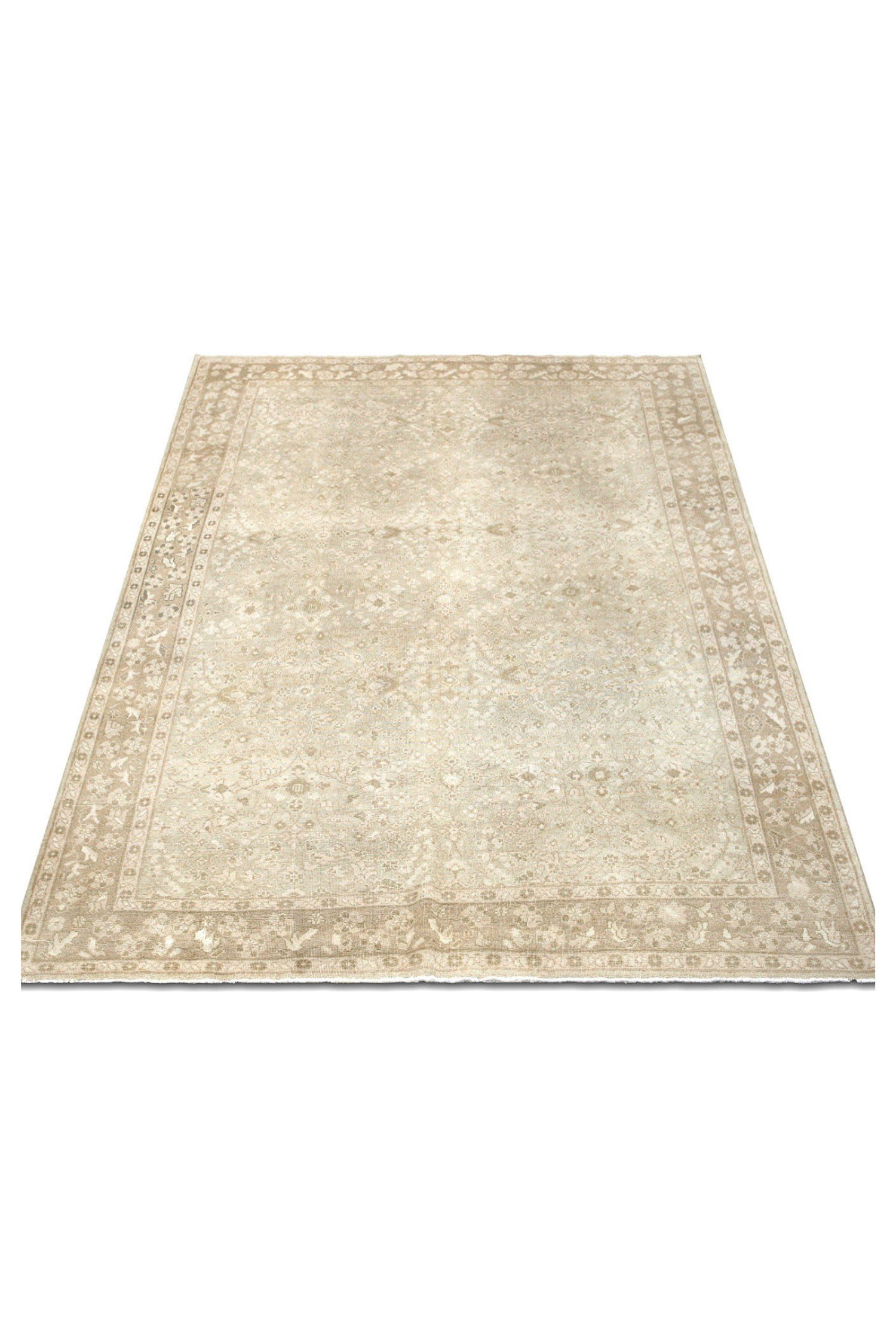 Image 4 of 6
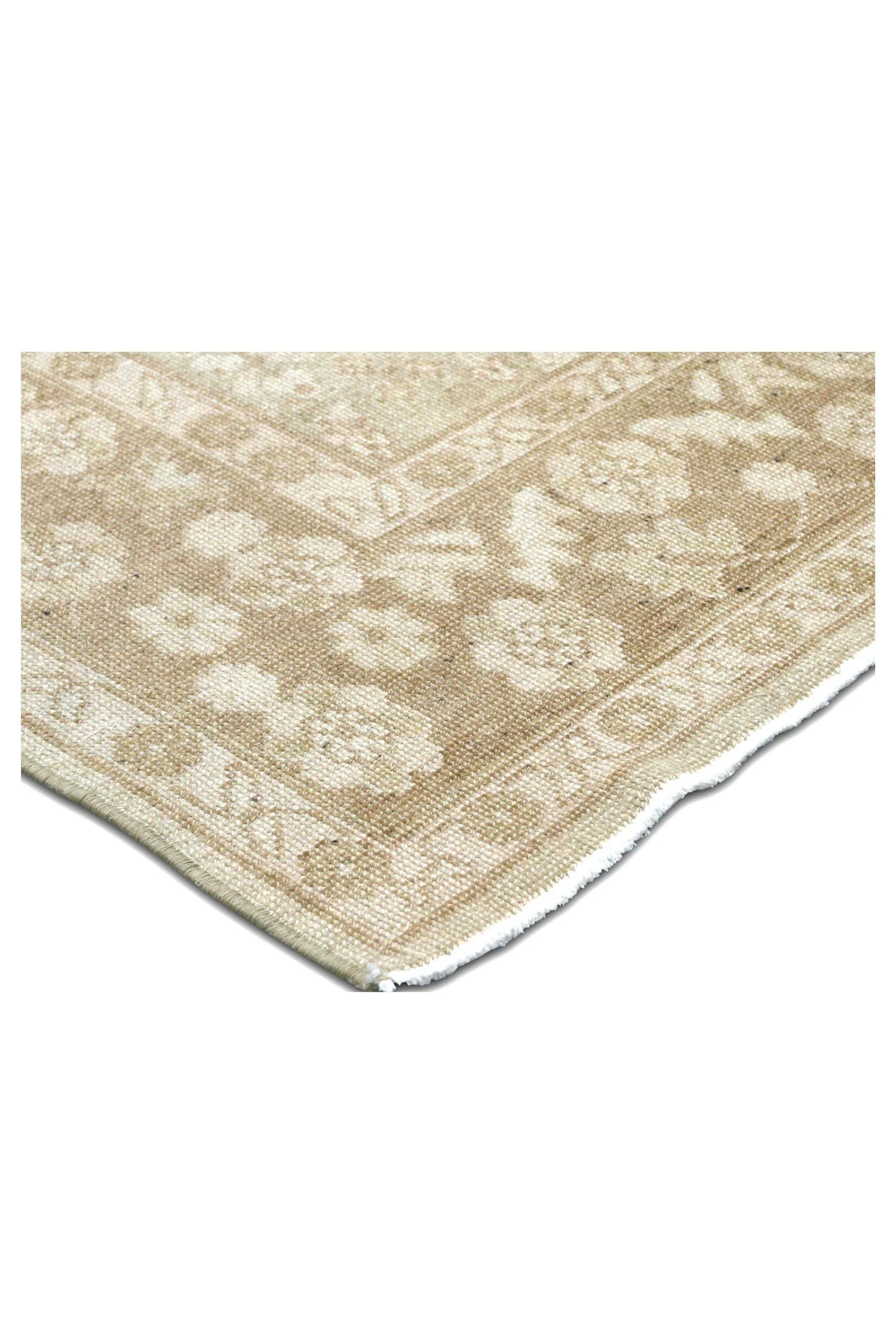 Image 5 of 6
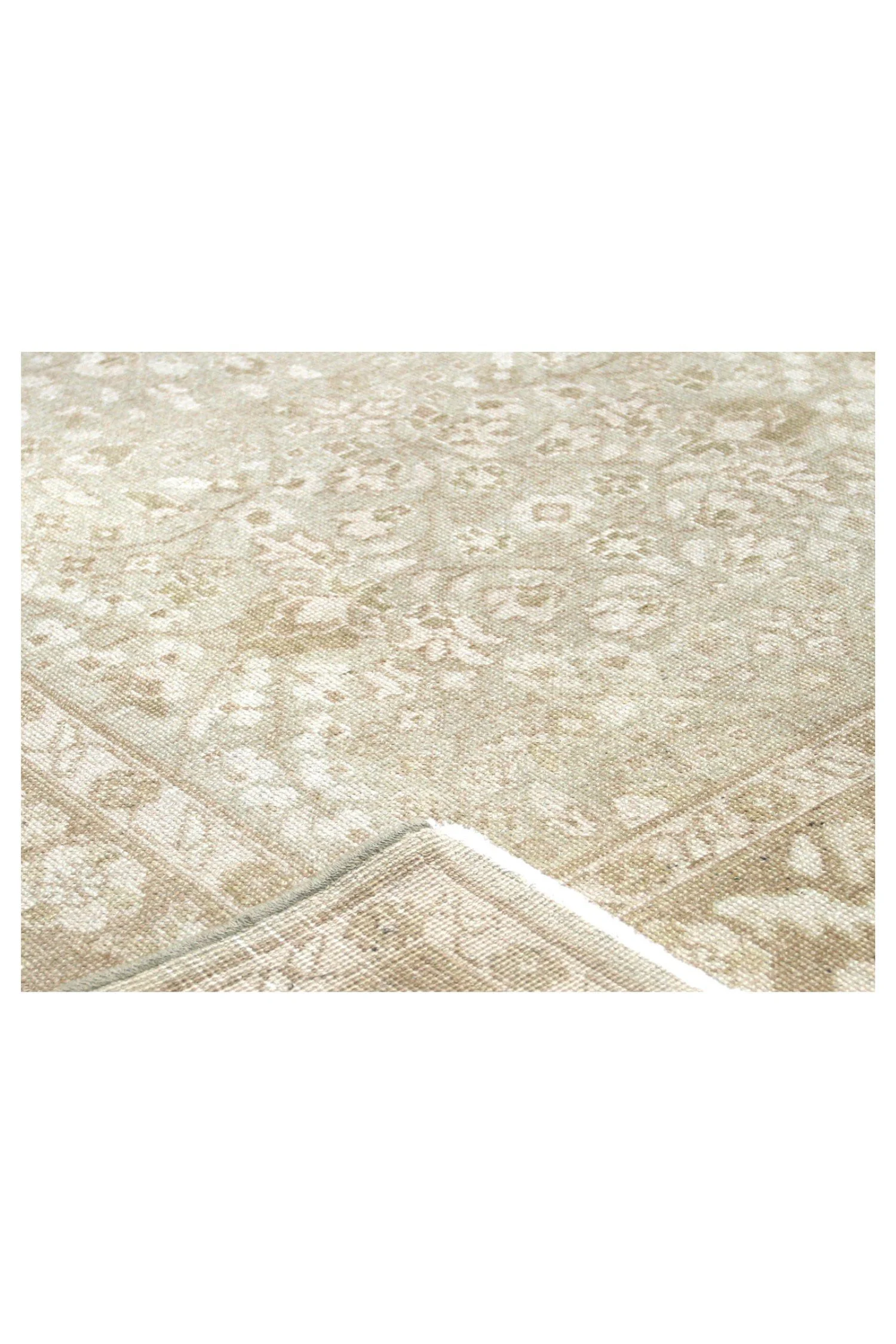 Image 6 of 6
Heritage and Craftsmanship
Mid-century Oushak production favored neutral palettes that worked in diverse interior settings. By the 1950s, workshops had refined techniques for creating rugs with subtle tonal variations, using natural wool colors as the foundation and adding minimal dye where needed.
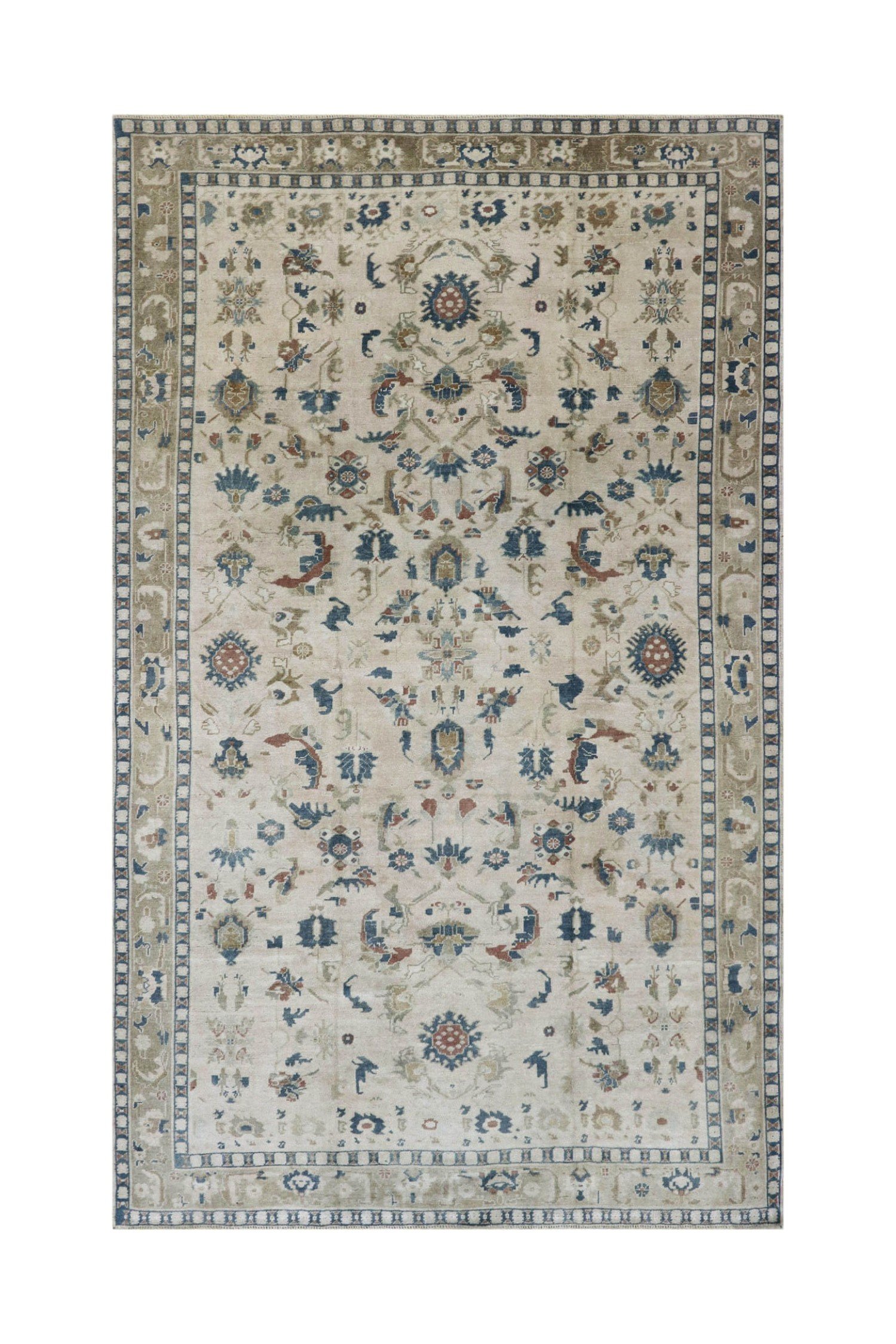
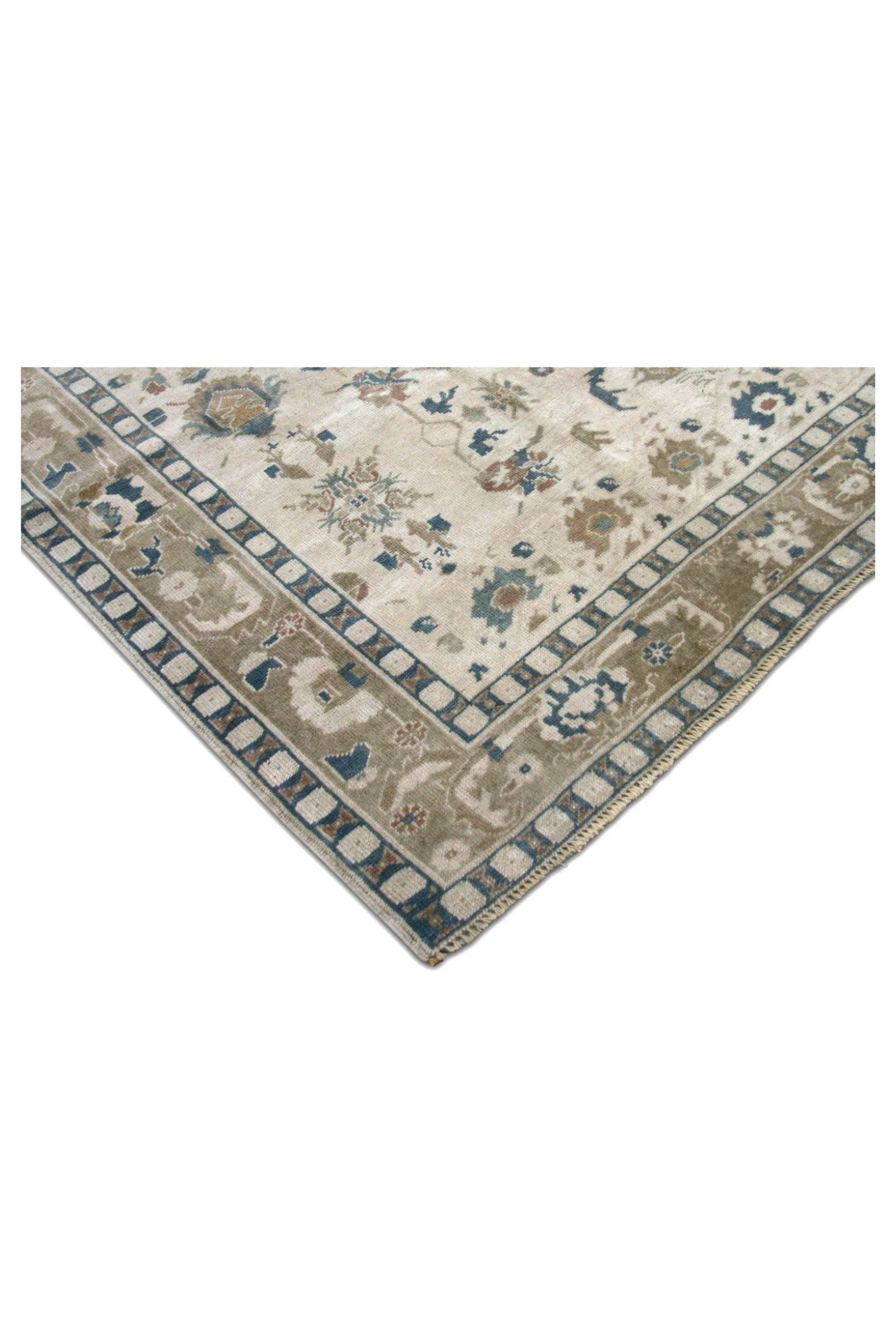
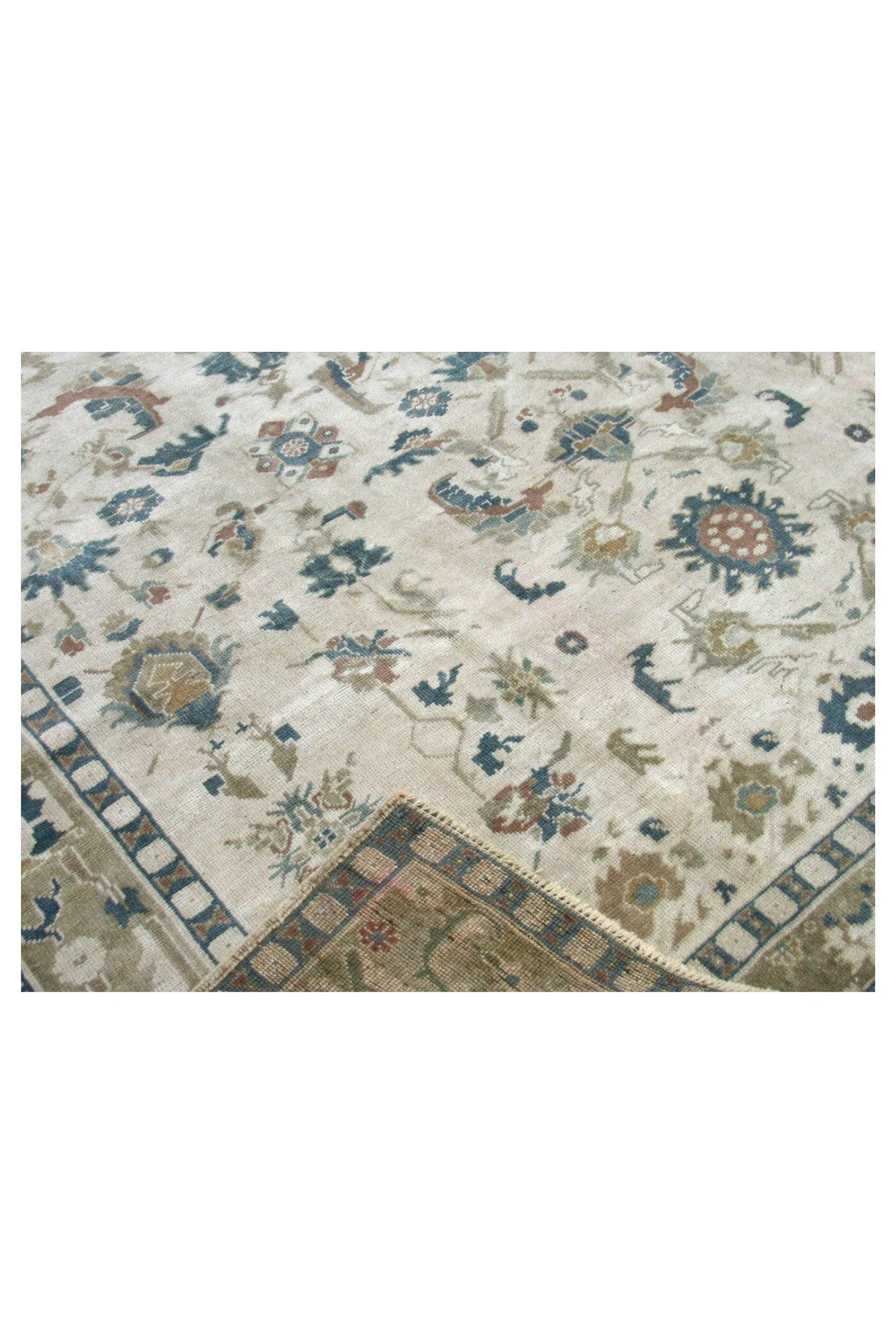
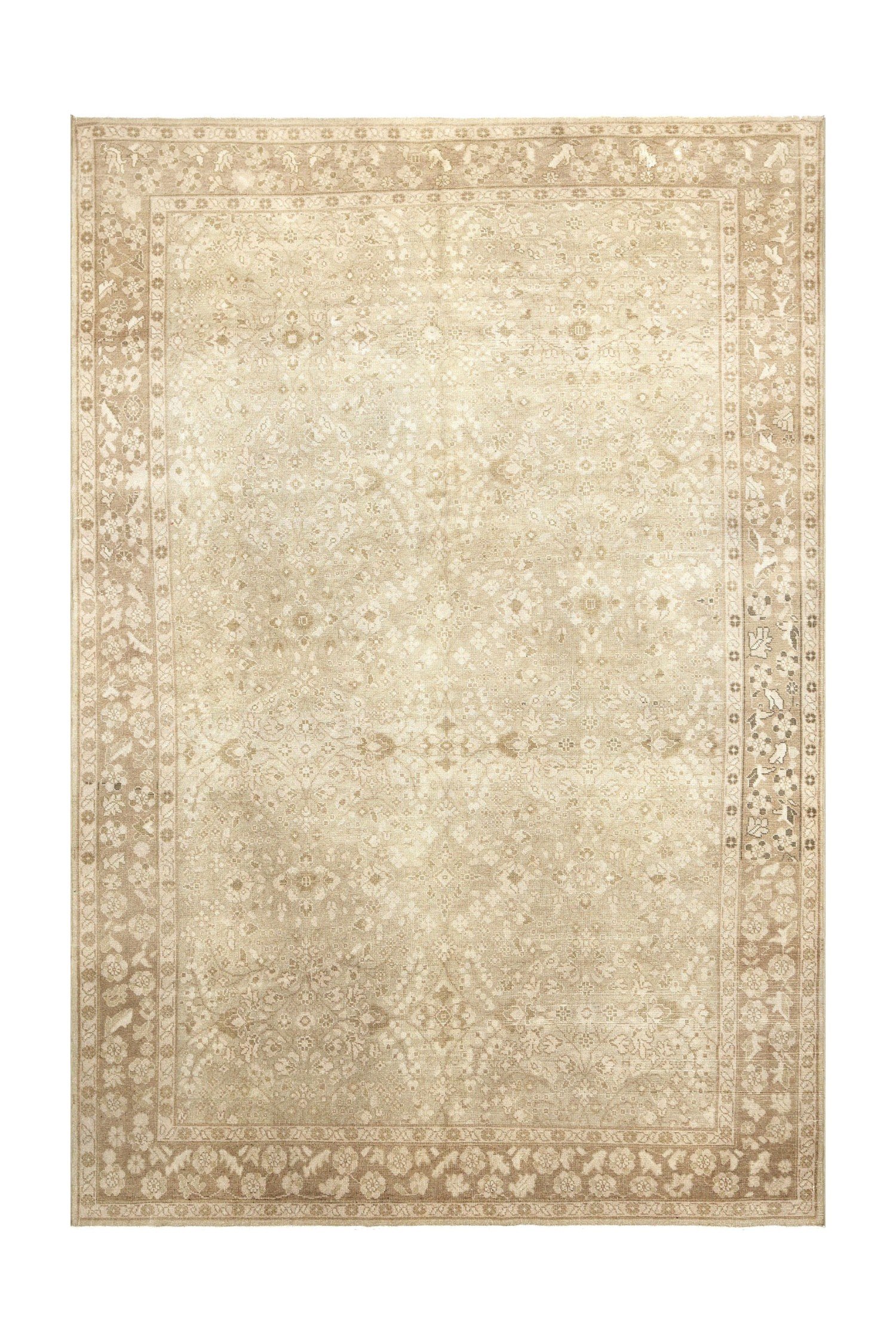
Weavers working with light grounds faced specific challenges. Any inconsistency in wool quality or tension became visible in the finished piece. The even appearance seen here required careful material selection and a consistent weaving technique maintained across the entire surface.
These neutral Oushaks found ready markets in postwar Europe and America, where they suited the cleaner lines and lighter palettes of mid-century modern interiors. The rugs offered traditional craft in forms that didn't compete with contemporary furnishings.
Design Elements
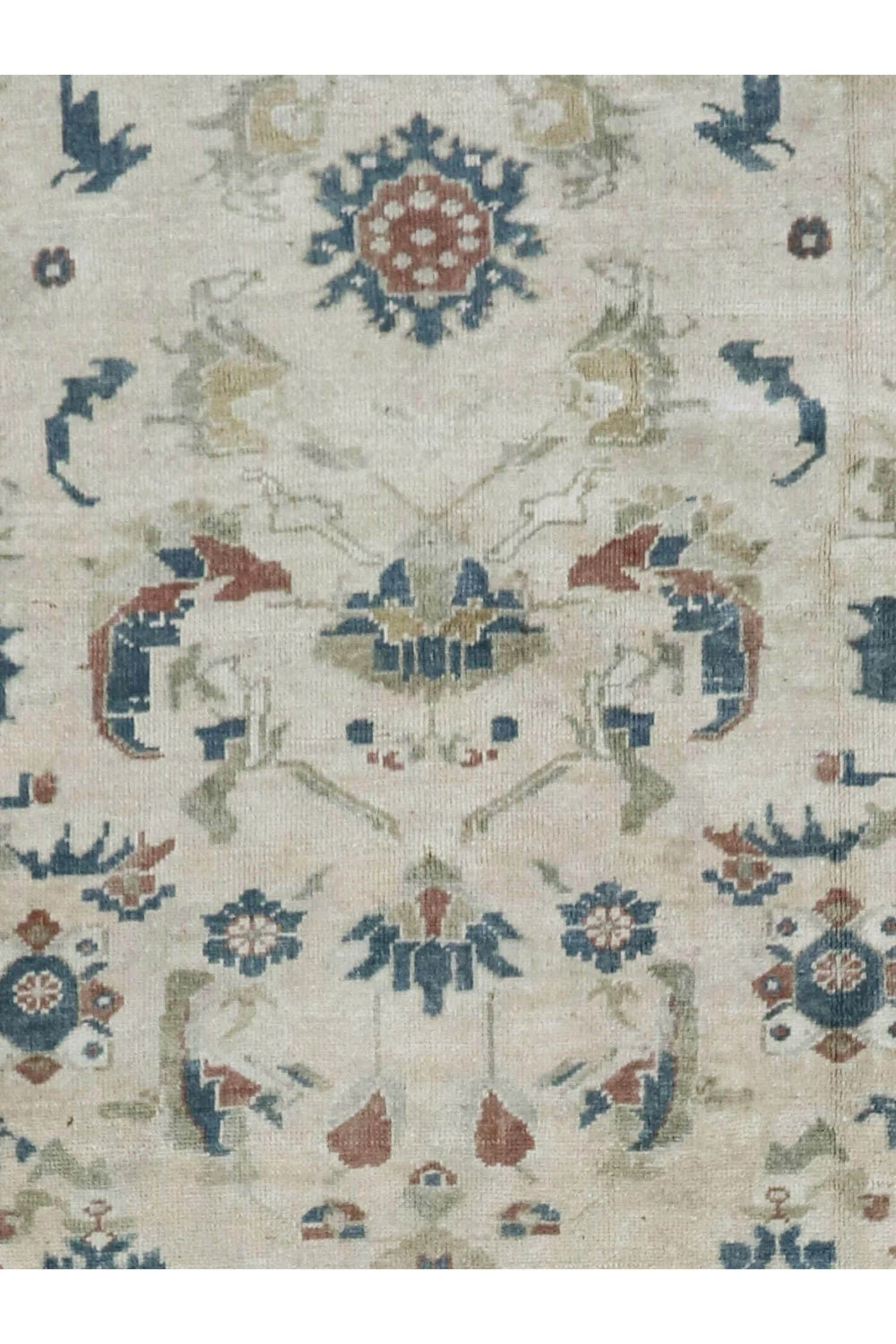
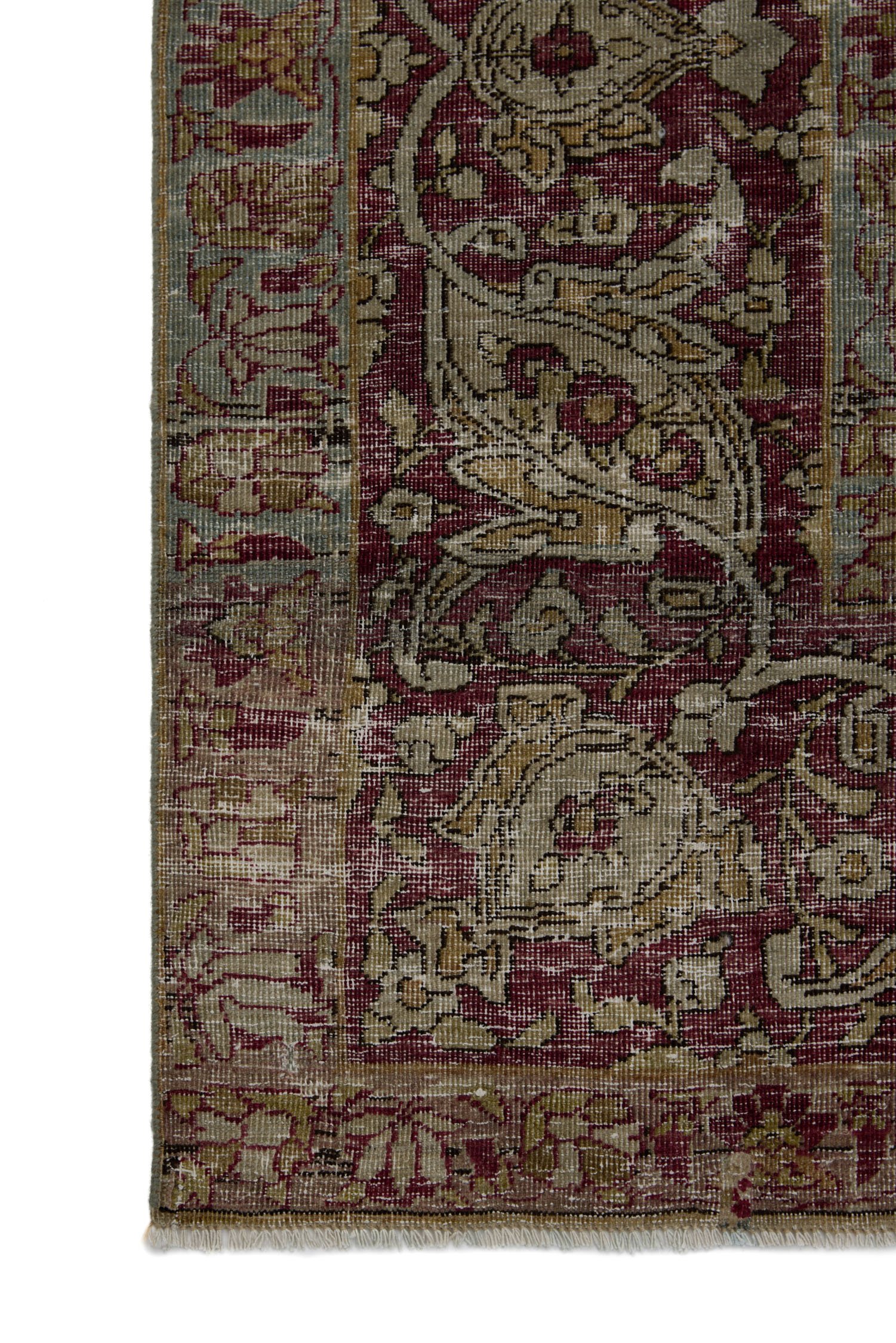
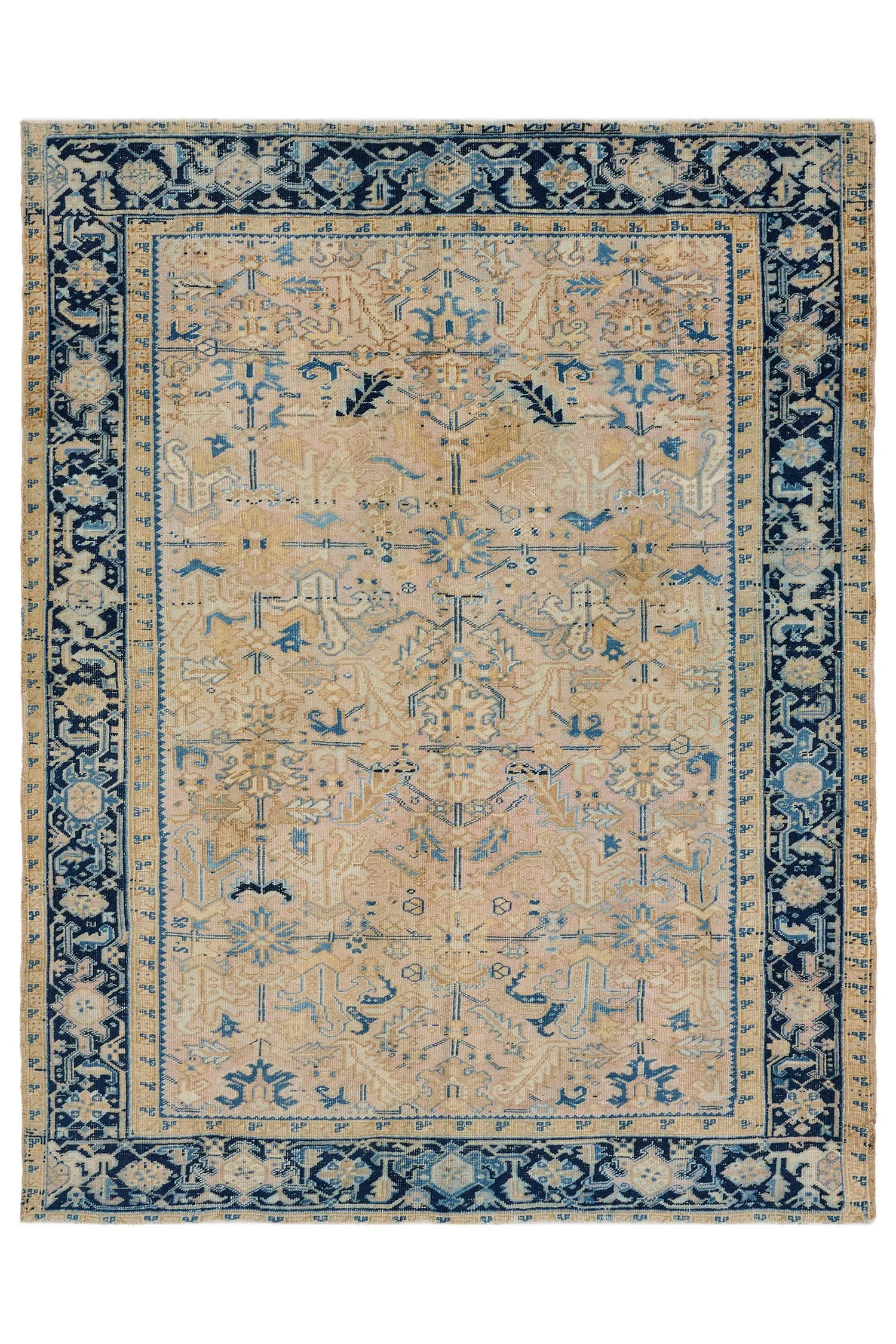
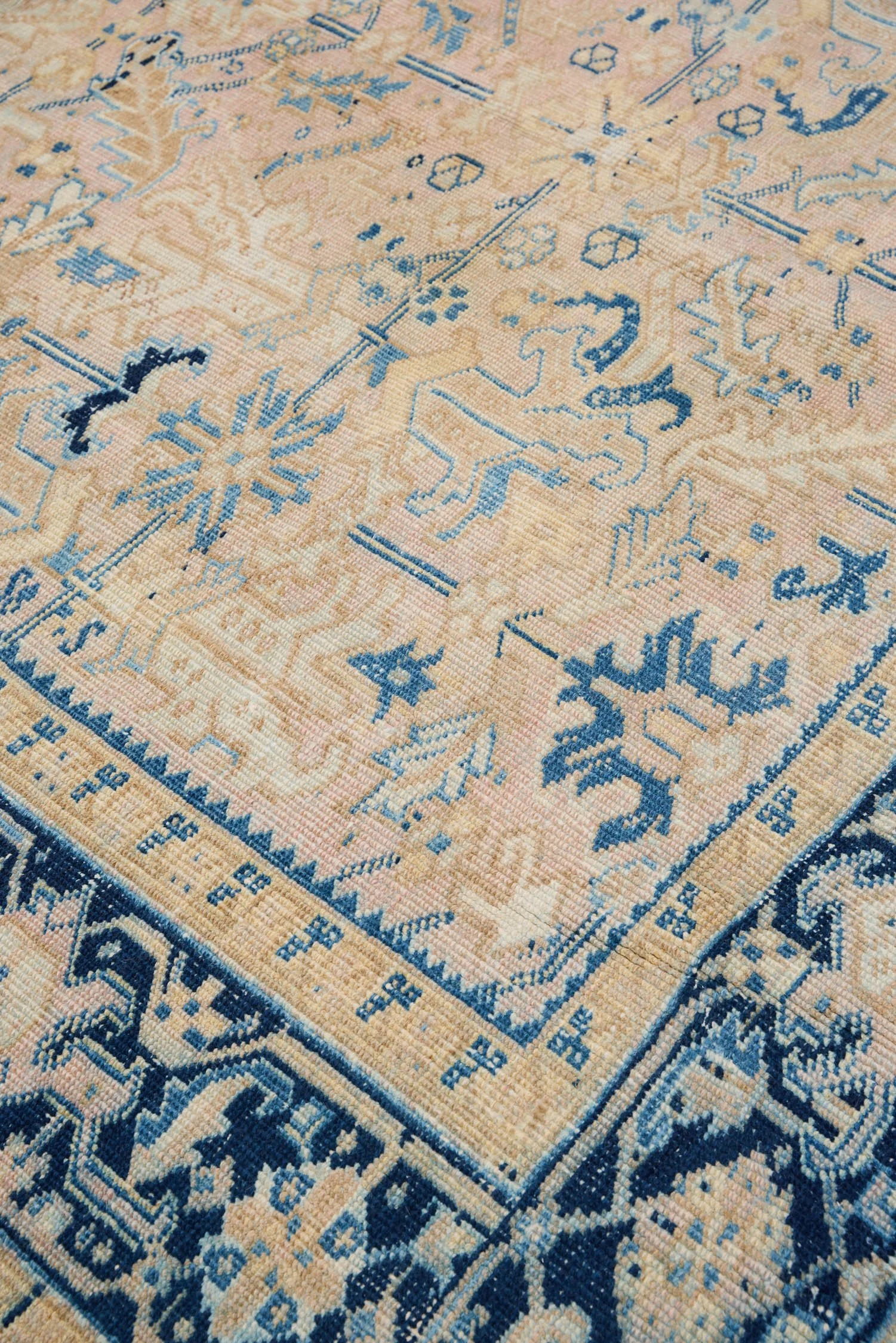
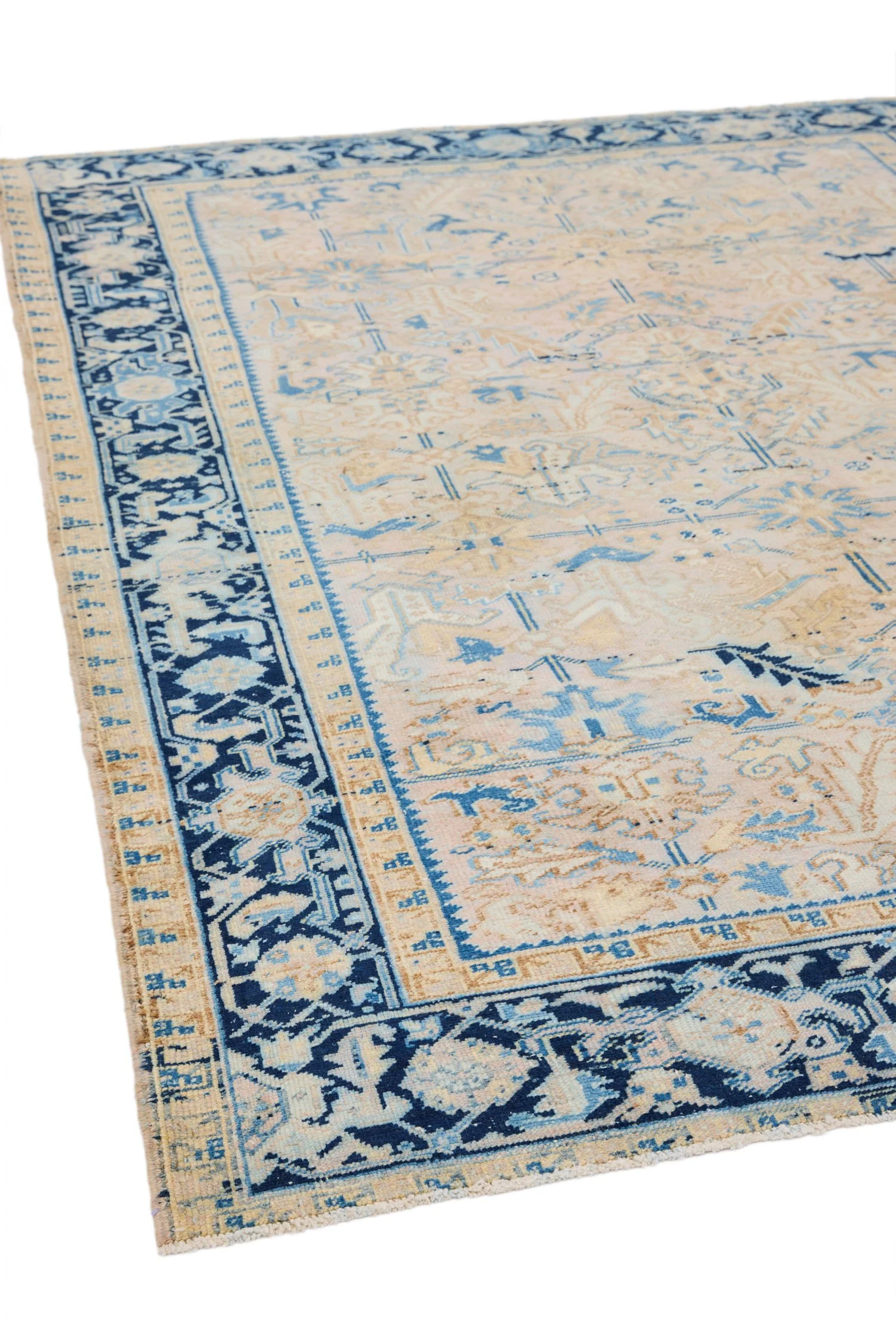
The allover pattern distributes finely scaled motifs across the field with even spacing. Floral forms and geometric elements appear in low relief, their edges soft enough that they blend into the tonal variations of the ground. This creates continuity rather than visual breaks.
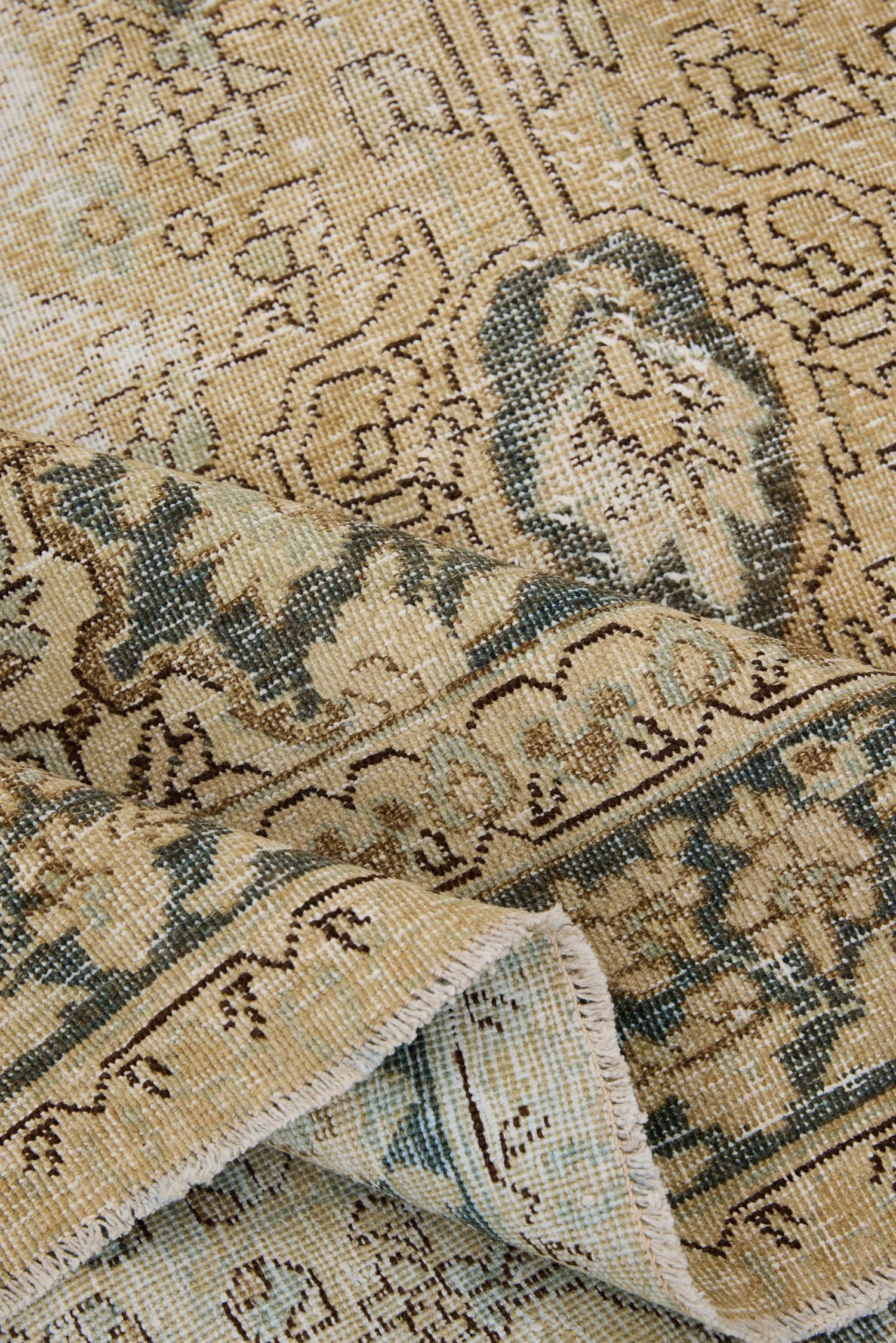
The pattern's fine scale means it reads differently depending on viewing distance. Up close, individual motifs become distinct. From across a room, the design registers as textured surface rather than discrete elements.
The narrow border frames the composition with a decorative sequence that echoes the field's vocabulary. Its slightly deeper tone provides just enough contrast to define the edges without creating a hard visual break.
Placement
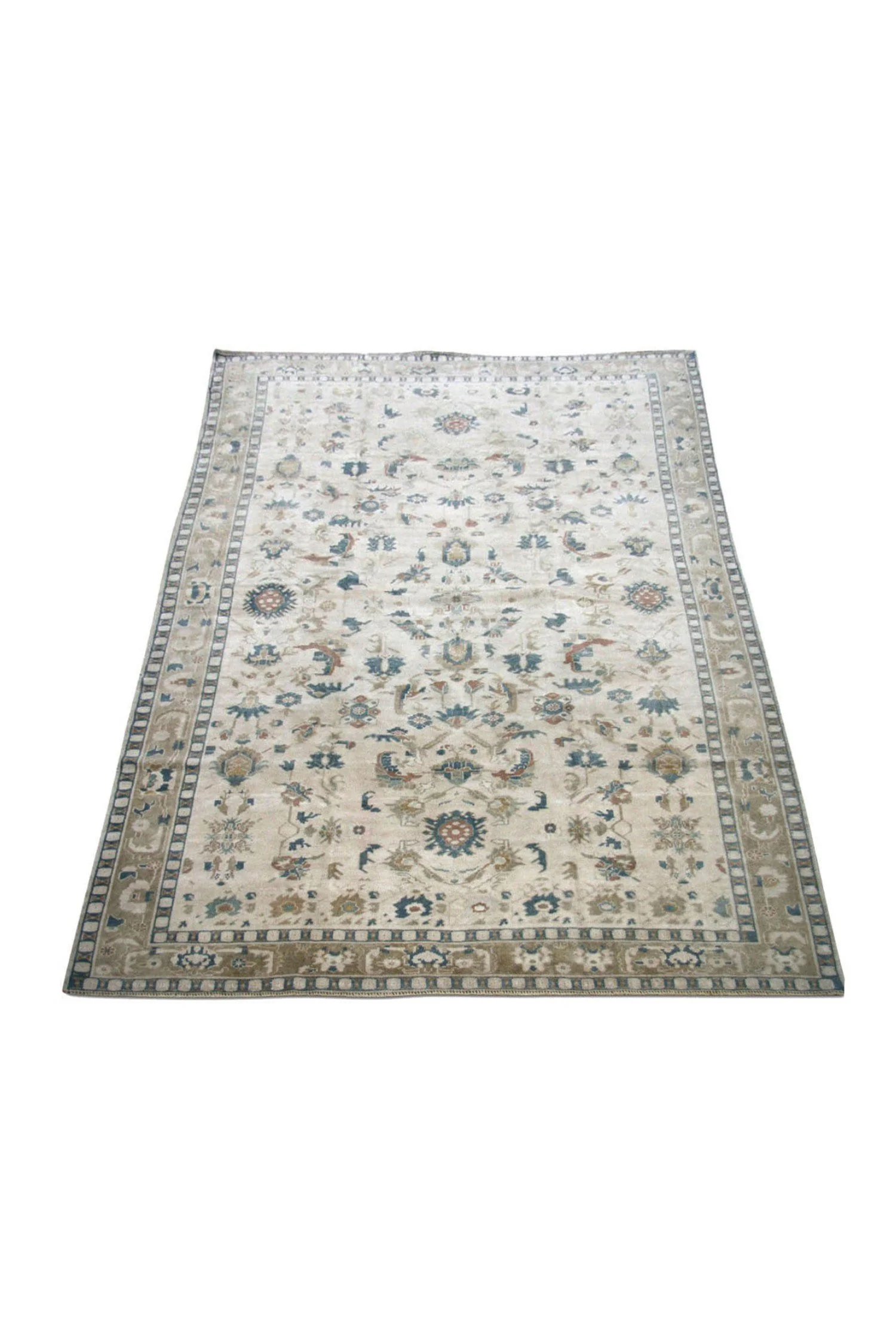
At 6'6" x 9'8", this fits comfortably in living rooms where you want to anchor a seating area without overwhelming the space. Dining rooms work well with this size, particularly under tables that seat four to six. Bedrooms can use it at the foot of the bed or as a foundation that extends beyond the bed frame on three sides.
The light neutral palette functions as a foundational element in both traditional and contemporary interiors. The tonal quality suits minimalist spaces where you want warmth and texture without pattern that competes with furnishings. The ivory and sand tones also work in layered settings where the rug needs to complement other textiles and materials.
Care Recommendations
To preserve the rug's beauty:
Rotate periodically for even wear
Vacuum regularly using a suction-only setting
Address spills immediately by blotting, never rubbing
Professional cleaning recommended annually
Avoid direct sunlight to maintain color integrity
Light grounds show everything, which made weaving them a test of consistent skill.