 Image 1 of 5
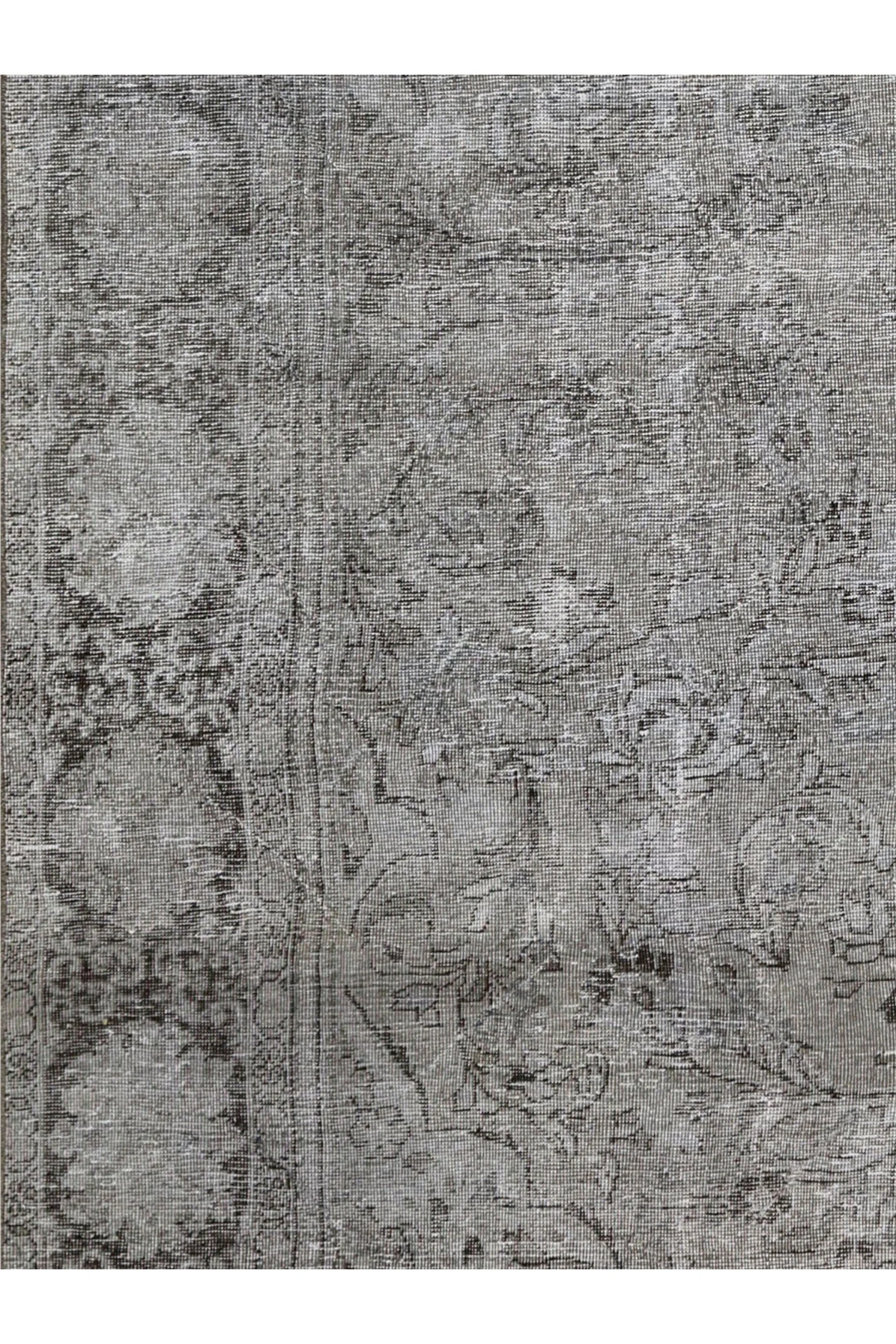 Image 2 of 5
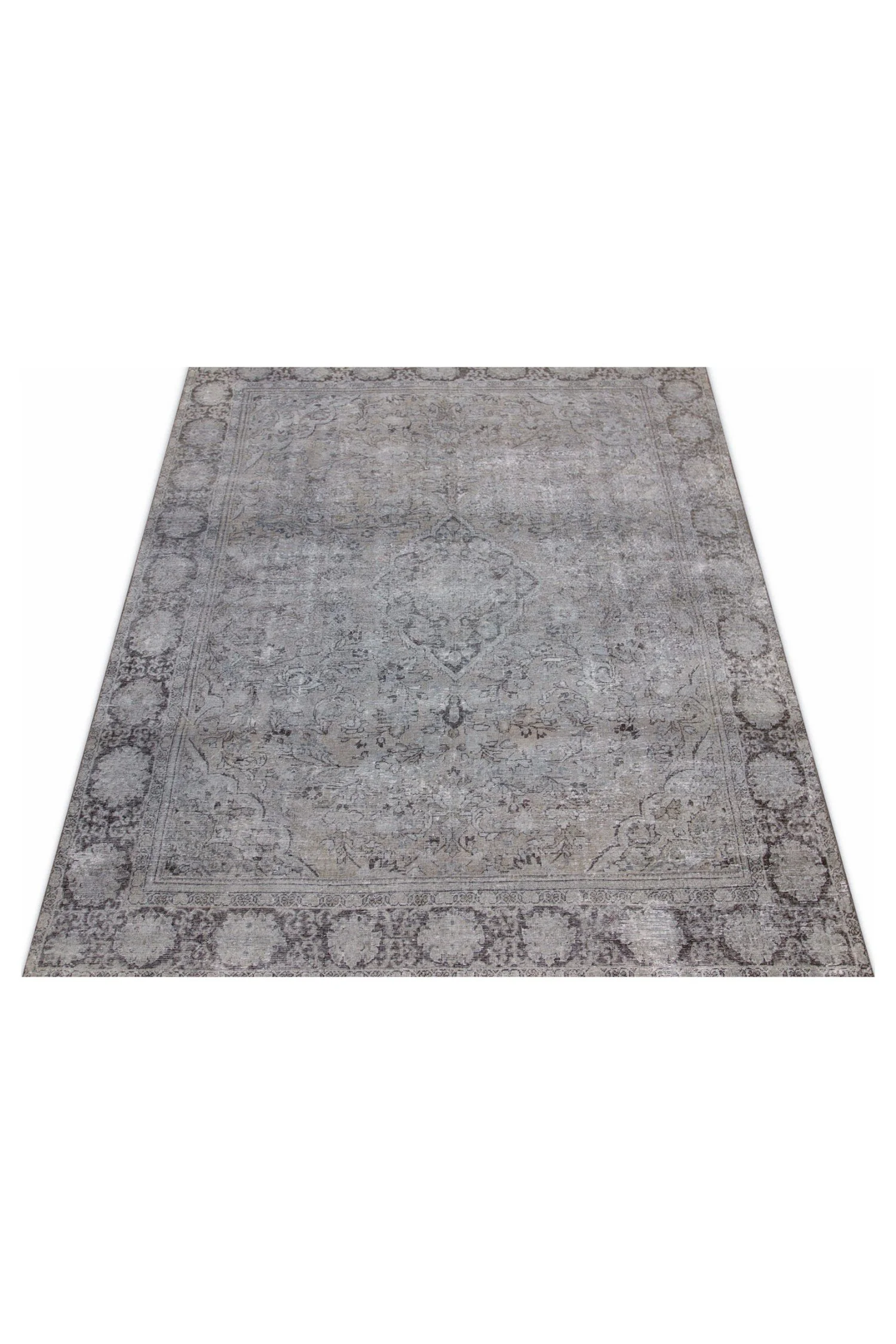 Image 3 of 5
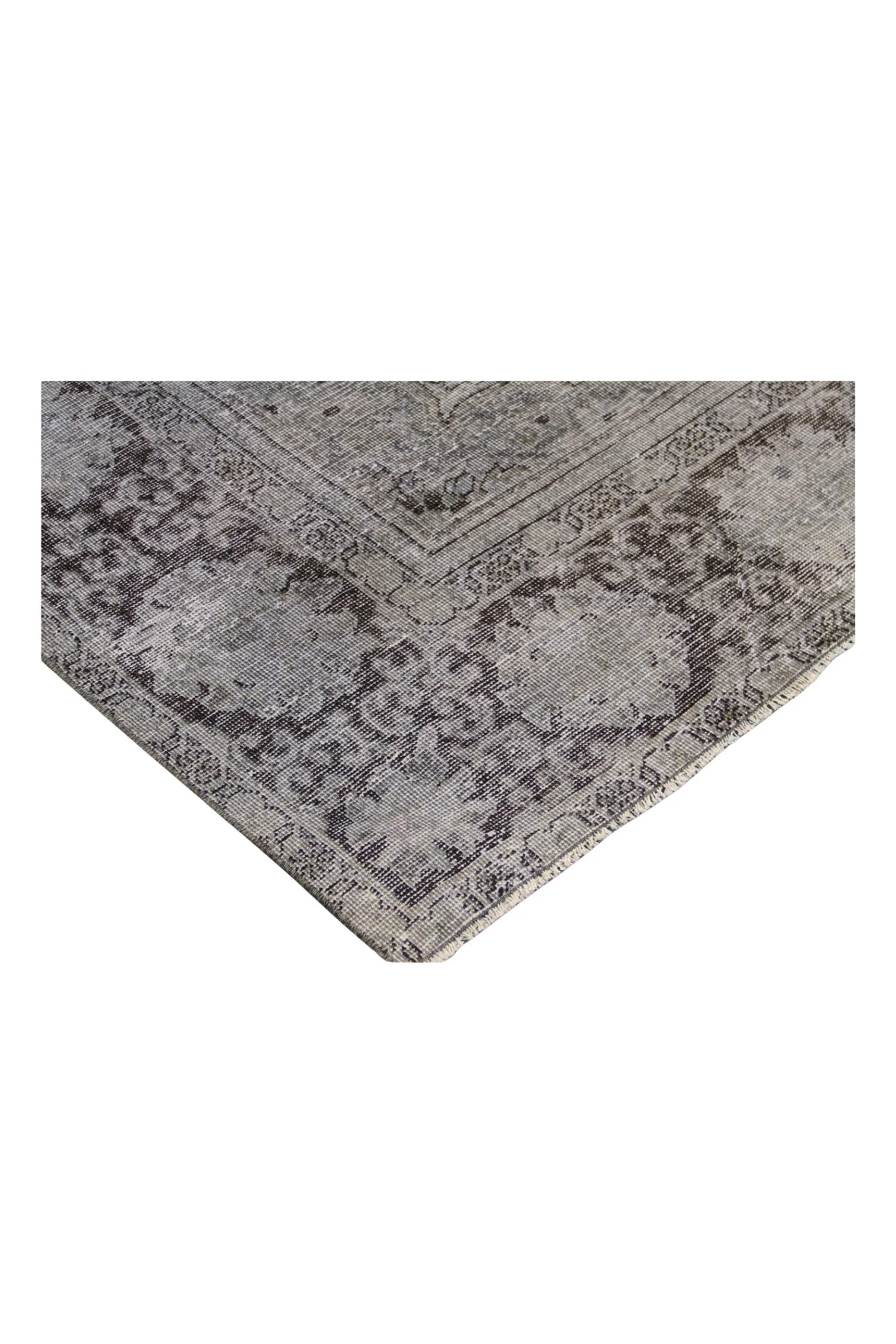 Image 4 of 5
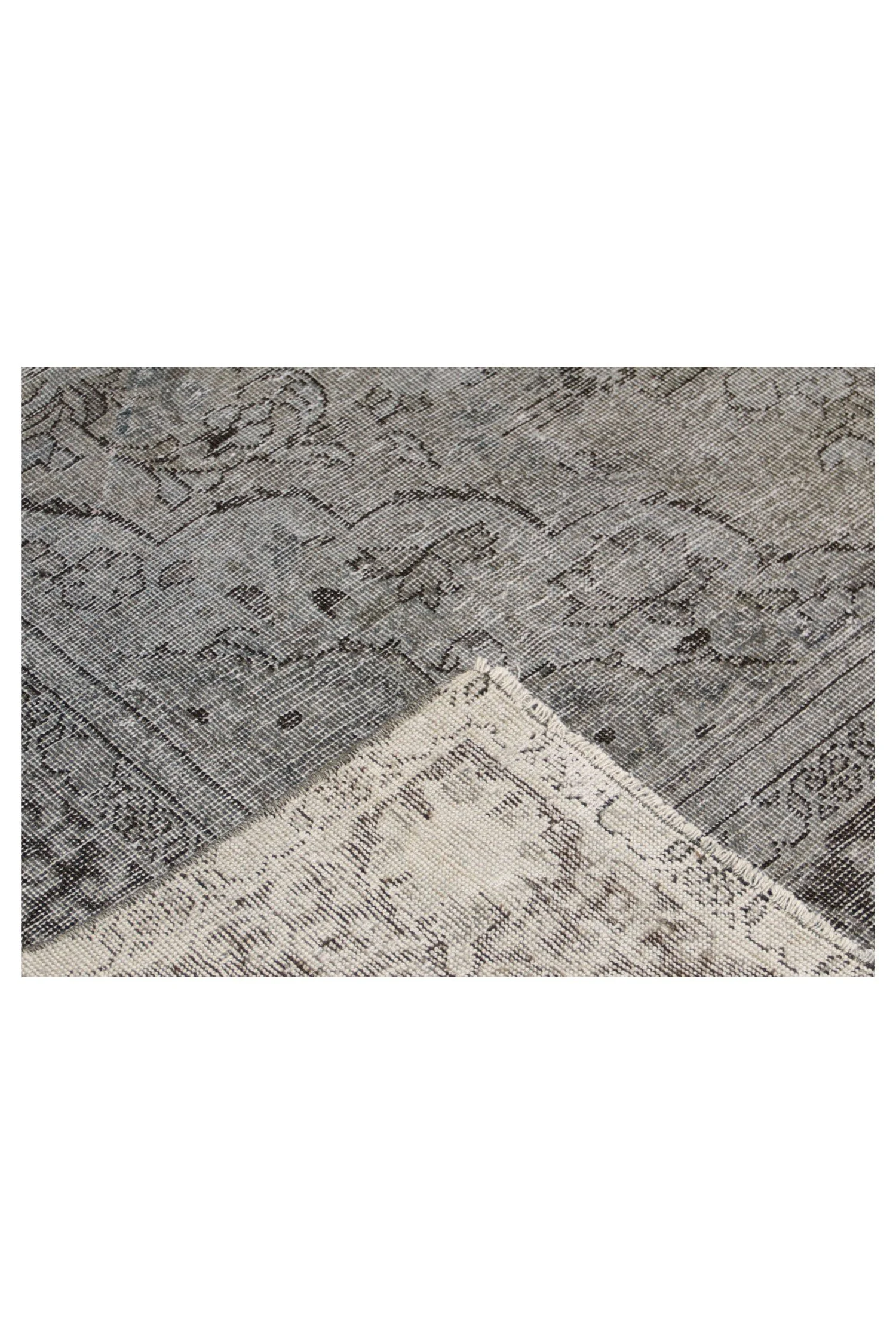 Image 5 of 5
Heritage and Craftsmanship
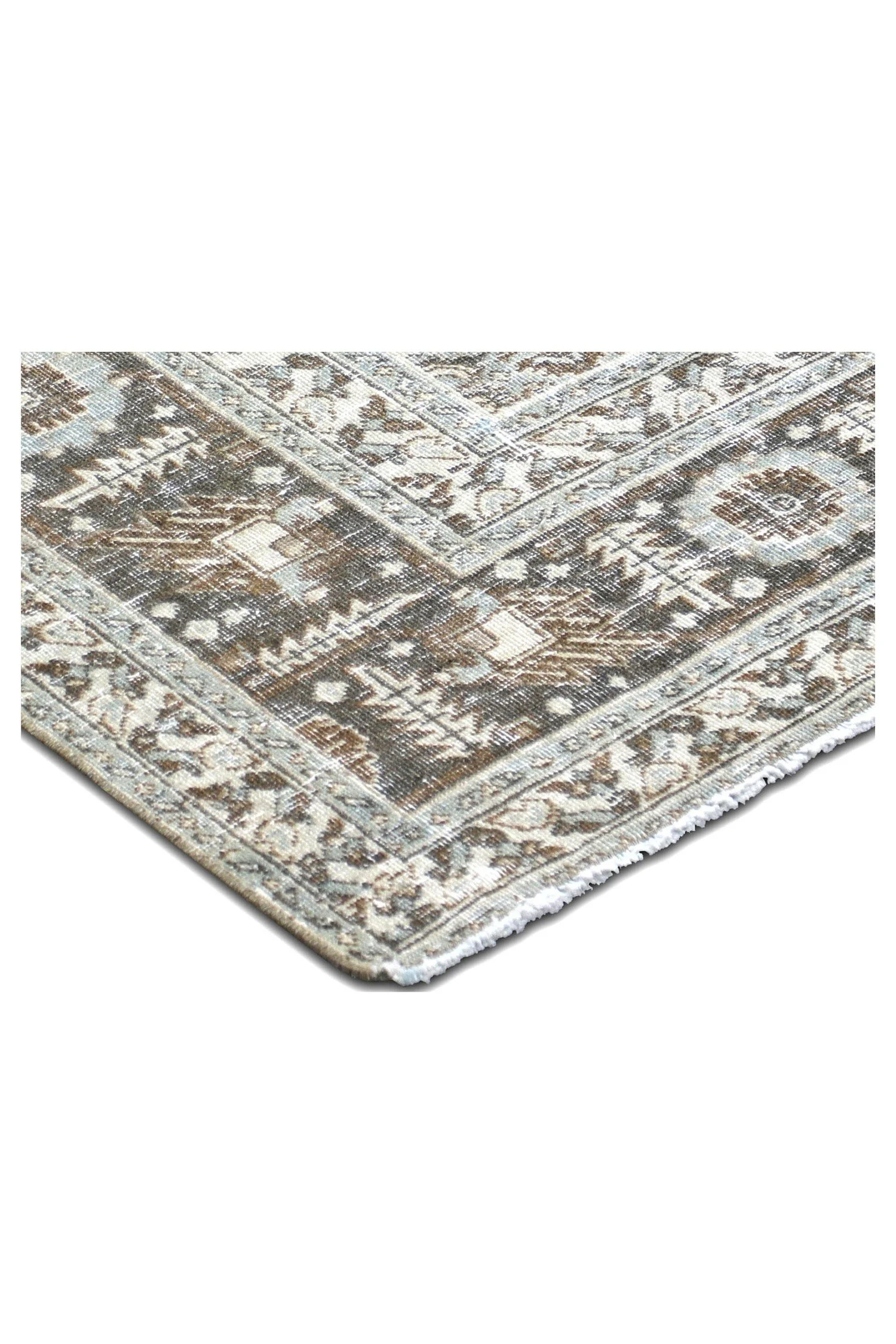
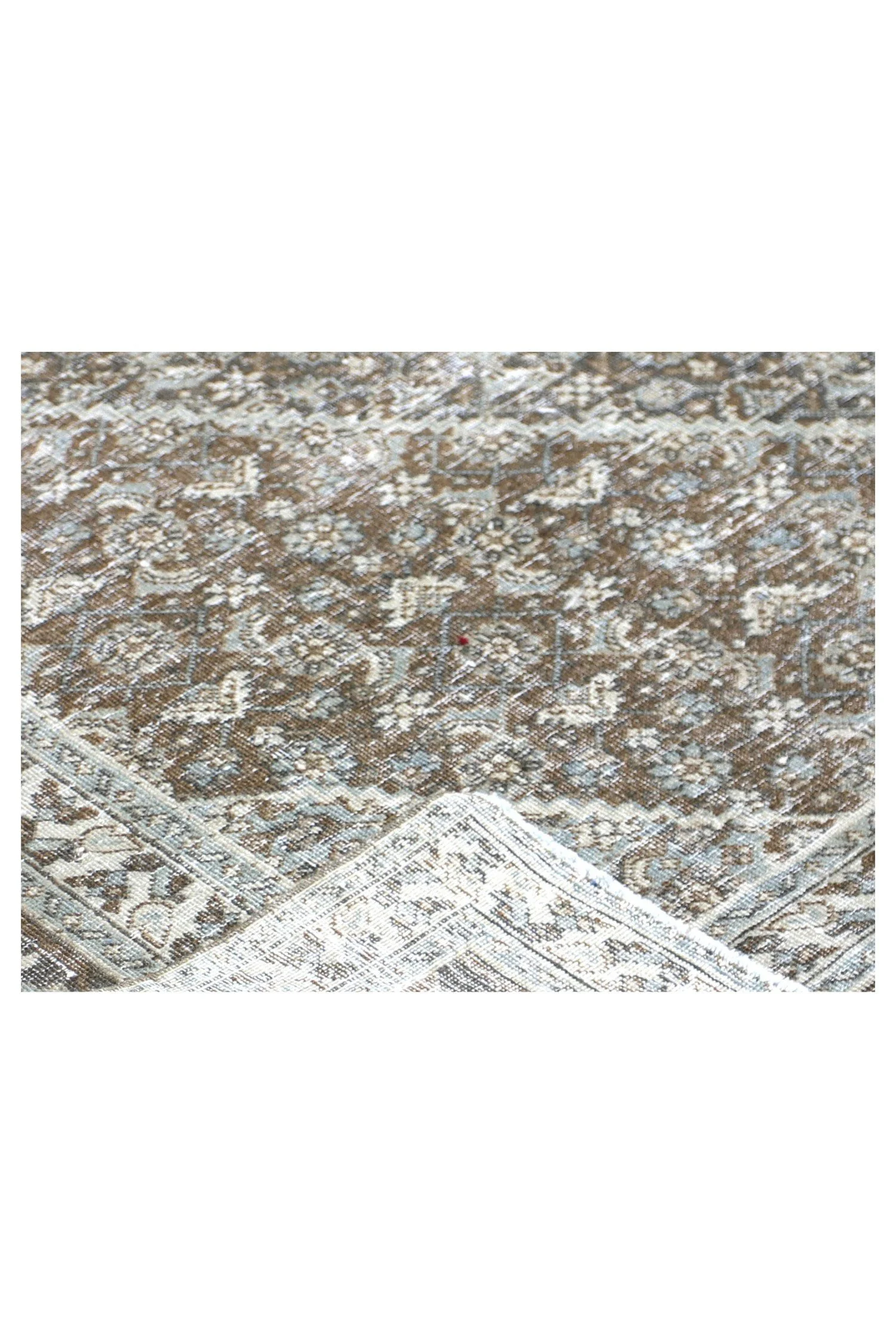
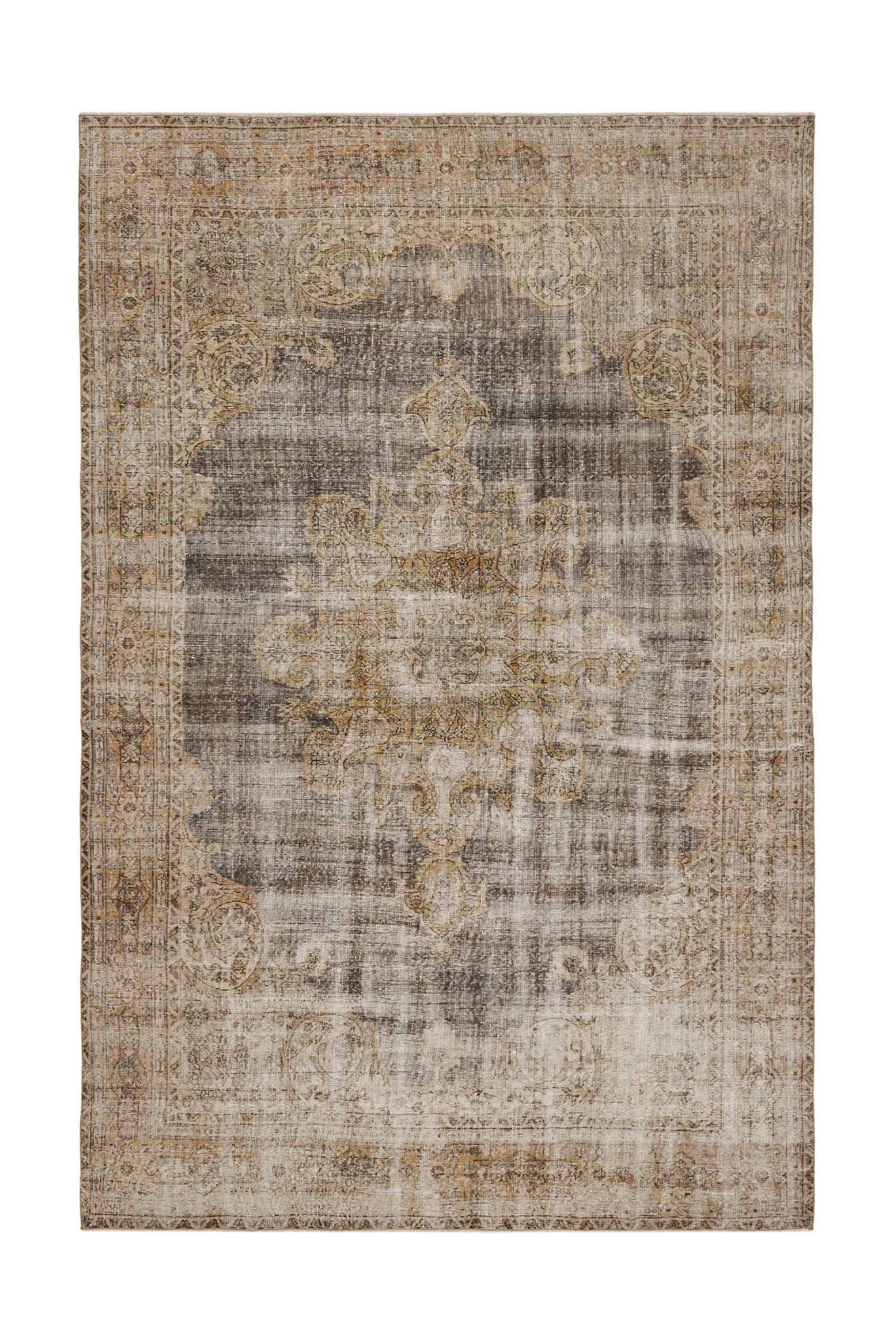
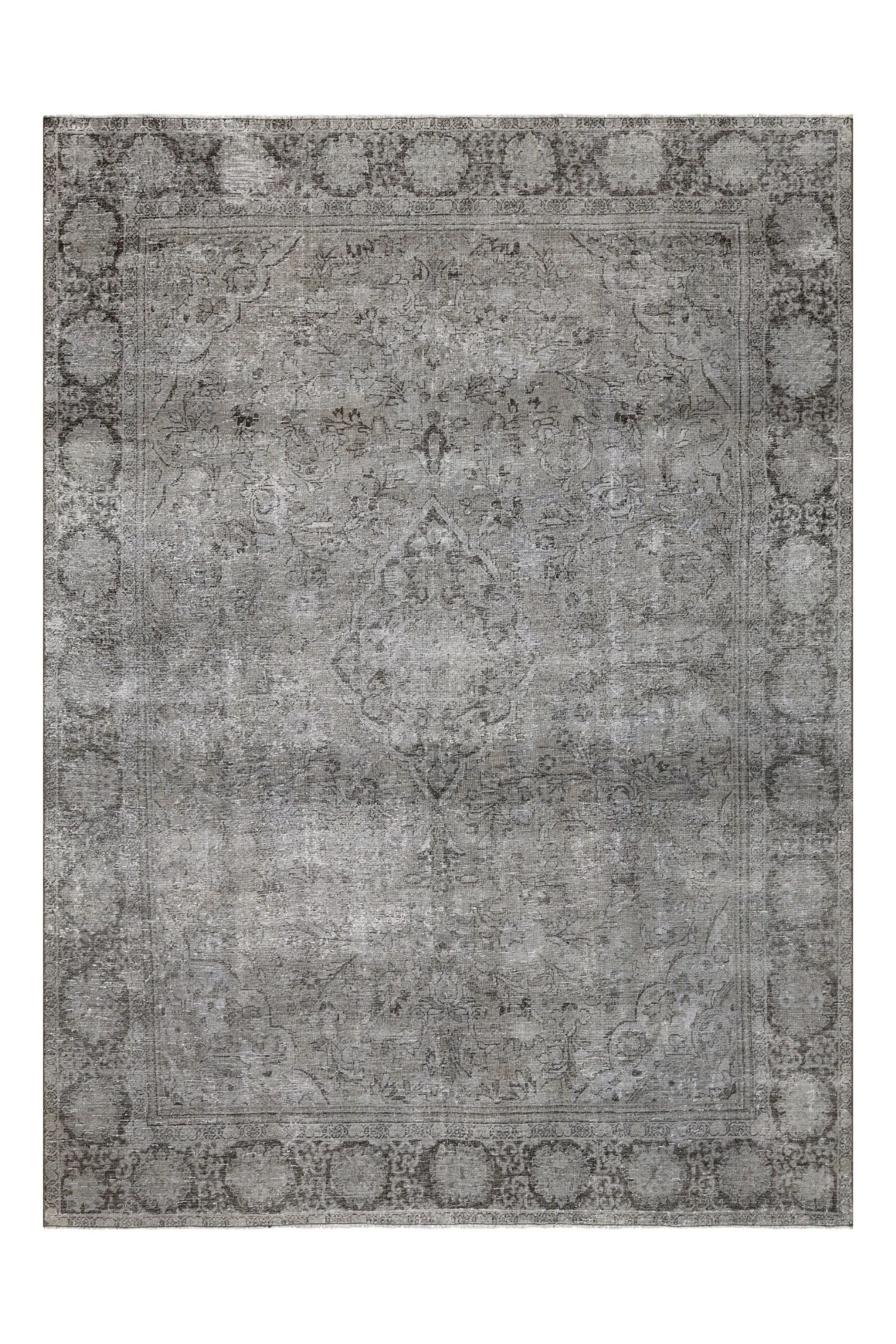
Persian rugs from the 1950s typically featured elaborate medallion compositions with dense floral fields, woven in workshops that had refined these patterns over generations. The original version of this rug would have displayed the rich reds, blues, and creams characteristic of mid-century Persian production.
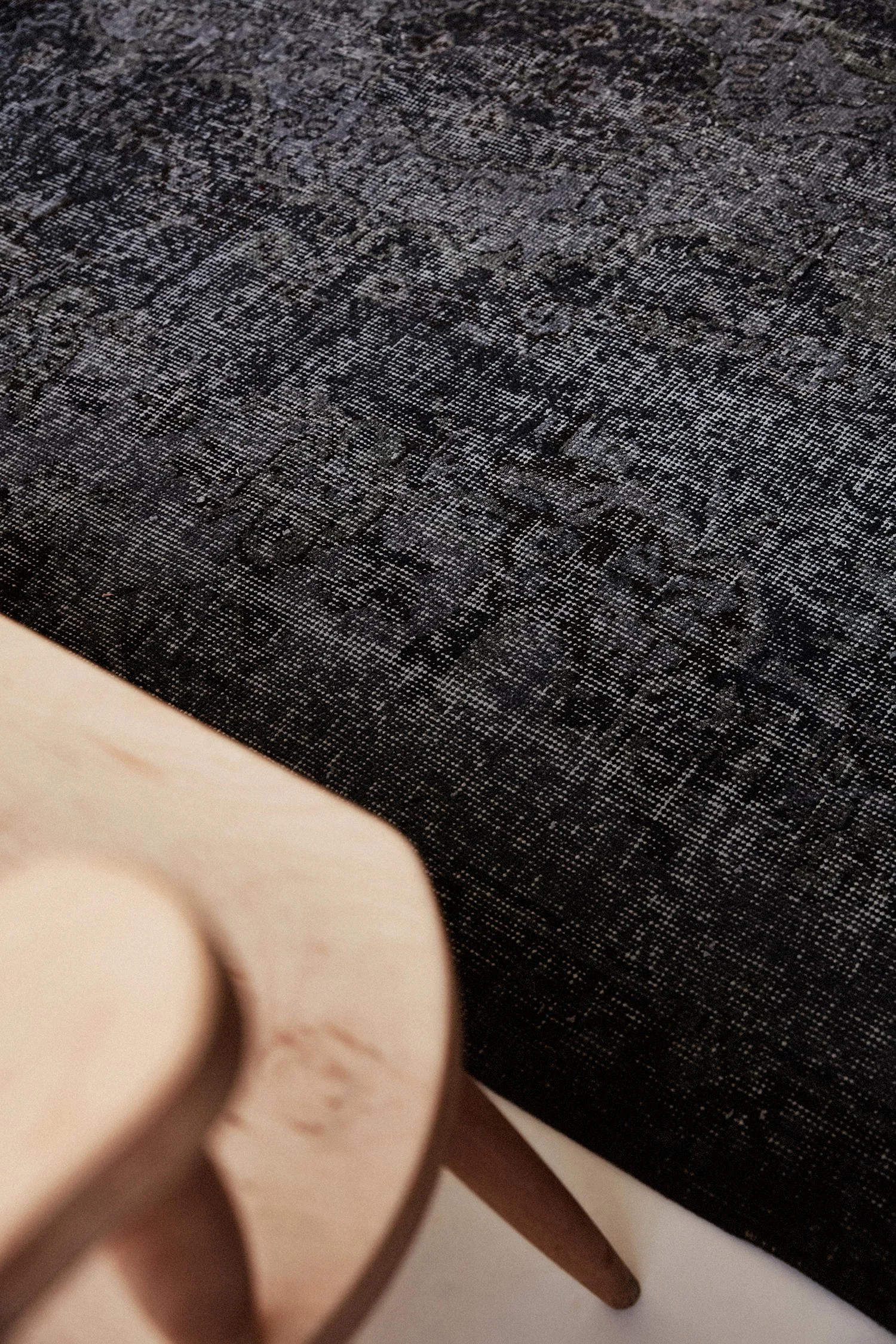
The overdyeing process happened decades after the initial weaving, likely in the 1990s or 2000s, when the technique became widespread for modernizing vintage rugs. Immersion in concentrated charcoal dye transformed the entire color palette while leaving the pattern structure intact as a kind of textured memory beneath the surface.
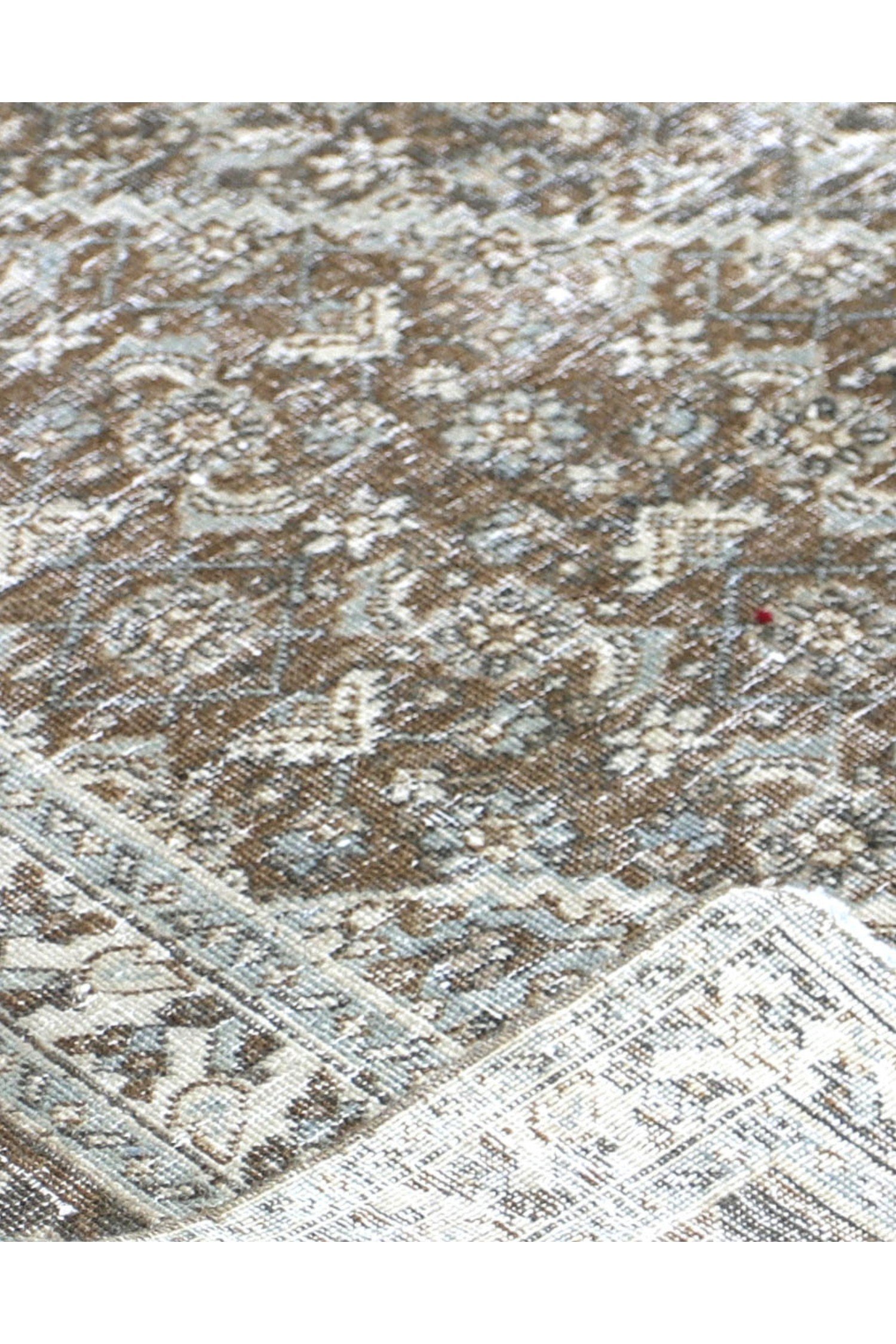
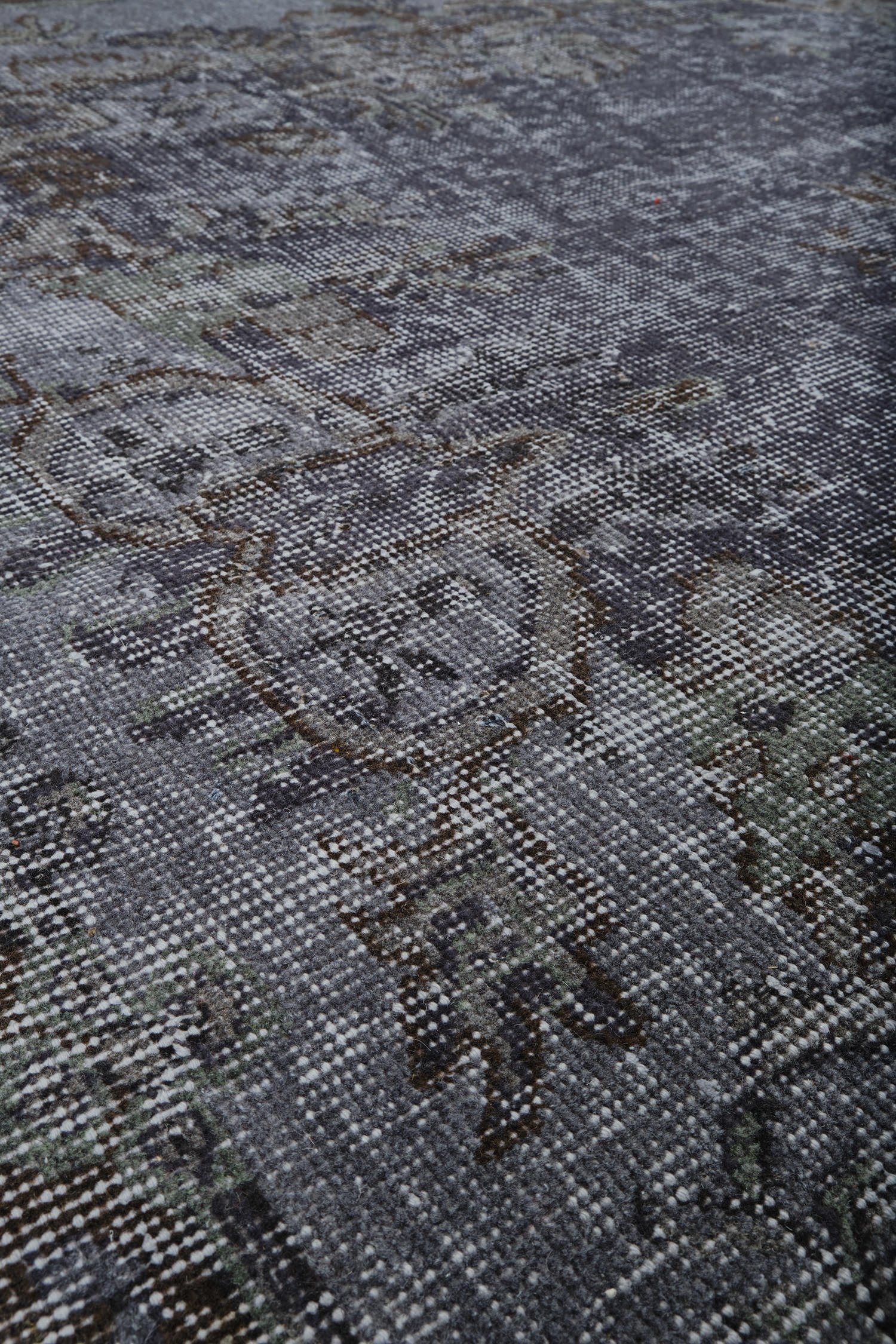
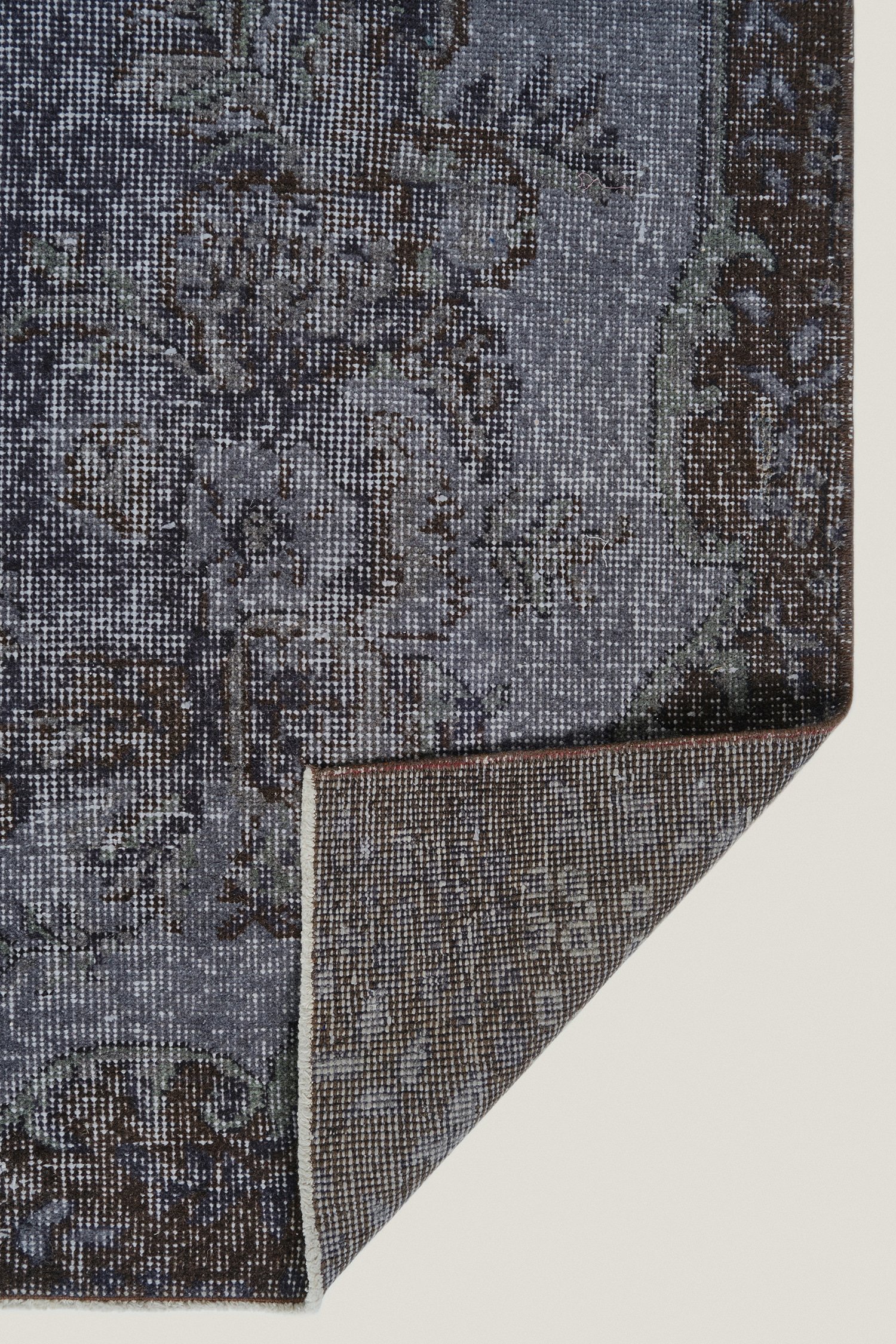
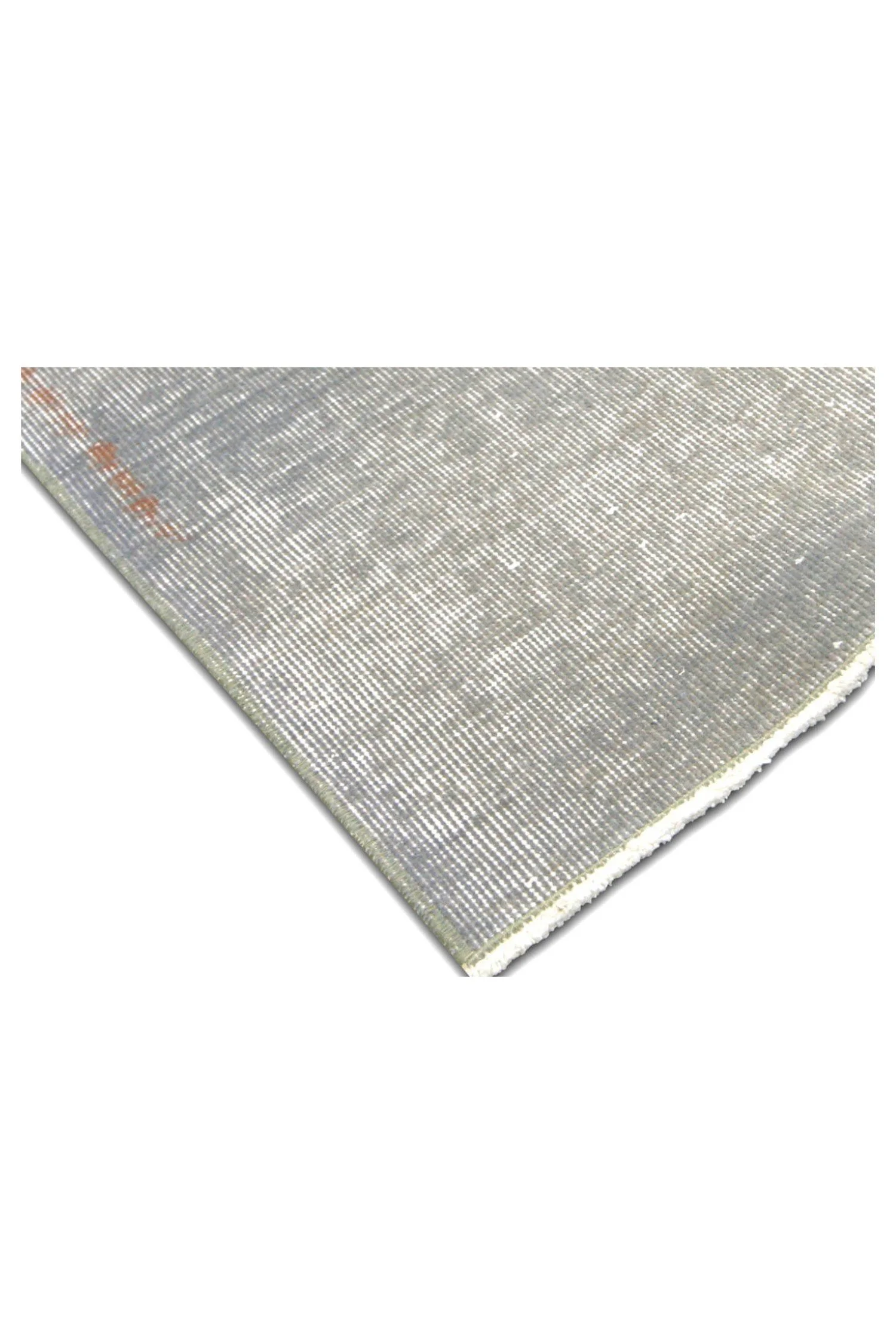
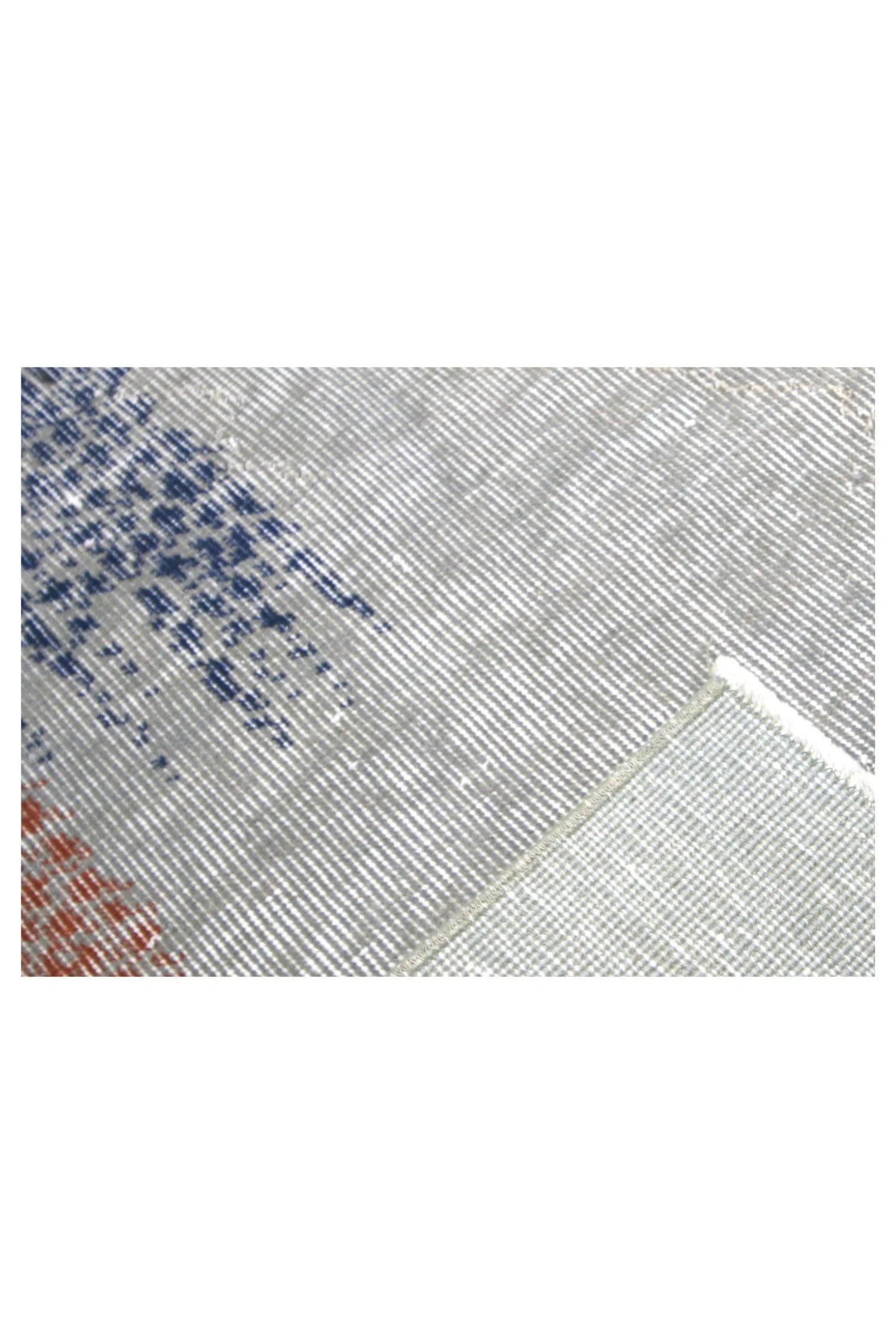
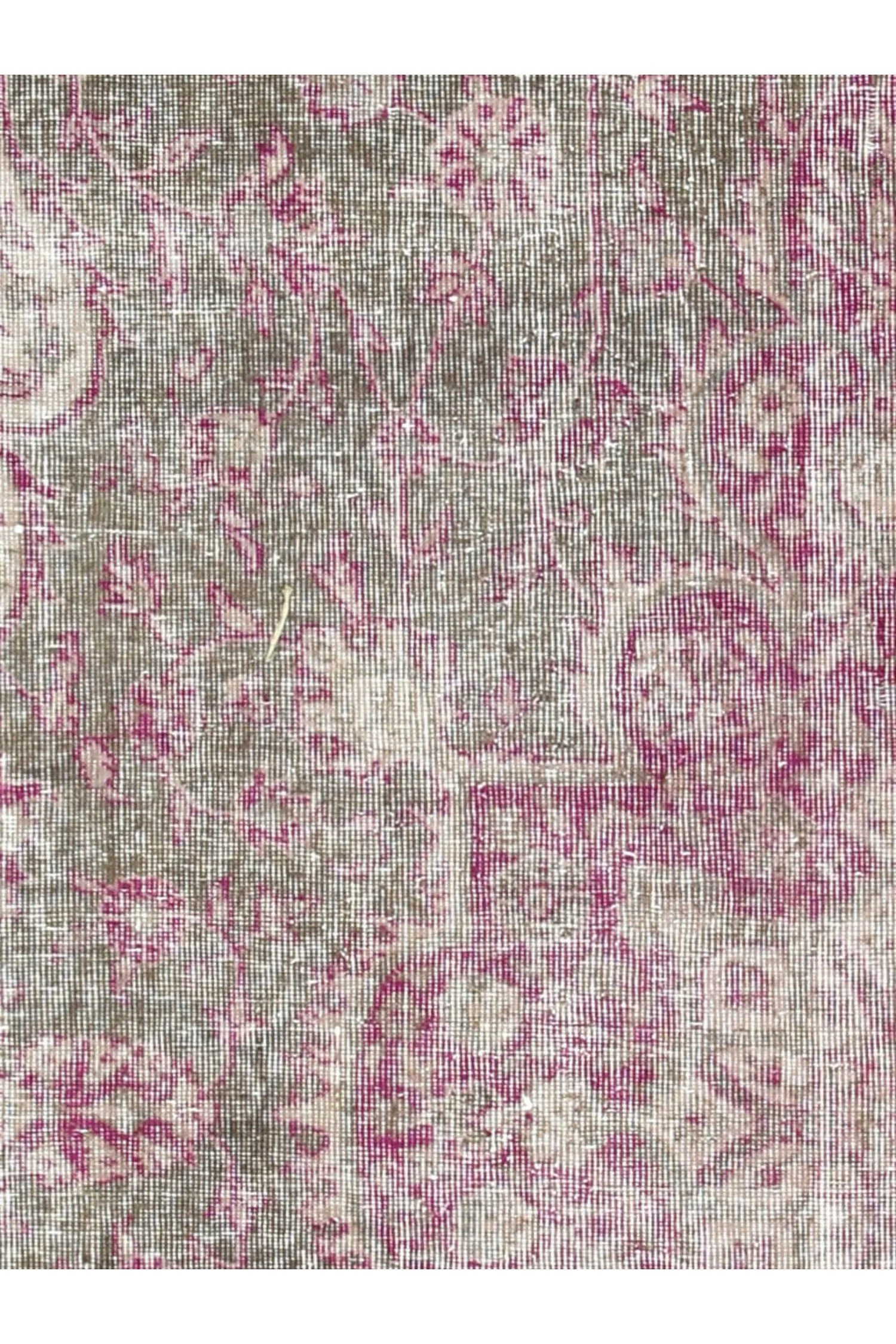
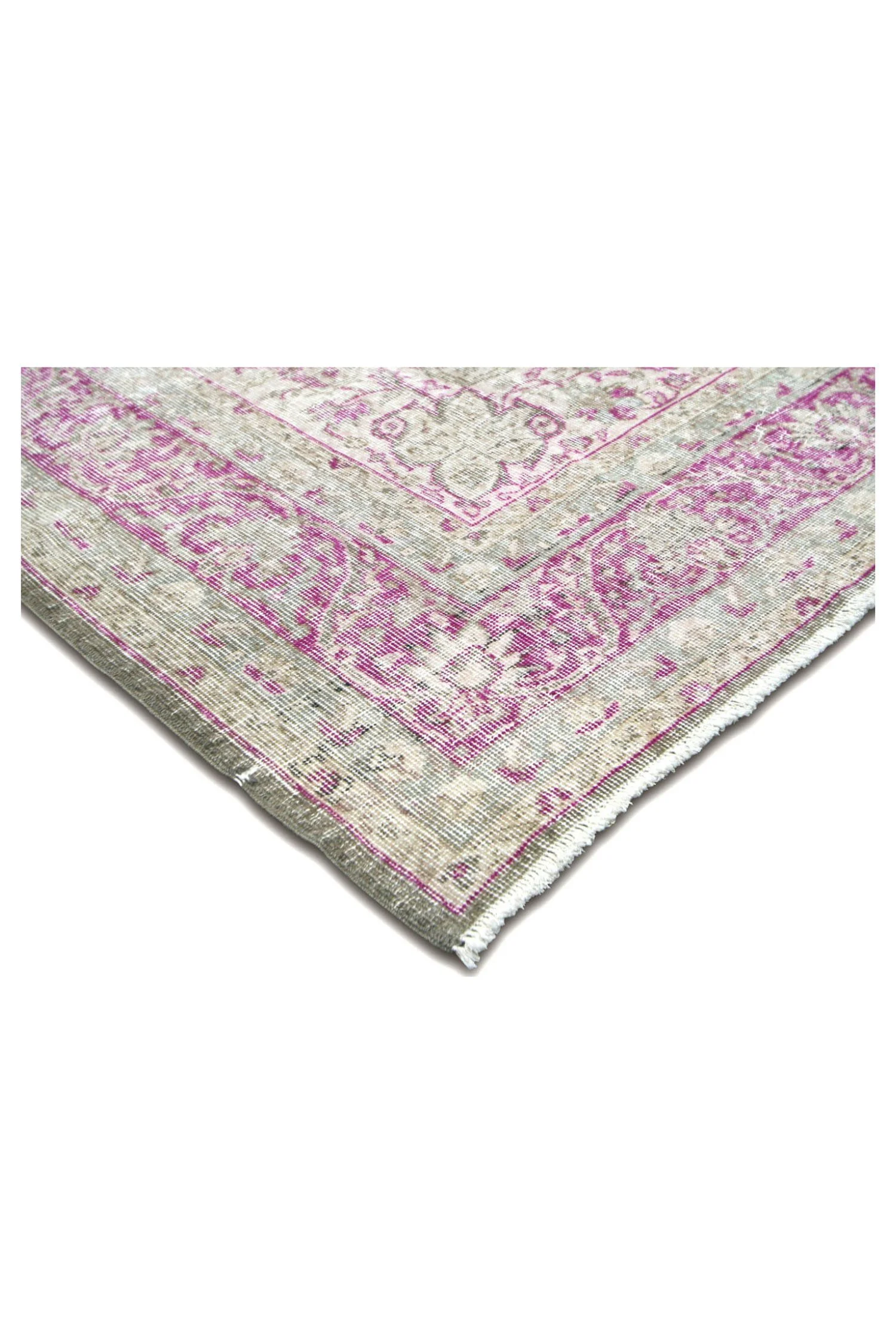
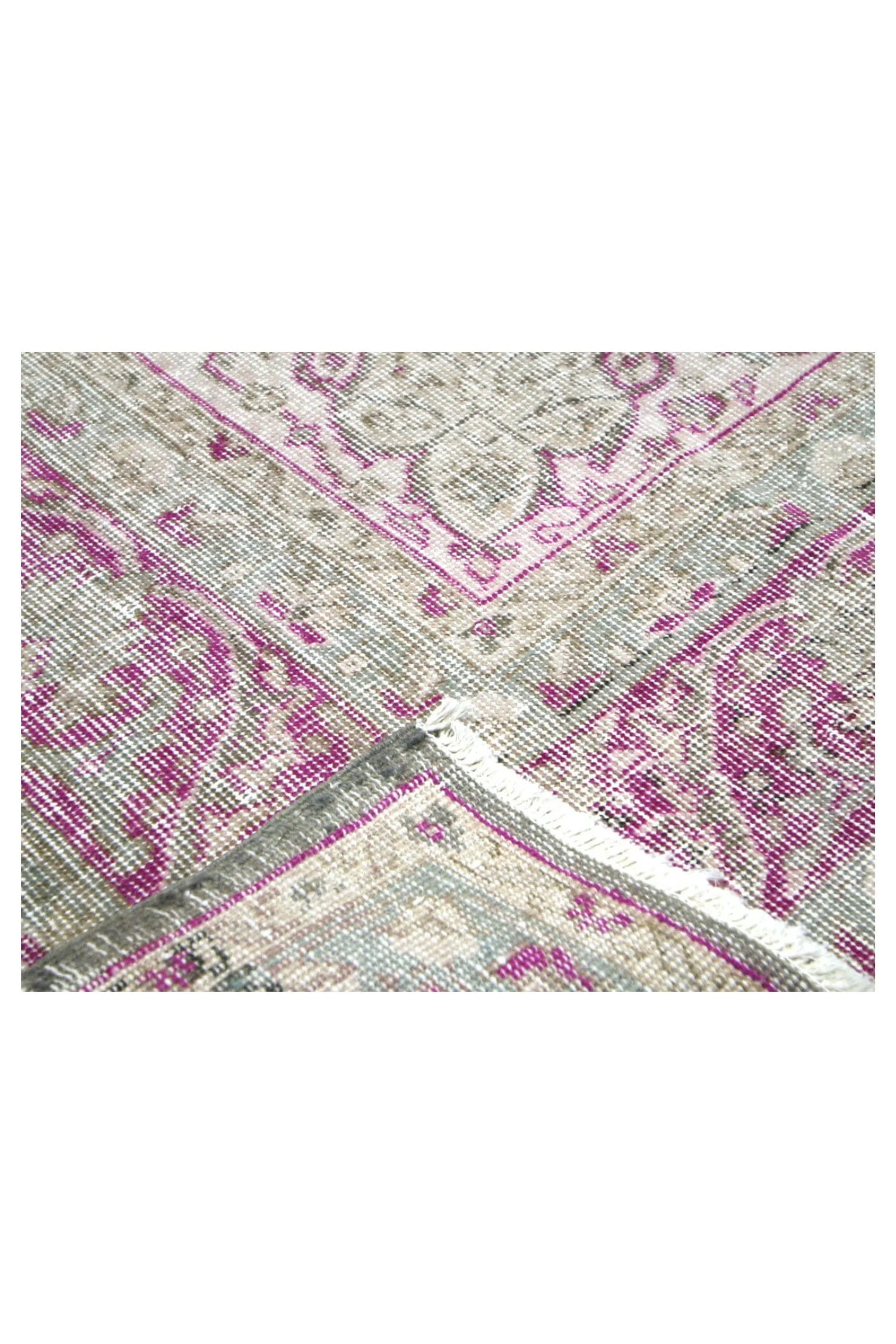
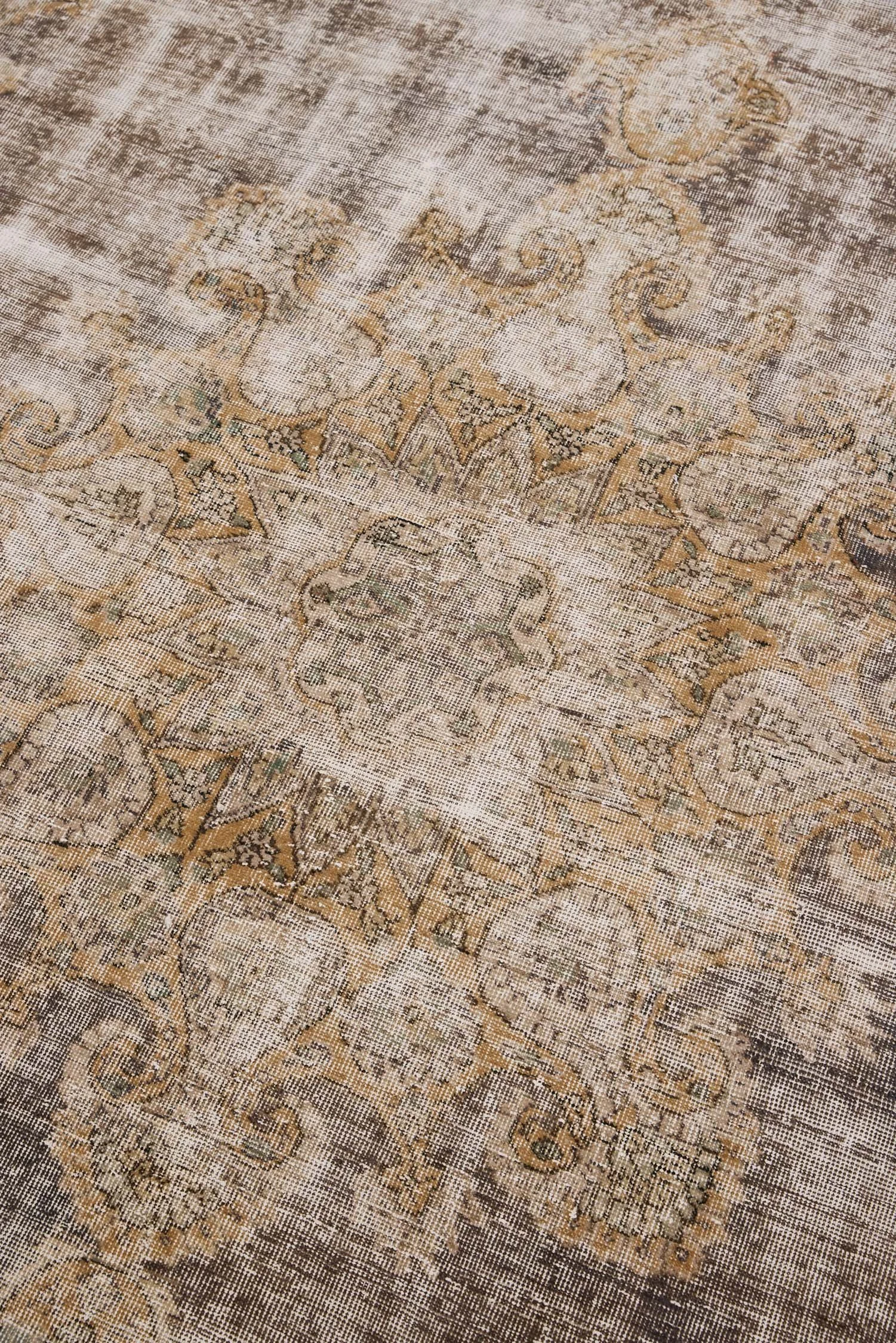
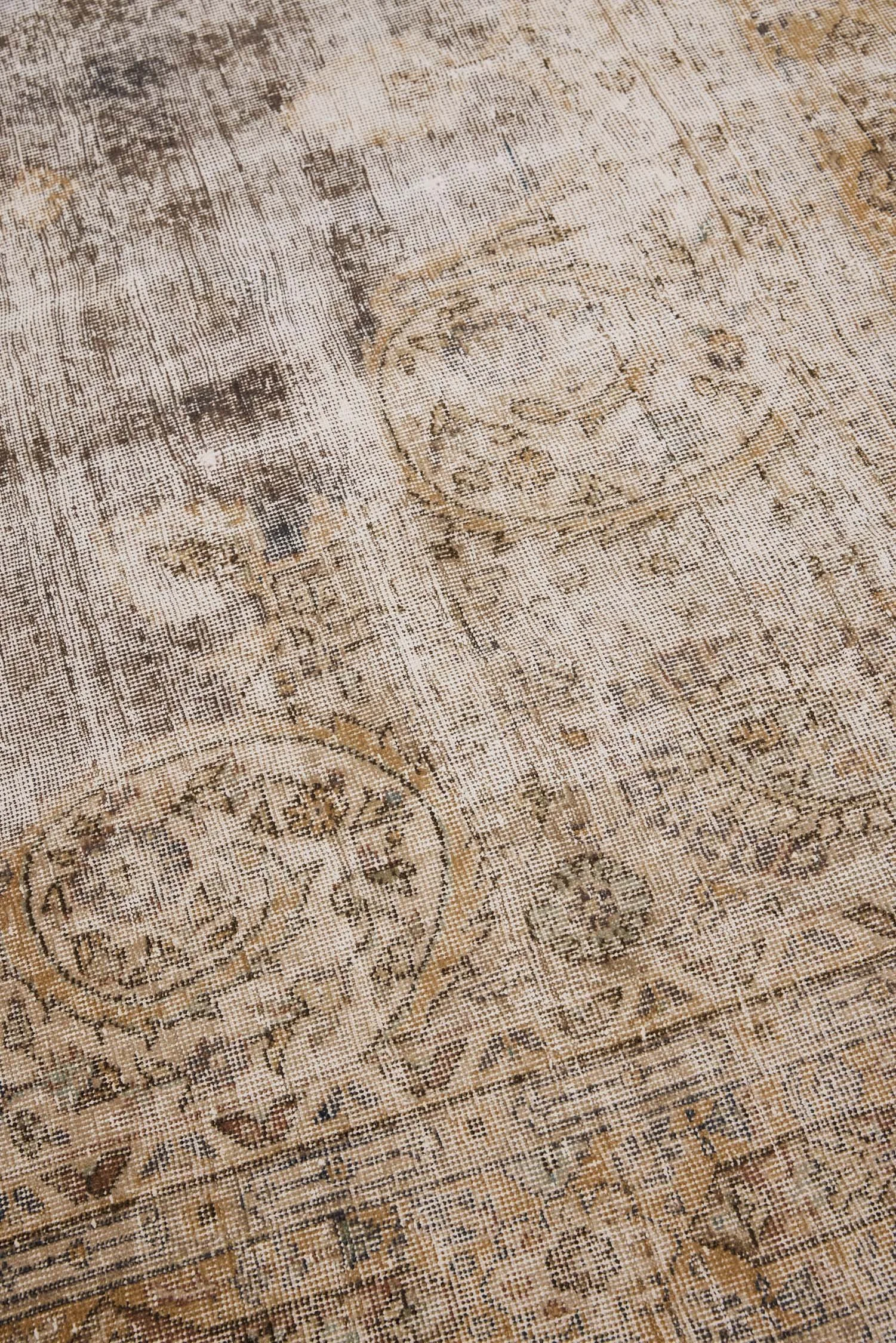
The way dye settles depends on wool density, knot tightness, and existing color saturation. Areas with denser knotting hold more dye, creating the darker pooling visible in the medallion and border. Worn sections may resist saturation differently, allowing traces of the original palette to influence the final tonal variations.
Design Elements
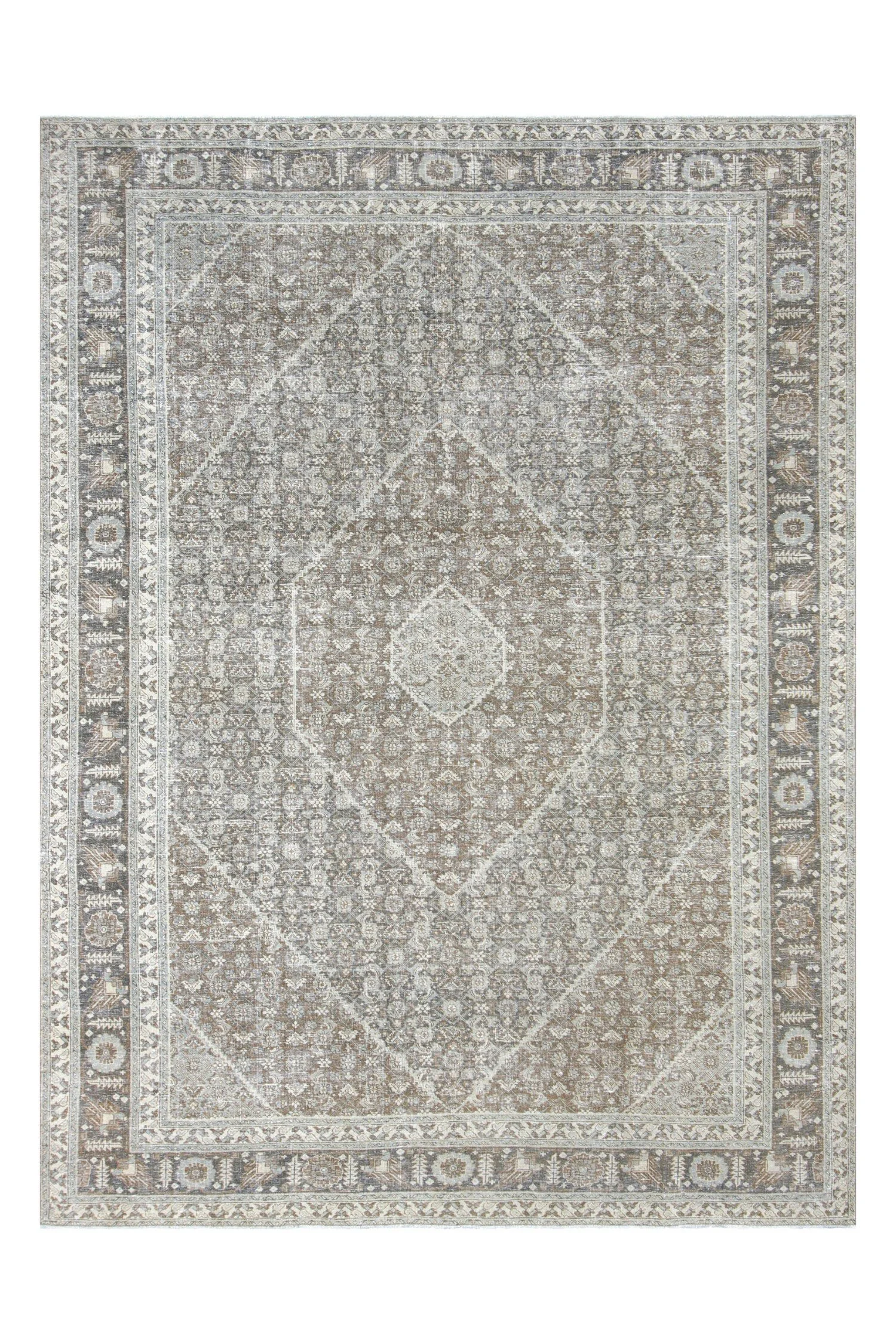
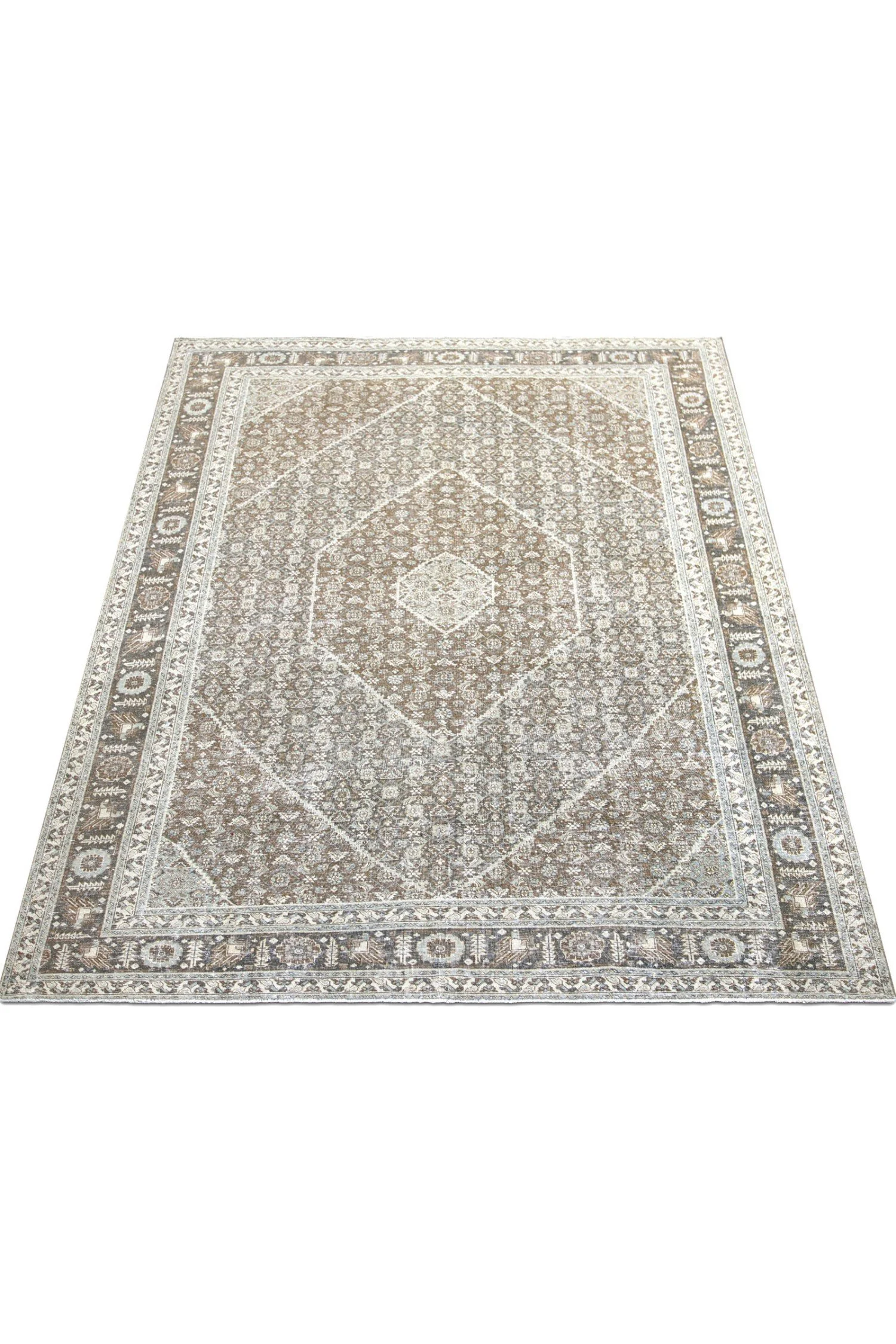
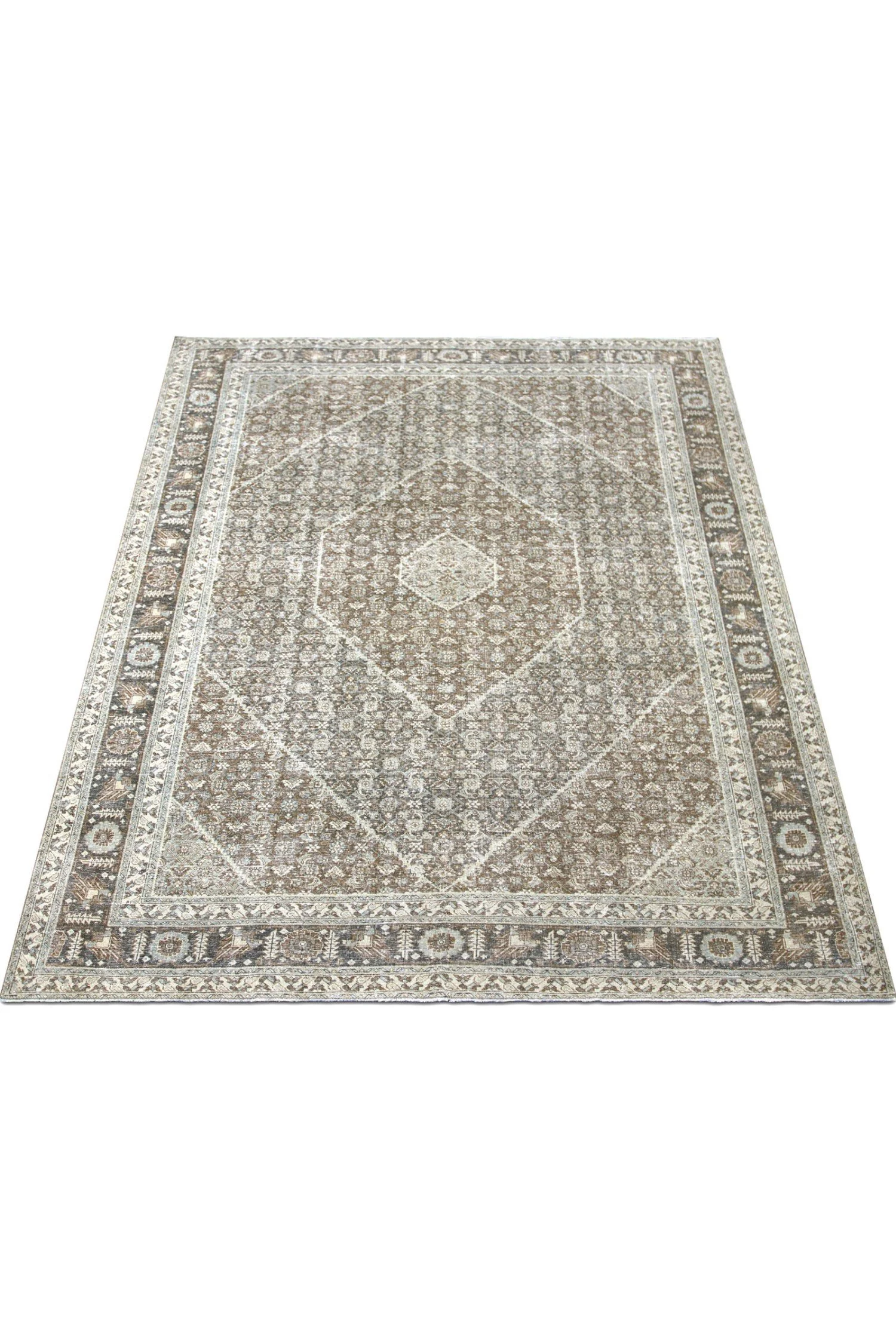
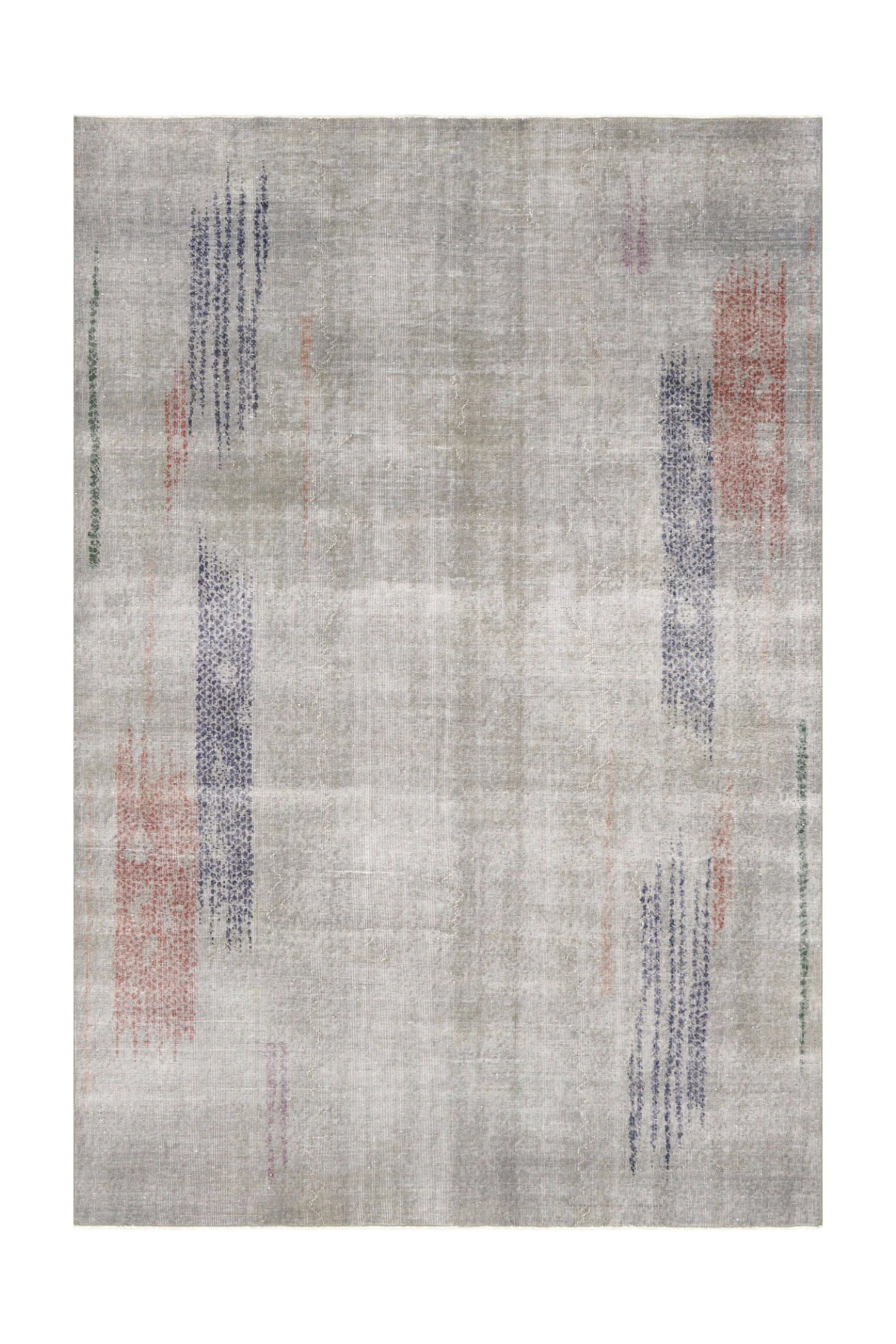
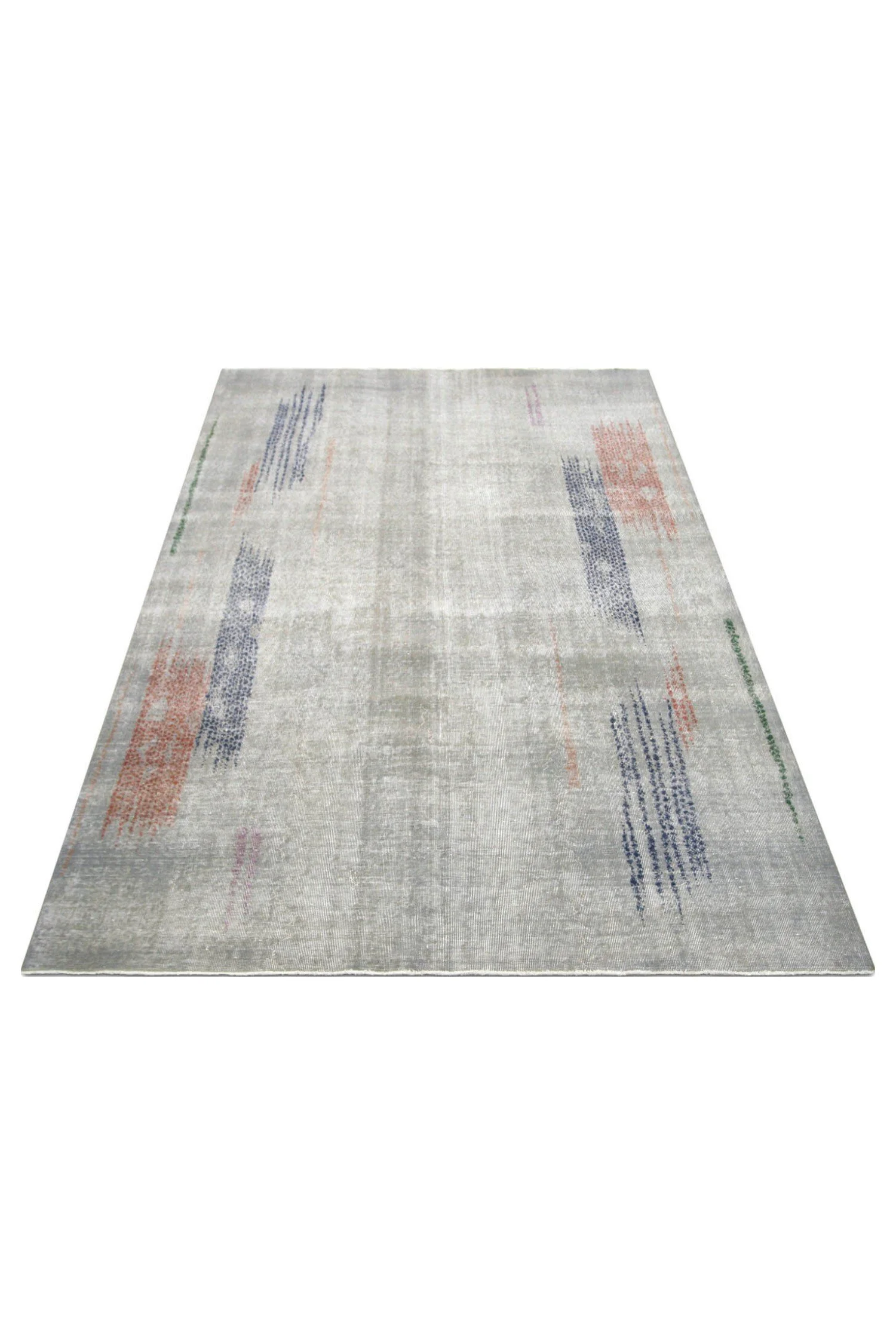
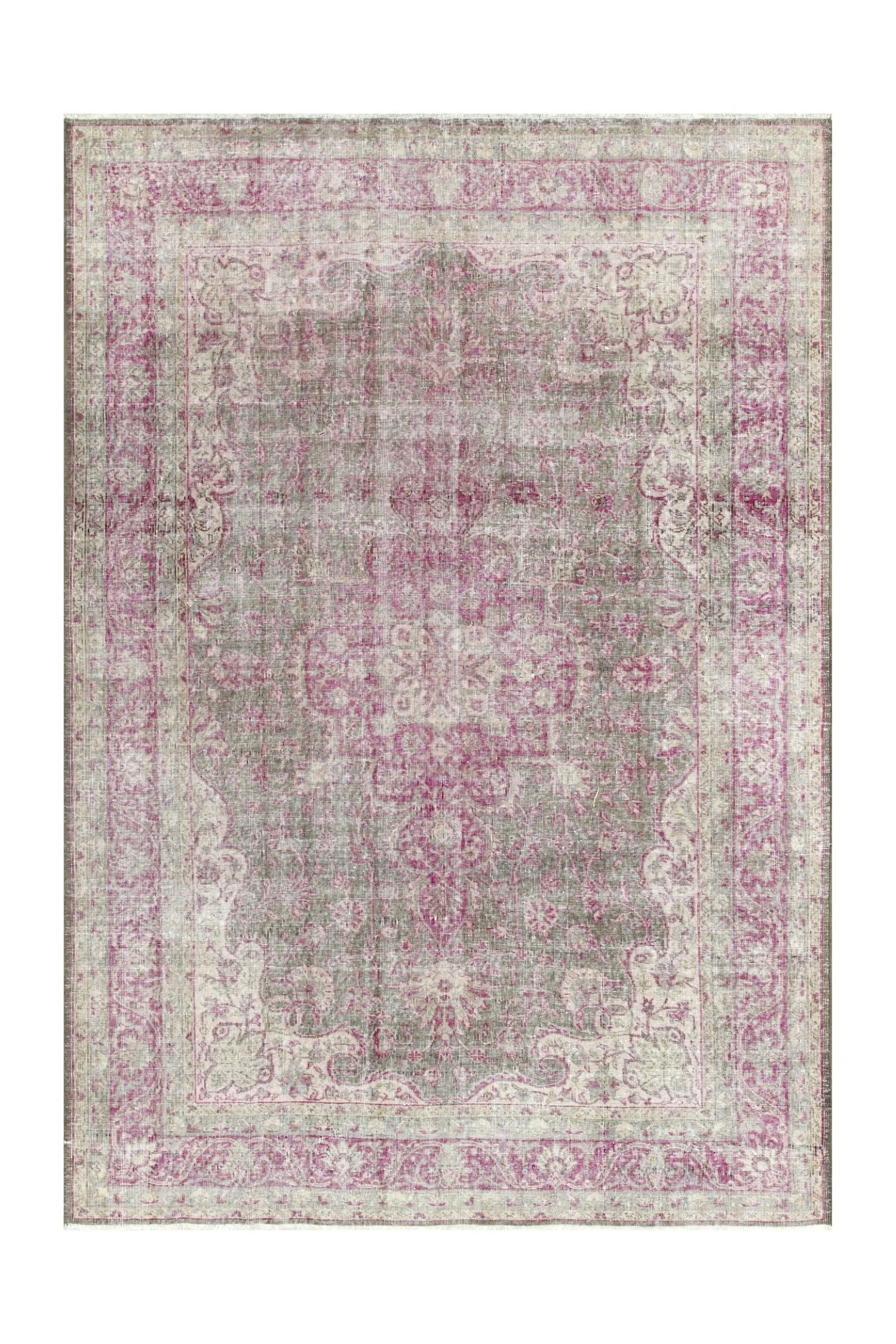
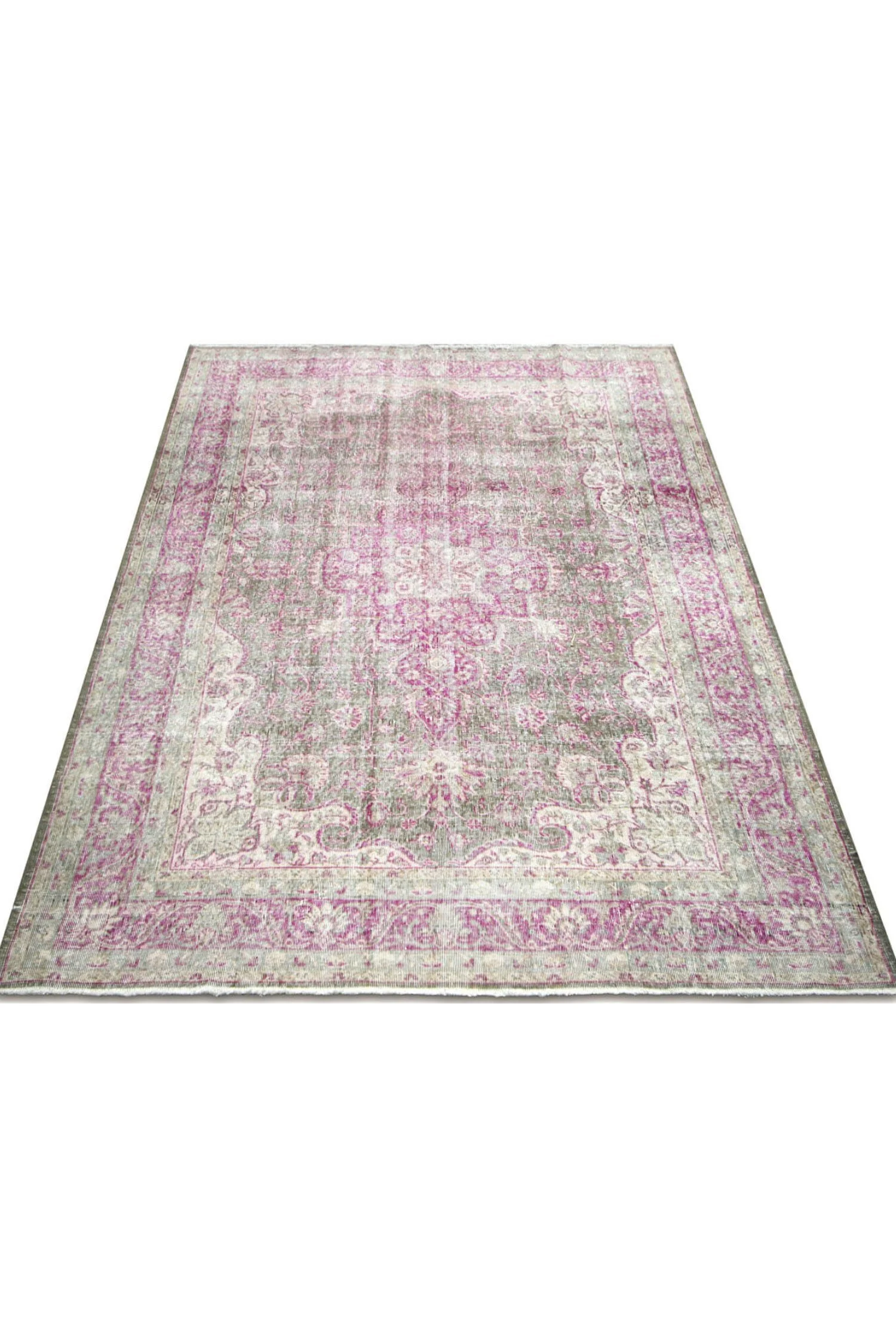
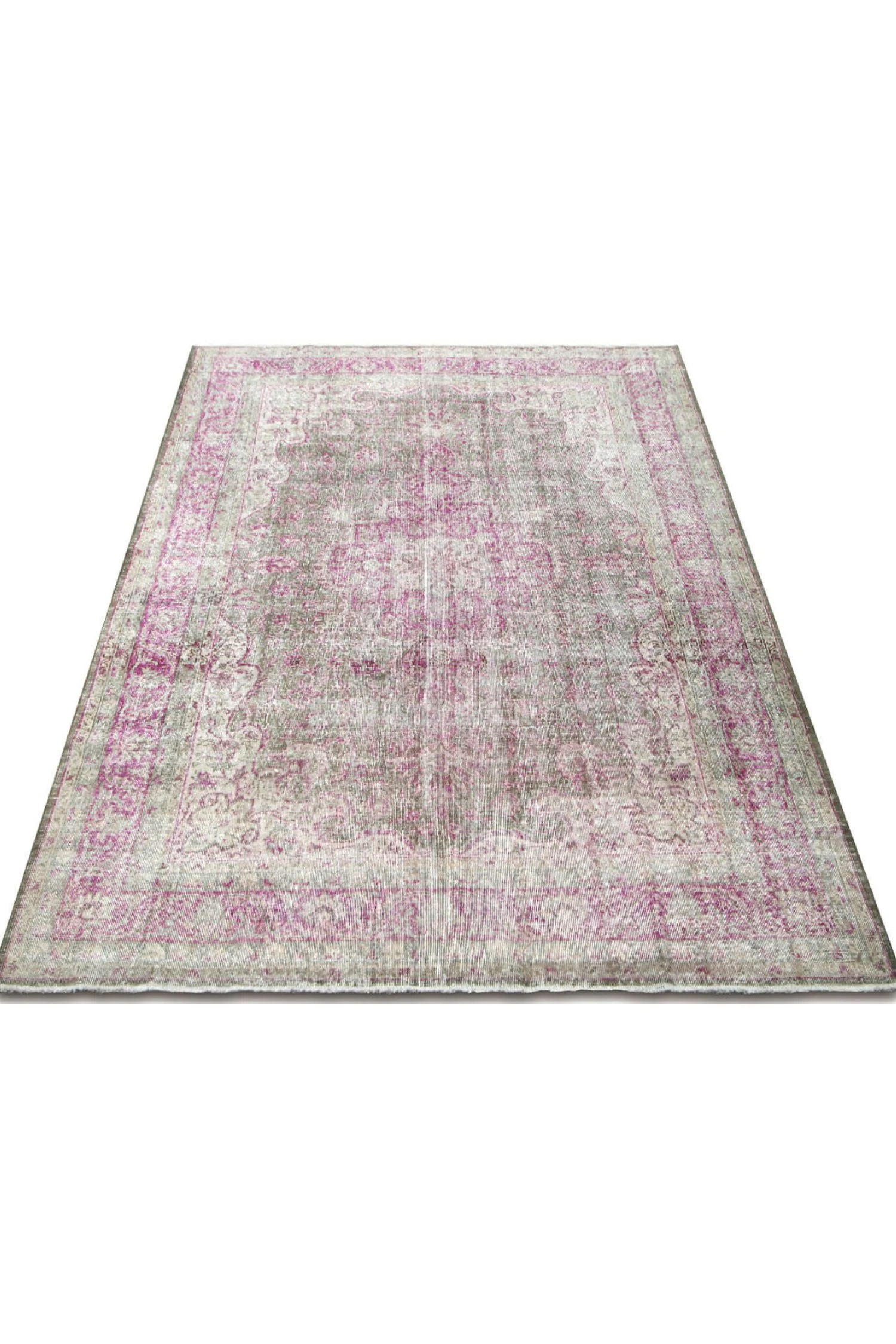
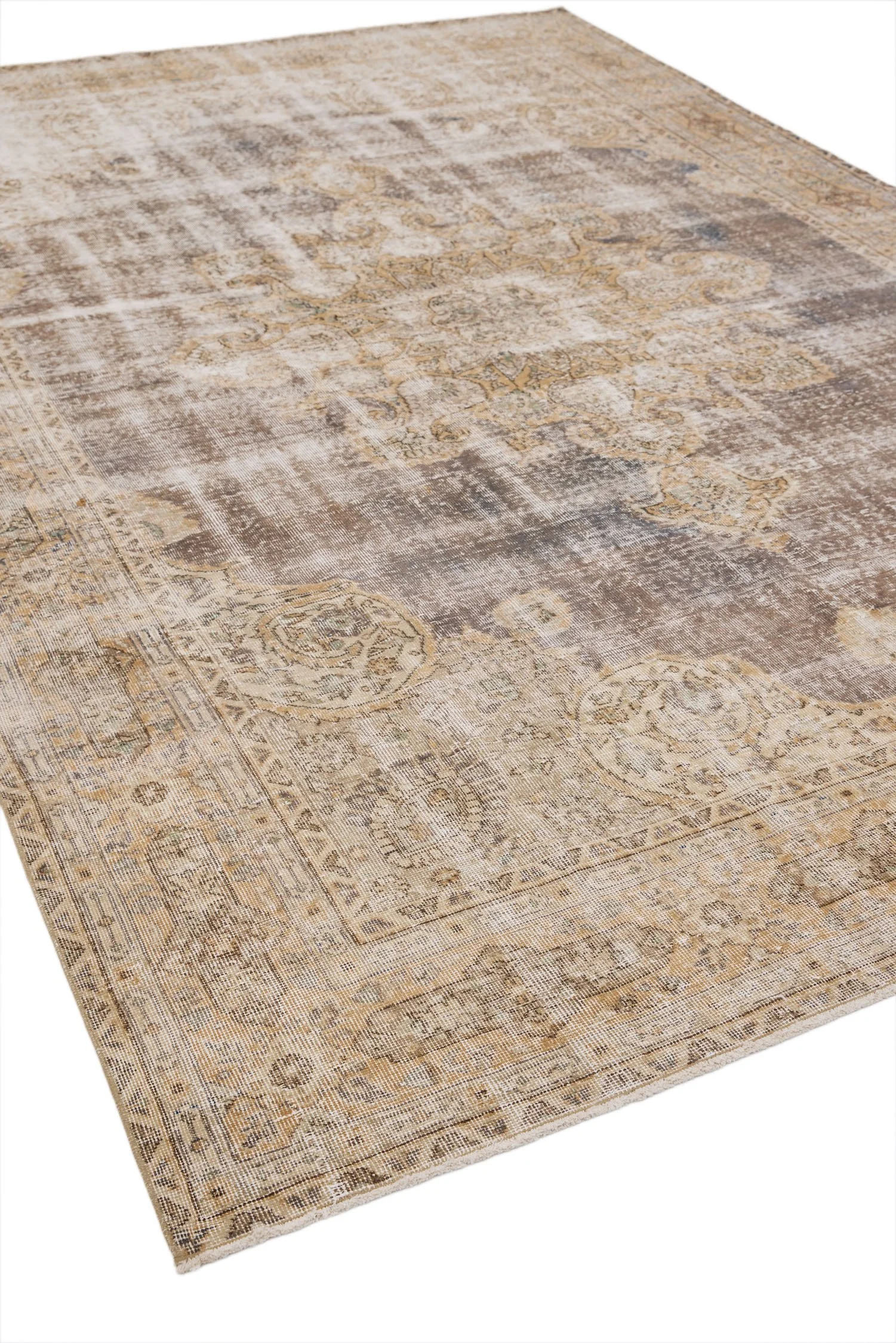
The central medallion remains legible as a structural element despite the overdye's transformation. Its edges blur into the field, creating an atmospheric presence rather than a sharp focal point. The medallion's form organizes the composition even when its details have been softened.
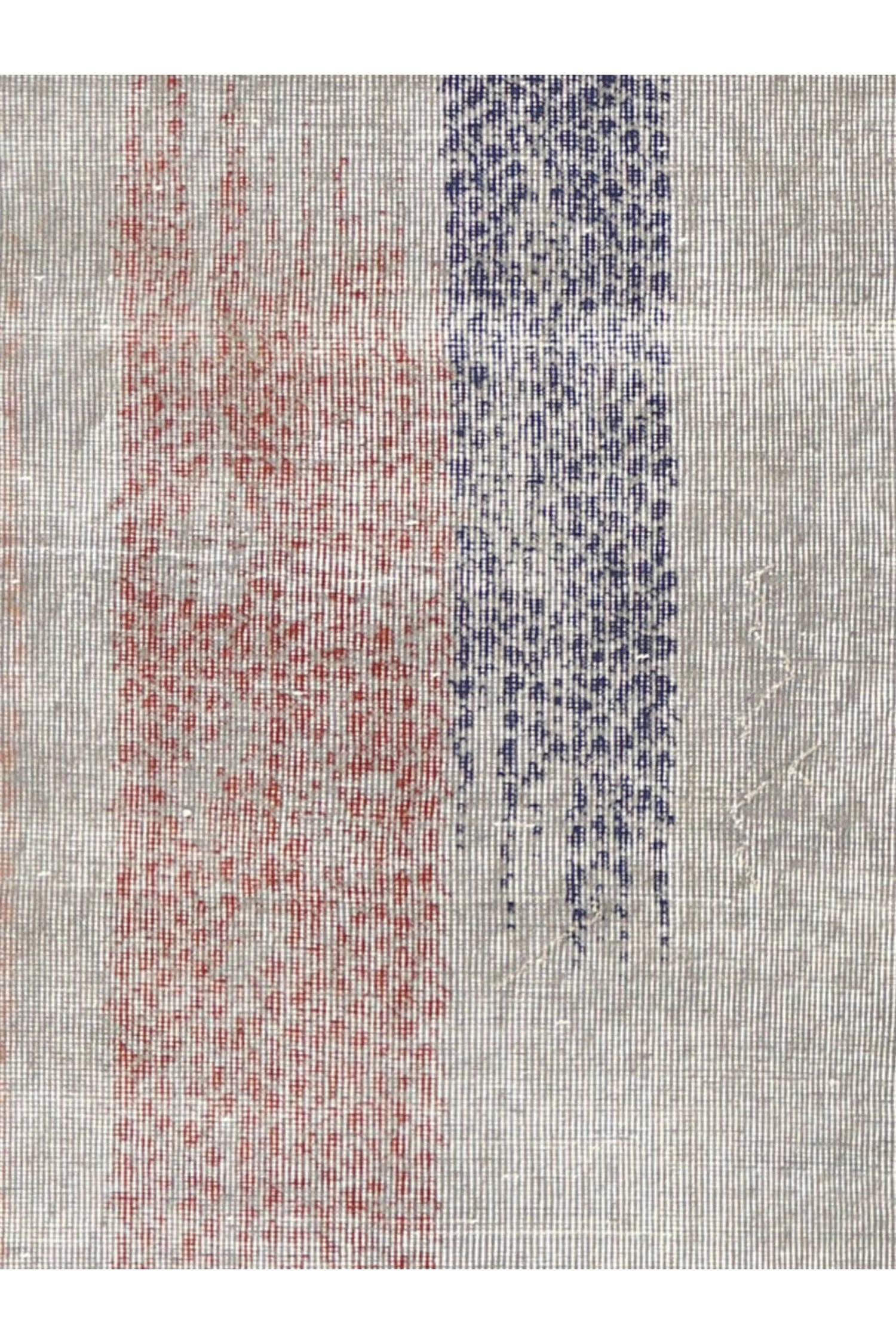
Dense floral patterns fill the field in traditional Persian fashion. The overdye process left these as textured variations rather than distinct motifs. The pattern creates depth through layering, with forms emerging and receding depending on light and viewing angle.
The border maintains its framing function while integrating tonally with the field. The pattern remains visible enough to provide definition but subdued enough that the composition reads as unified rather than segmented into distinct zones.
Placement
At 8'4" x 11'5", this works in living rooms where you want substantial coverage with visual weight. Dining rooms can accommodate it under tables that seat eight to ten. Bedrooms benefit from the moody, atmospheric quality, particularly in spaces with ample natural light where the tonal variations become more apparent.
The charcoal and gray palette suits contemporary interiors where you want pattern without bright color. The darker tones work in rooms with light walls and furnishings, creating a grounding contrast. The atmospheric quality of the softened pattern also fits spaces styled with industrial, minimalist, or modern aesthetics.
Care Recommendations
To preserve the rug's beauty:
Rotate periodically for even wear
Vacuum regularly using a suction-only setting
Address spills immediately by blotting, never rubbing
Professional cleaning recommended annually
Avoid direct sunlight to maintain color integrity
The medallion beneath the dye is still there, just speaking in a quieter voice.