 Image 1 of 6
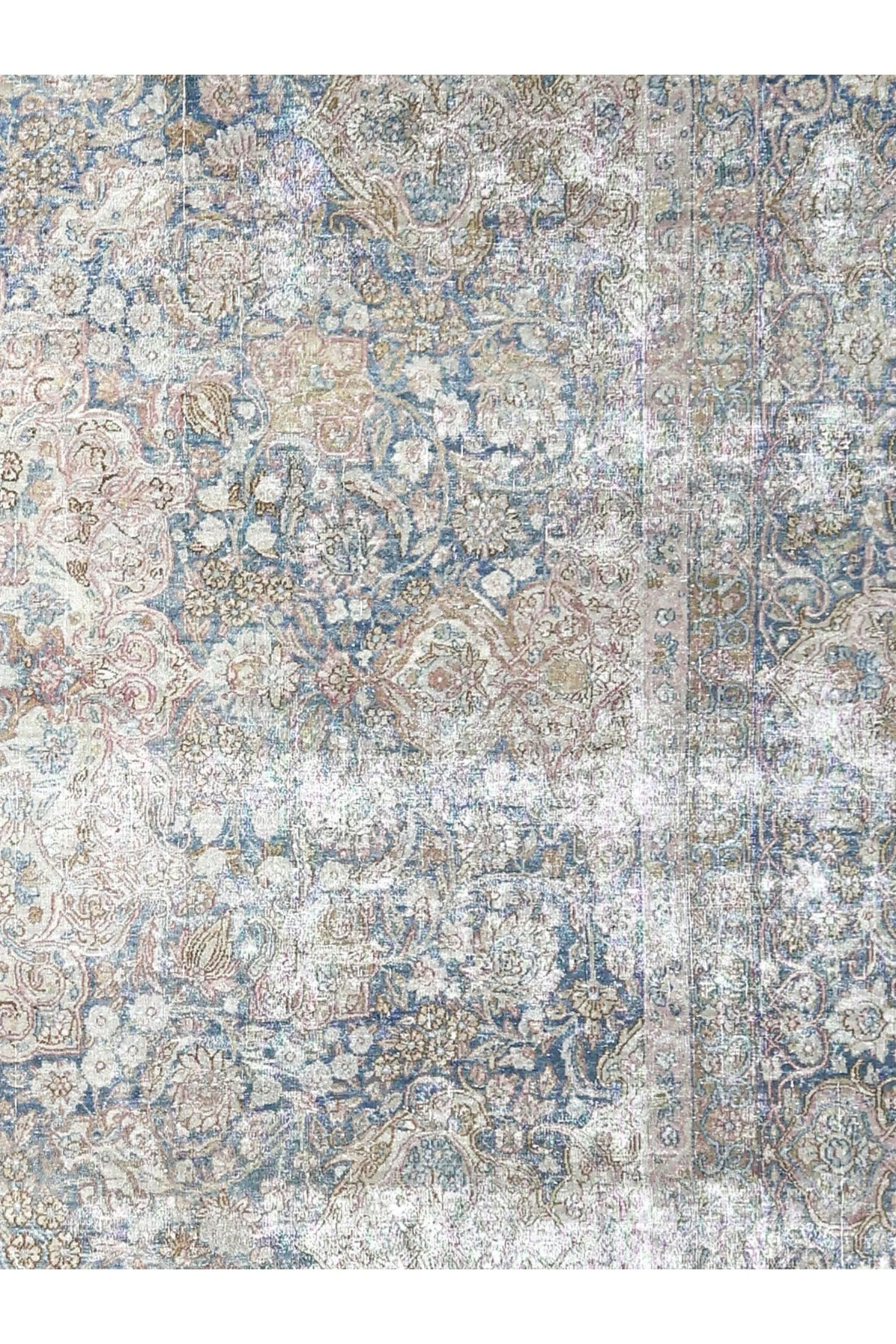 Image 2 of 6
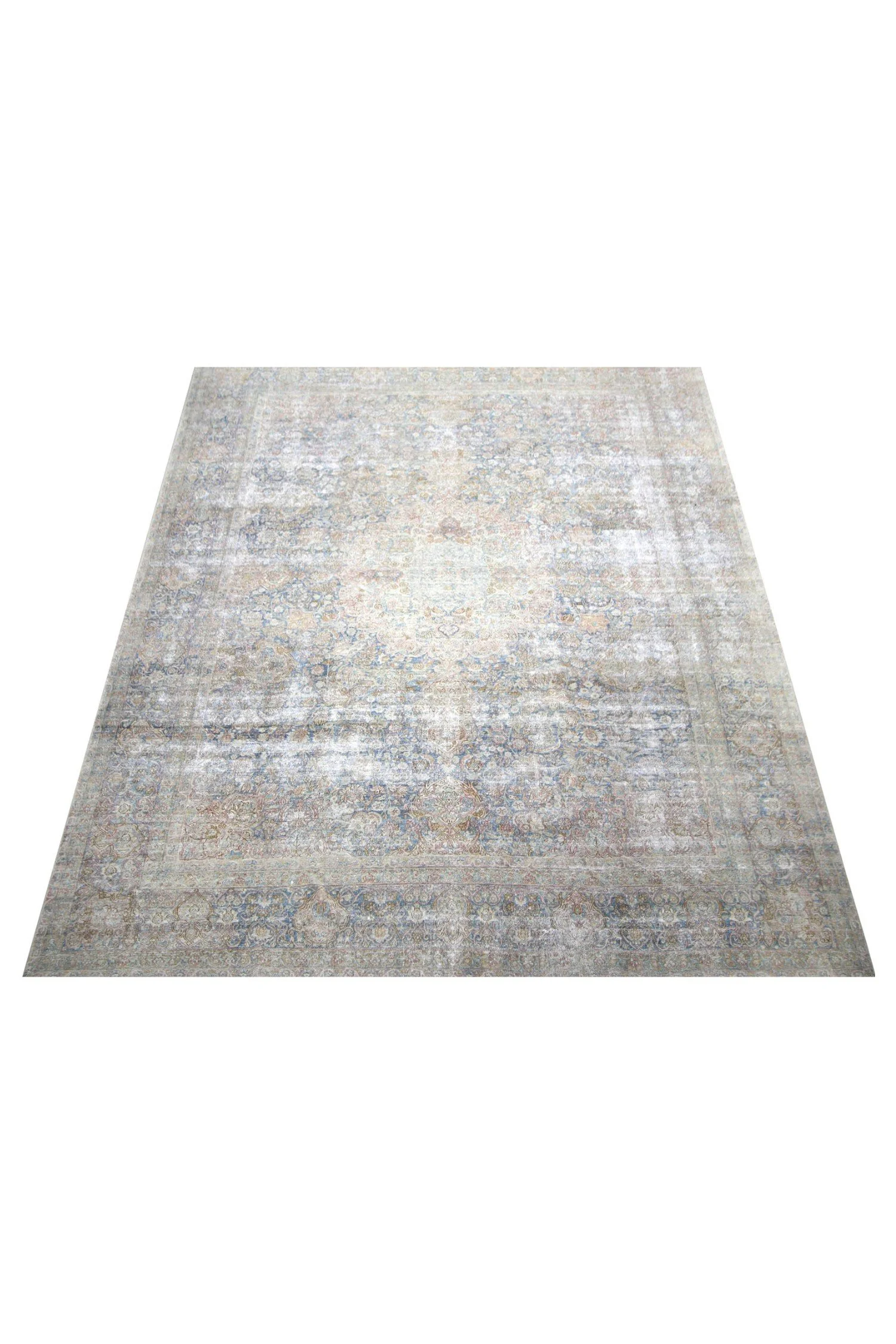 Image 3 of 6
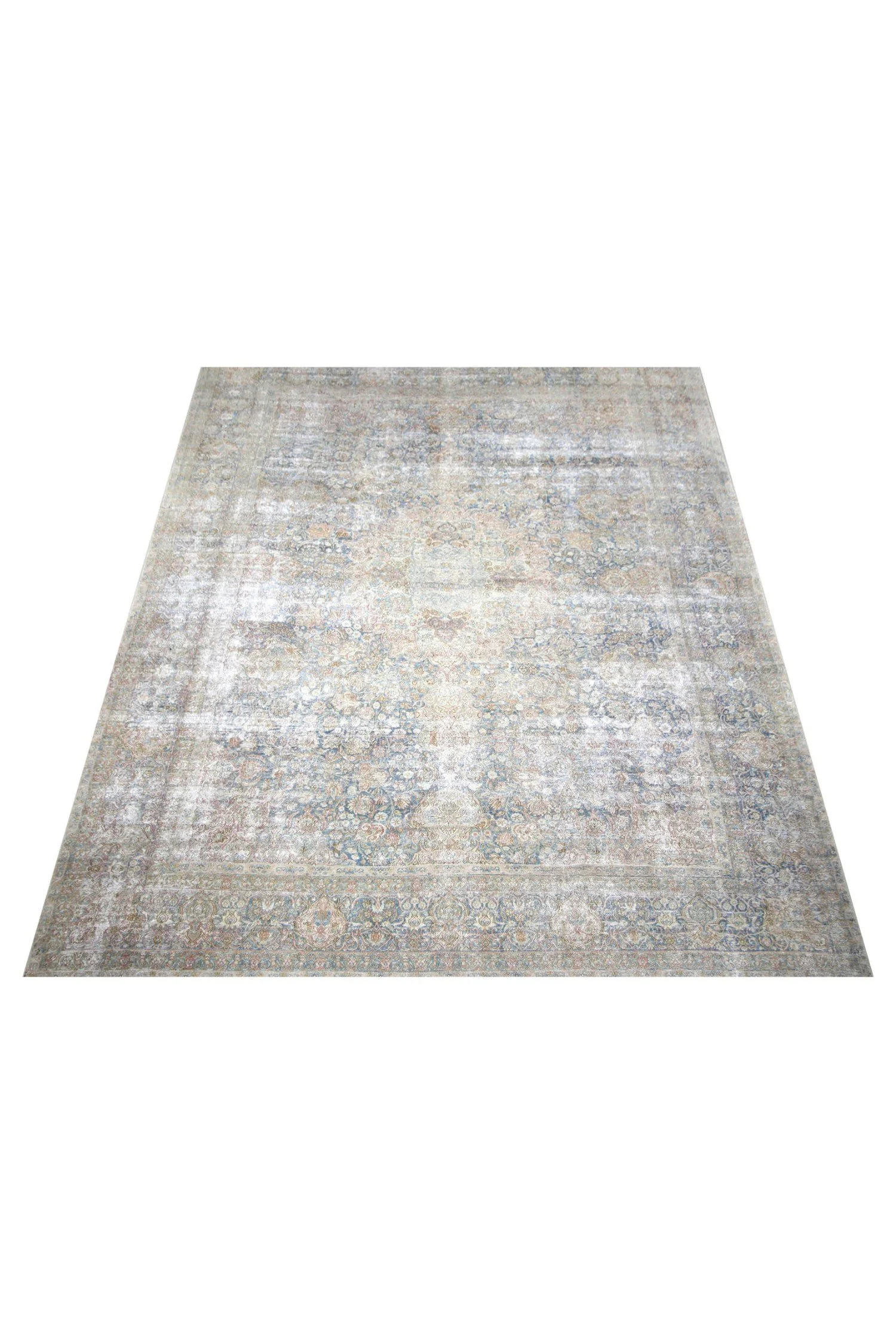 Image 4 of 6
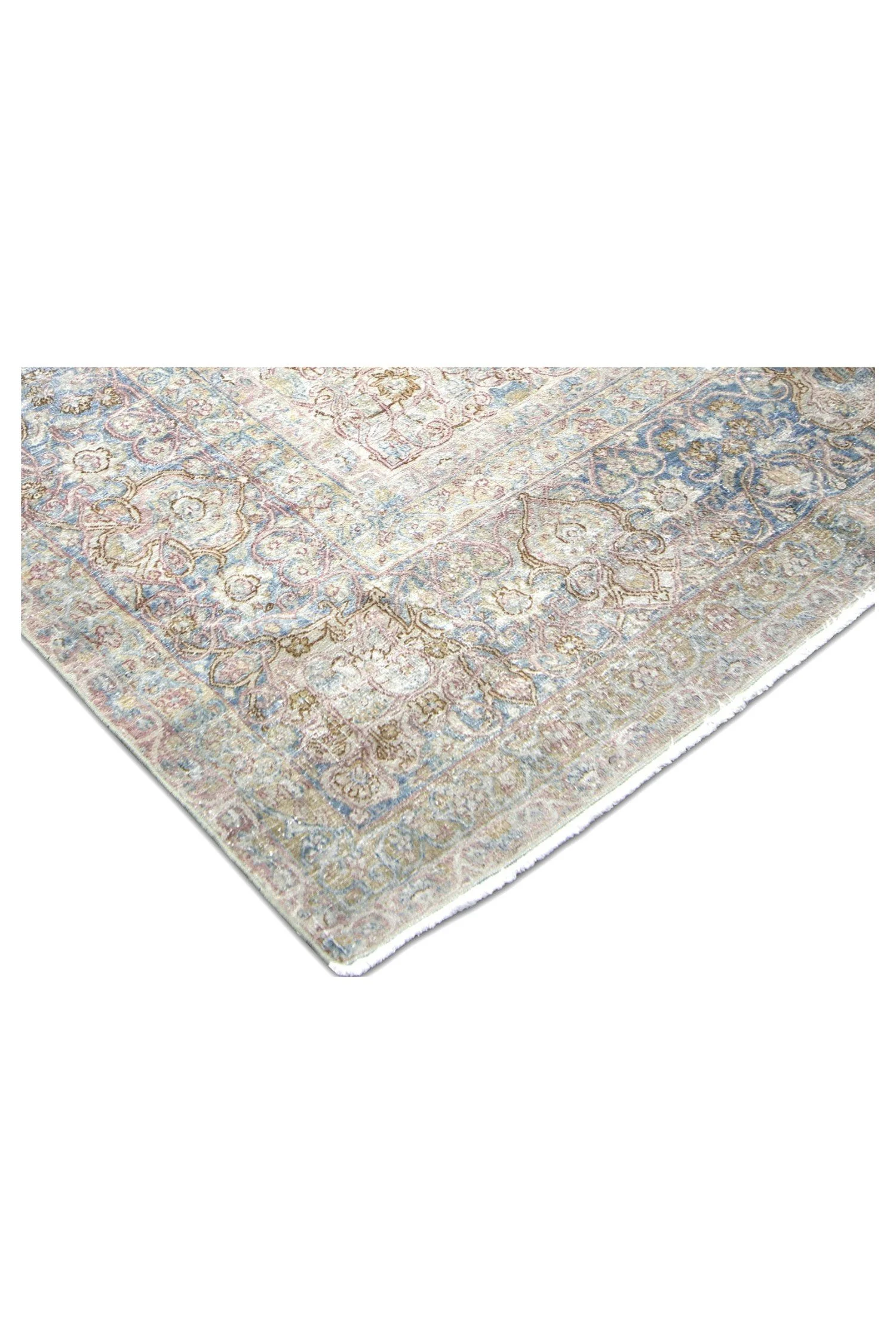 Image 5 of 6
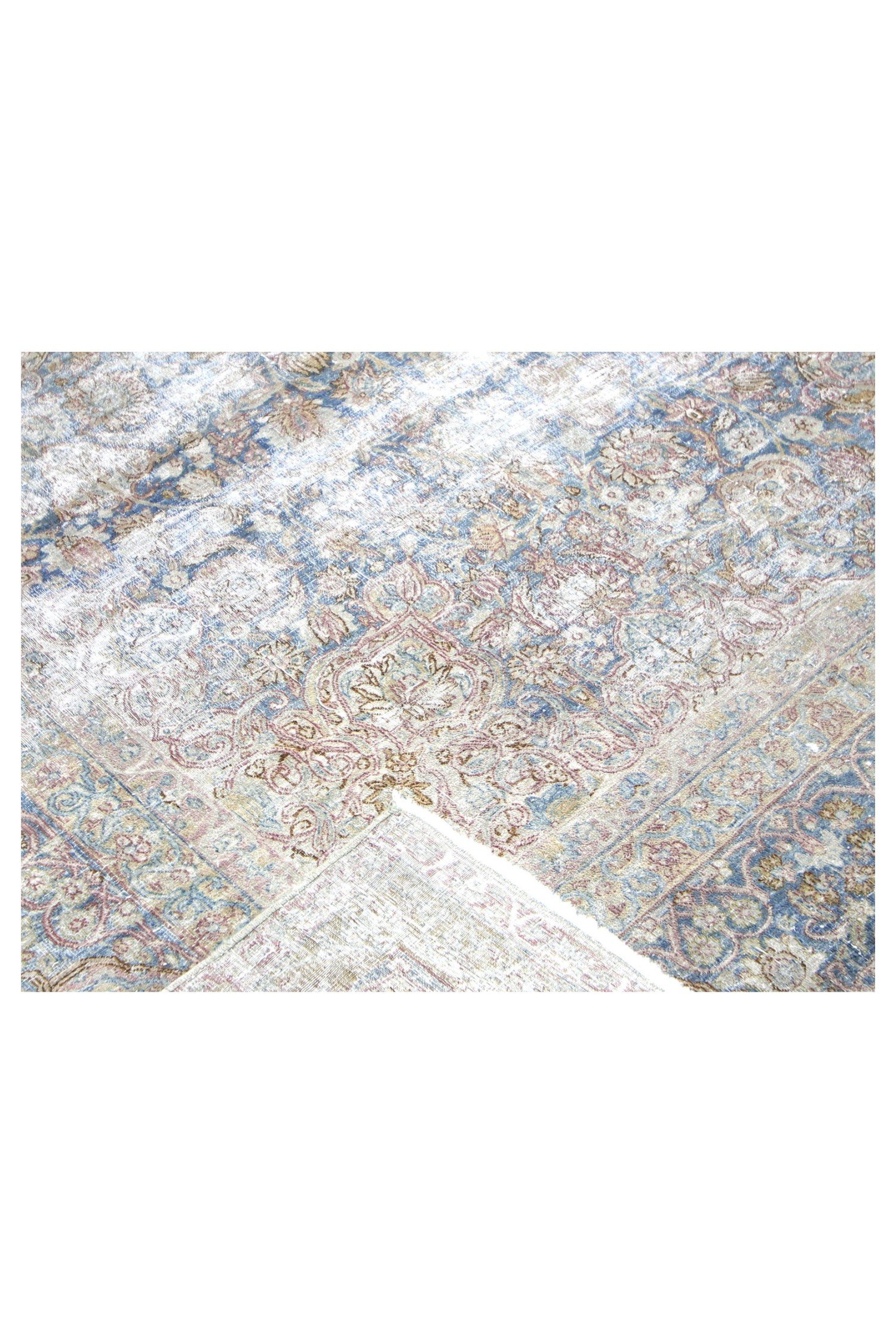 Image 6 of 6
Heritage and Craftsmanship
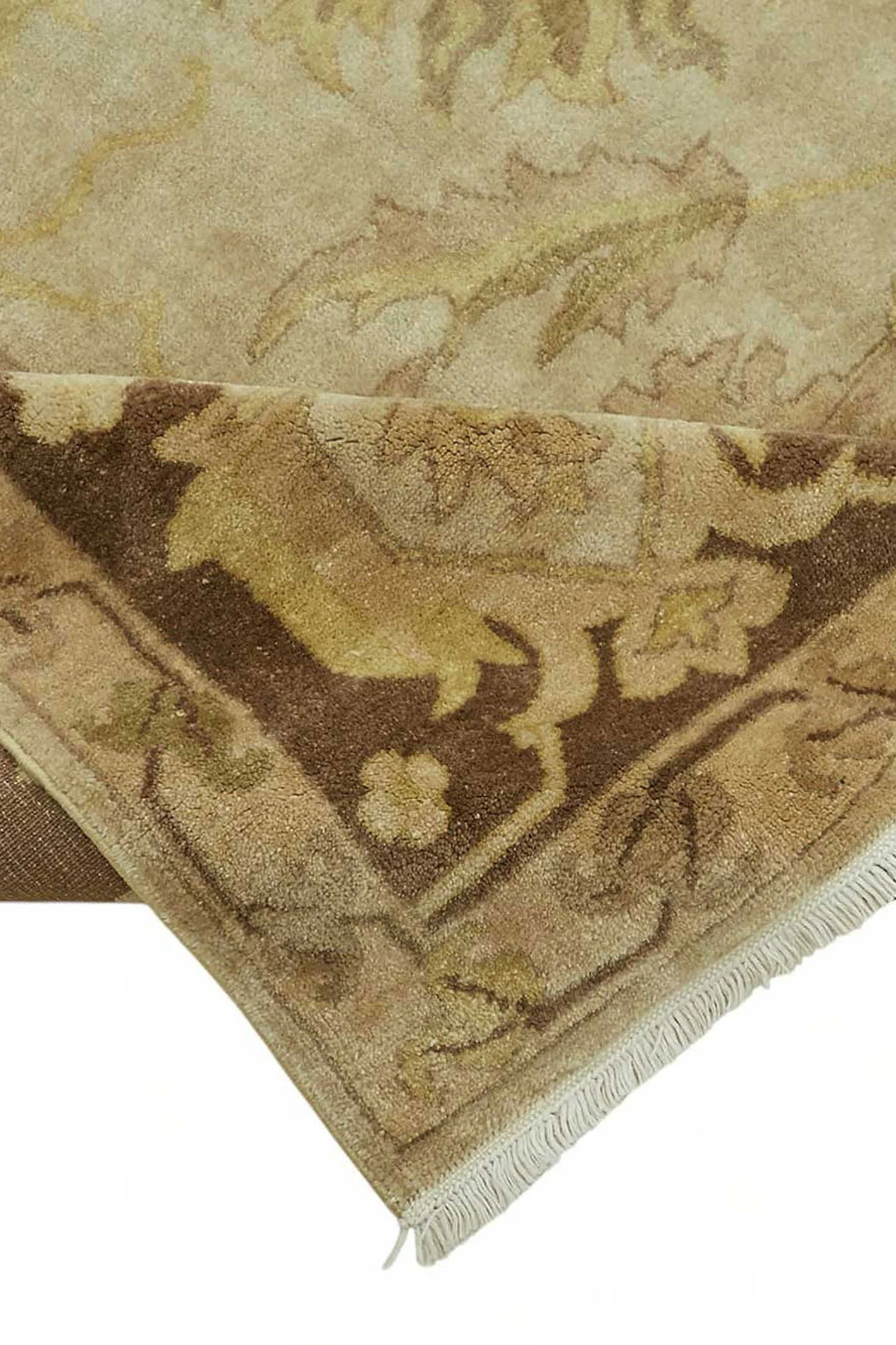
Kerman, a city in southeastern Persia, produced some of the most technically refined rugs of the early 20th century. By the 1930s and 1940s, Kerman workshops had developed distinctive styles characterized by delicate floral compositions, fine knotting, and elegant color palettes that appealed particularly to American and European markets.
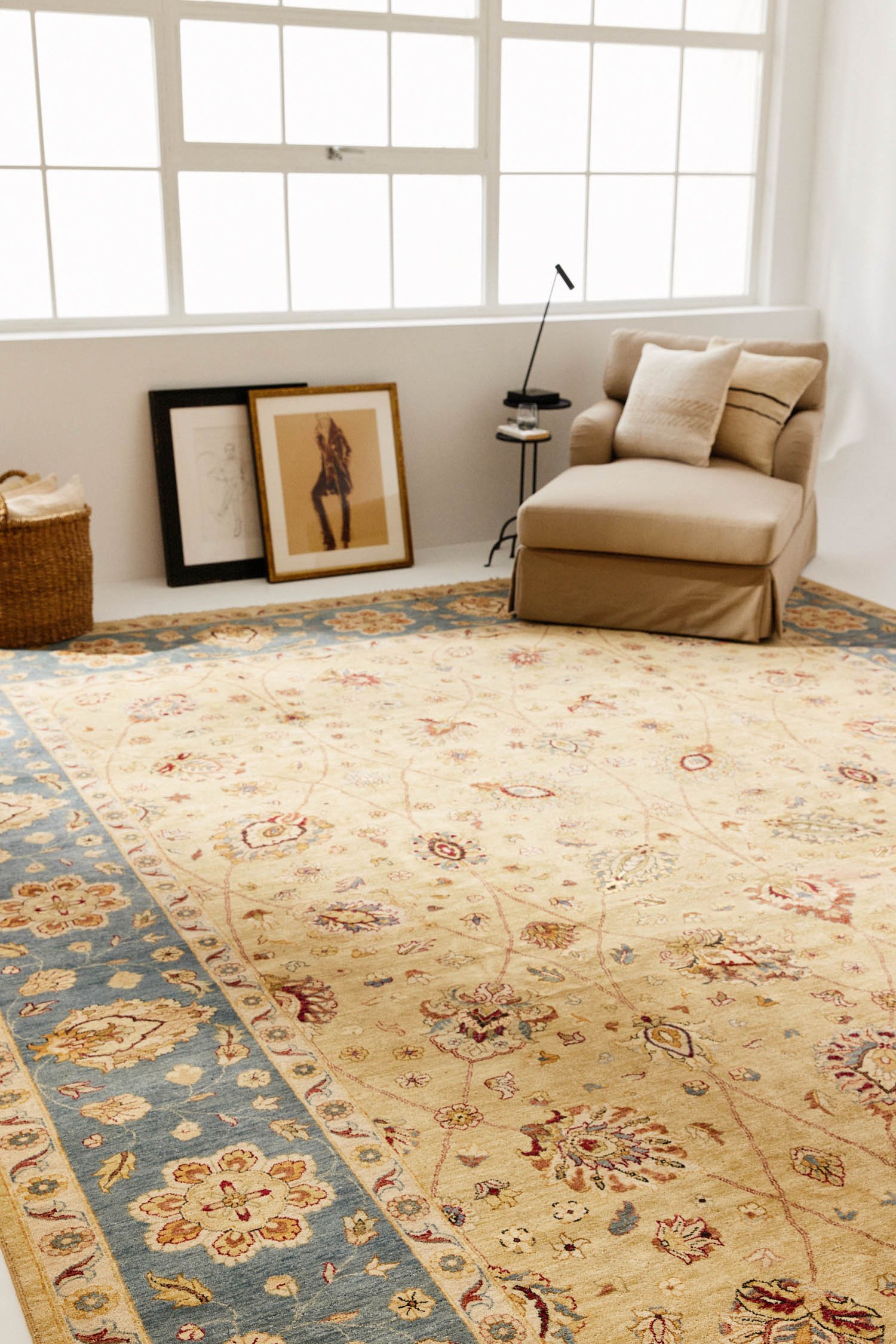
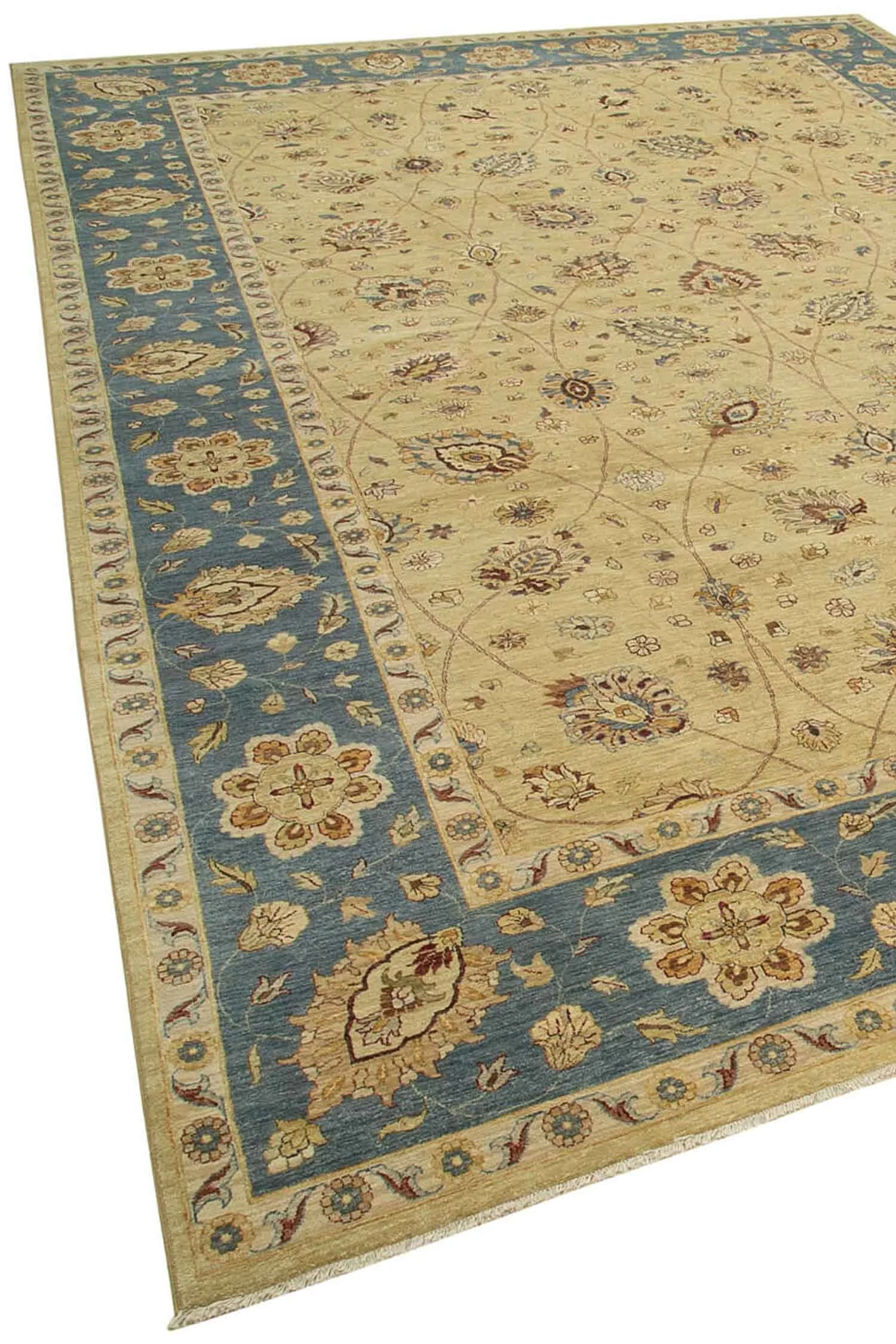
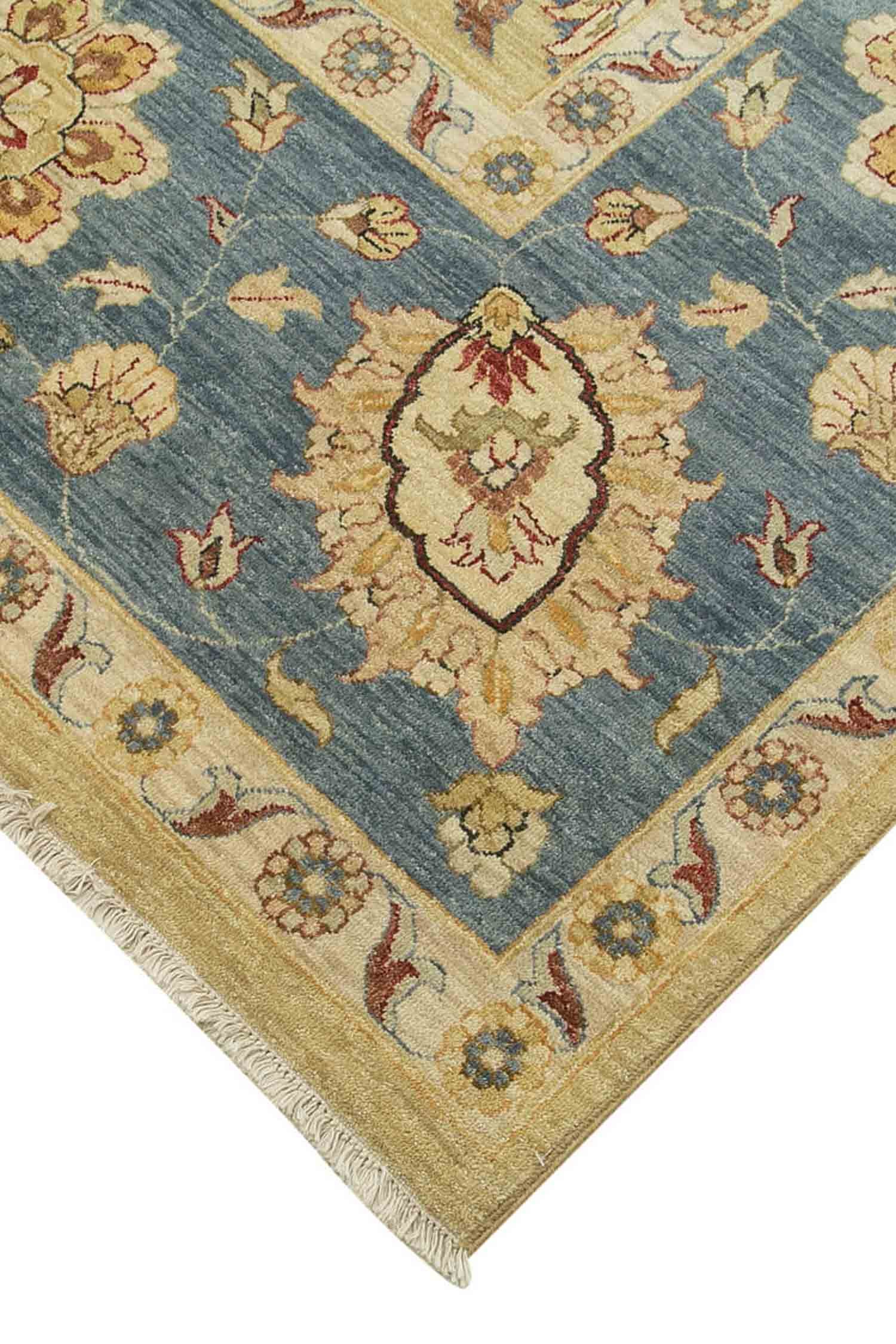
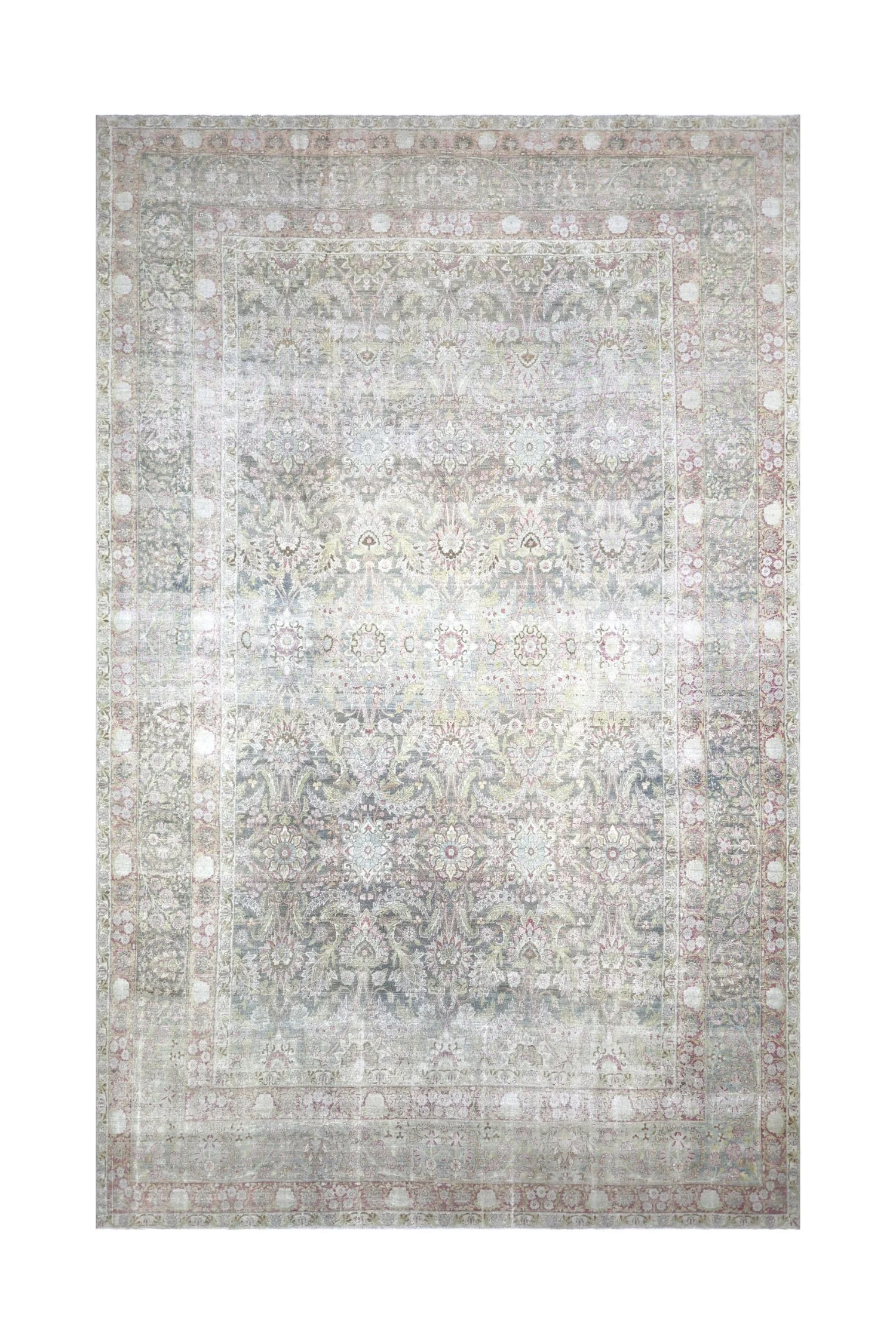
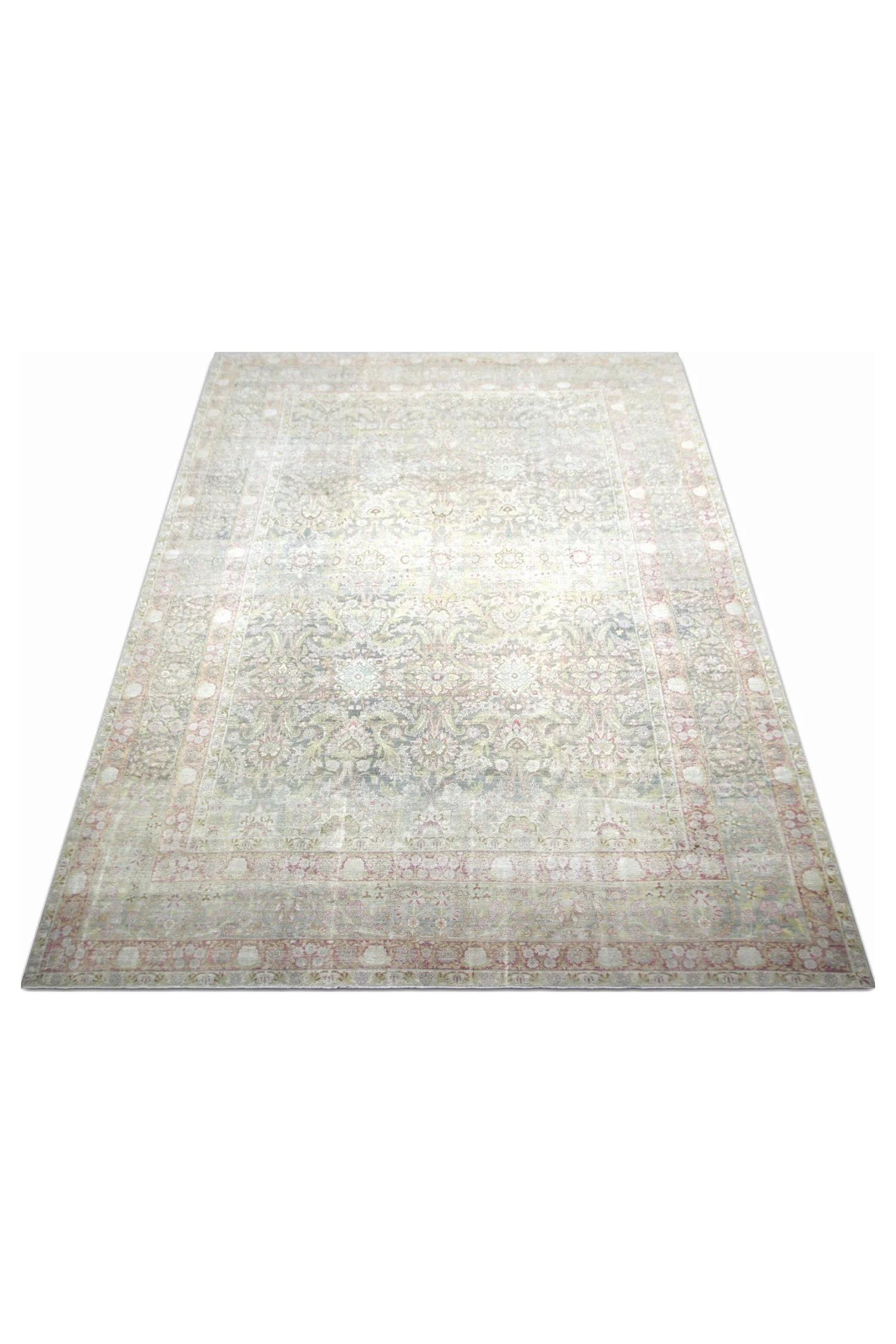
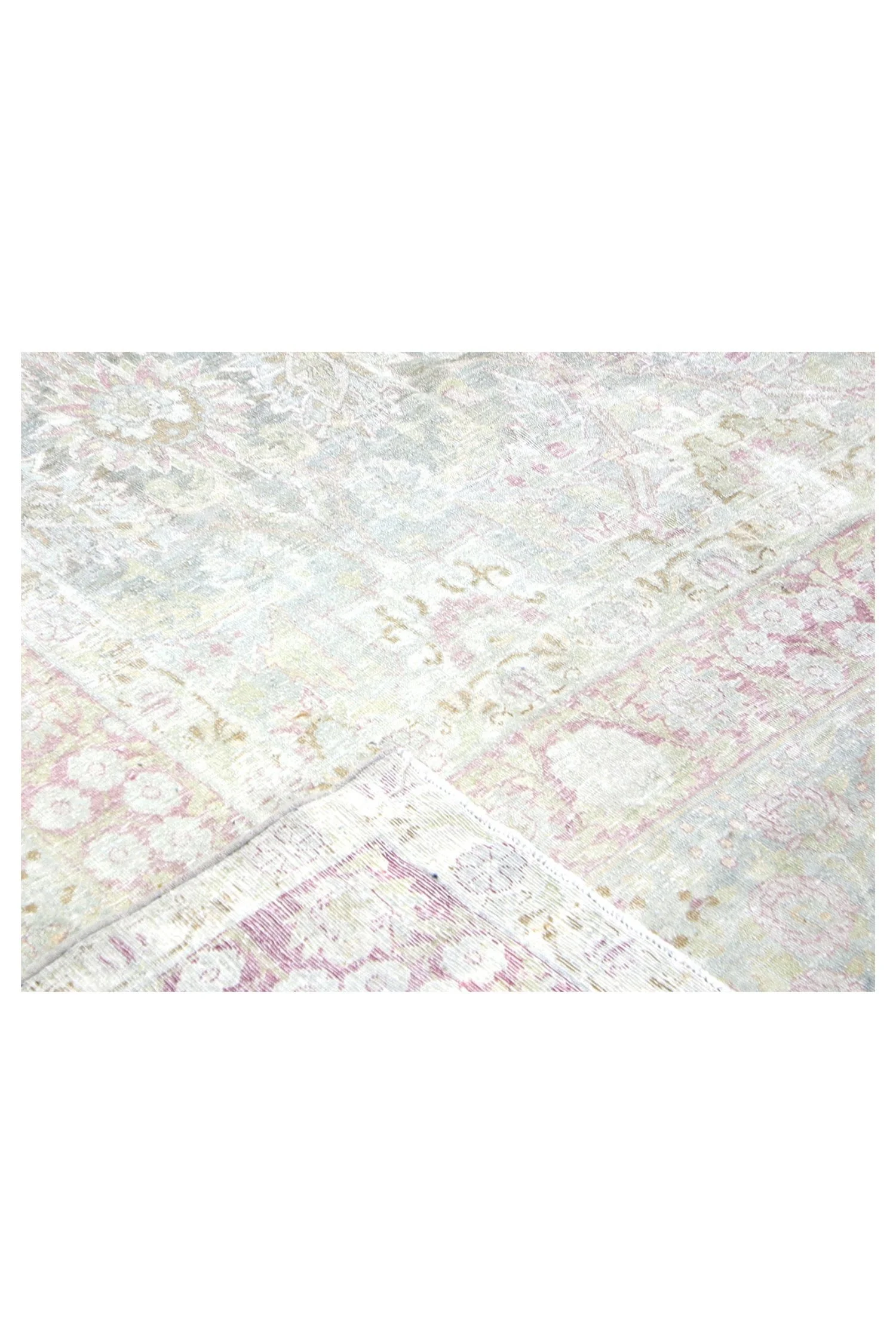
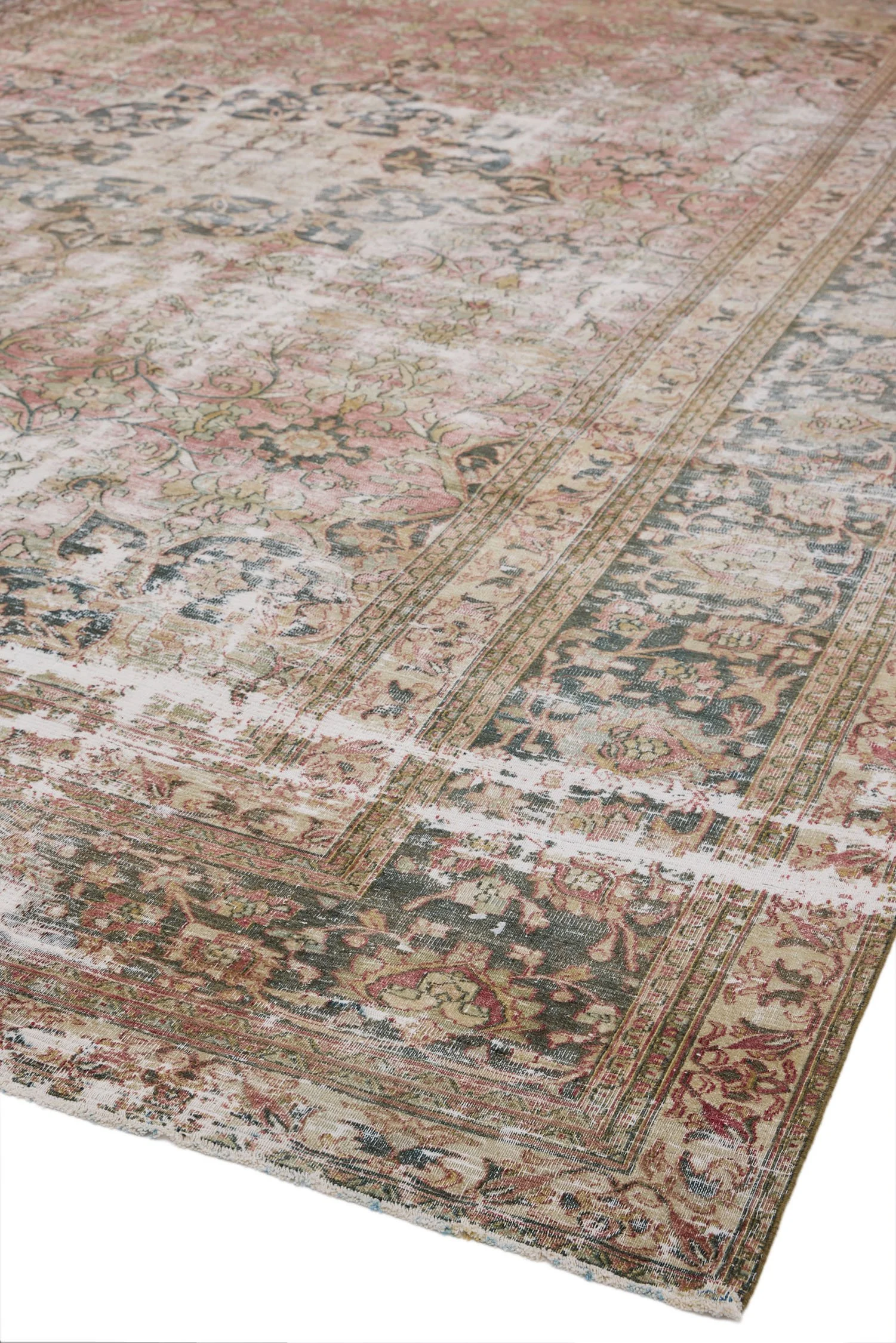
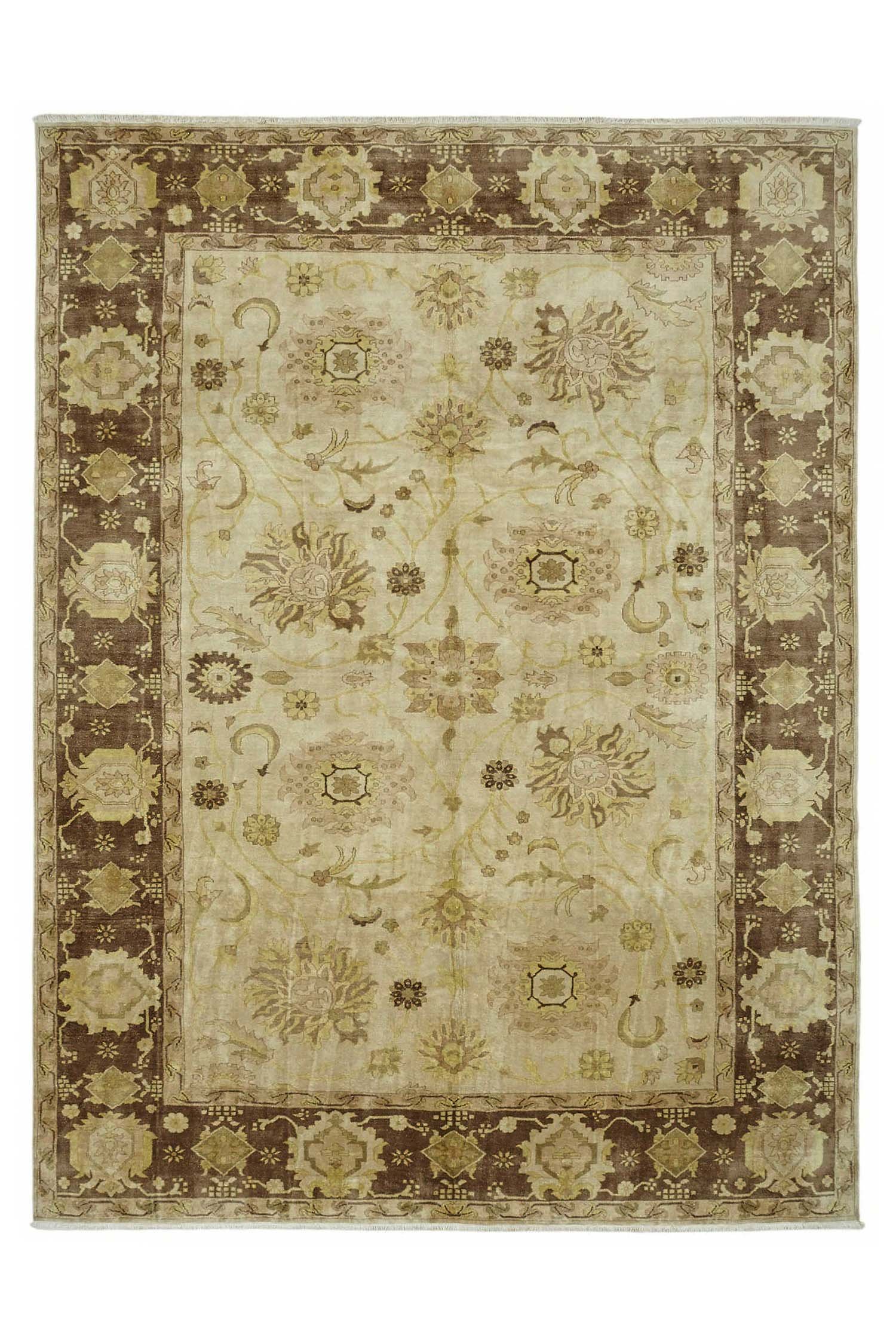
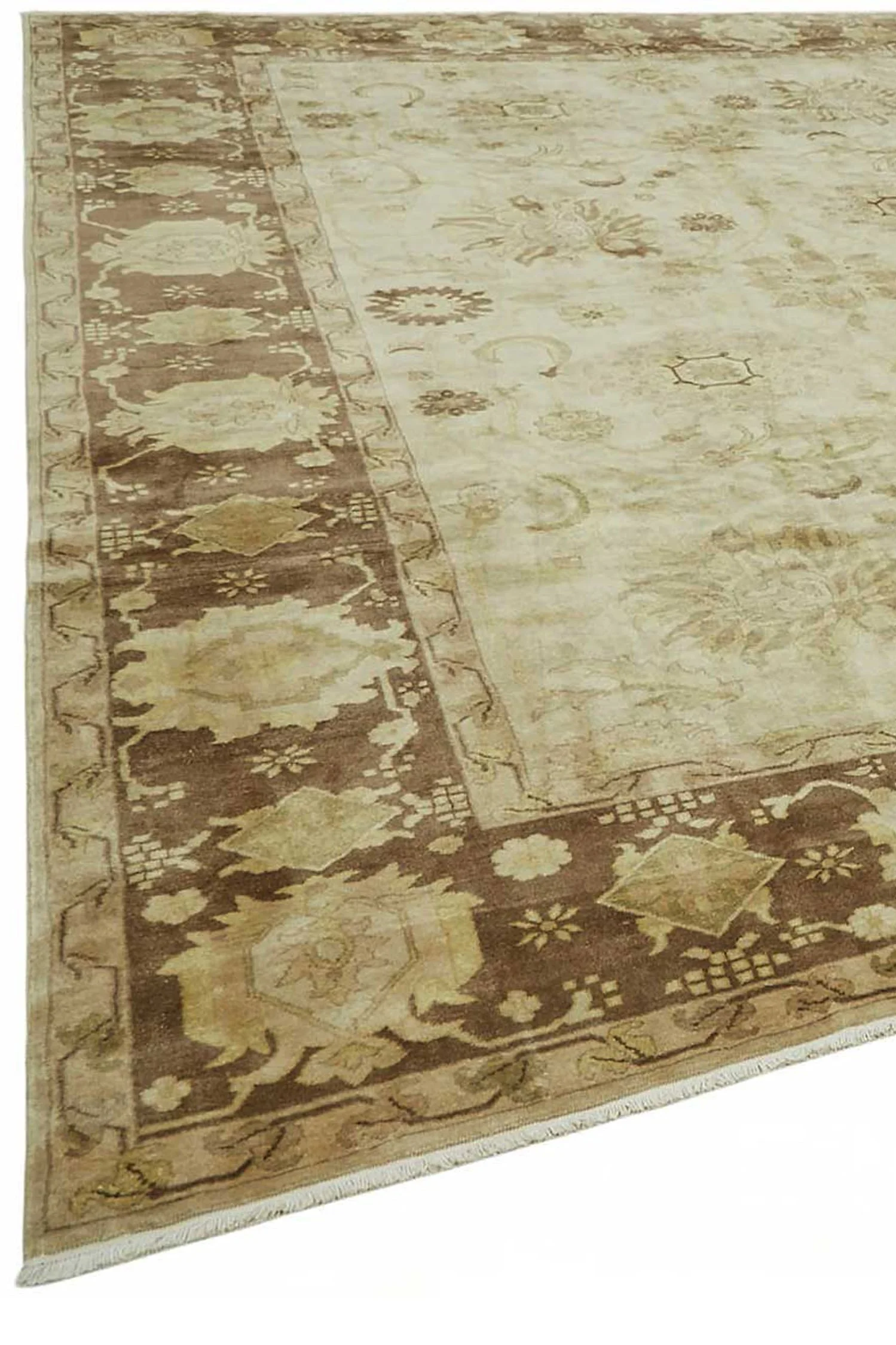
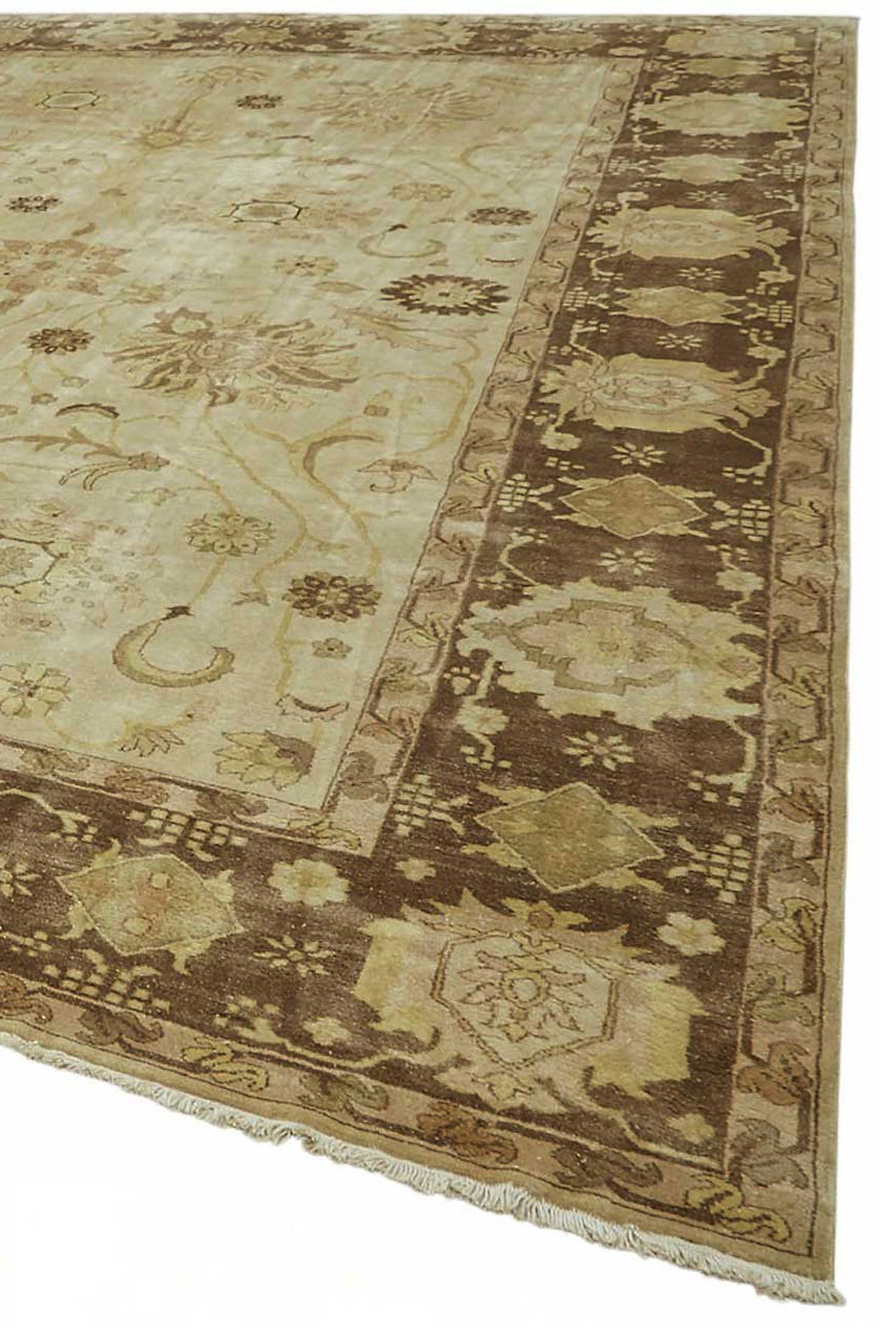
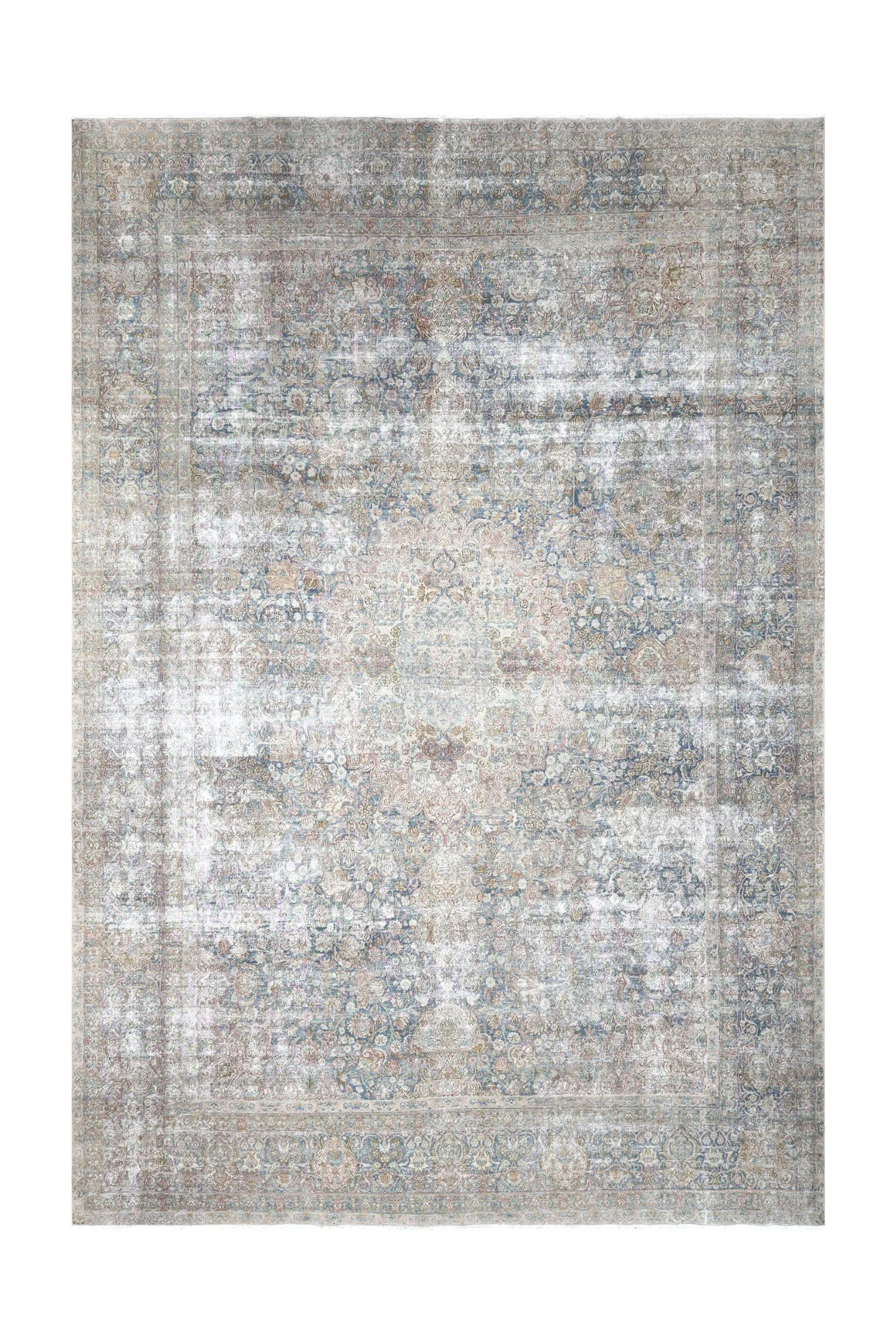
The powder-blue field seen here reflects Kerman's preference for softer, more atmospheric colors, compared to the saturated reds and blues common in other Persian weaving centers. These lighter palettes required careful dye formulation and consistent application across large surfaces. Natural aging has further softened the original tones, creating the graceful fading visible today.
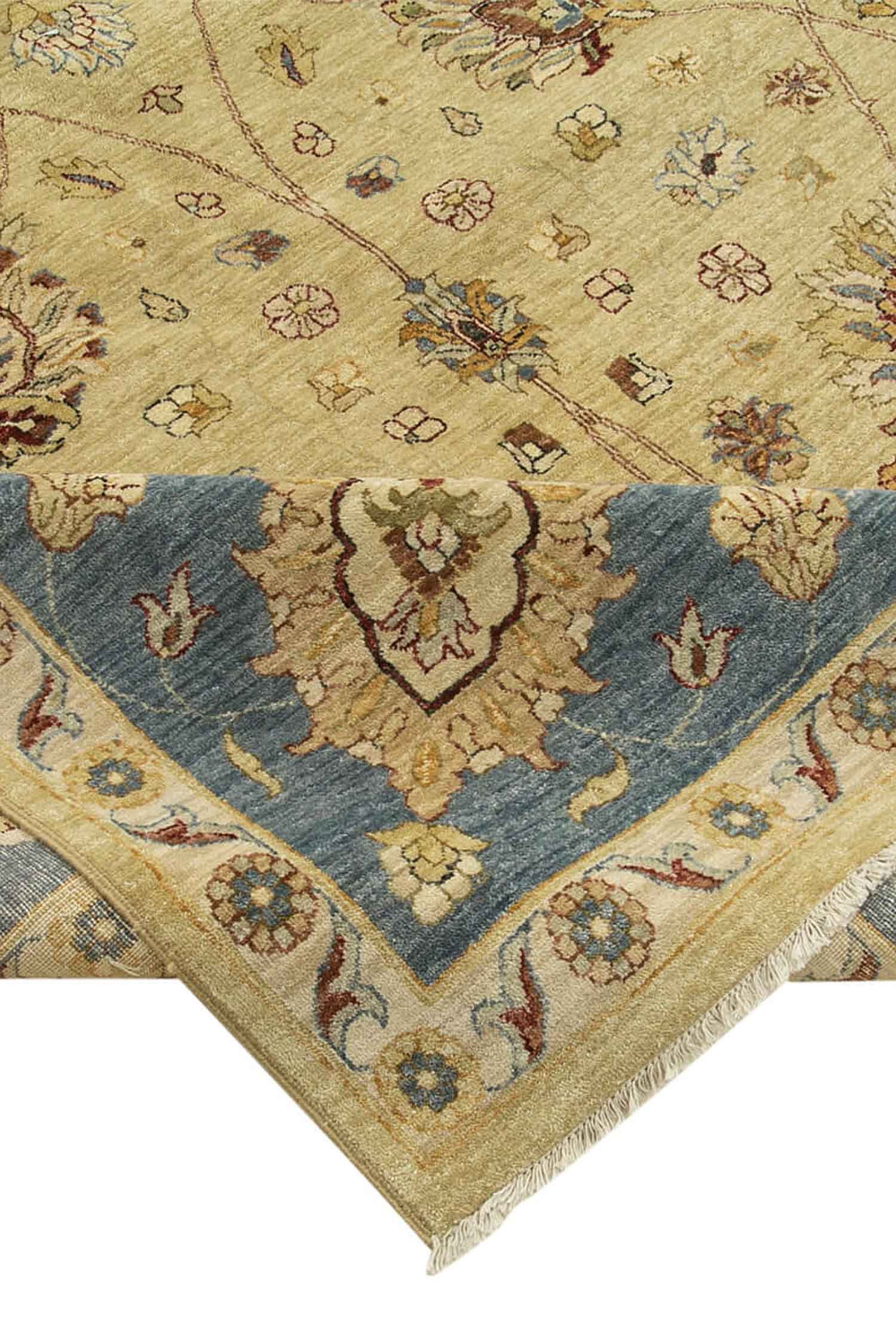
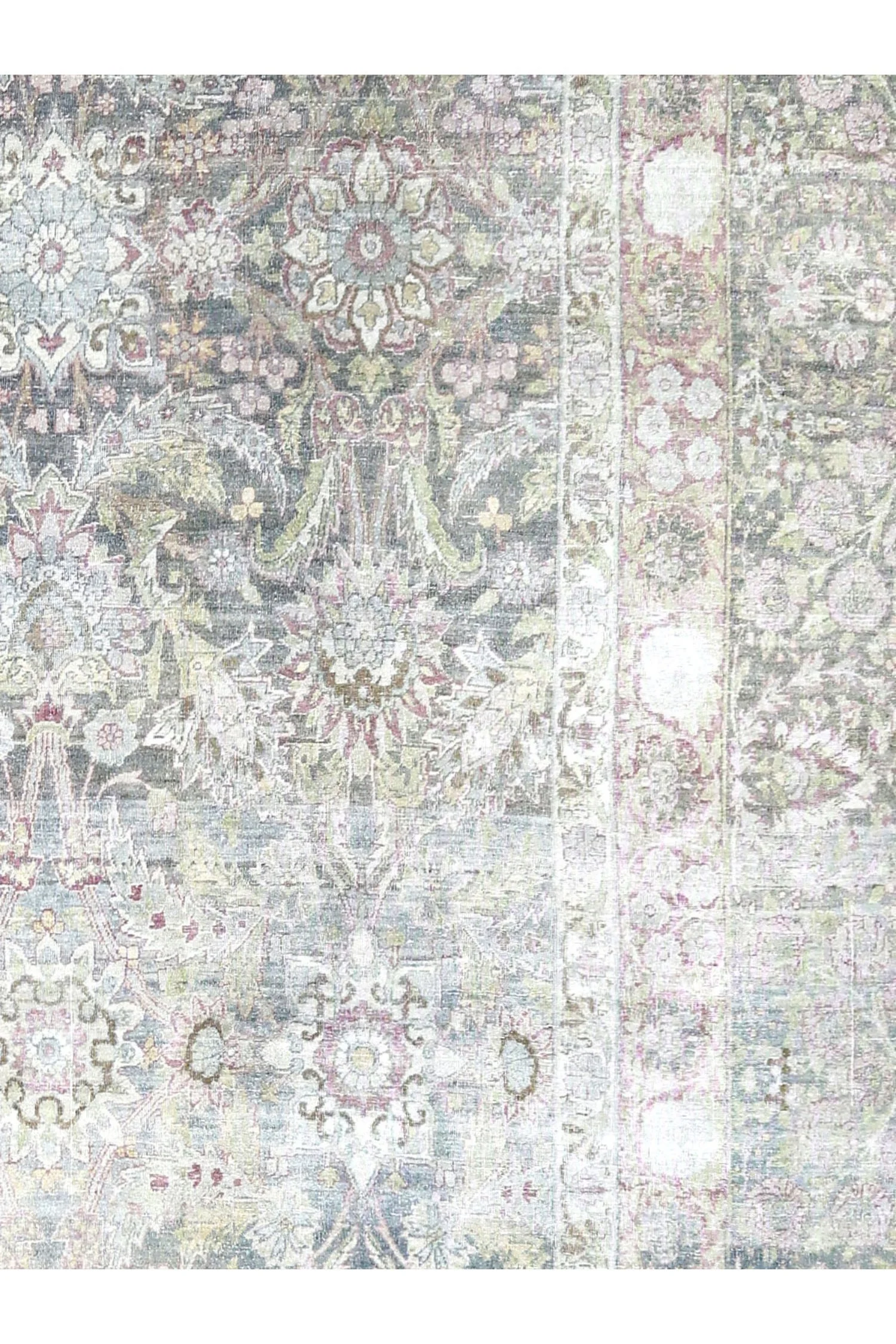
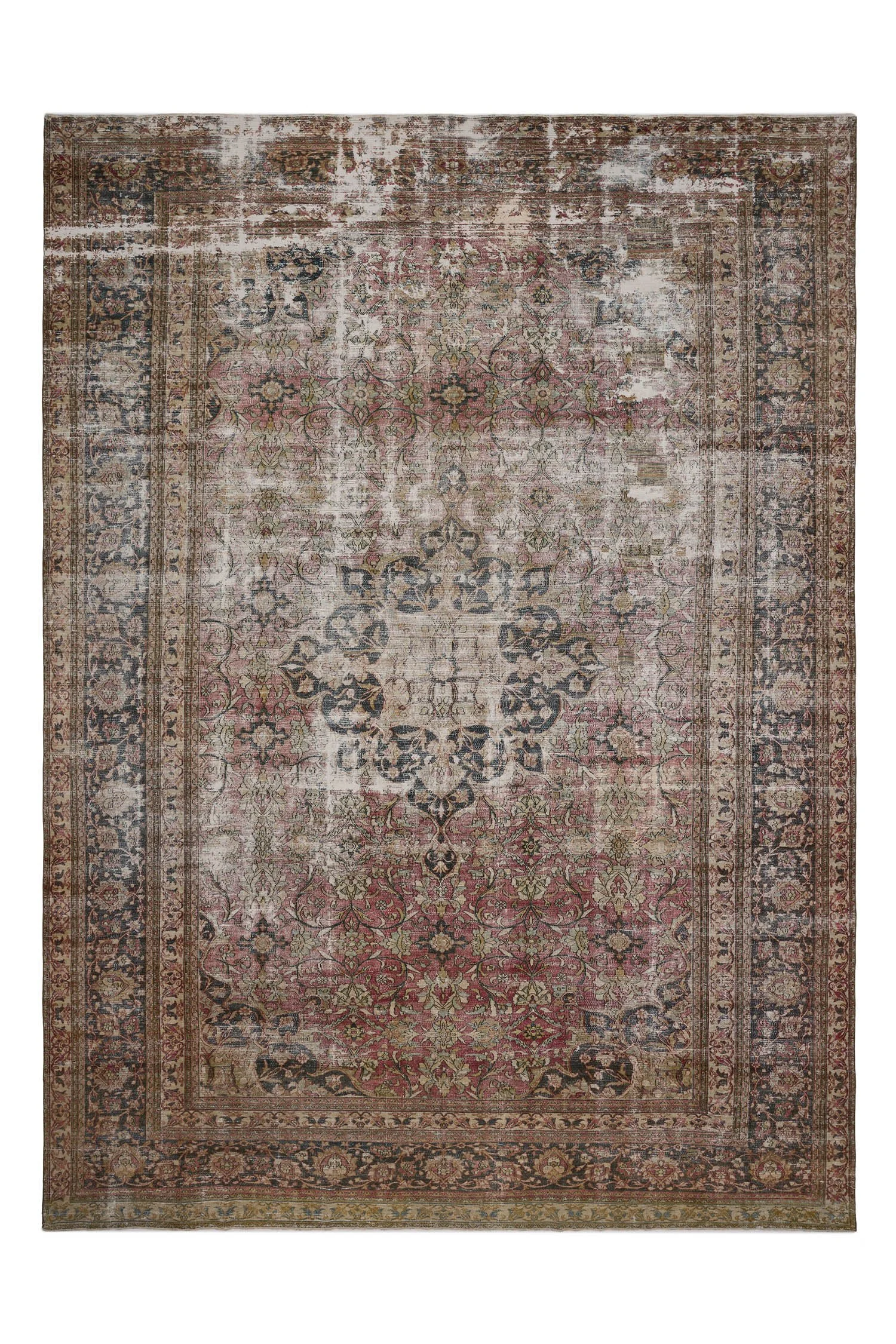
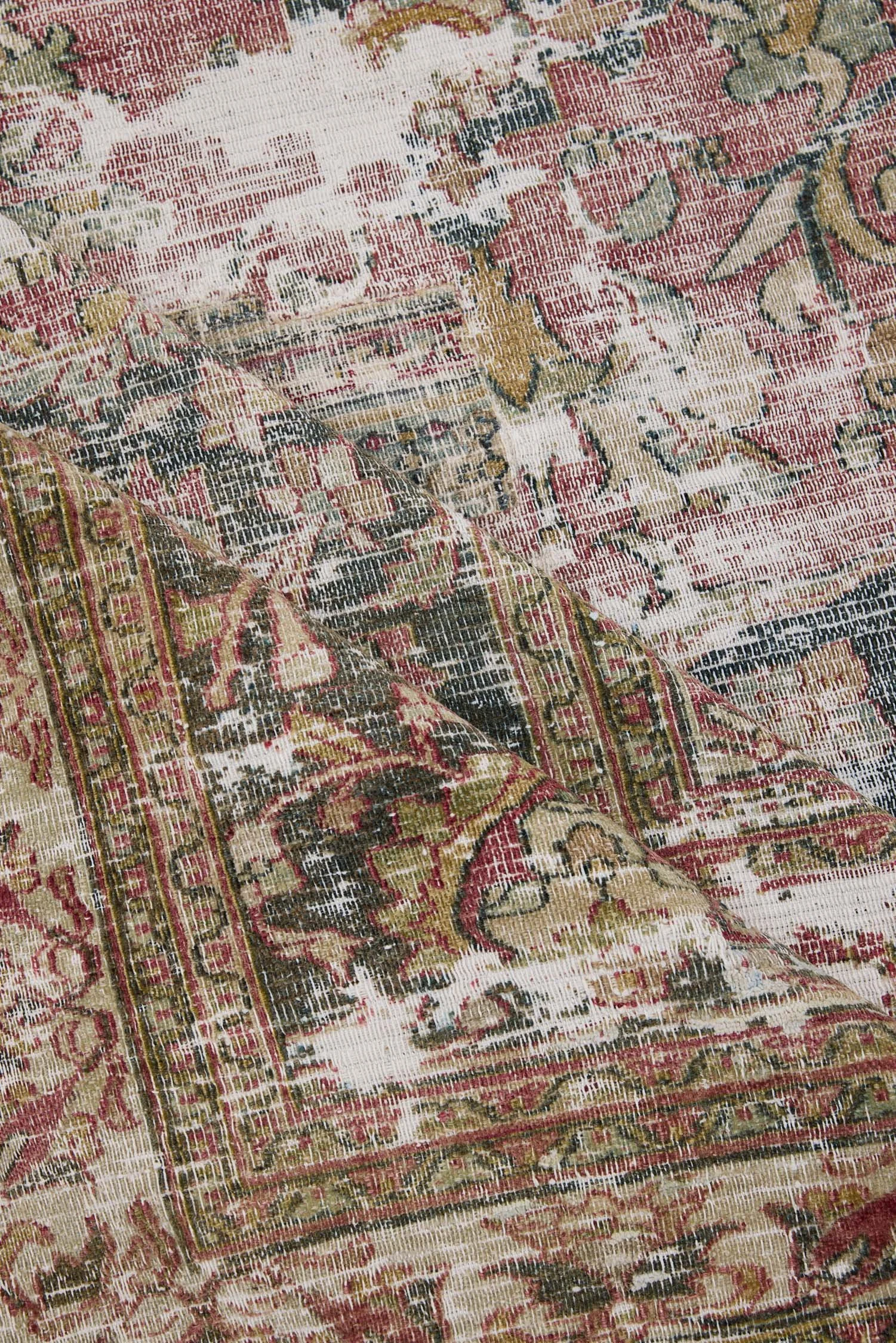
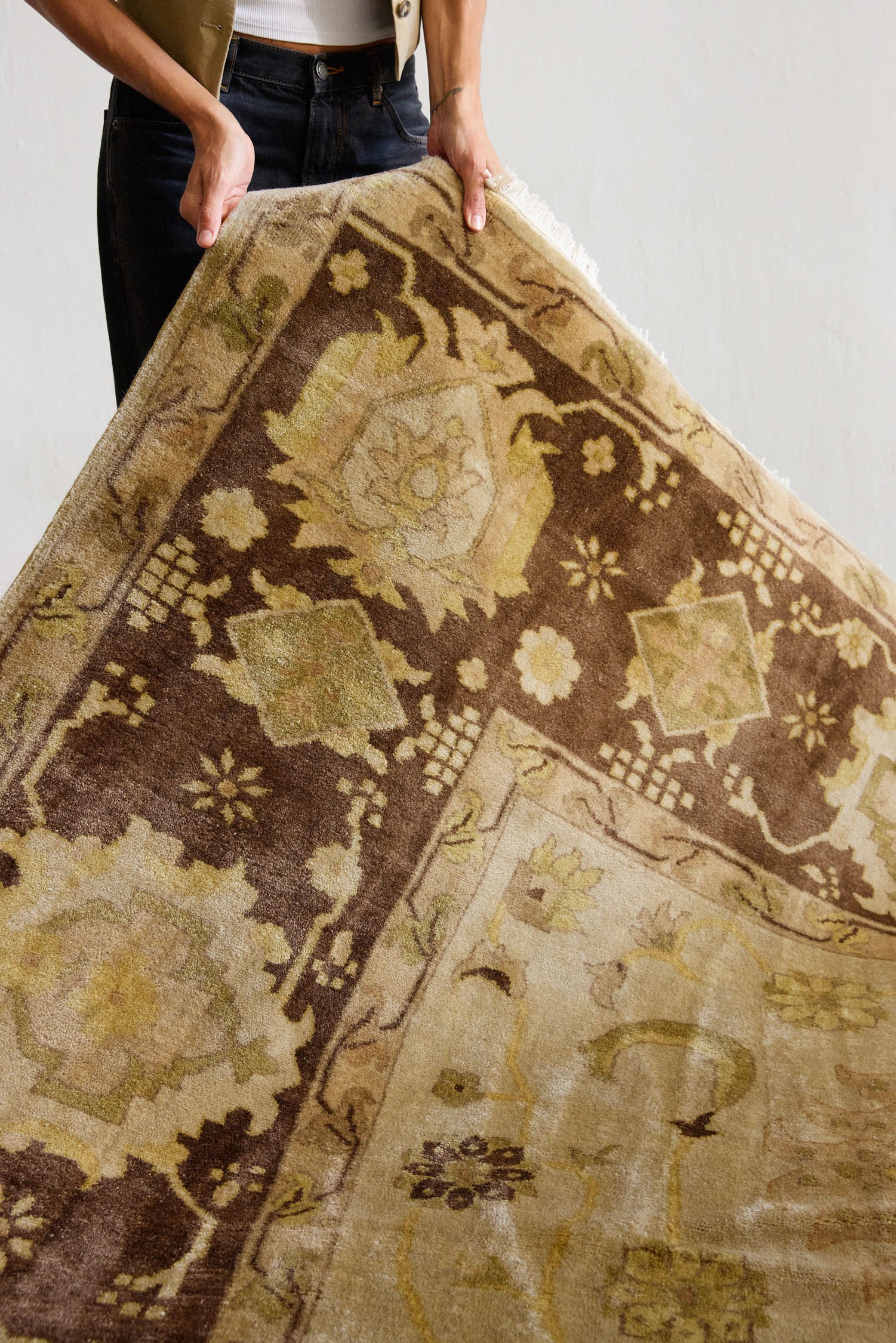
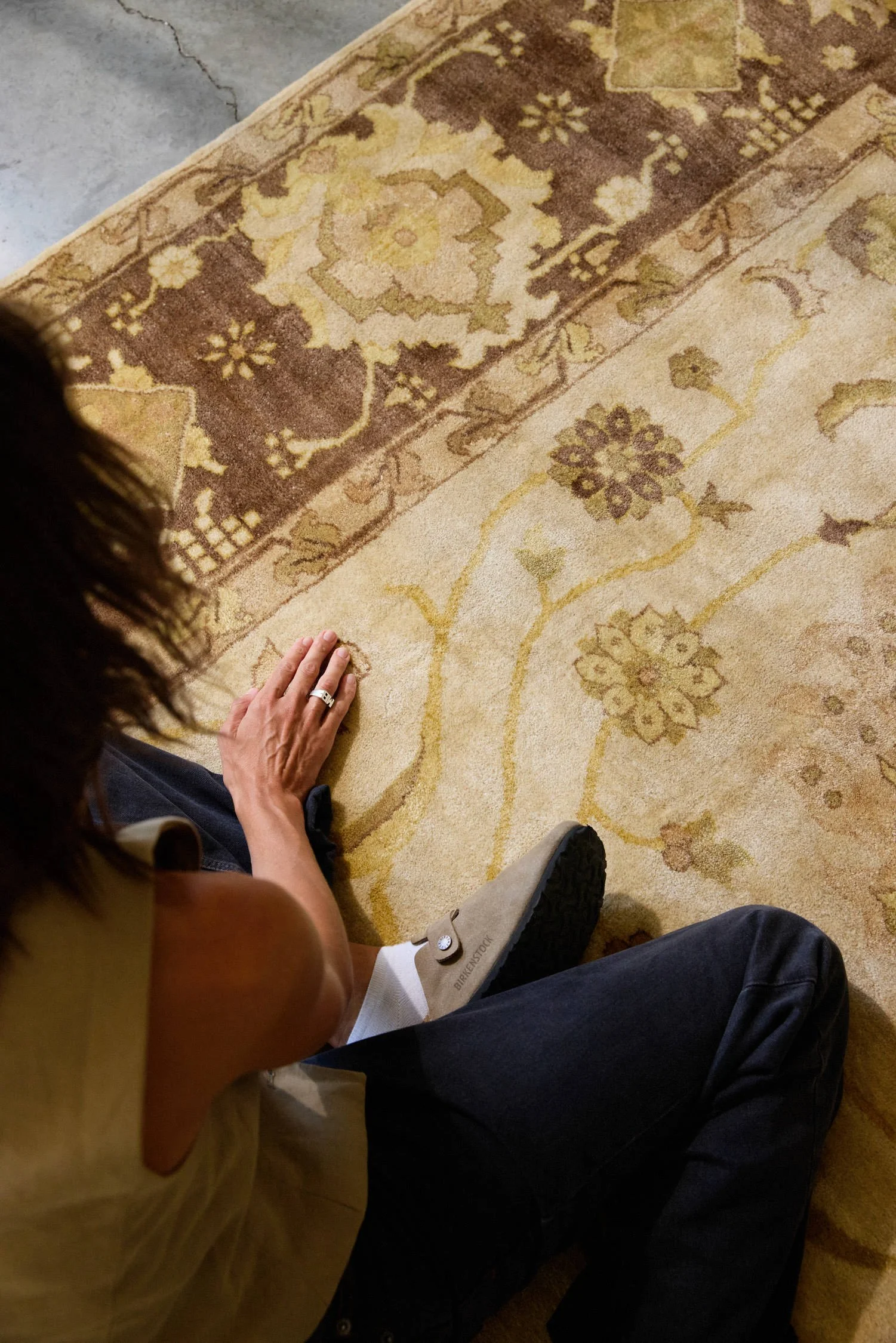
Fine knotting allowed Kerman weavers to execute the delicate vine work and detailed floral forms characteristic of the region. Weavers worked from precise cartoons under skilled supervision, maintaining consistency across large rugs like this, a nearly ten-by-fourteen-foot piece. The surface patina reflects decades of use that have mellowed the original appearance.
Design Elements
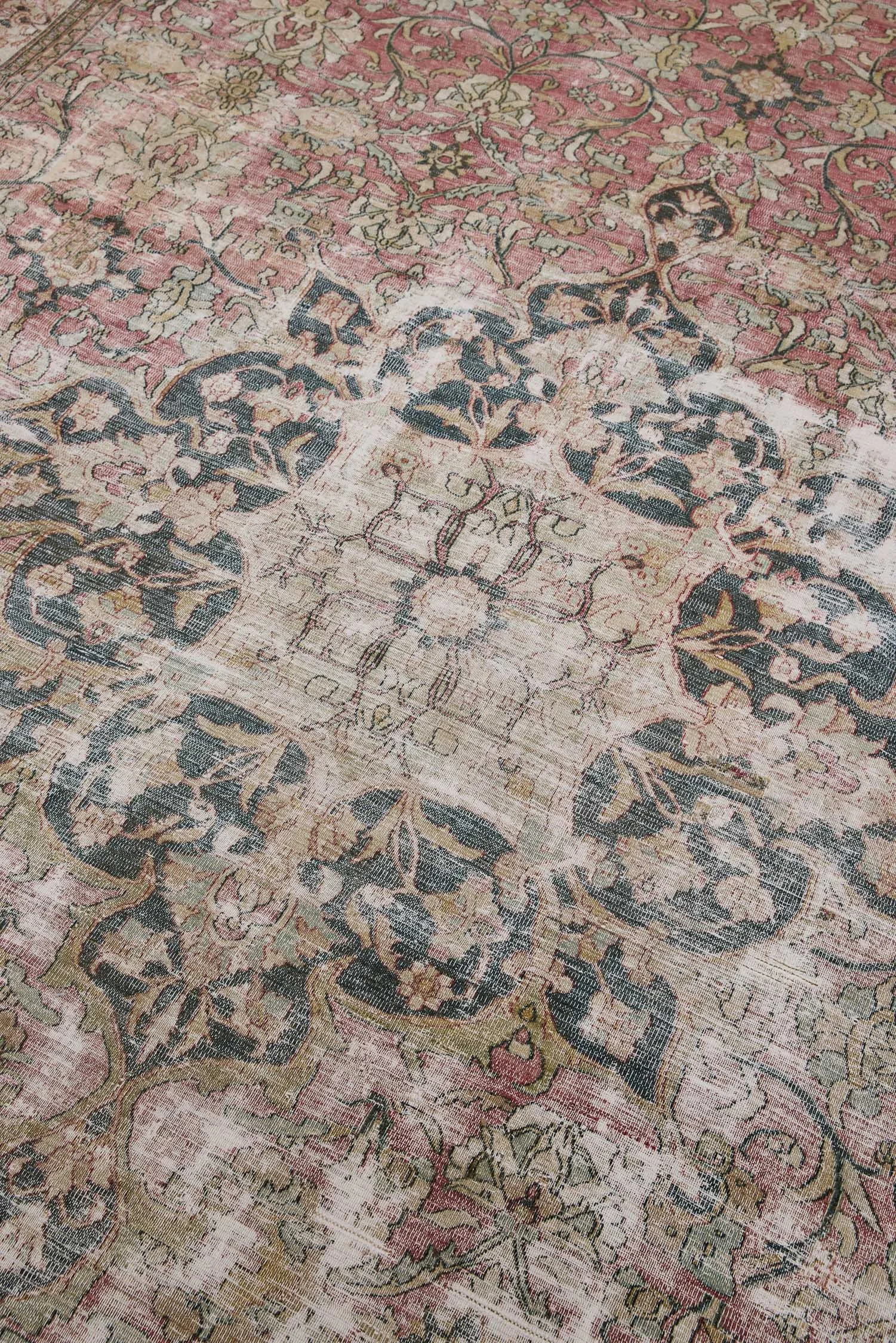
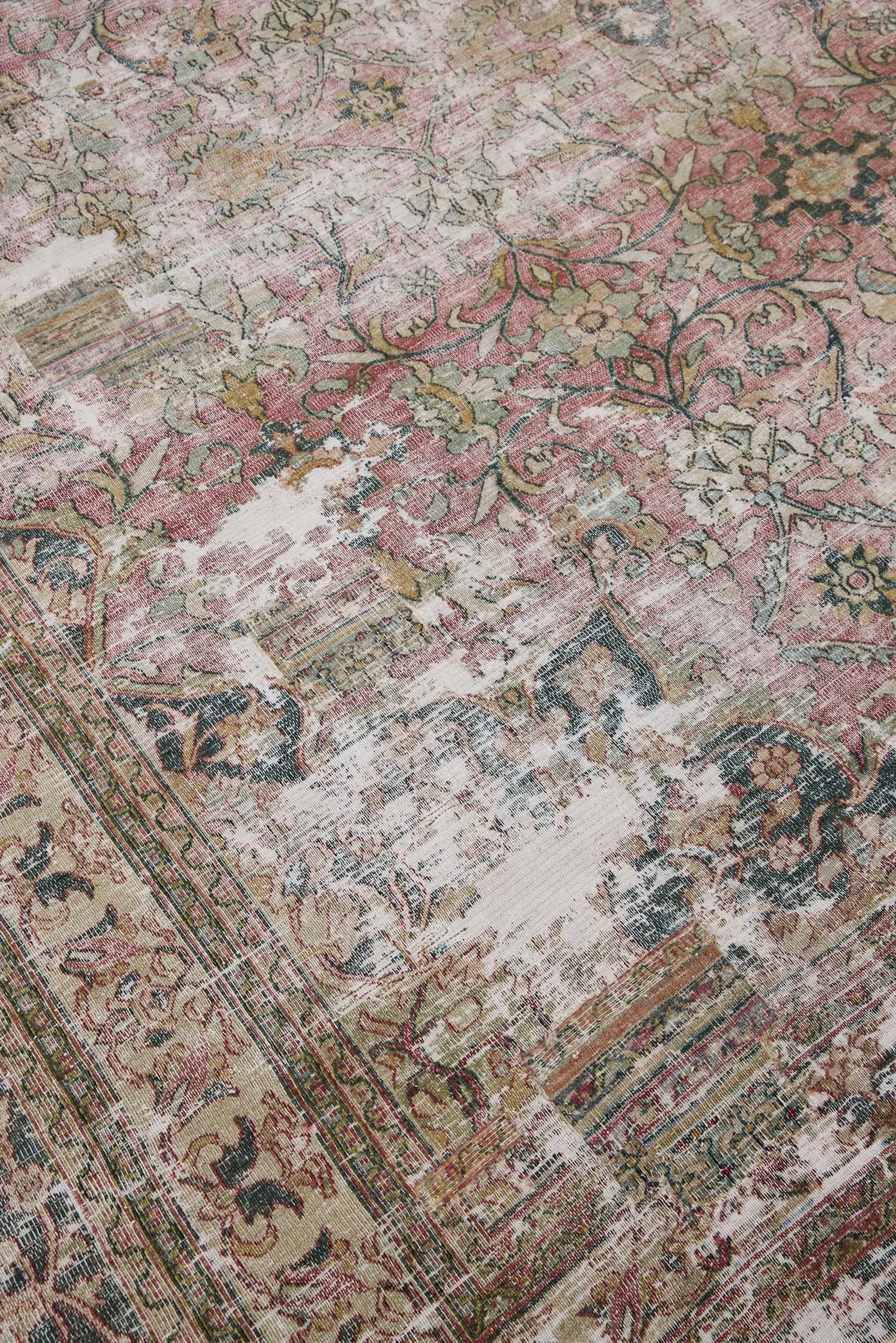
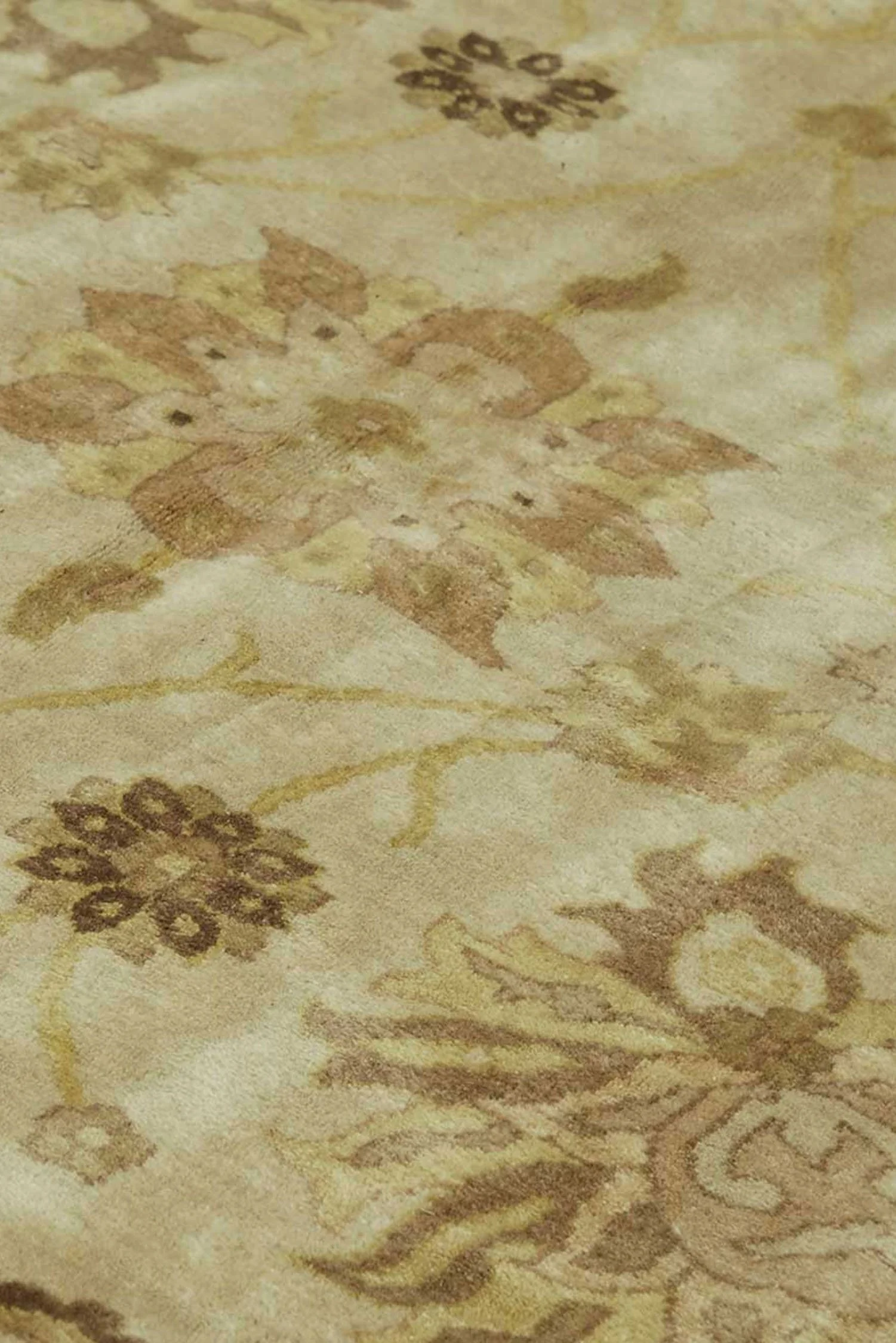
The allover floral composition organizes patterns across the field with balanced distribution. Floral elements vary in scale, creating visual hierarchy while maintaining overall consistency. The arrangement avoids rigid symmetry, allowing the composition to feel organic within its structured framework.
Delicate vine work connects the floral forms in flowing pathways that guide the eye across the surface. The vines show the graceful, curving lines characteristic of Kerman design, executed with the fine detail possible through tight knotting. Age has softened the definition of these elements, creating a more integrated surface quality.
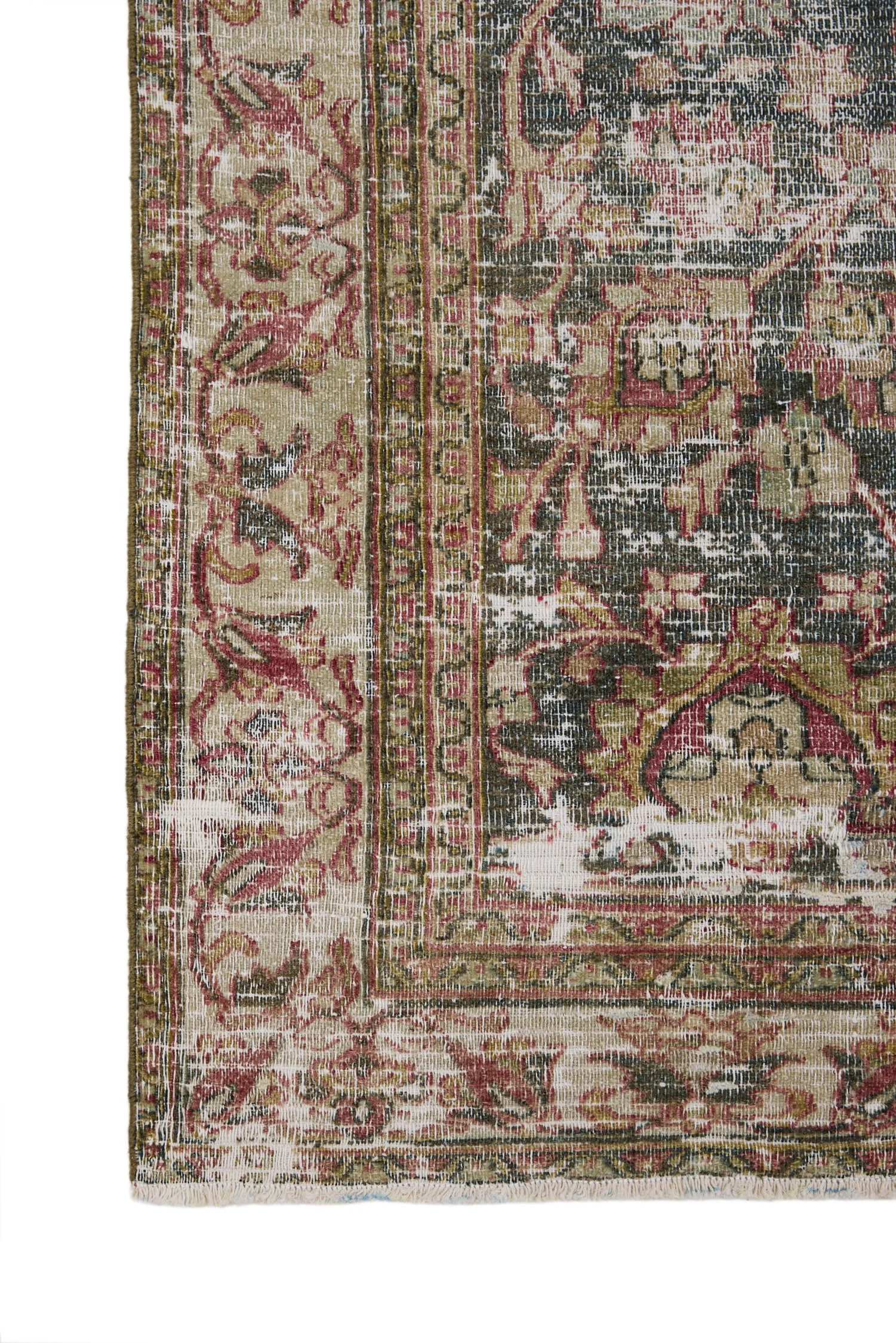
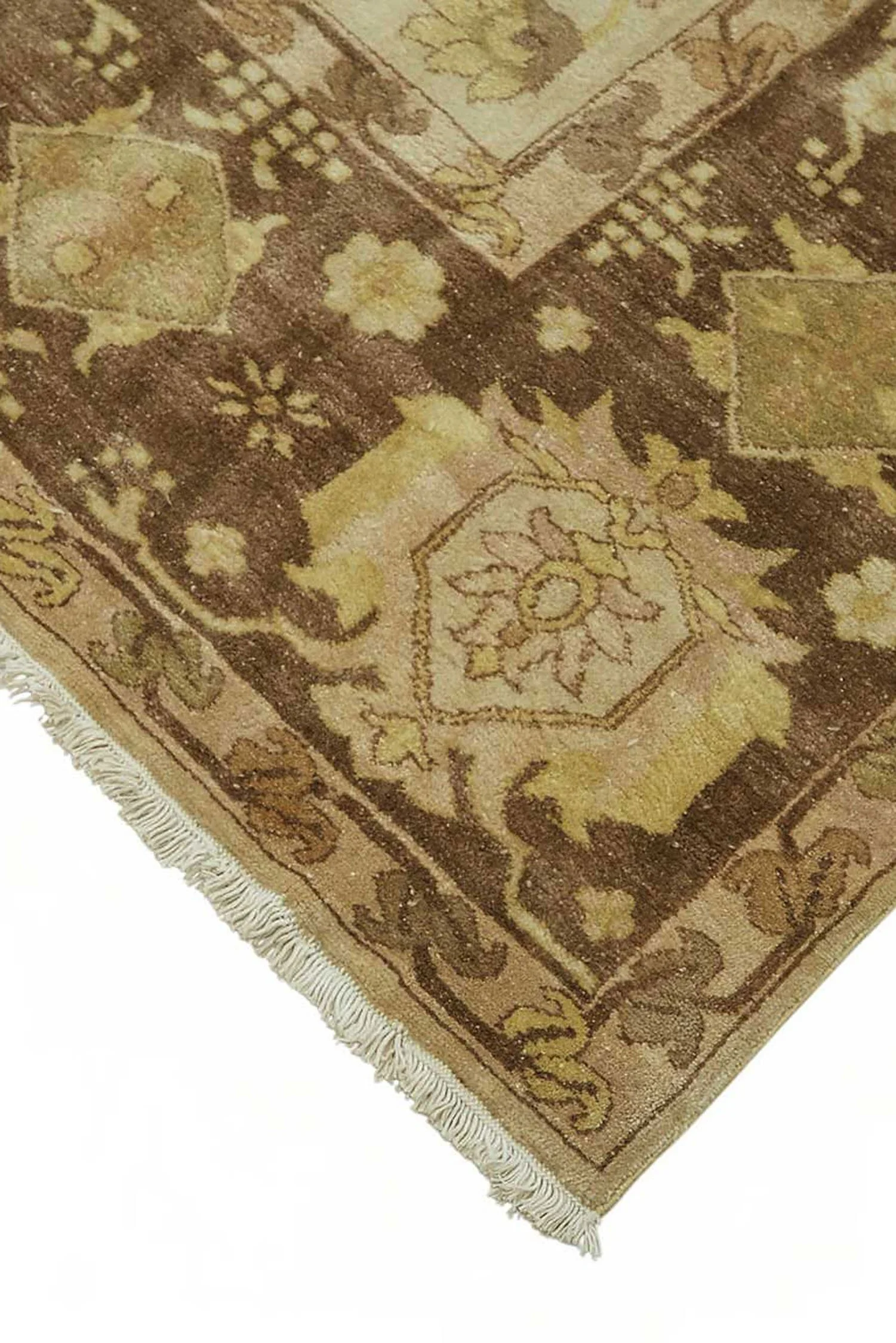
The finely detailed border features traditional Kerman motifs executed with precision. The border pattern maintains the same level of refinement as the field, with carefully rendered forms that show the workshop's technical capabilities. Faded rose tones in the border add subtle warmth to the overall composition.
Placement
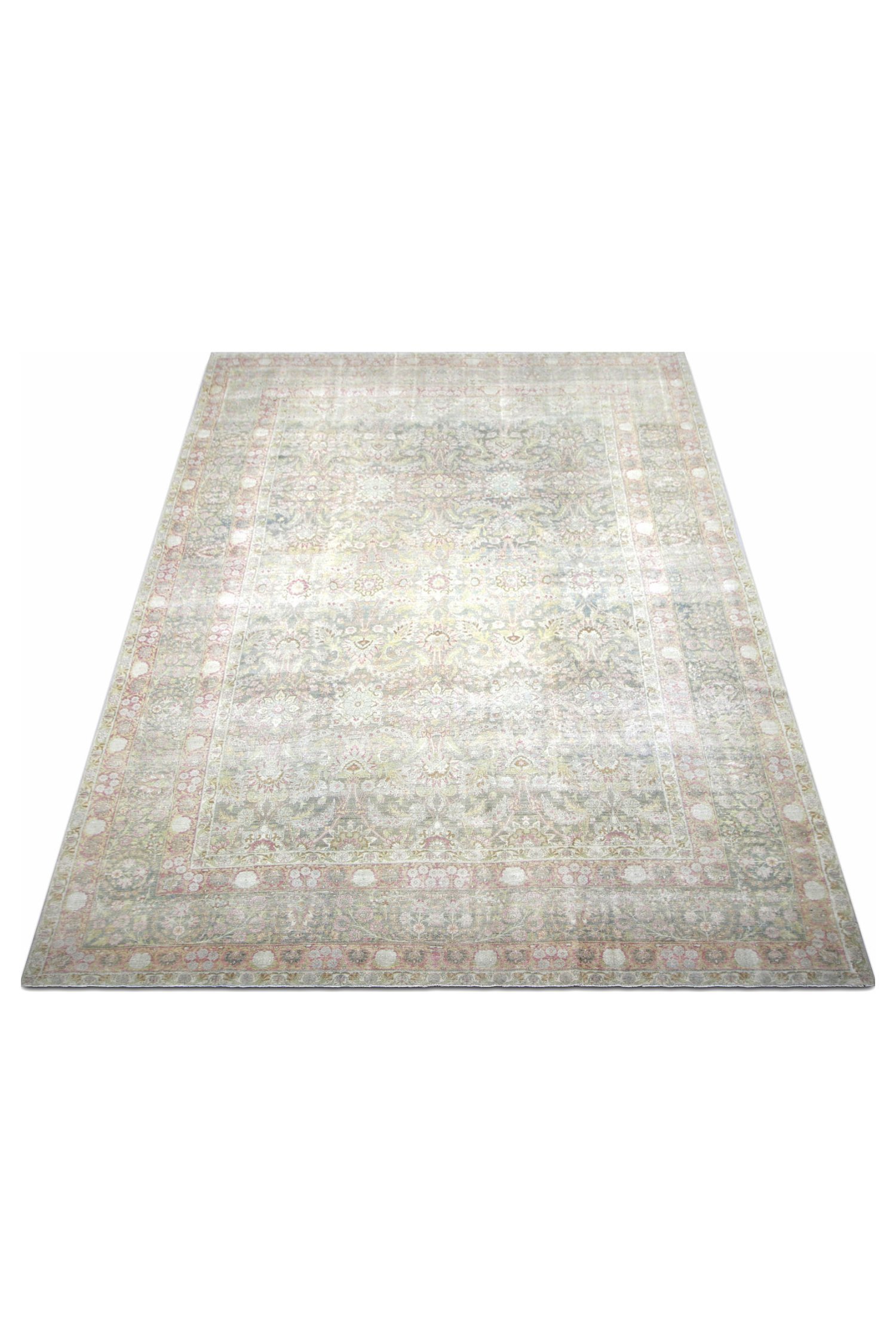
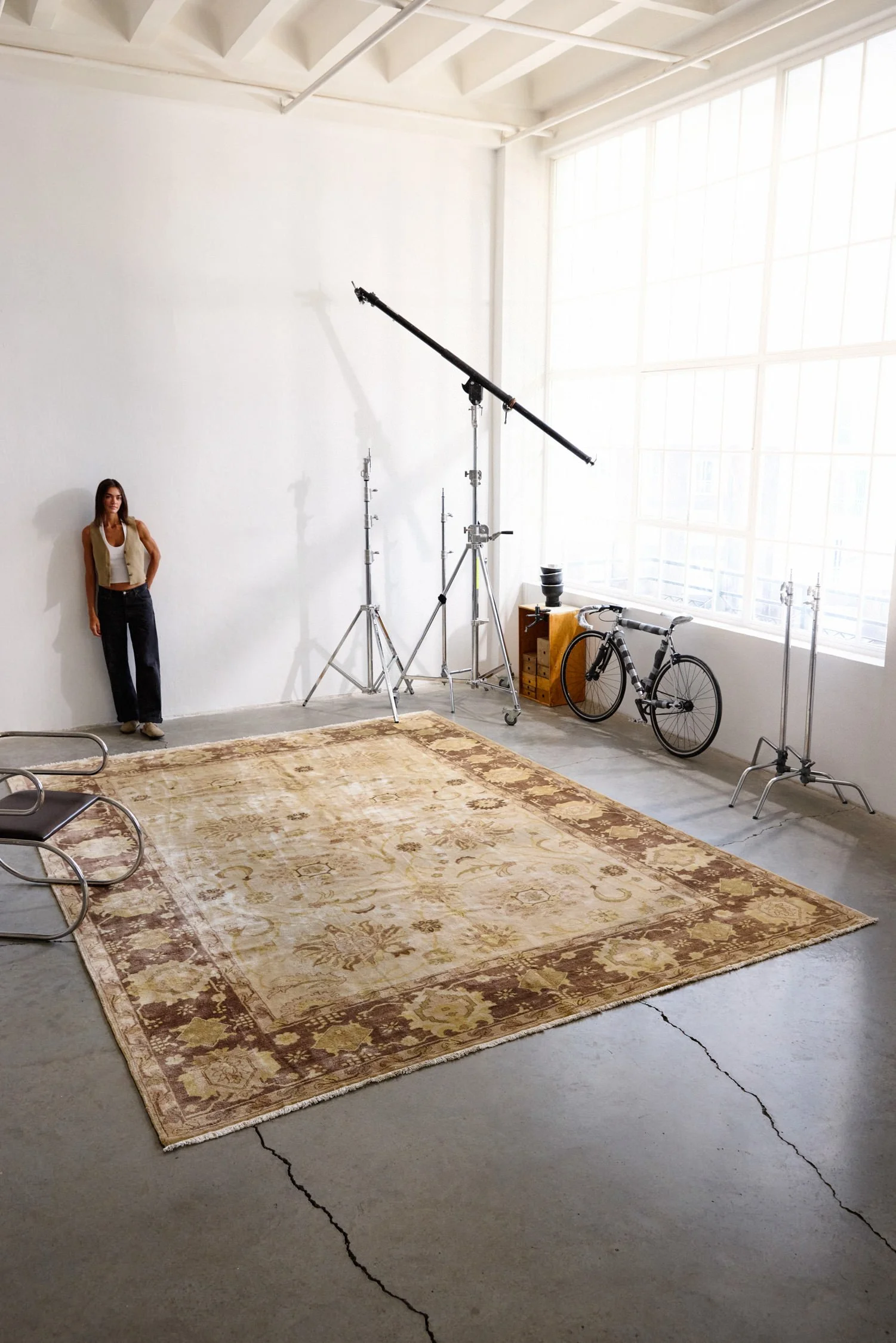
At 9'7" x 14', this requires substantial room dimensions. Large living rooms can accommodate it with full furniture arrangements. Formal dining rooms with tables that seat ten to twelve work well with the generous proportions, allowing chairs to remain on the rug when pulled out.
The powder blue and ivory palette suits interiors with ample natural light, where the subtle color variations and faded rose tones become more apparent. Traditional settings appreciate the semi-antique Kerman provenance and classical Persian floral design. Contemporary spaces can use the atmospheric quality and soft palette as a foundation that provides elegance without strong color demands.
Care Recommendations
To preserve the rug's beauty:
Rotate periodically for even wear
Vacuum regularly using a suction-only setting
Address spills immediately by blotting, never rubbing
Professional cleaning recommended annually
Avoid direct sunlight to maintain color integrity
Kerman workshops understood that refinement meant knowing when to make patterns delicate rather than dense.