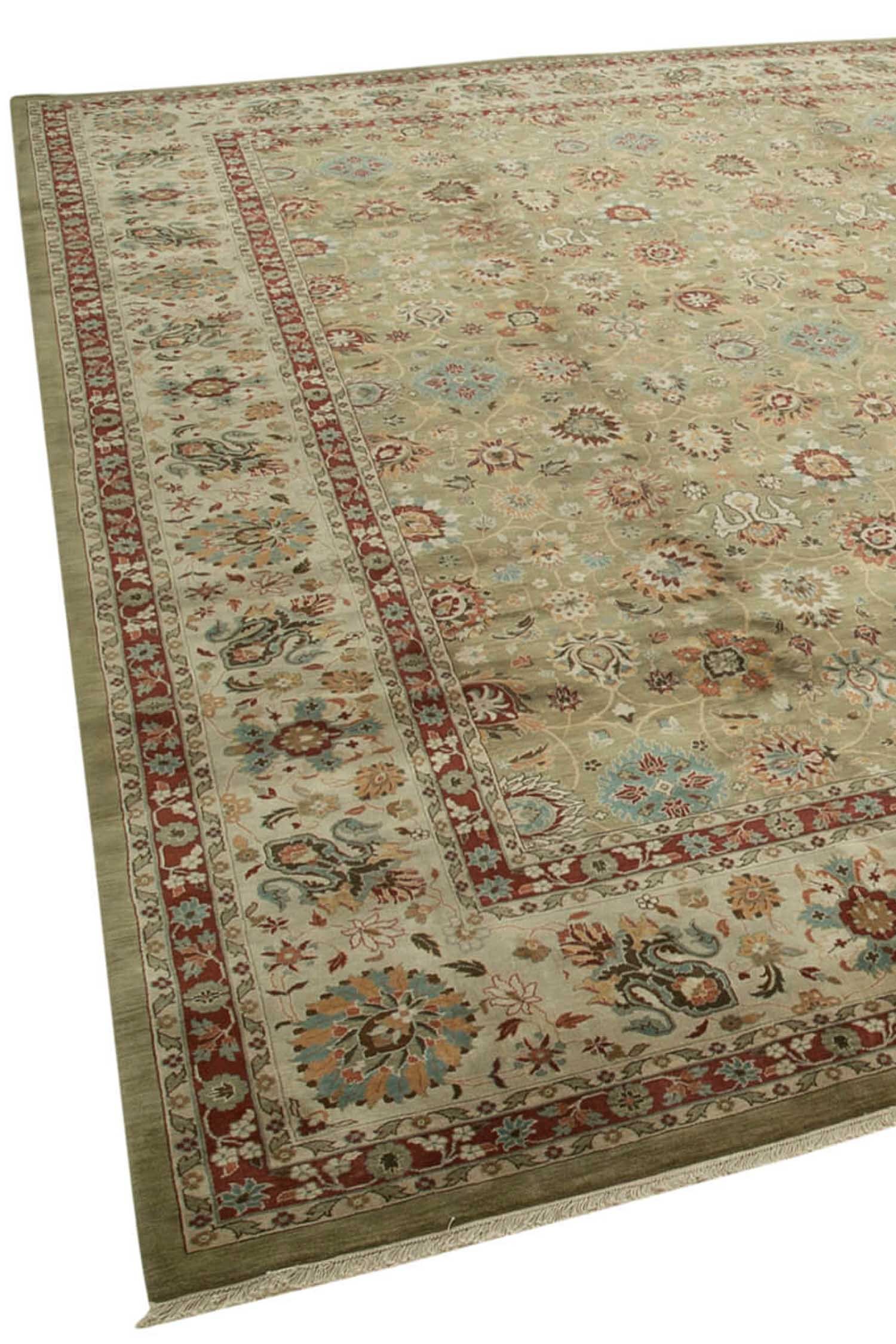
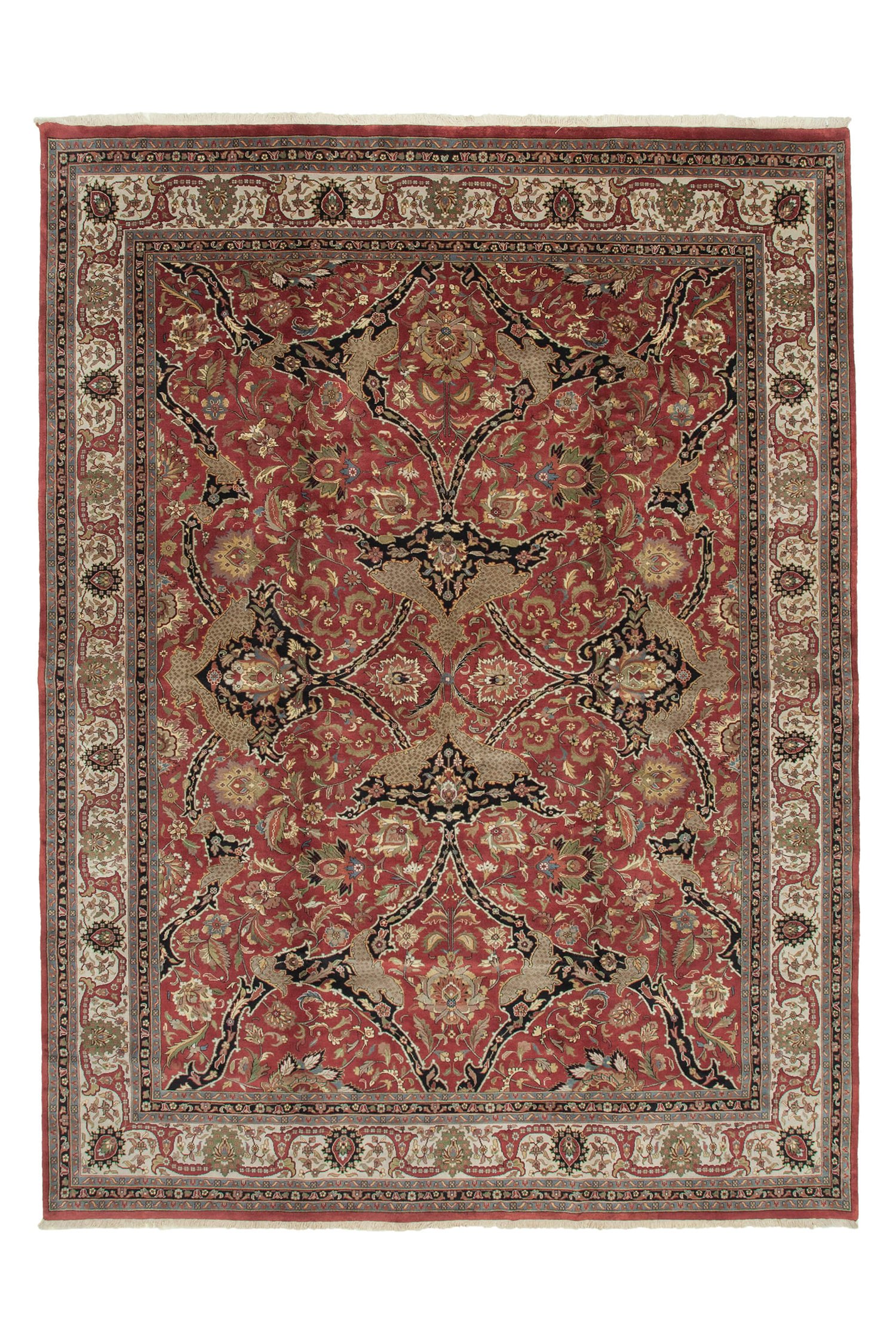
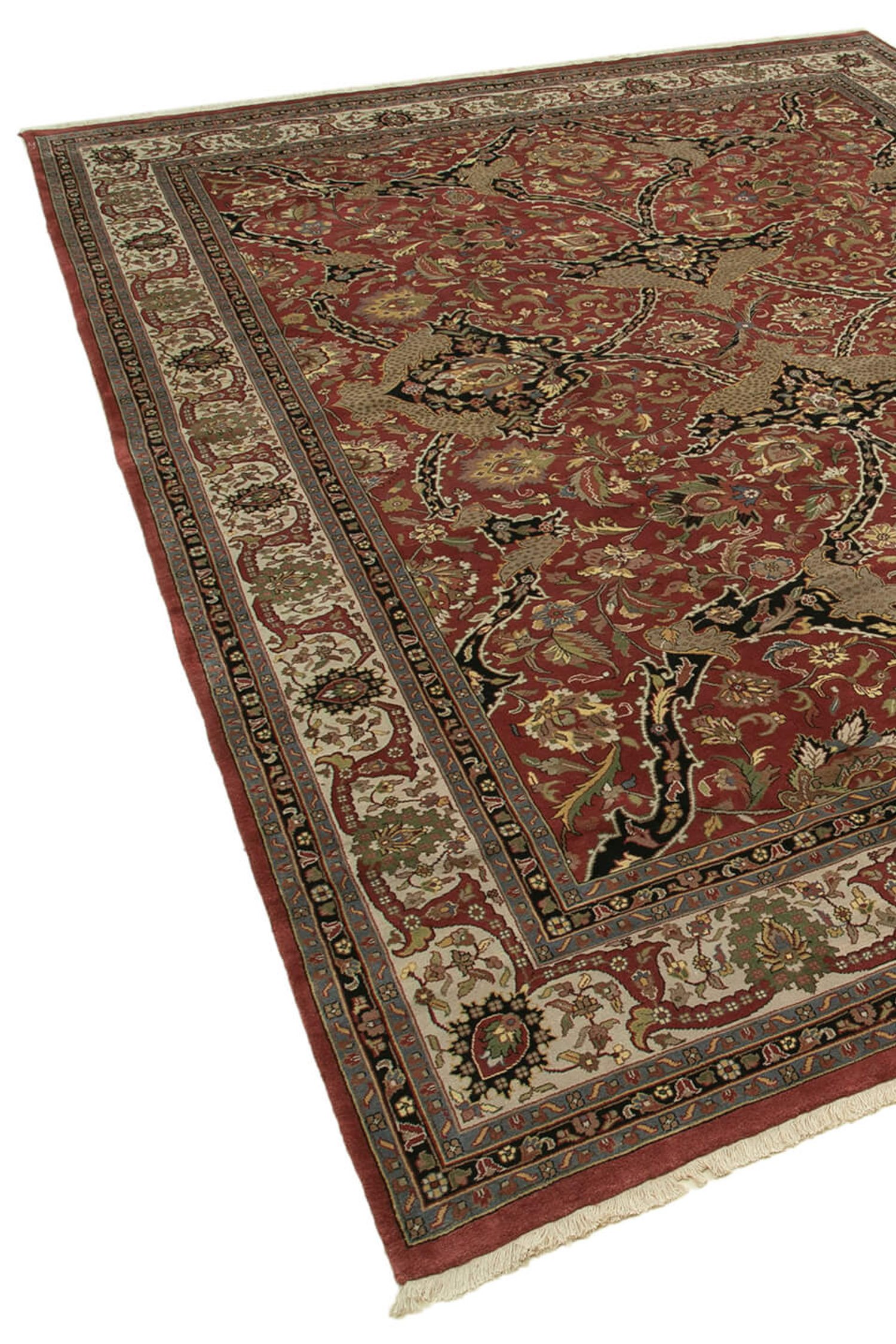
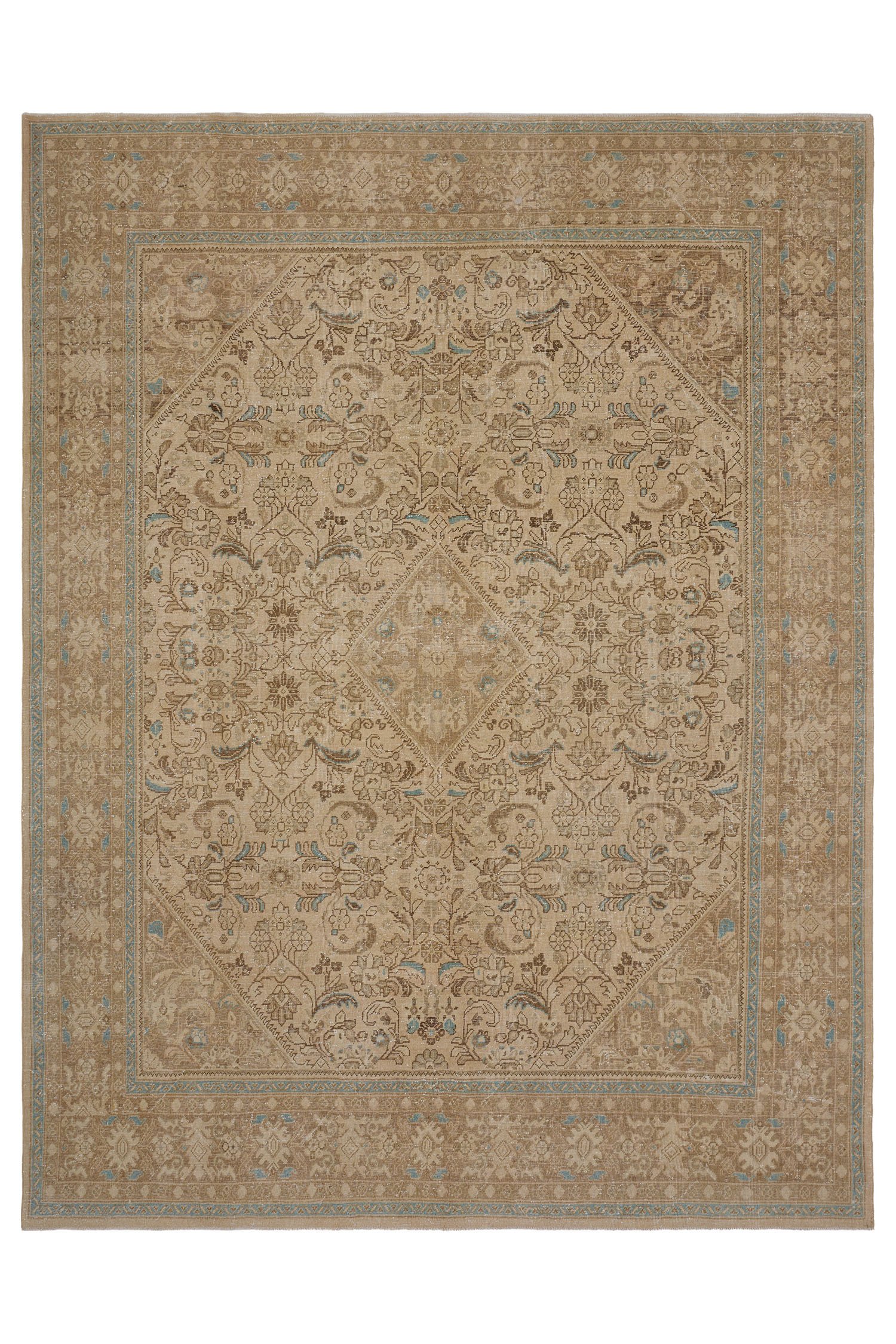
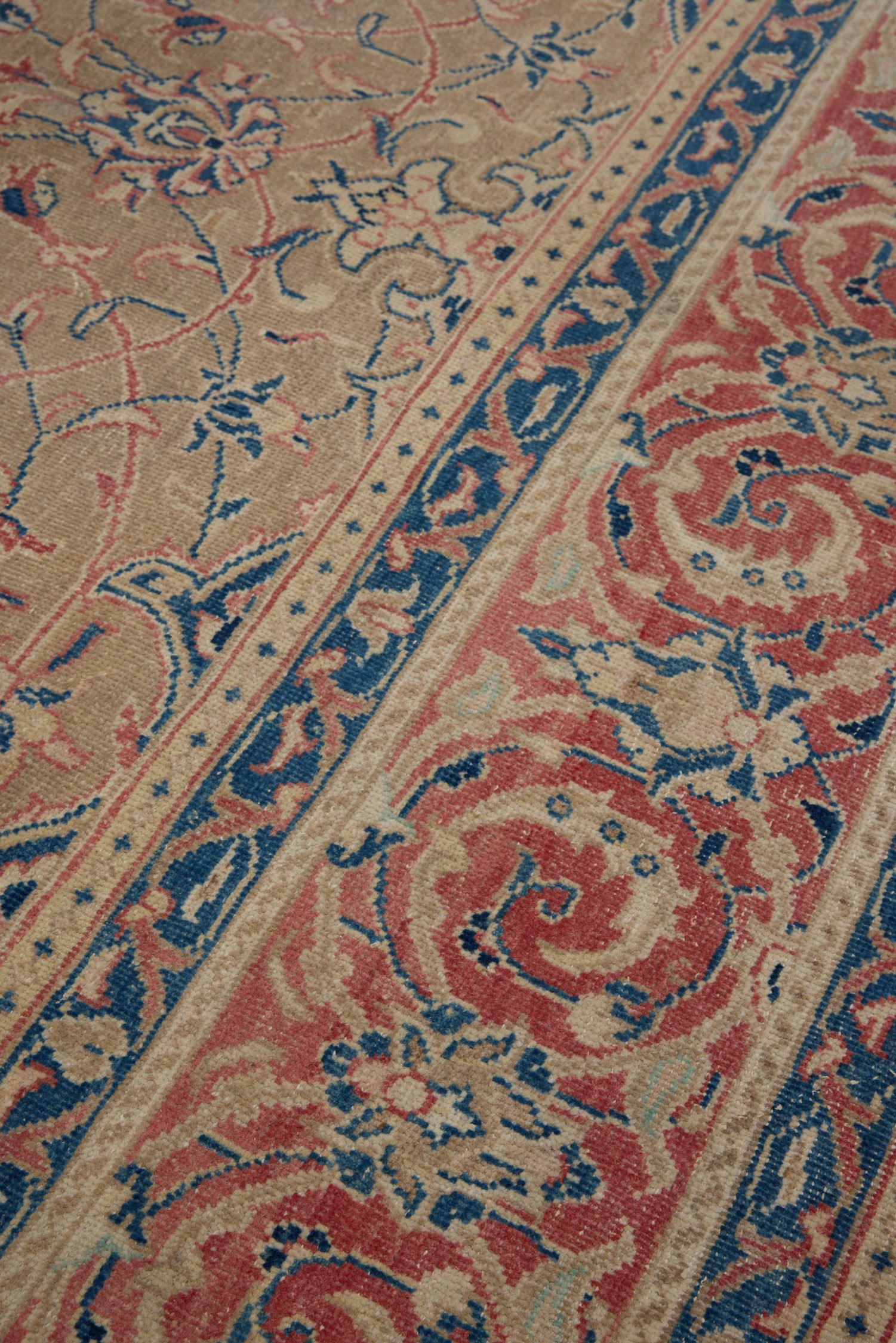
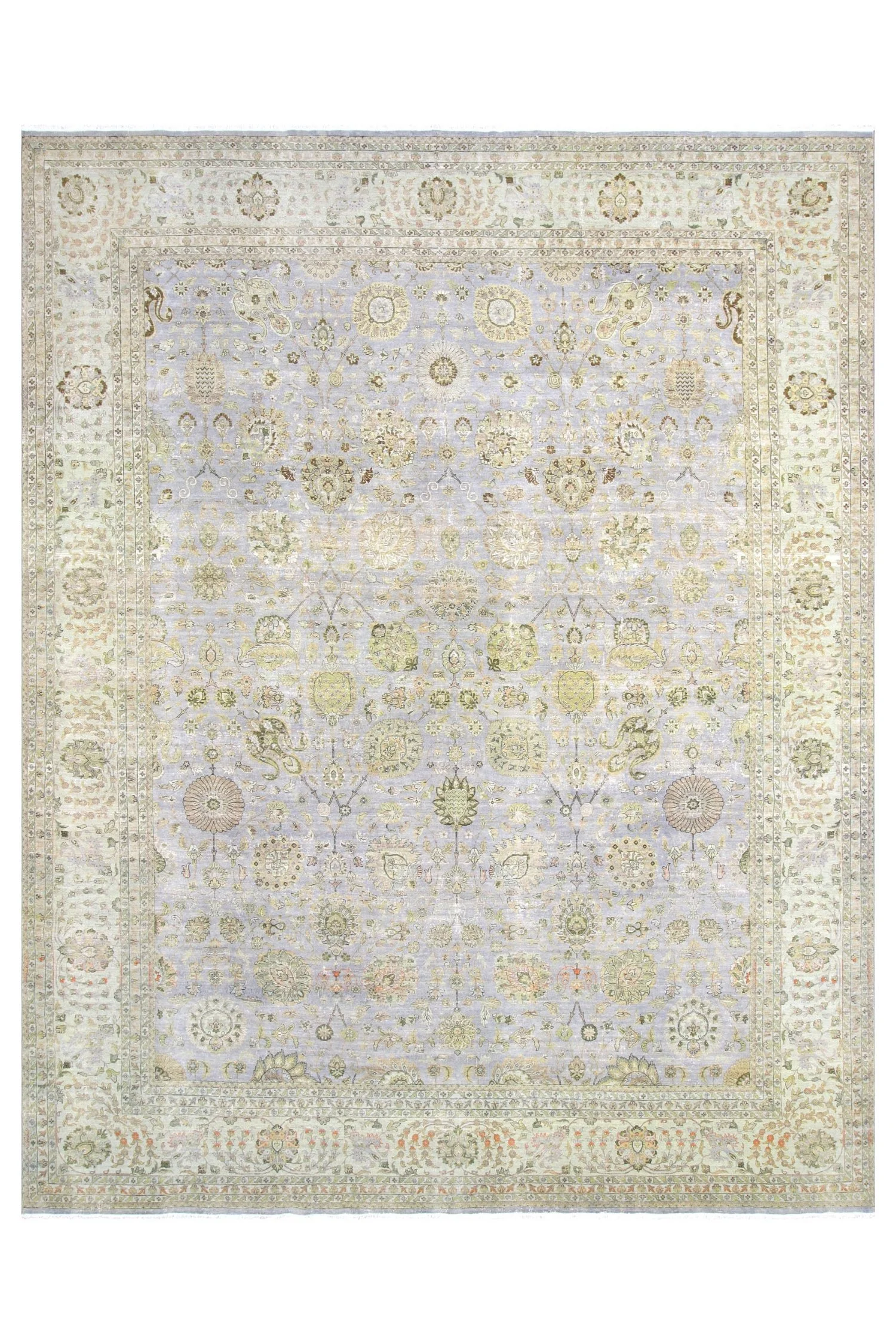
 Image 1 of 5
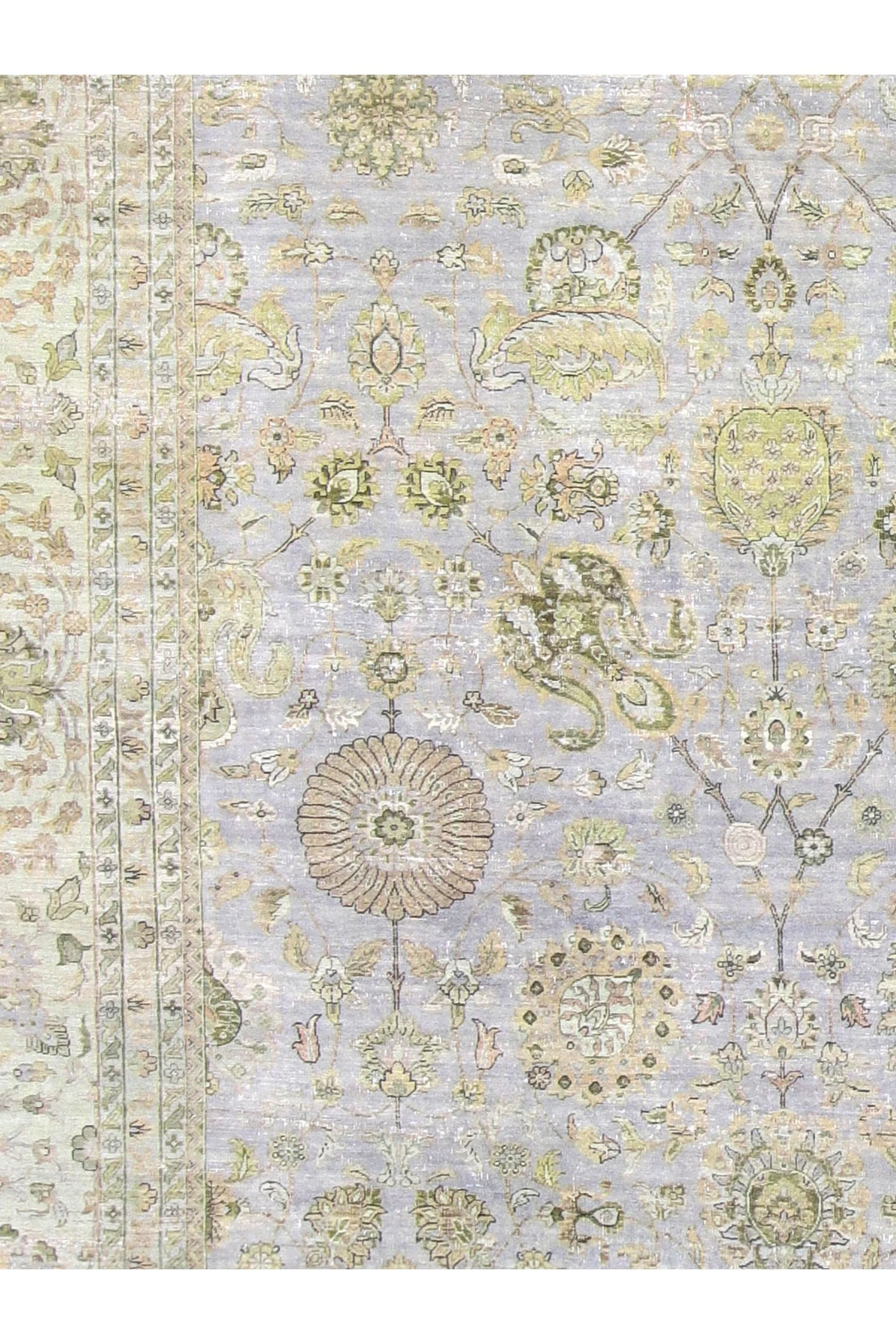 Image 2 of 5
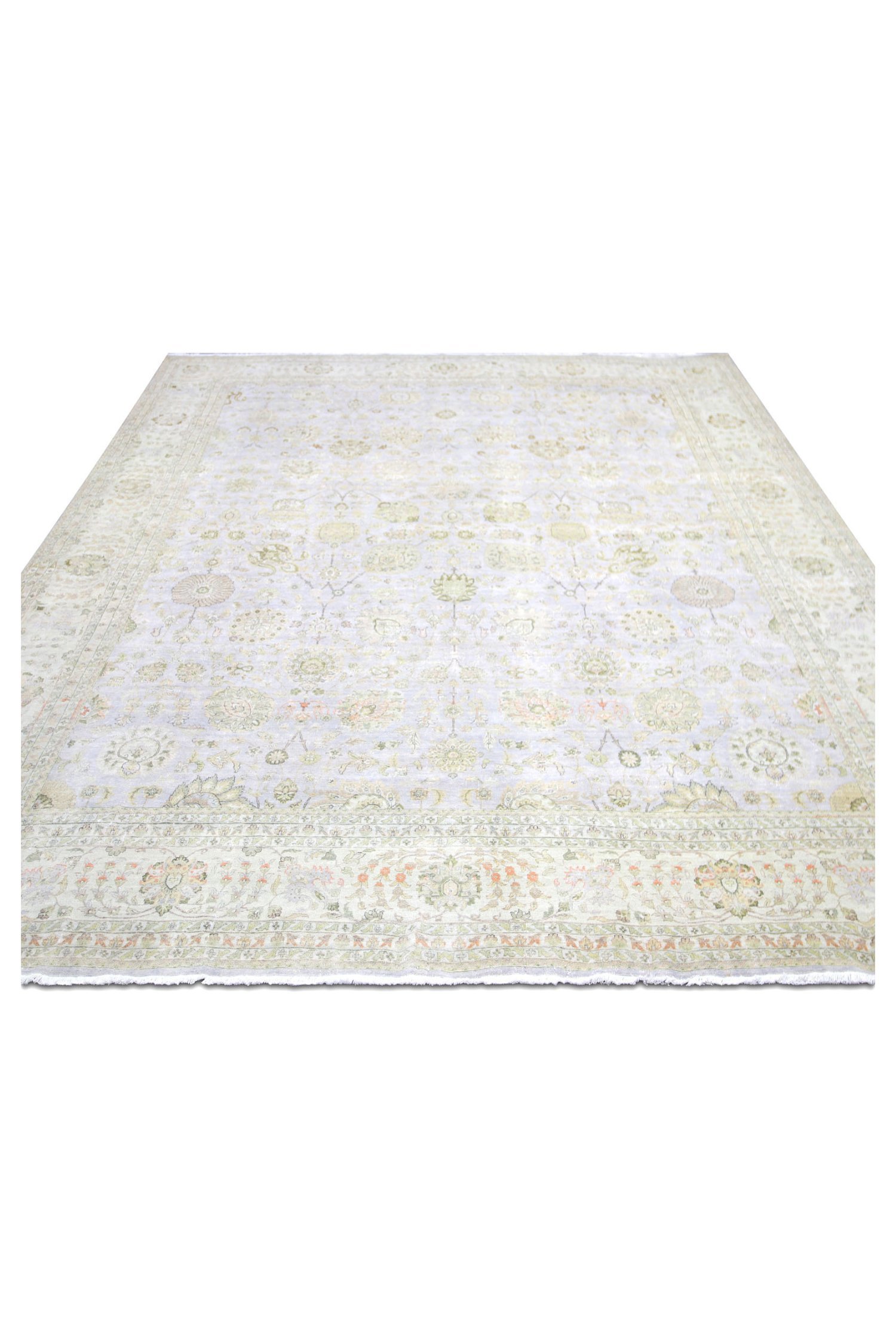 Image 3 of 5
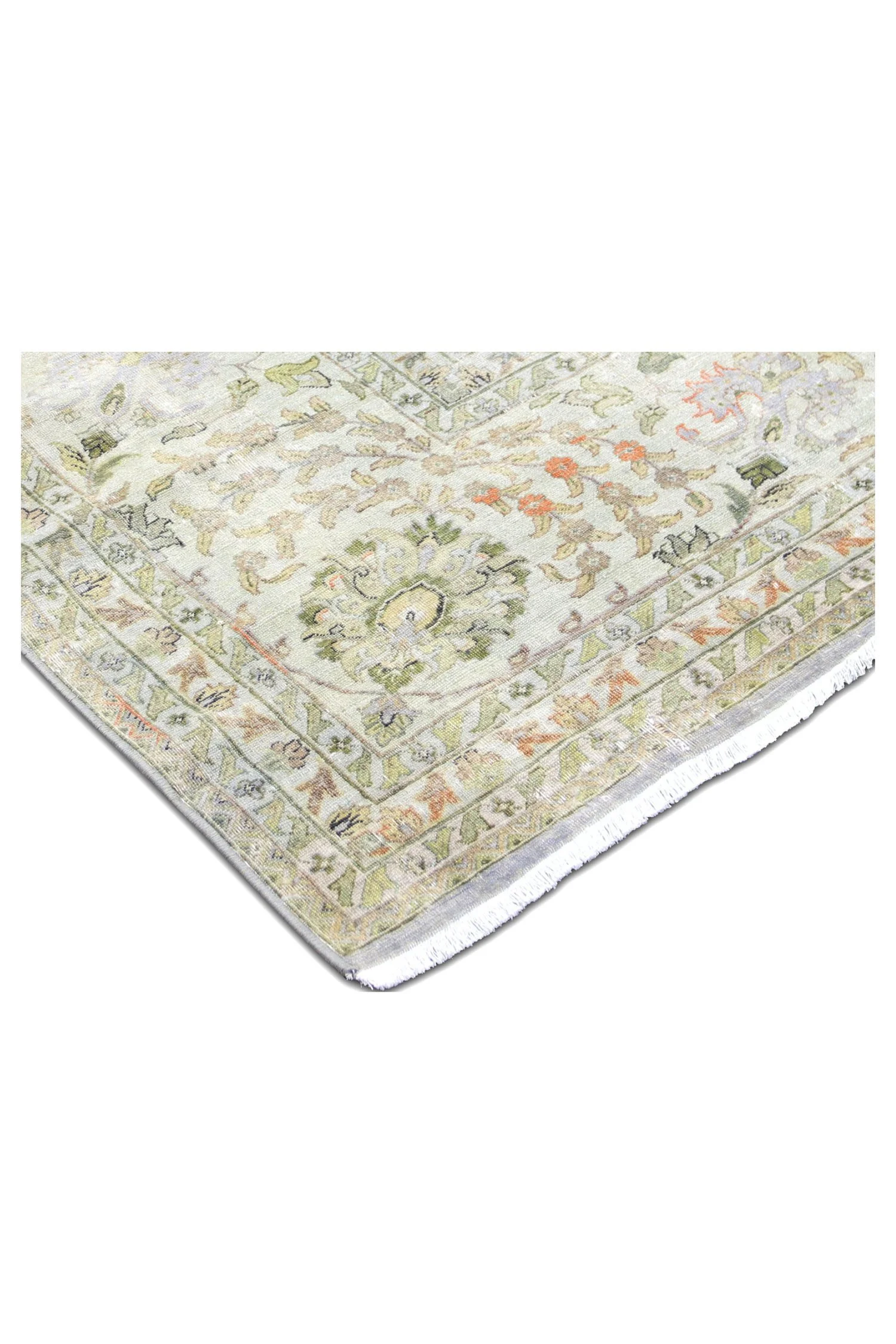 Image 4 of 5
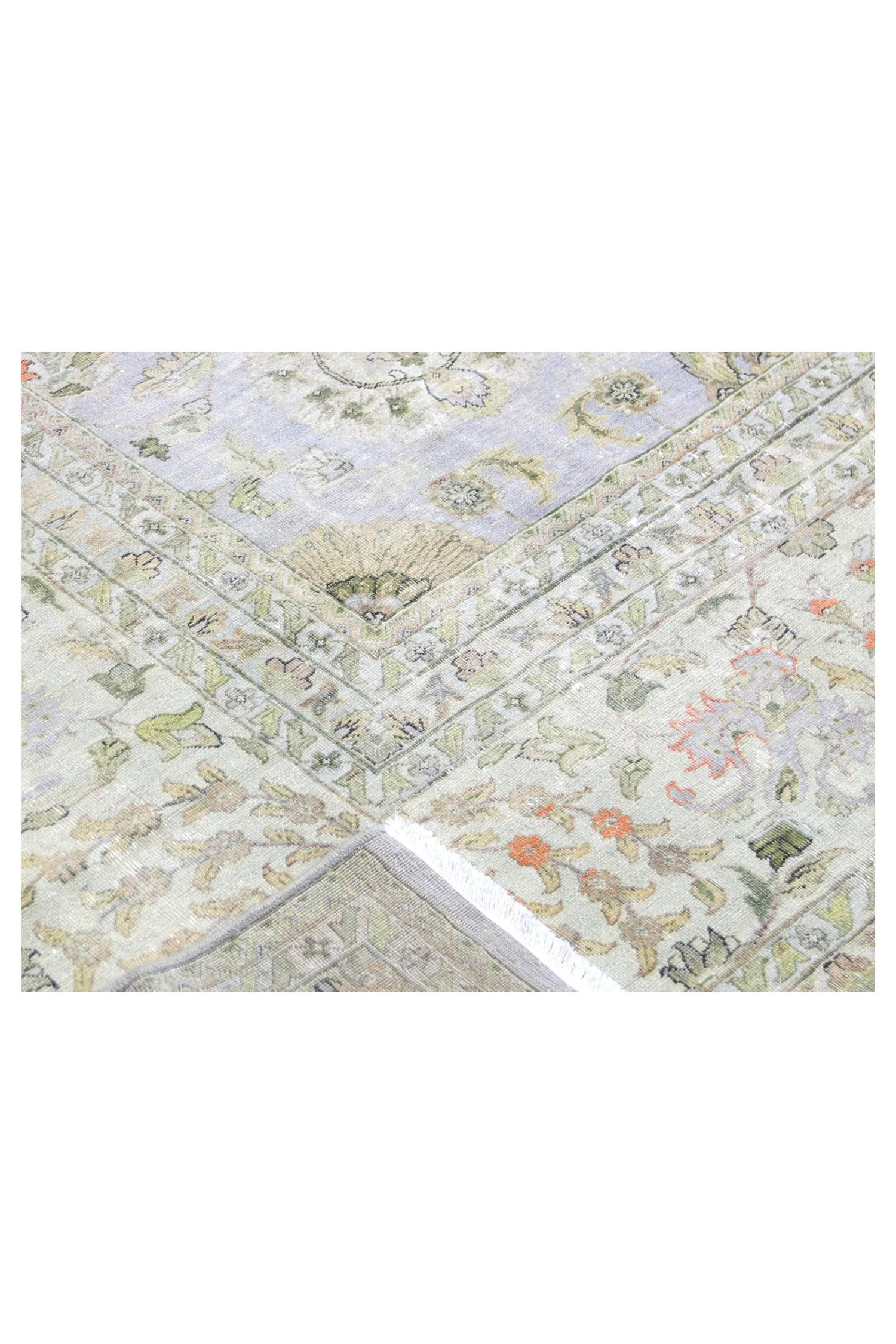 Image 5 of 5
Heritage and Craftsmanship
Tabriz in the 1960s remained one of Persian weaving's most technically accomplished centers. The city's workshops had spent centuries perfecting tight knot counts and intricate pattern execution, earning reputations that commanded premium prices in both domestic and export markets.
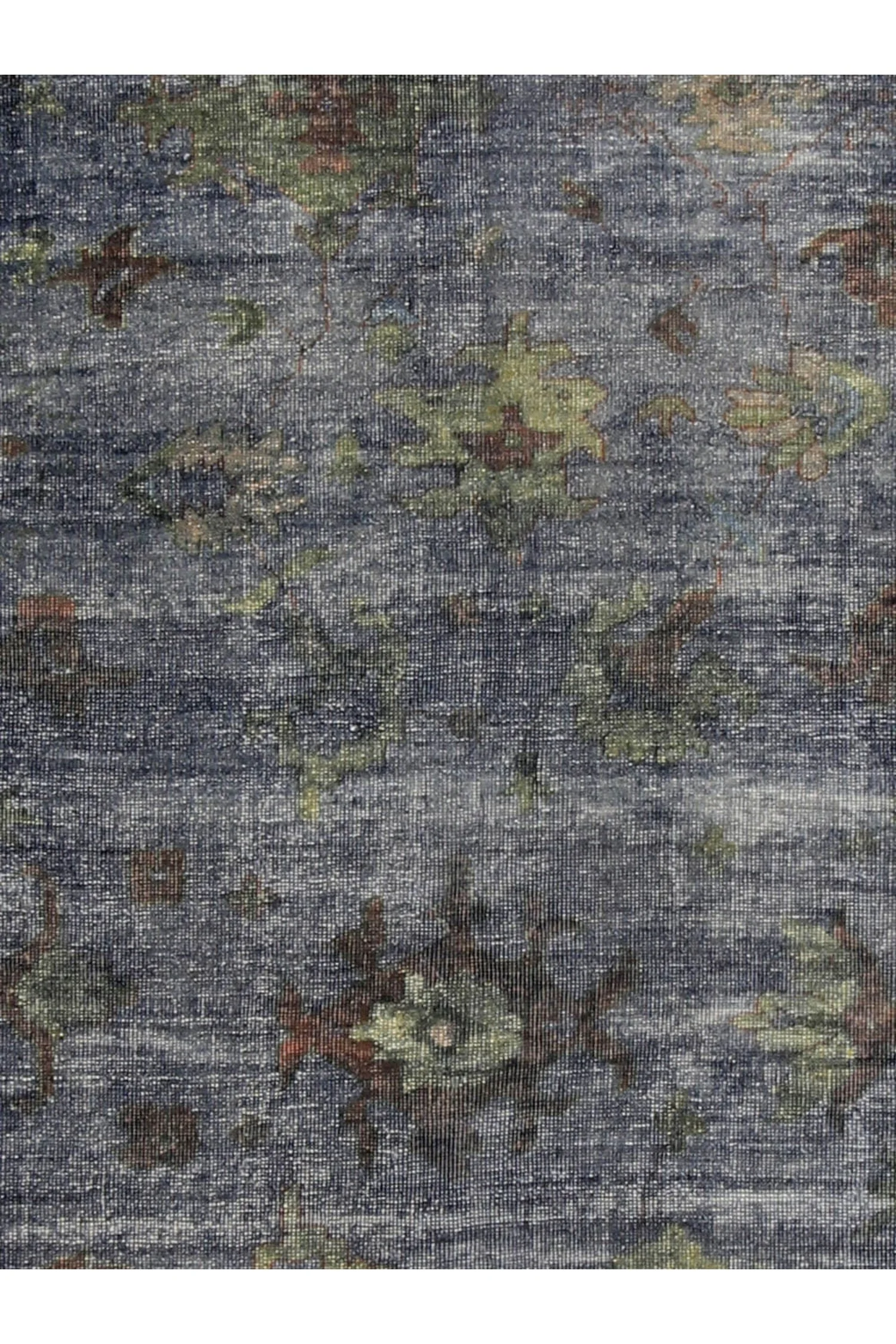
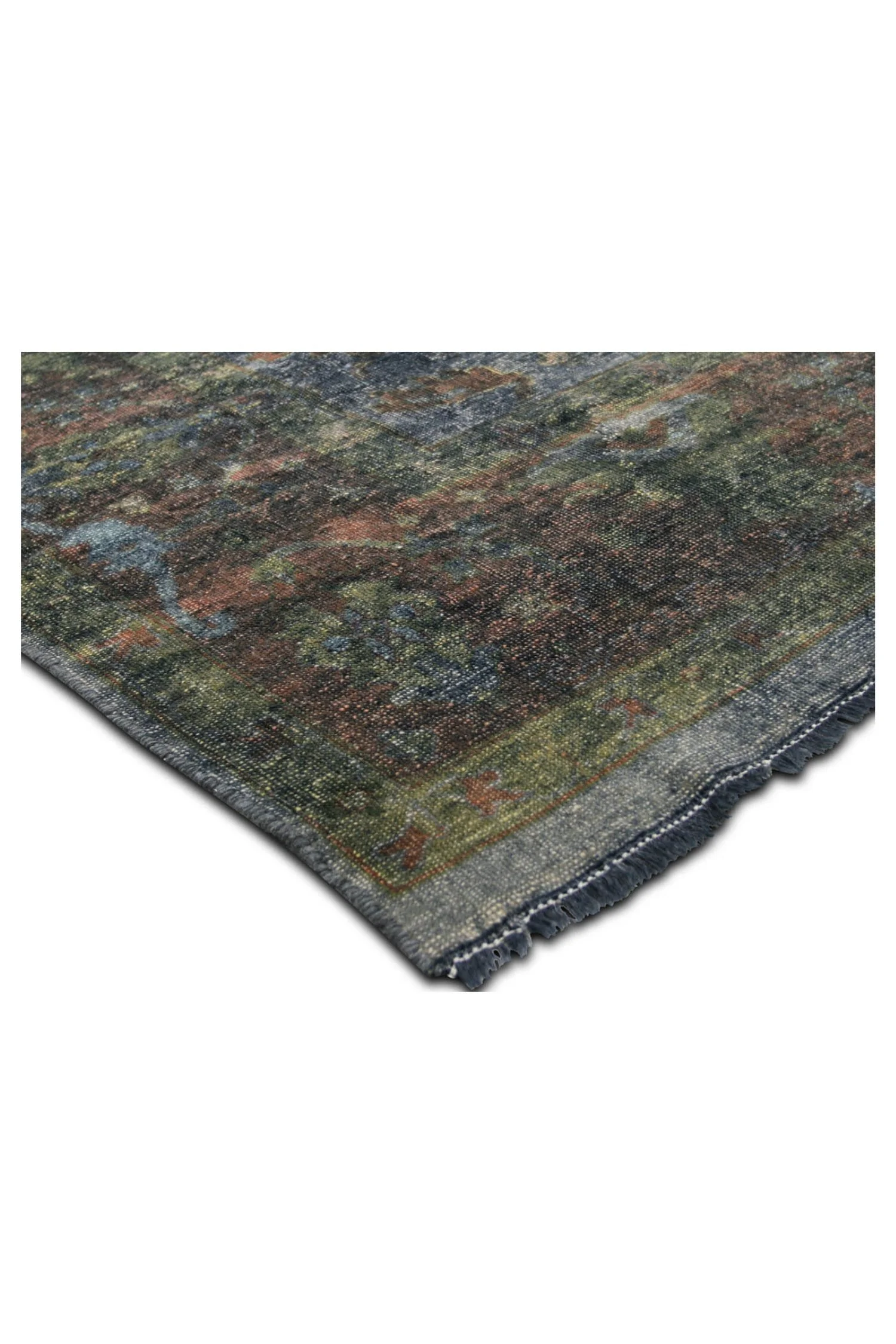
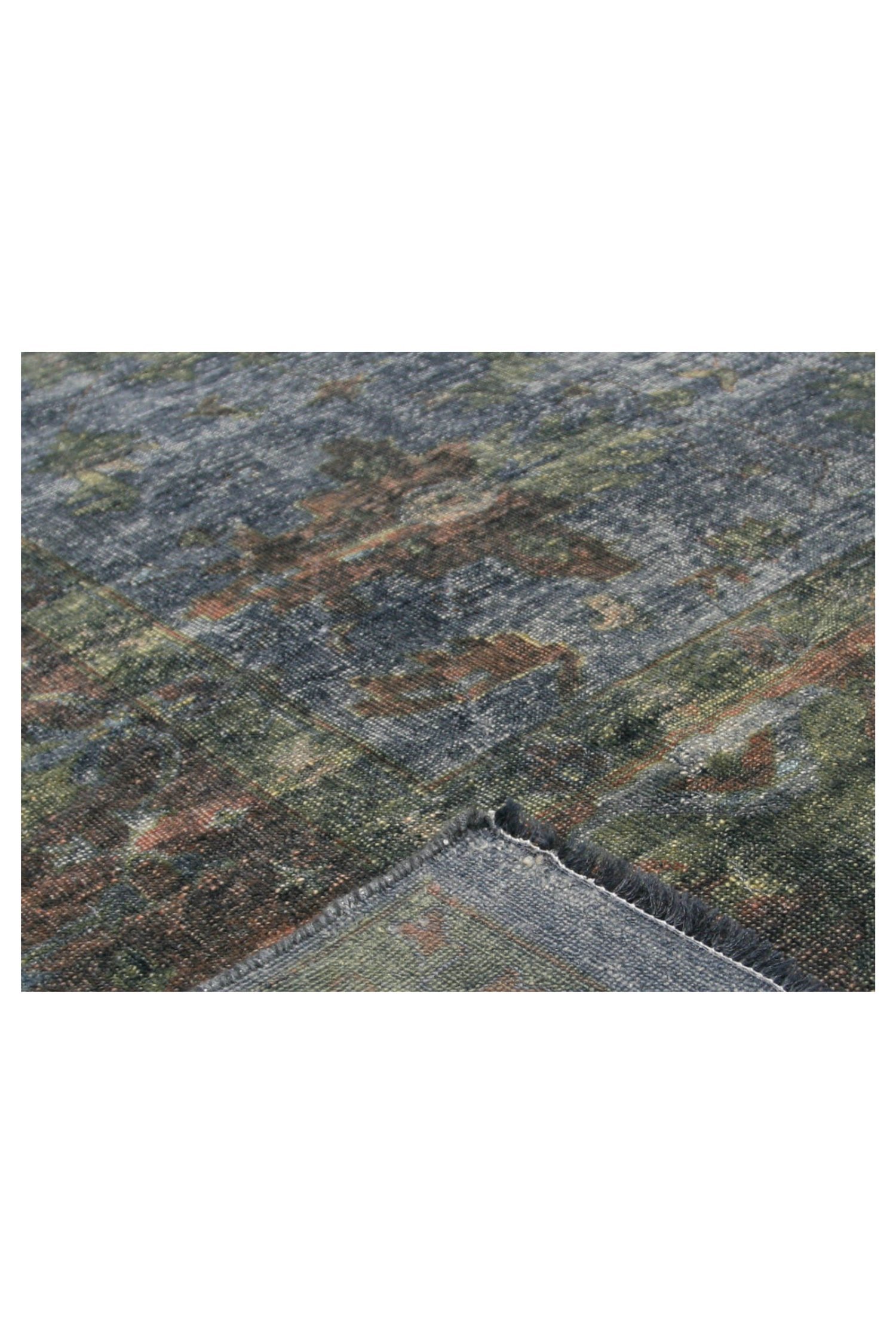
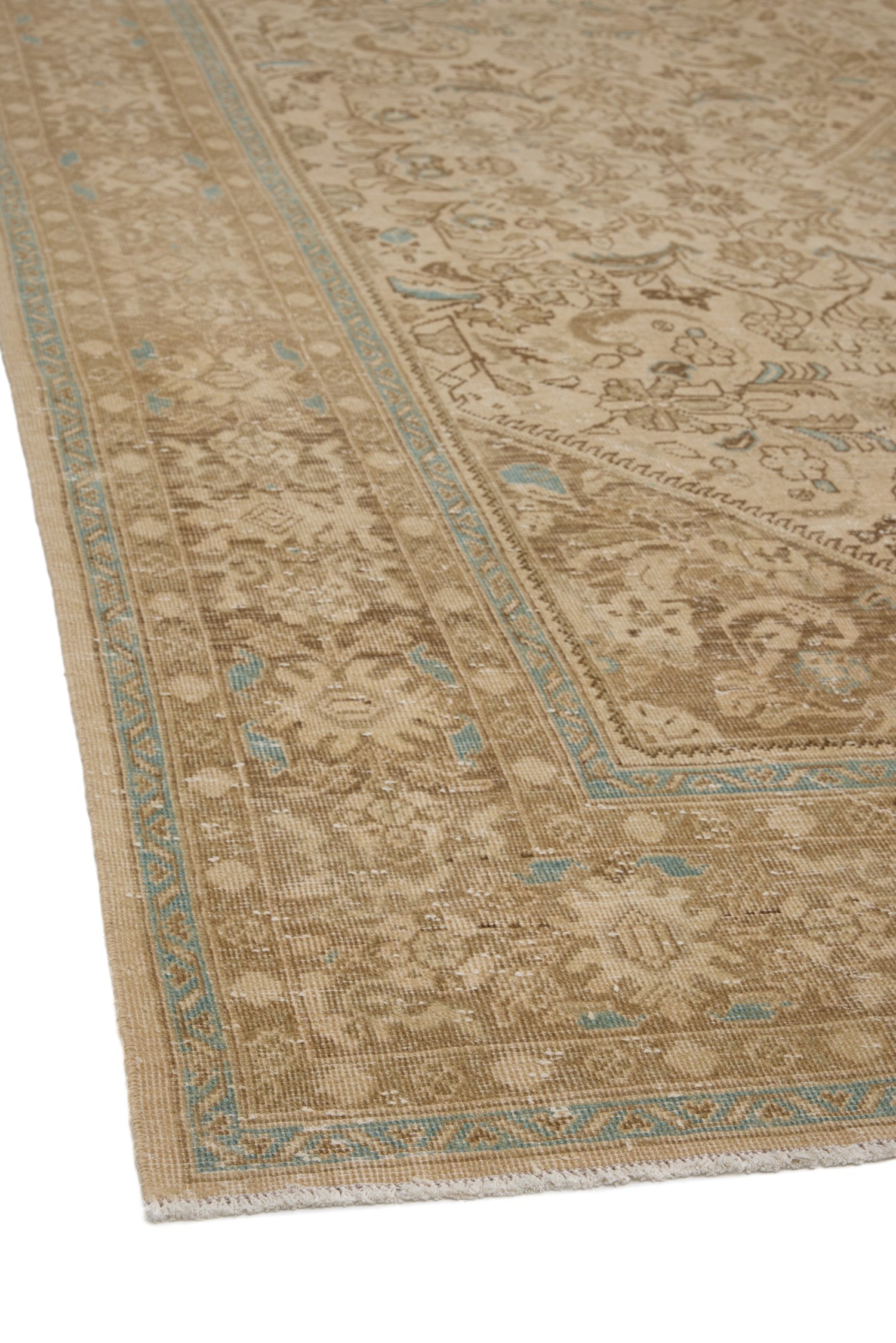
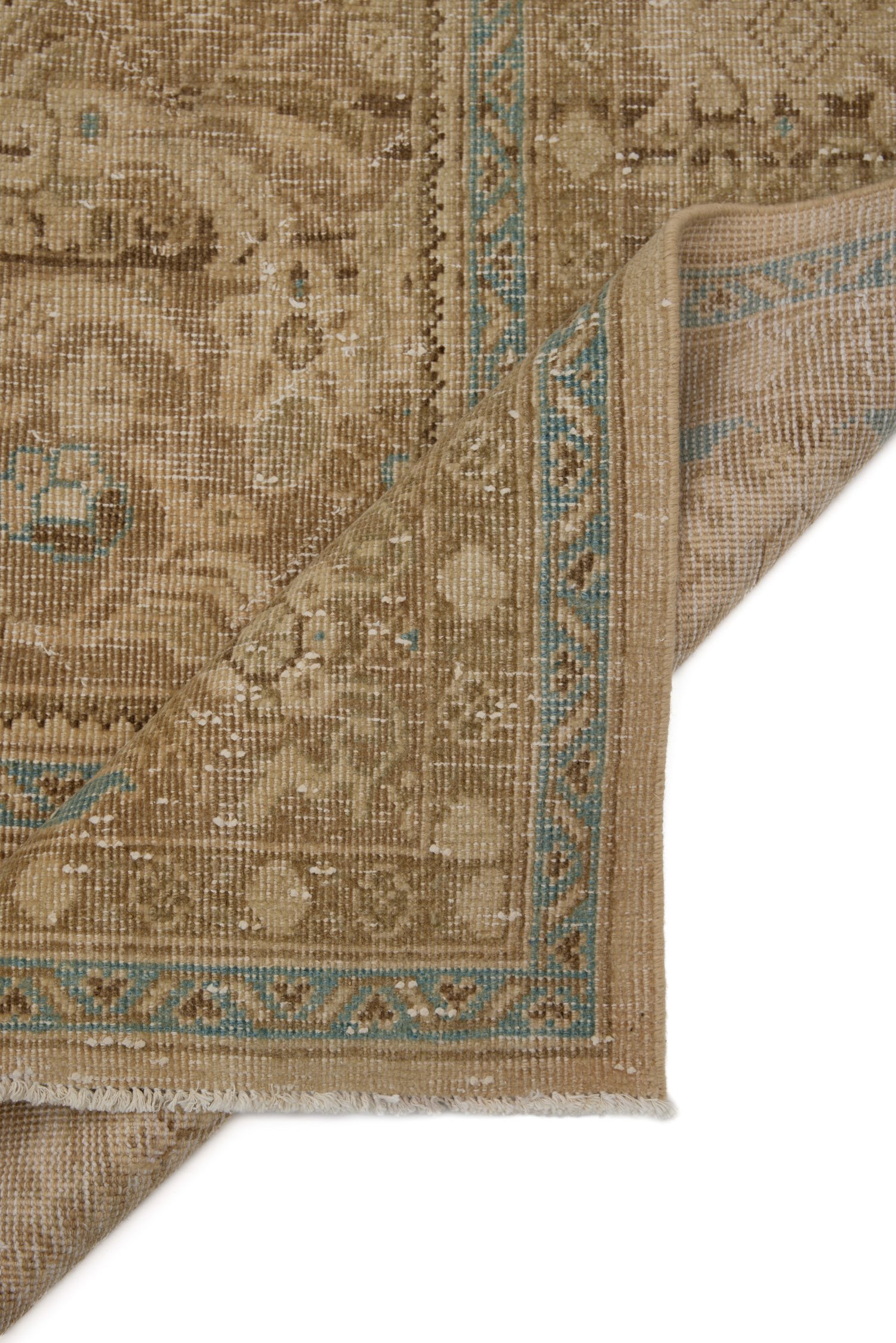
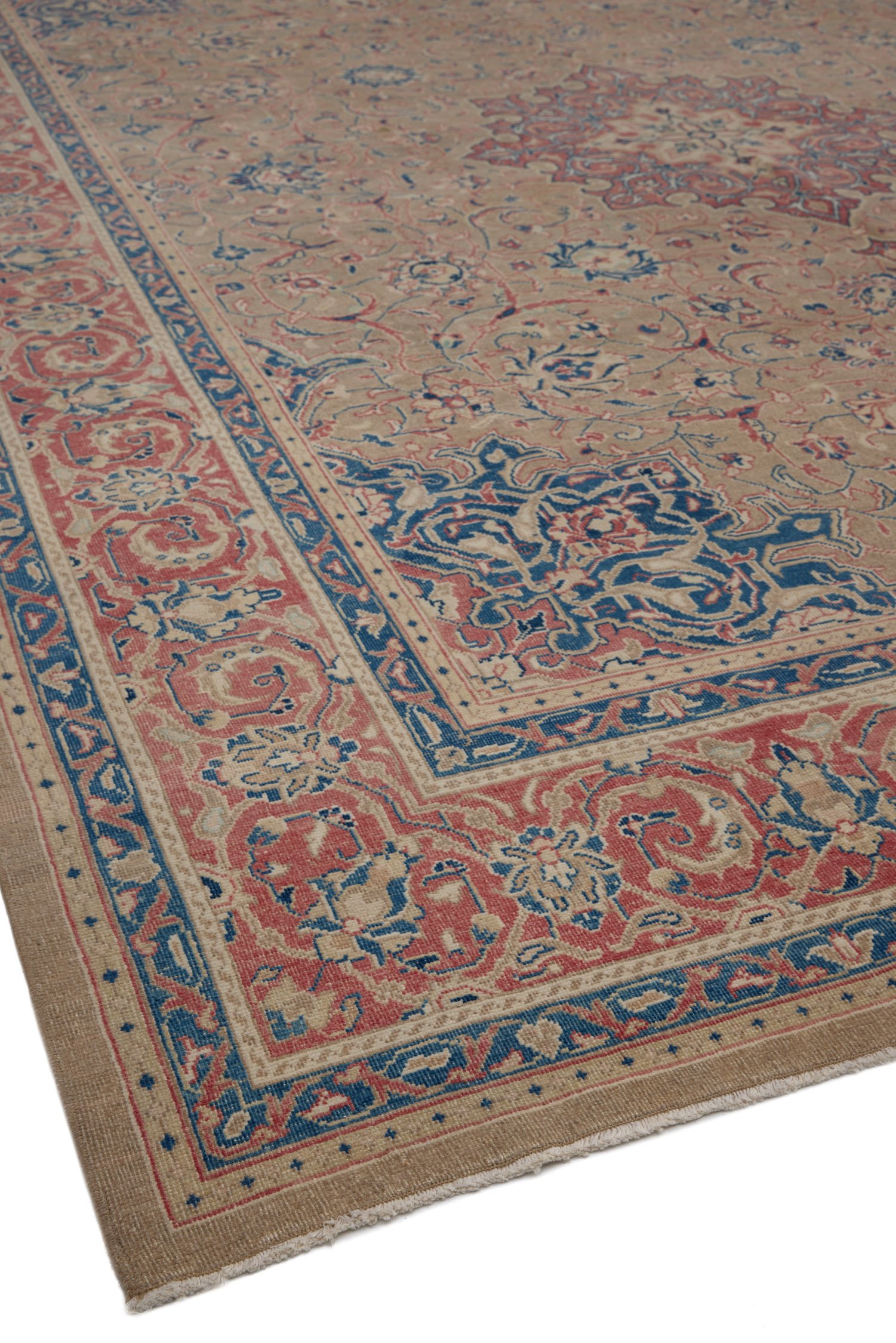
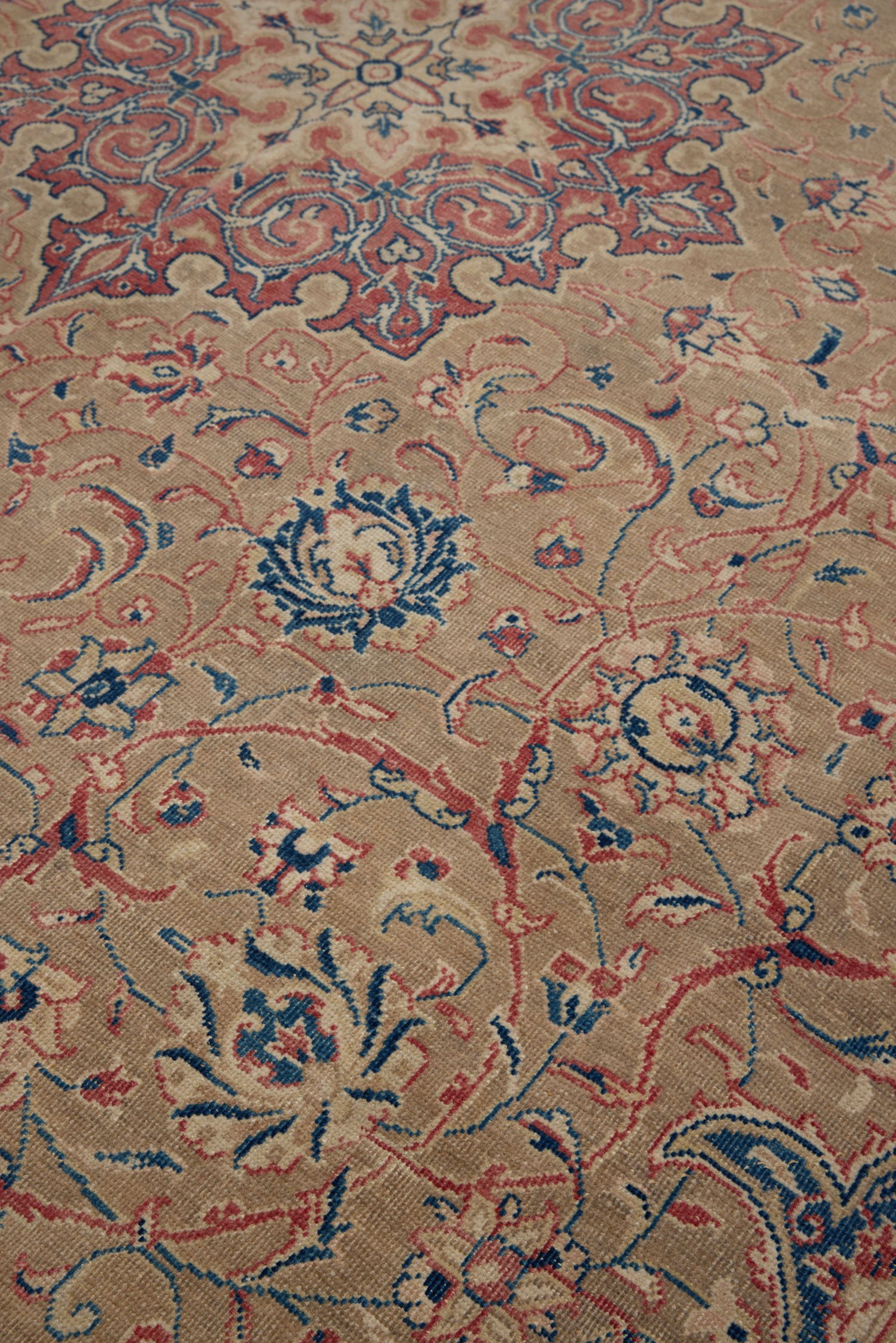
Weavers worked from detailed cartoons, gridded pattern guides that allowed for precise replication of complex floral designs. This system enabled the elaborate palmettes and vine work seen here, where each element required careful counting and placement. The fine weave structure meant more knots per square inch, which allowed for greater detail in the rendering of forms.
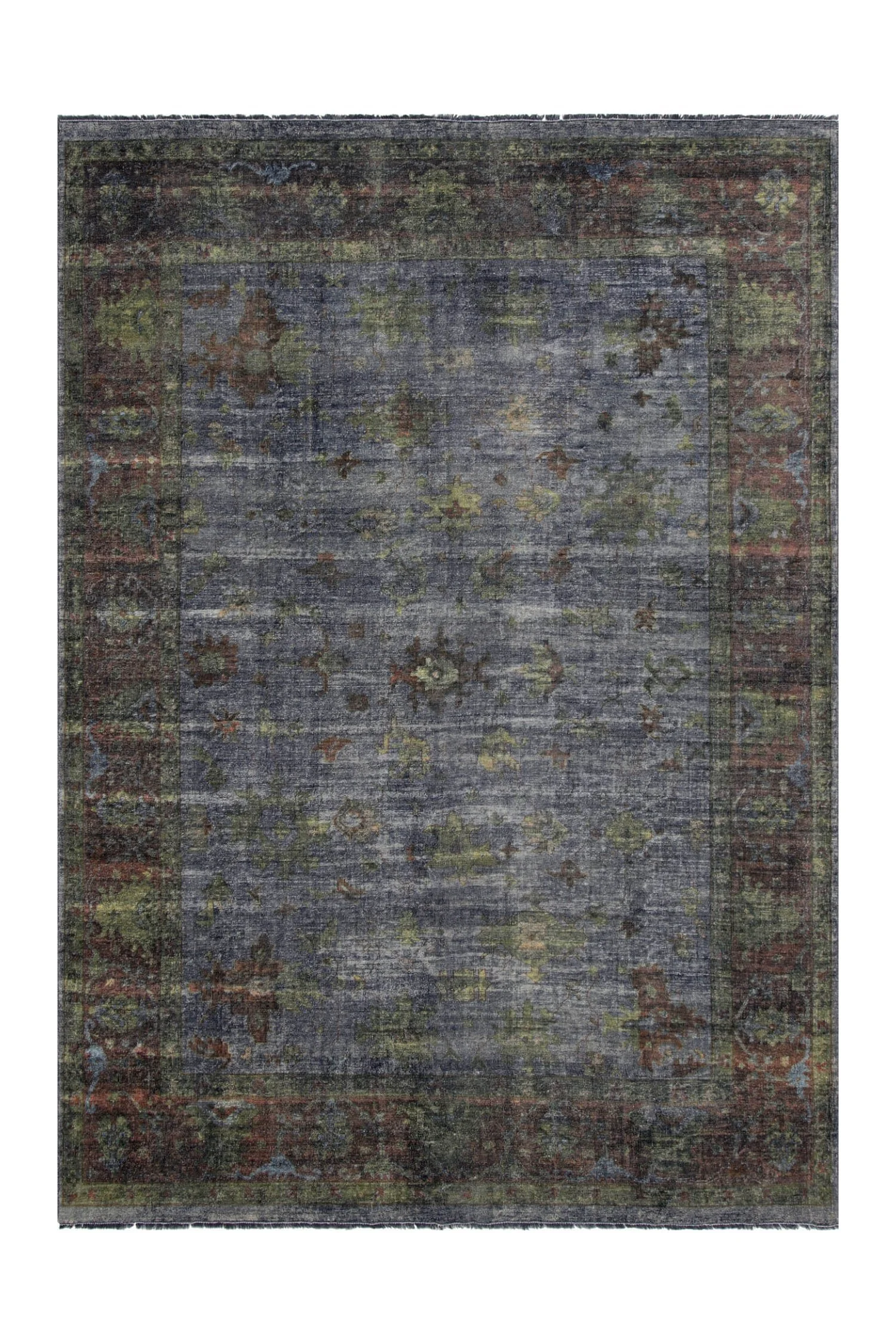
The lavender ground reflects an interesting moment in Tabriz production. While traditional reds and creams dominated the market, some workshops experimented with alternative palettes to appeal to Western buyers seeking something distinctive. Lavender required specific dye formulations and careful control to achieve consistent color across large surfaces.
Design Elements
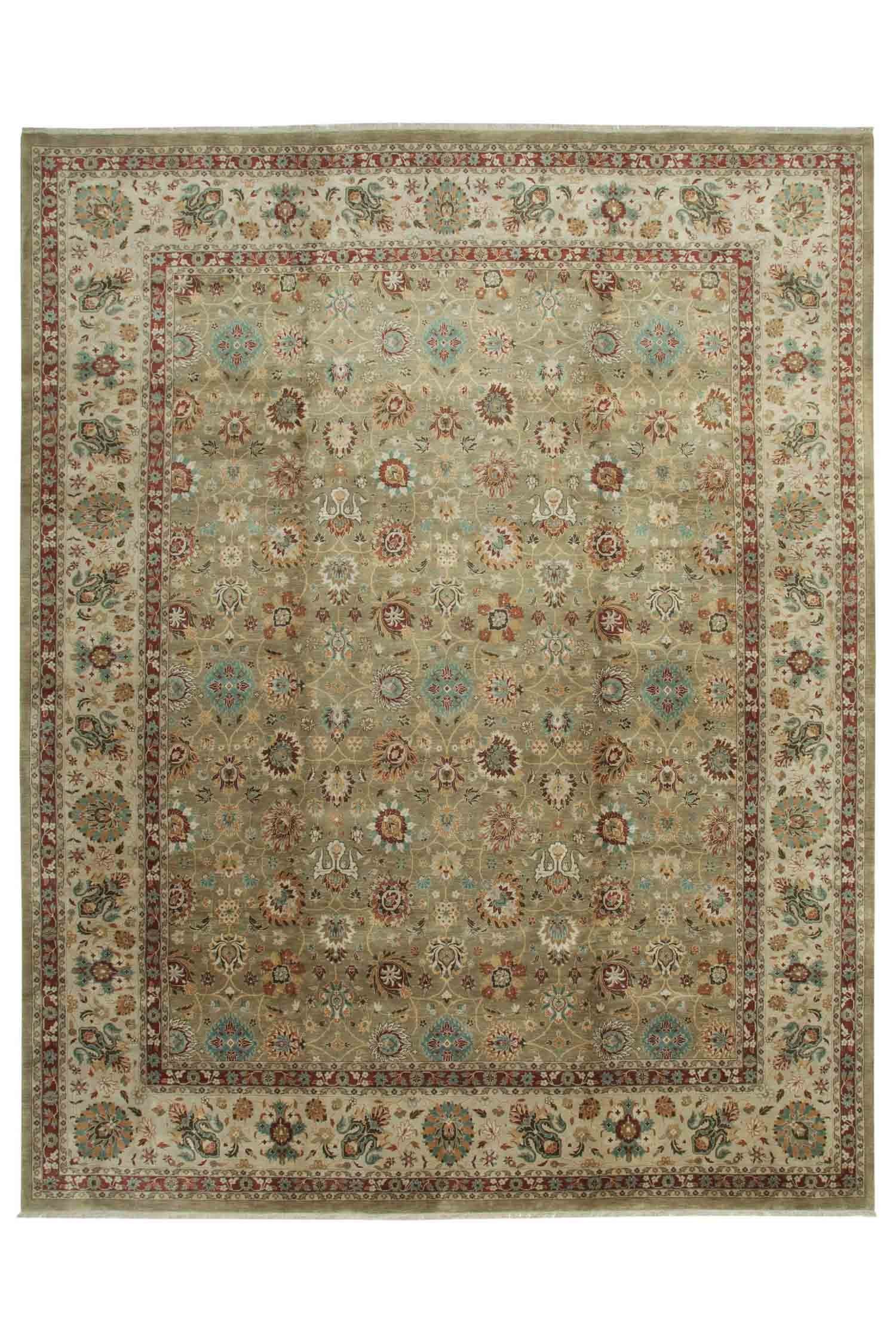
The allover floral lattice distributes pattern across the entire field with careful attention to balance. Palmettes serve as the primary motifs, their layered petals and curving forms showing the level of detail possible in fine Tabriz weaving. Vines connect these larger elements in flowing paths that guide the eye across the surface.
Small rosettes fill the spaces between major forms, preventing any sense of emptiness while maintaining visual hierarchy. The density creates a tapestry effect where pattern builds on pattern without confusion. Each element remains distinct despite the crowded composition.
The border uses a similar vocabulary of florals but arranges them in a more linear sequence. This provides structural framing while maintaining continuity with the field's aesthetic. The gold accents in the border tie it visually to the field highlights.
Placement
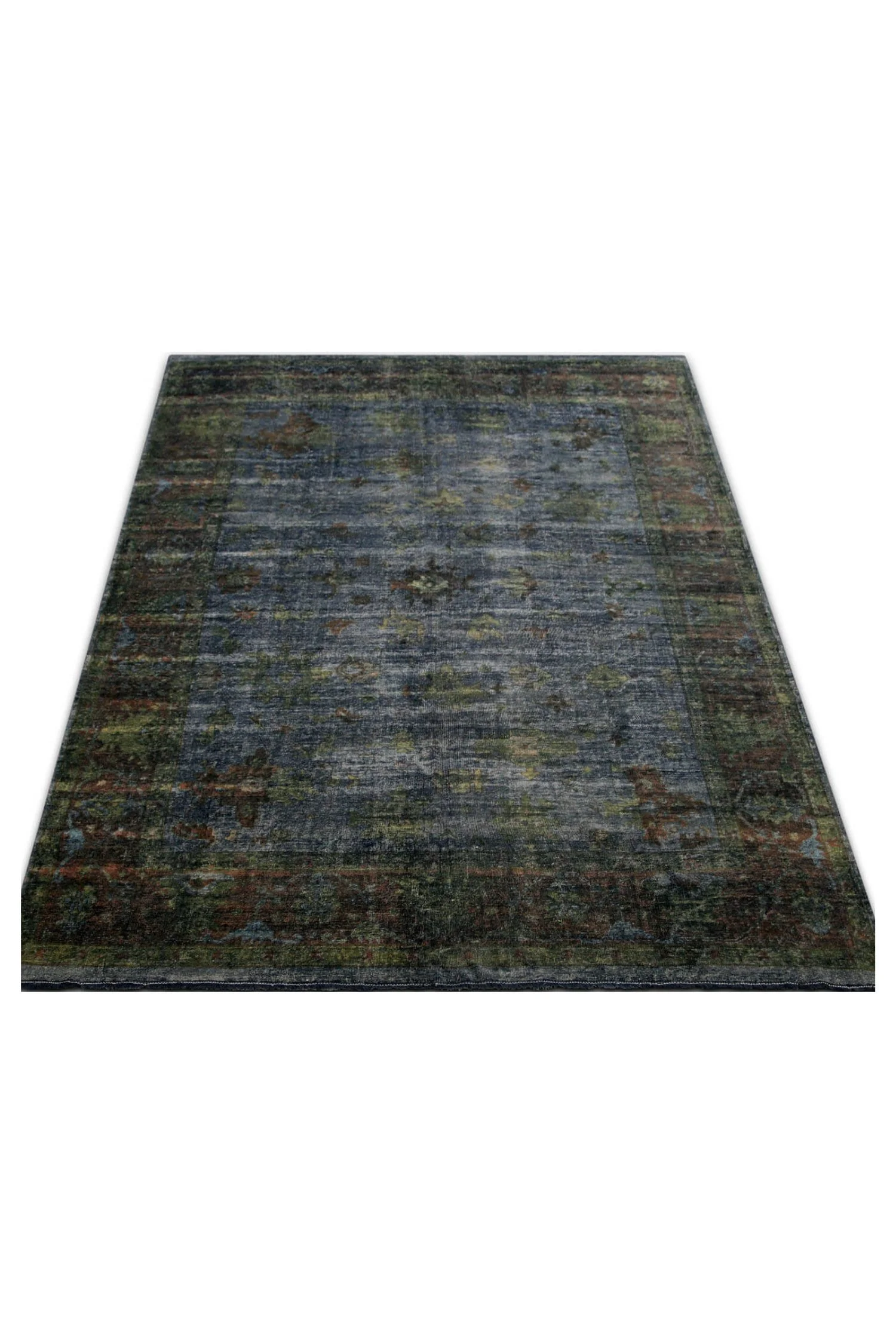
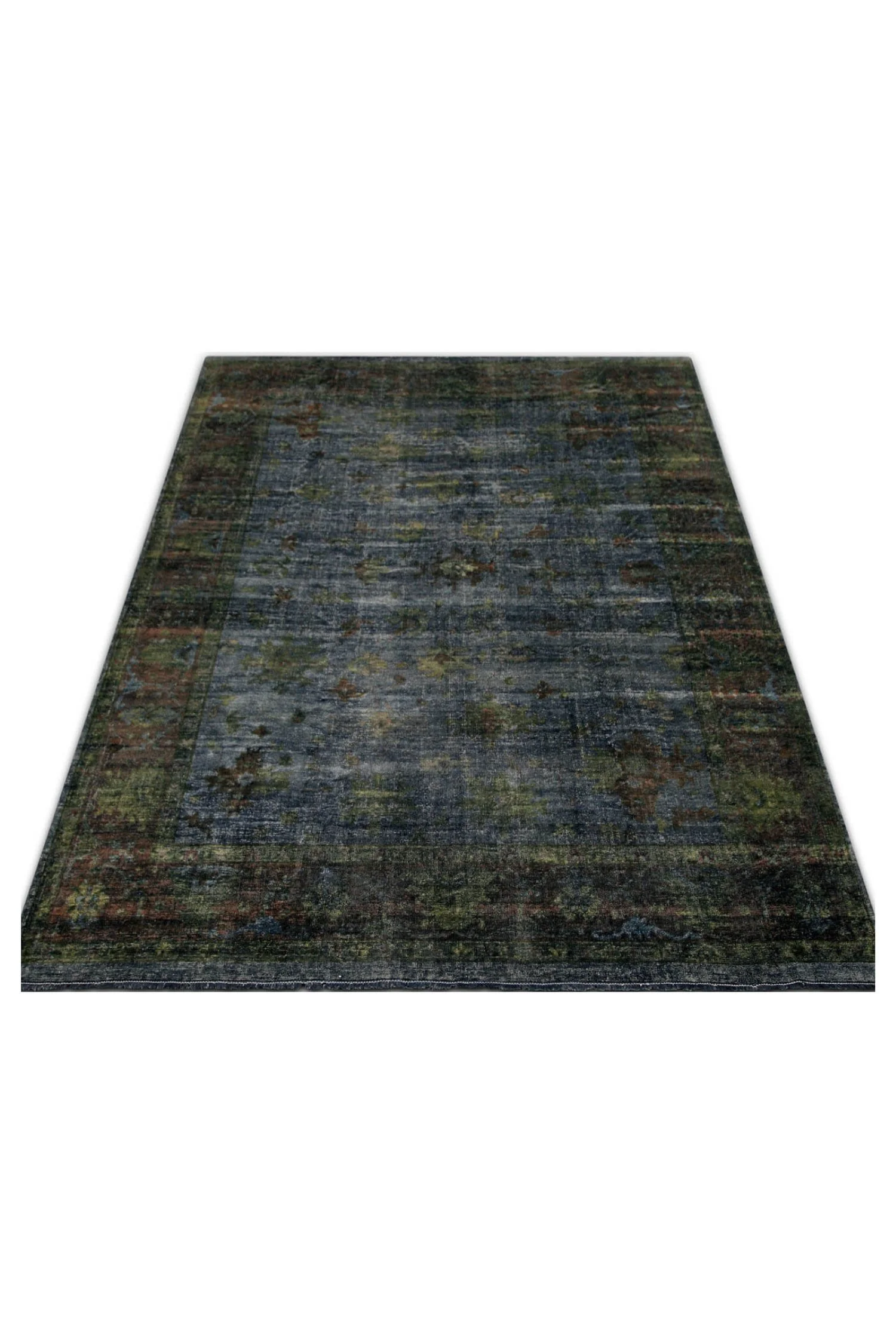
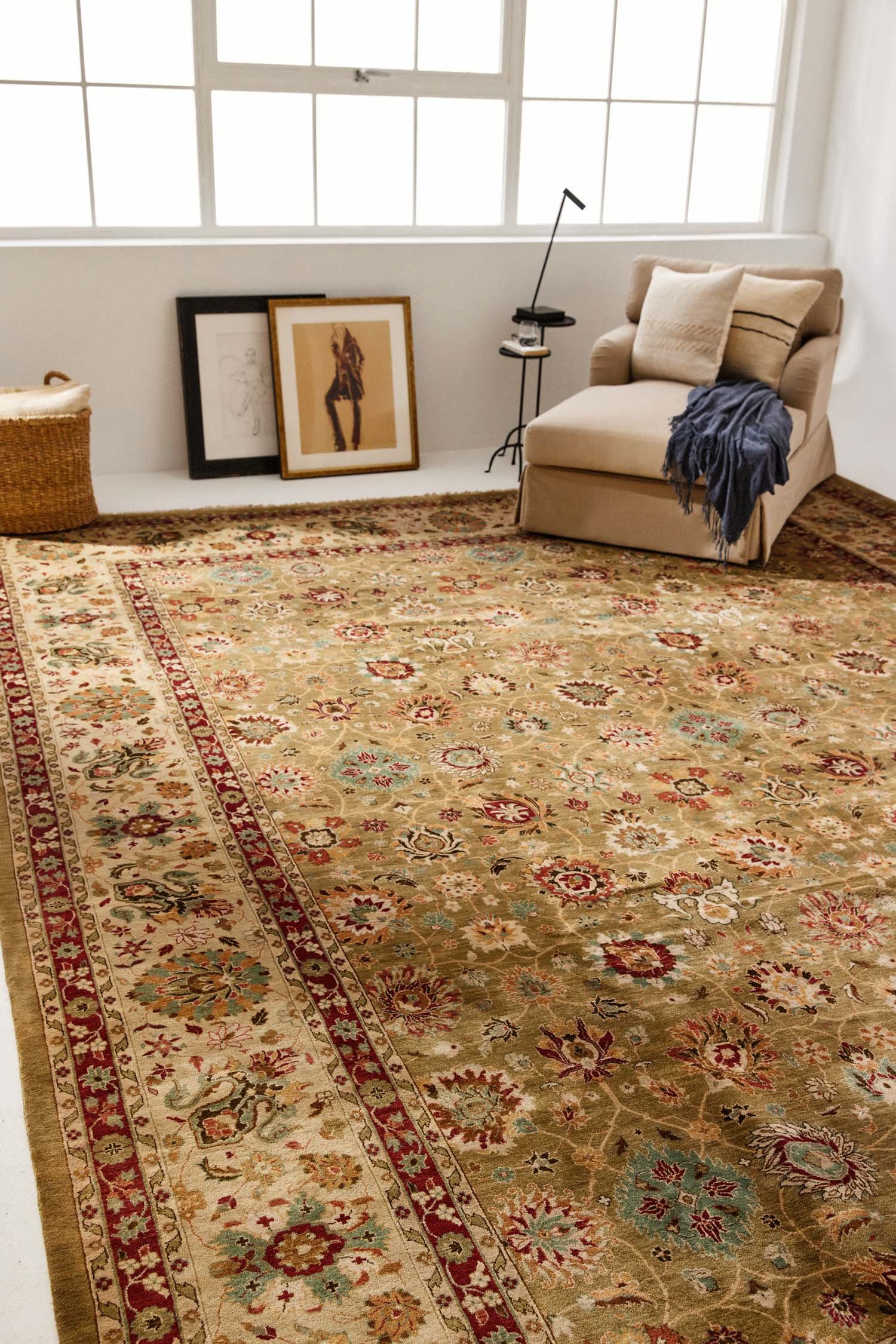
At nearly twelve by fifteen feet, this requires substantial room dimensions. Large living rooms can accommodate it with furniture arranged on top and clearance maintained around the perimeter. Formal dining rooms with tables that seat ten to twelve benefit from the generous proportions.
The lavender and sage palette works in interiors where you want something refined but not conventional. The scale suits spaces with high ceilings or large windows where a smaller rug would feel insufficient. Traditional settings appreciate the technical quality and historical provenance, while contemporary rooms can use the unusual color as a bridge between classic craft and modern aesthetics.
Care Recommendations
To preserve the rug's beauty:
Rotate periodically for even wear
Vacuum regularly using a suction-only setting
Address spills immediately by blotting, never rubbing
Professional cleaning recommended annually
Avoid direct sunlight to maintain color integrity
Tabriz workshops measured their reputation by knot count and pattern complexity, both of which this rug demonstrates.