 Image 1 of 6
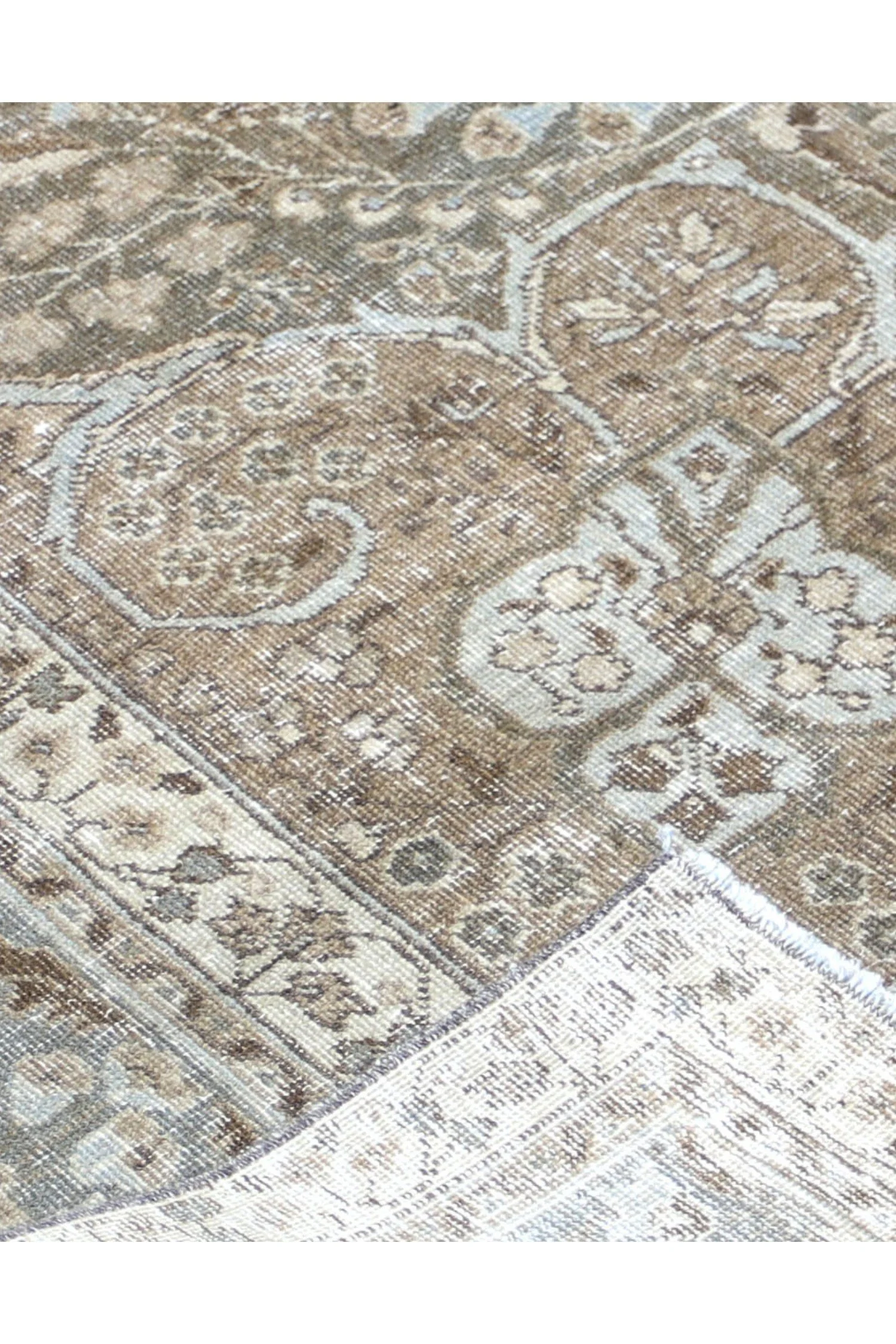 Image 2 of 6
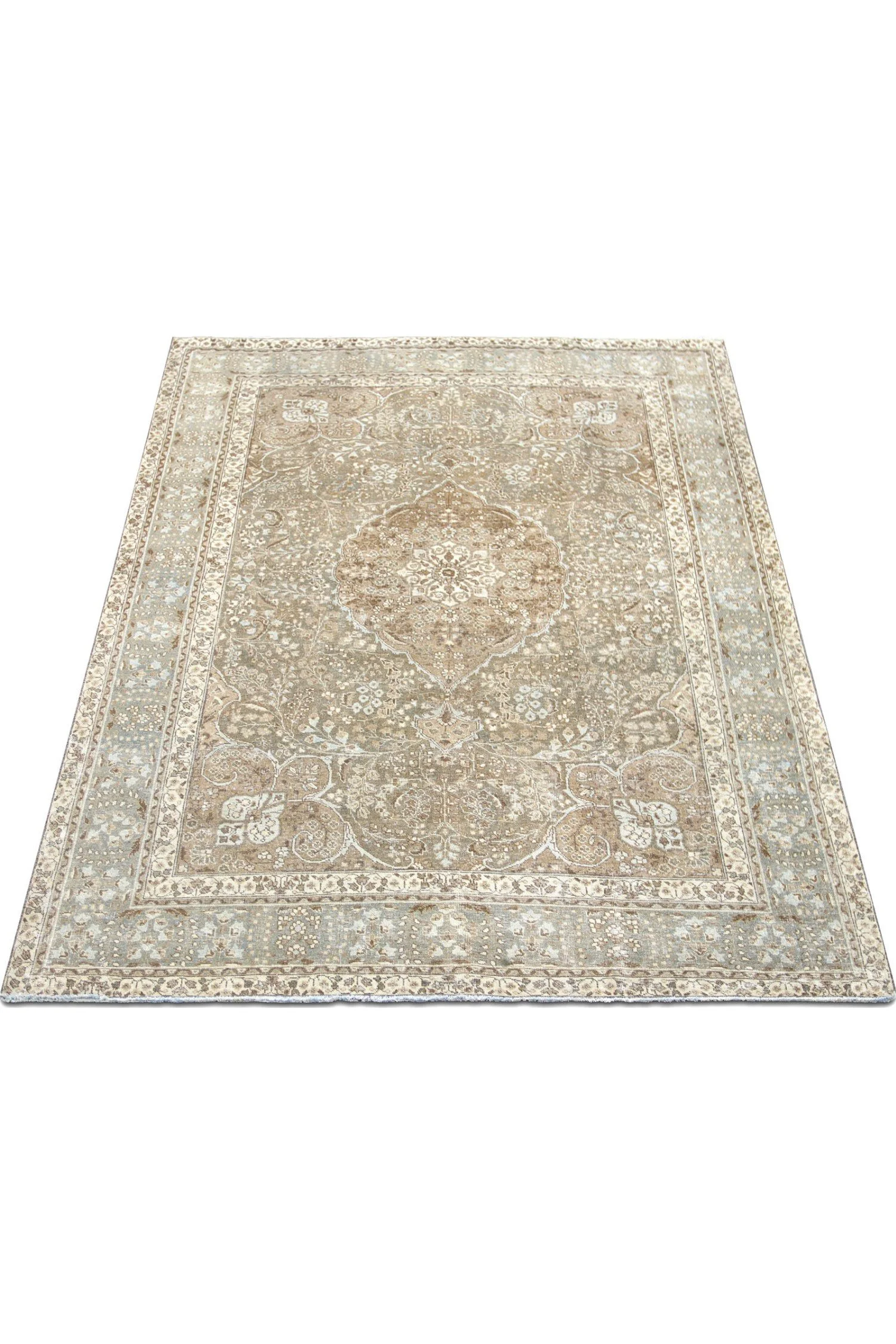 Image 3 of 6
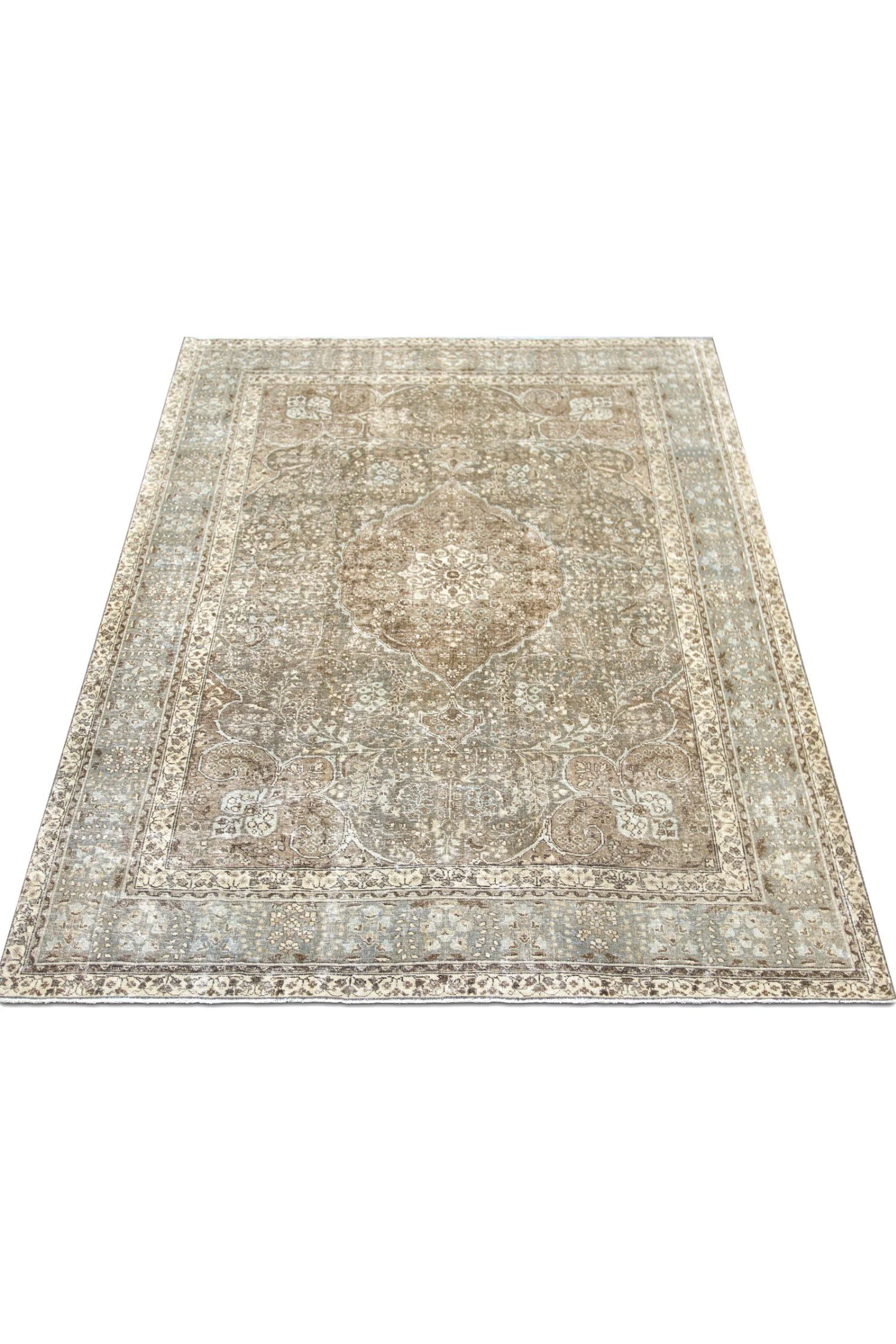 Image 4 of 6
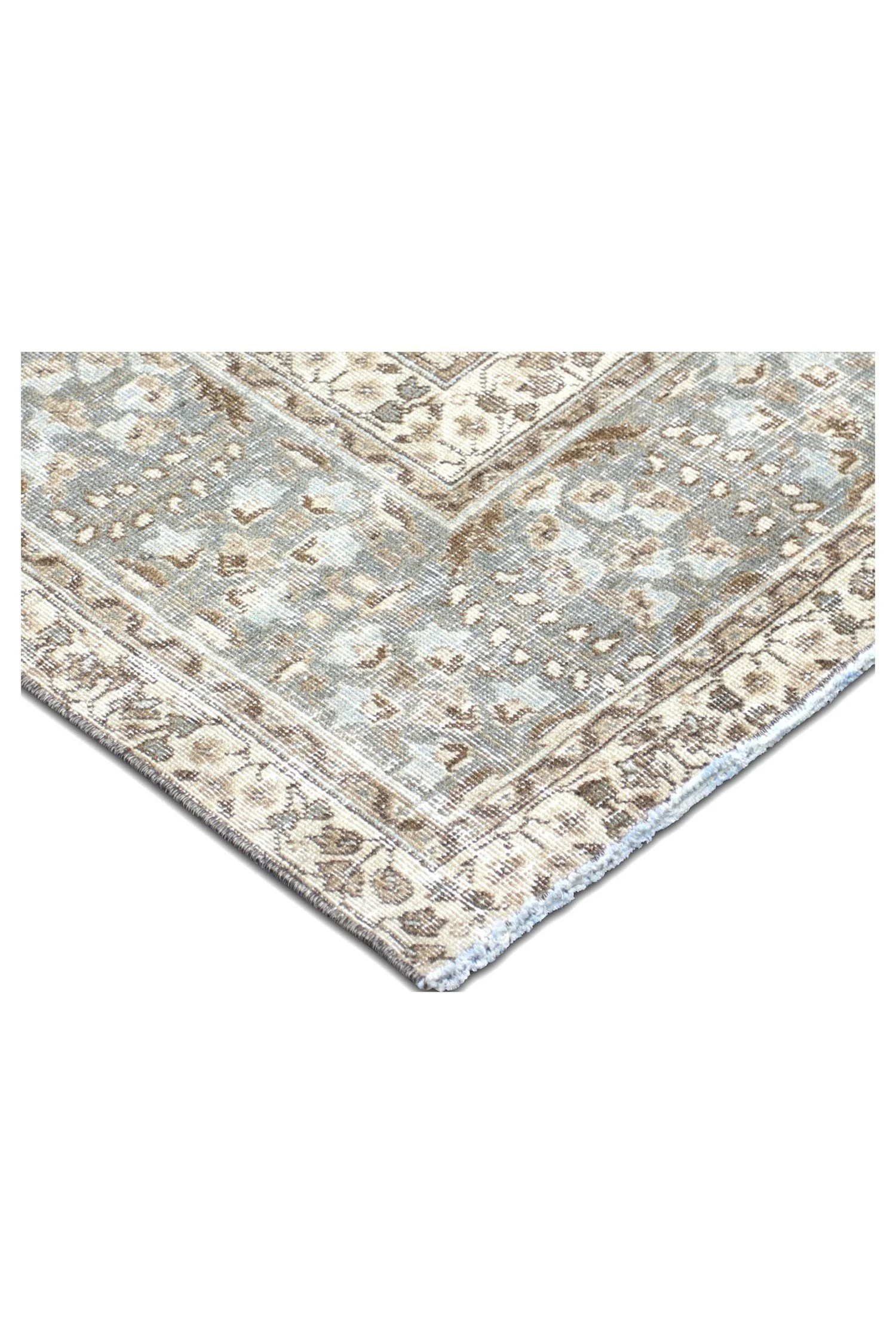 Image 5 of 6
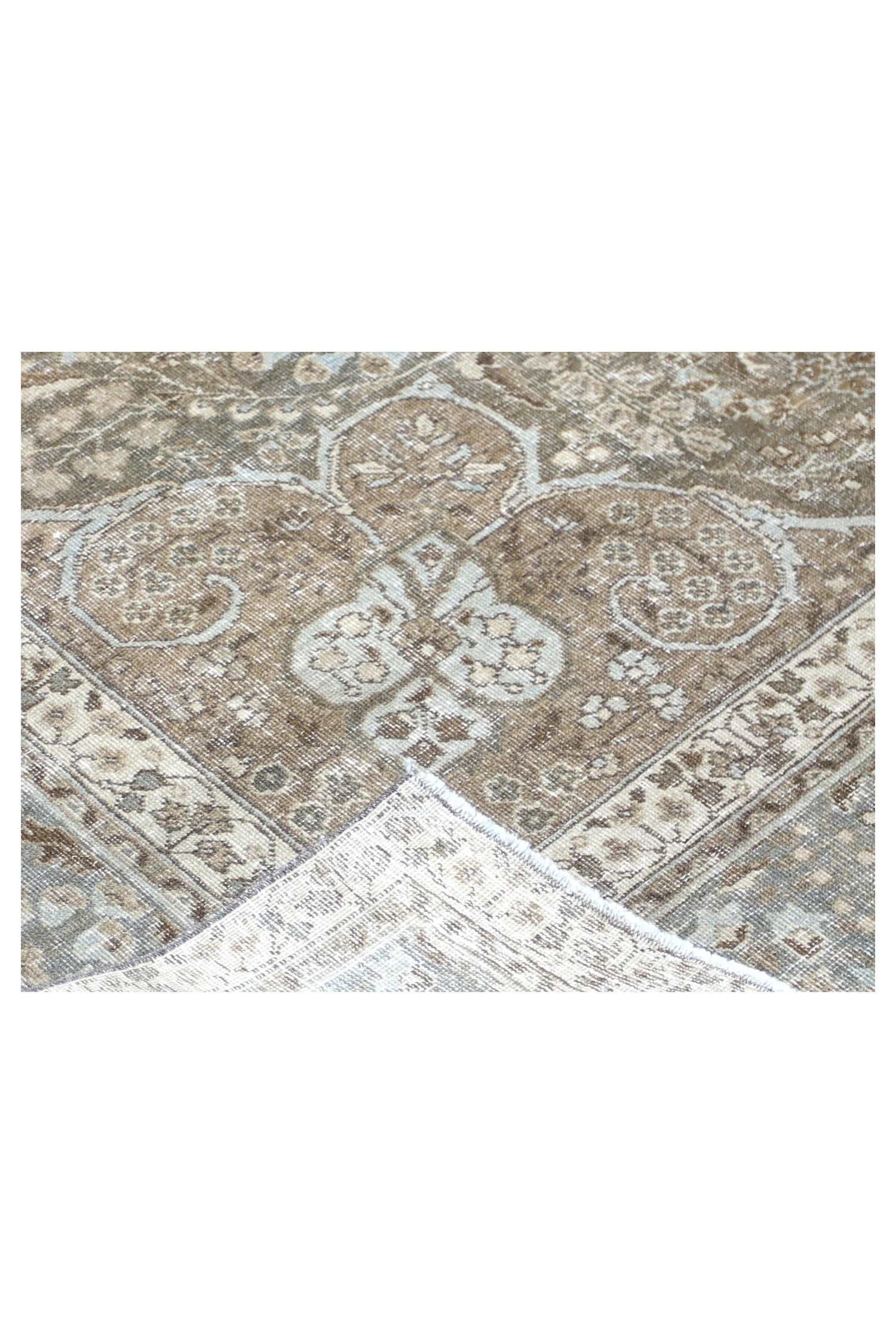 Image 6 of 6
Heritage and Craftsmanship
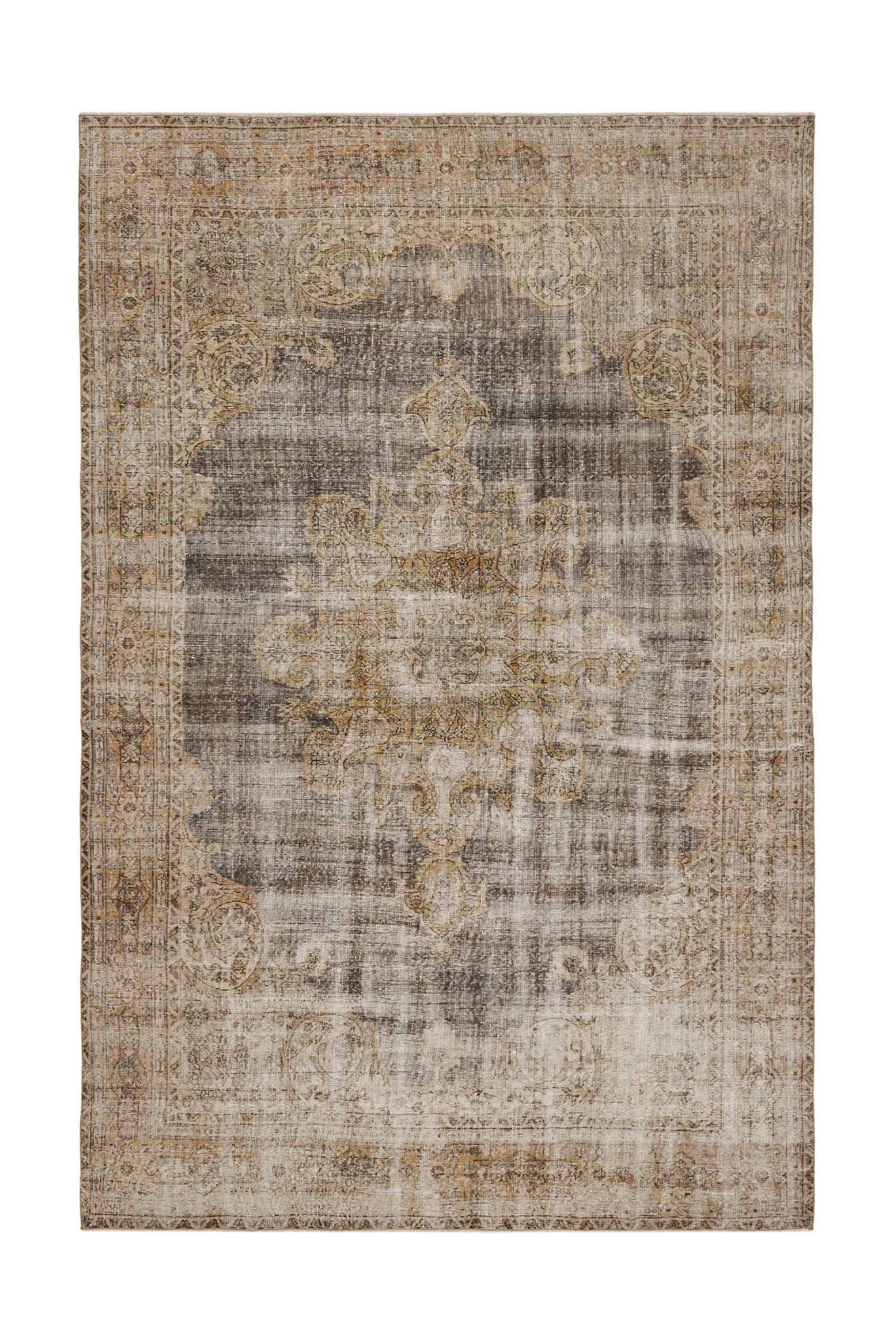
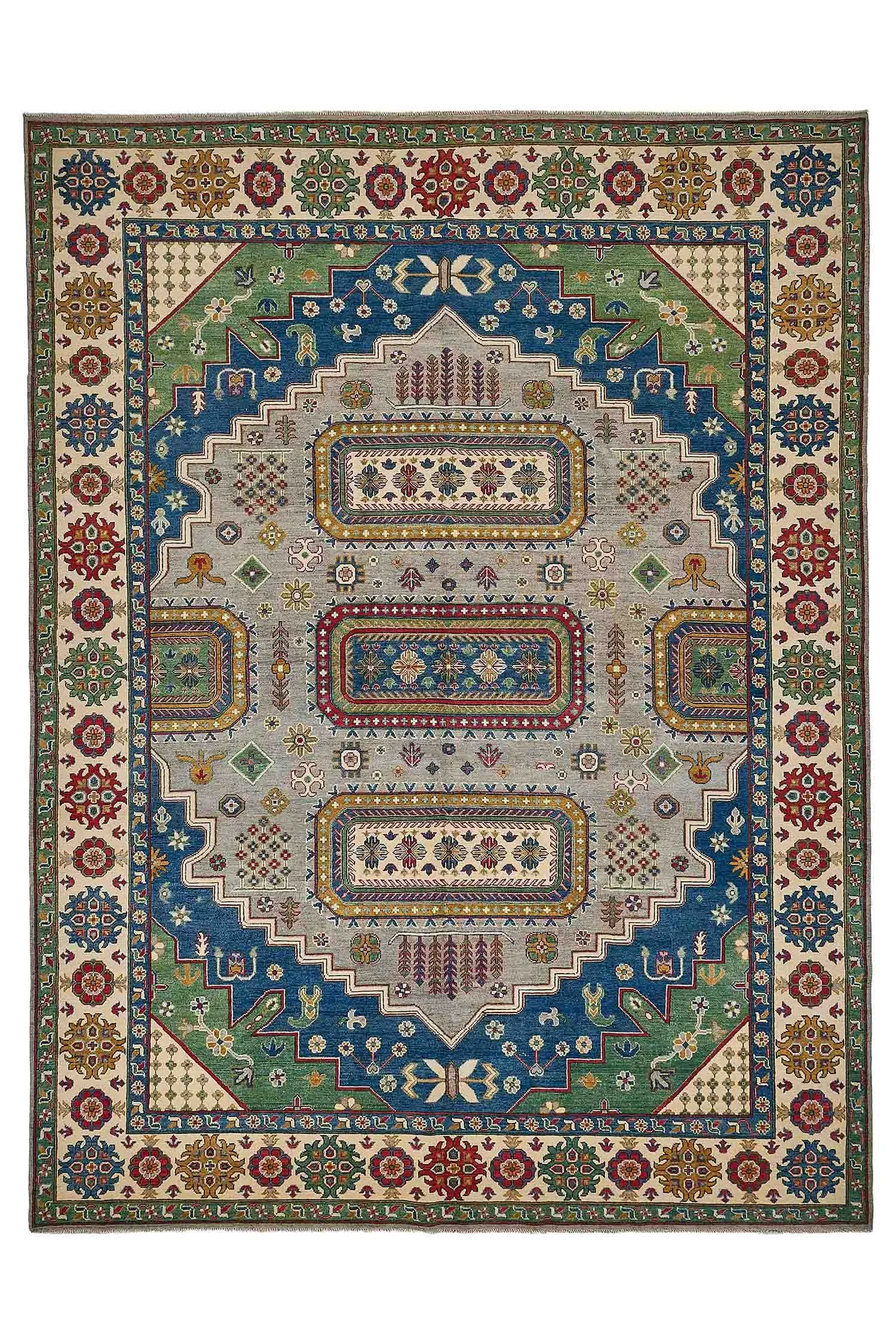
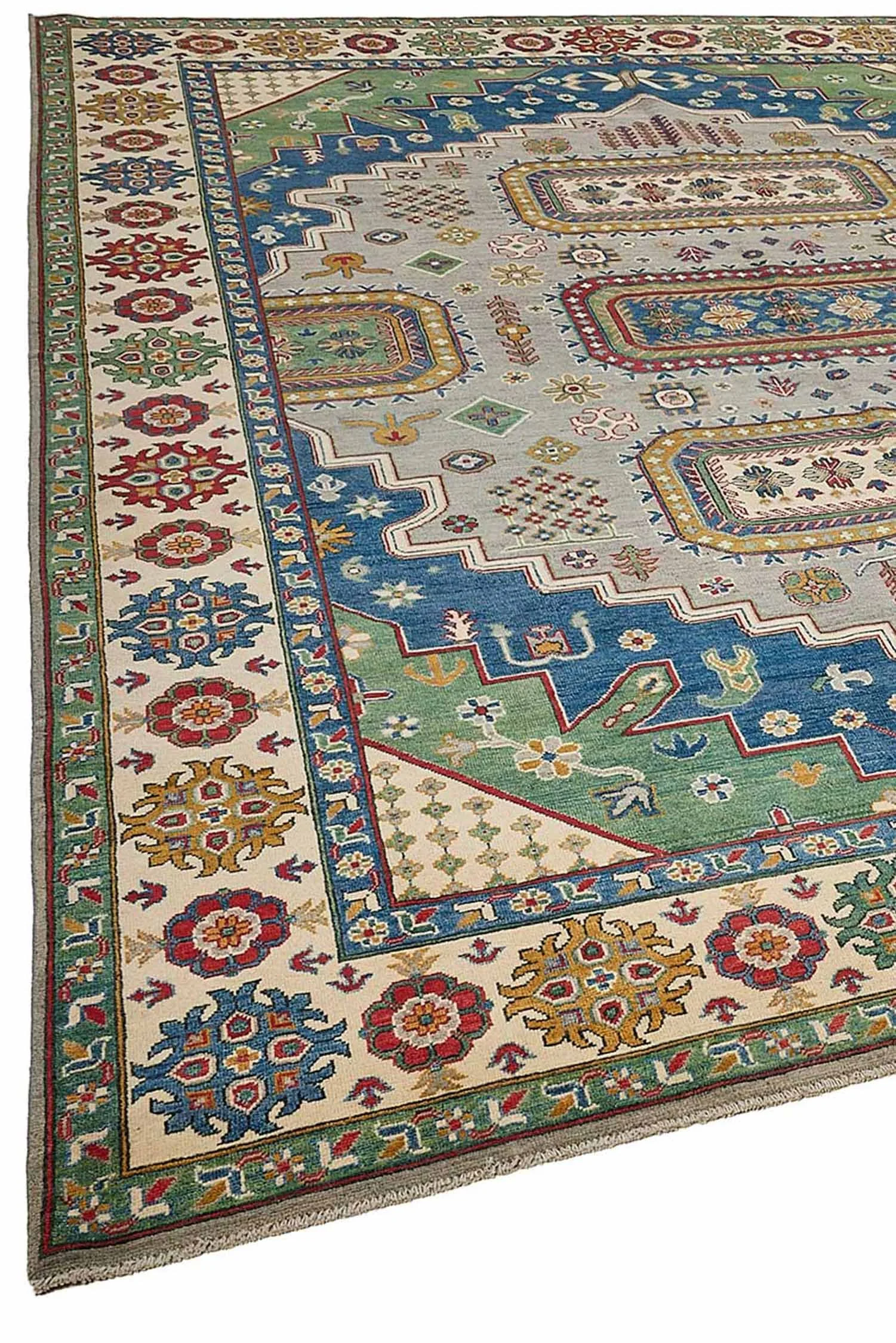
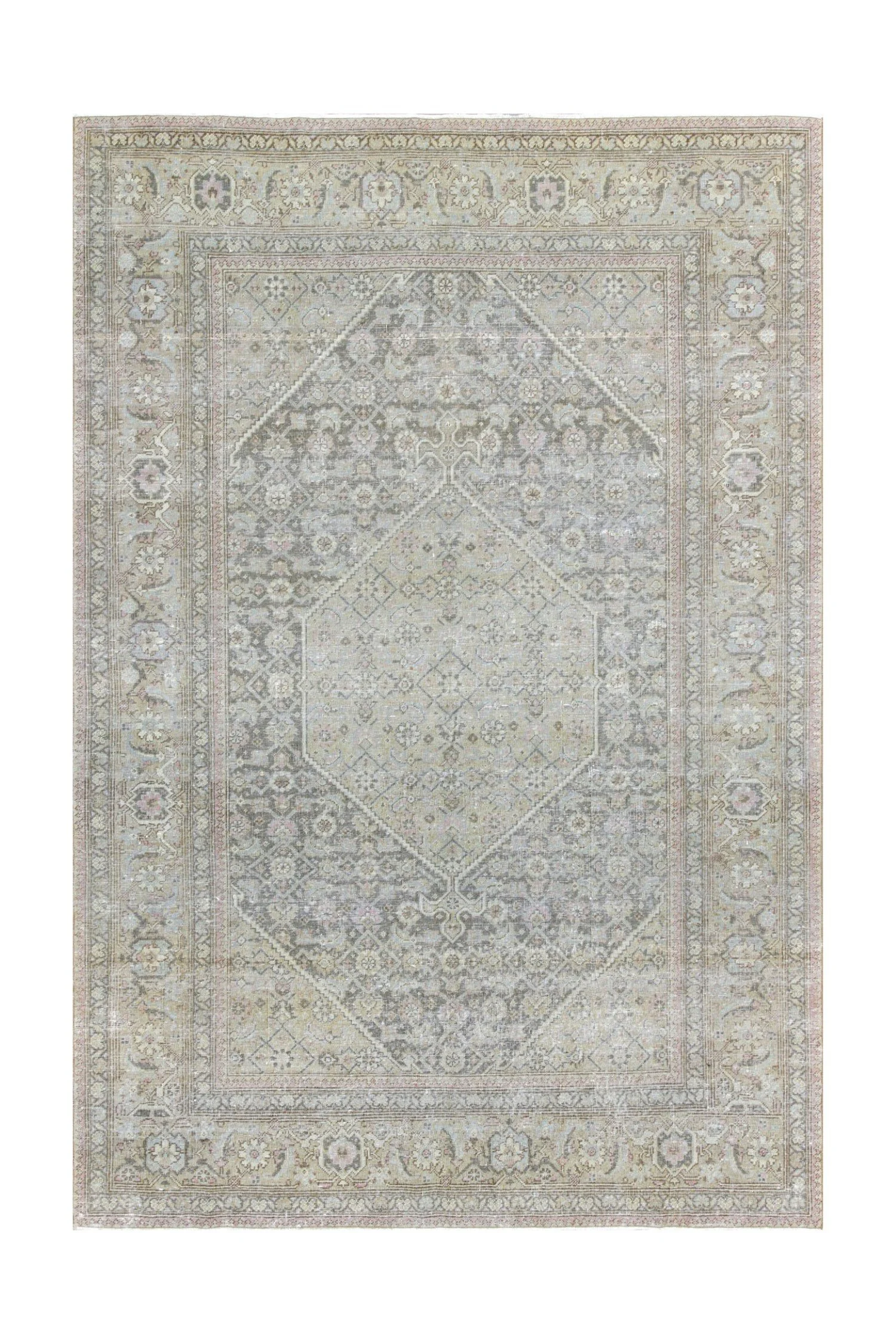
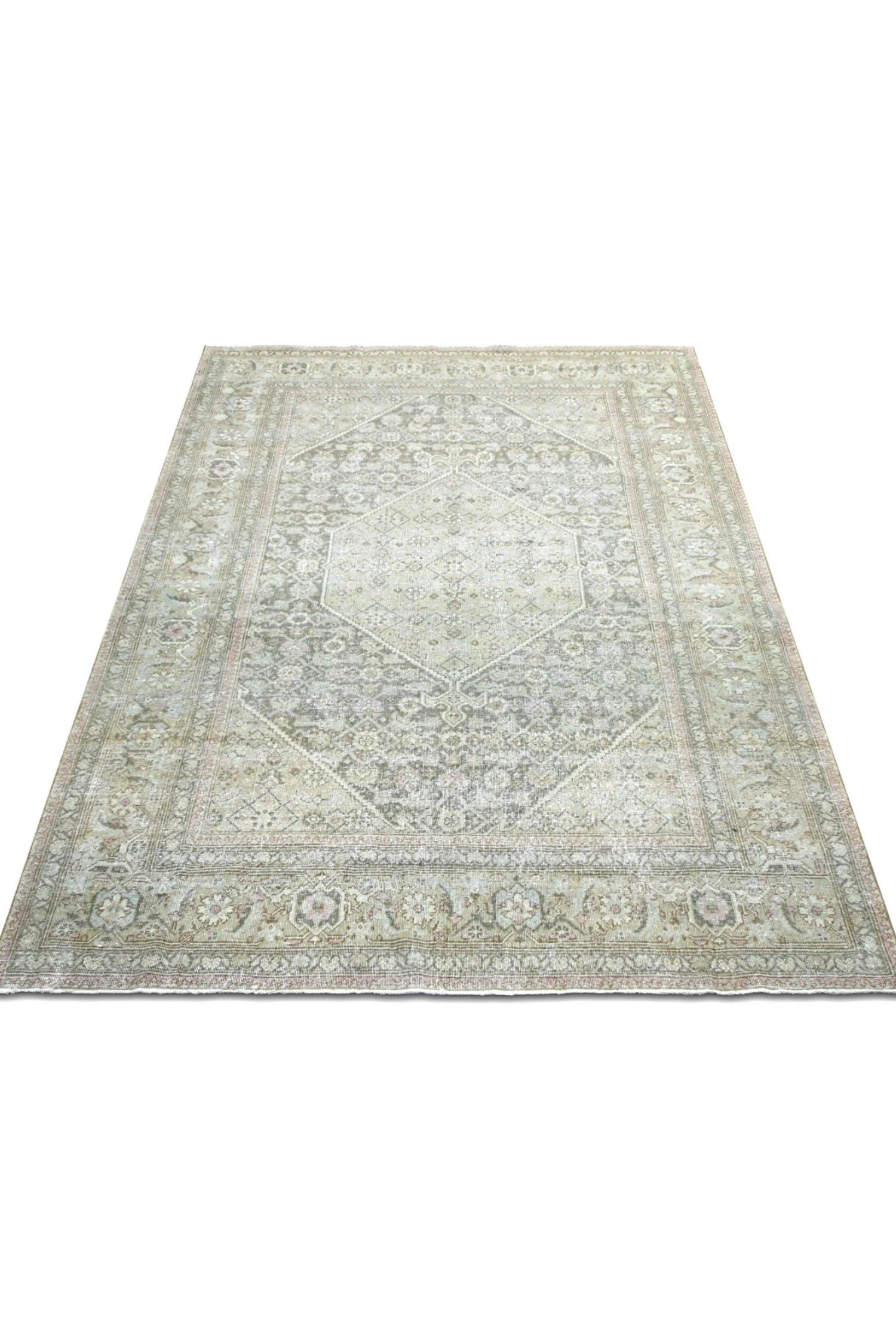
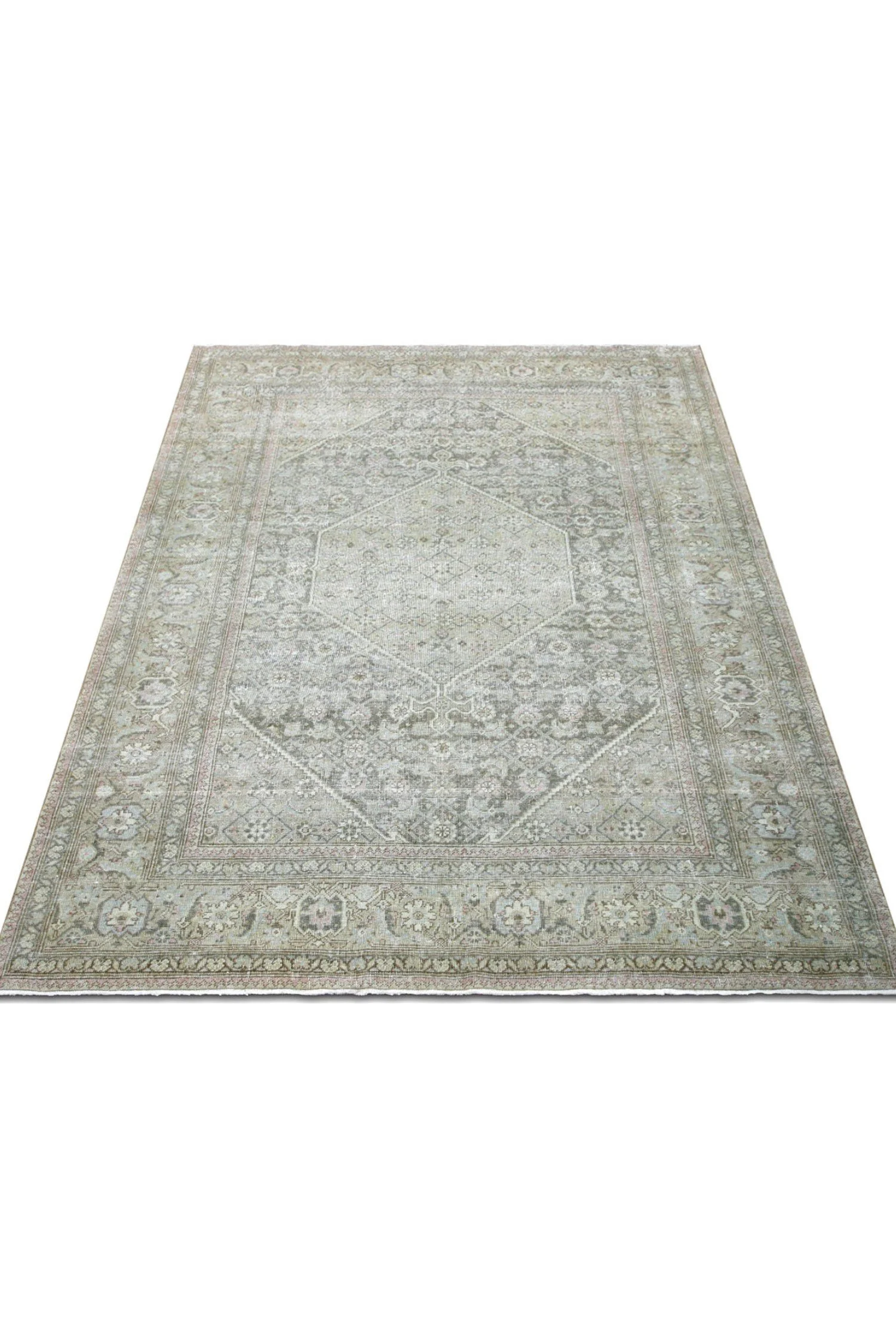
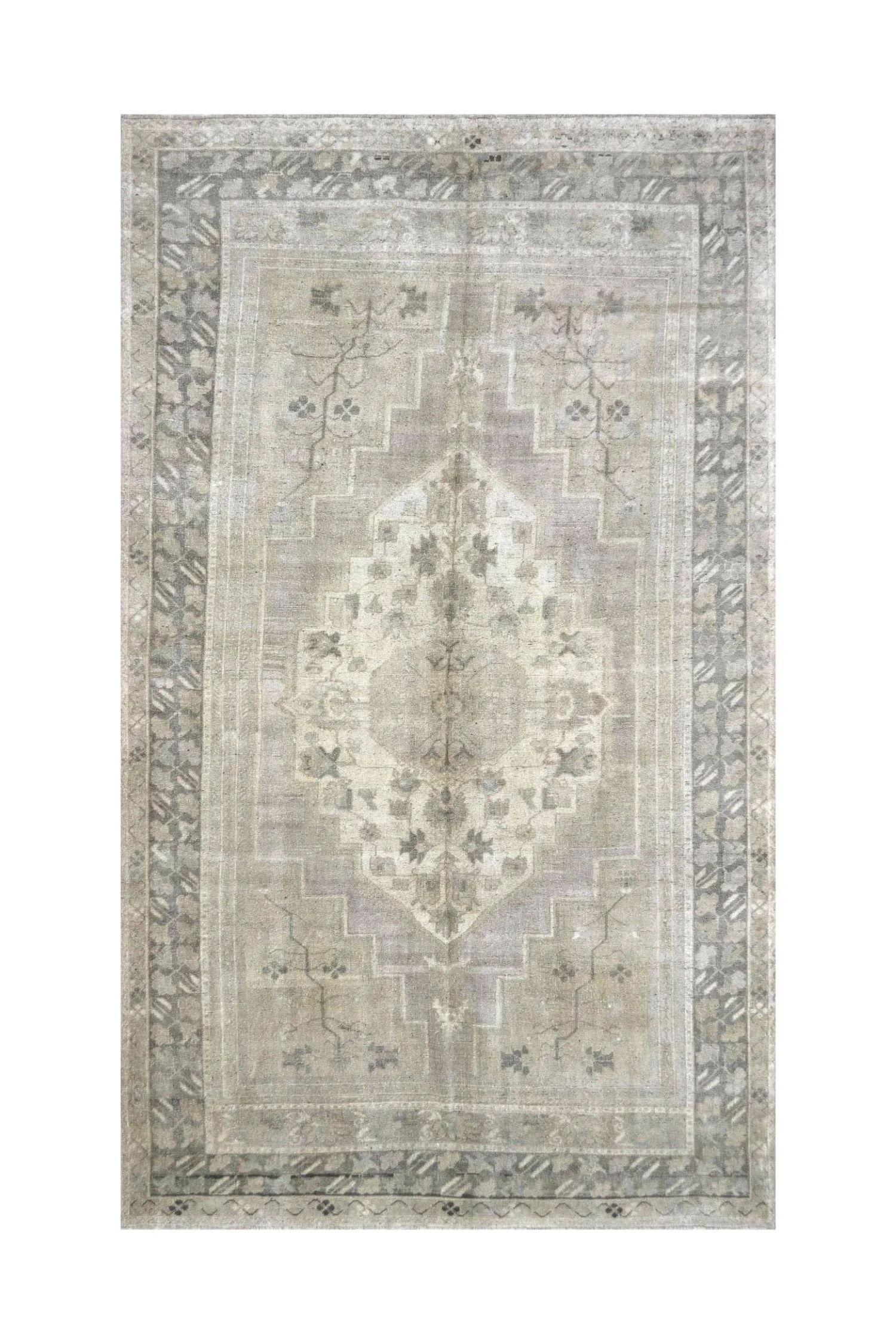
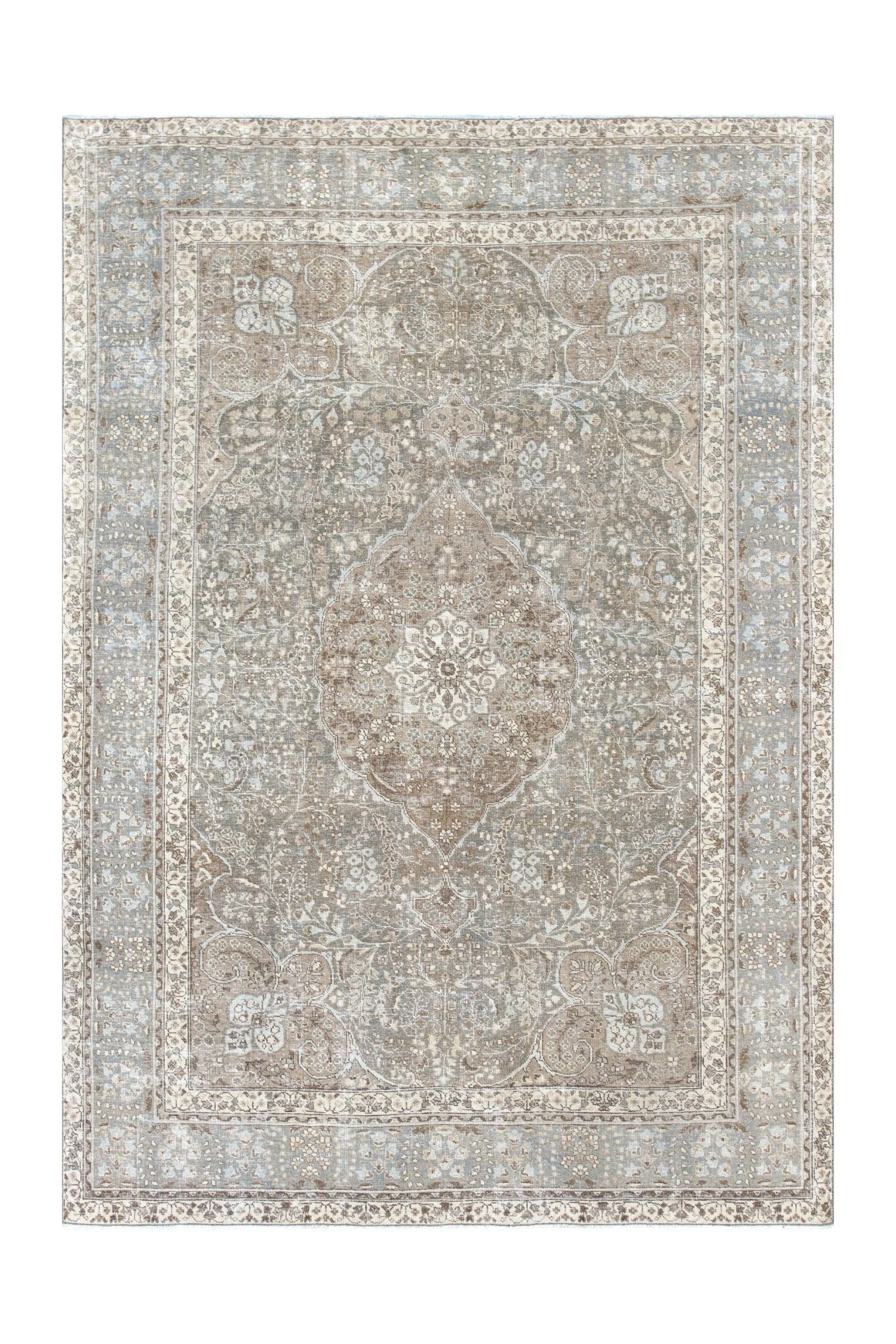
Tabriz workshops in the 1950s continued producing rugs with central medallion compositions that represented traditional Persian structure. The balanced, formal drawing seen here reflects workshop production where weavers worked from cartoons that specified pattern placement and proportions with precision.
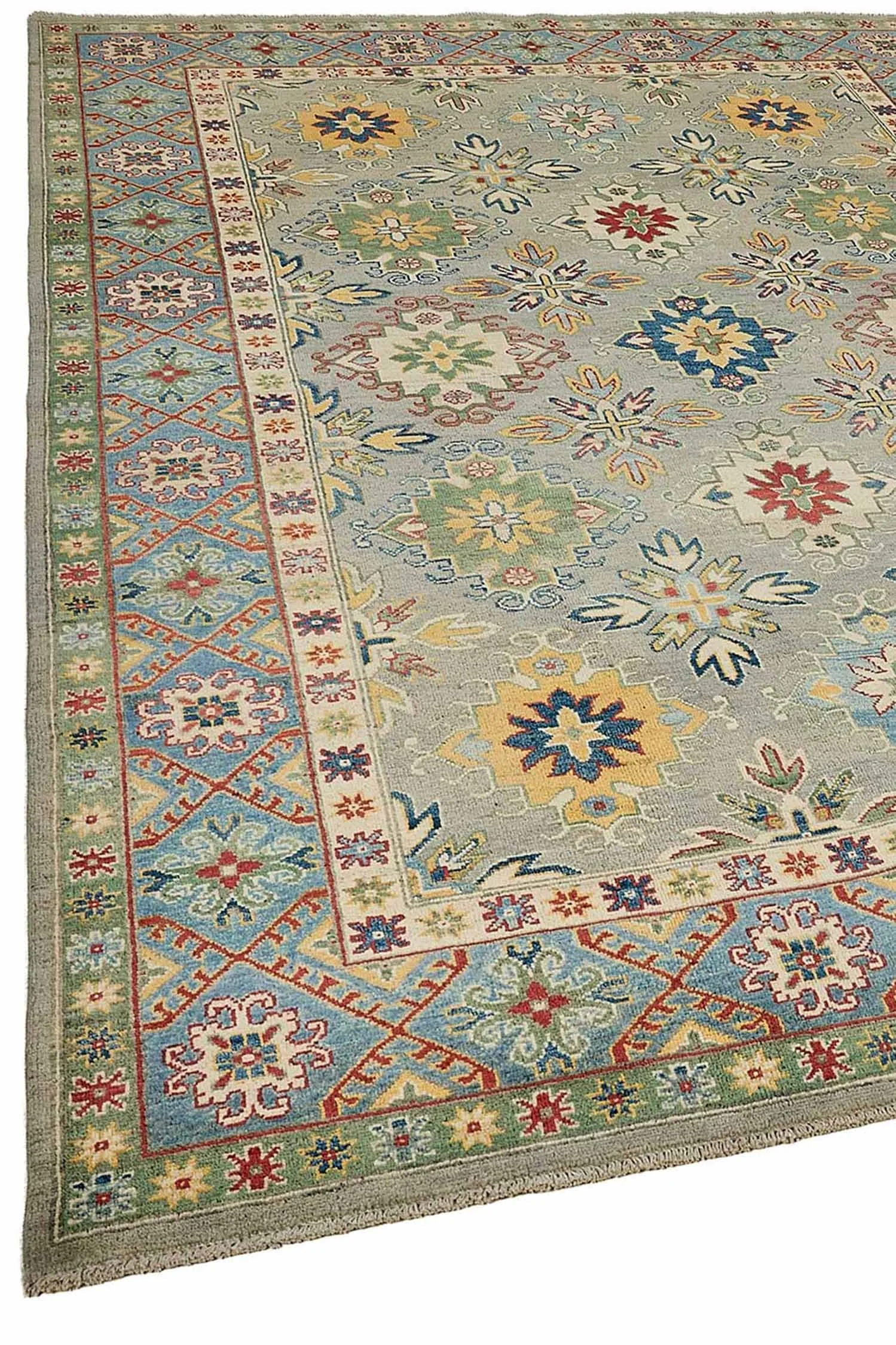
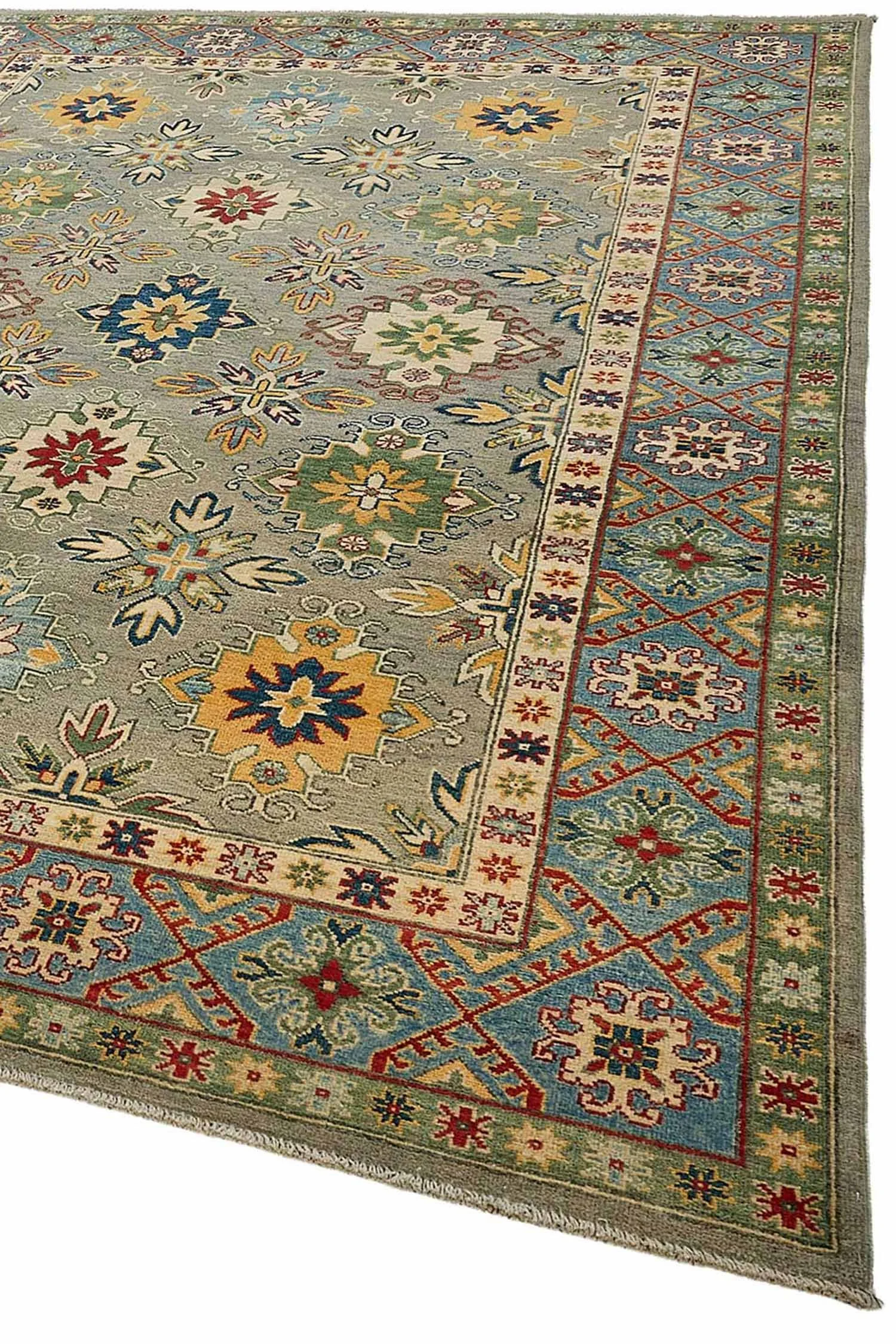
Creating layered floral arabesques required skilled drawing to maintain flowing quality while keeping forms organized within the composition. The arabesques needed to fill the field around the medallion while deferring to it as the primary focal point. Multiple borders provided graduated framing that enhanced the composition's depth.
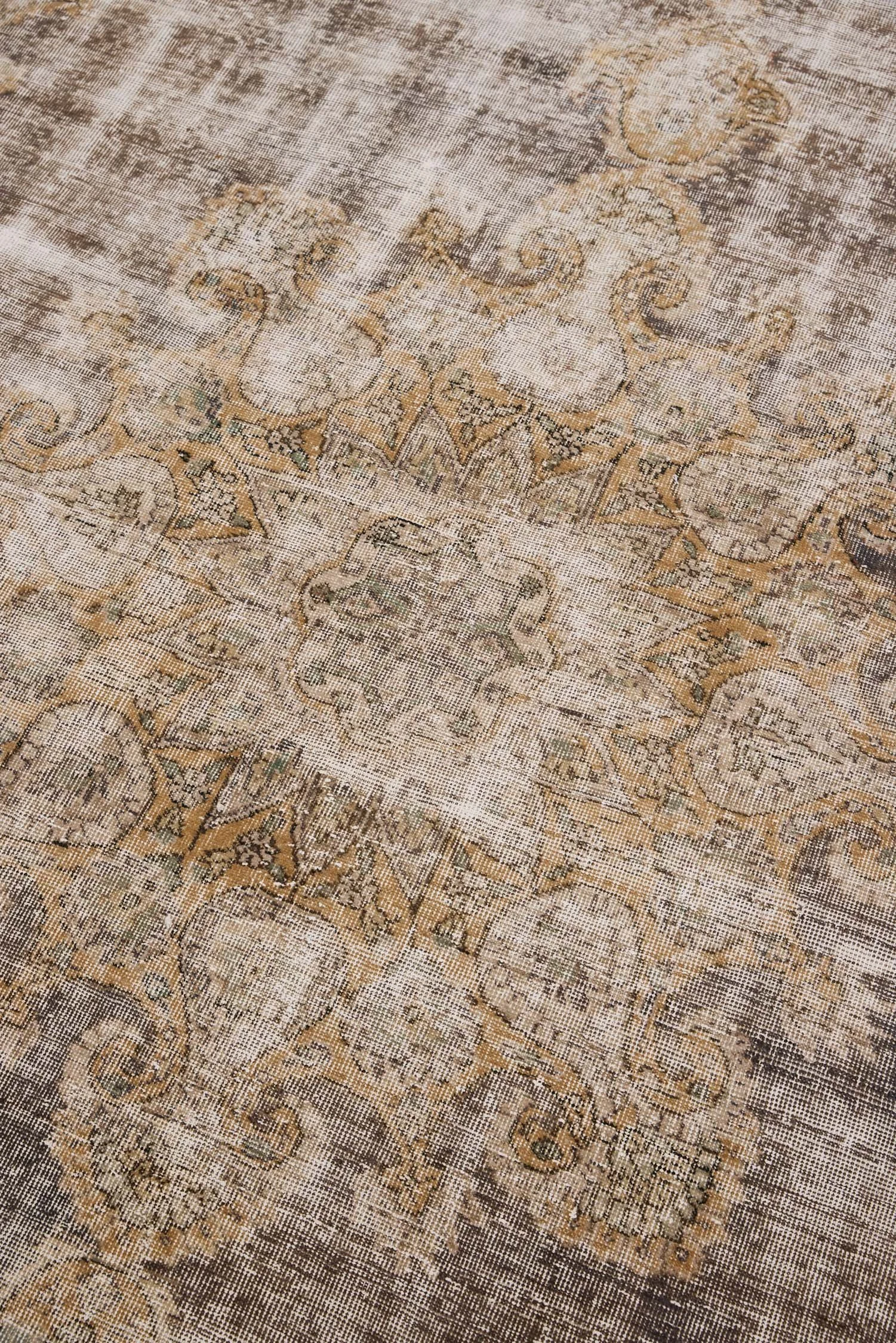
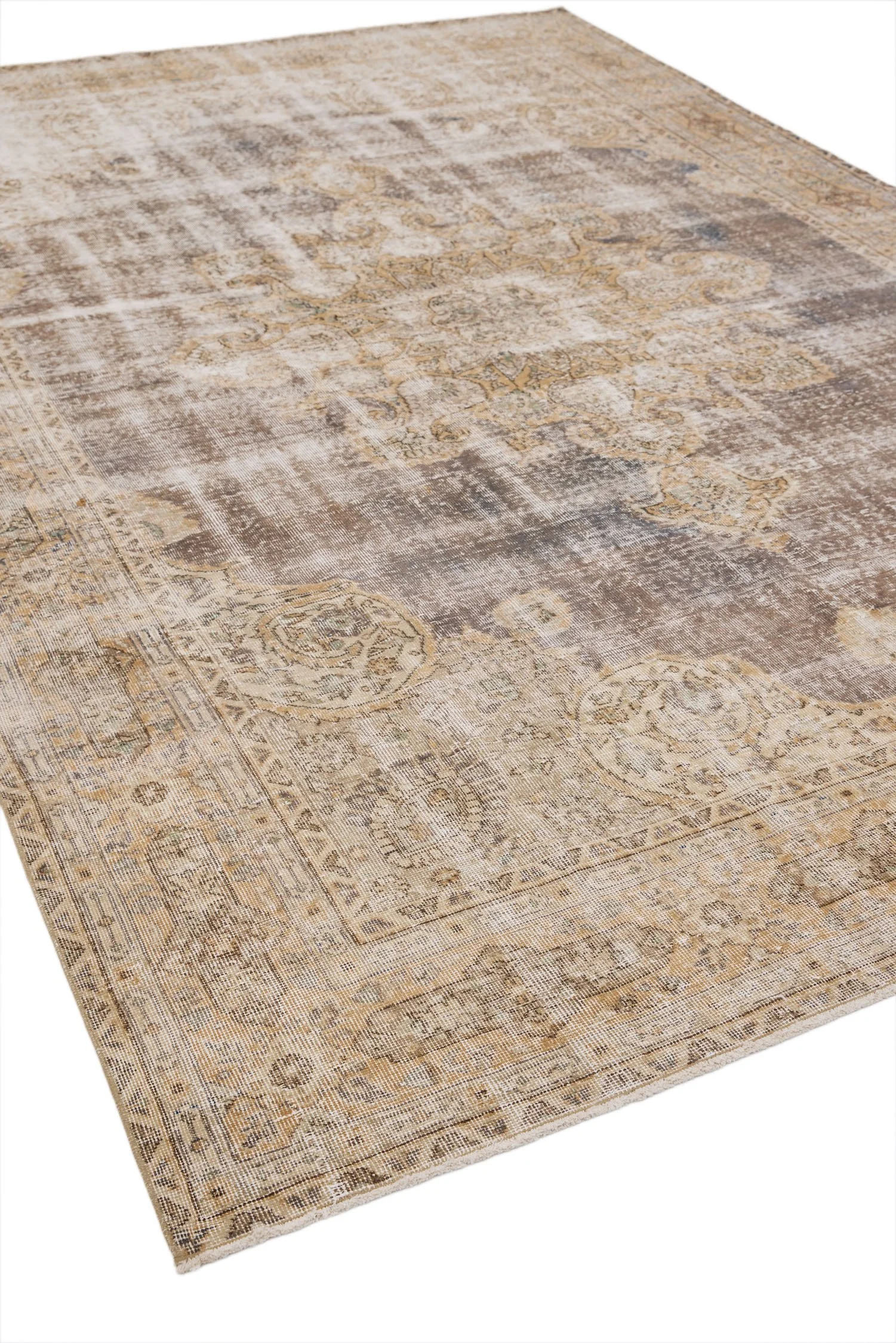
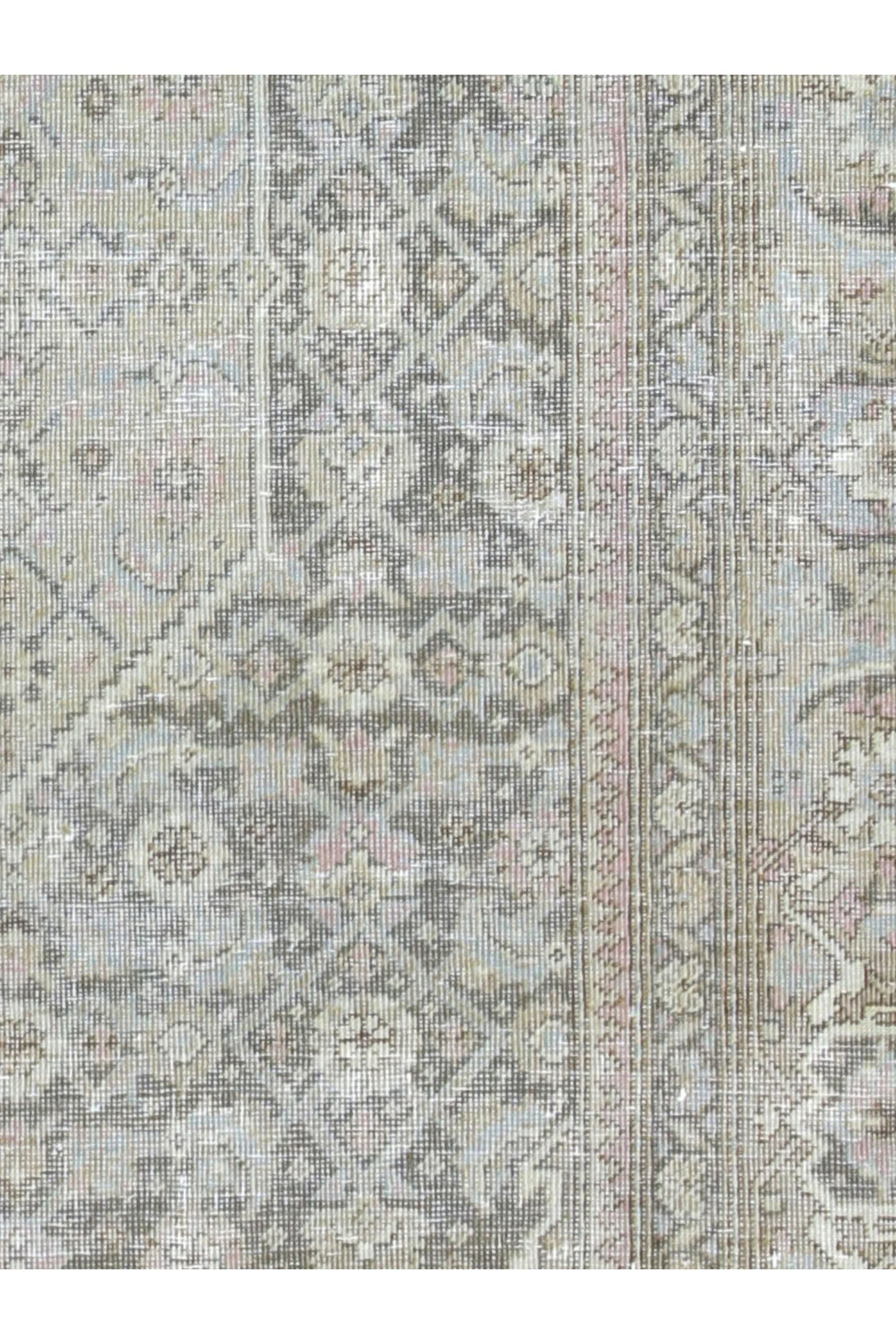
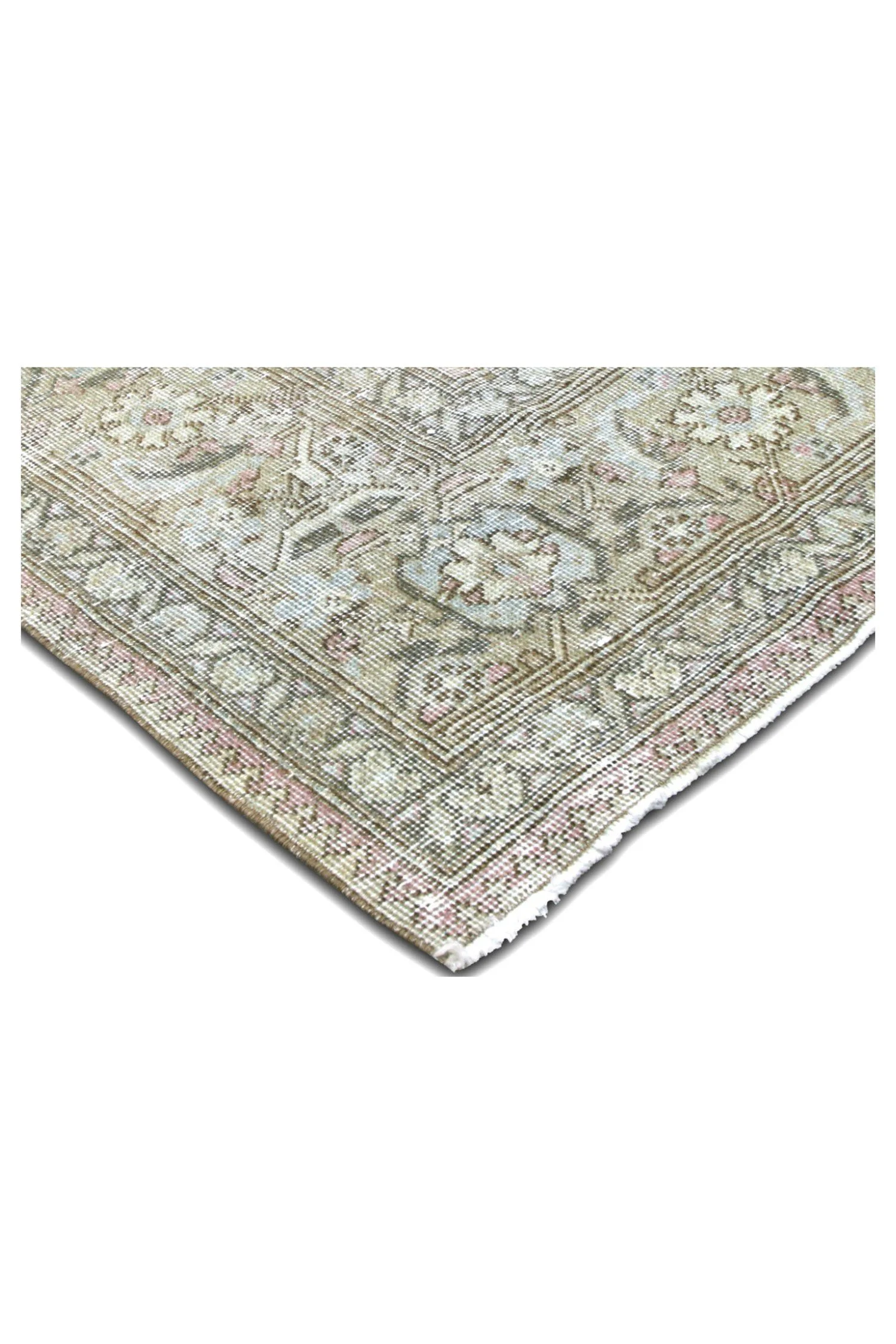
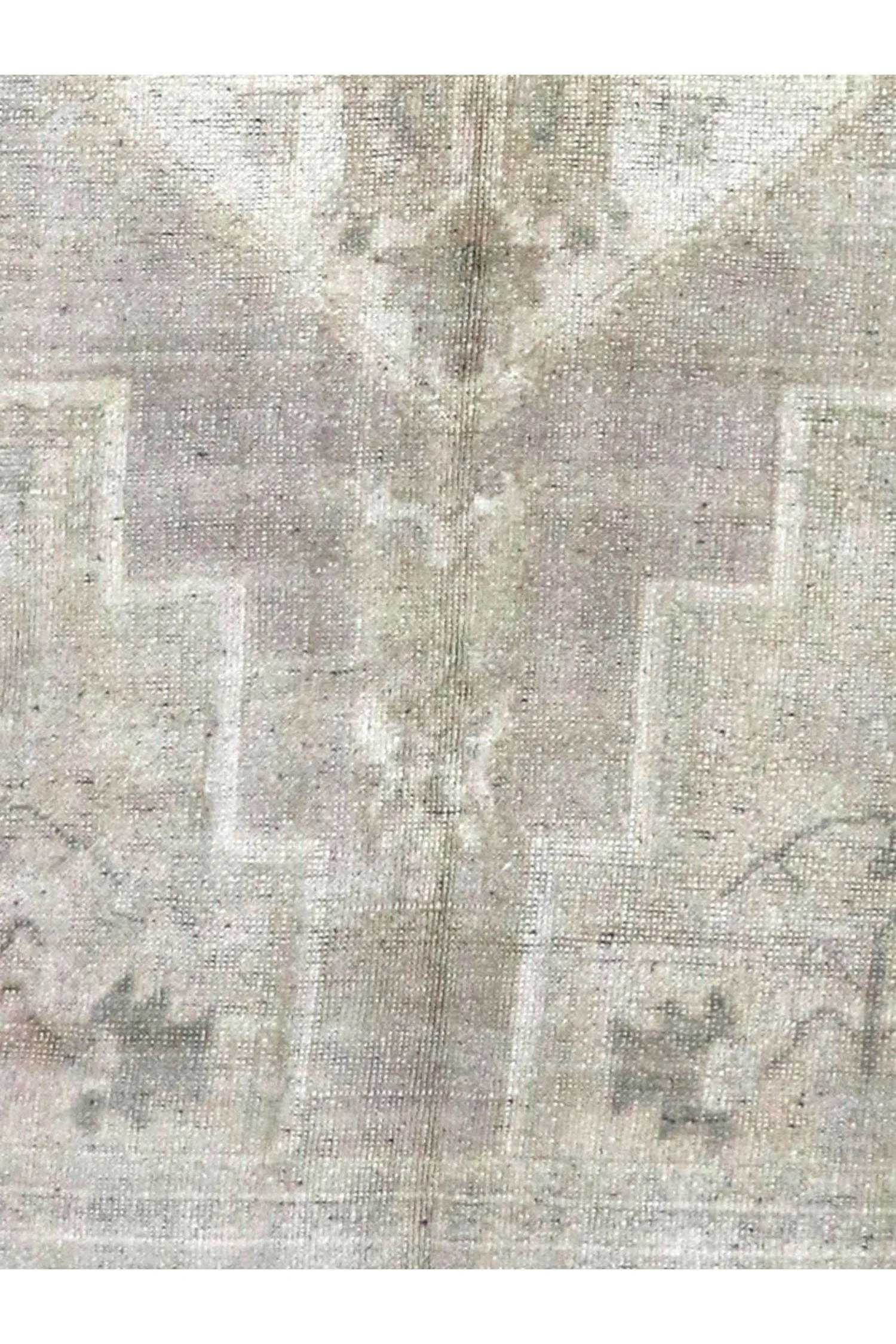
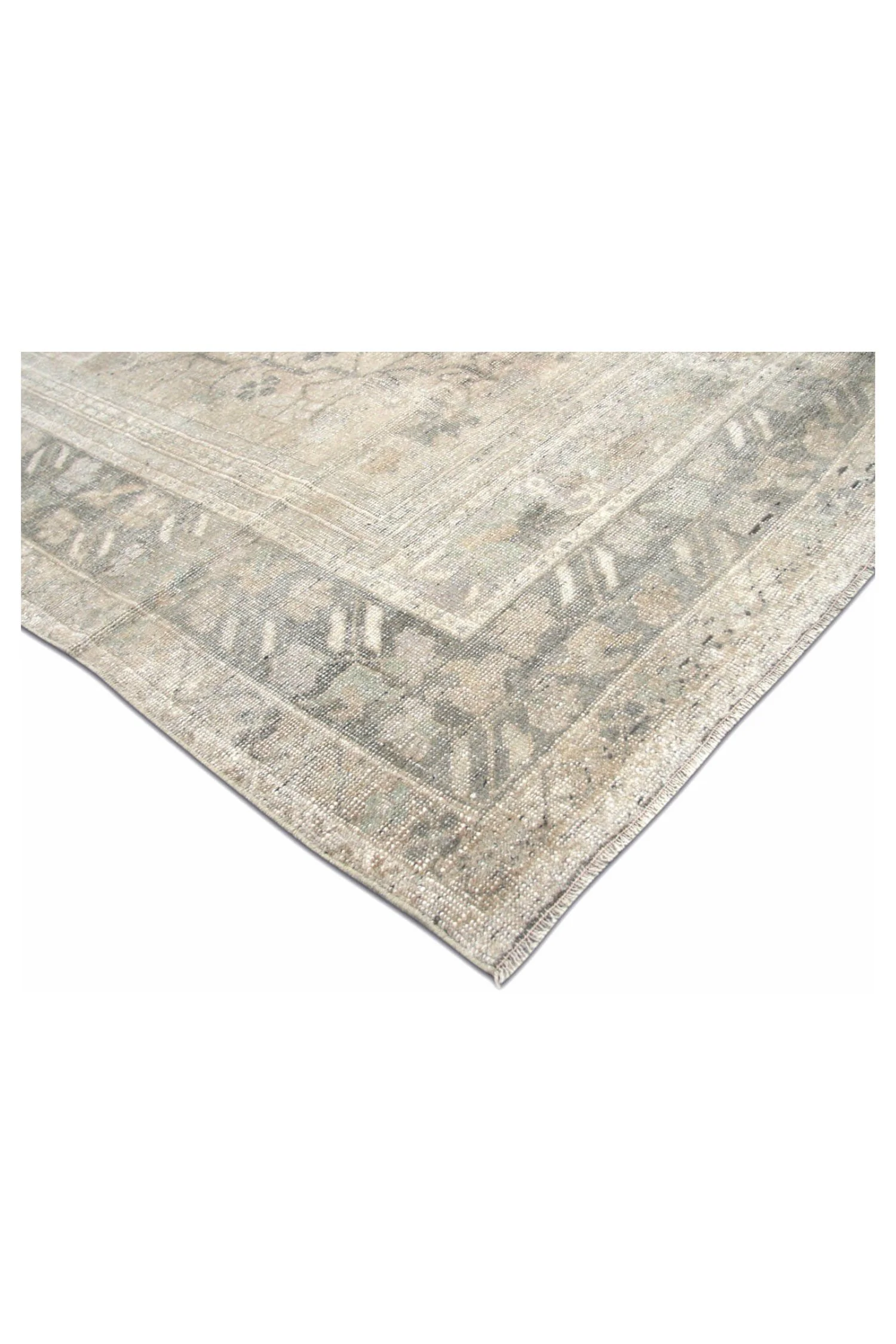
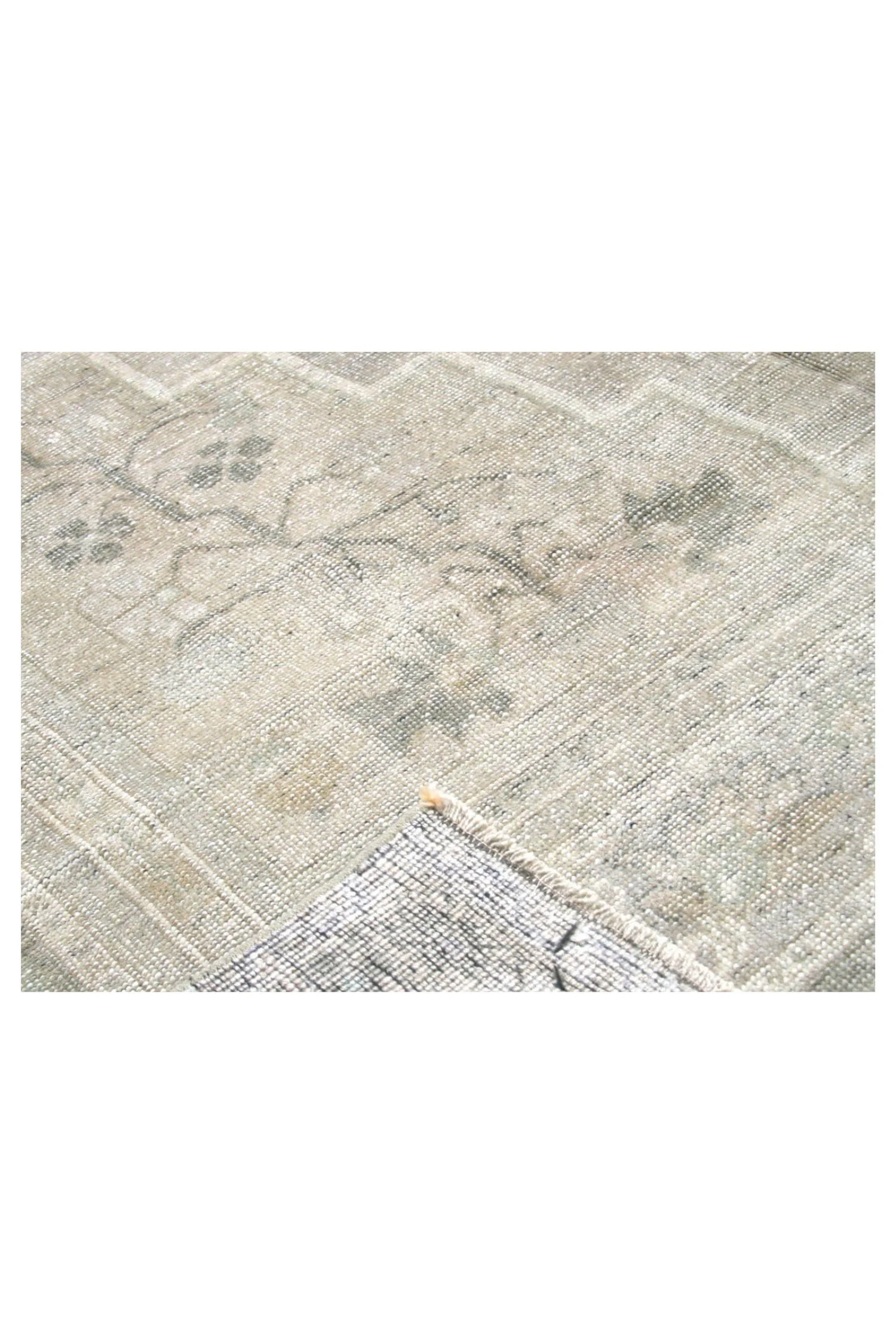
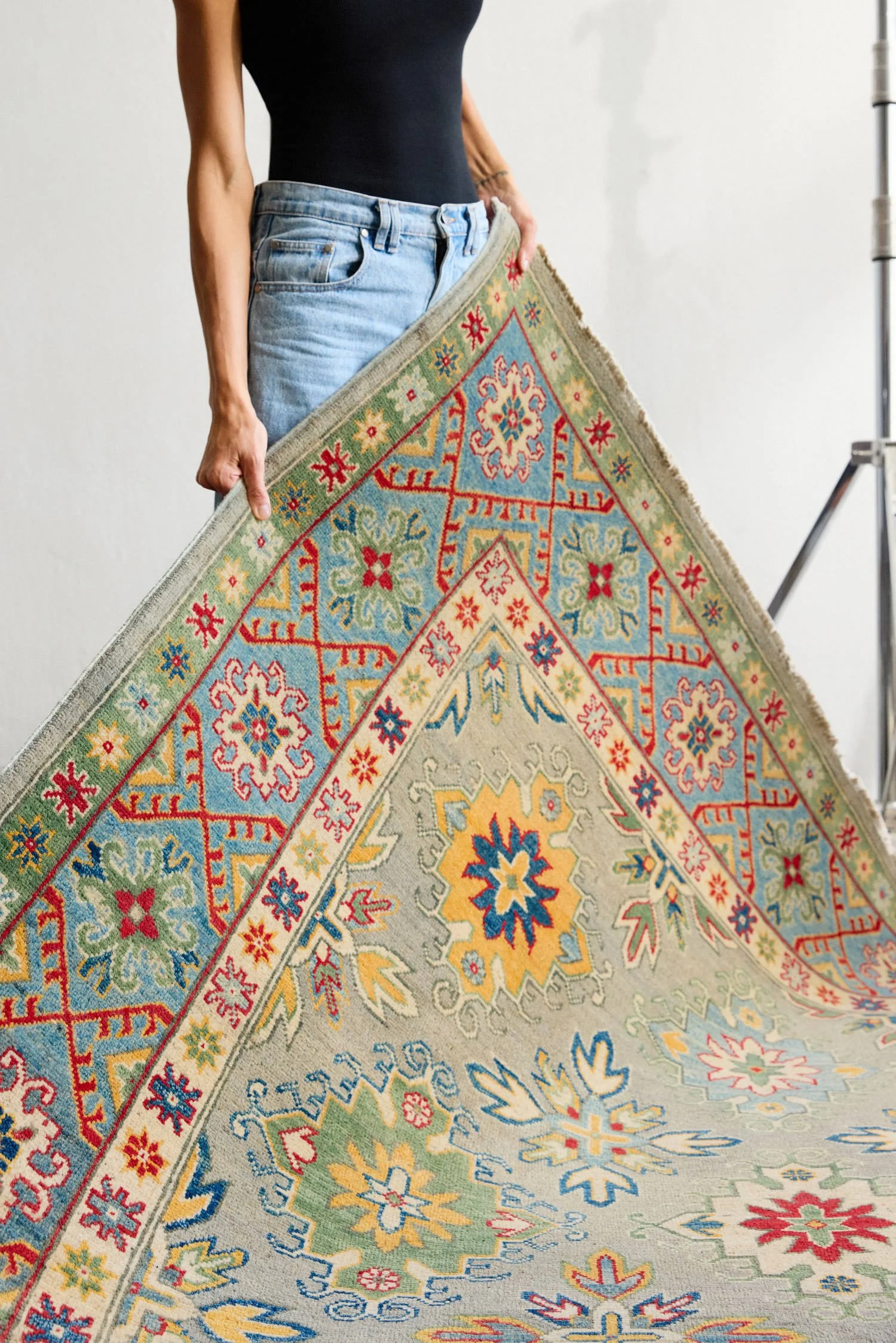
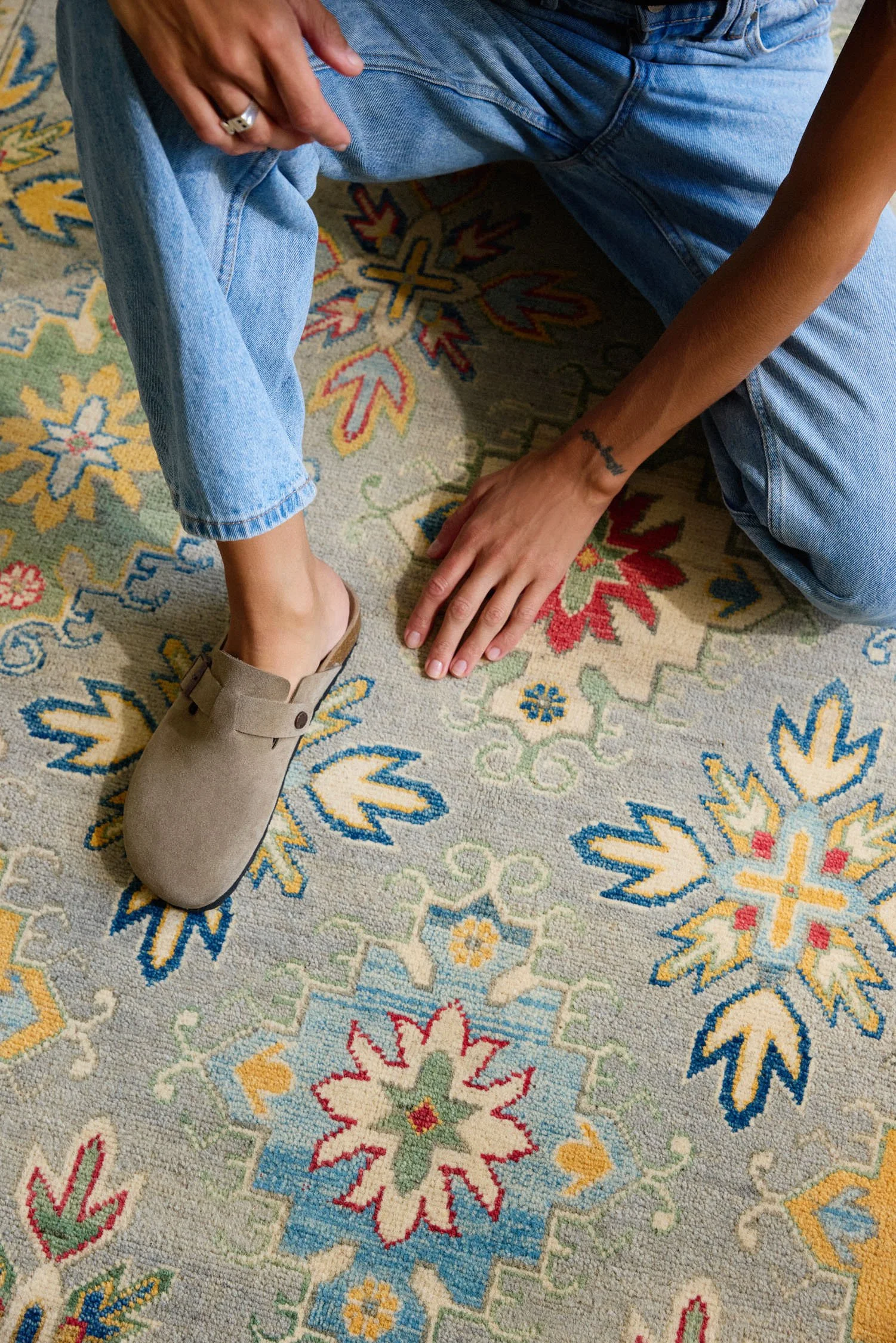
The cool gray and taupe palette with ivory detailing and faint blue notes has aged over seven decades. Surface wear has softened the original edges, creating the light, stone-washed quality visible today. This wear has transformed the original appearance into something more understated and integrated.
Design Elements
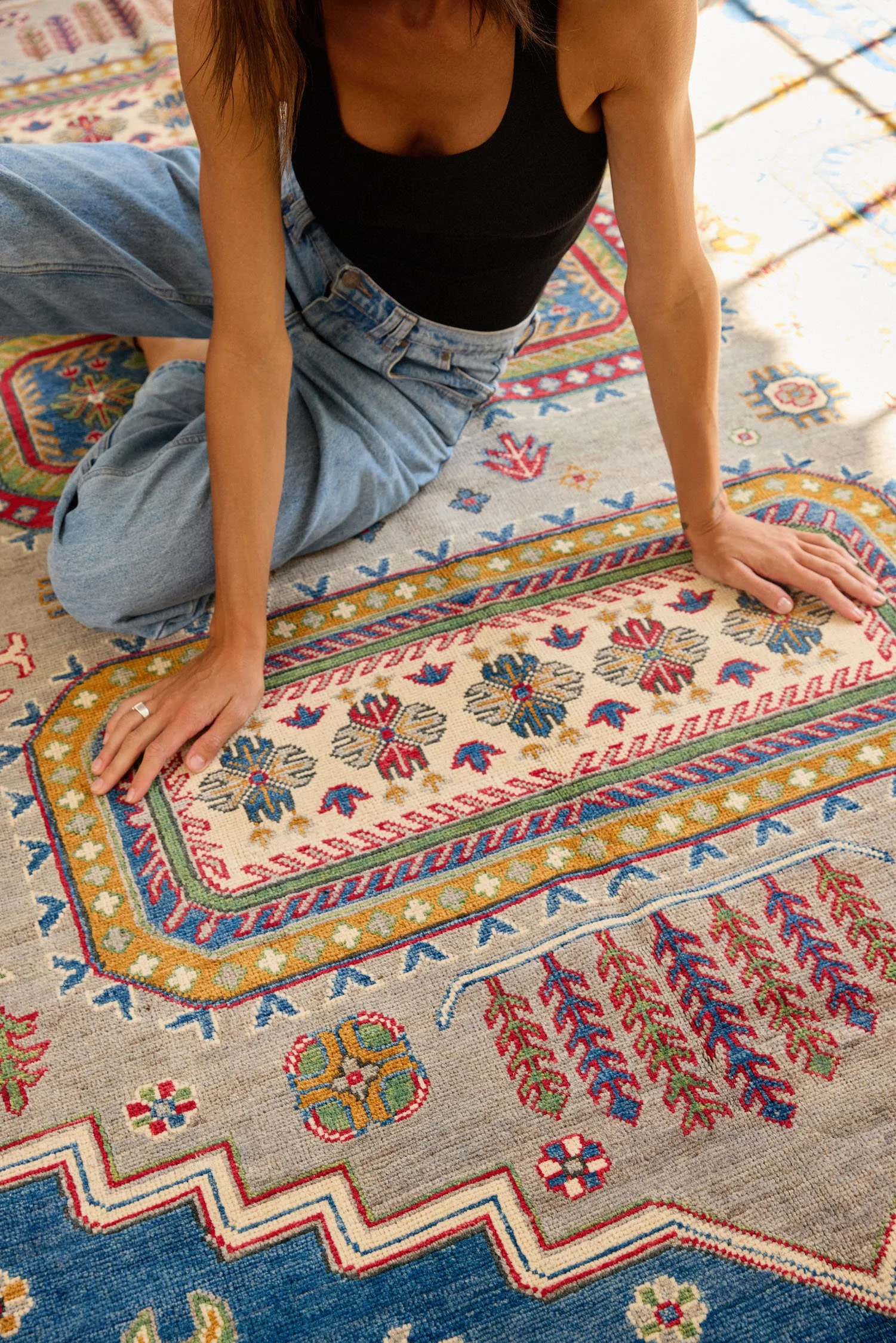
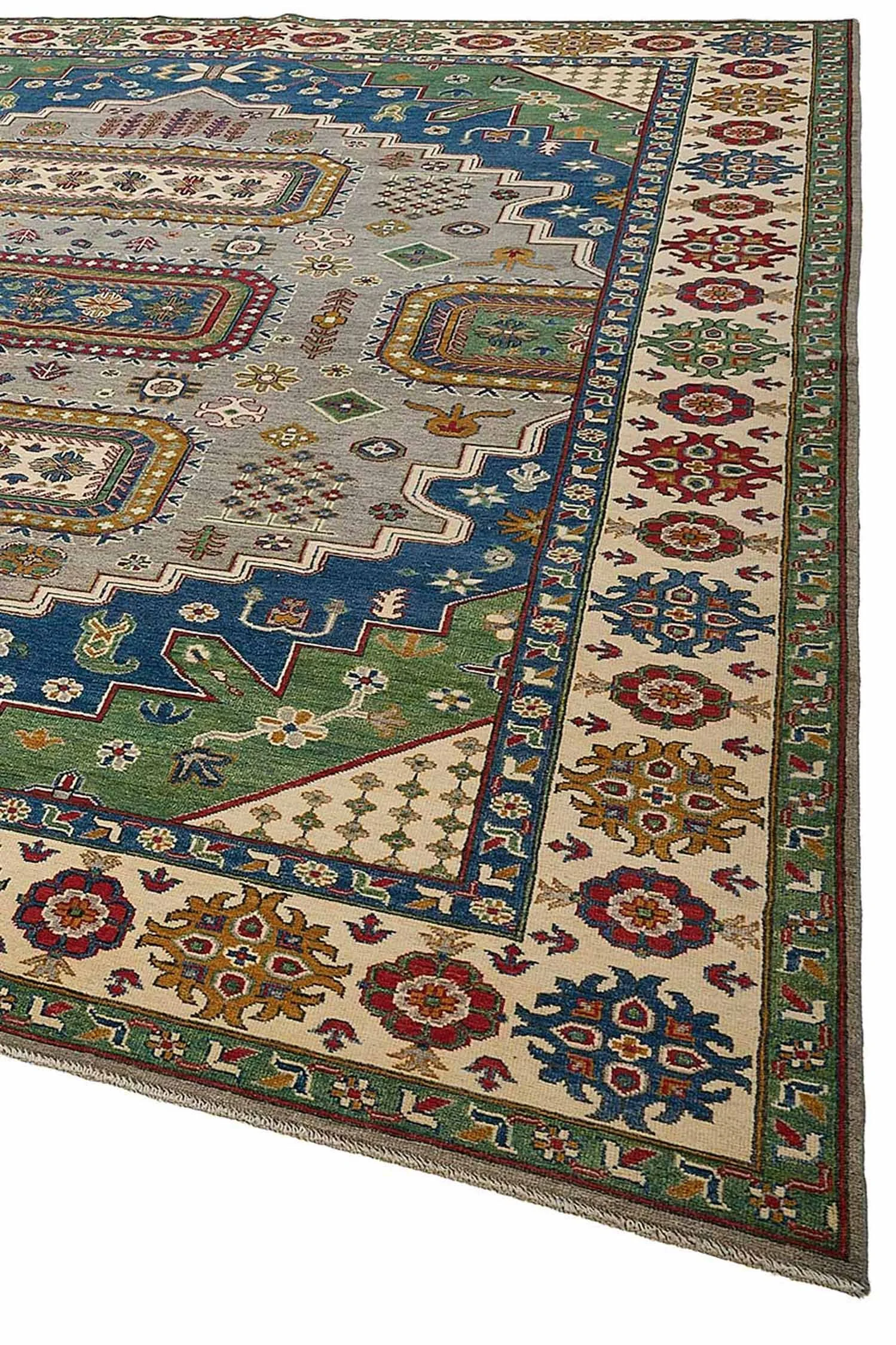
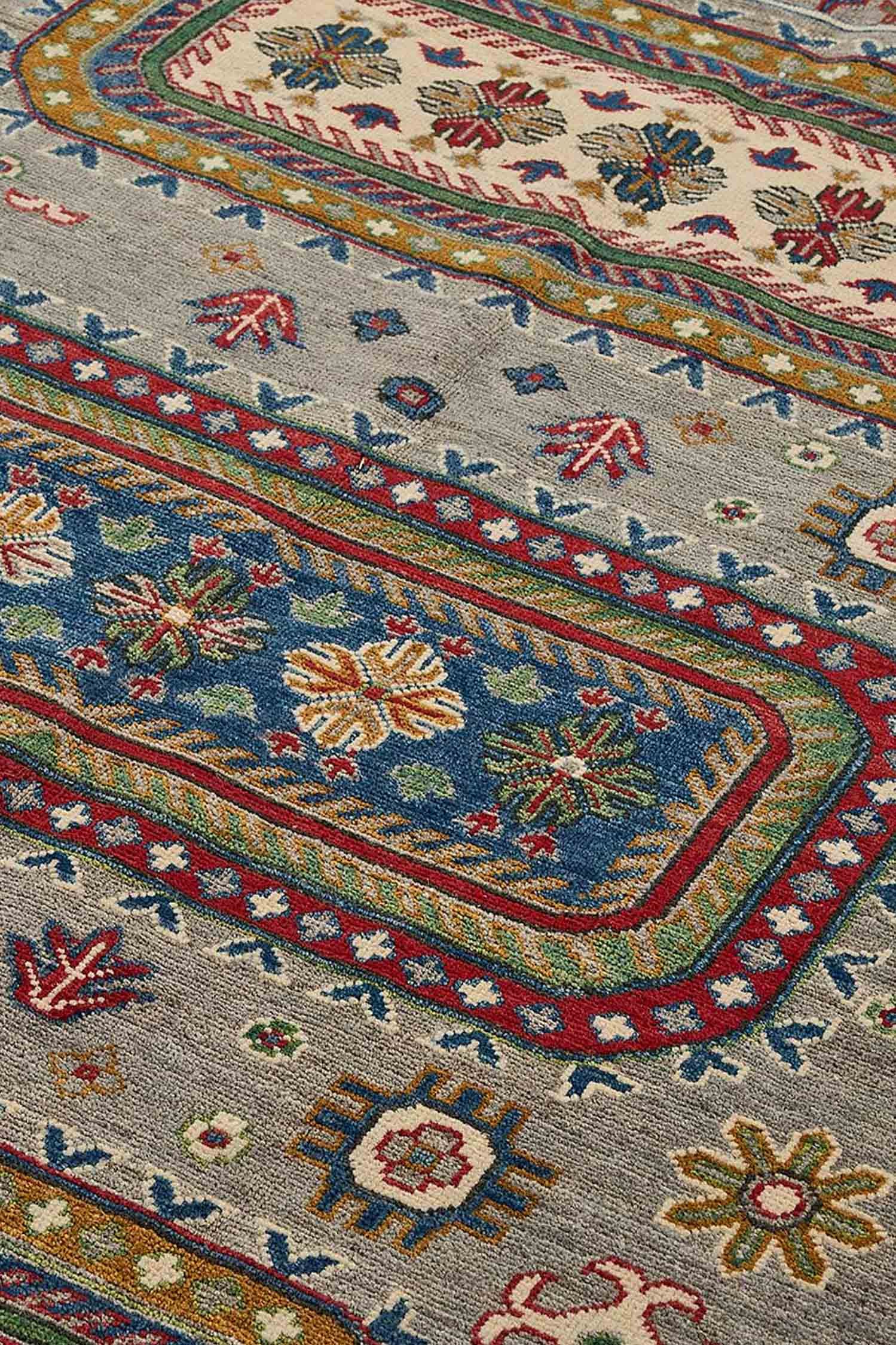
The central medallion creates a focal point with traditional structure. Layered floral arabesques flow around it with graceful, curving forms characteristic of classical Persian vocabulary. The layering creates depth through overlapping elements.
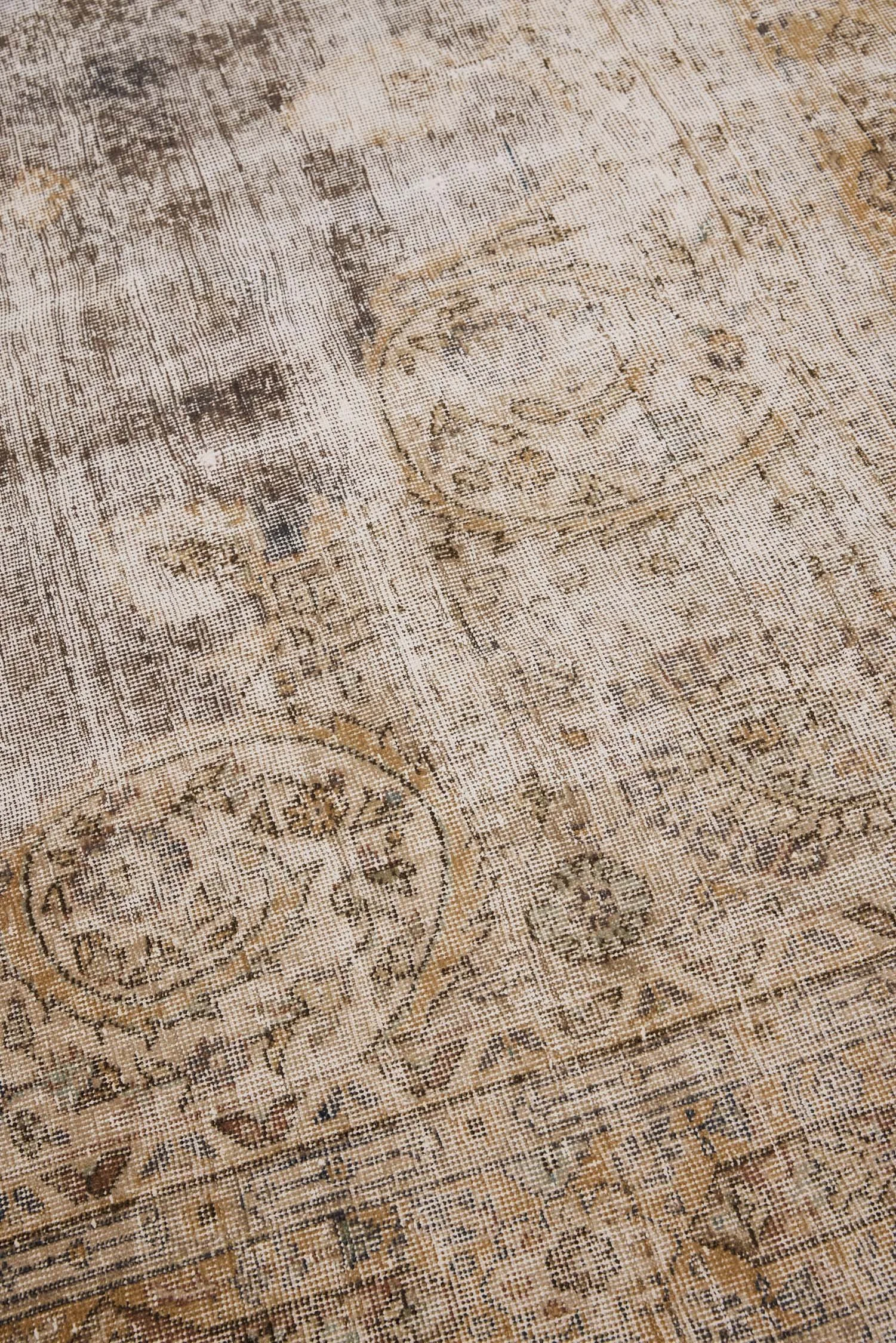
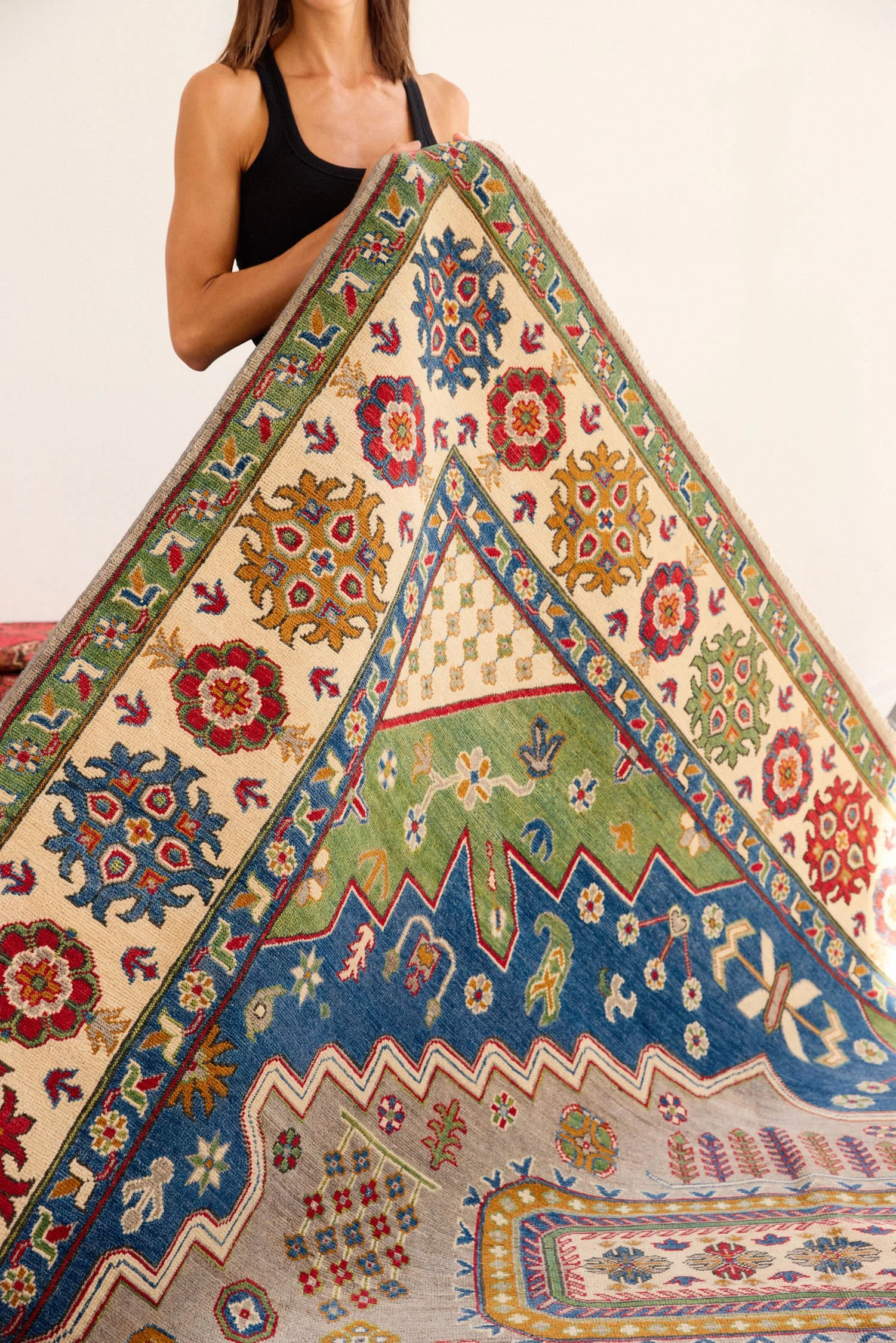
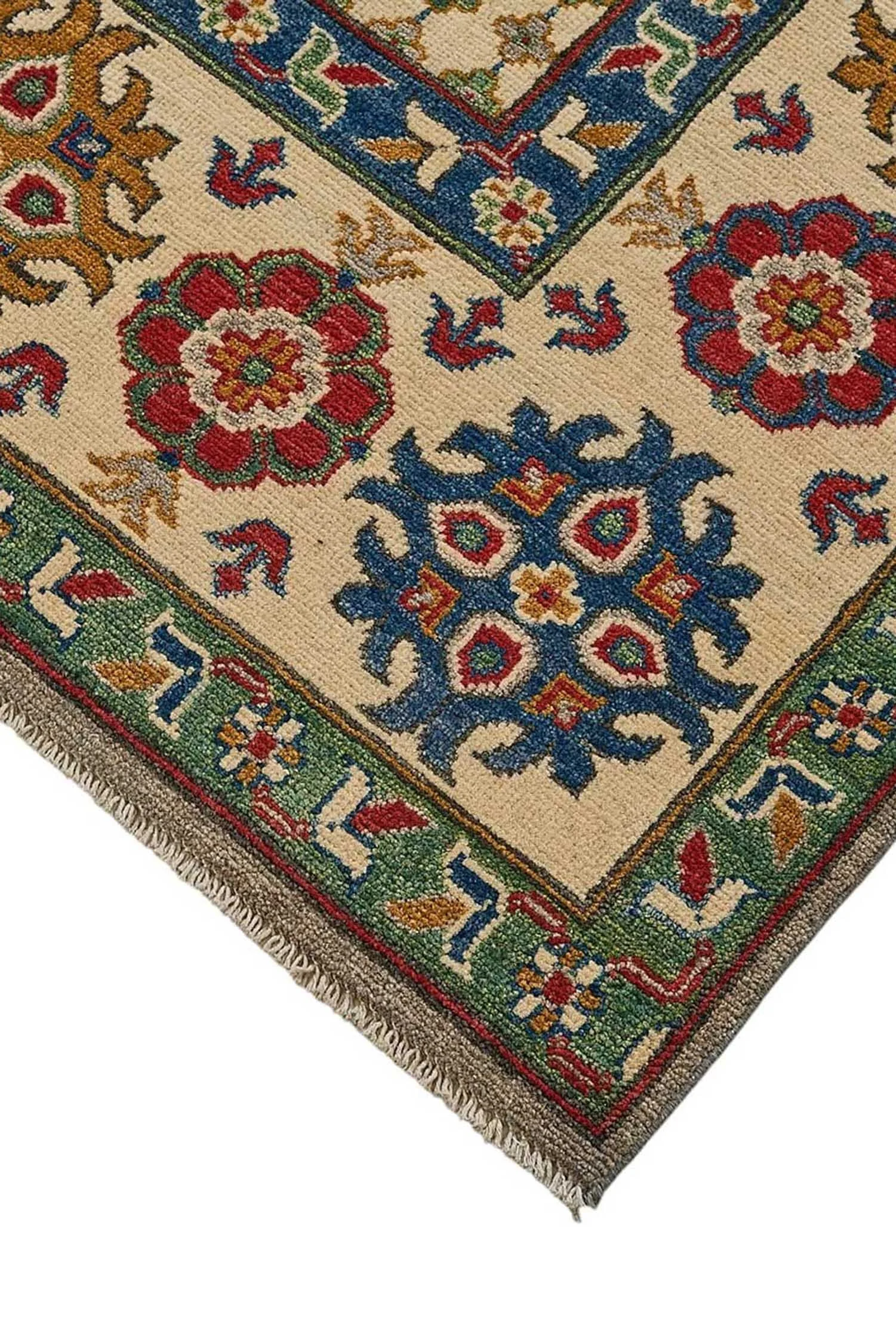
Multiple borders frame the composition with graduated bands. Stylized blossoms and vine work fill the border zones with traditional motifs. The multiple bands create visual progression from field to edge, enhancing the architectural quality.
Surface wear has softened edges throughout, creating the understated character visible today. What once showed crisper definition now reads with gentler transitions between forms and ground. This creates the architectural look where structure remains clear, but details have mellowed.
Placement
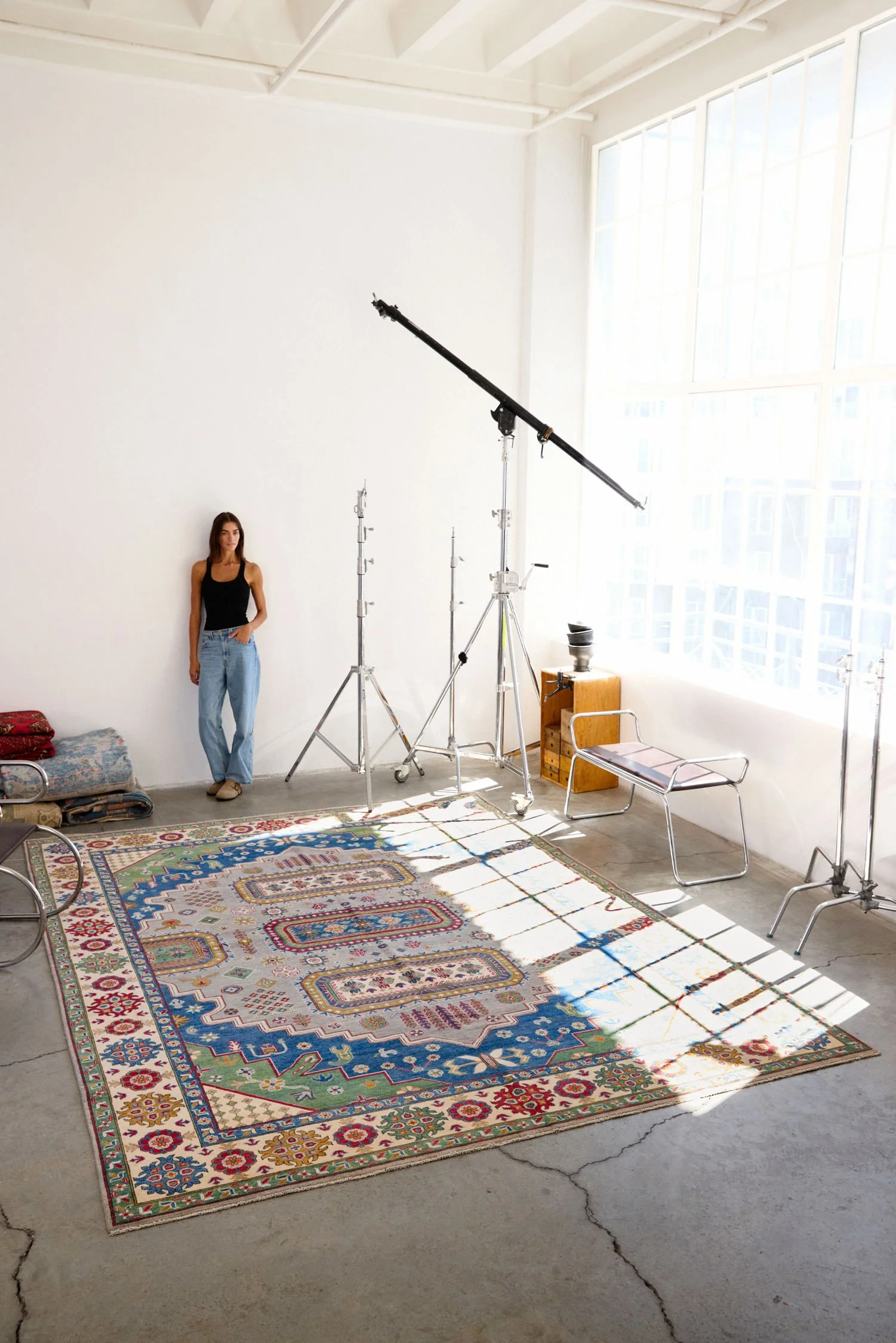
At 6'10" x 9'10", this works in living rooms where you want to anchor seating areas, dining rooms under tables that seat six, bedrooms at the foot of the bed or extending along one side, and home offices. The proportions suit spaces where you want traditional Tabriz structure with an understated, neutral presence.
The cool gray and taupe palette functions as a sophisticated neutral foundation. The light, stone-washed quality works in contemporary spaces styled with restrained color schemes and natural materials. Traditional settings appreciate the vintage Tabriz provenance and balanced workshop execution. The understated, architectural character suits rooms where pattern should provide subtle structure without strong visual demands.
Care Recommendations
To preserve the rug's beauty:
Rotate periodically for even wear
Vacuum regularly using a suction-only setting
Address spills immediately by blotting, never rubbing
Professional cleaning is recommended annually
Avoid direct sunlight to maintain color integrity
Multiple borders in Tabriz rugs created graduated framing that enhanced compositional depth rather than simply marking edges.