 Image 1 of 5
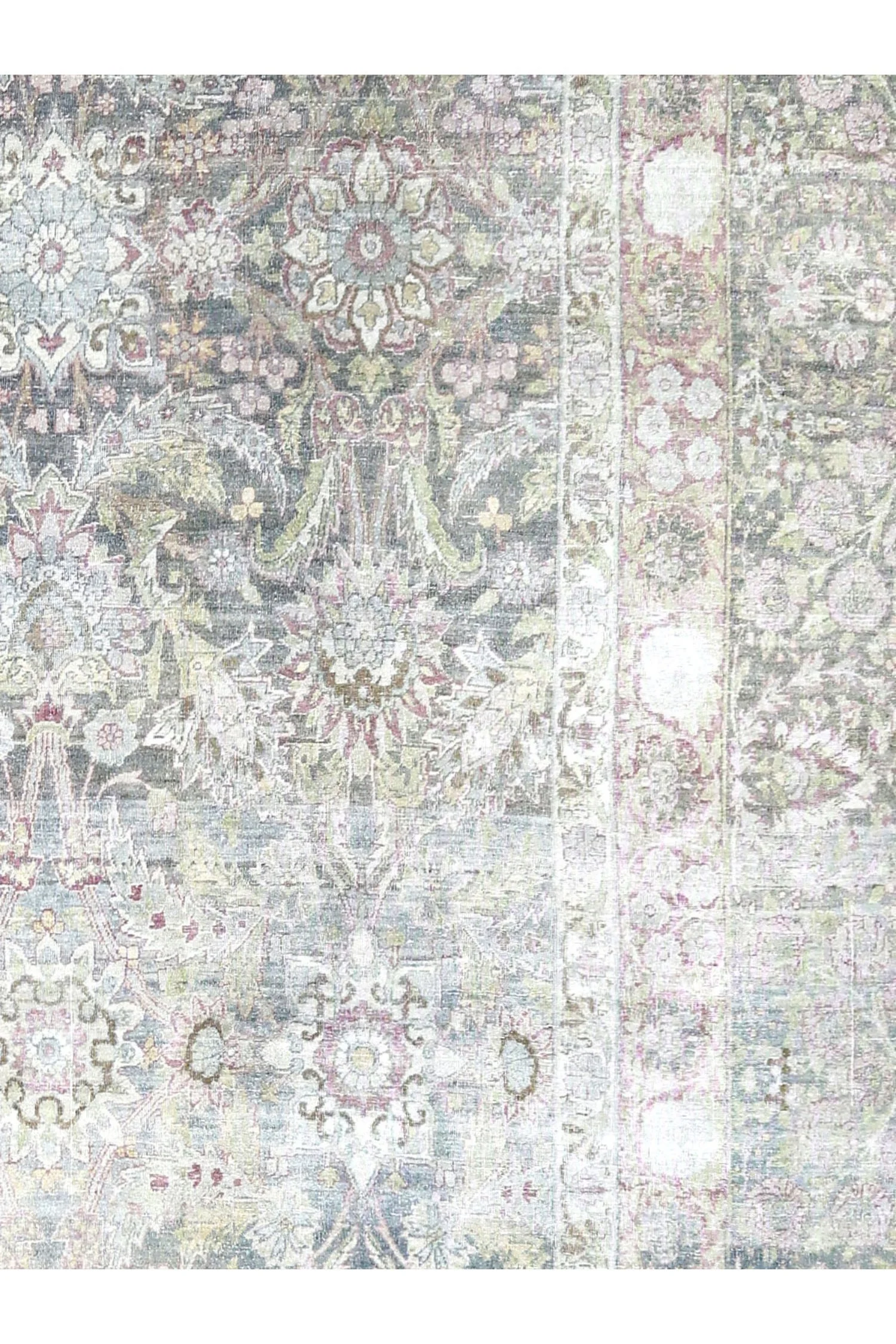 Image 2 of 5
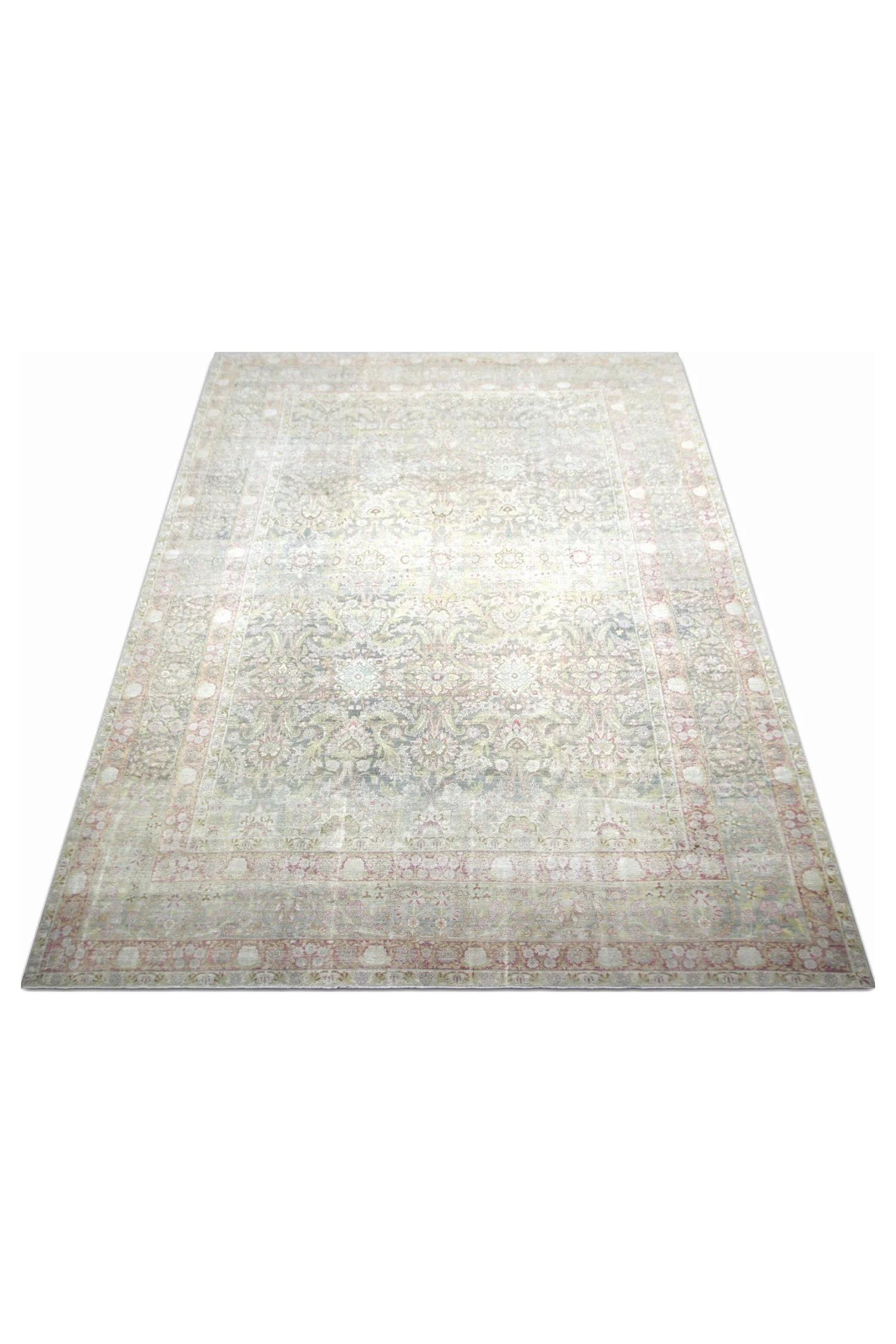 Image 3 of 5
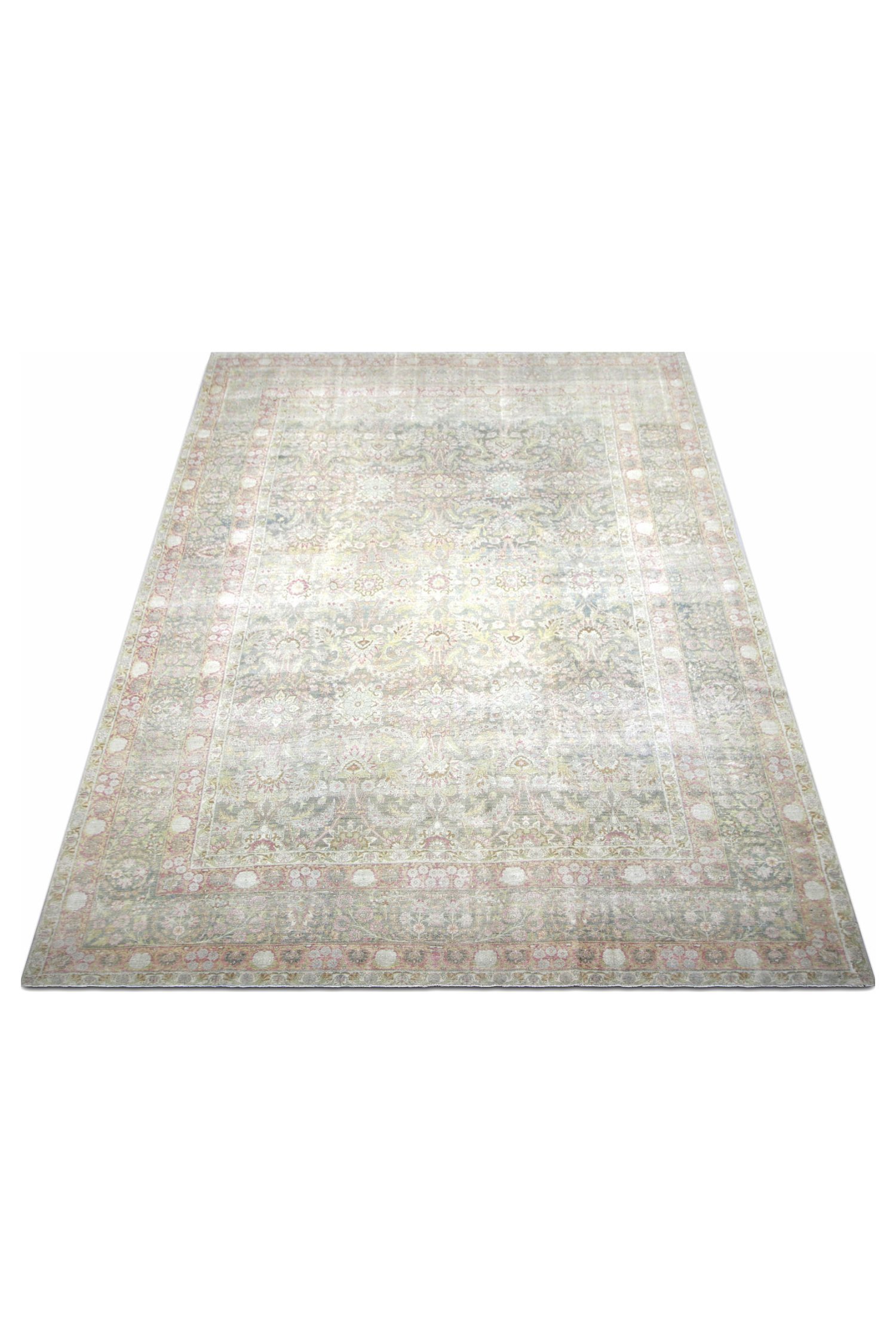 Image 4 of 5
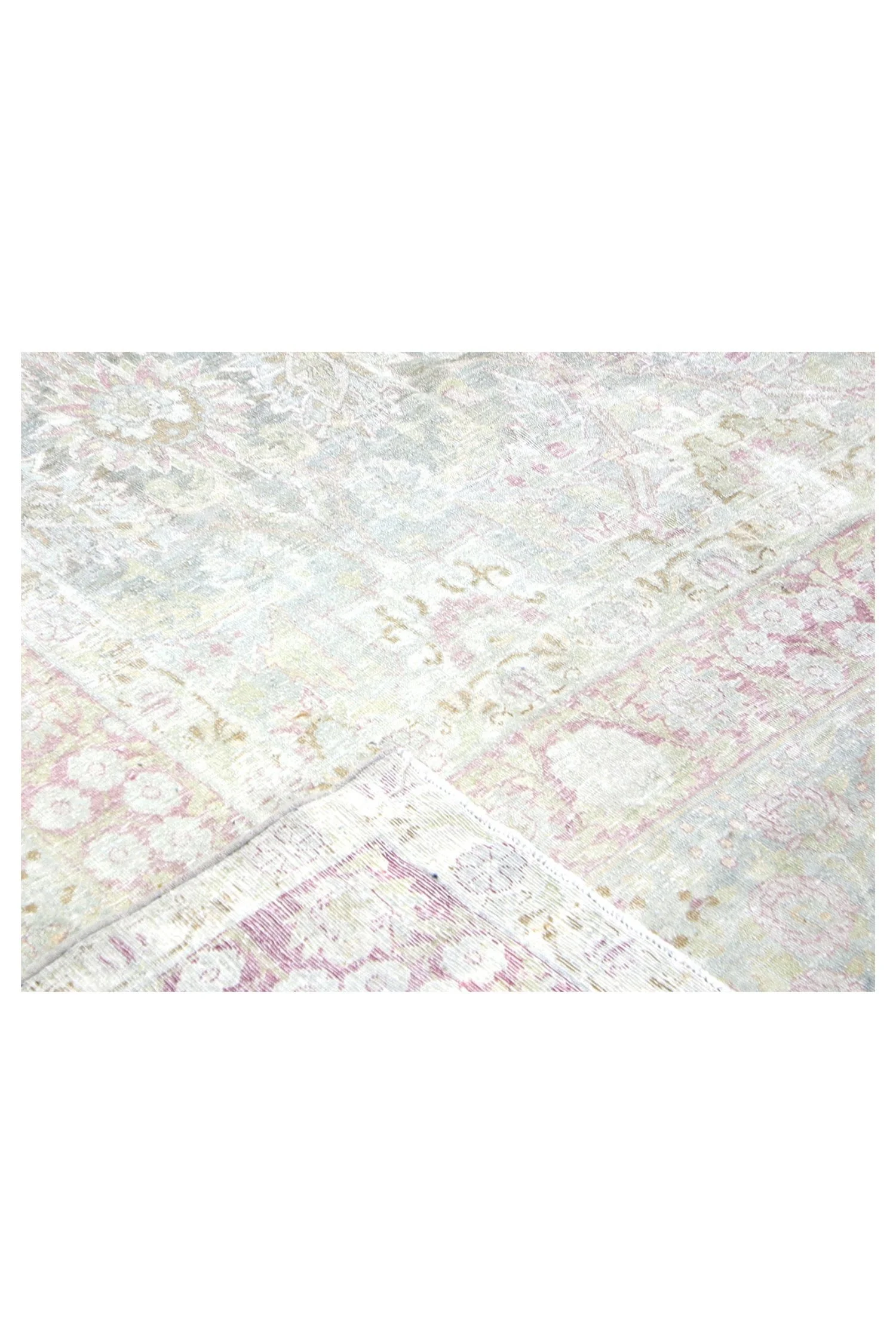 Image 5 of 5
Heritage and Craftsmanship
Tabriz in the 1920s and 1930s was the peak of Persian commercial rug production, with workshops producing pieces for both the Persian aristocracy and international export markets. The city's weavers had centuries of accumulated expertise in executing complex floral compositions with fine knot counts that enabled detailed articulation.
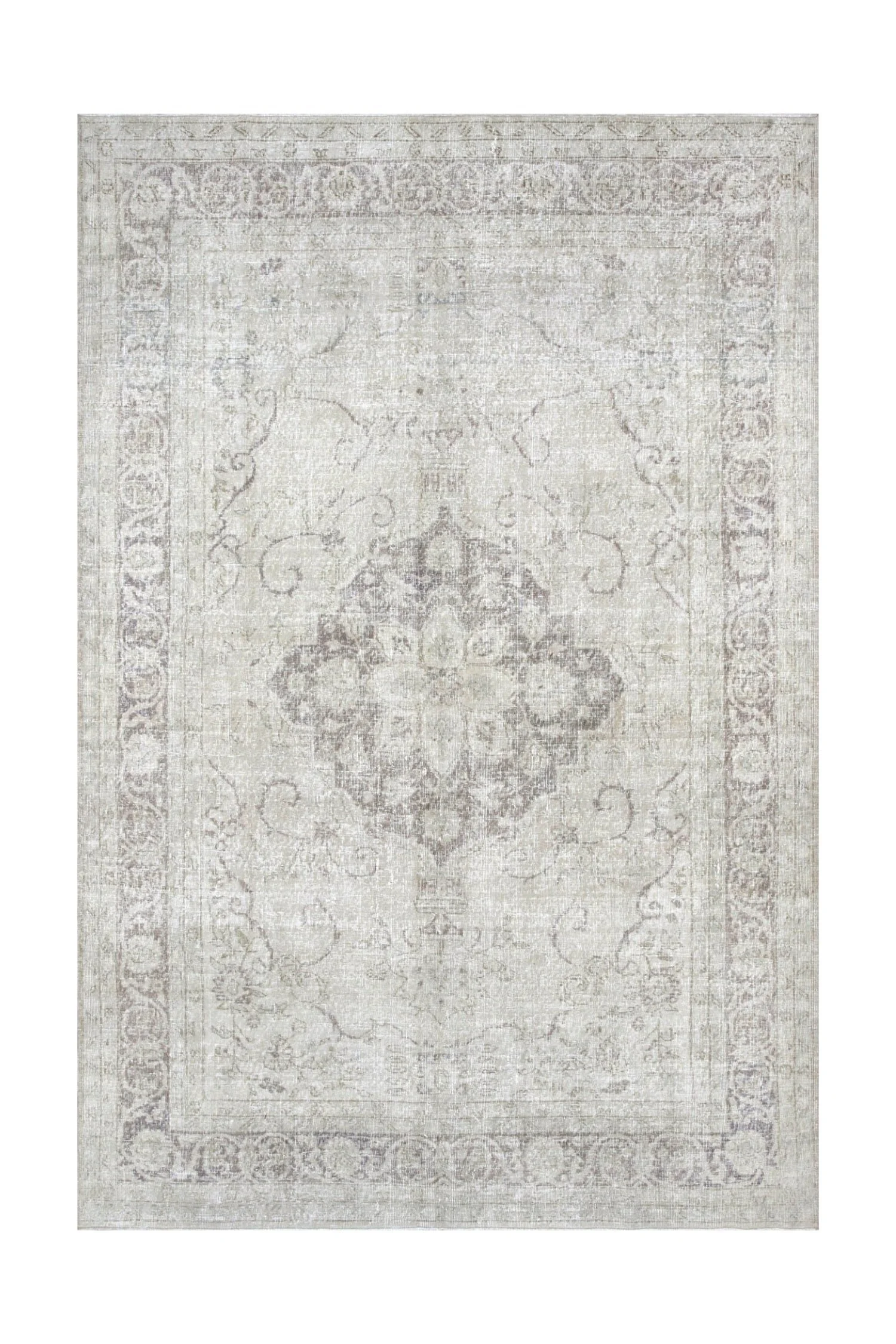
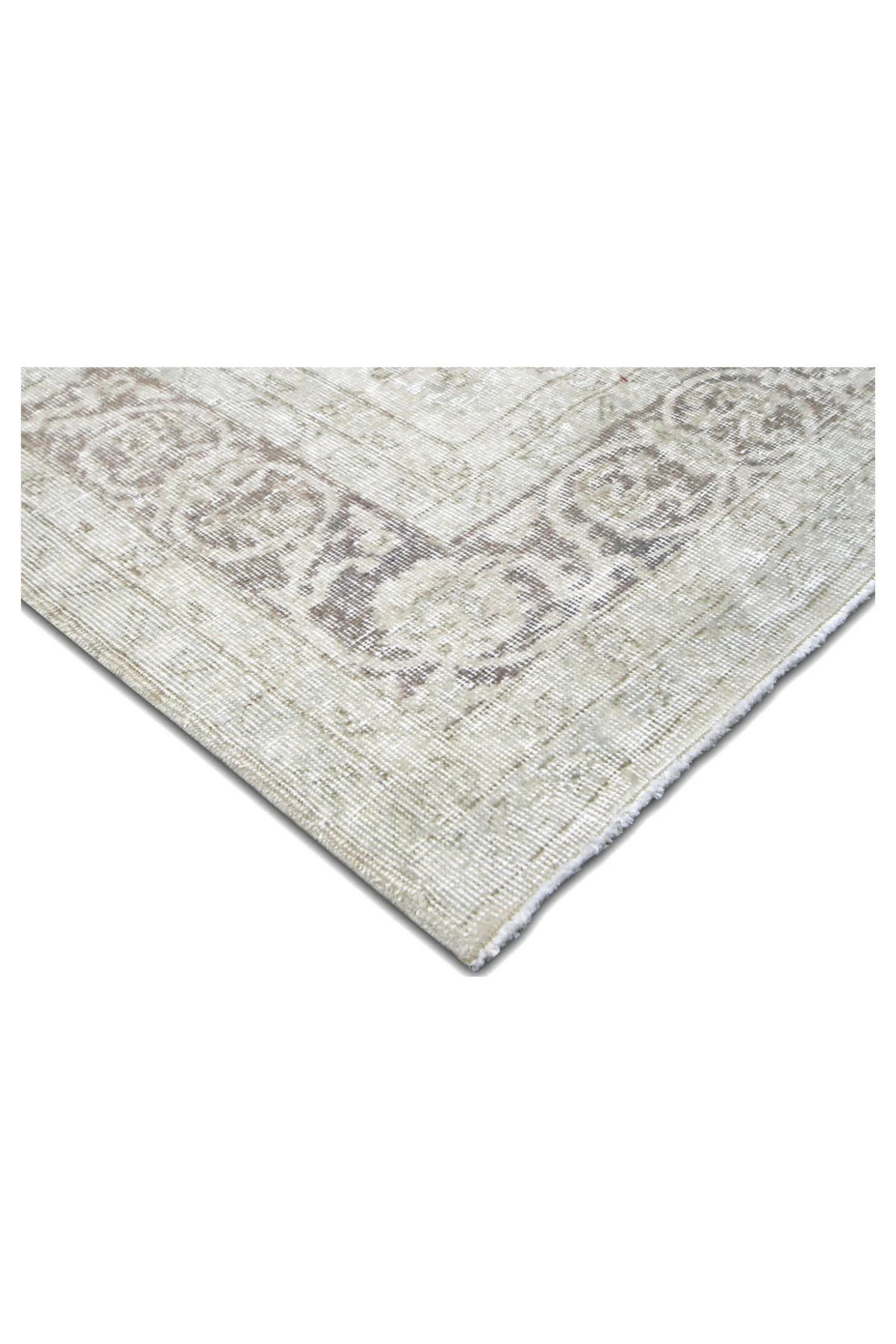
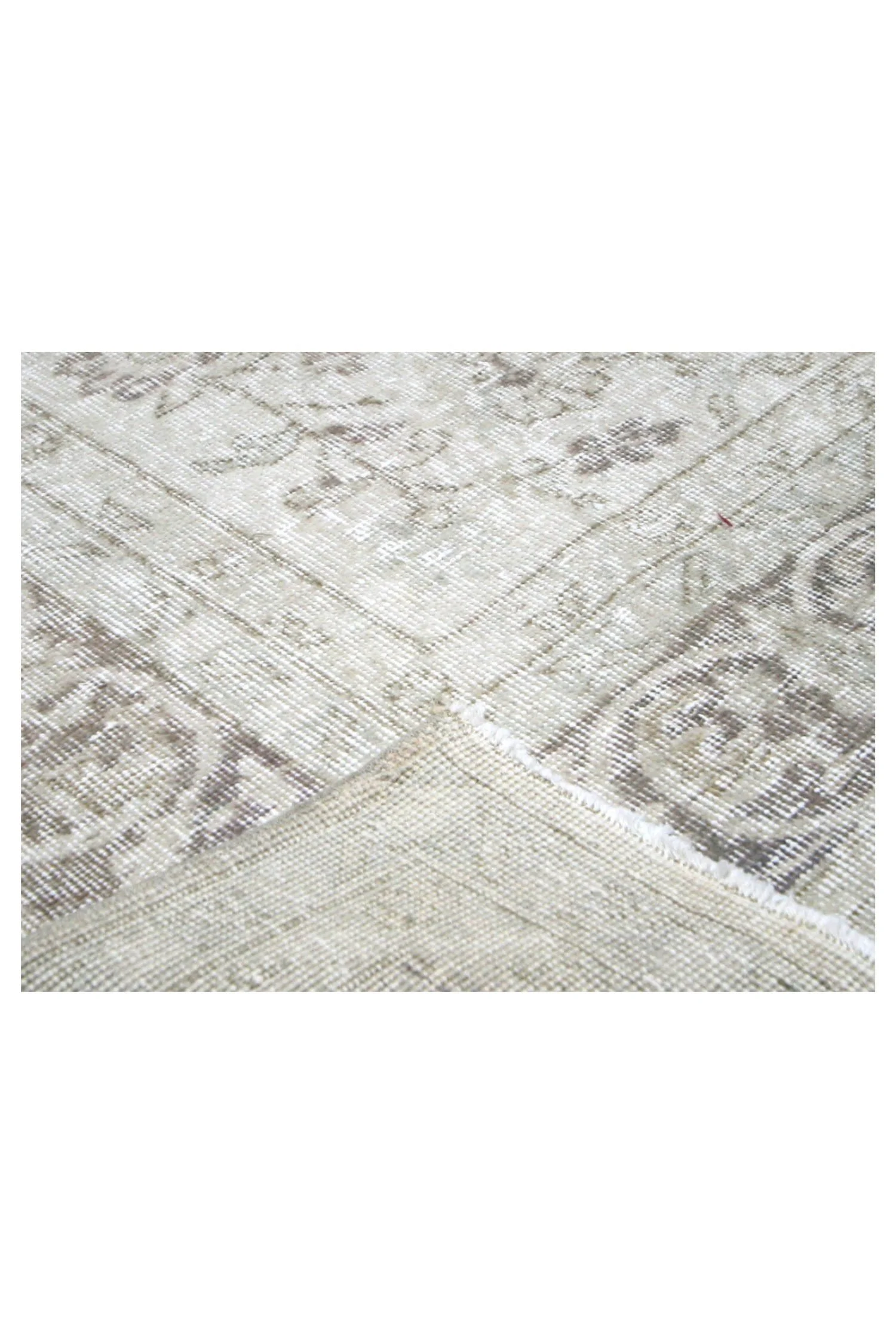
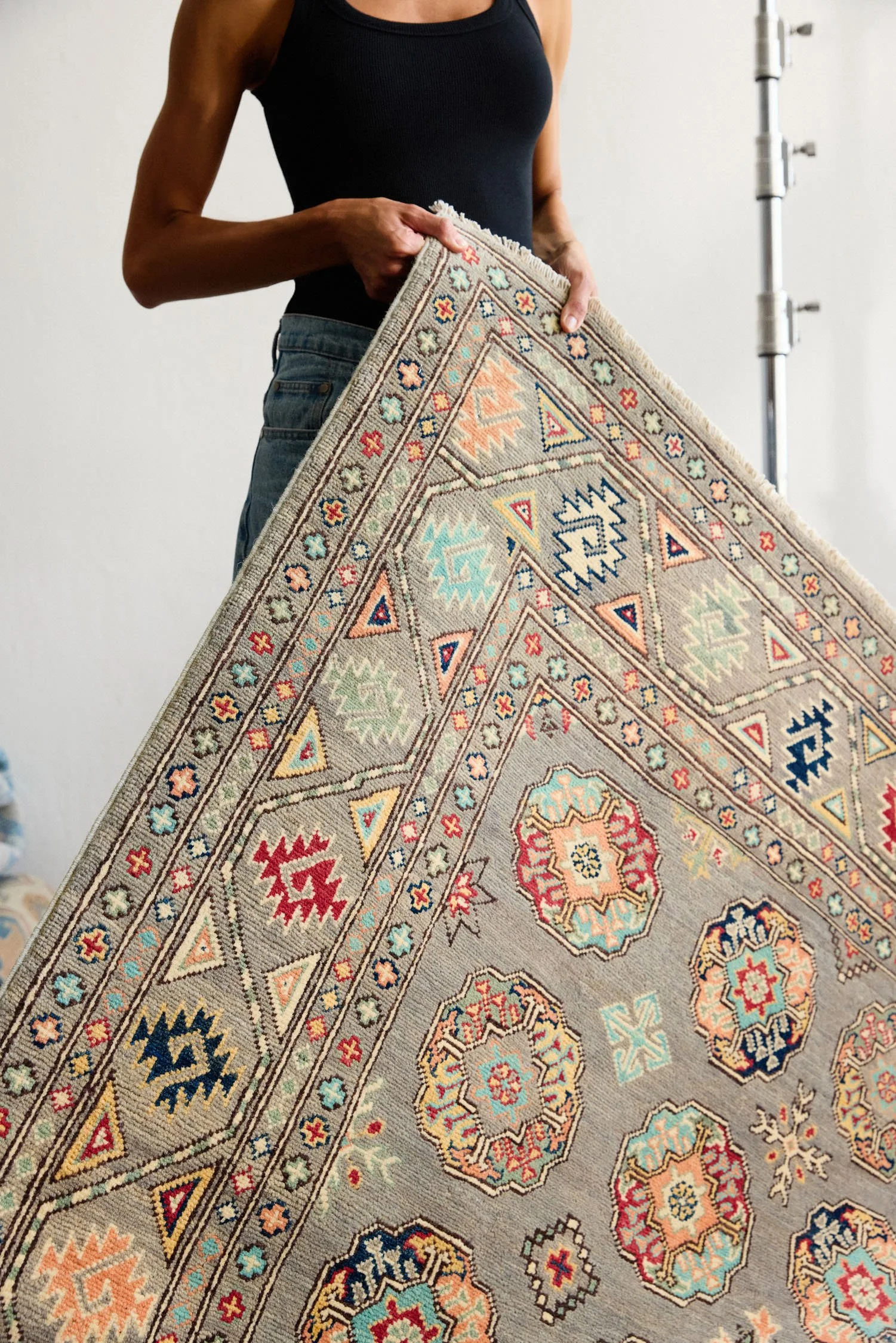
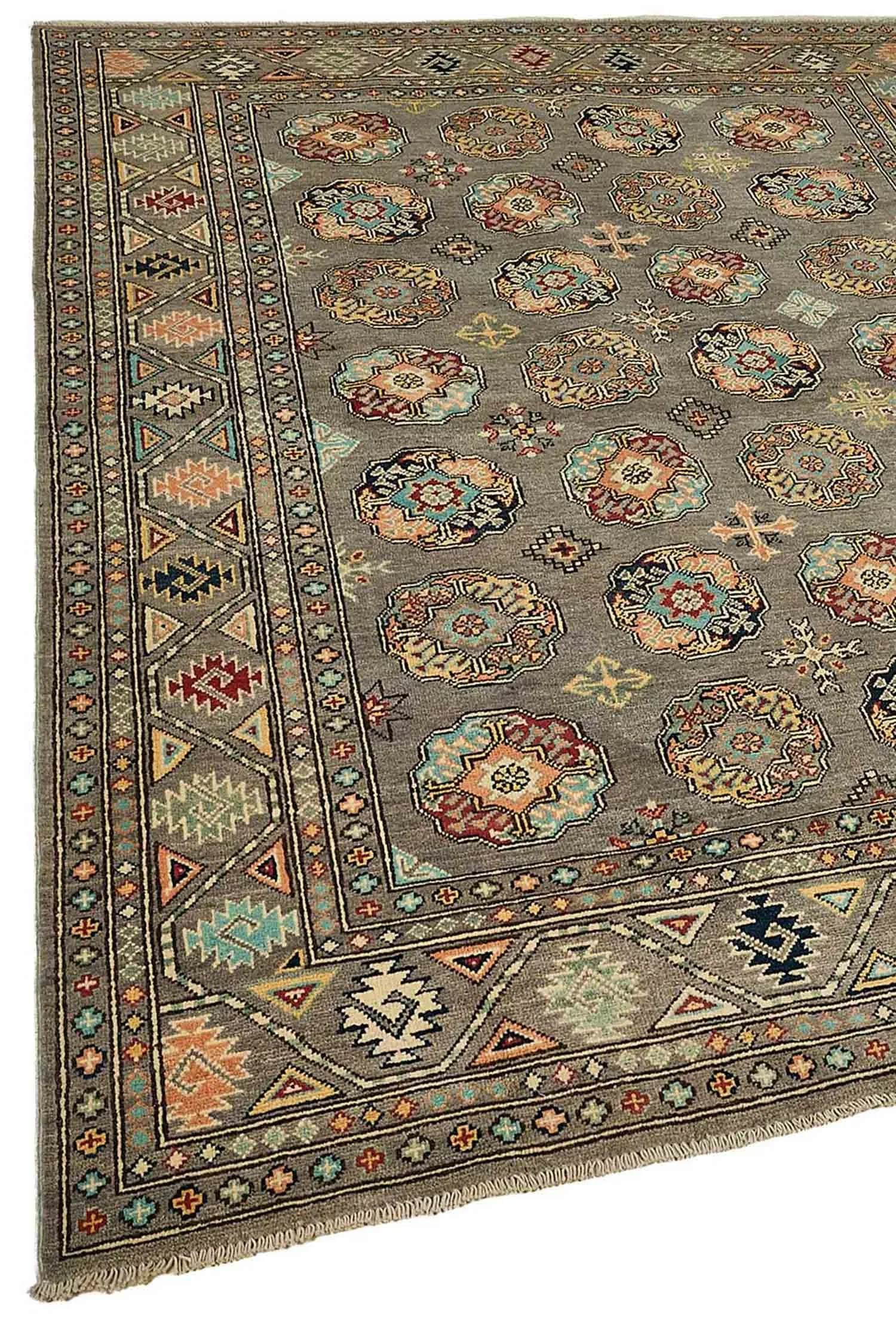
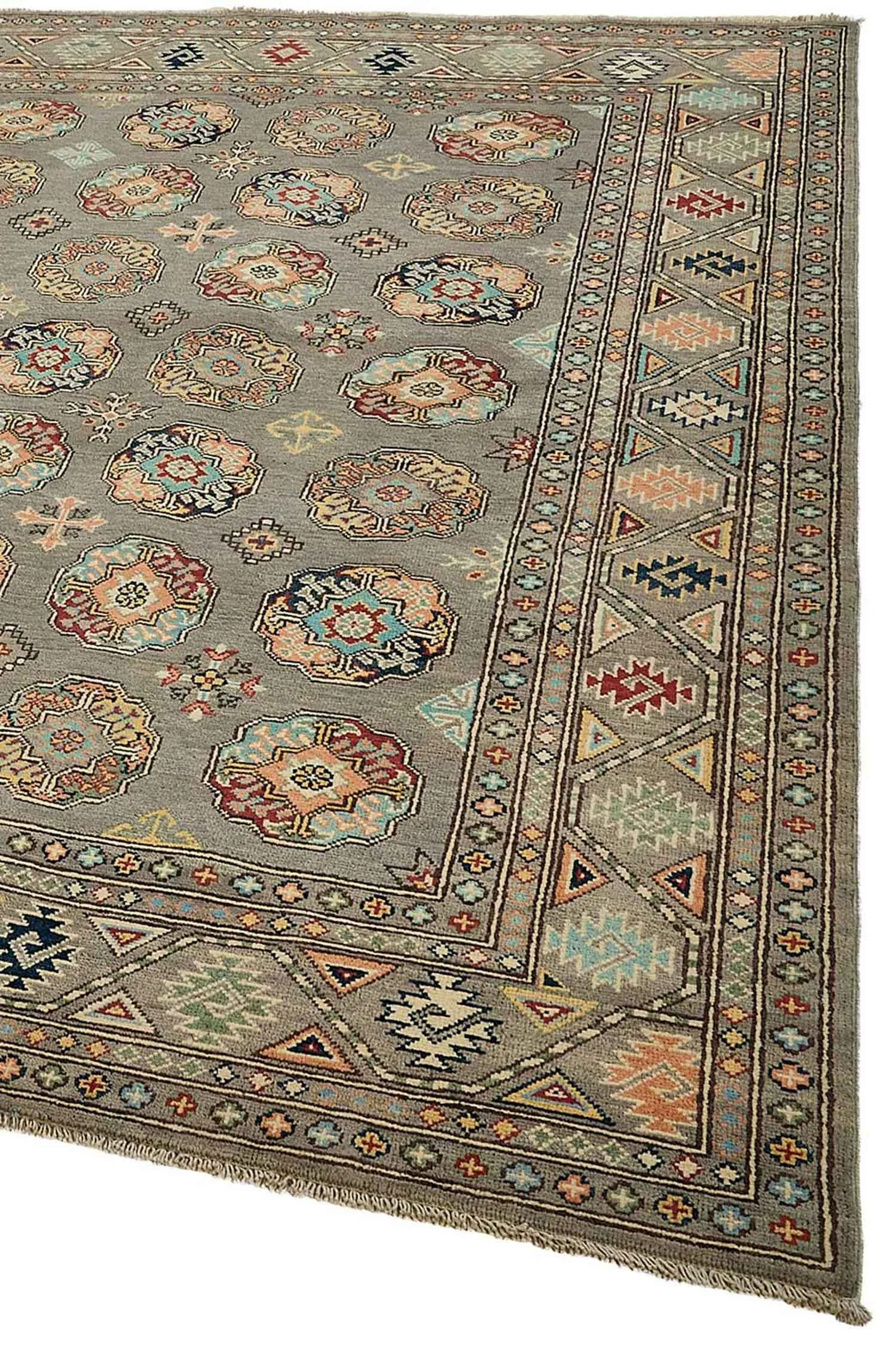
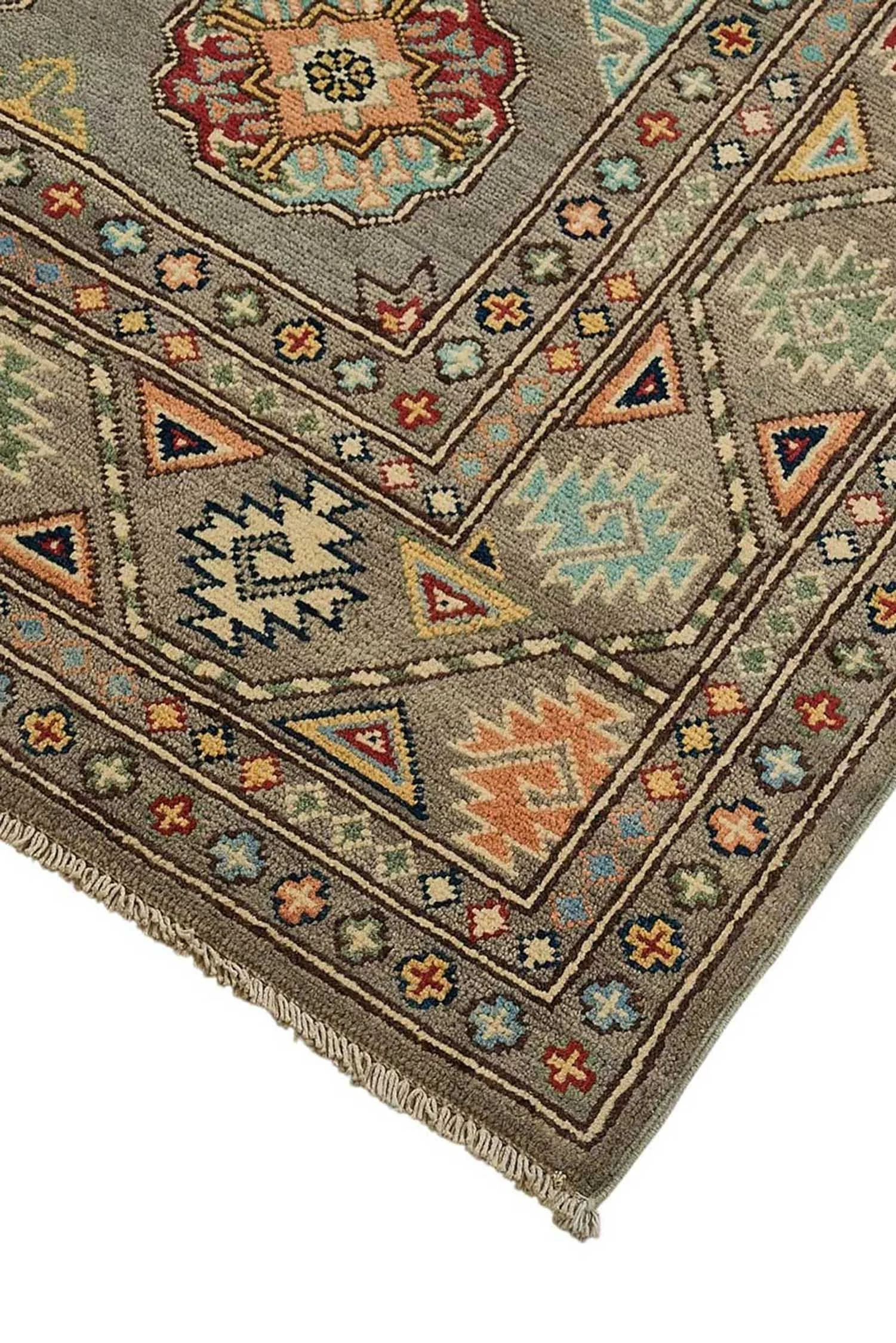
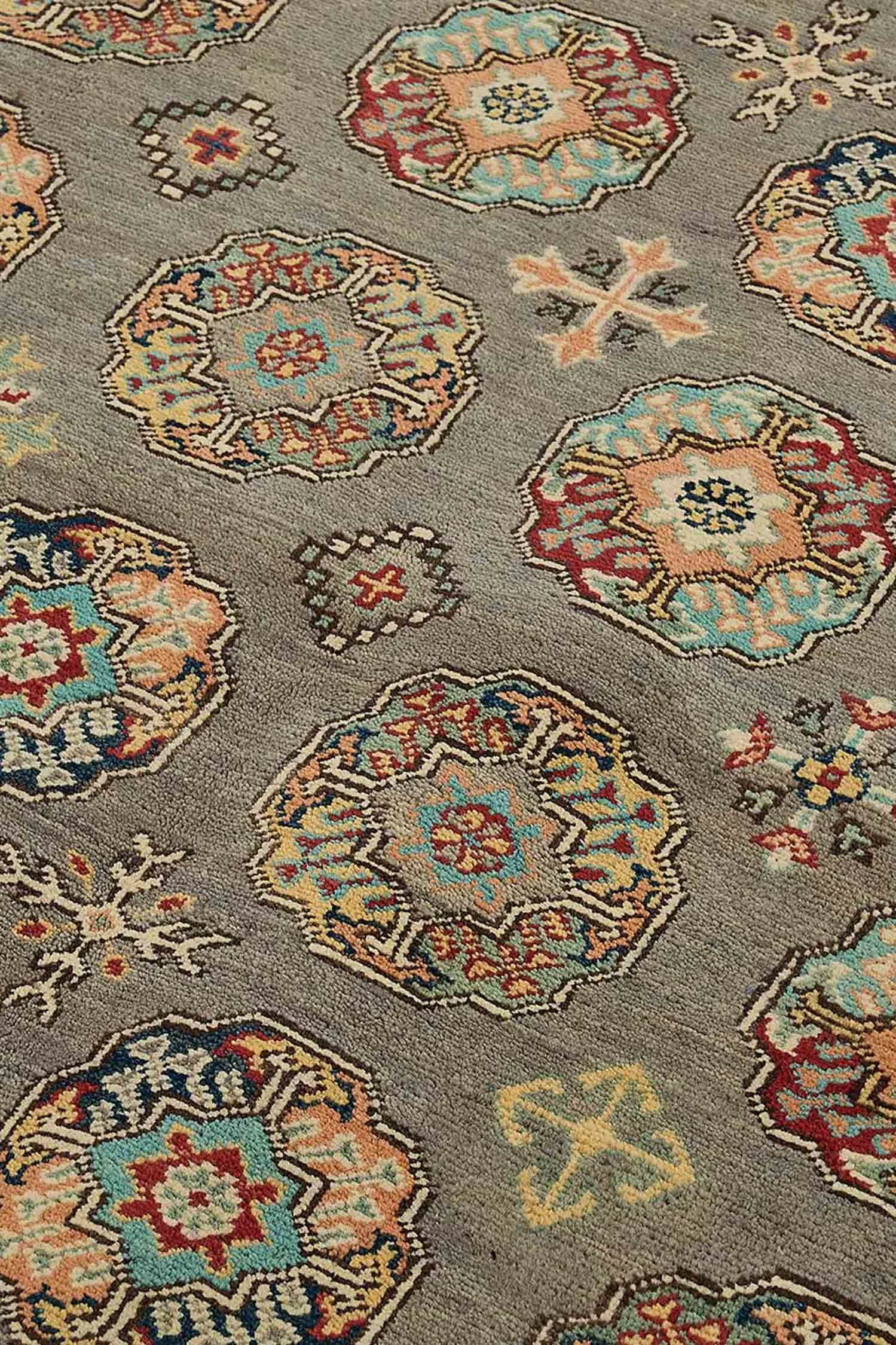
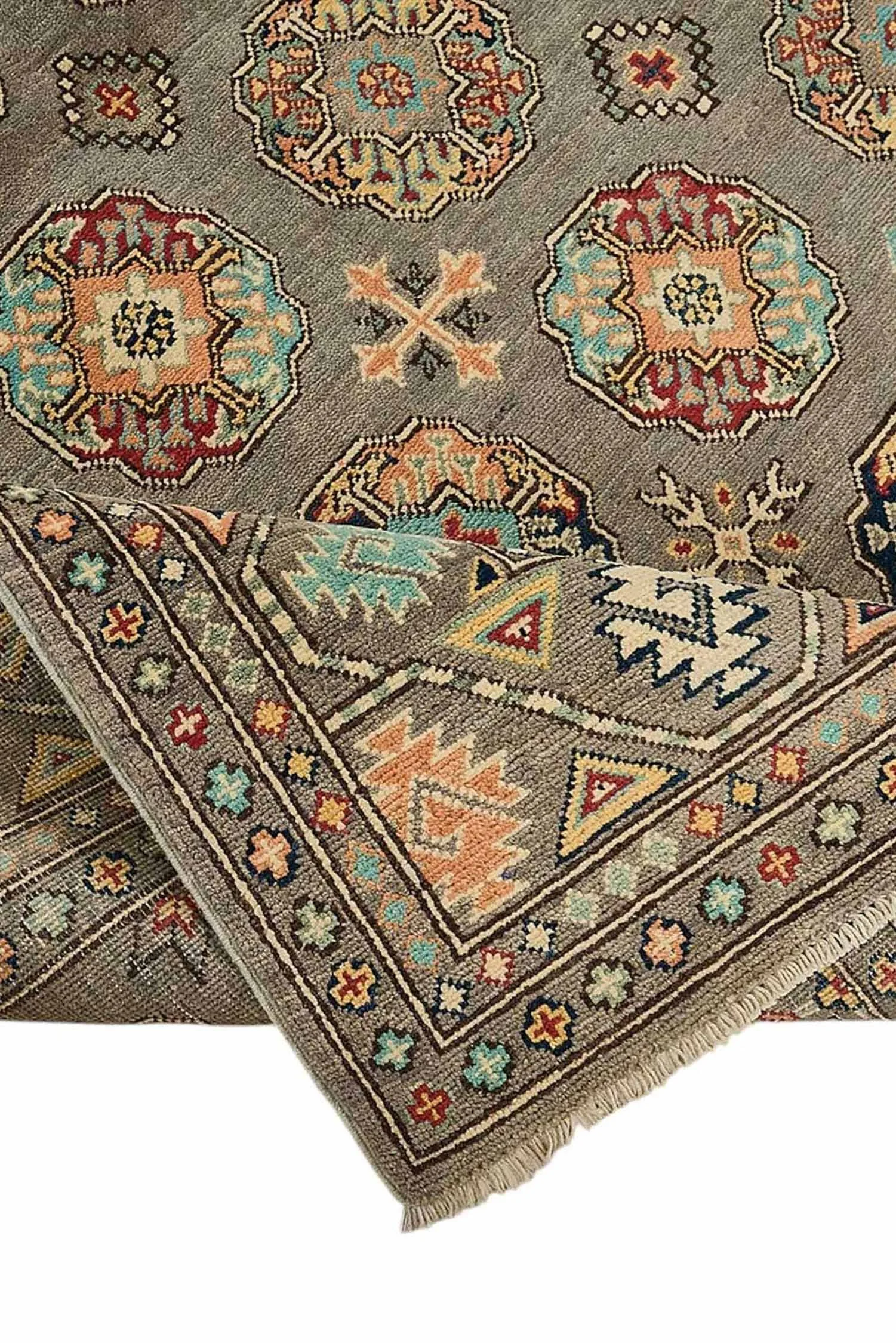
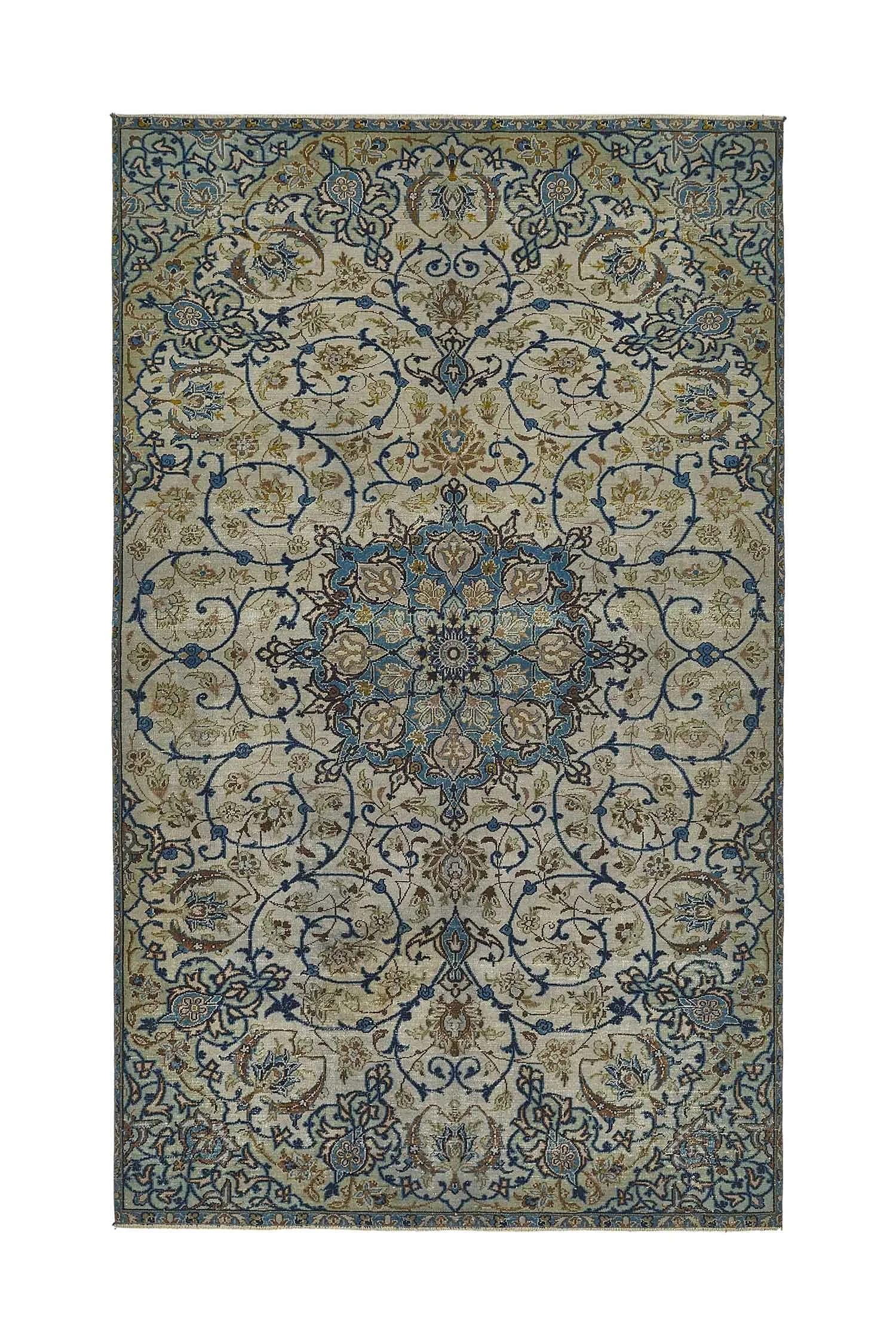
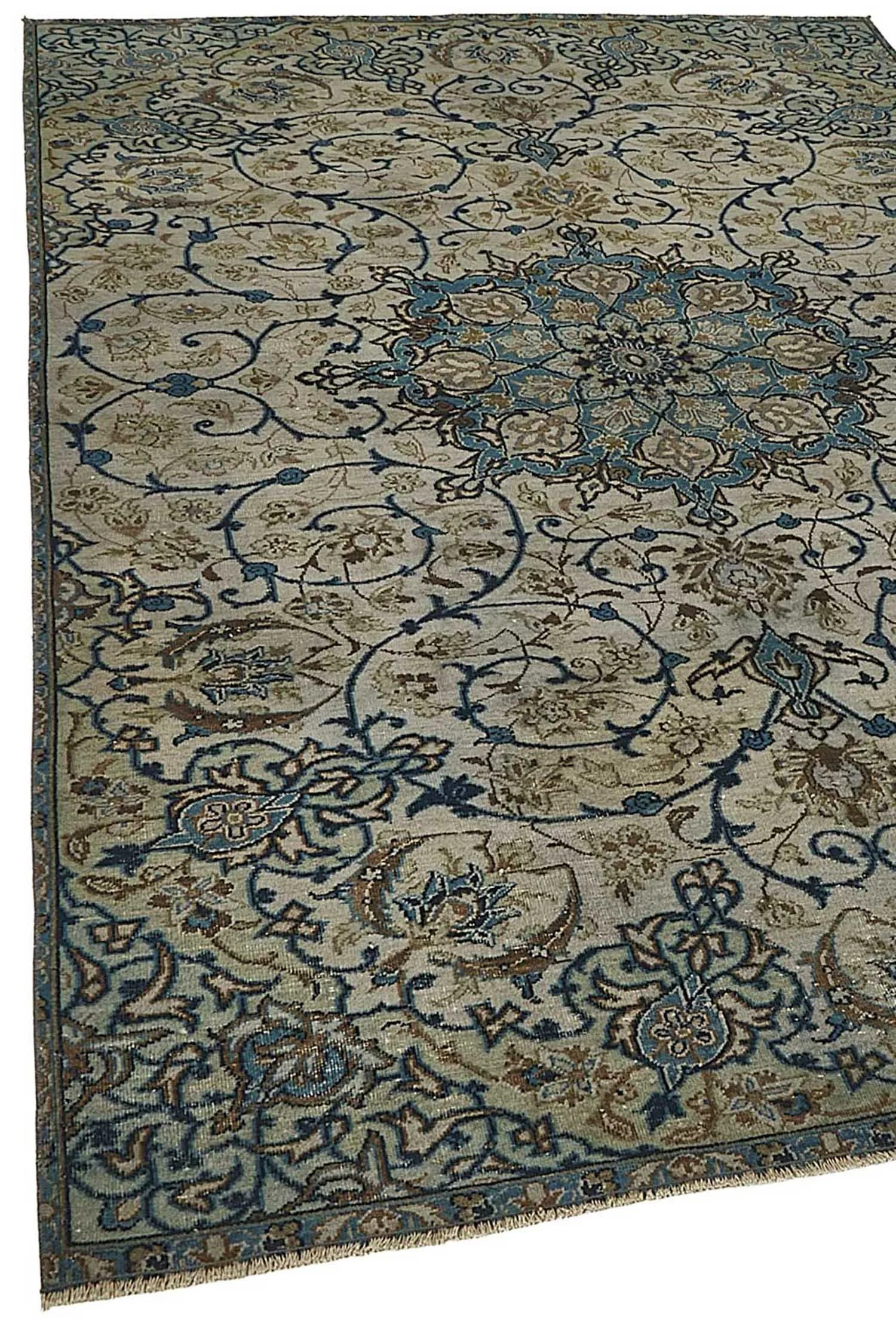
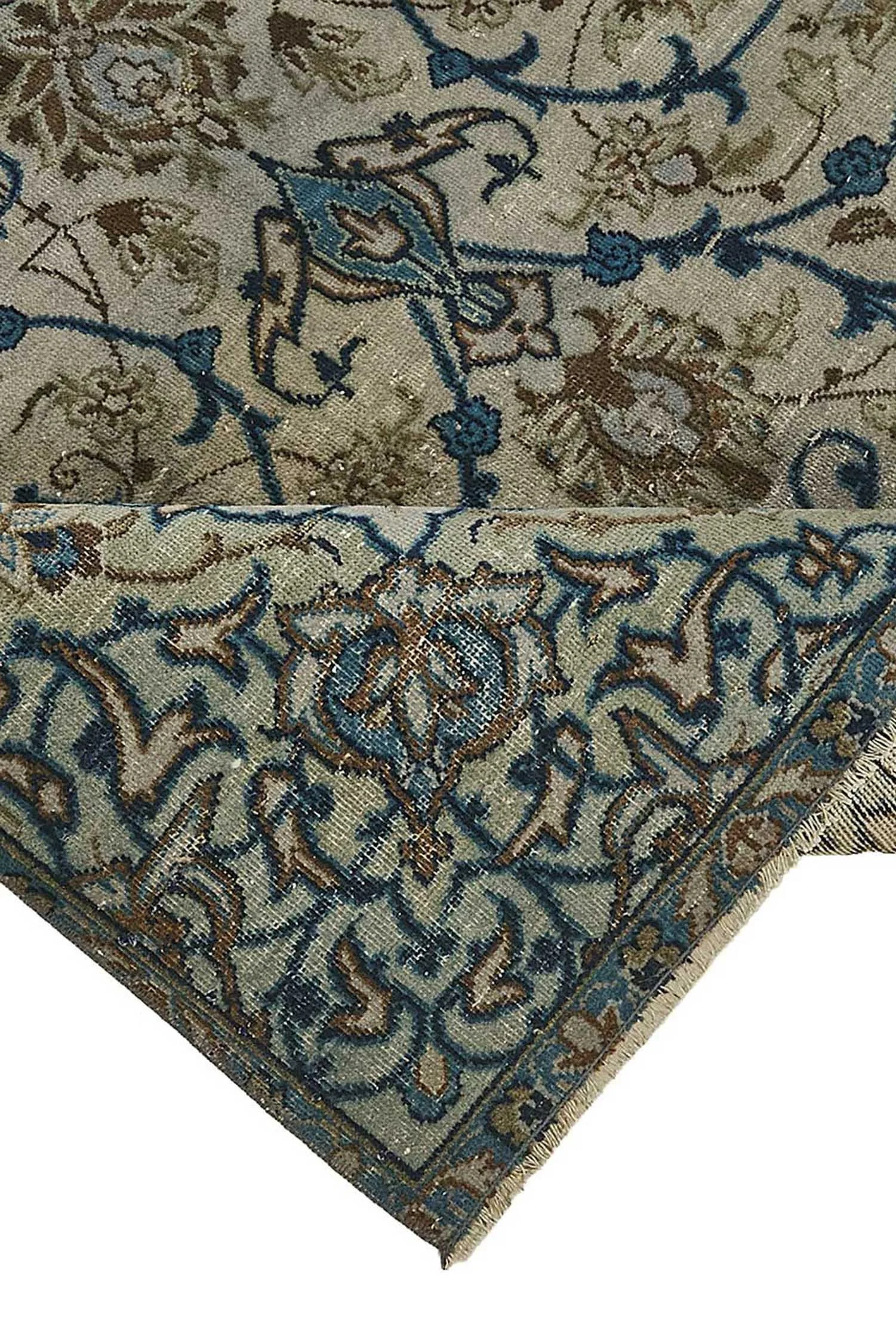
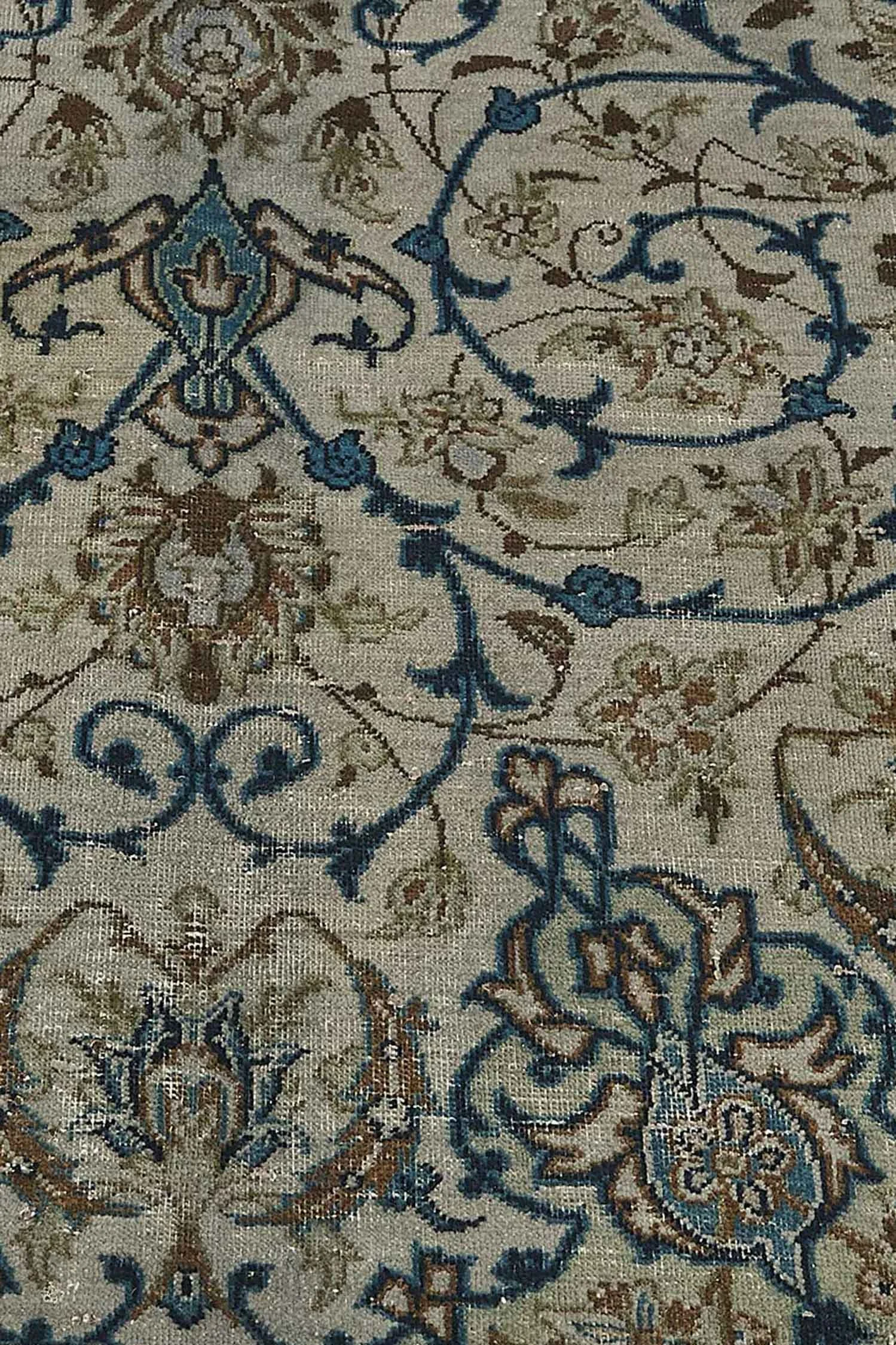
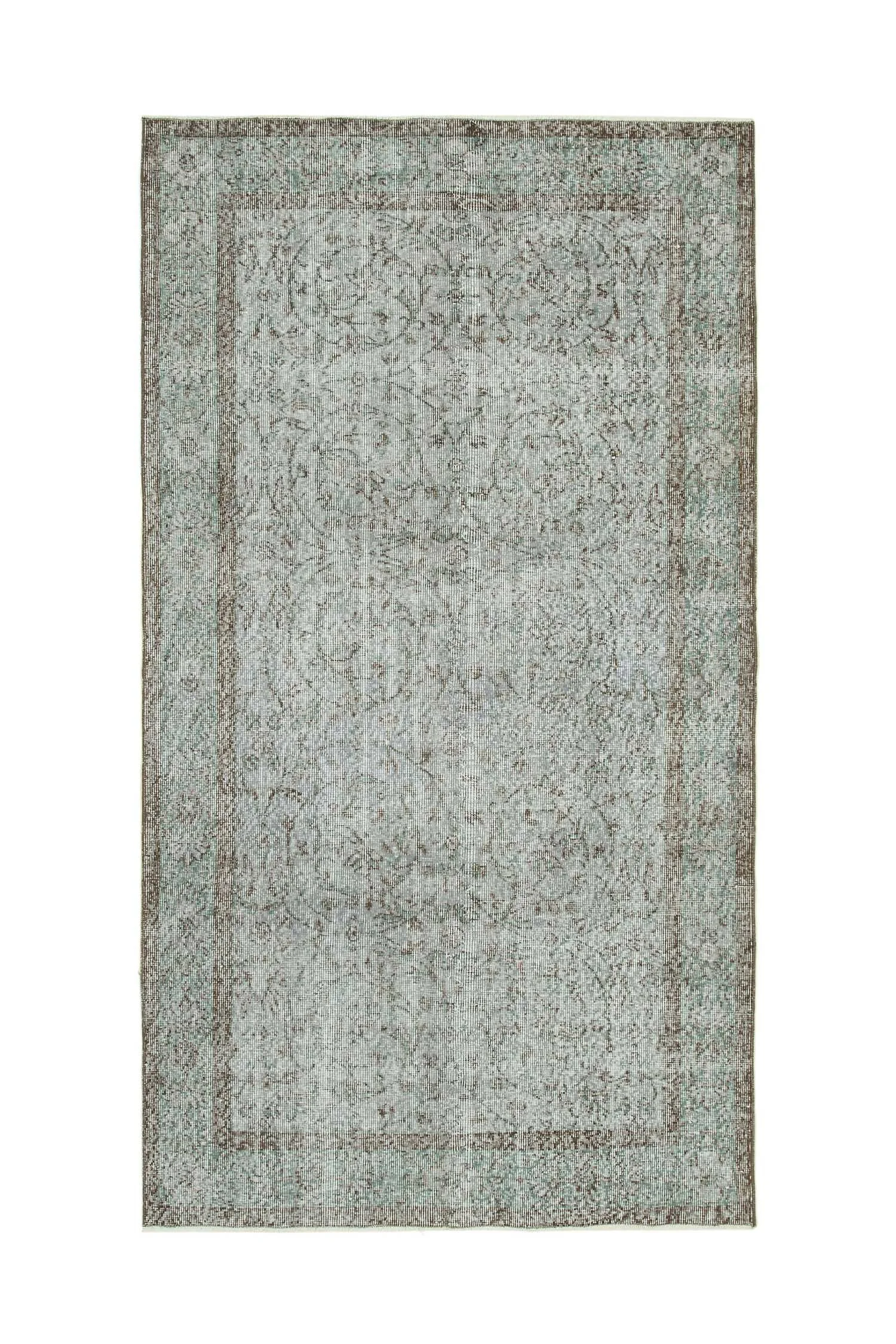
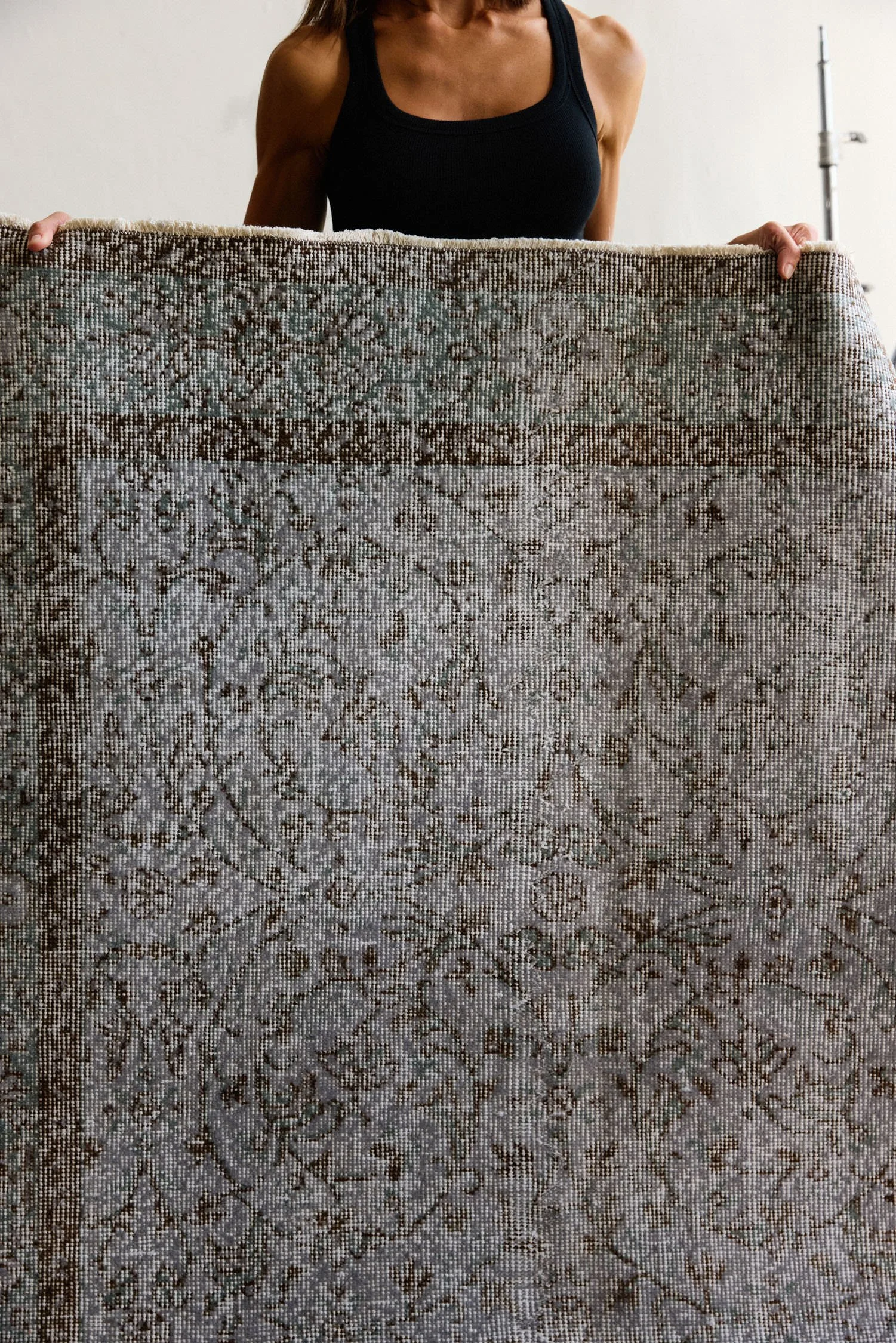
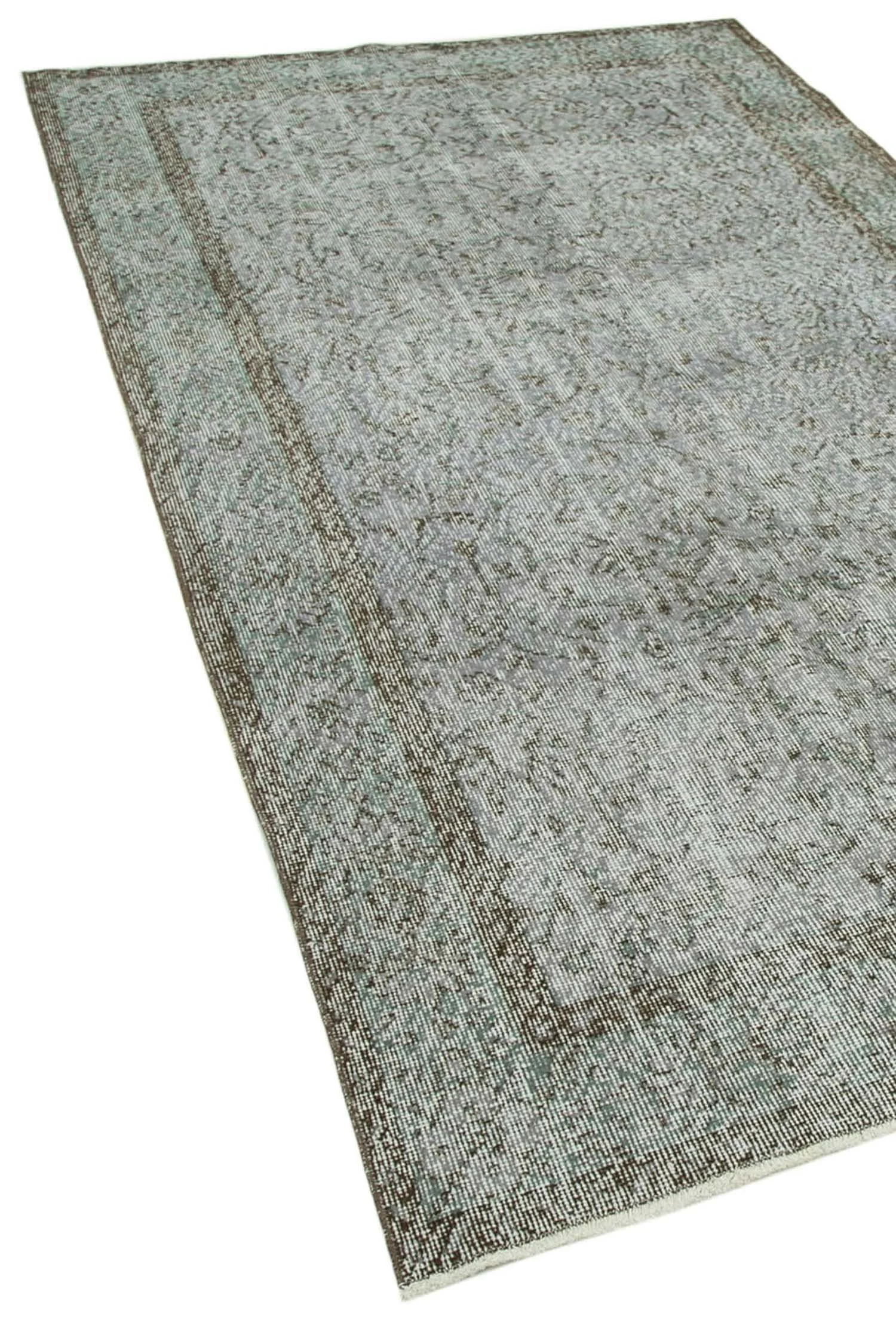
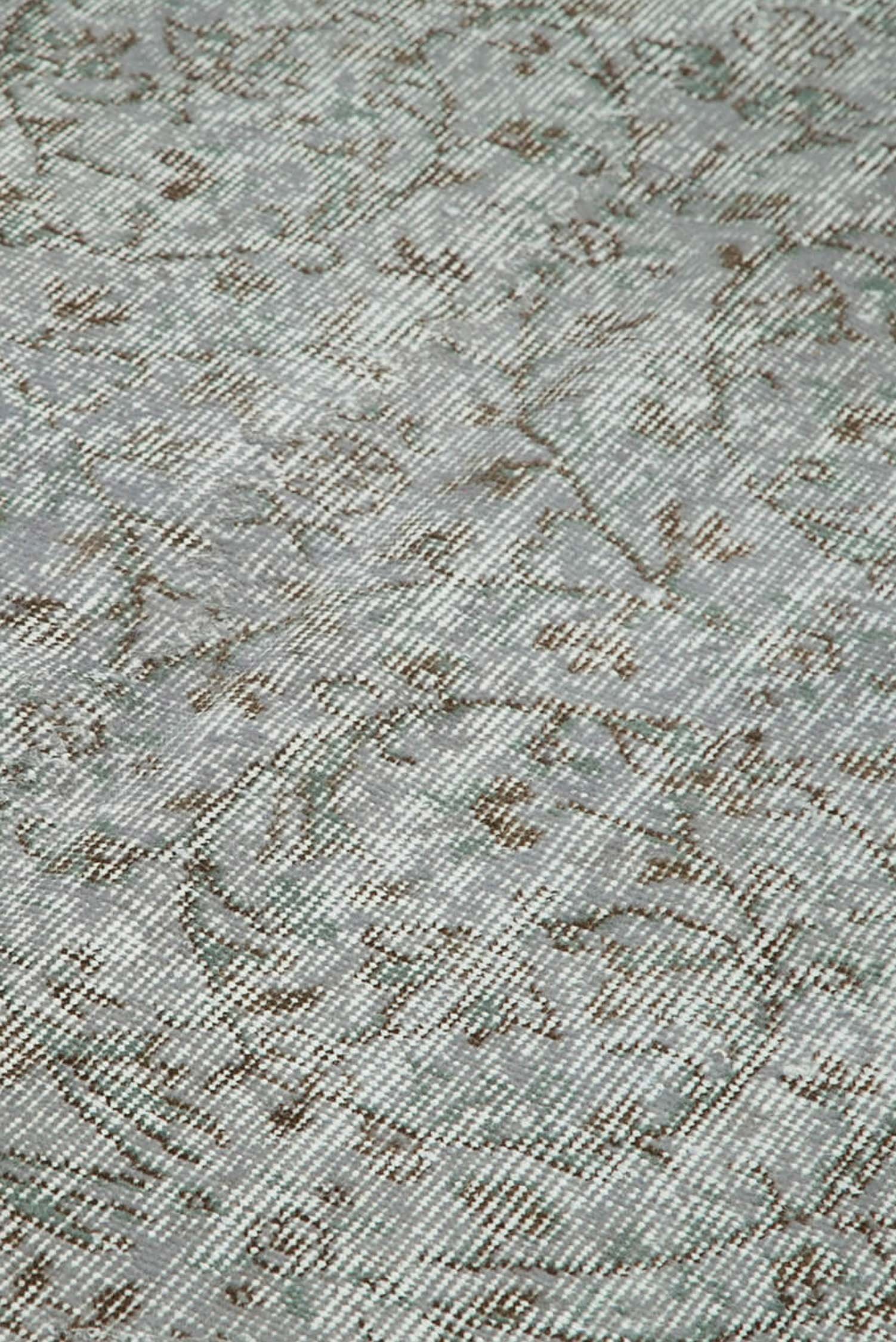
These early 20th-century Tabriz rugs used natural dyes that have aged in characteristic ways. The silvery gray seen here likely started as a deeper tone that oxidized over decades, a common transformation in wool dyed with certain natural materials. The faded rose tones show similar aging, their original vibrancy mellowed by time and exposure.
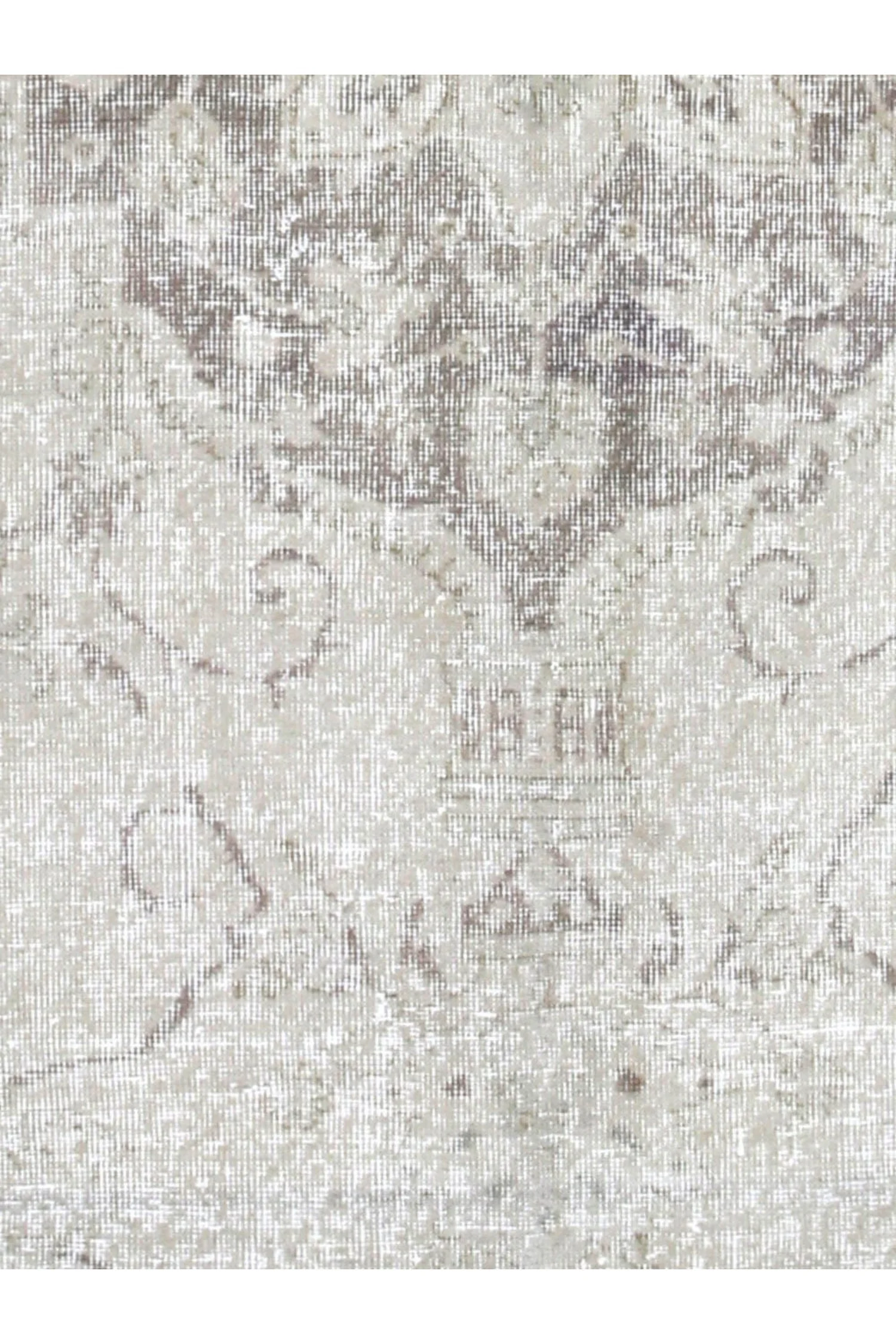
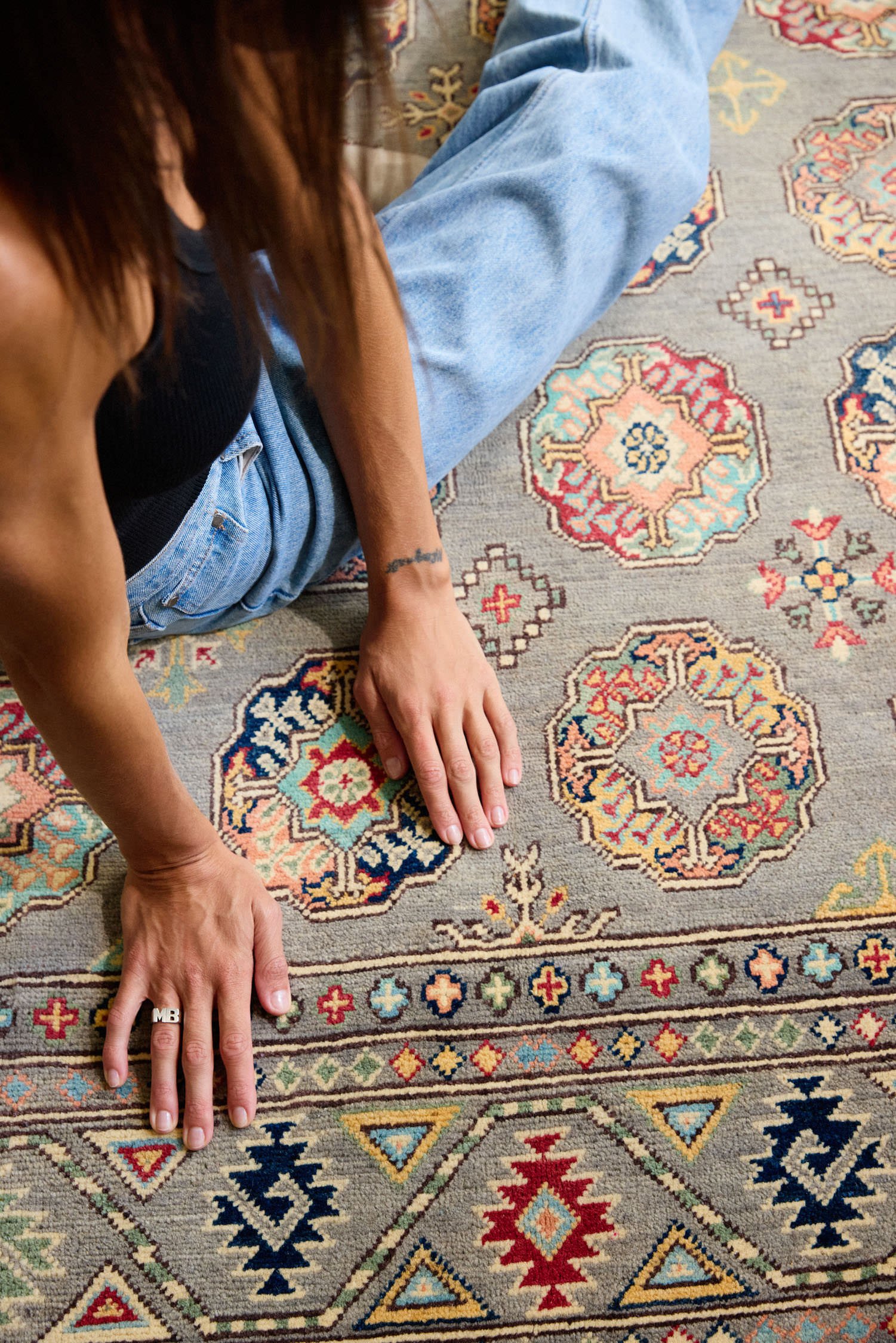
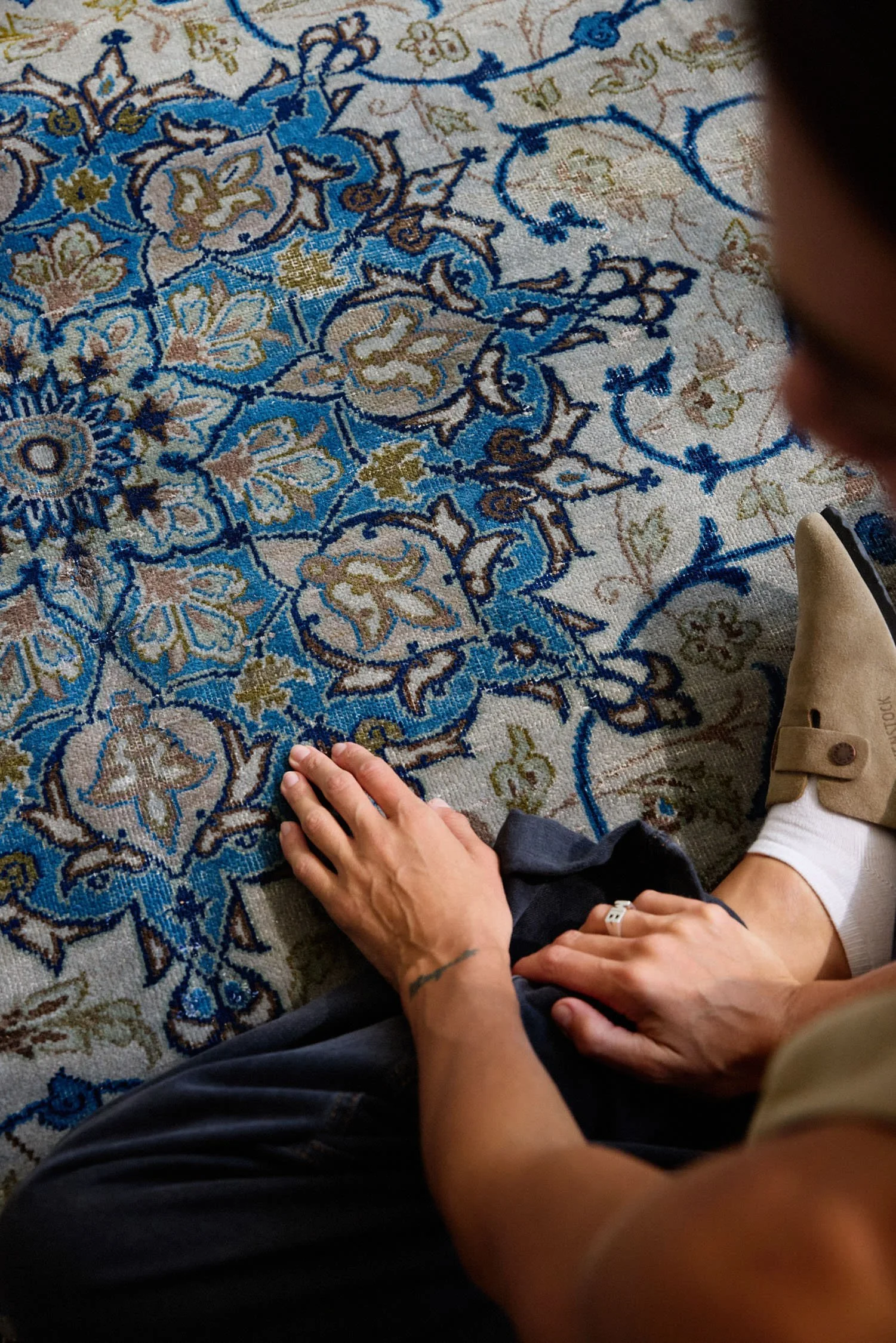
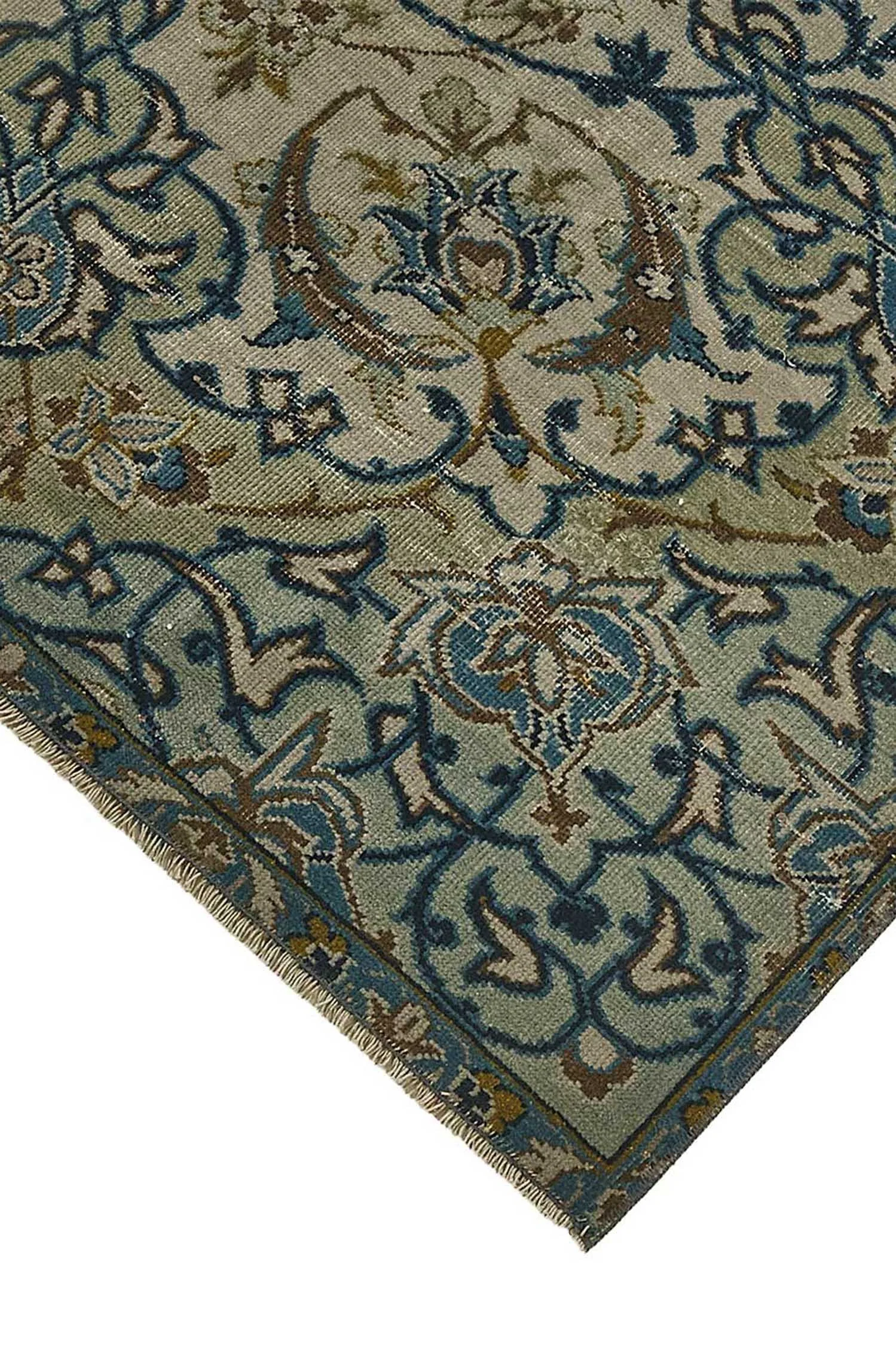
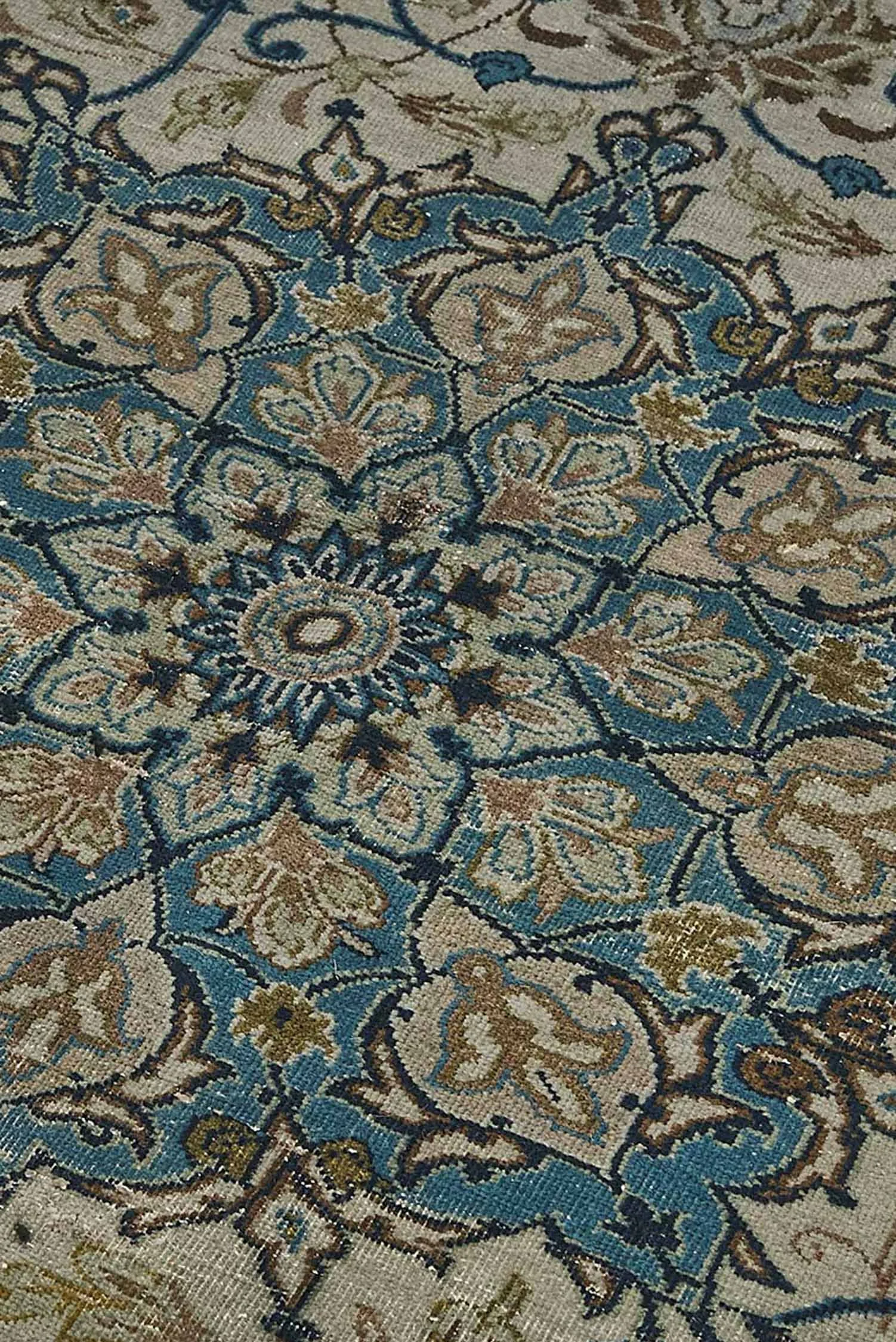
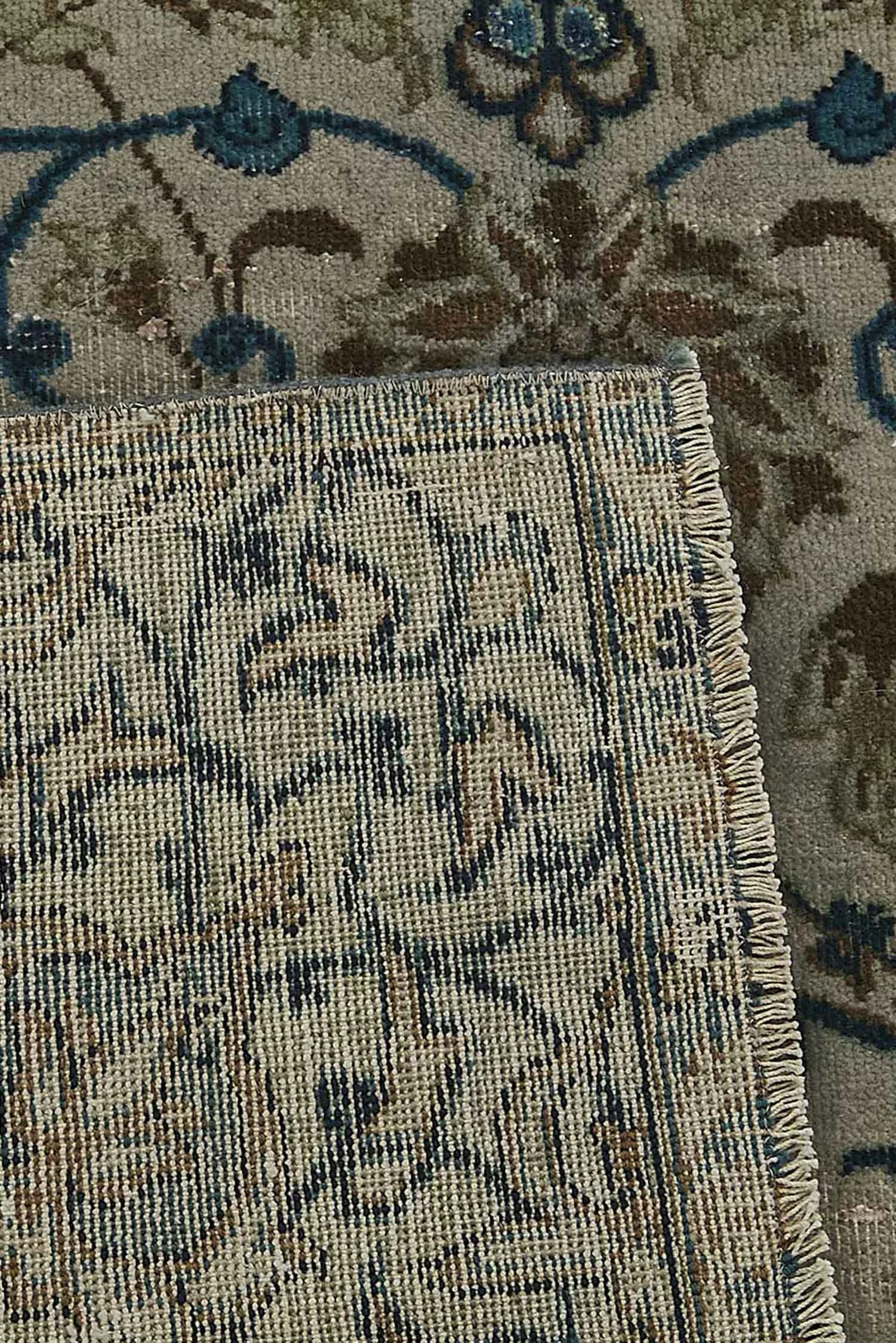
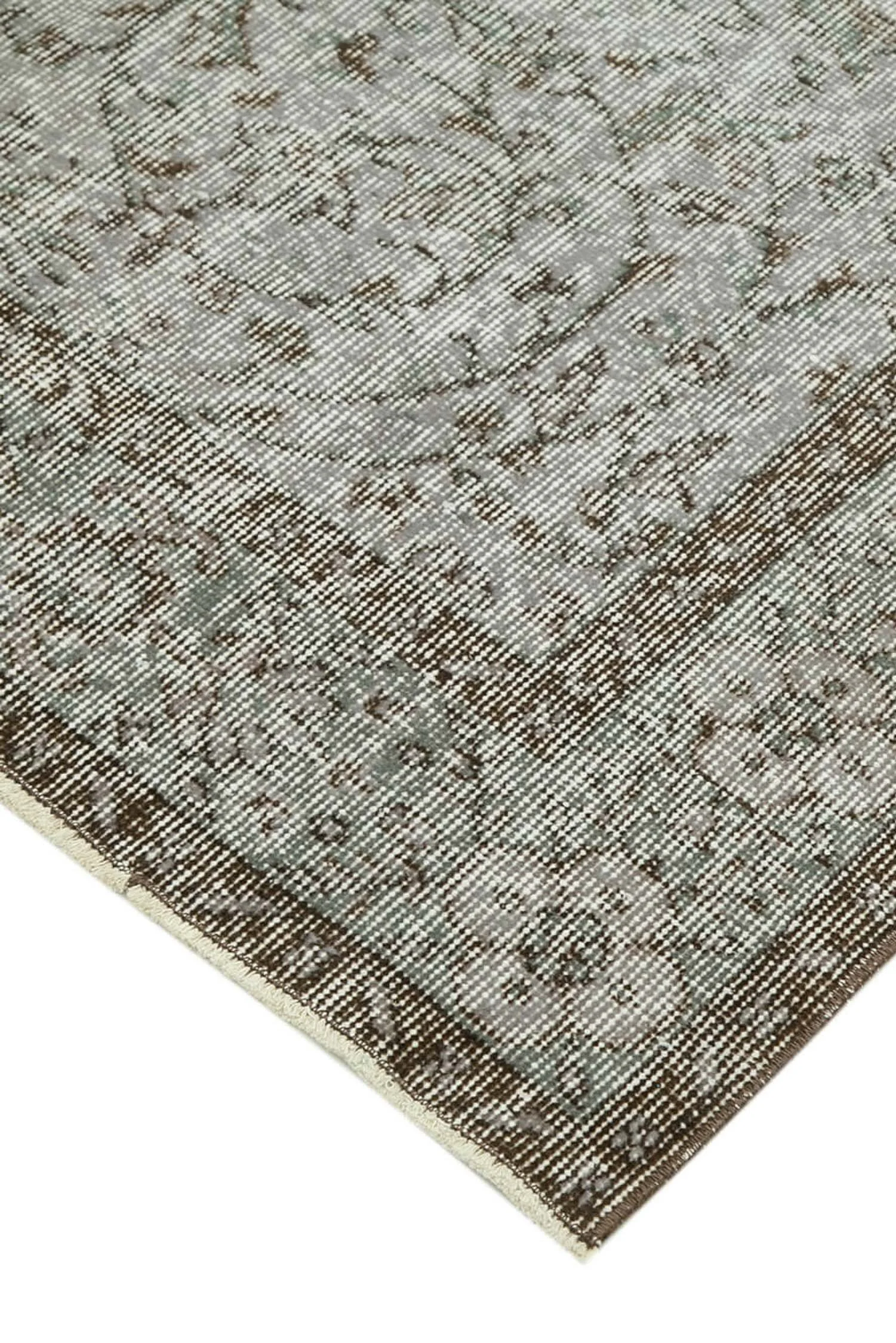
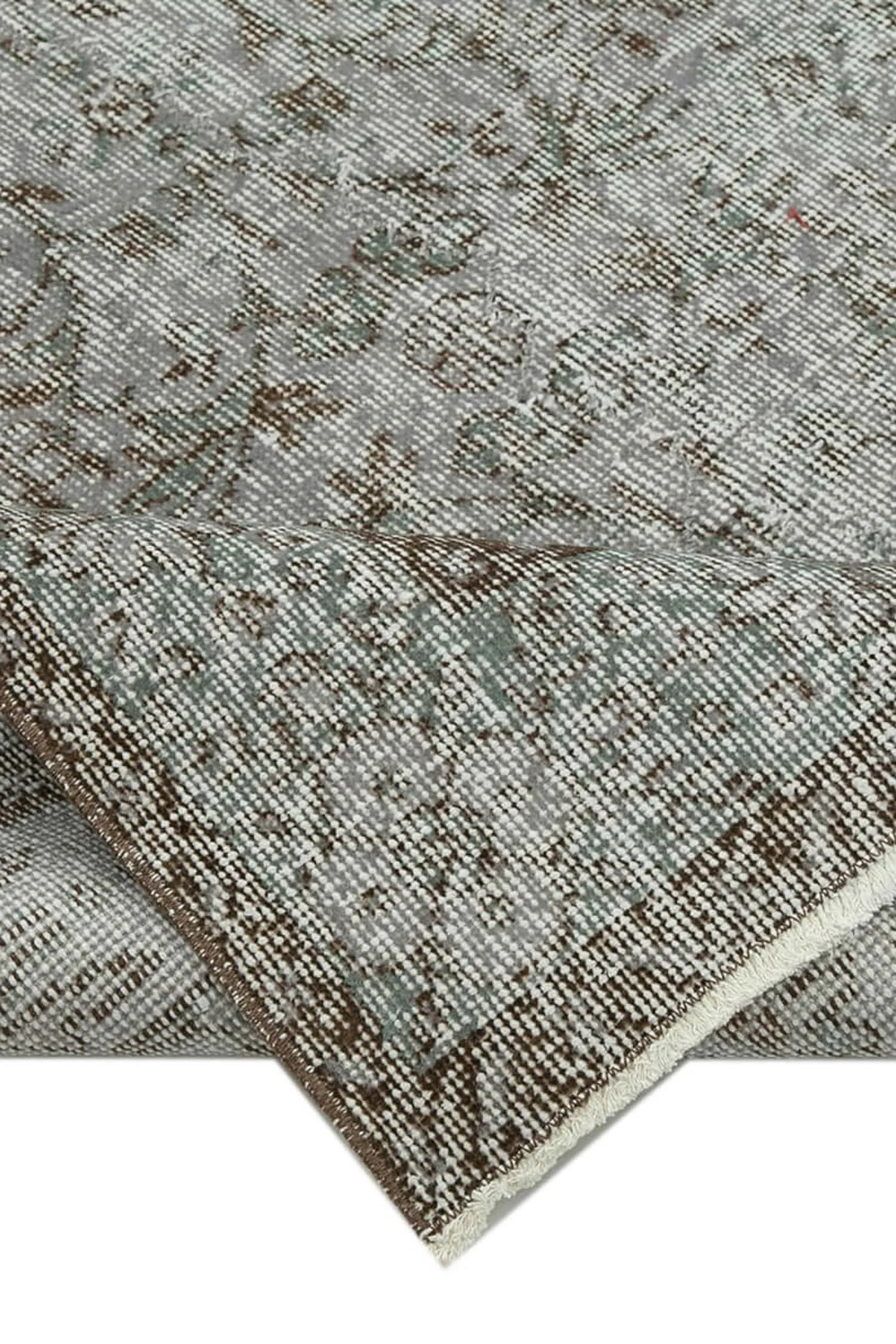
The fine articulation visible in the pattern execution required weavers to work from detailed cartoons with skilled oversight. Each floral form needed precise counting and careful color placement. The tight knot structure meant more ties per square inch, which allowed for greater detail but demanded more time and higher skill levels.
Design Elements
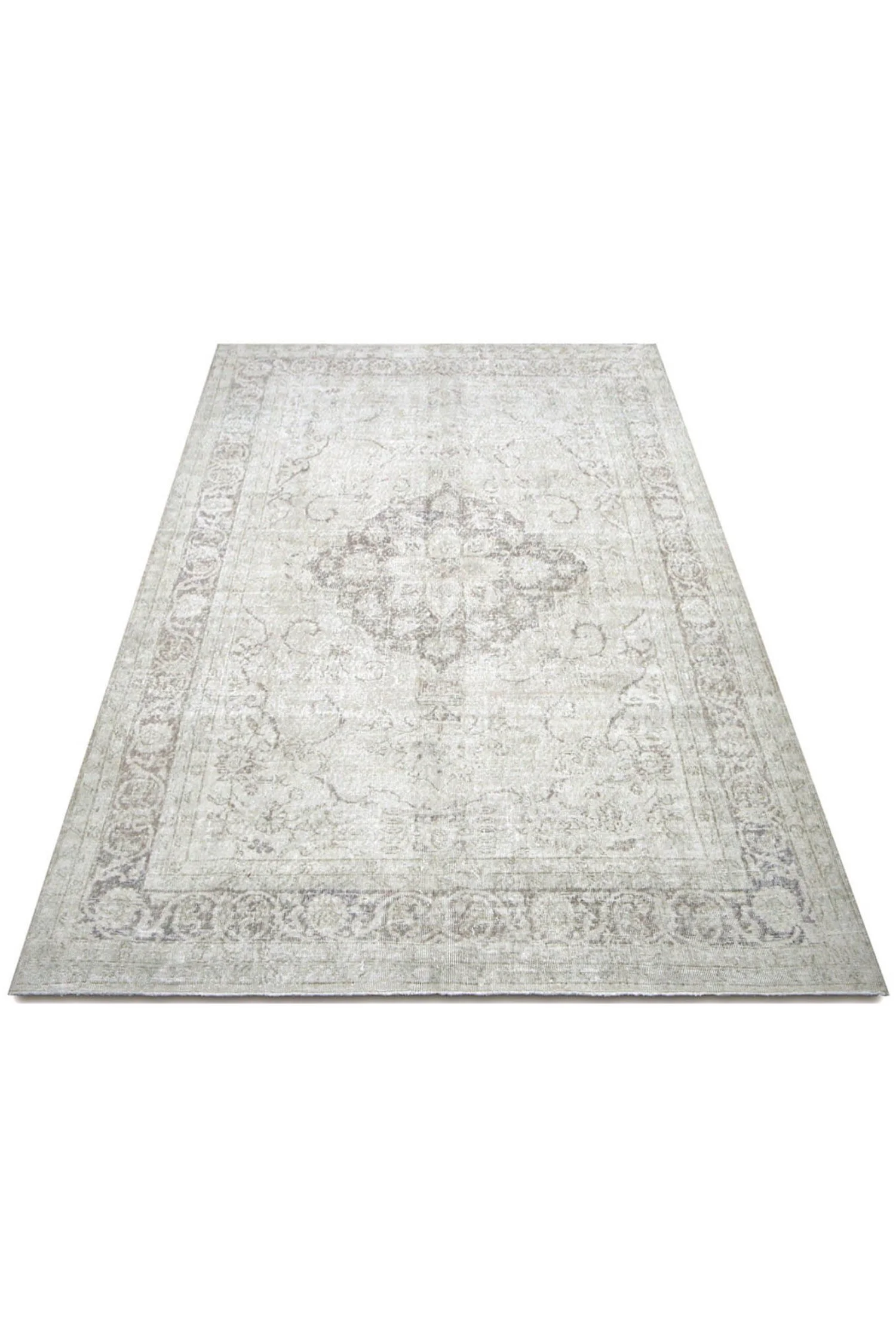
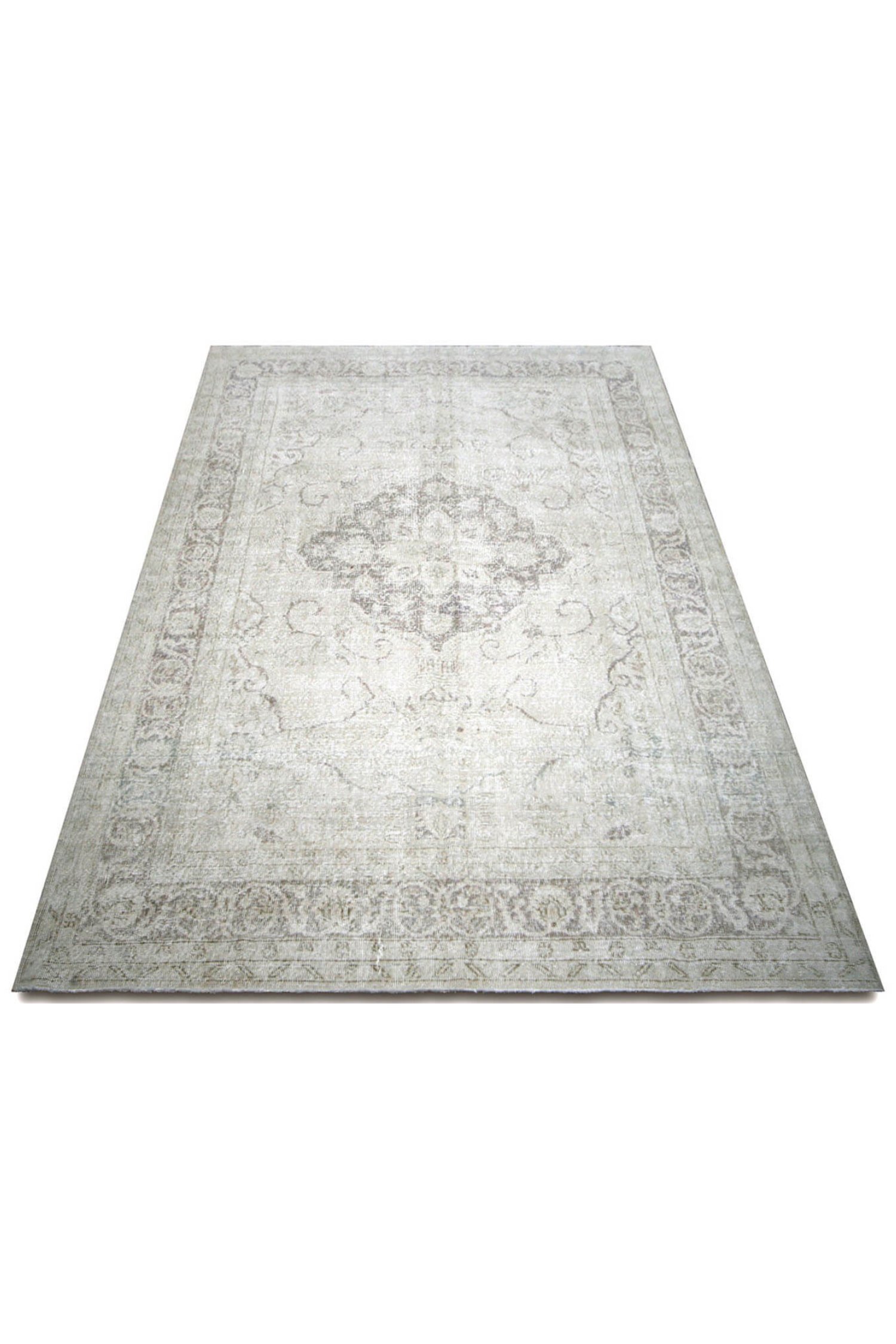
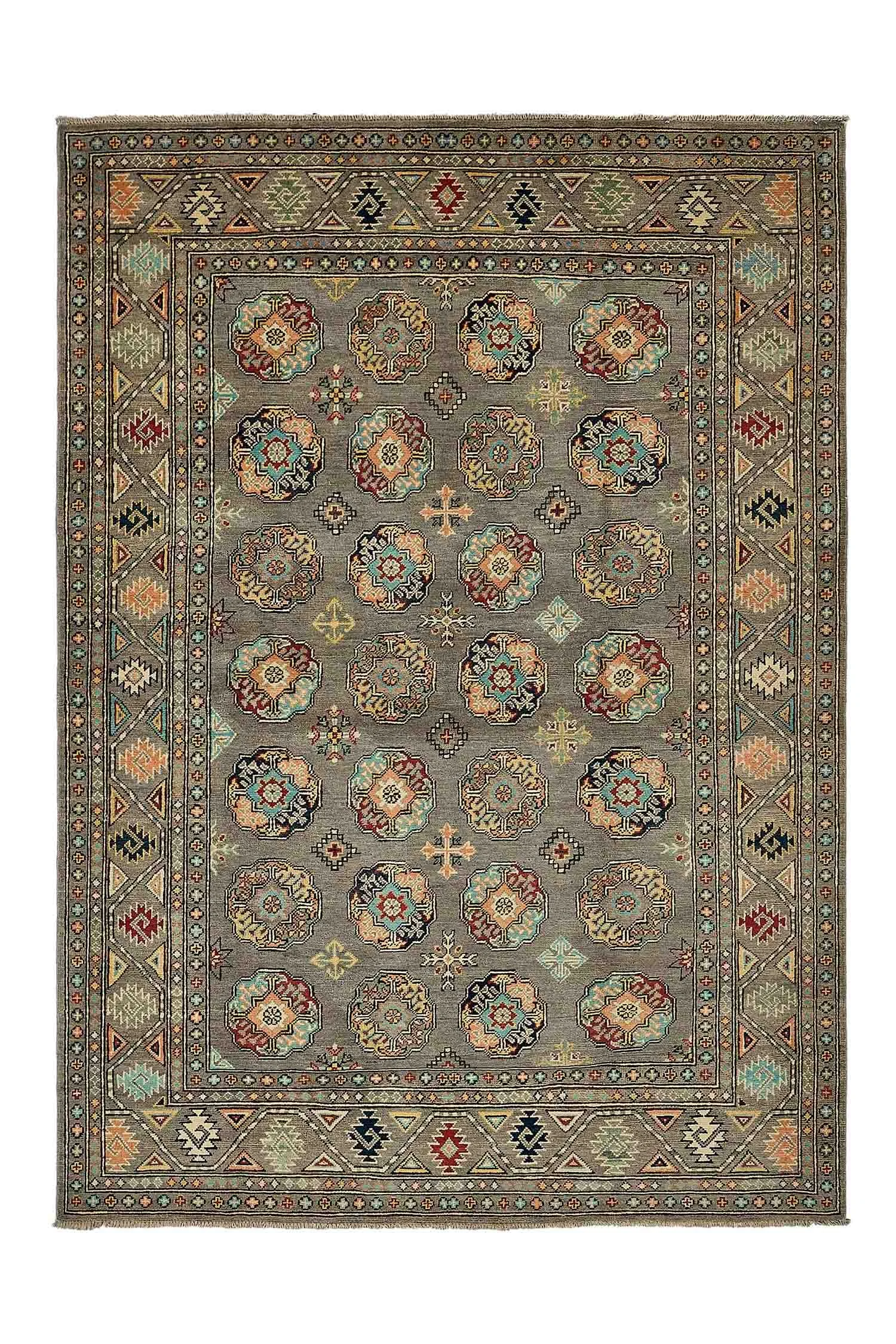
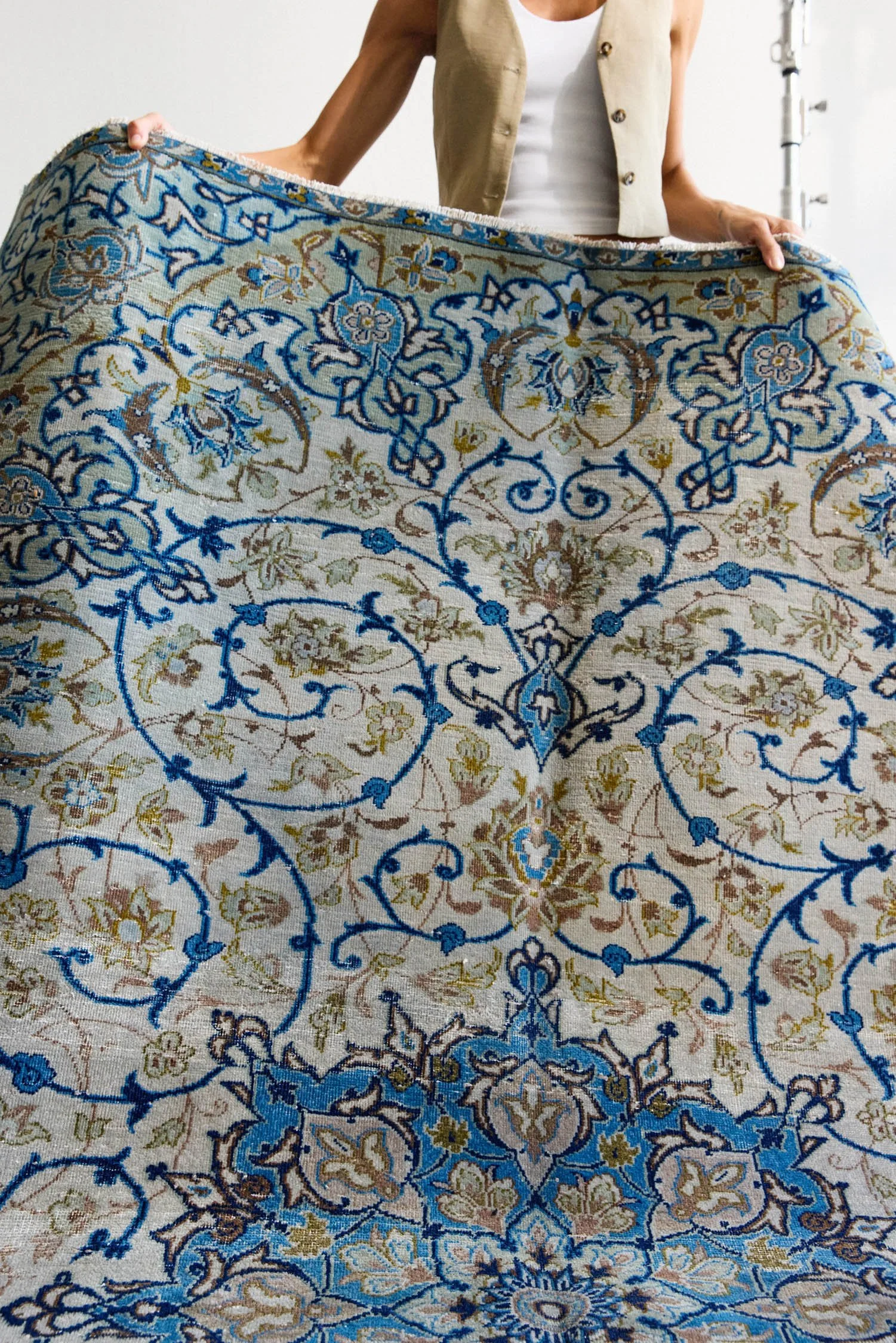
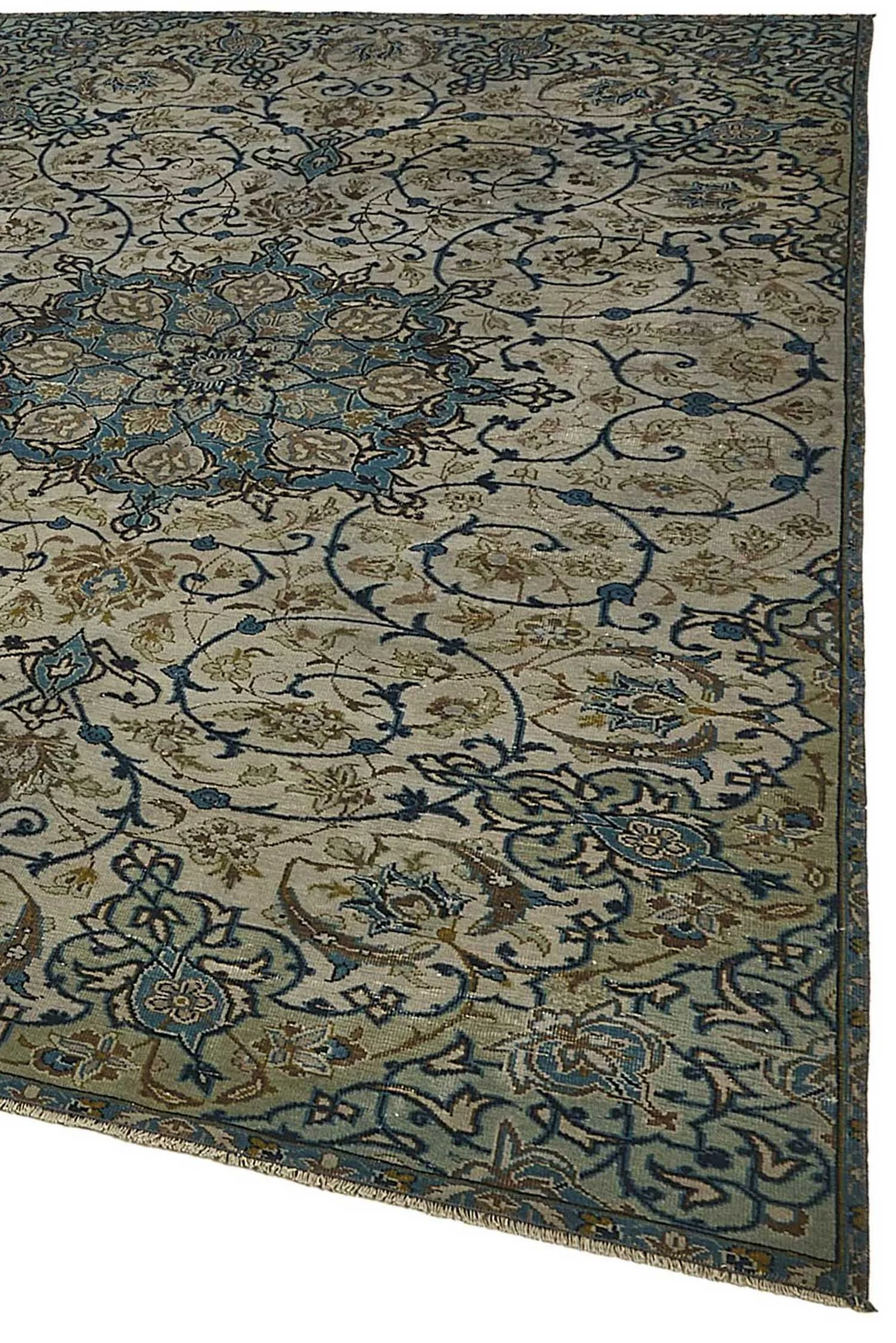
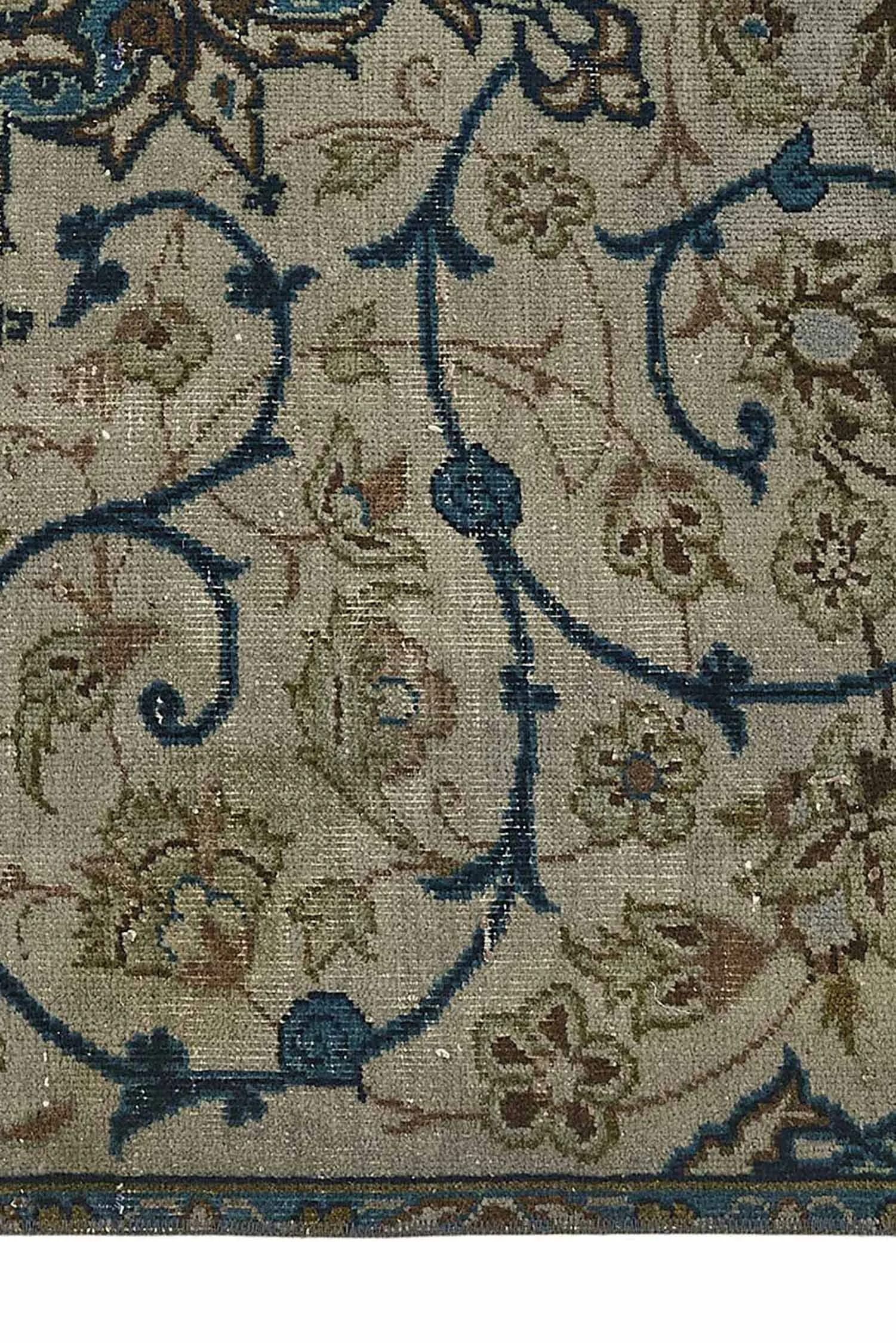
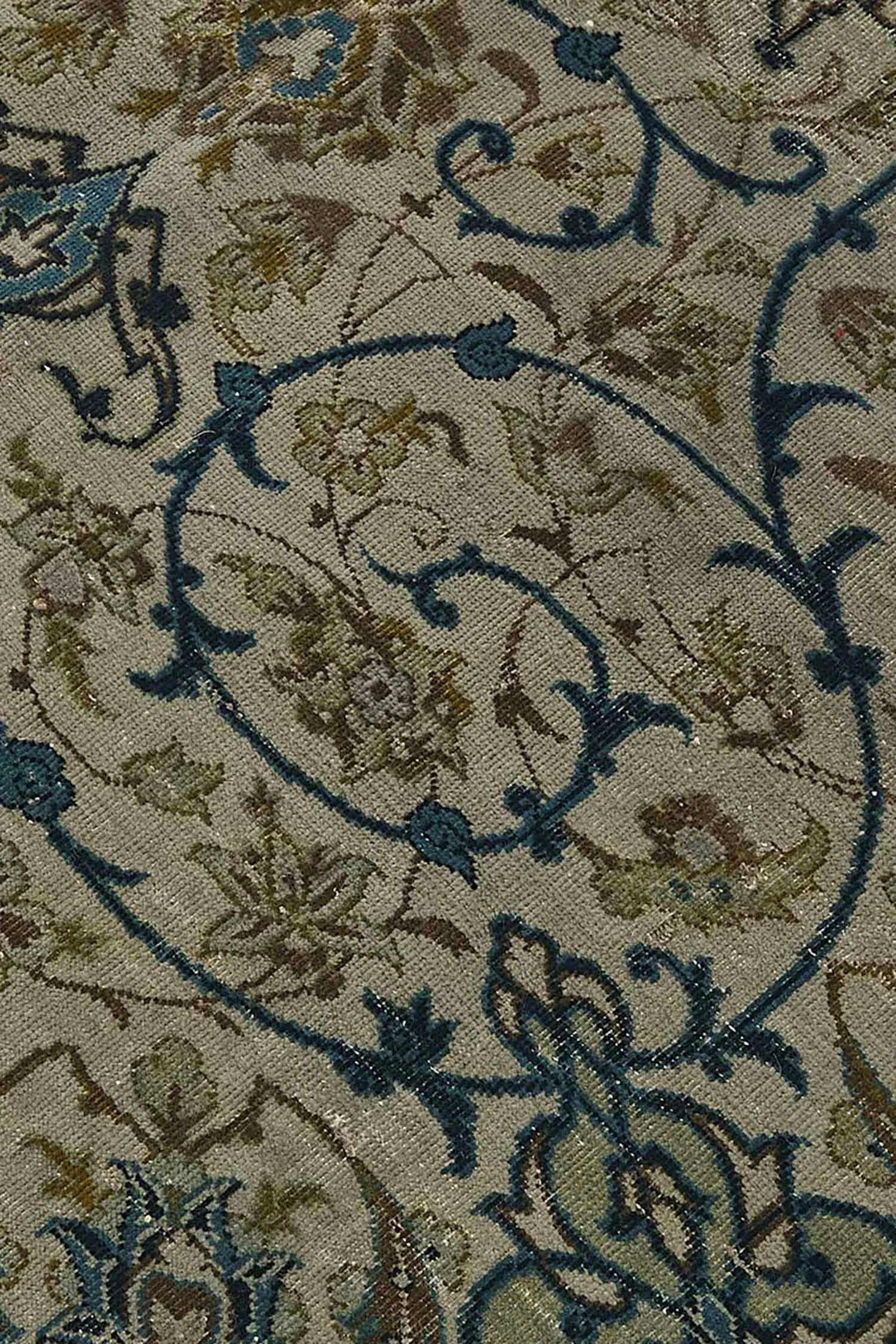
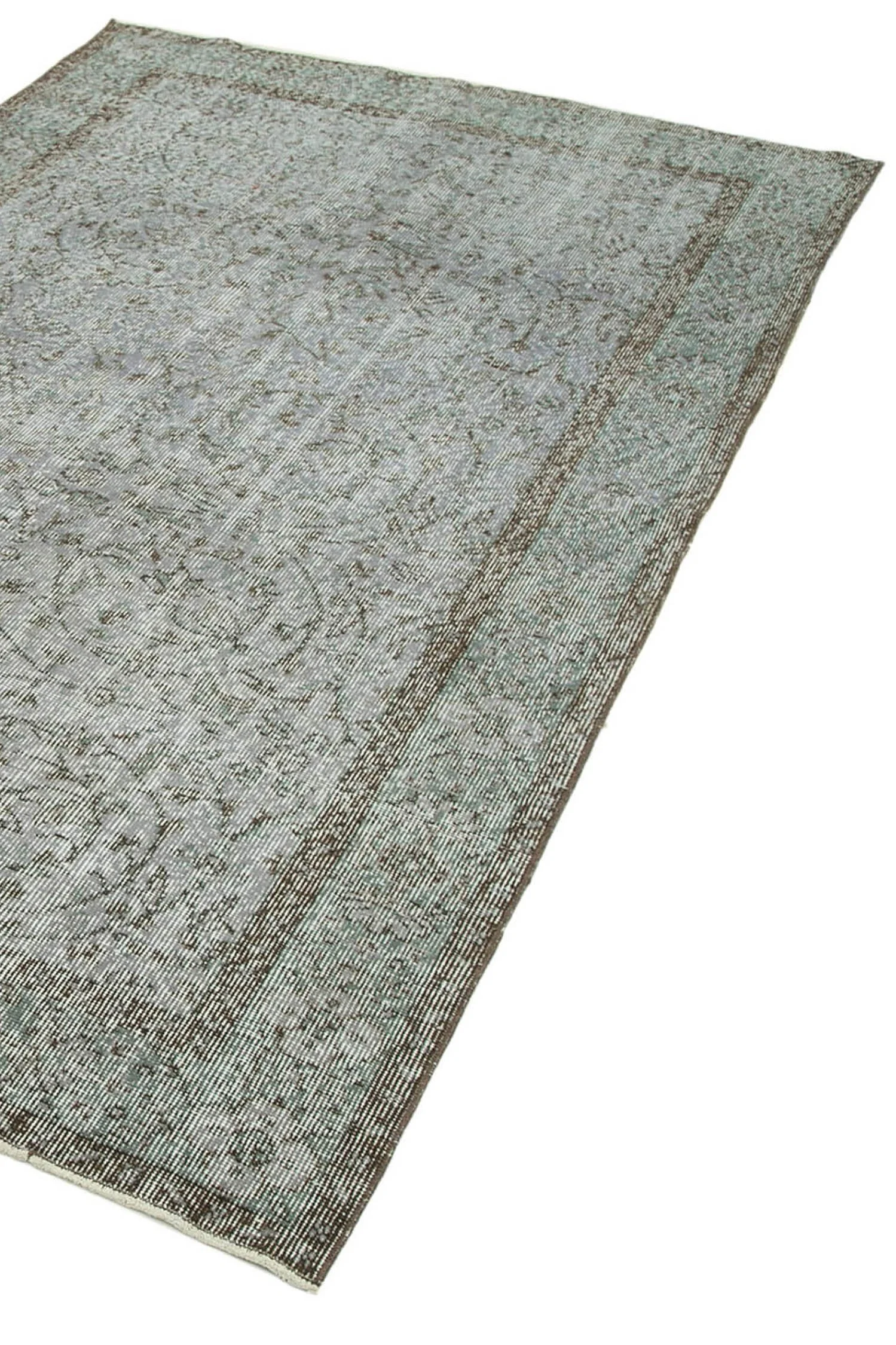
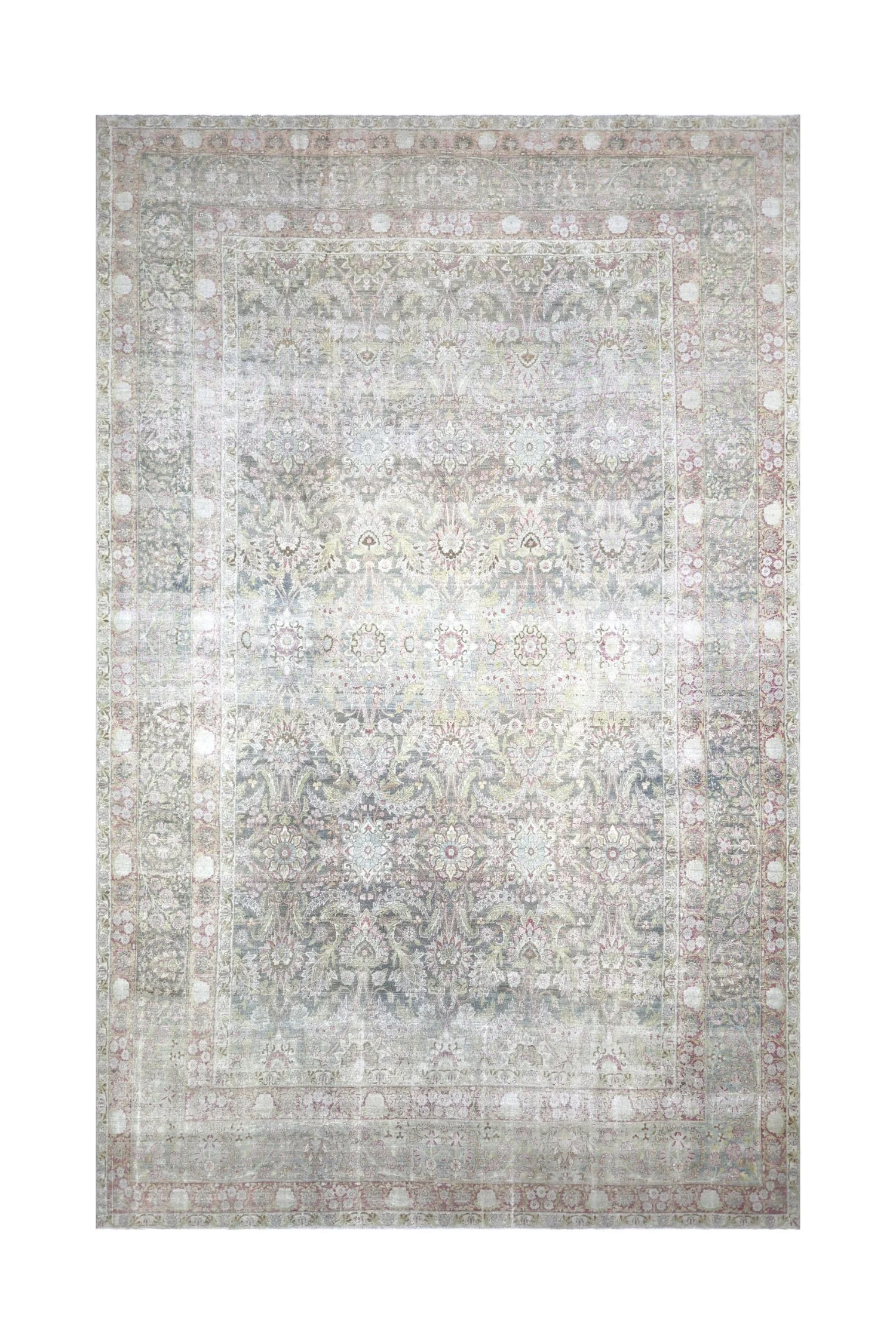
The allover floral composition distributes palmettes and vine work across the entire field with classical symmetry. The spacing creates rhythm without crowding, allowing each floral form room to register individually while contributing to the overall pattern density. The elegant placement shows sophisticated design planning.
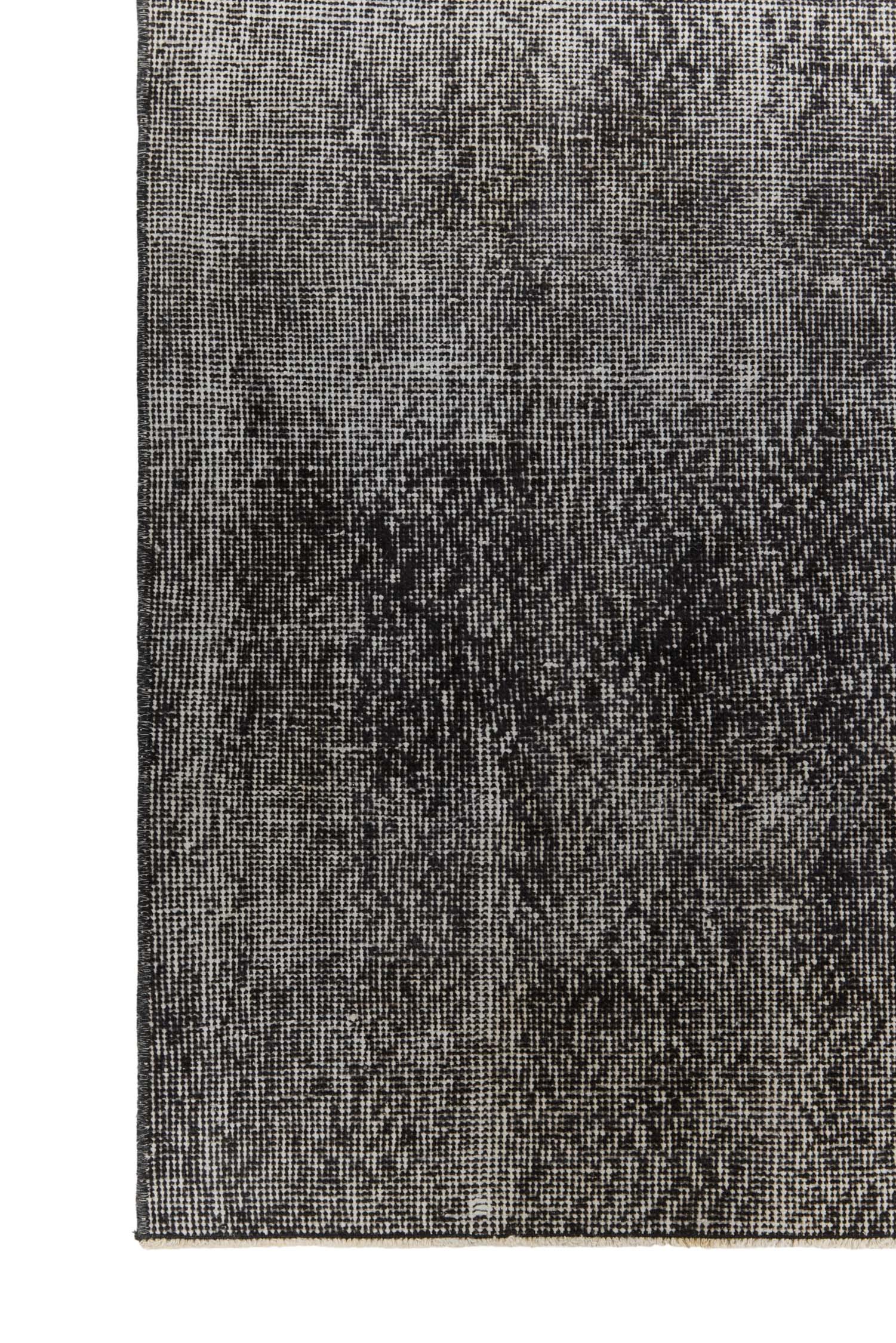
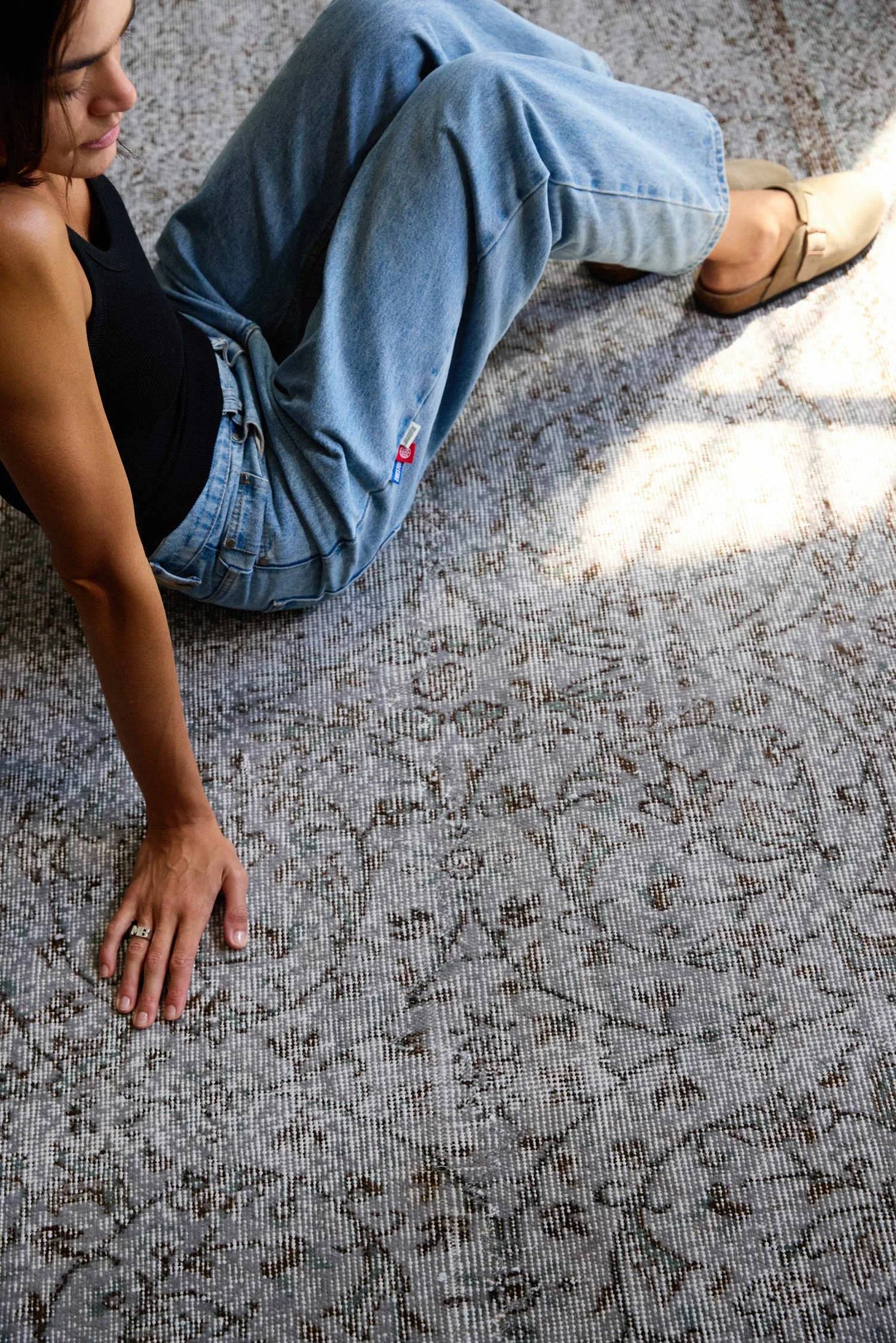
Natural wear has created the quiet, washed character visible in the surface. Areas of higher traffic show more fading, creating tonal variation that adds depth to the composition. The oxidation of certain dyes has shifted the color relationships, producing the mineral quality that distinguishes early 20th-century pieces from later production with more stable synthetic dyes.
The border uses traditional Tabriz floral motifs arranged in continuous sequence. The pattern maintains the same level of fine articulation as the field, with detailed rendering that shows the workshop's technical capabilities. The border integrates tonally with the field through similar aging and oxidation patterns.
Placement
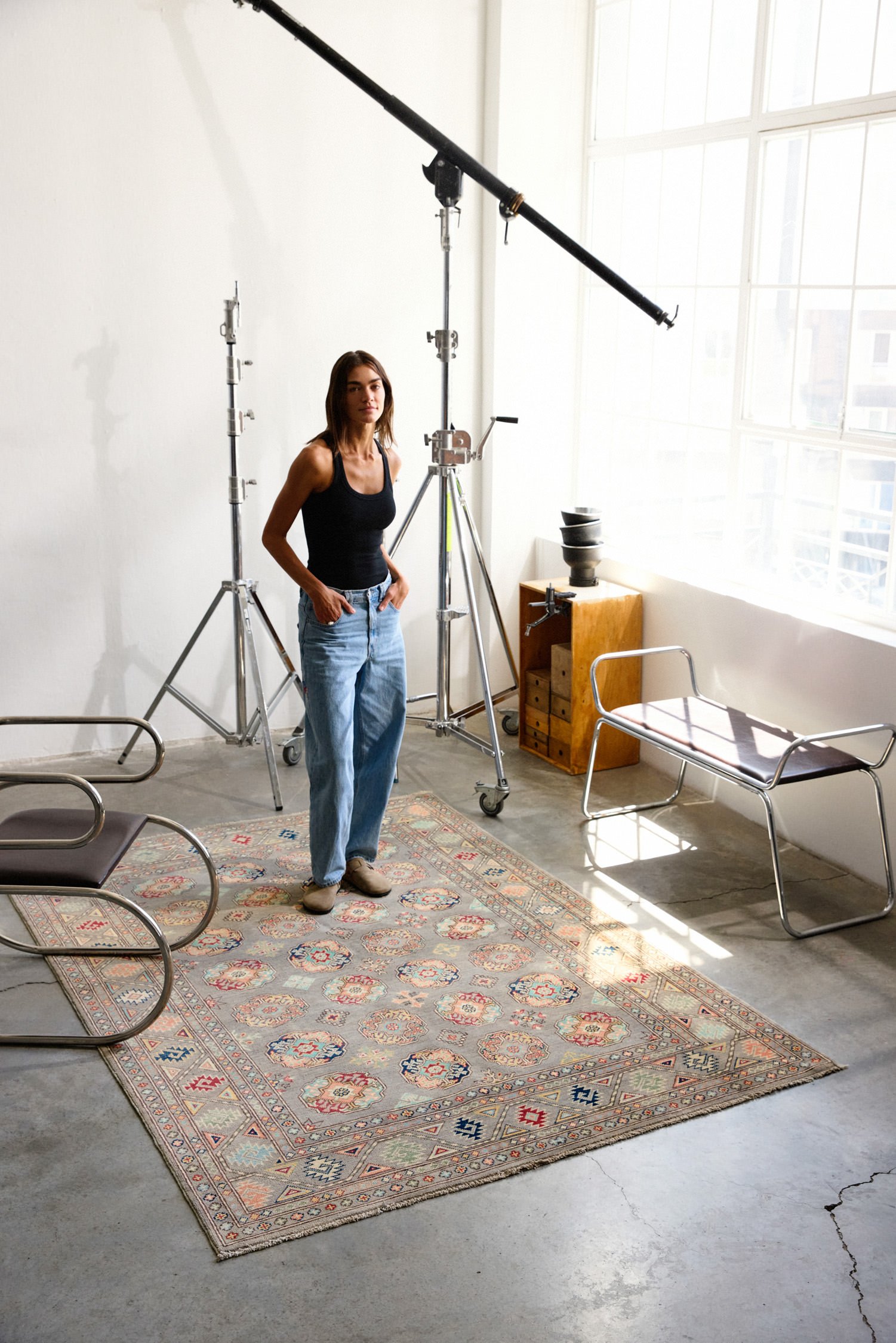
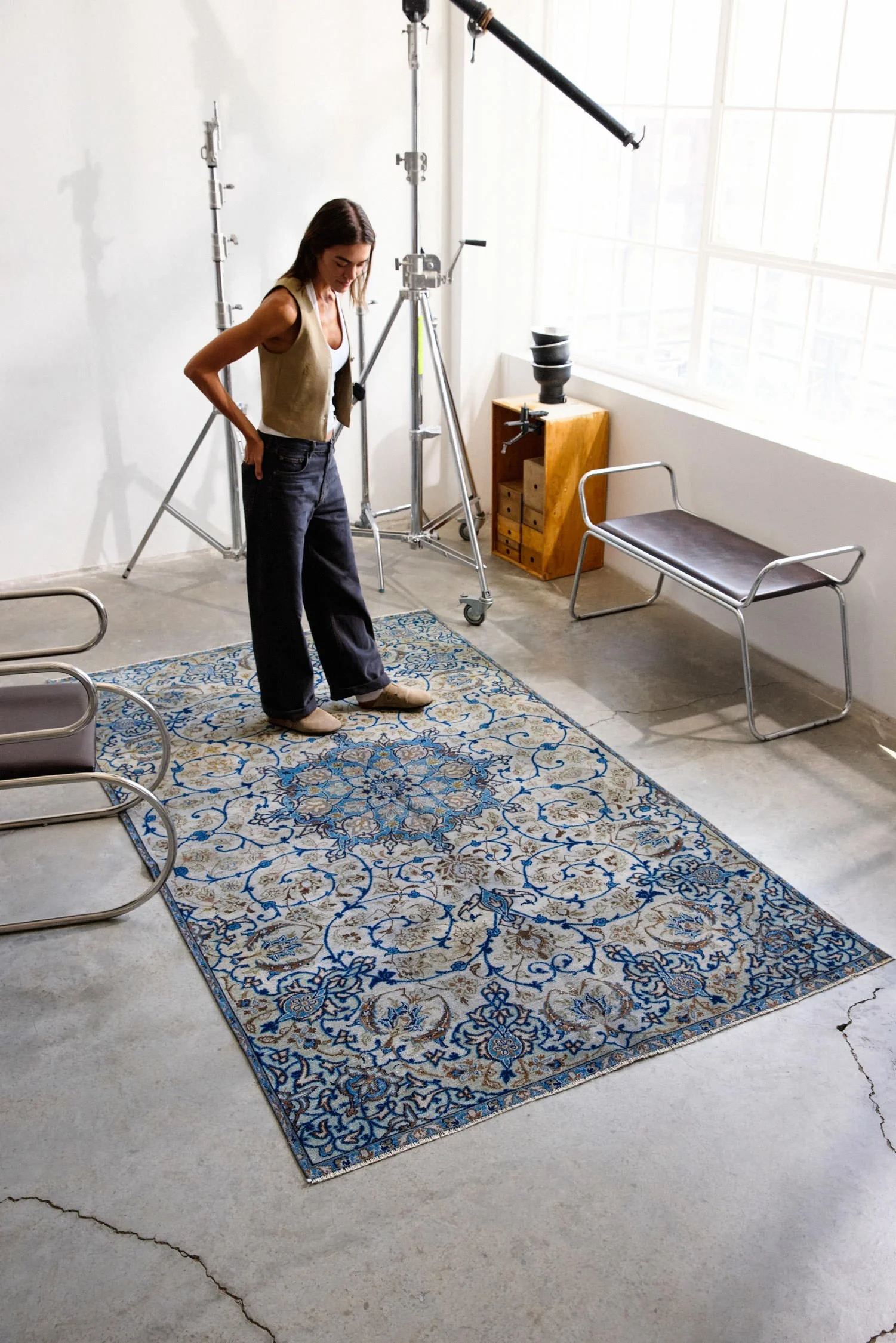
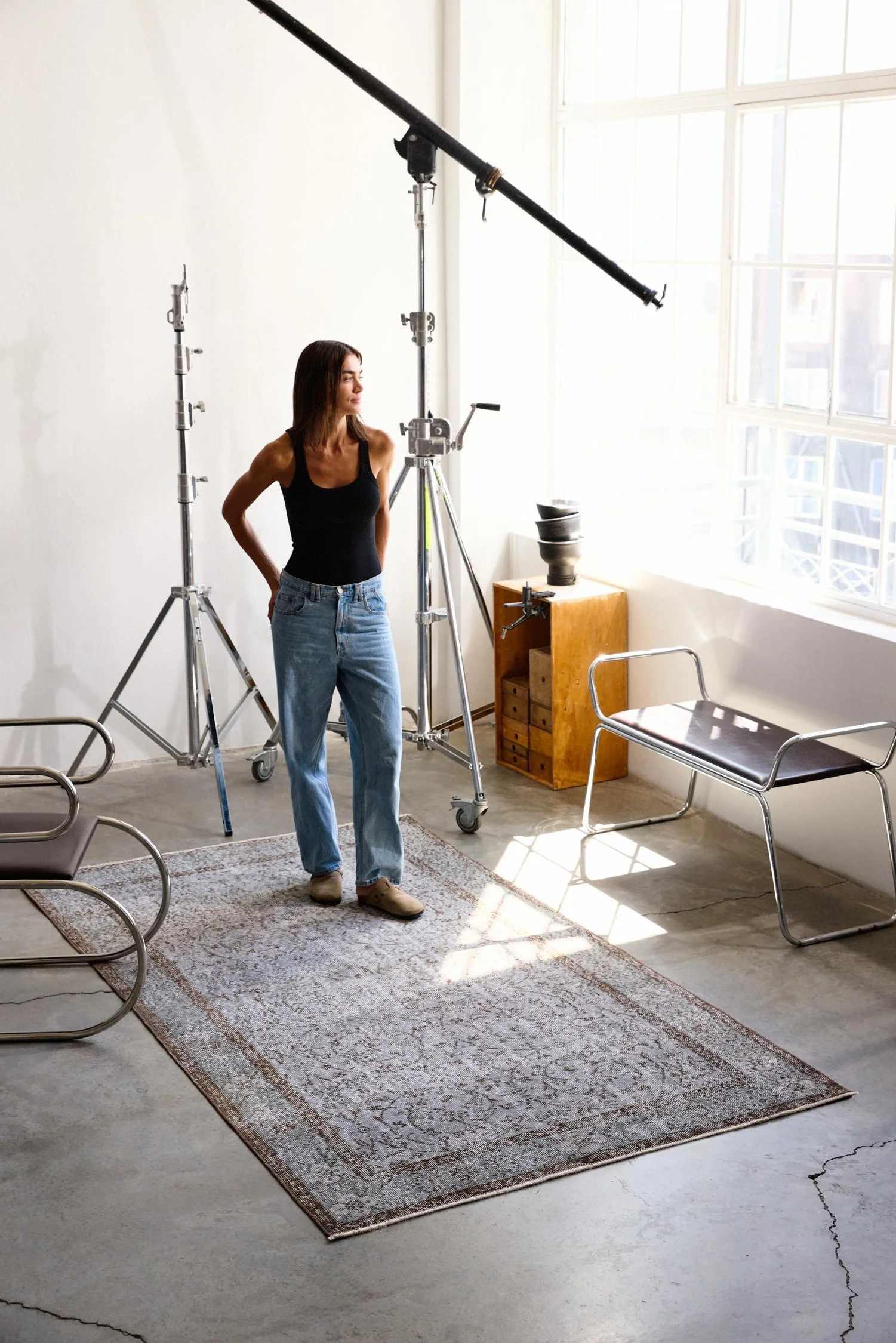
At 11'2" x 17'10", this requires substantial room dimensions with appropriate scale to match. Formal living rooms, grand dining rooms, or primary bedrooms in homes with generous proportions can accommodate it. The size suits spaces with high ceilings and large windows where the rug's presence can be appreciated at full scale.
The silvery gray and aged palette works in interiors that can handle substantial floor coverage with understated color. Traditional settings appreciate the historical provenance and classical Persian design. Contemporary spaces with ample natural light benefit from the mineral quality and washed character, which provides texture and pattern without strong color demands.
Care Recommendations
To preserve the rug's beauty:
Rotate periodically for even wear
Vacuum regularly using a suction-only setting
Address spills immediately by blotting, never rubbing
Professional cleaning recommended annually
Avoid direct sunlight to maintain color integrity
A century of footsteps and light transformed this Tabriz from what it was woven to be into what it became.