 Image 1 of 6
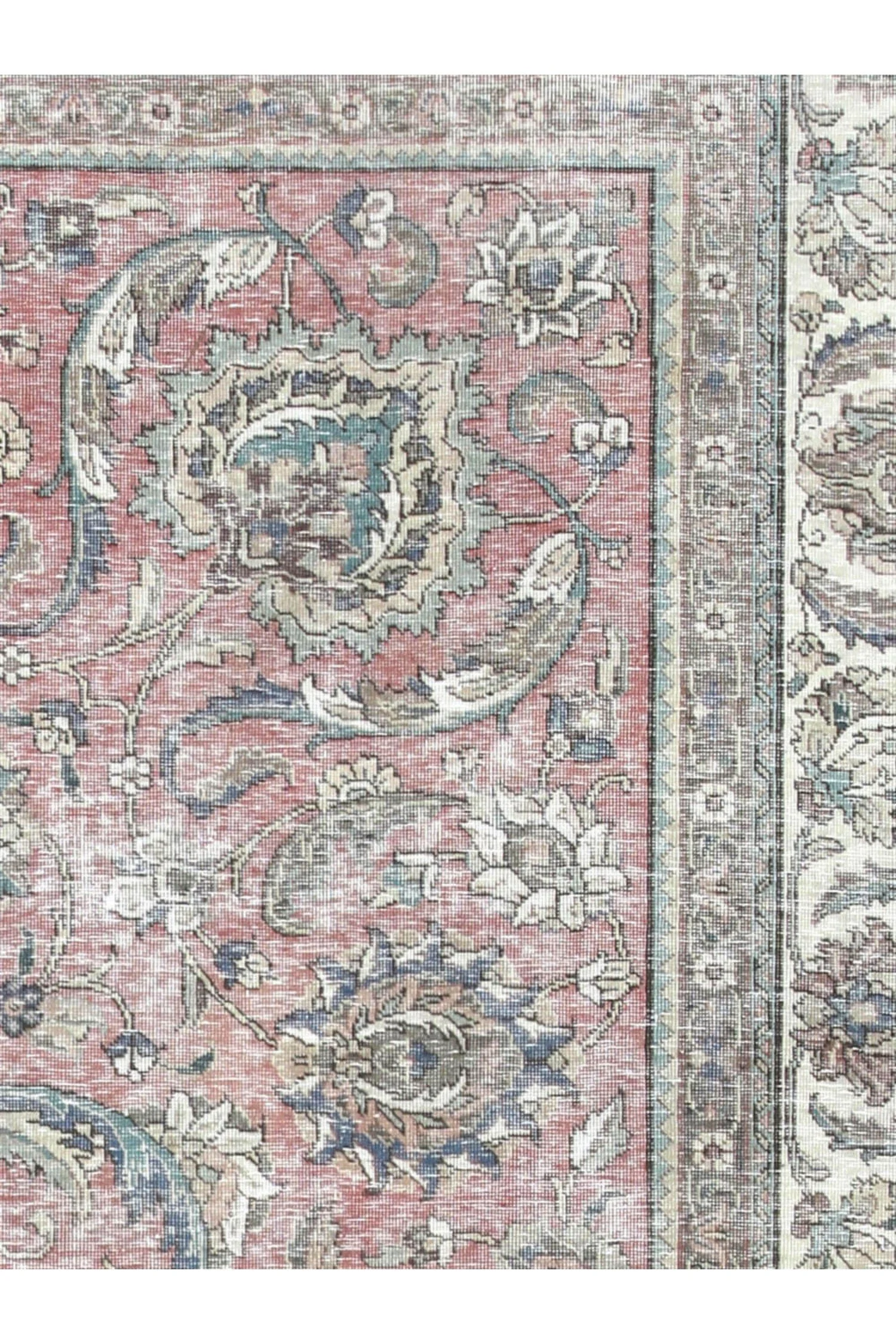 Image 2 of 6
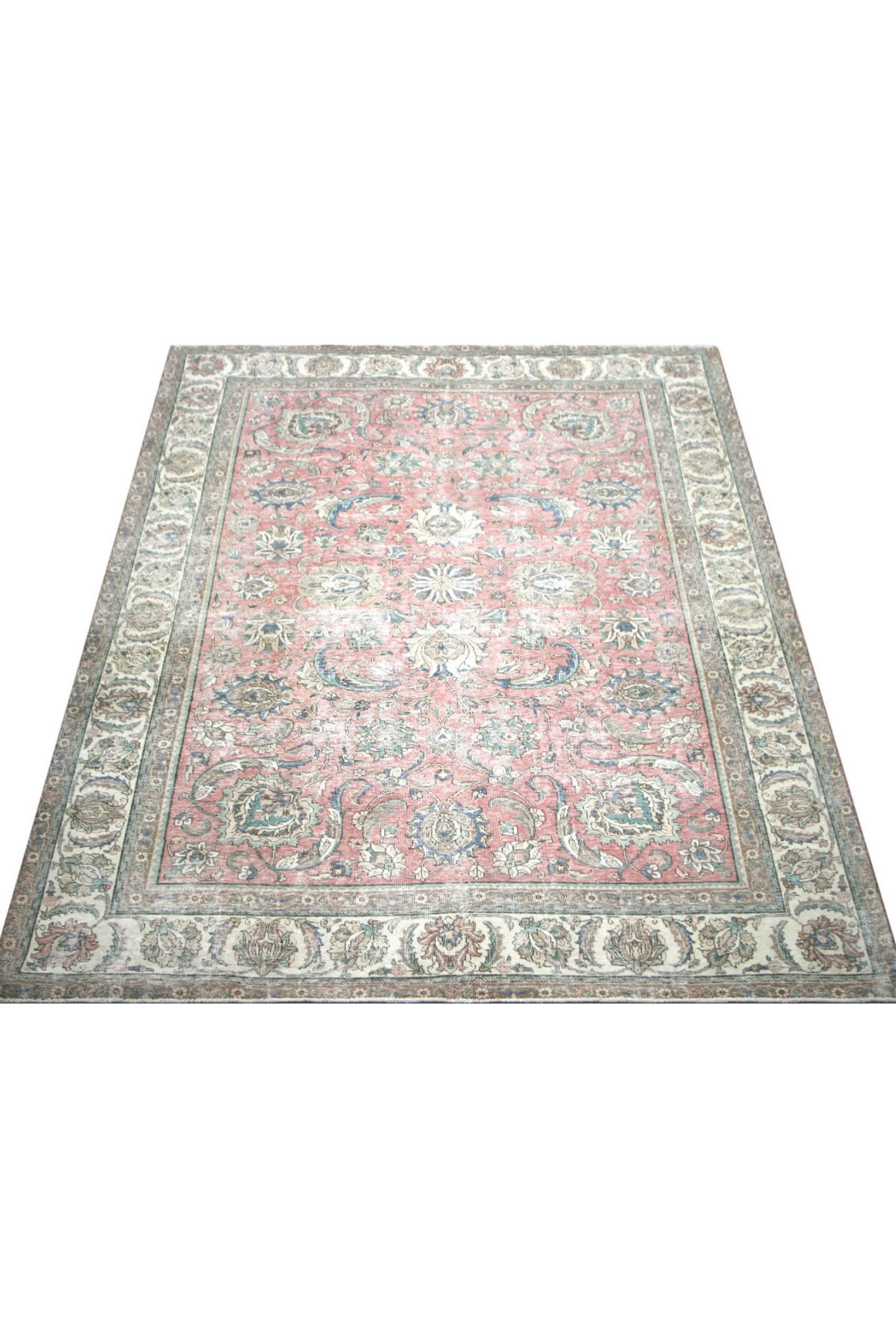 Image 3 of 6
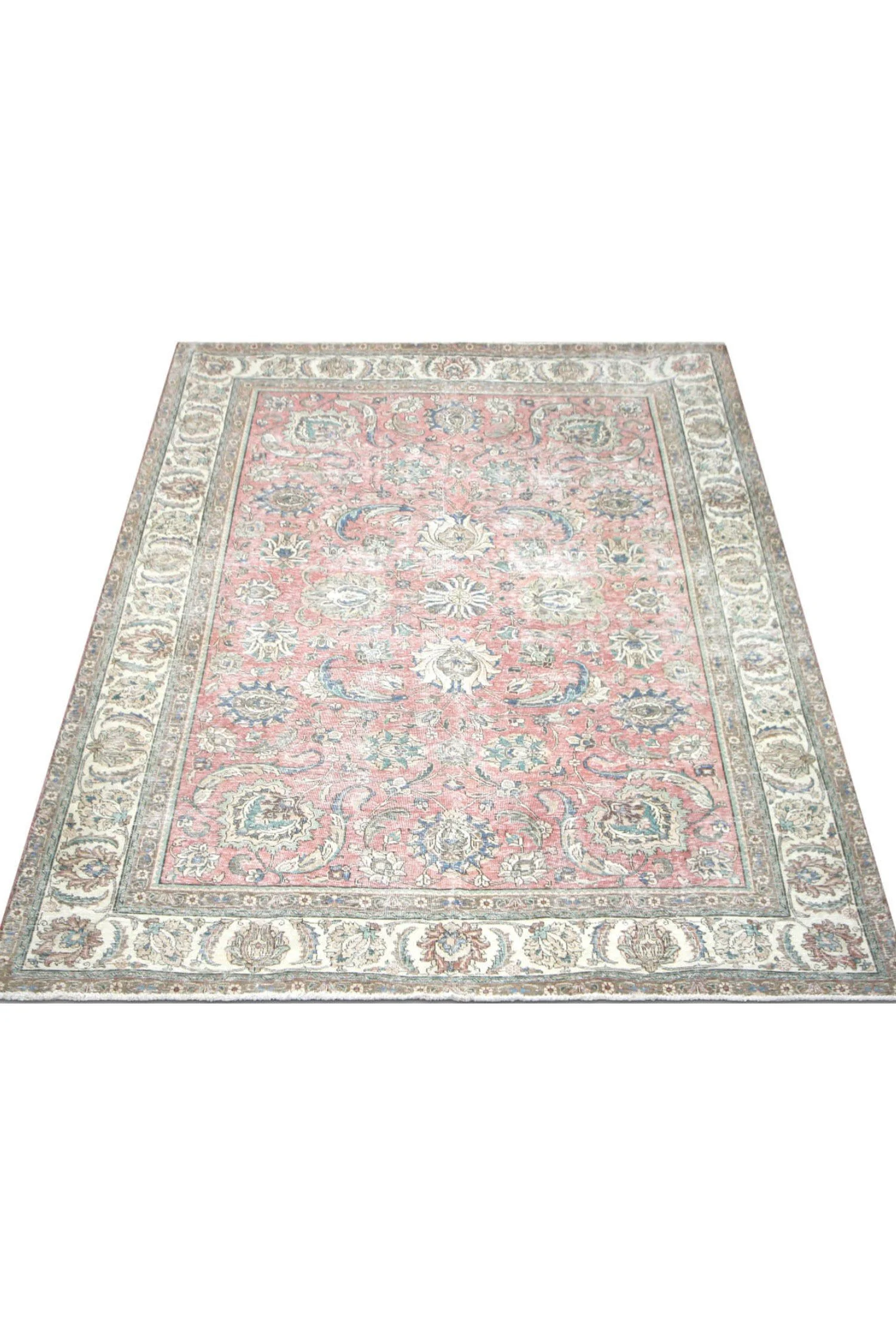 Image 4 of 6
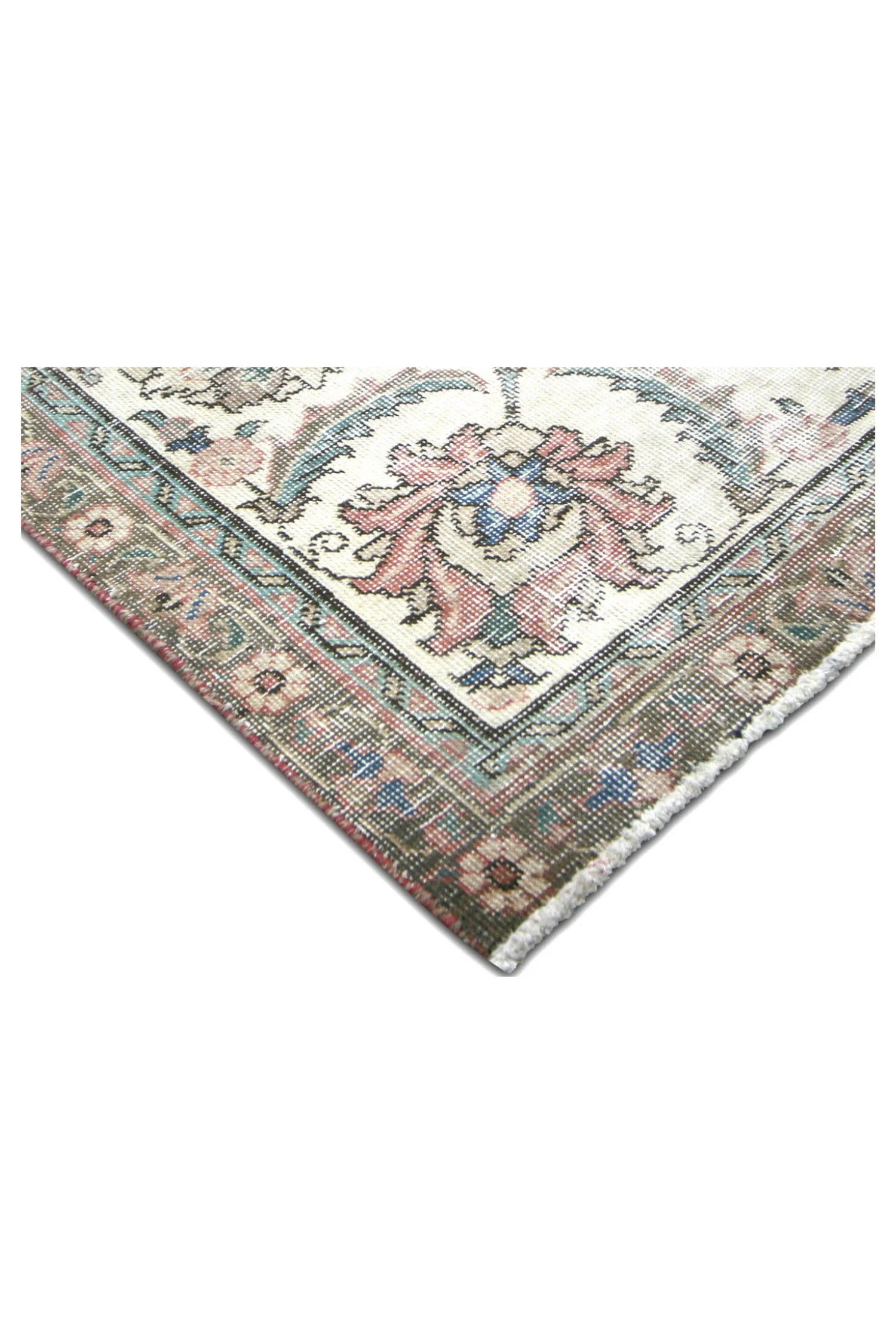 Image 5 of 6
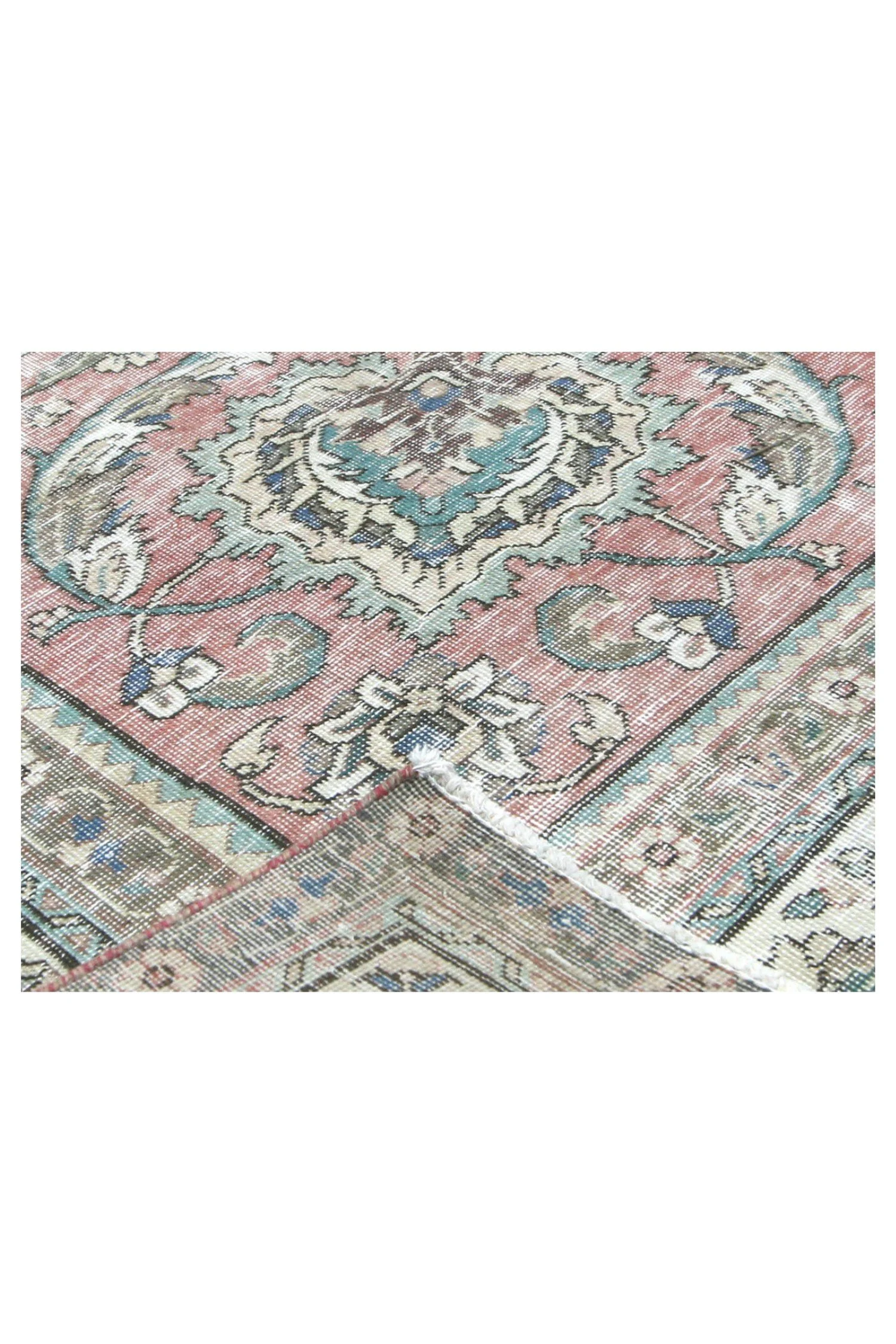 Image 6 of 6
Heritage and Craftsmanship
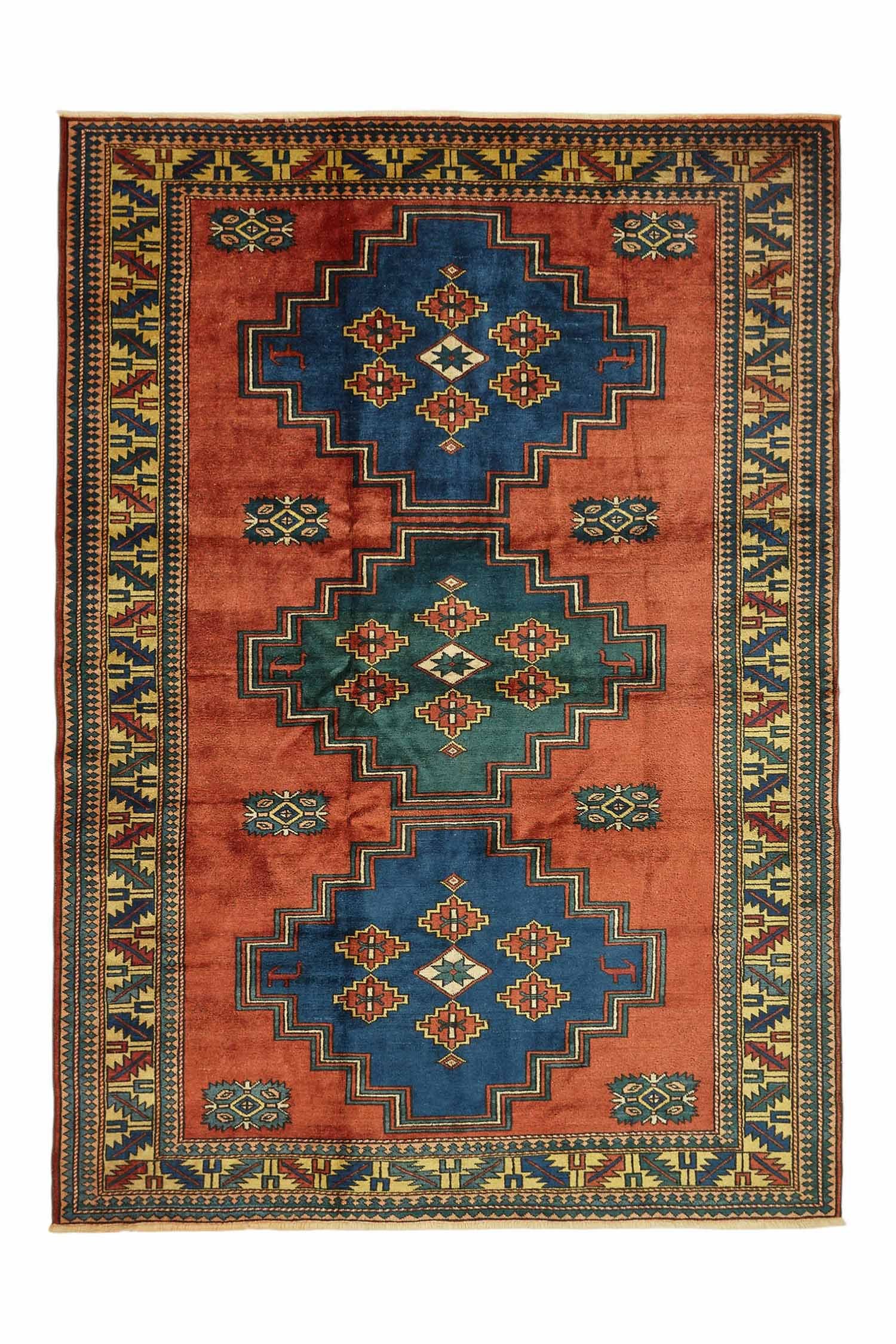
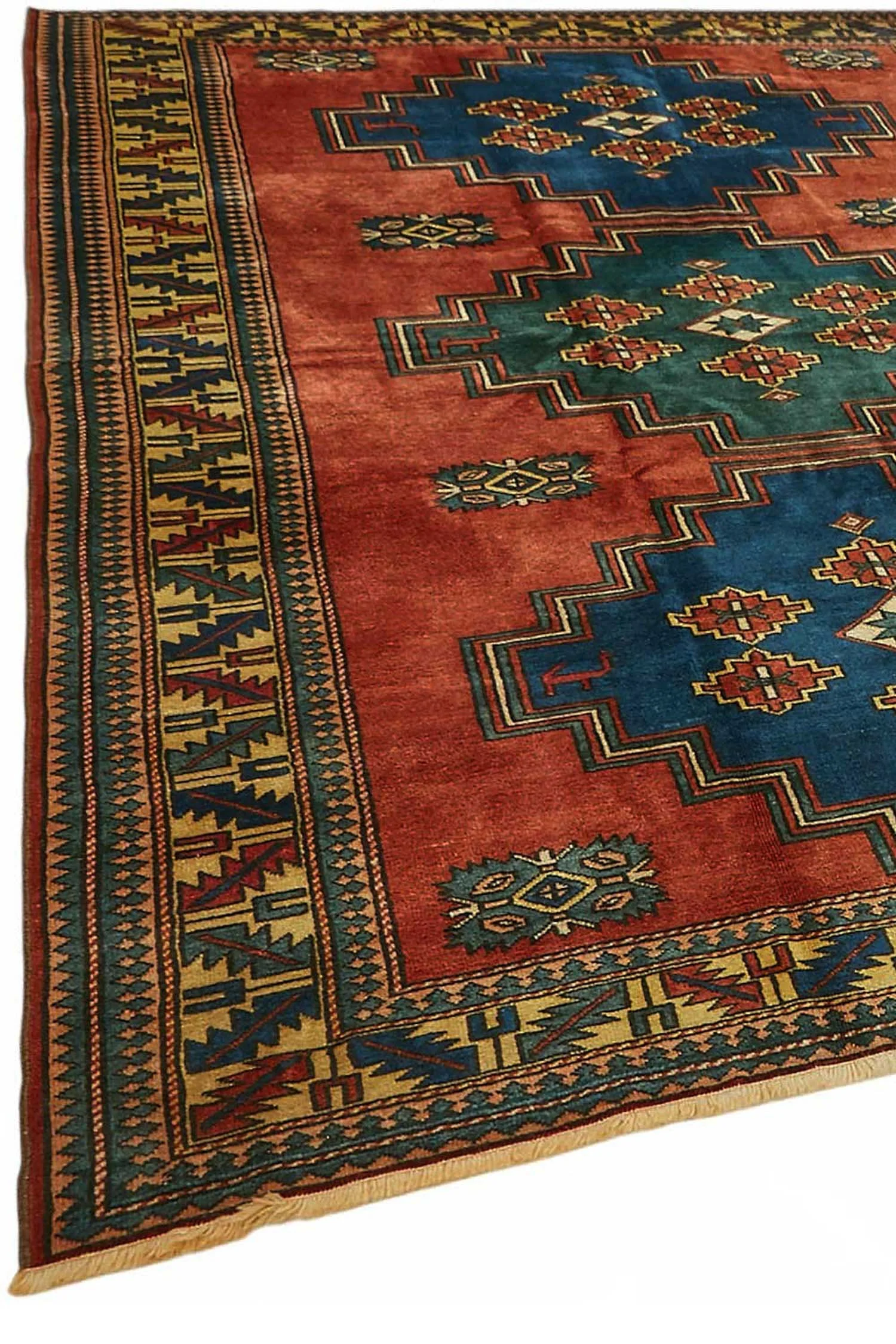
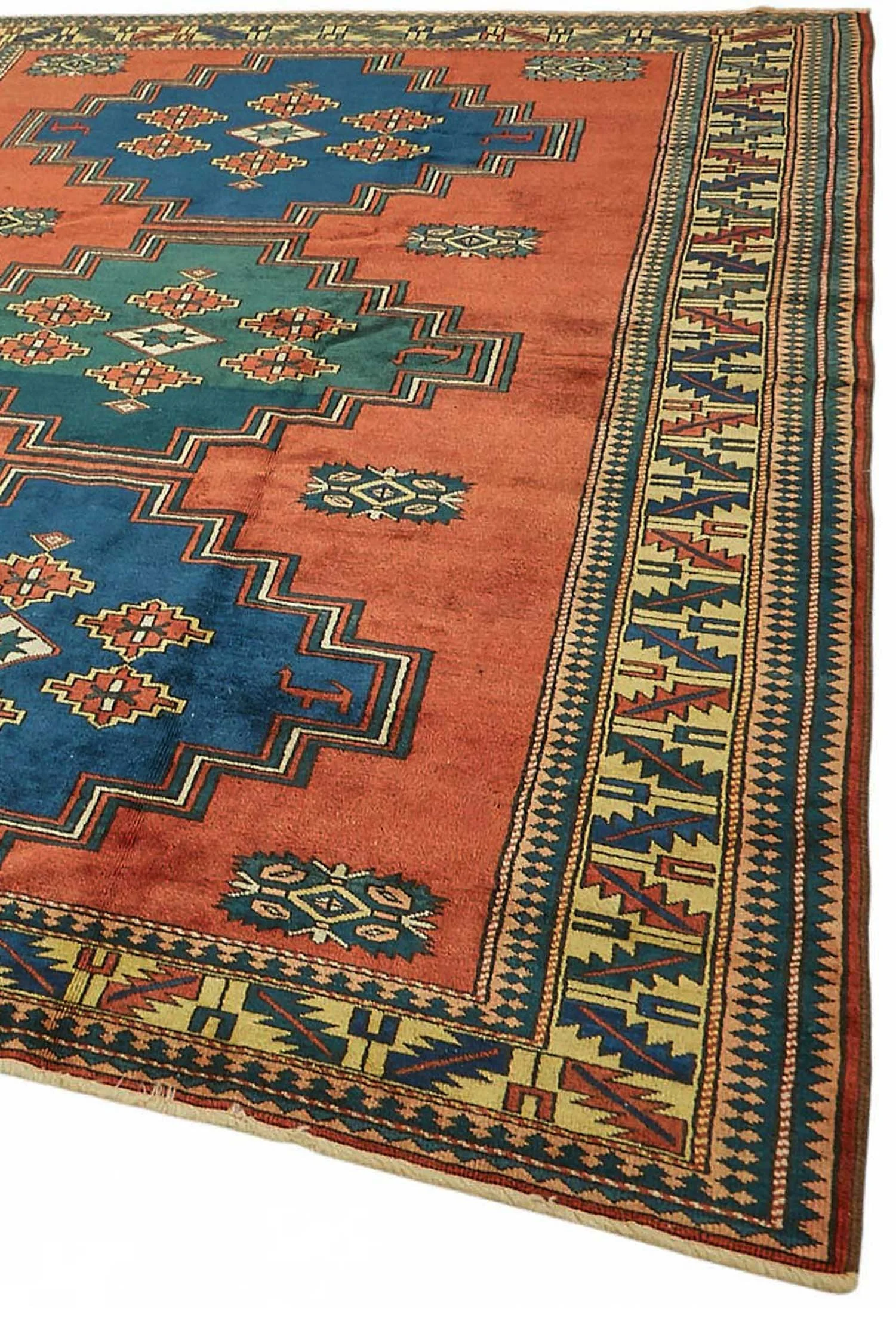
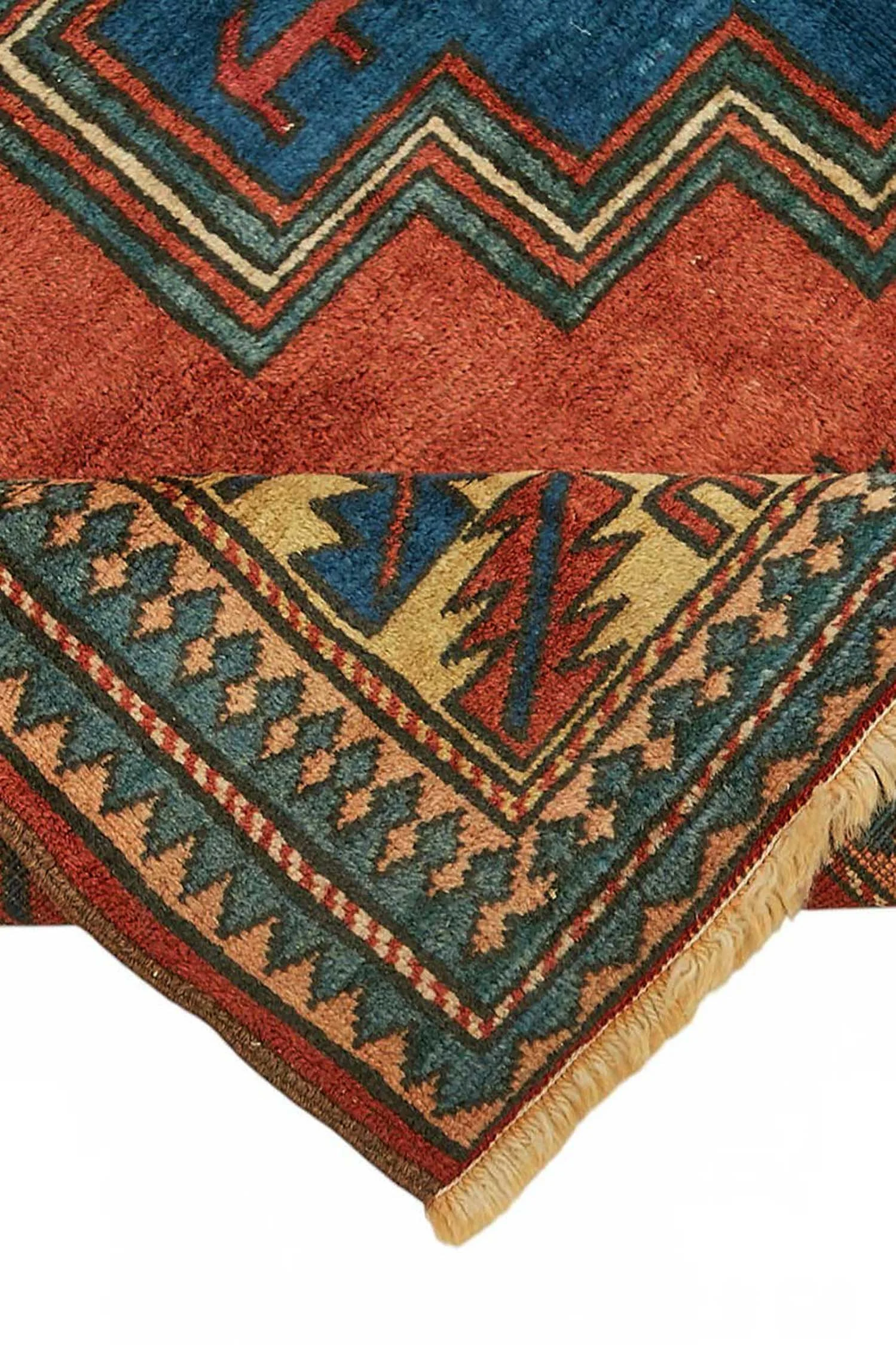
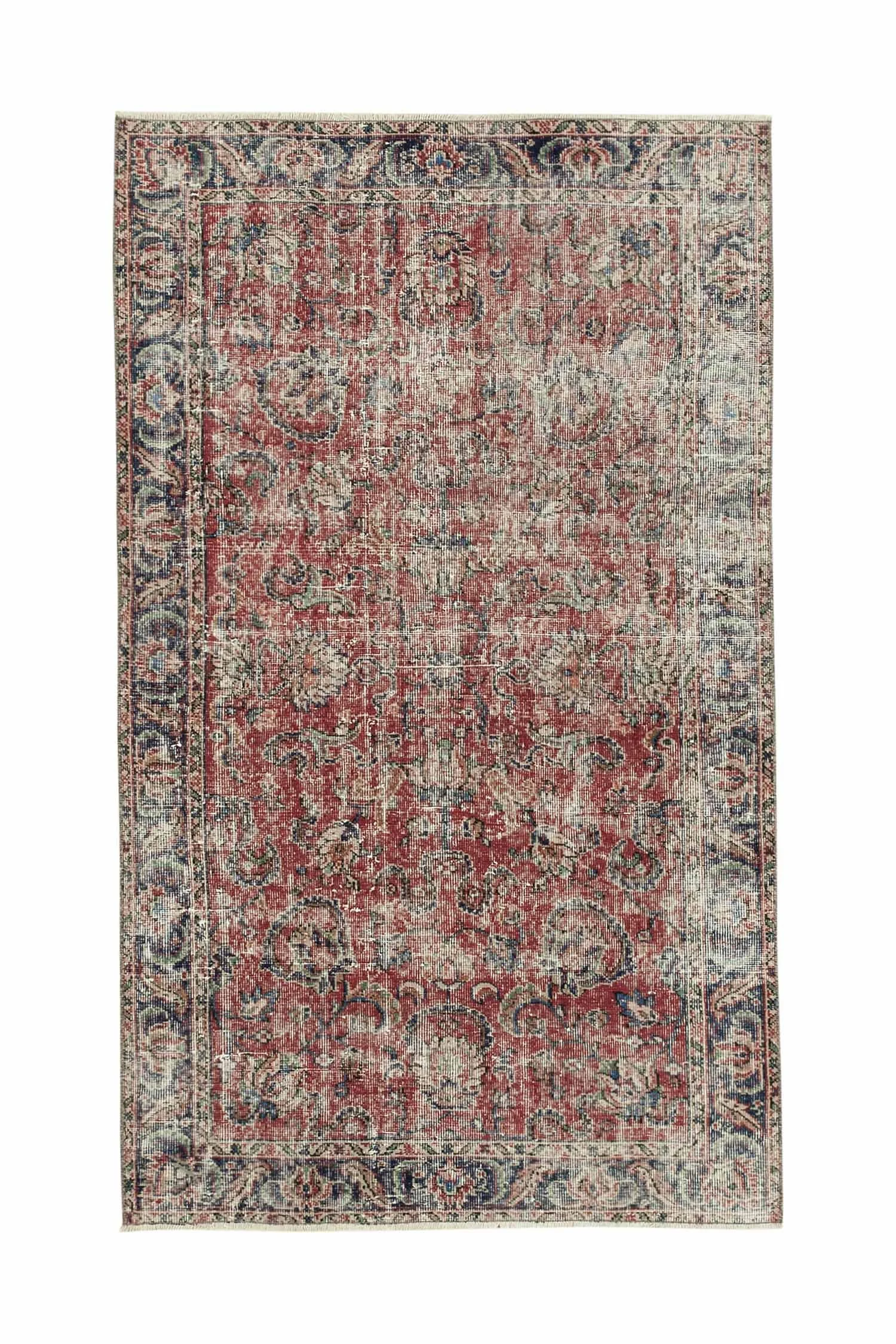
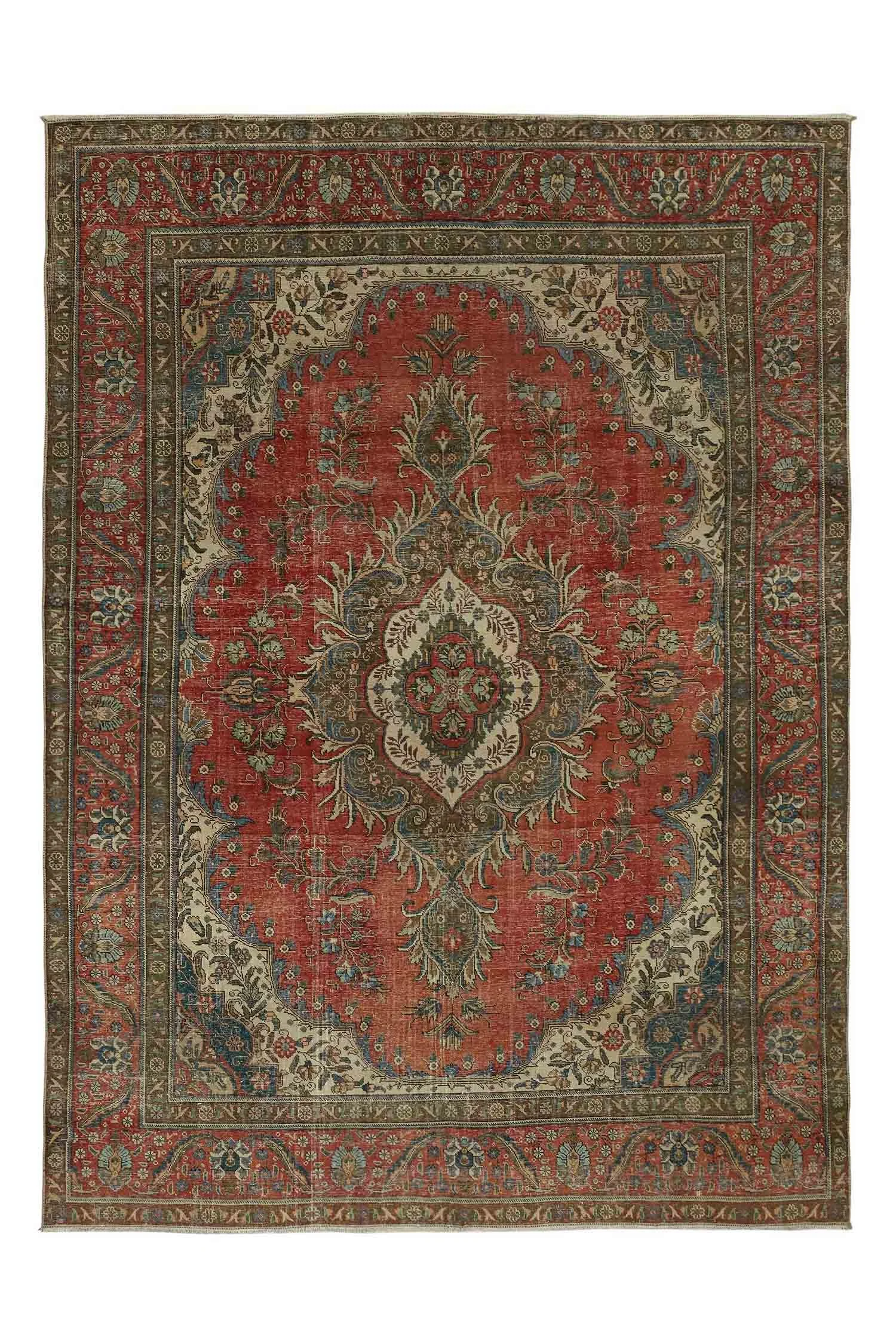
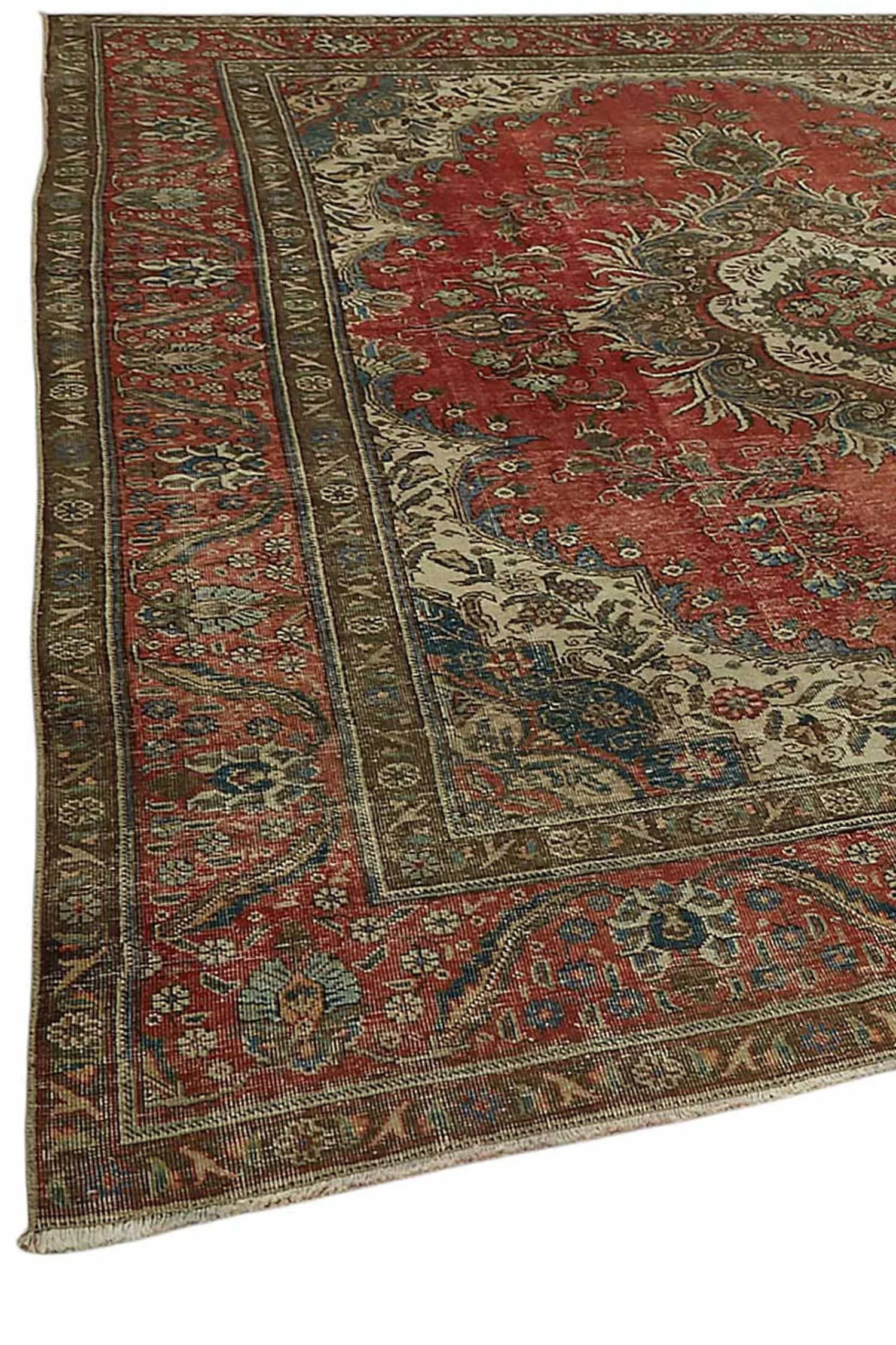
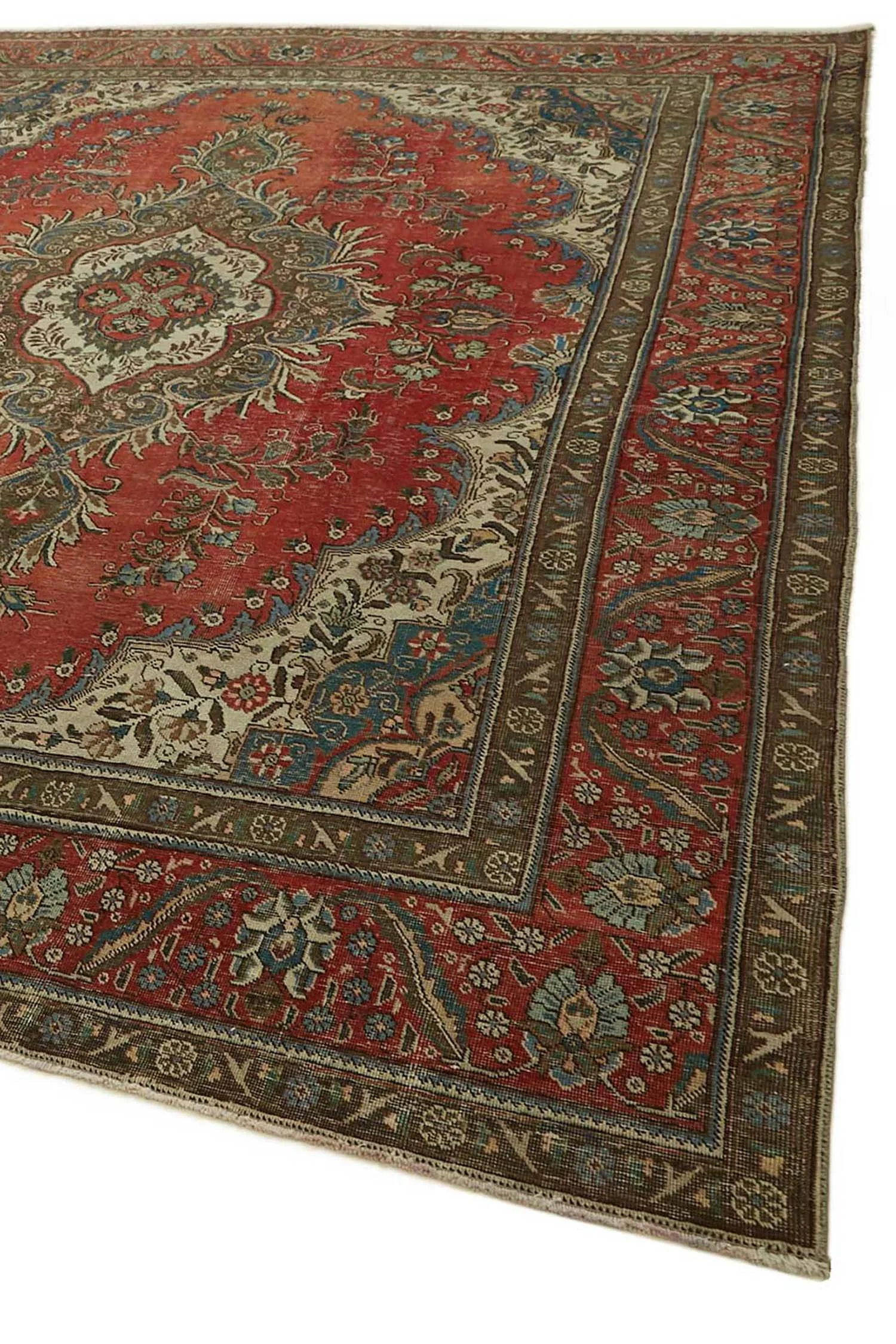
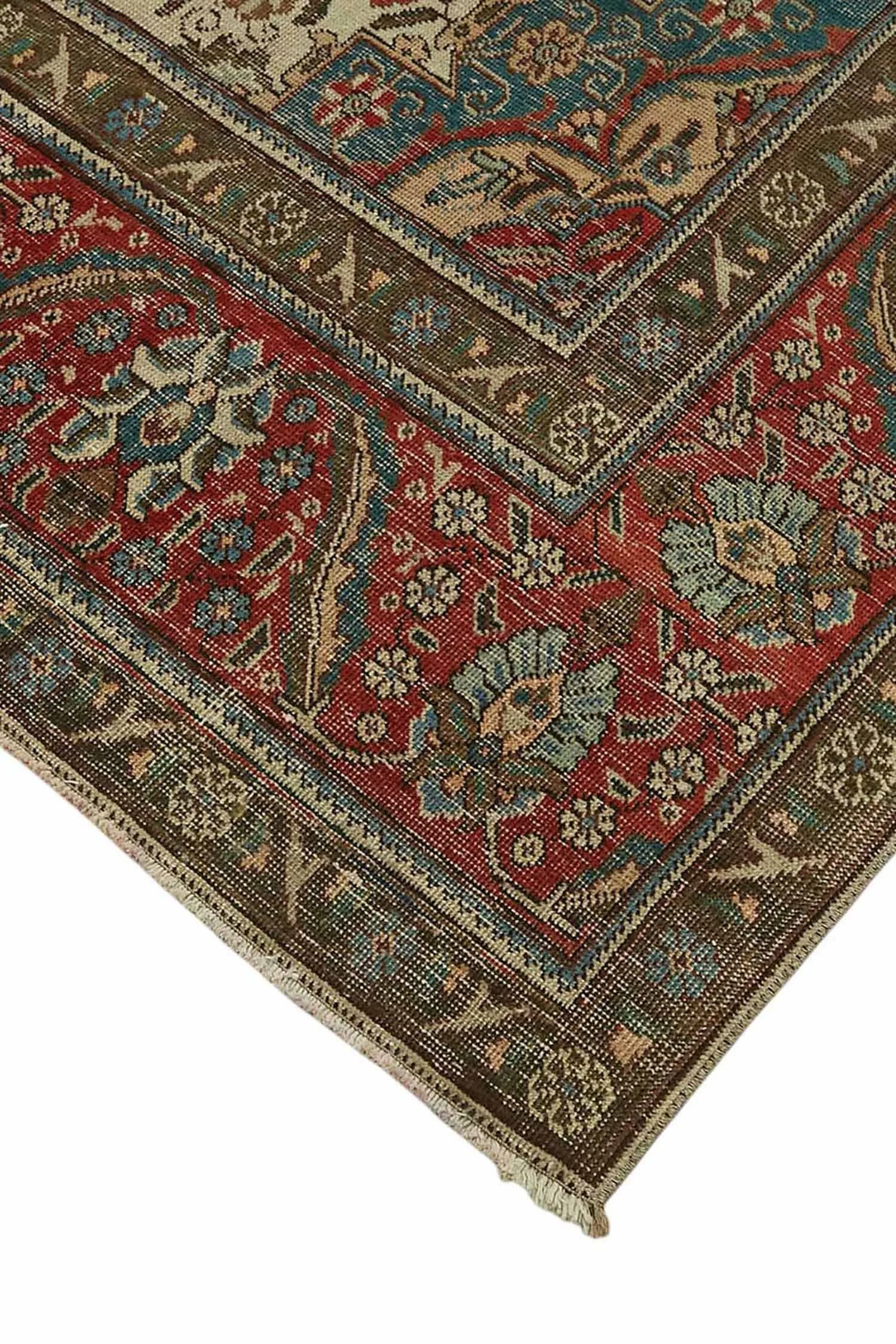
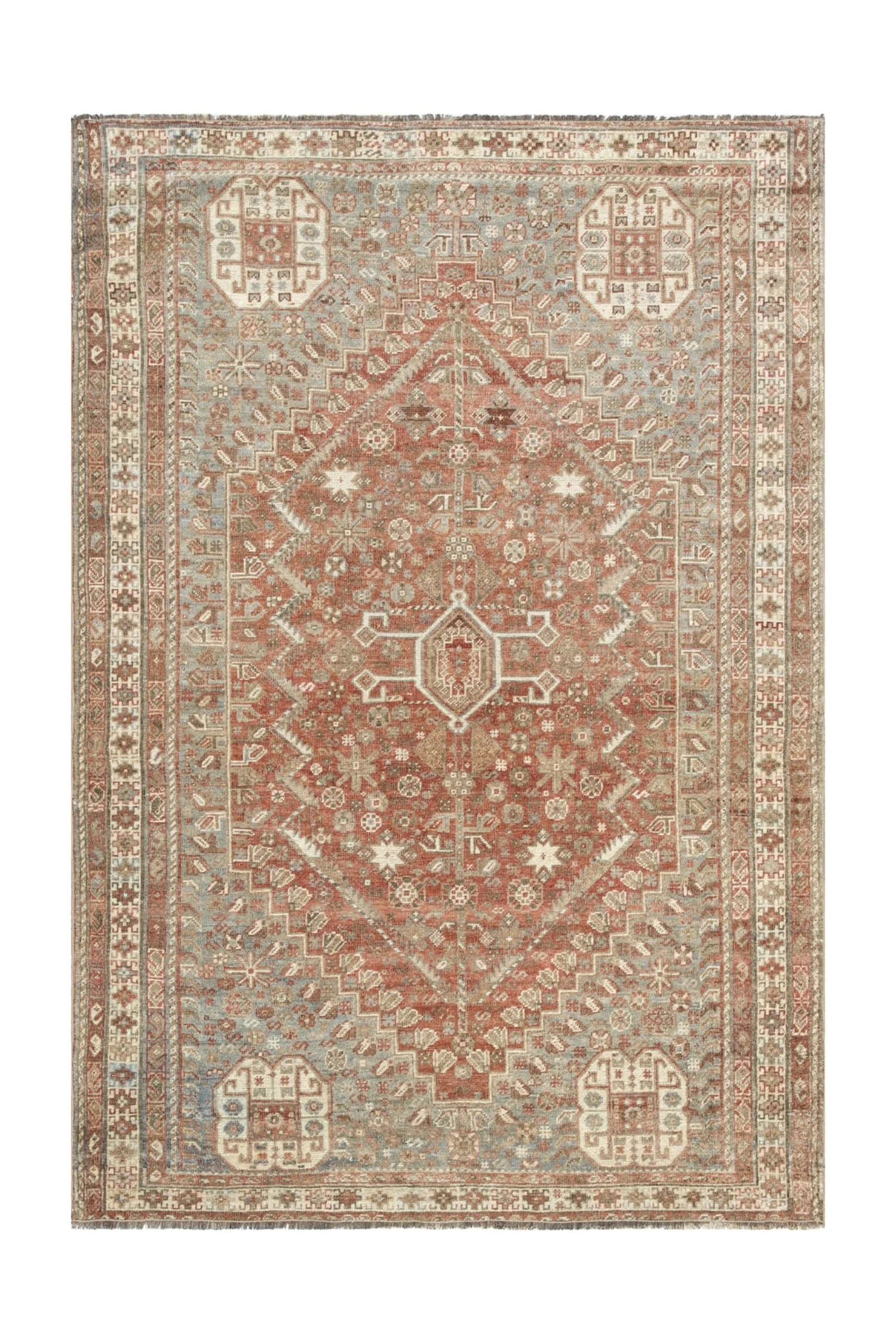
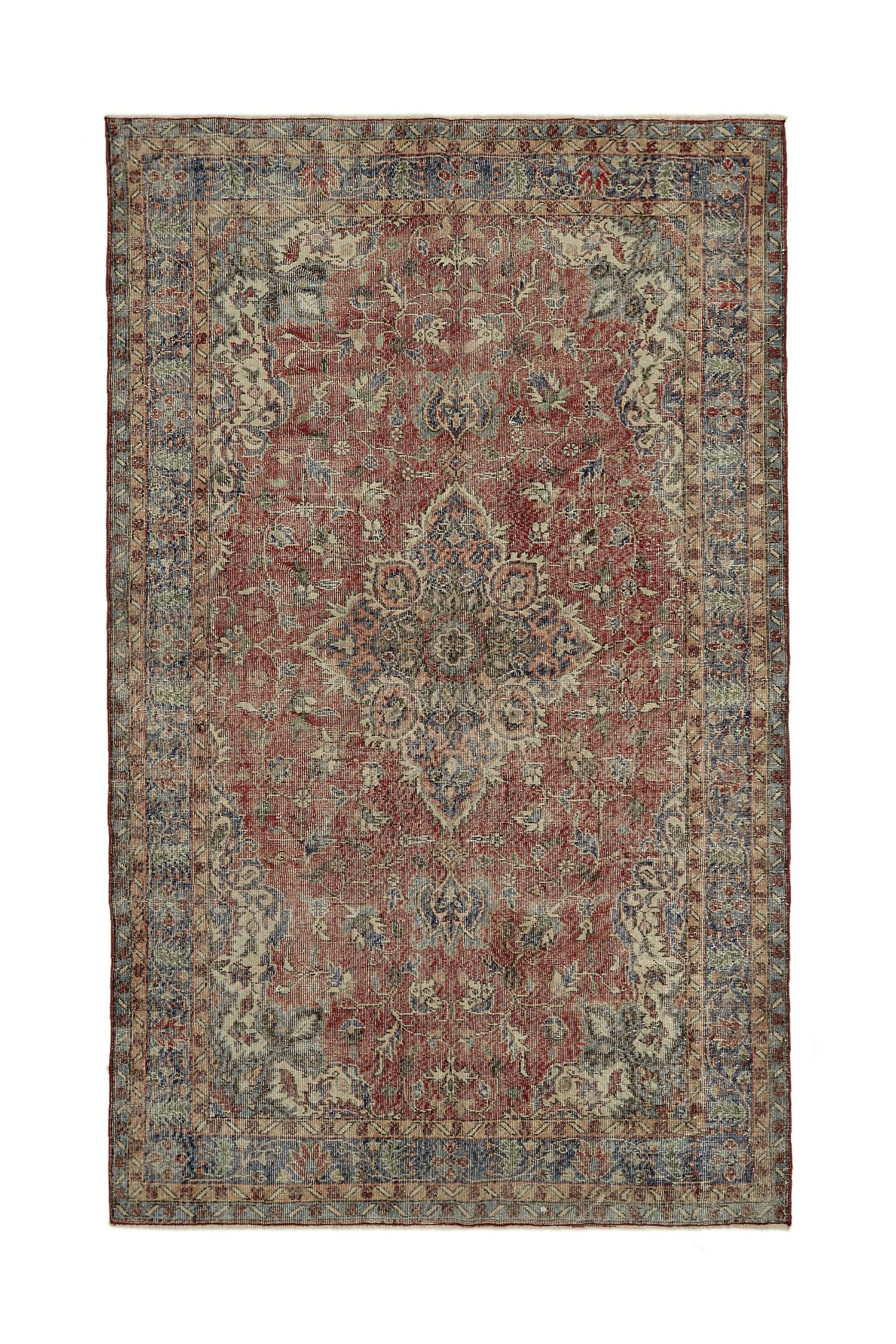
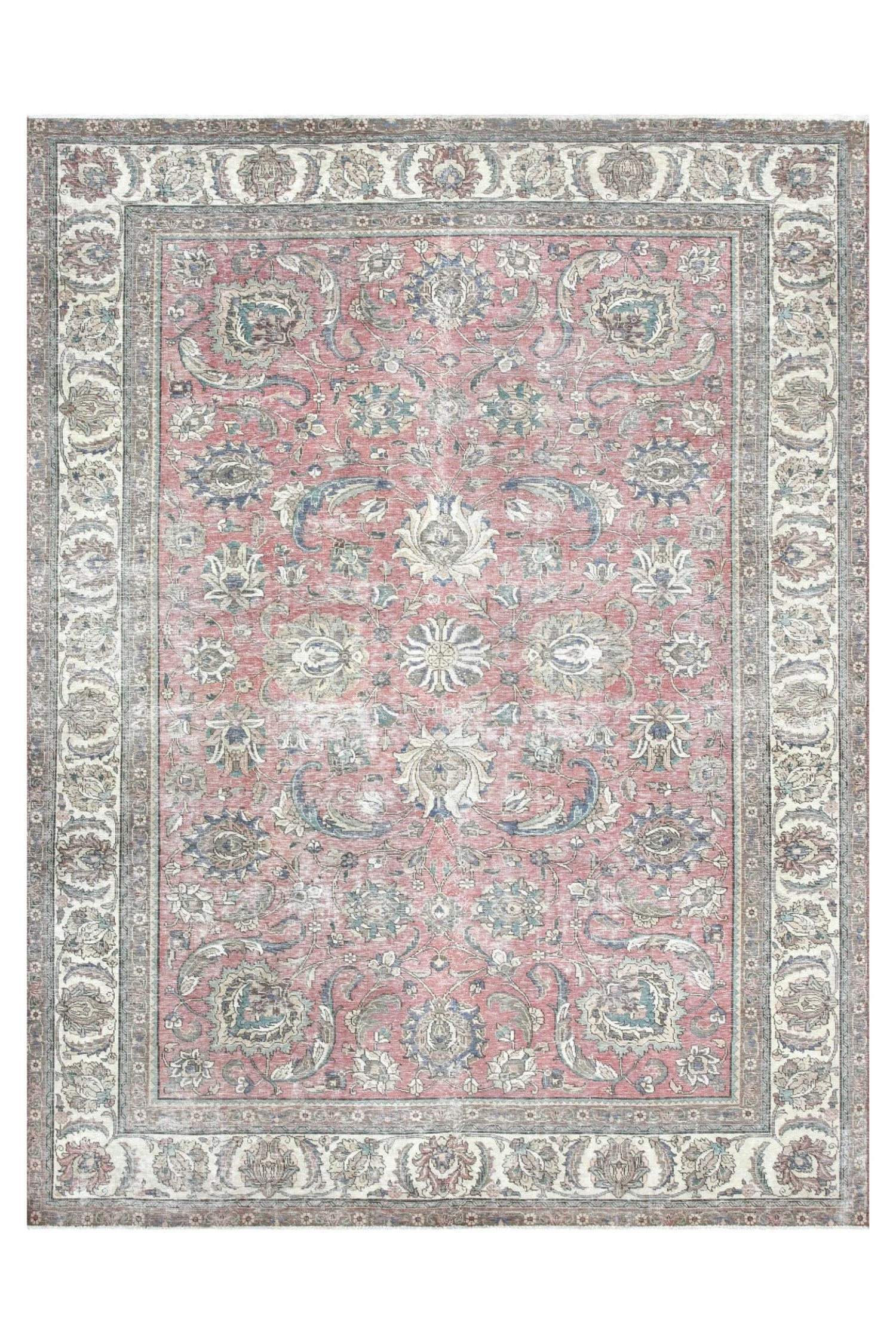
Tabriz workshops in the 1940s created rugs with classical Persian floral compositions executed through fine weaving techniques refined over centuries. The scrolling palmette format seen here is one of the most enduring design structures in Persian rug-making, used across multiple weaving centers but particularly associated with Tabriz's sophisticated urban production.
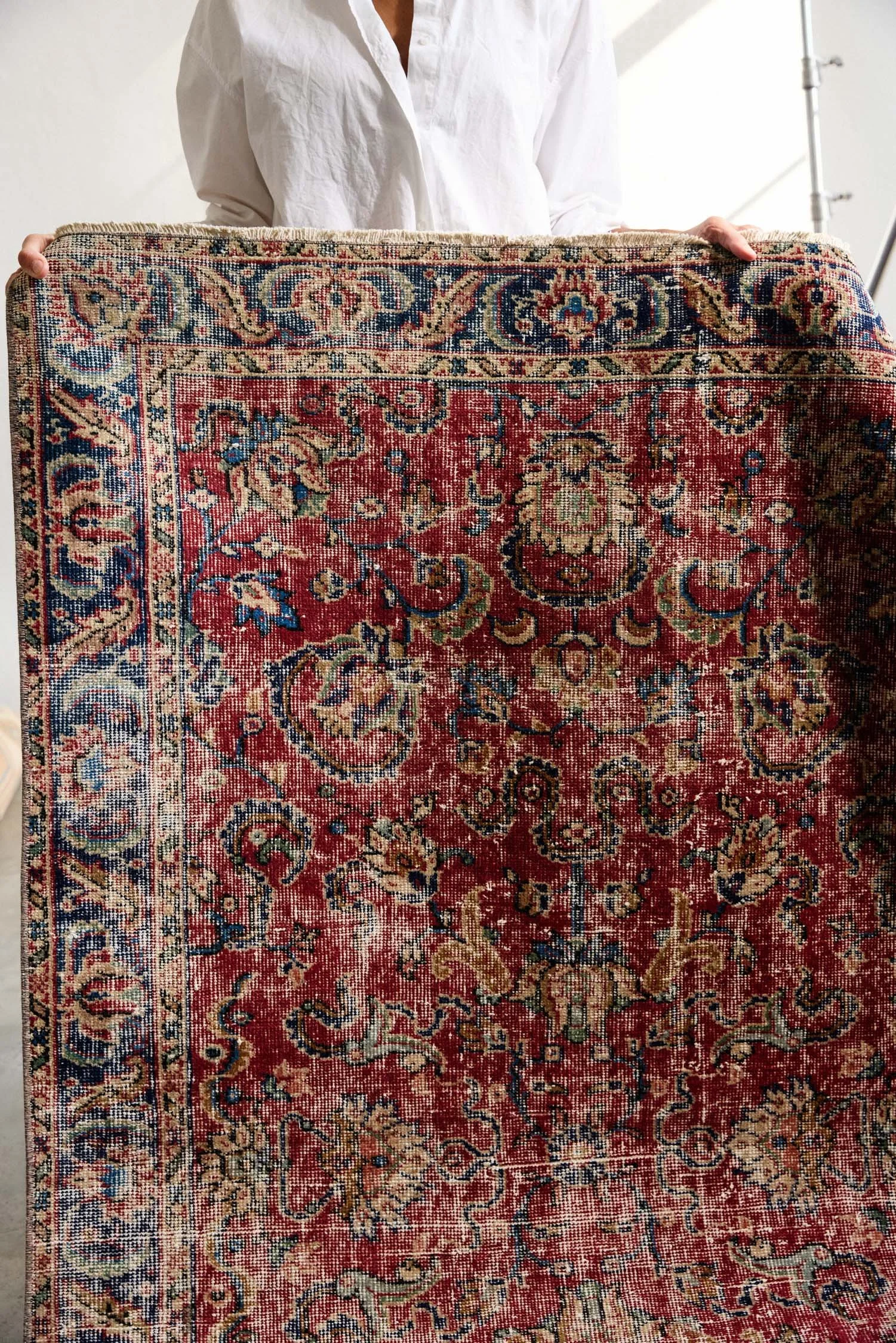
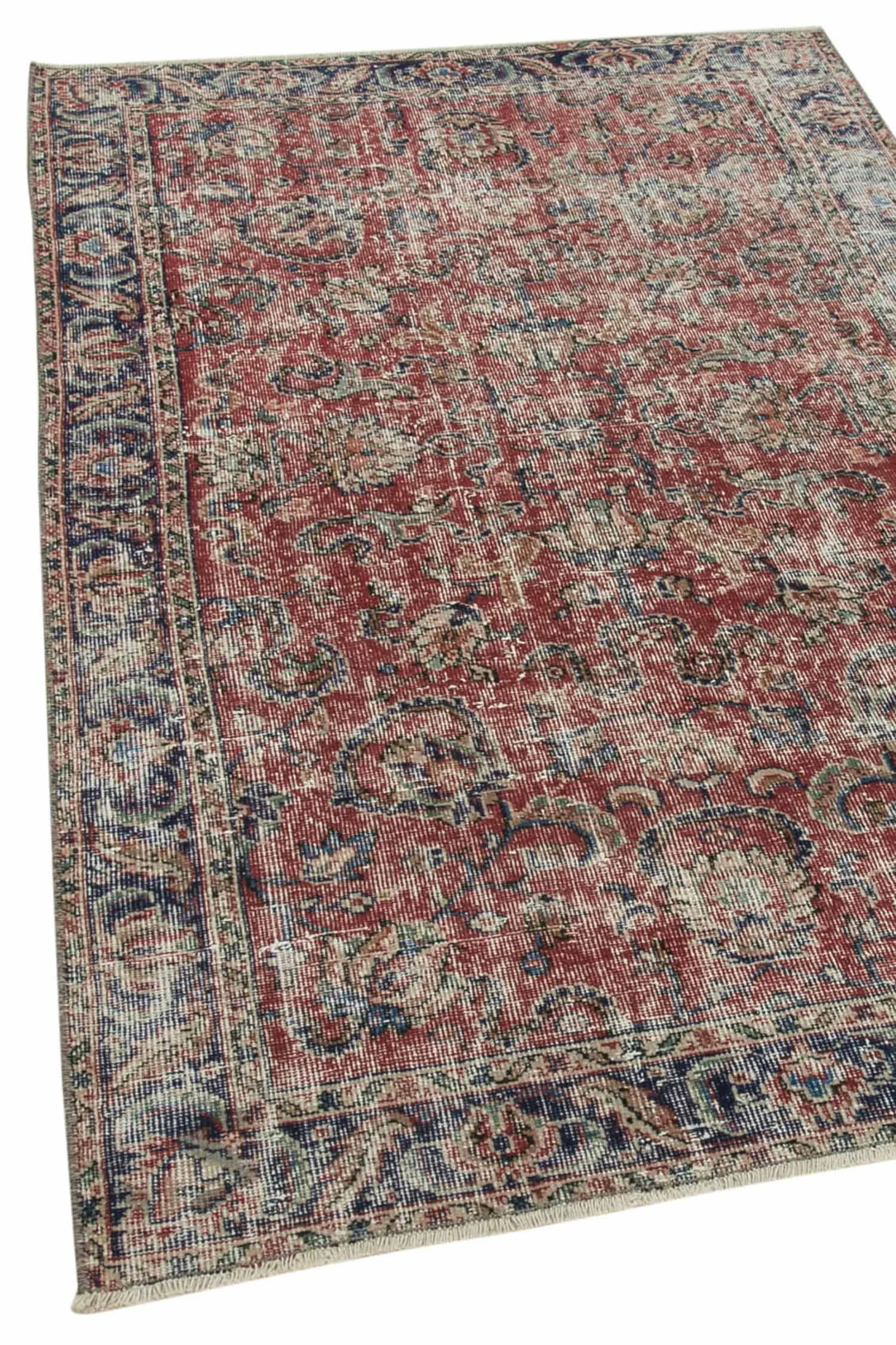
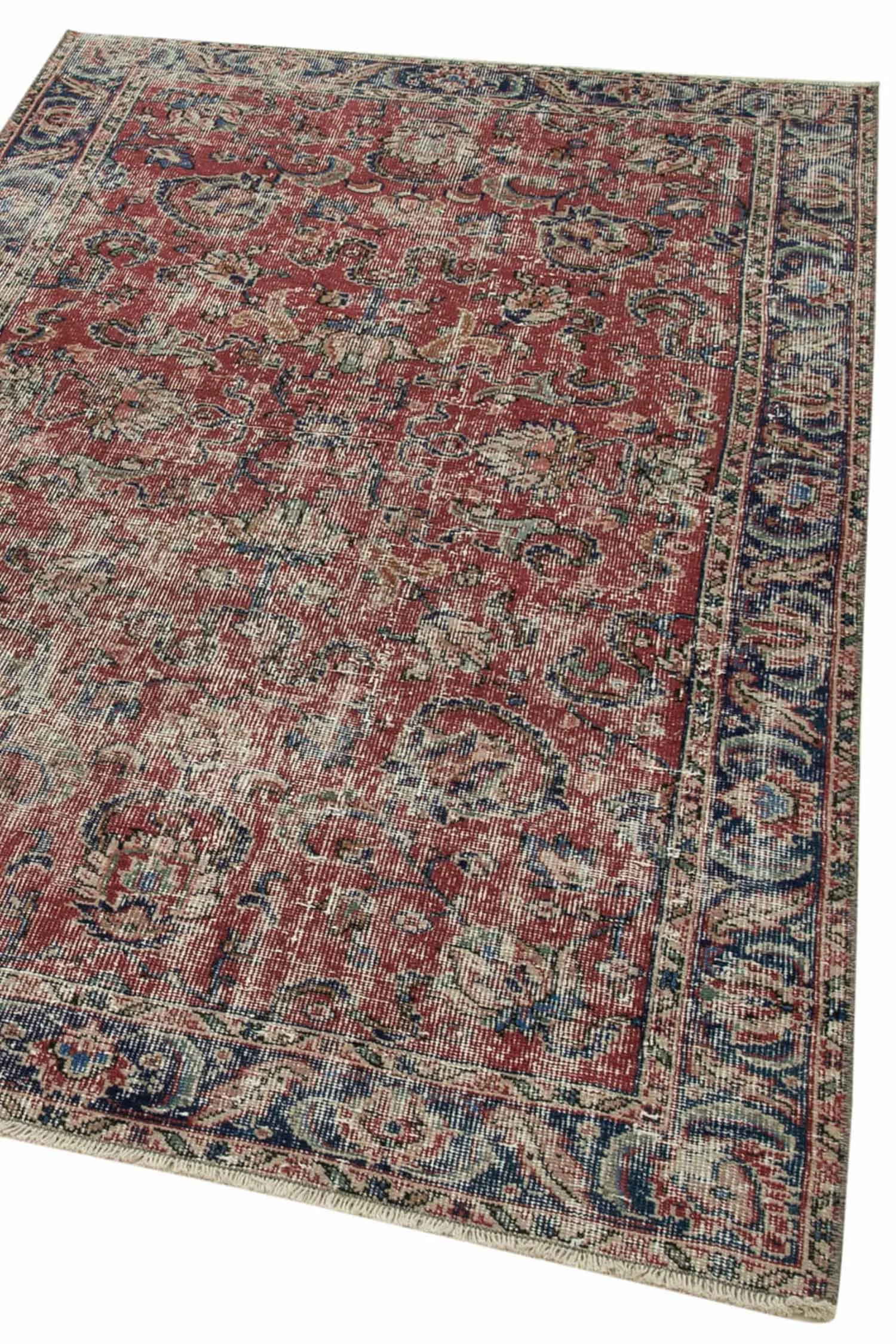
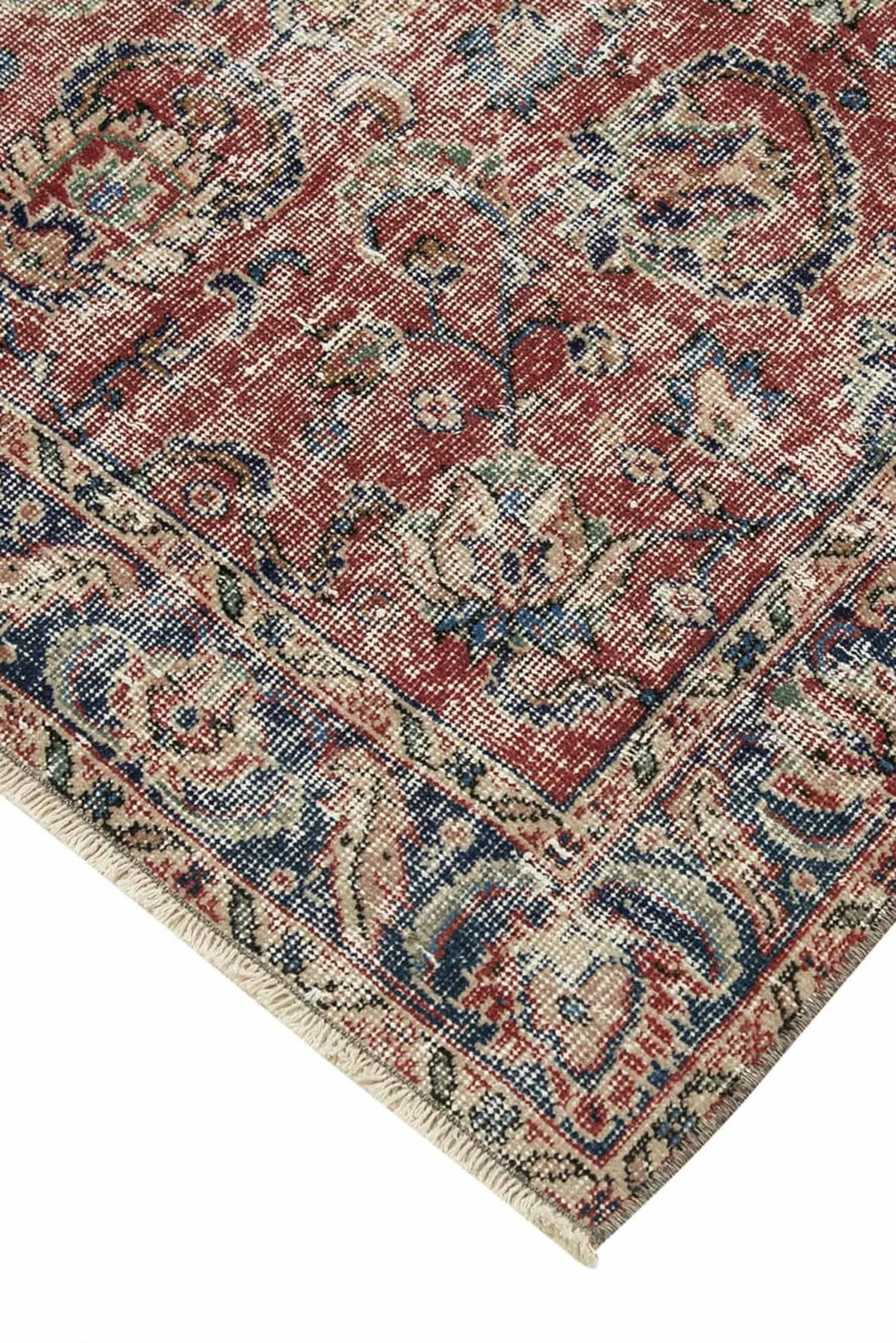
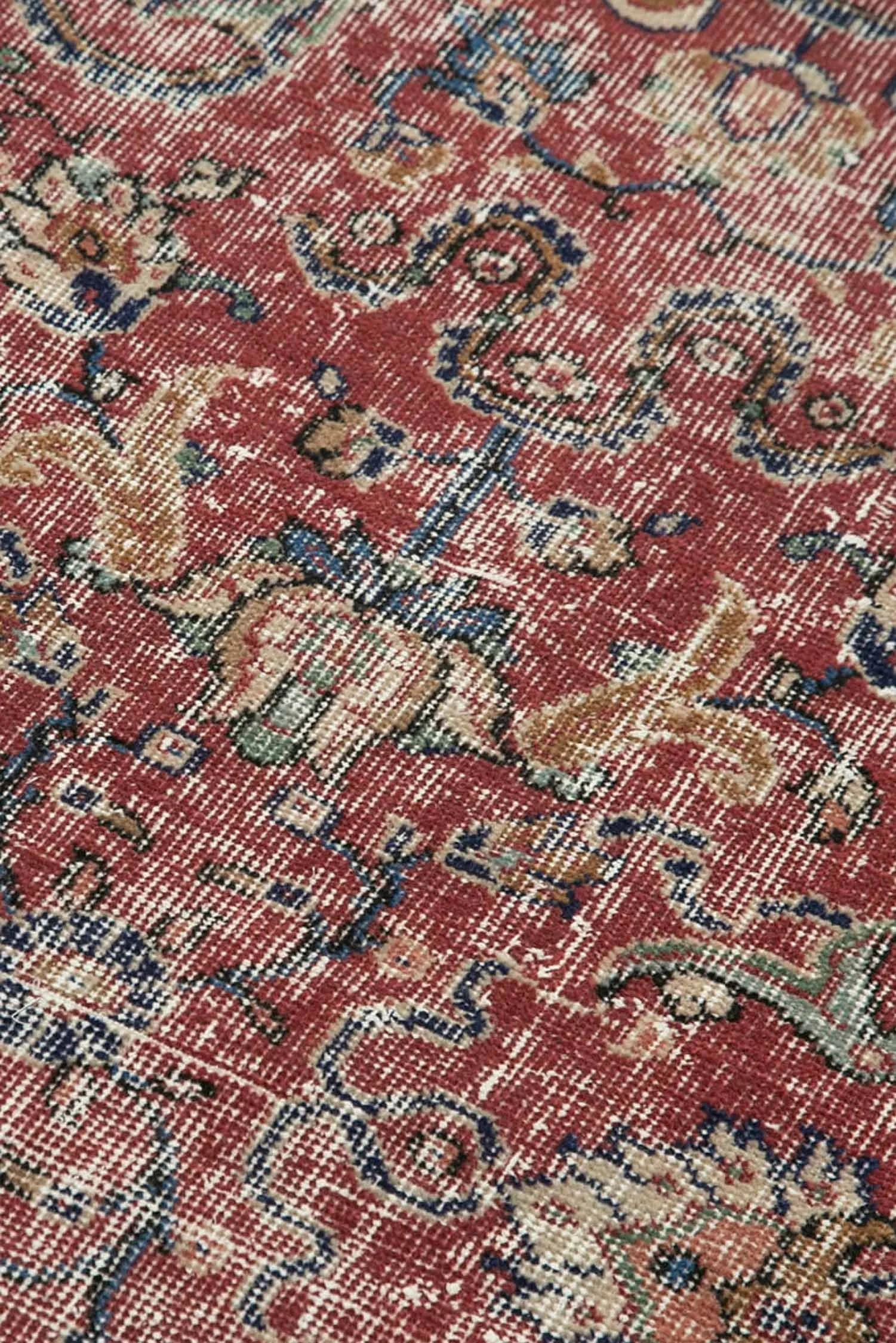
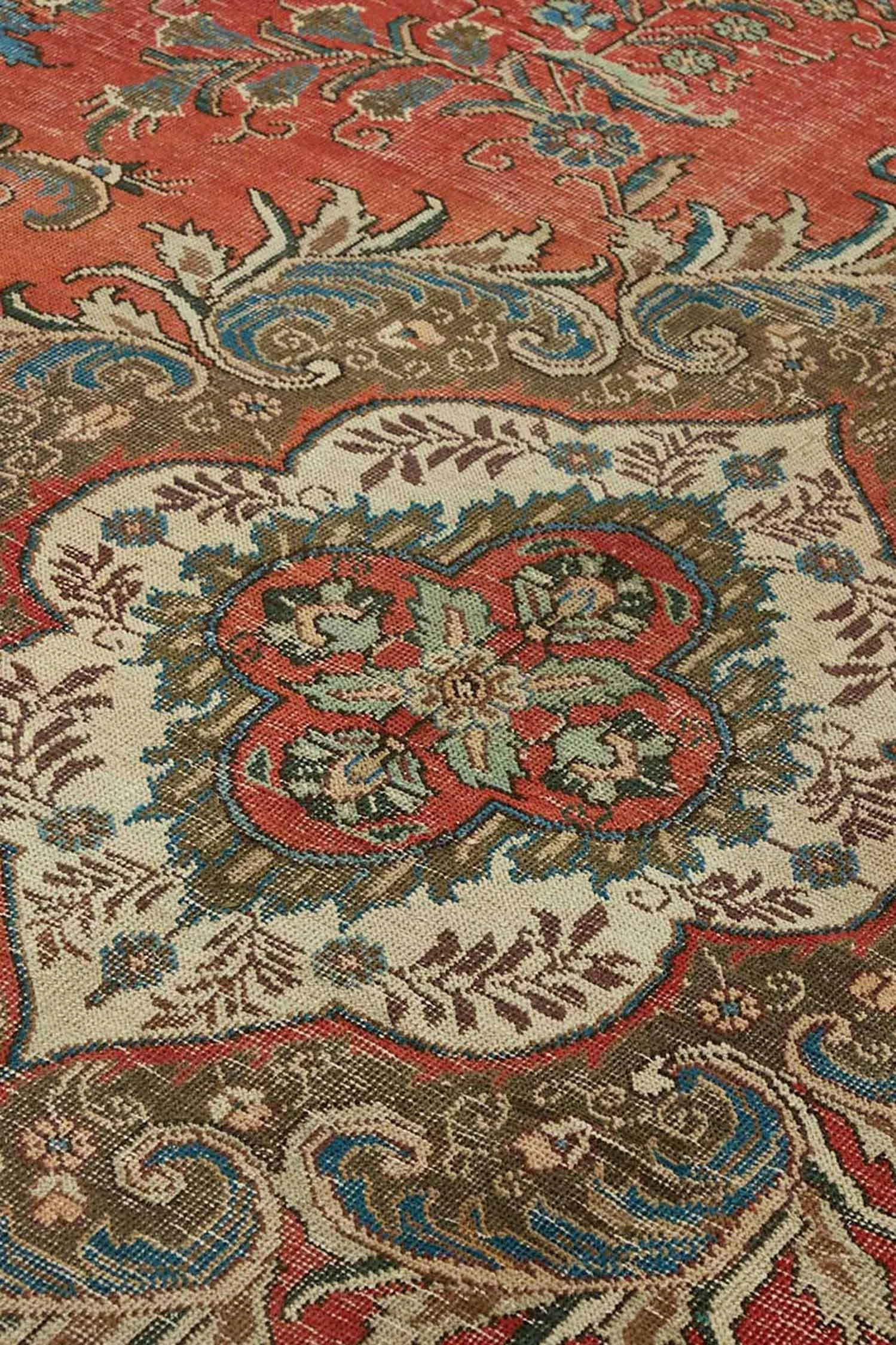
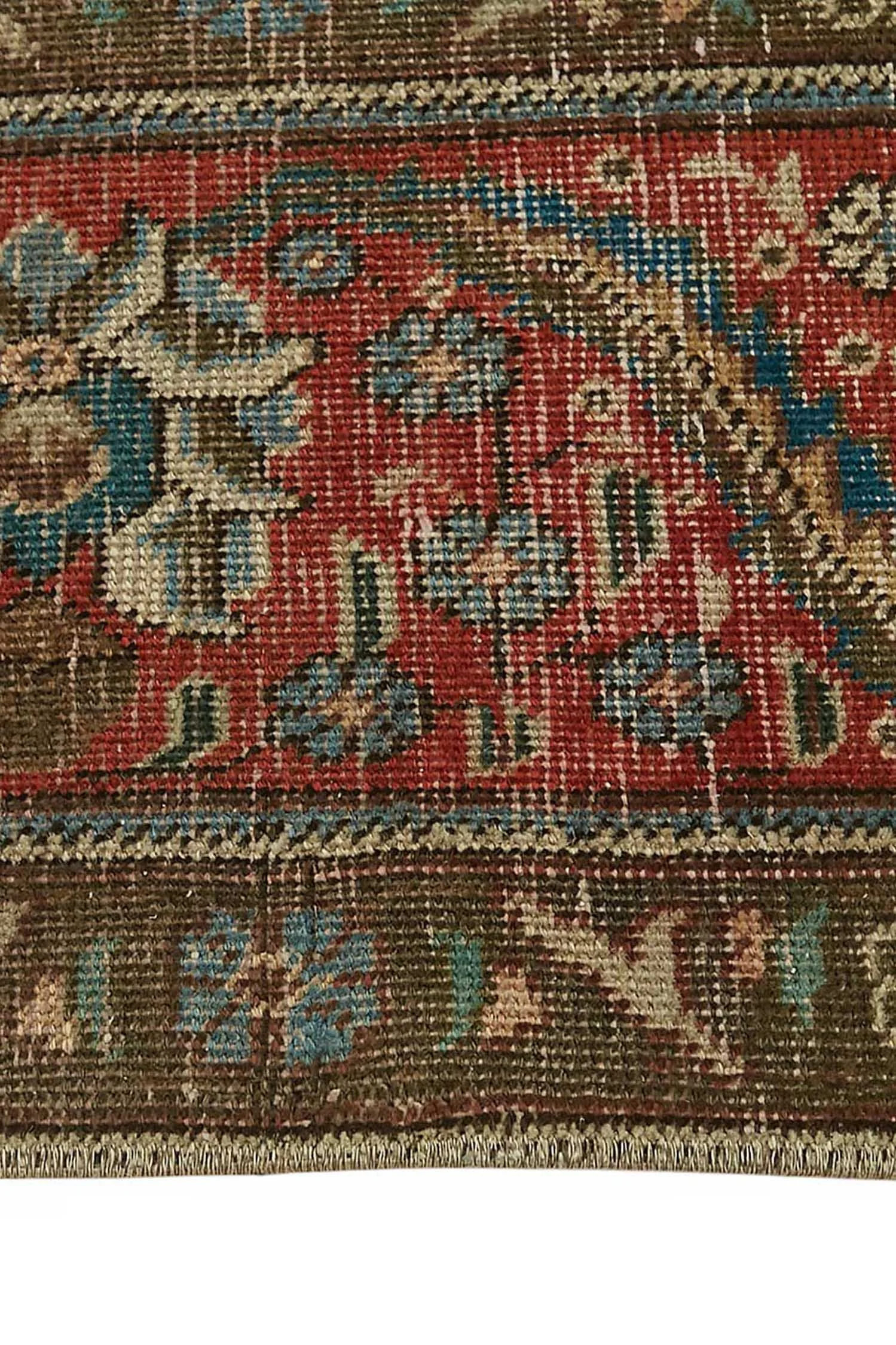
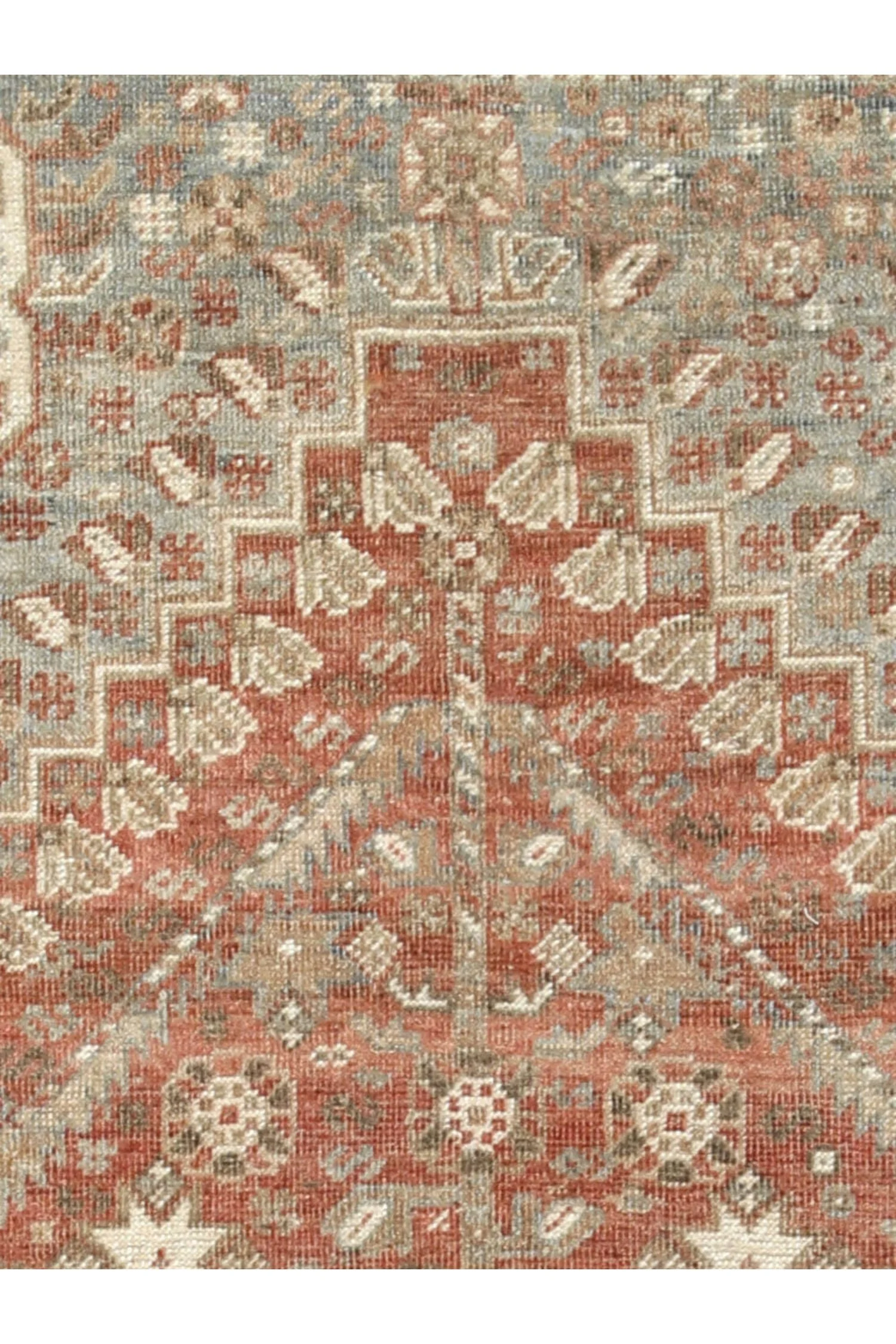
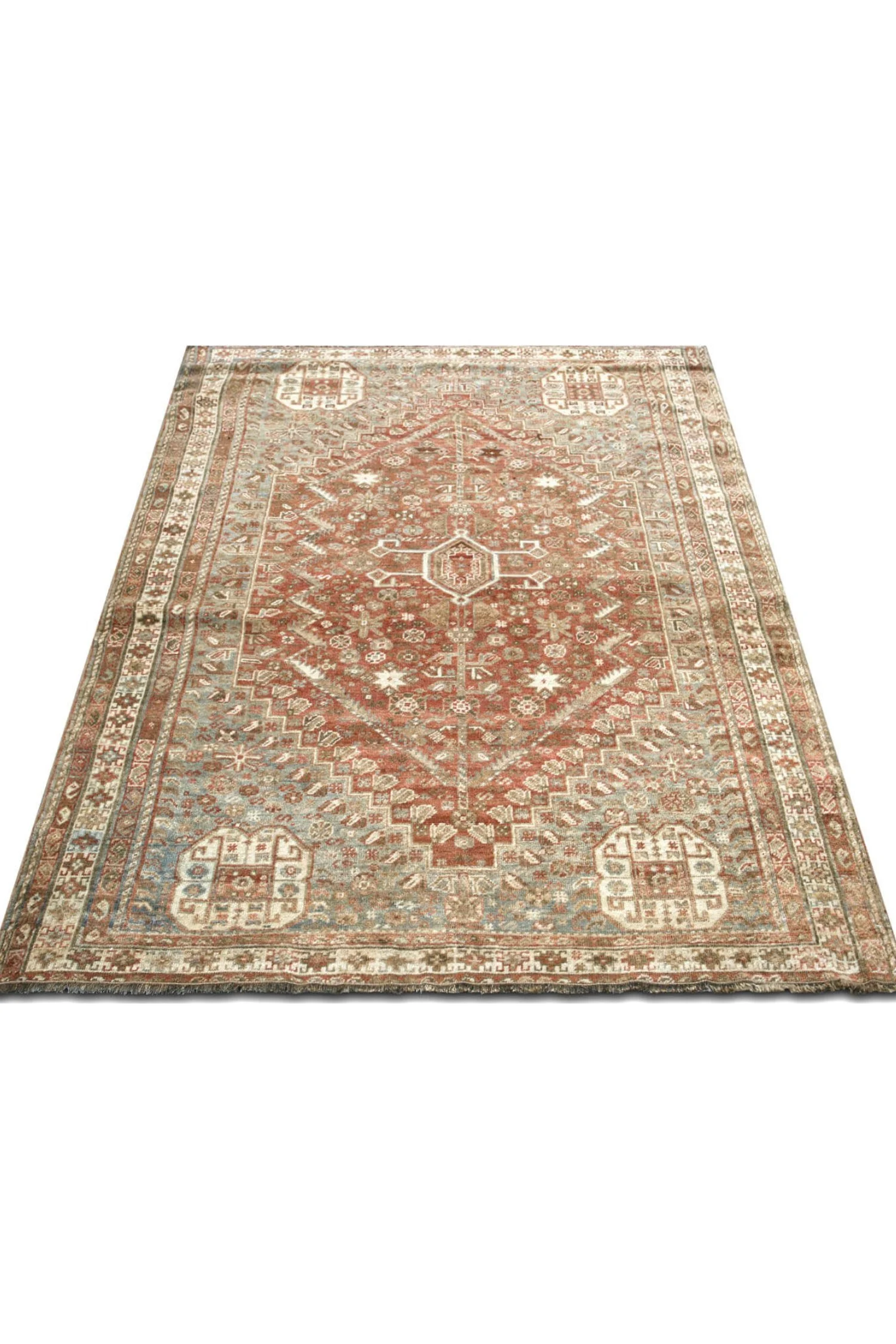
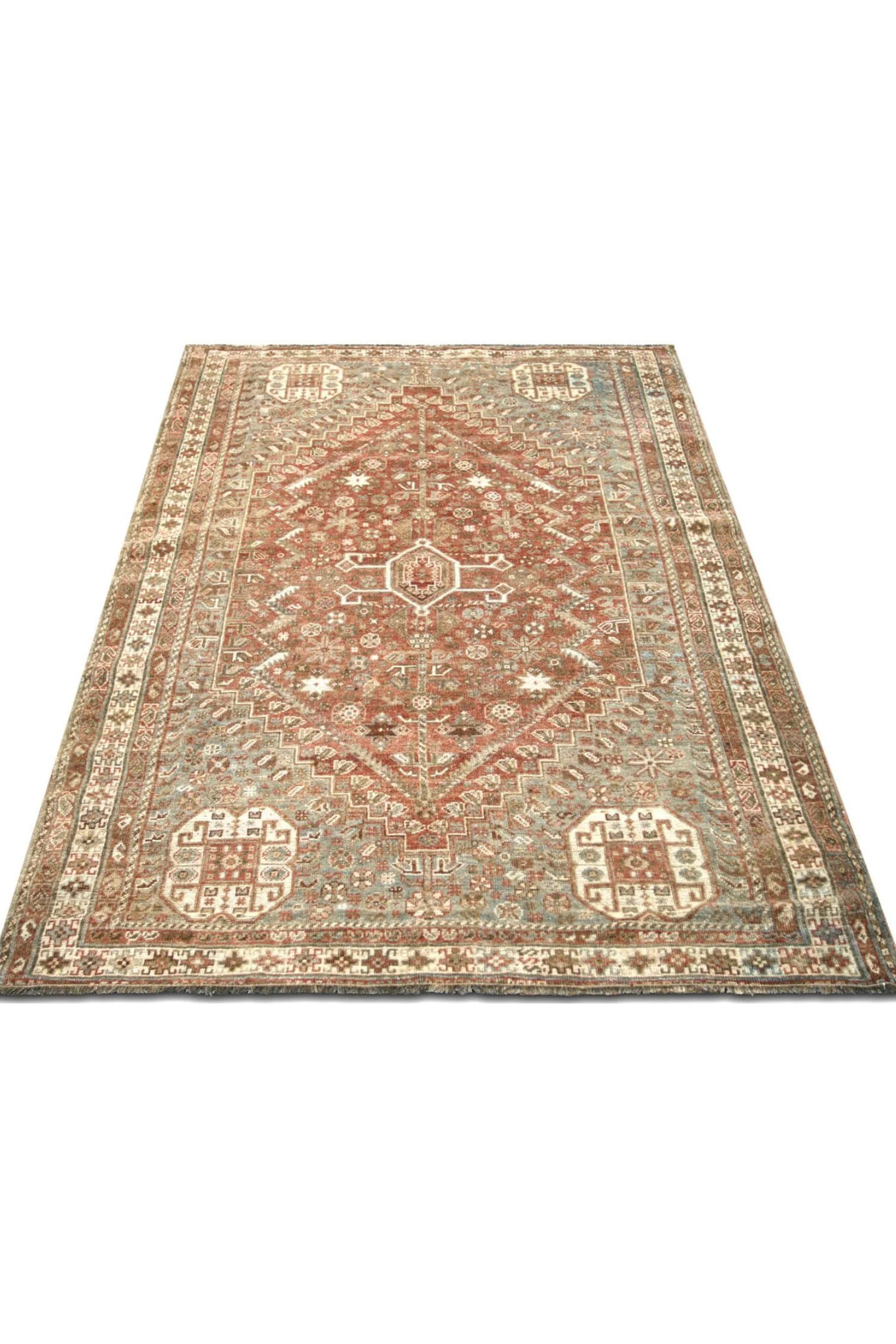
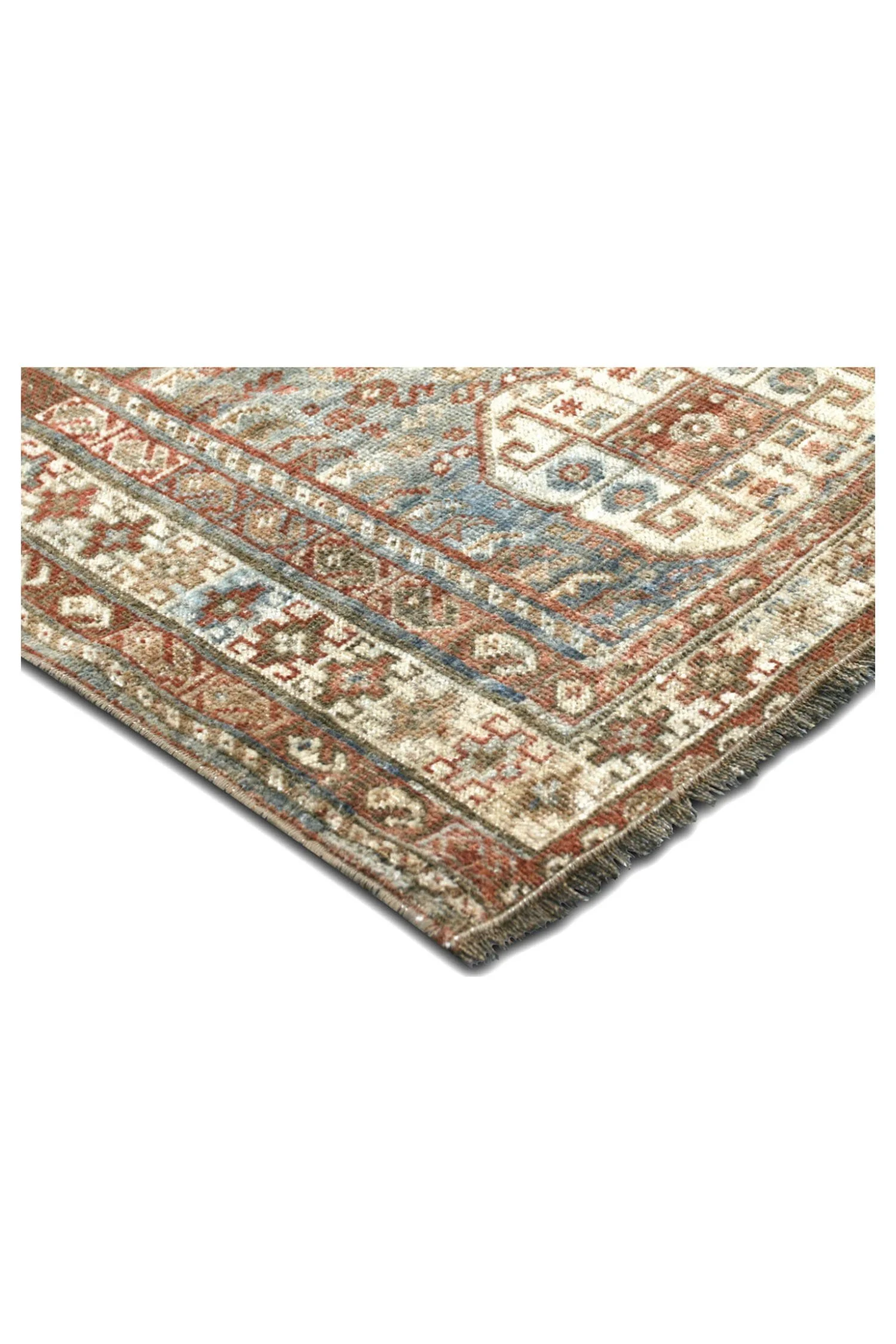
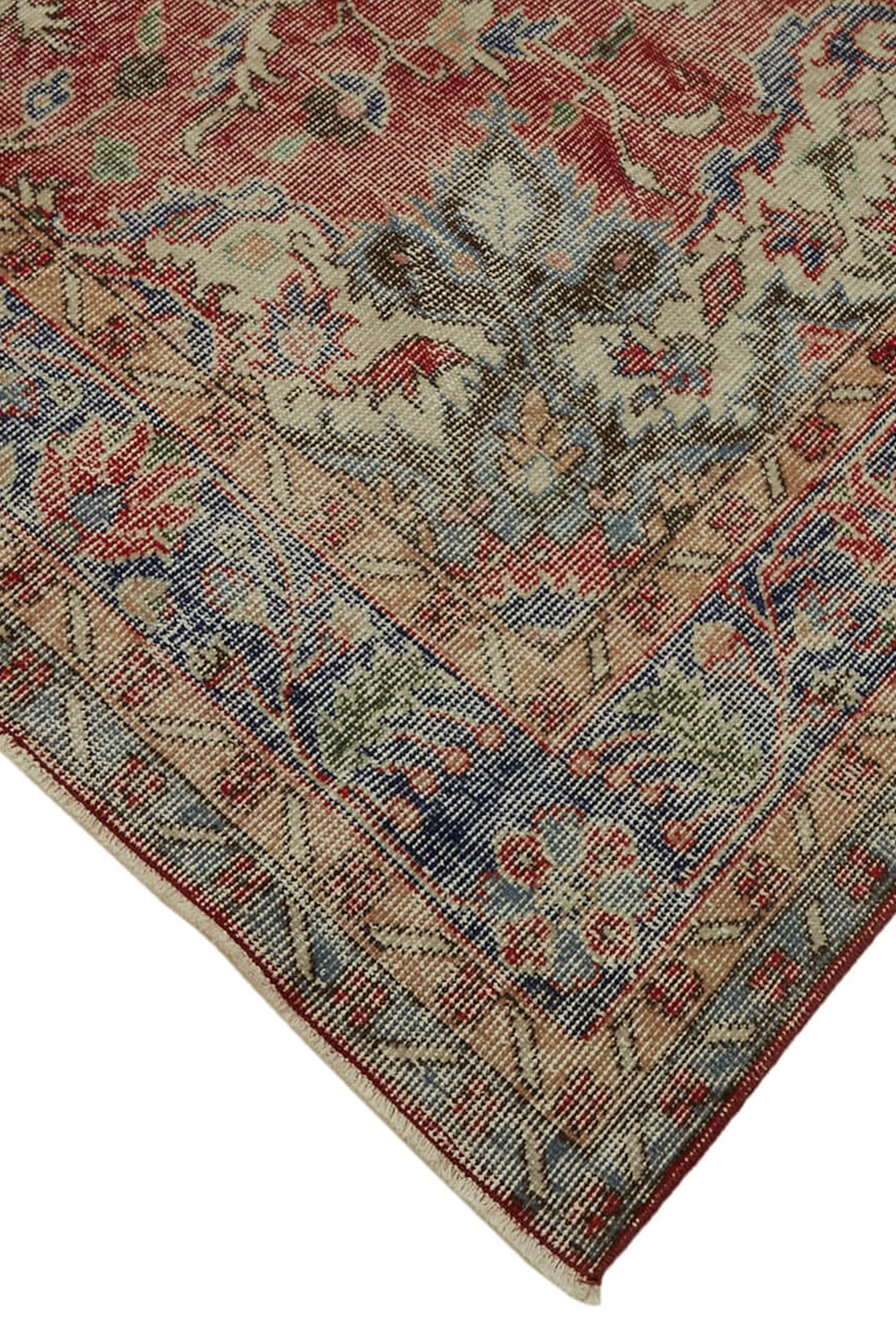
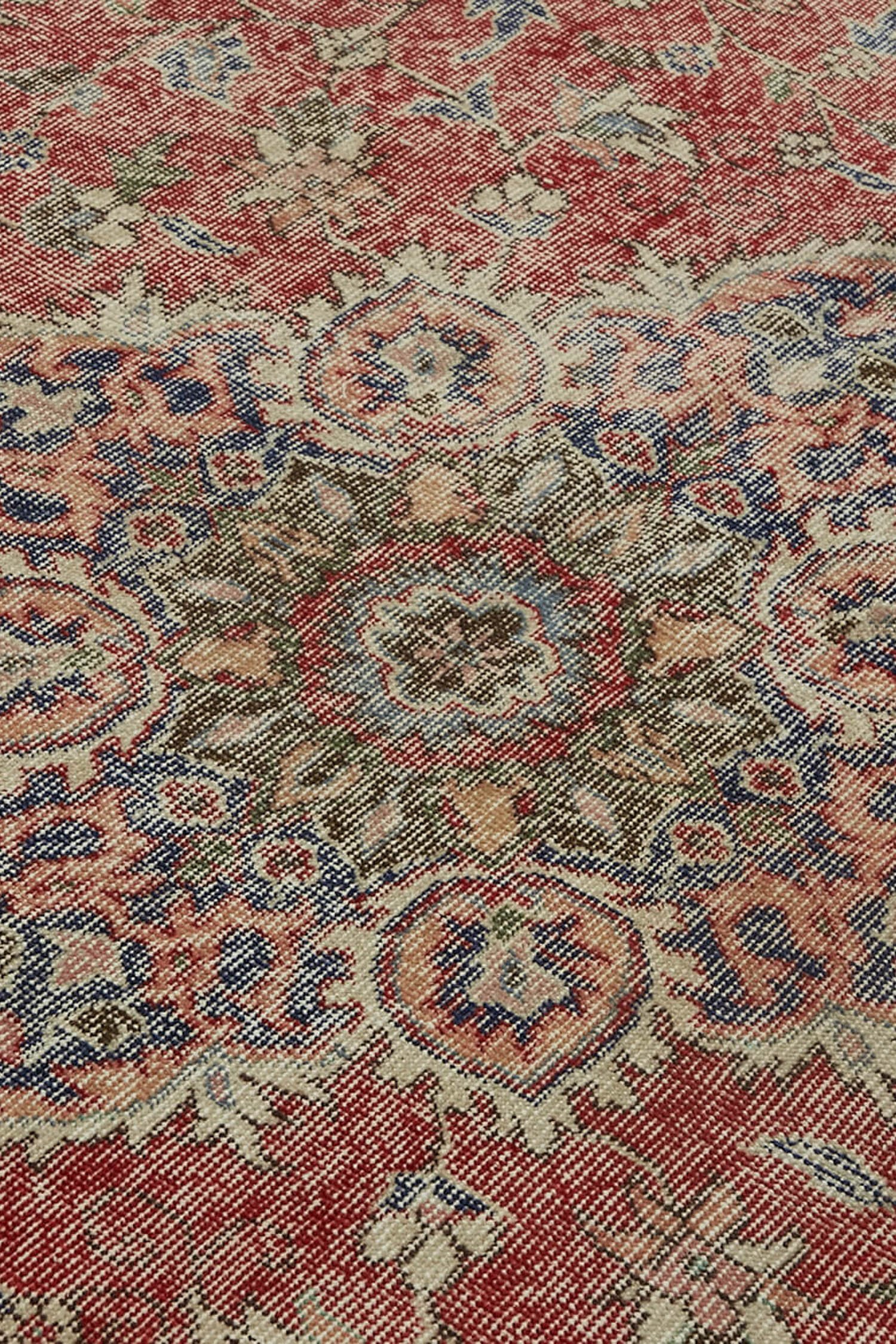
The dusty rose field came from madder root dye that has mellowed over eight decades. Natural dyes age in characteristic ways, with reds typically softening toward rose and pink tones through light exposure and use. The soft blue required indigo processing, while muted sage came from plant-based materials that created green tones.
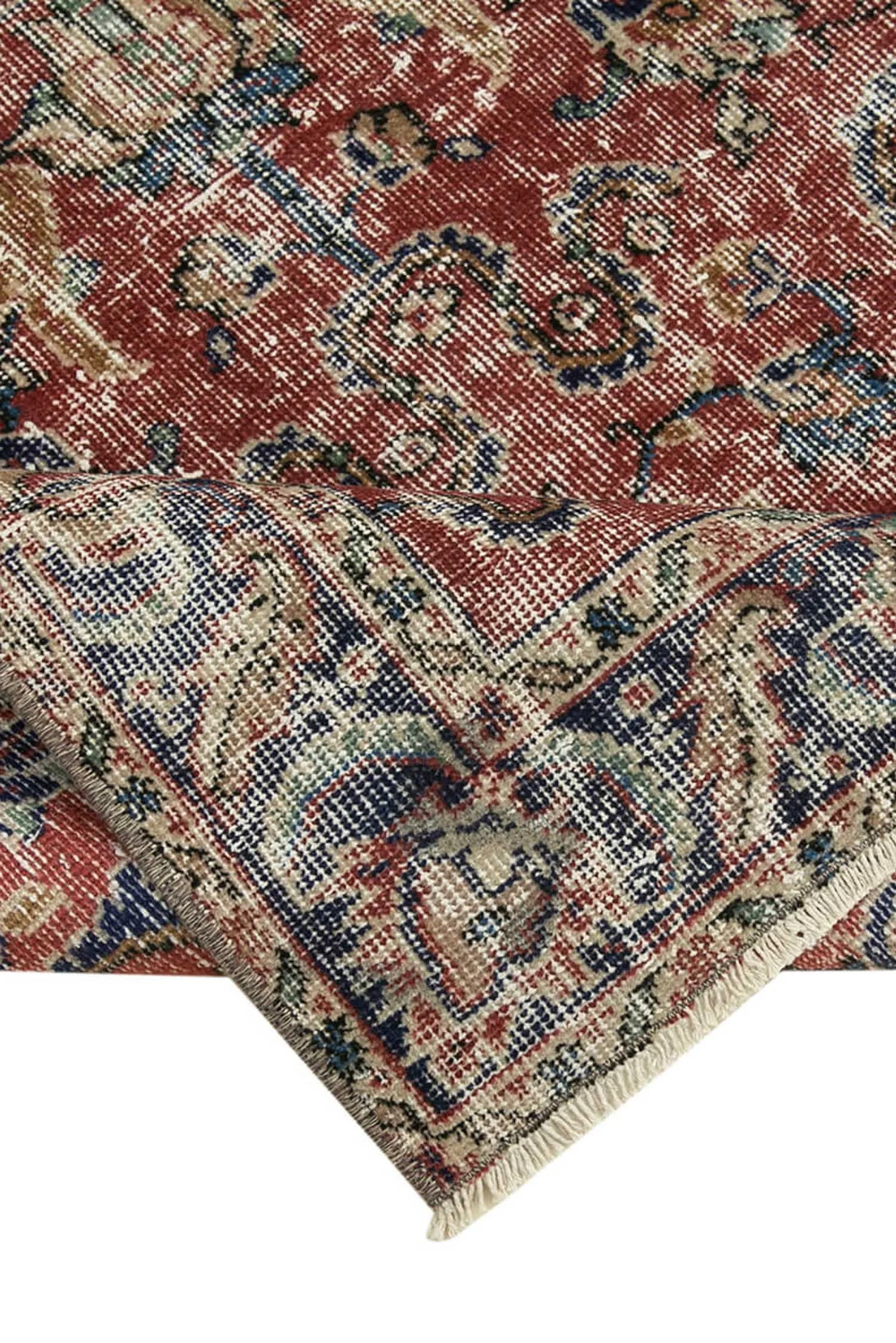
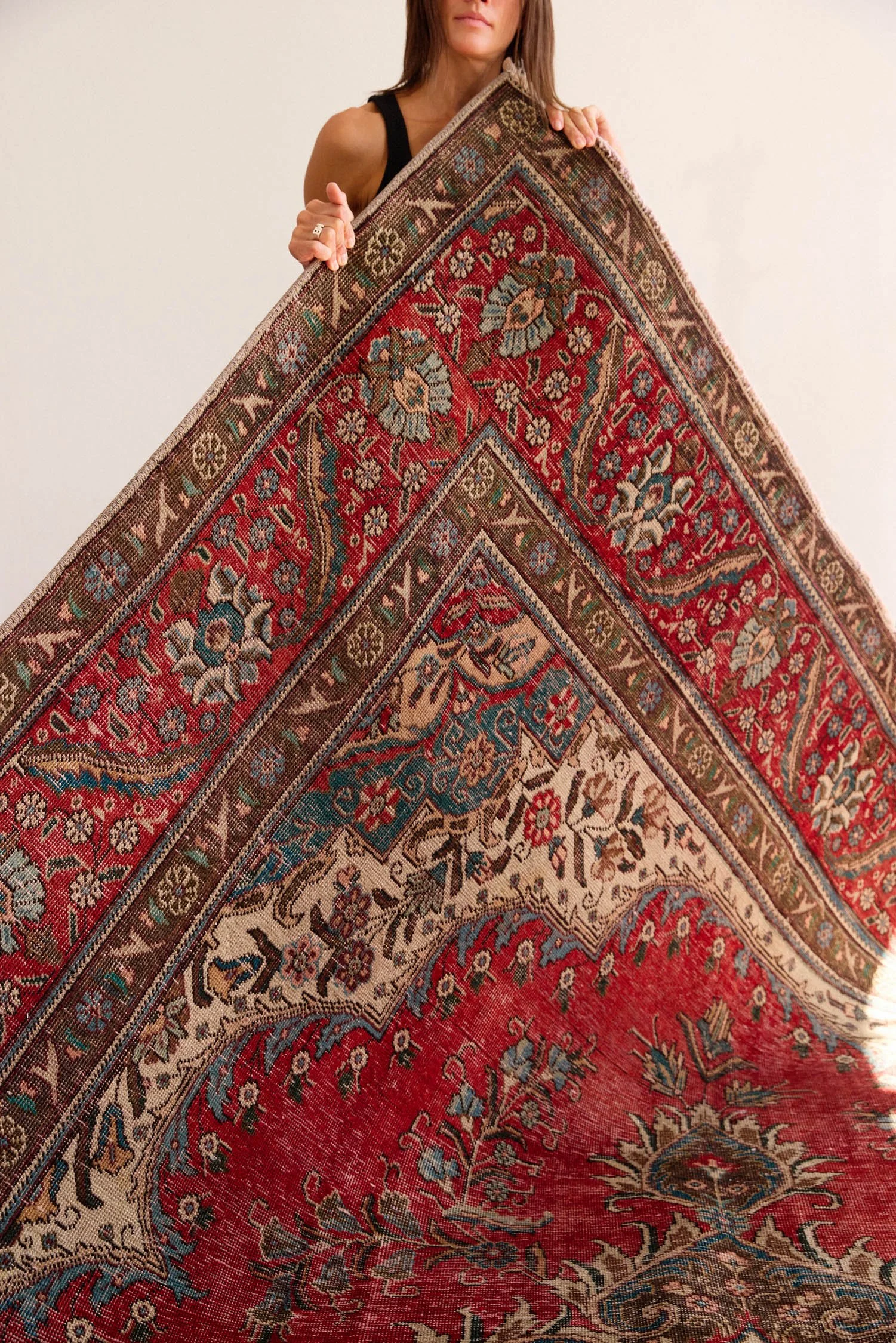
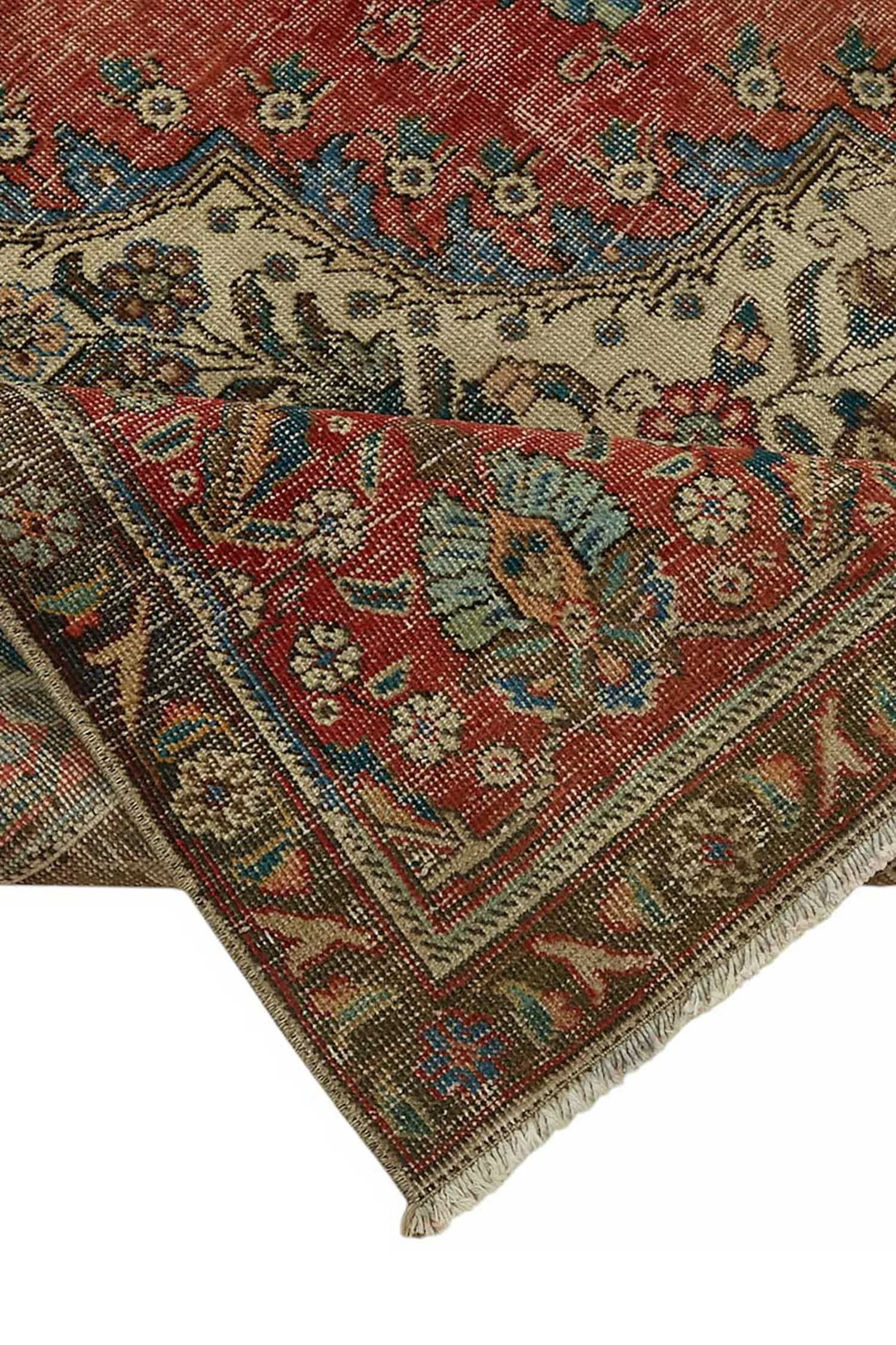
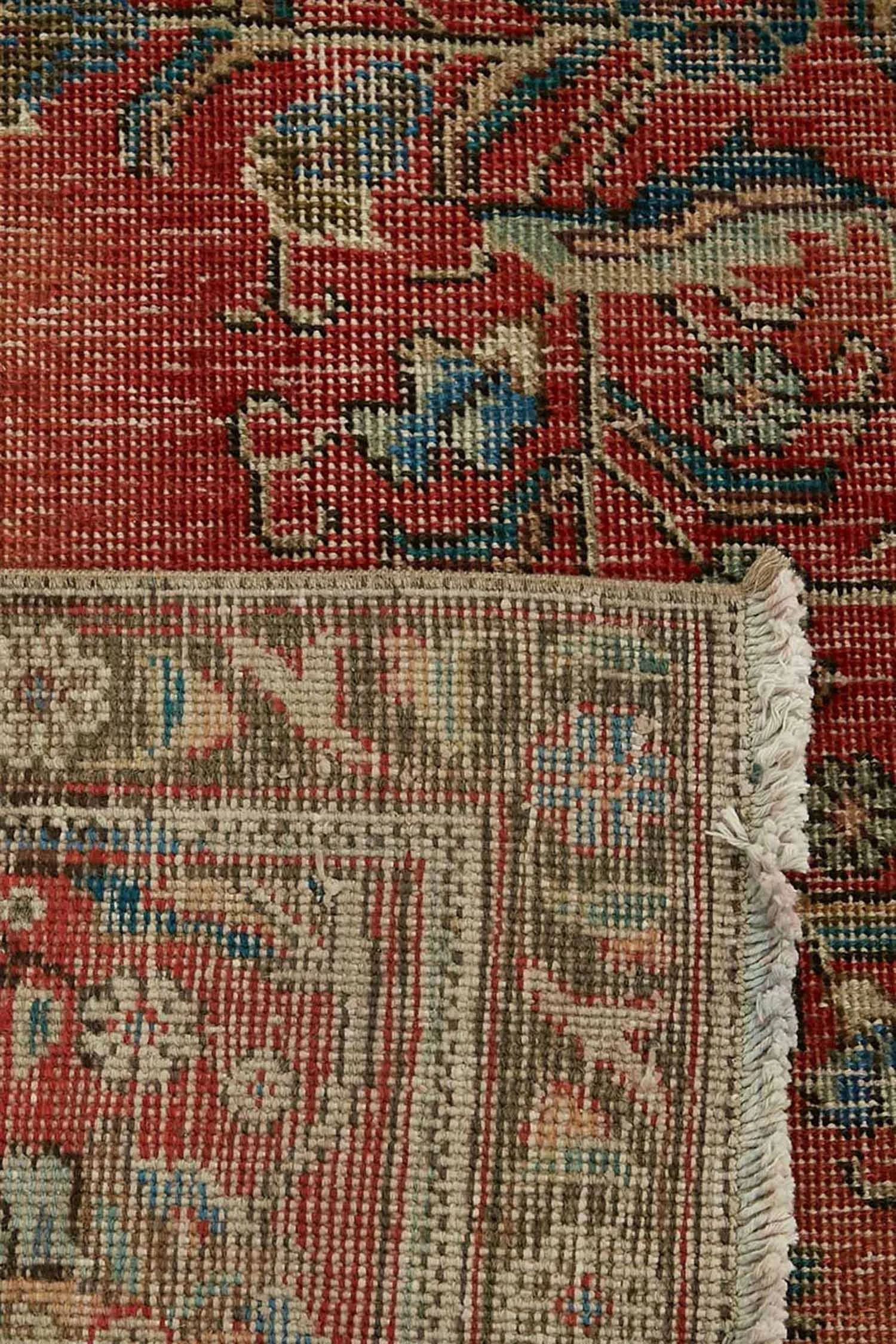
Fine weaving allowed Tabriz workshops to execute the detailed palmettes and scrolling vine work characteristic of classical Persian floral design. Weavers worked from precise cartoons under skilled supervision, maintaining the symmetry and order visible in the composition despite the softening effects of time and use.
Design Elements
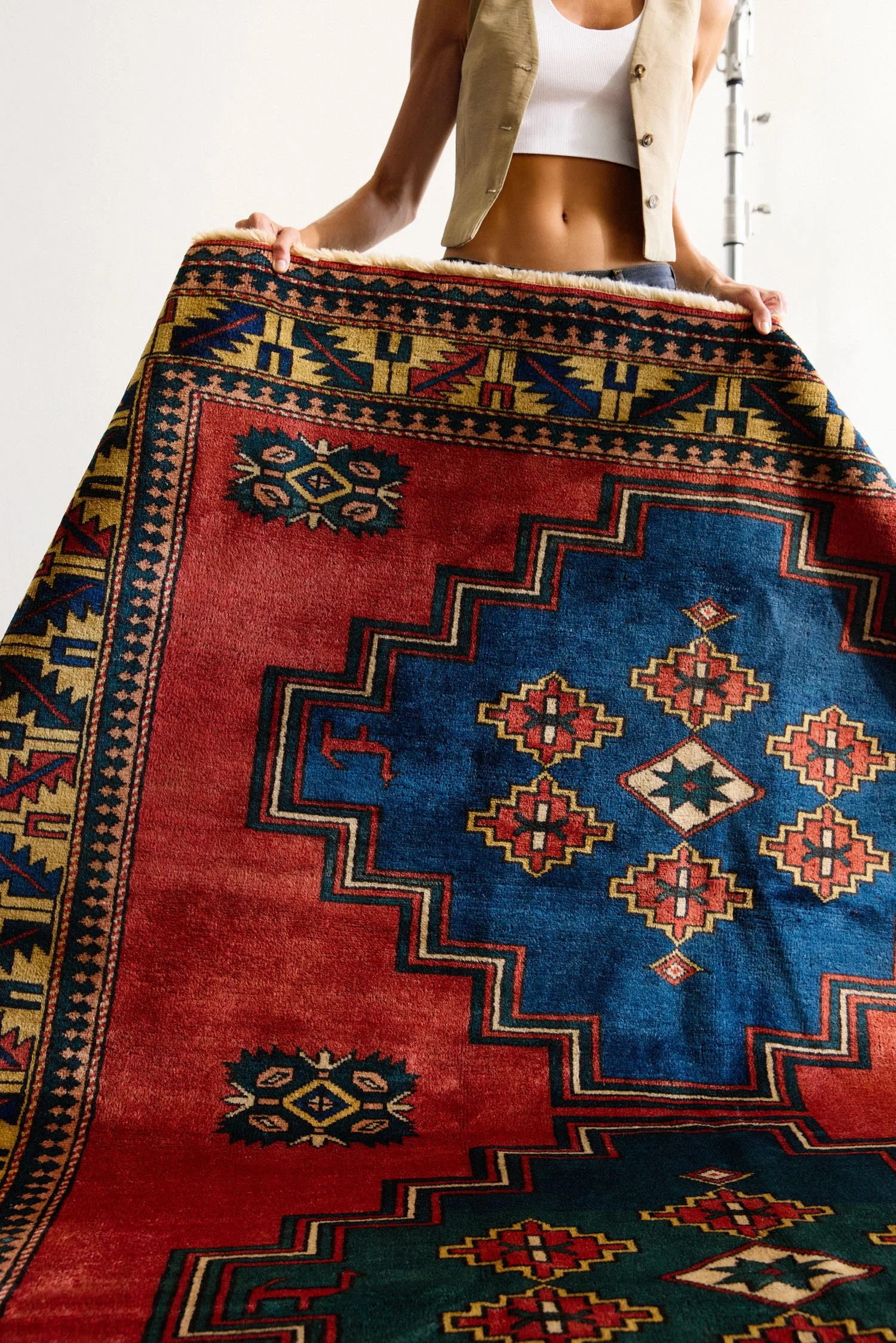
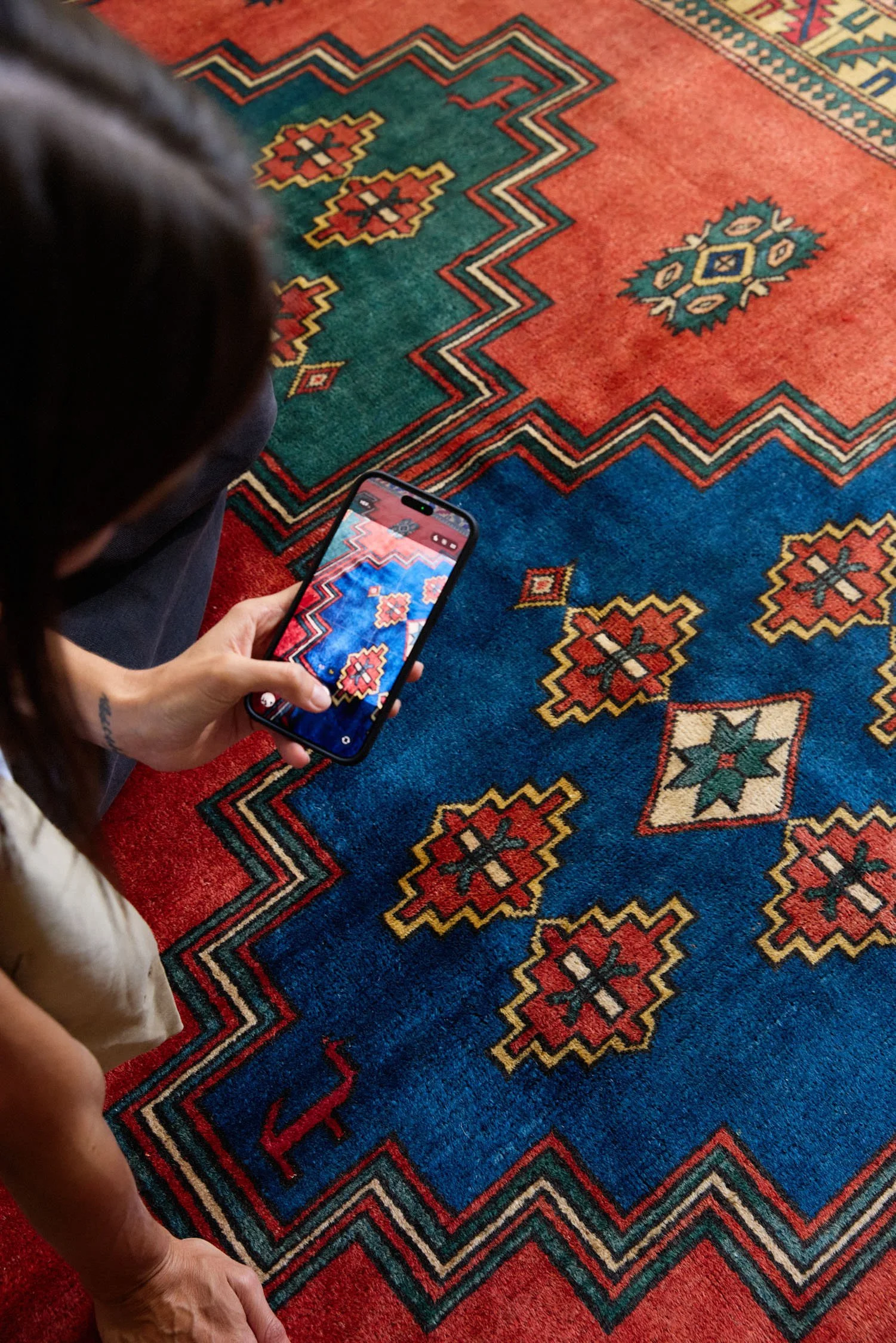
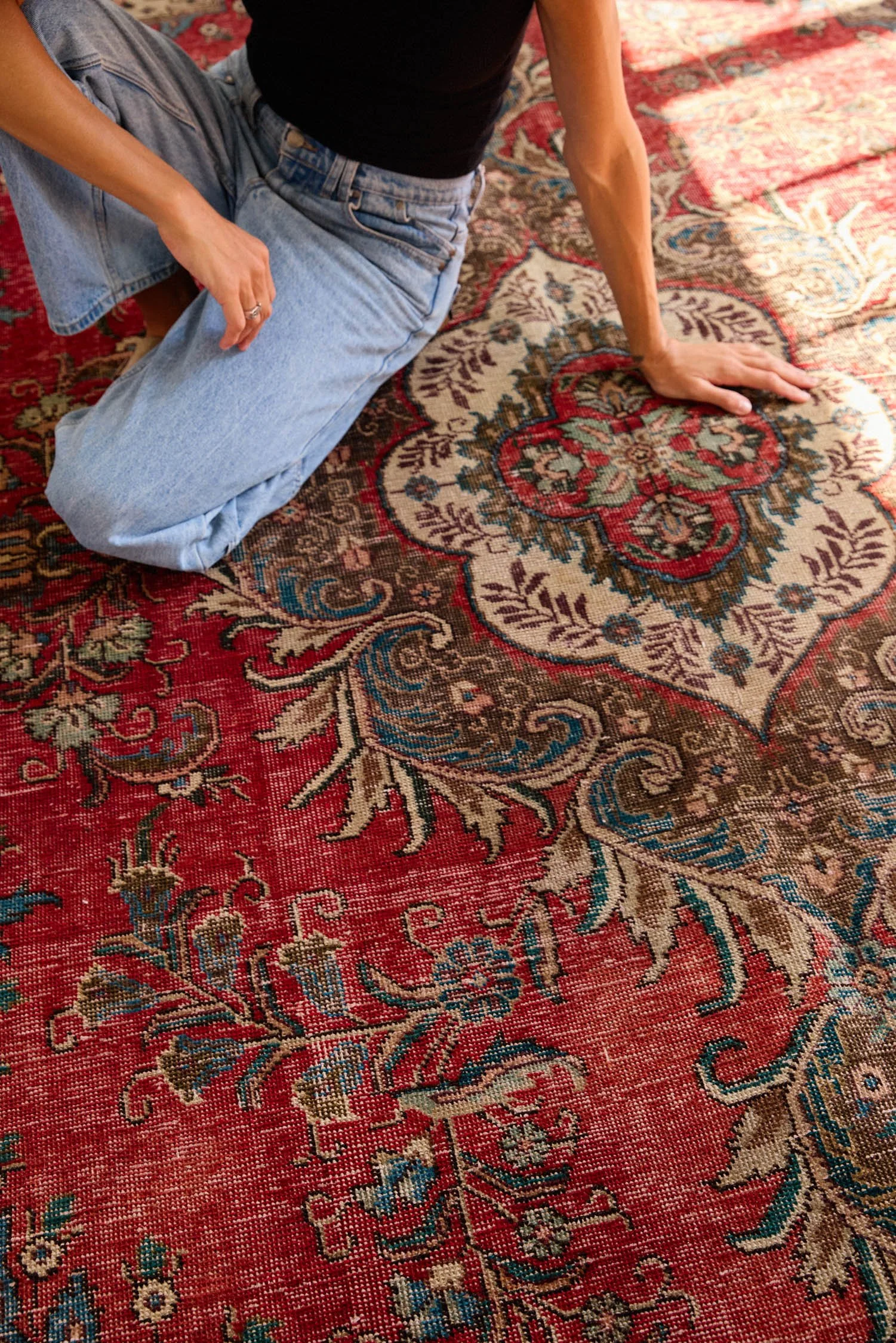
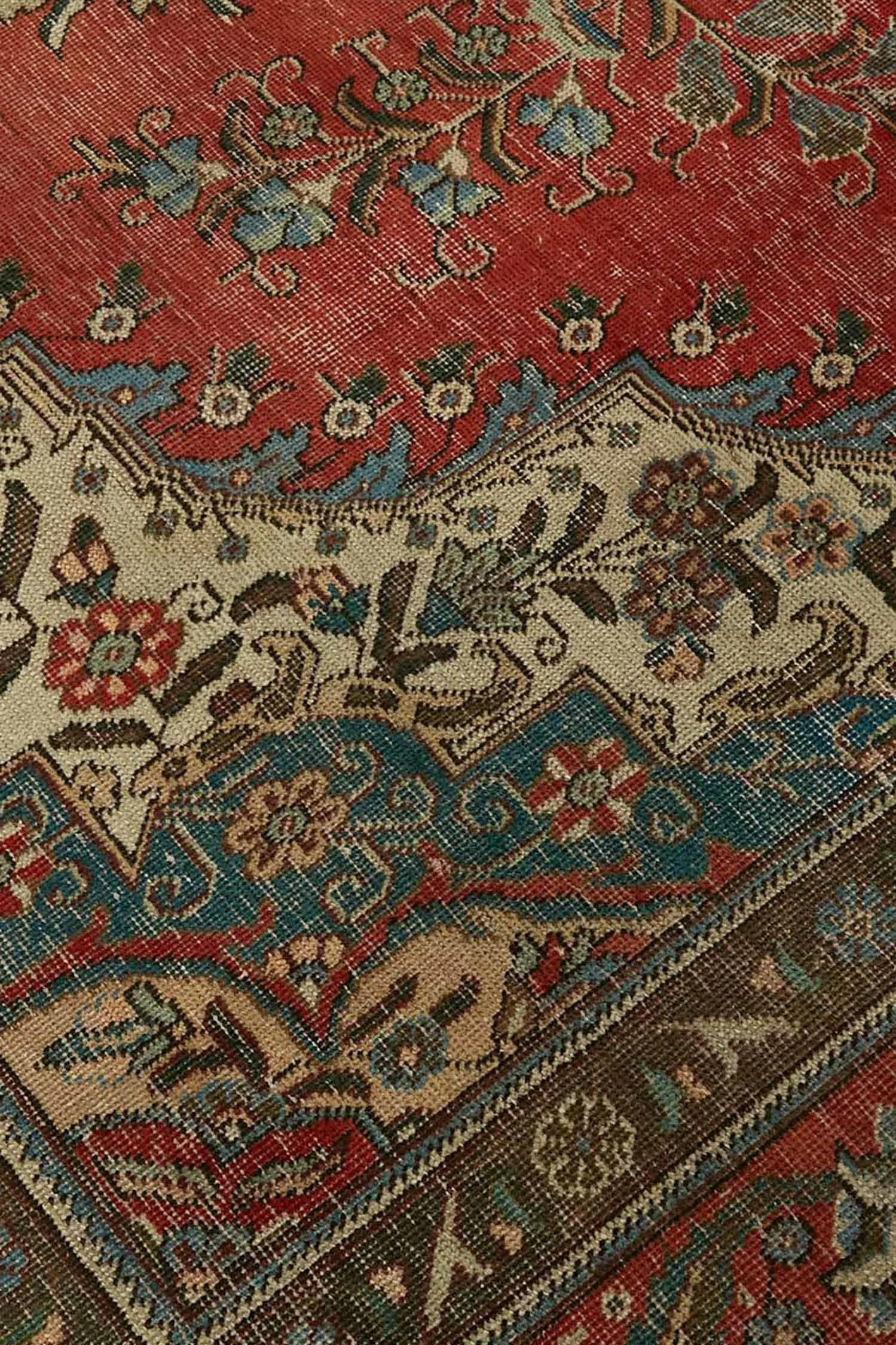
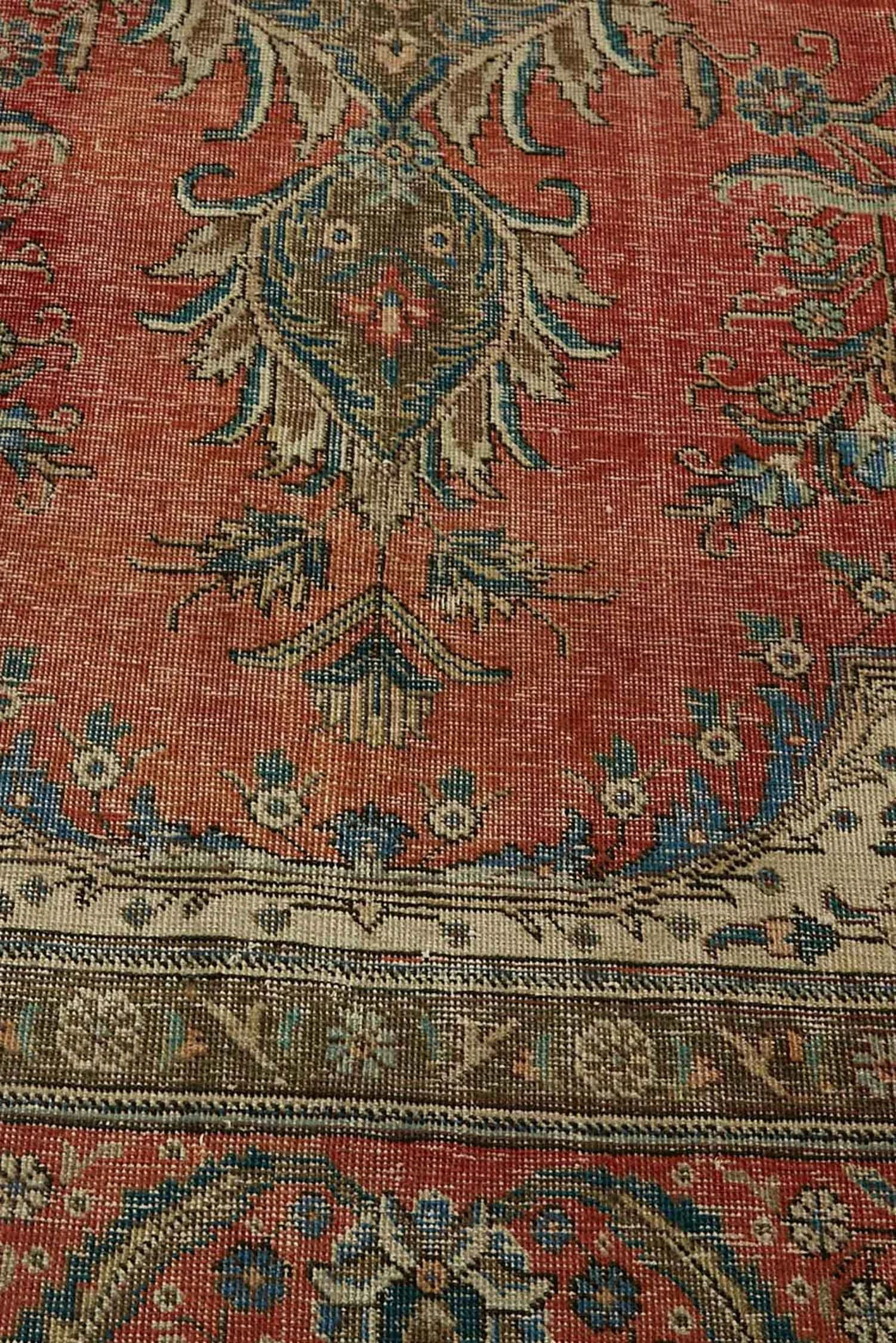
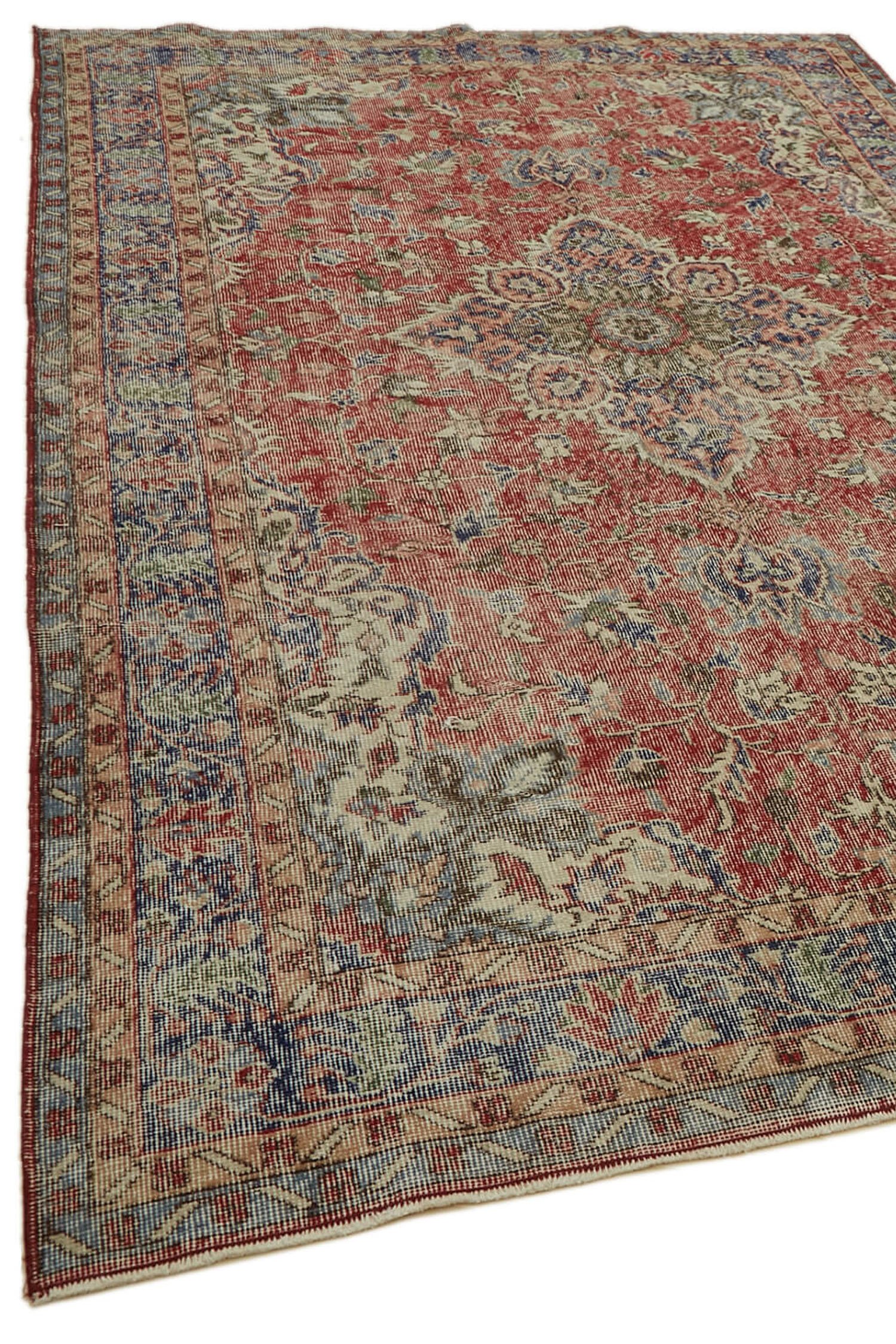
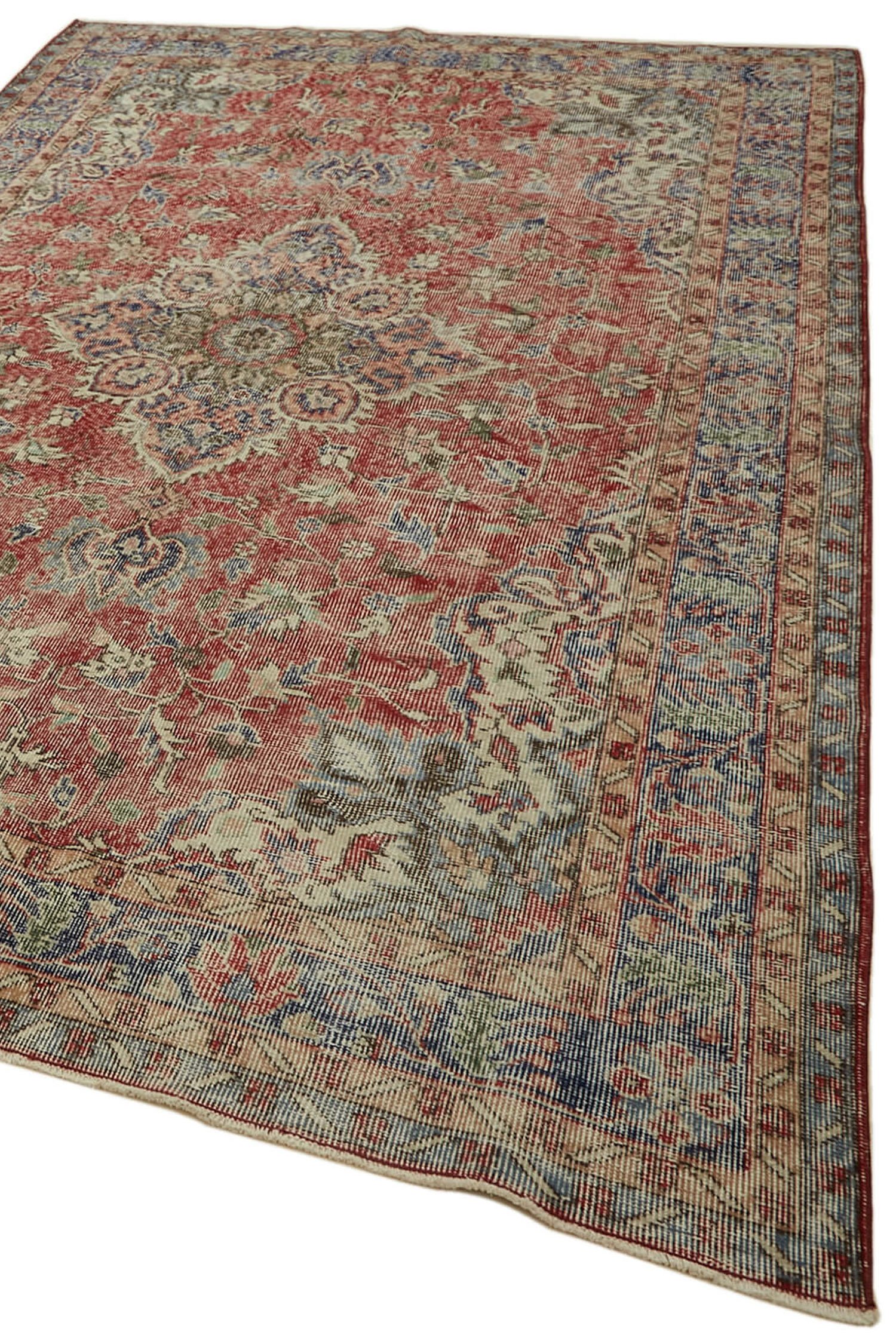
Scrolling palmettes create the primary pattern structure, their curving forms organized in a symmetrical arrangement across the field. The palmettes vary in scale, creating visual hierarchy while maintaining overall balance. Vine work connects the larger forms in flowing pathways.
Classical symmetry governs the composition, with mirrored elements creating formal balance. This ordering reflects workshop production where pattern consistency mattered. The symmetrical layout remains legible despite the timeworn patina that has softened edges and blended colors.
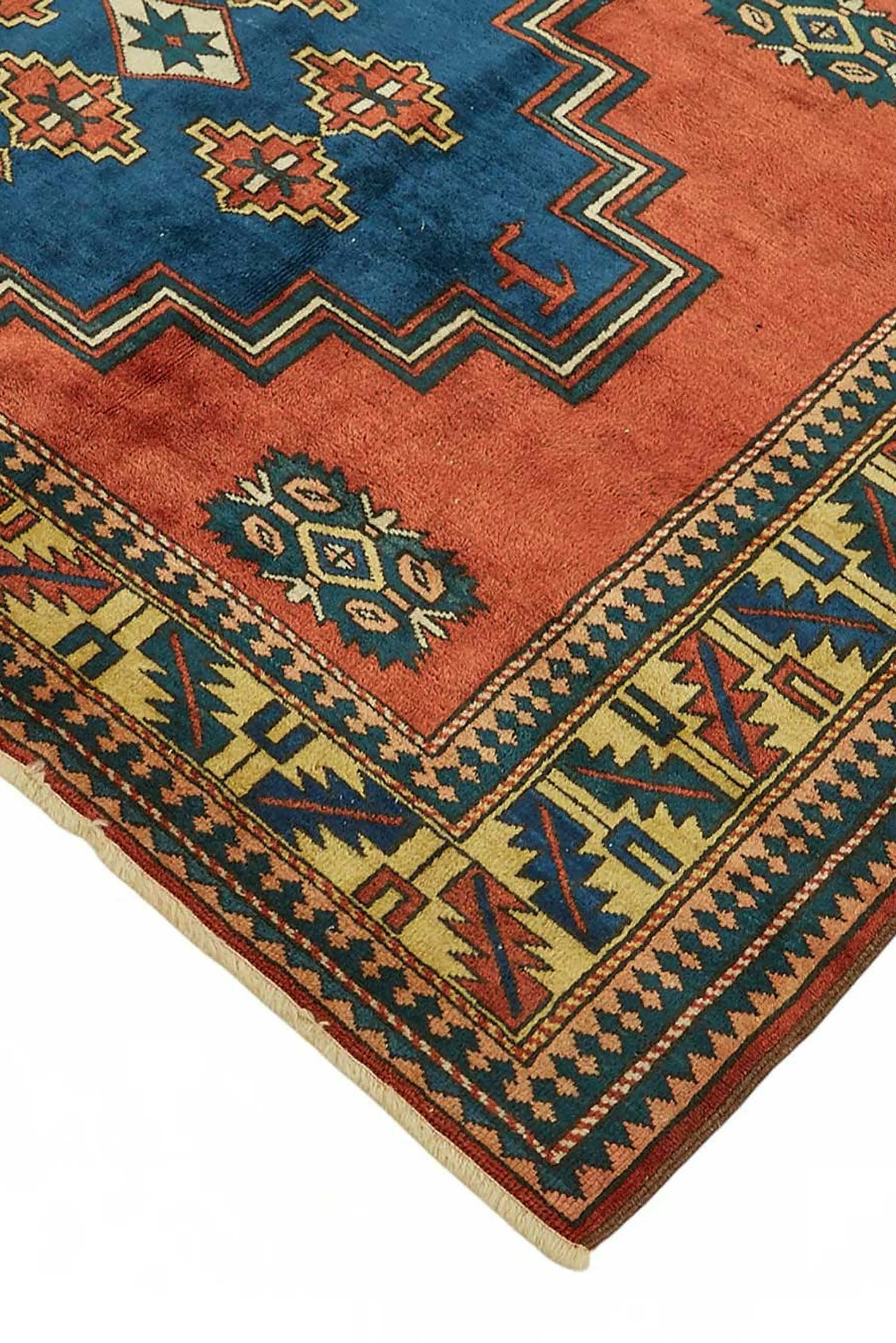
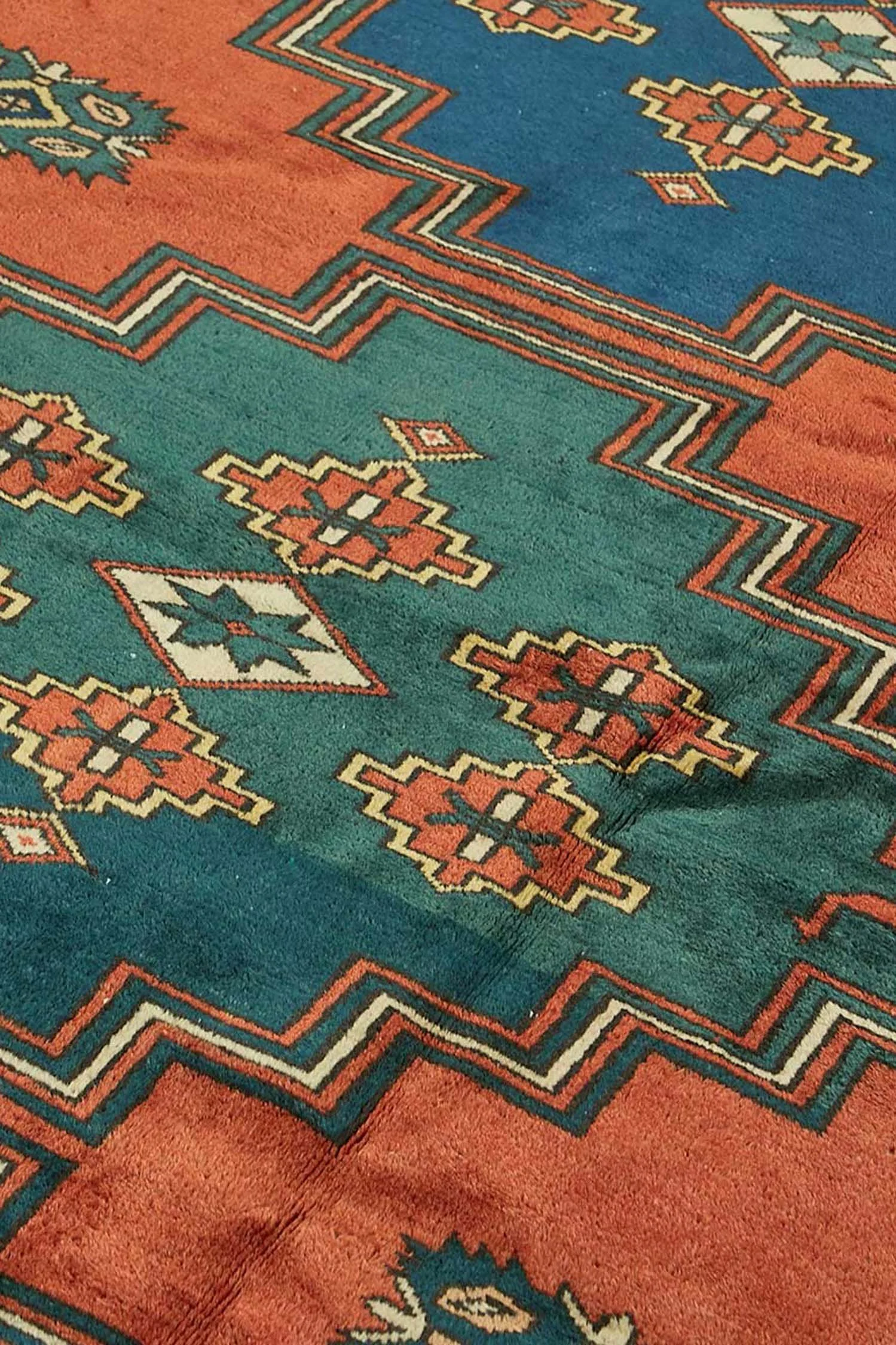
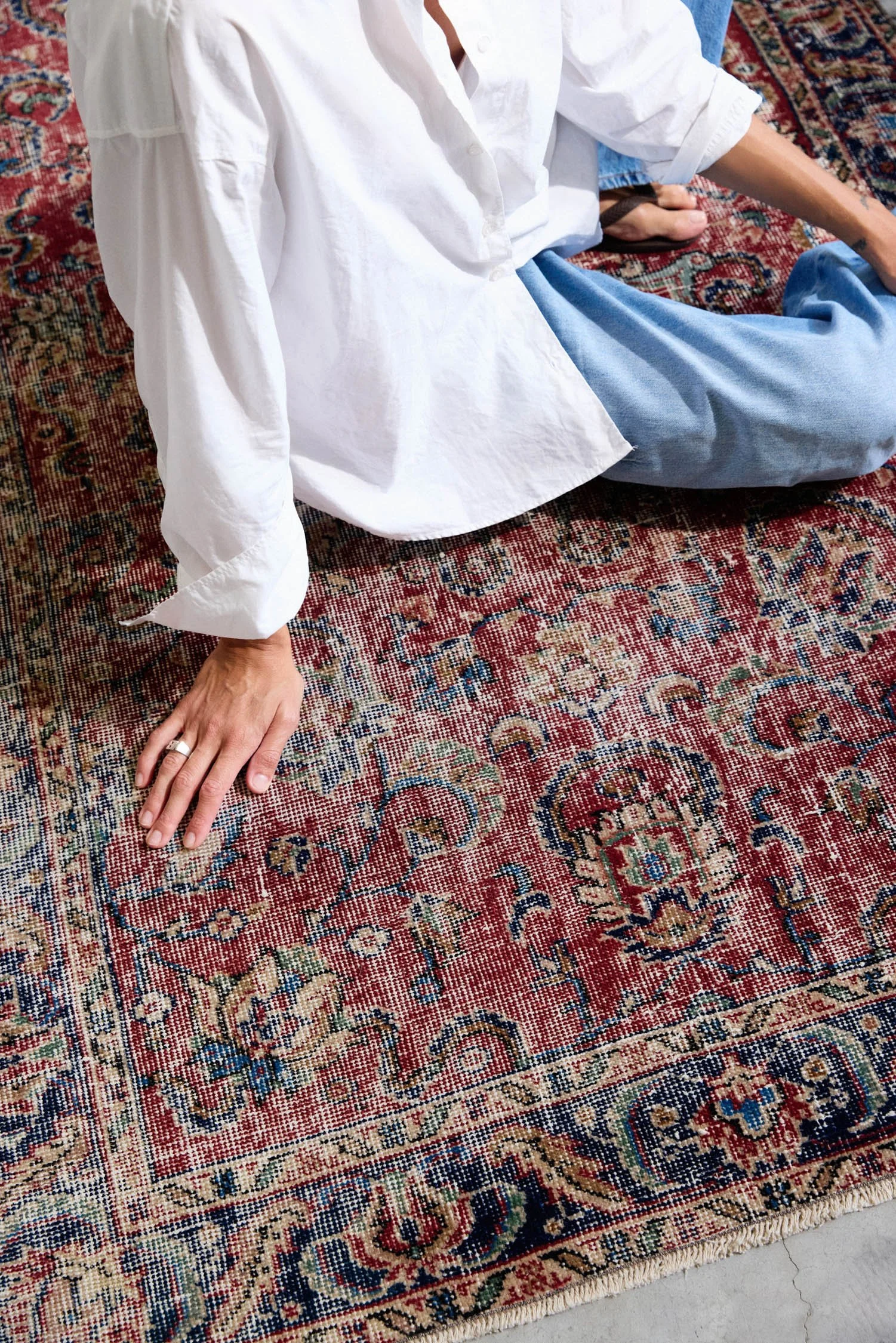
Decades of use have created the relaxed, lived-in character visible in the surface. What once showed sharper definition now reads with gentler transitions between forms and ground. This patina adds depth to the composition through the accumulation of time rather than through design complexity.
Placement
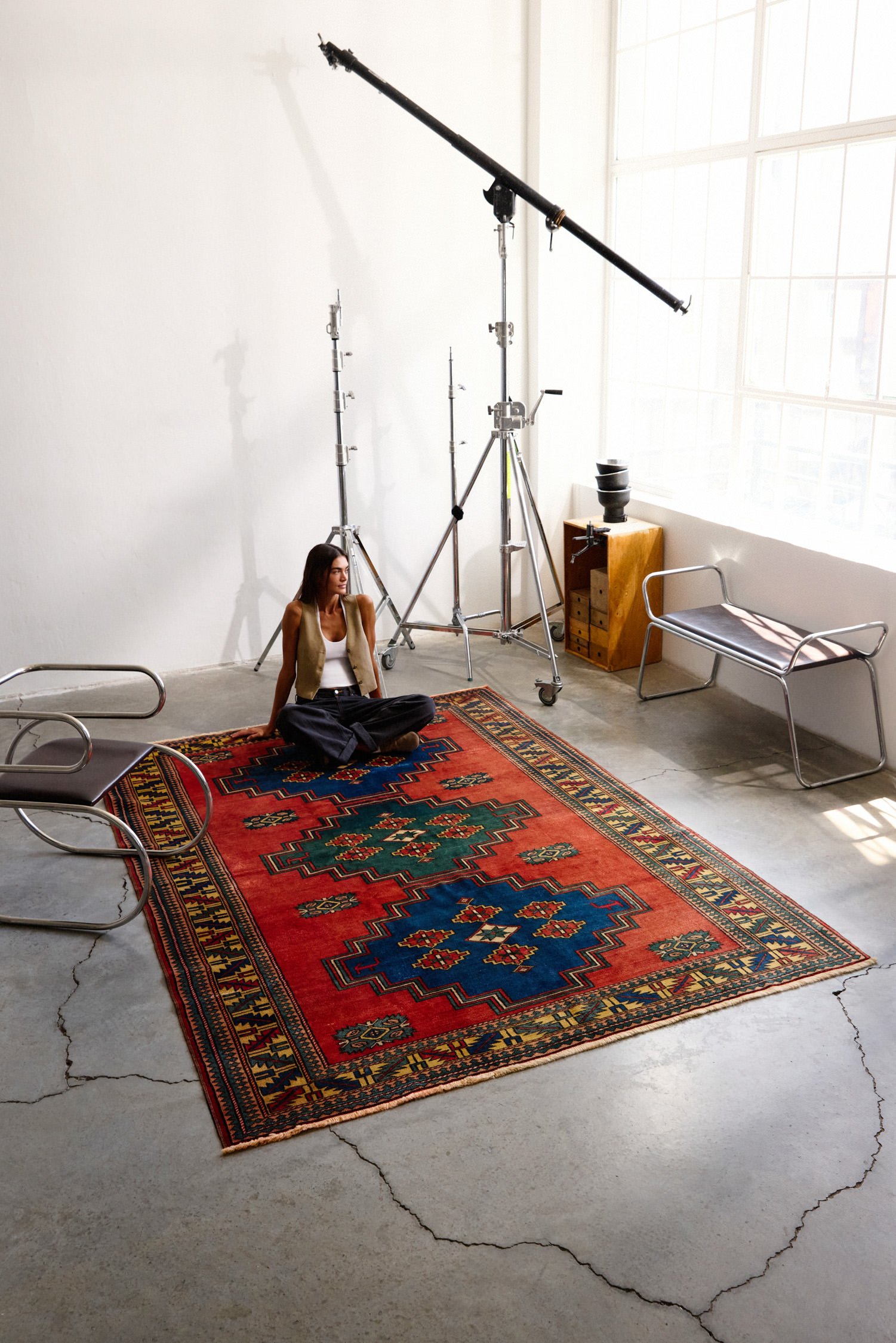
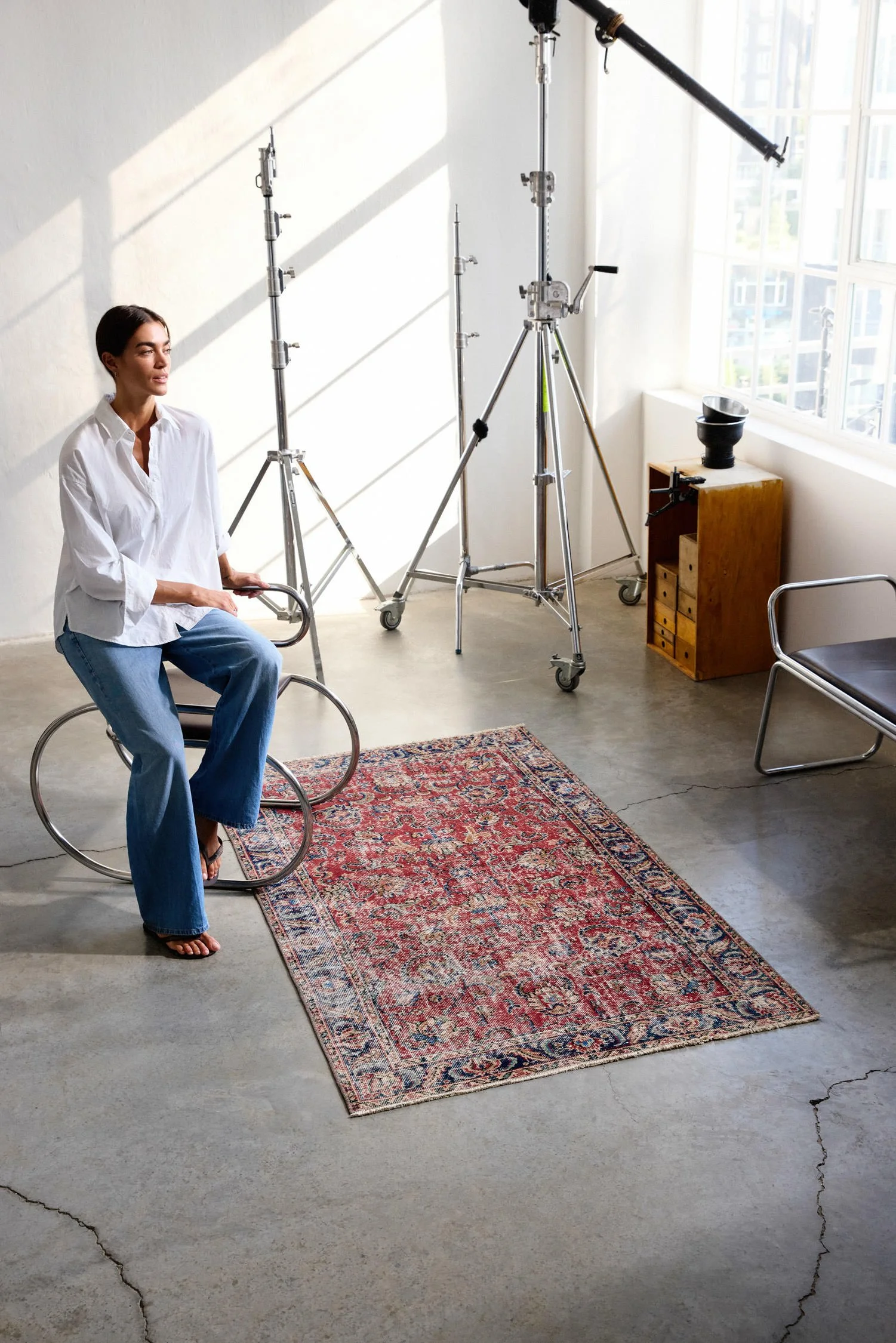
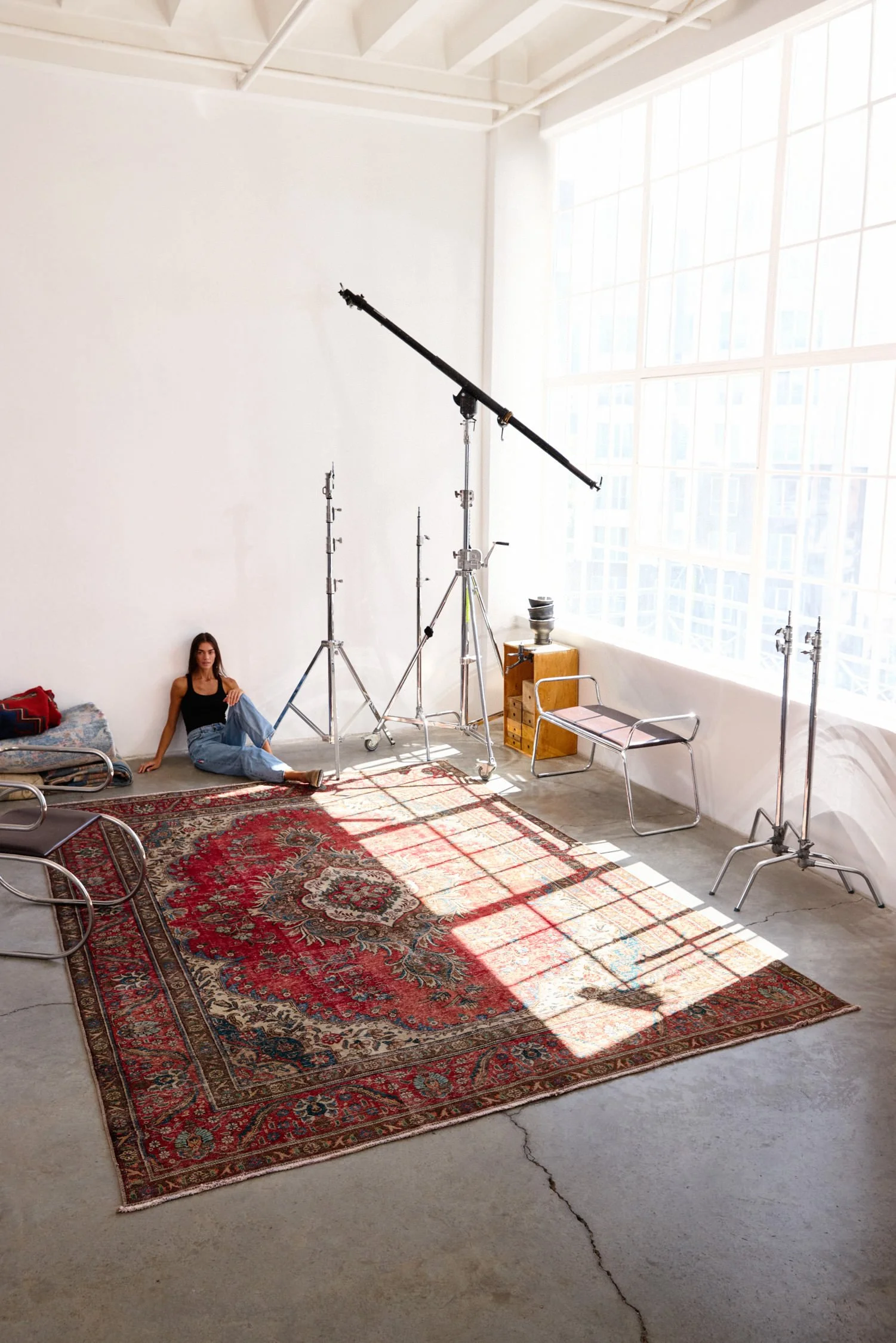
At 8'1" x 10'9", this works in living rooms where you want substantial coverage with classical Persian character. Dining rooms can accommodate it under tables that seat eight. Bedrooms benefit from the dusty rose palette and generous proportions.
The dusty rose and ivory tones suit interiors styled with warm, layered palettes. Traditional settings appreciate the semi-antique Tabriz provenance and classical floral composition. Contemporary spaces can use the timeworn patina and soft colors as a foundation that provides elegance with lived-in character rather than formal perfection.
Care Recommendations
To preserve the rug's beauty:
Rotate periodically for even wear
Vacuum regularly using a suction-only setting
Address spills immediately by blotting, never rubbing
Professional cleaning recommended annually
Avoid direct sunlight to maintain color integrity
Eight decades softened this Tabriz from a formal statement into a comfortable companion.