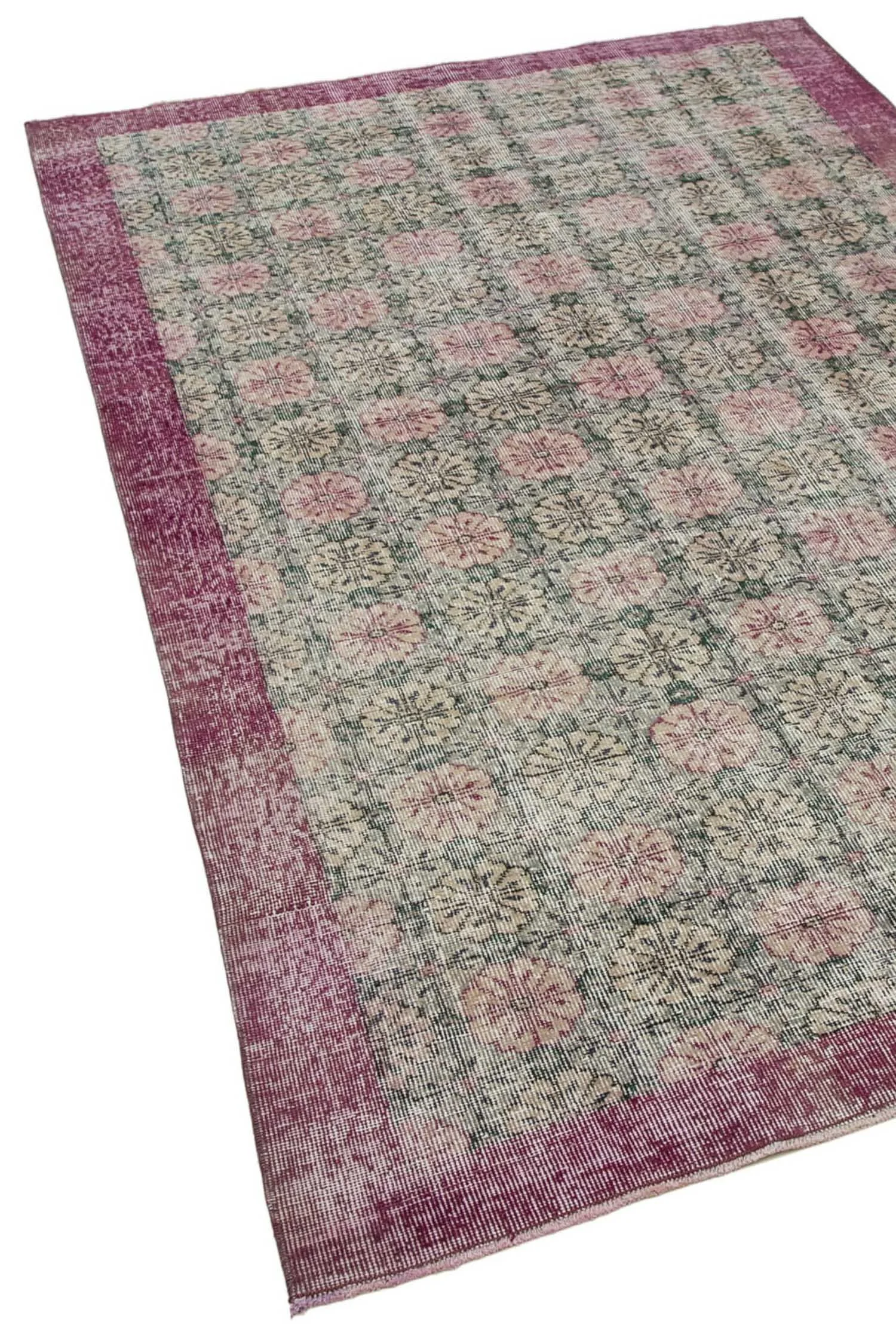
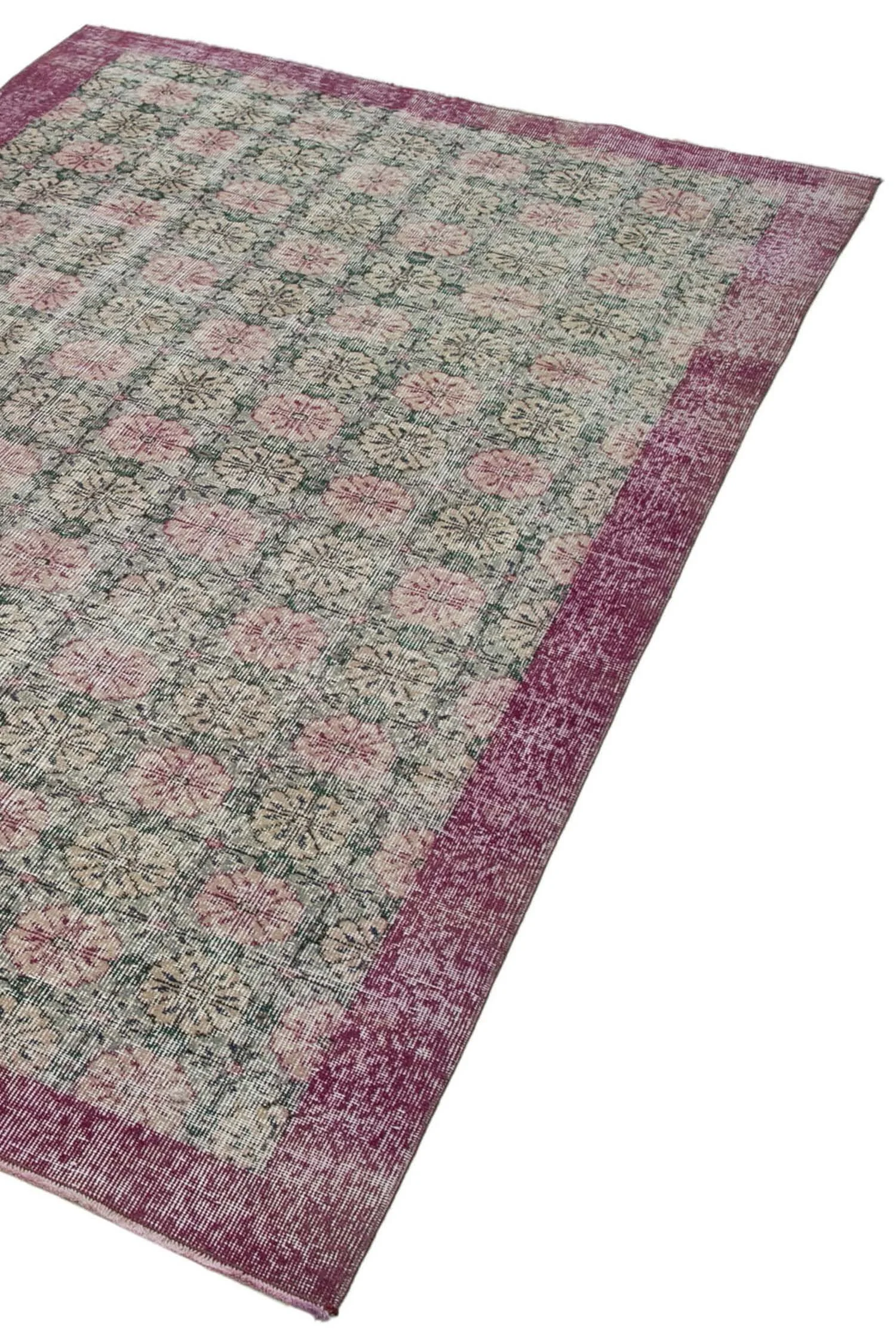
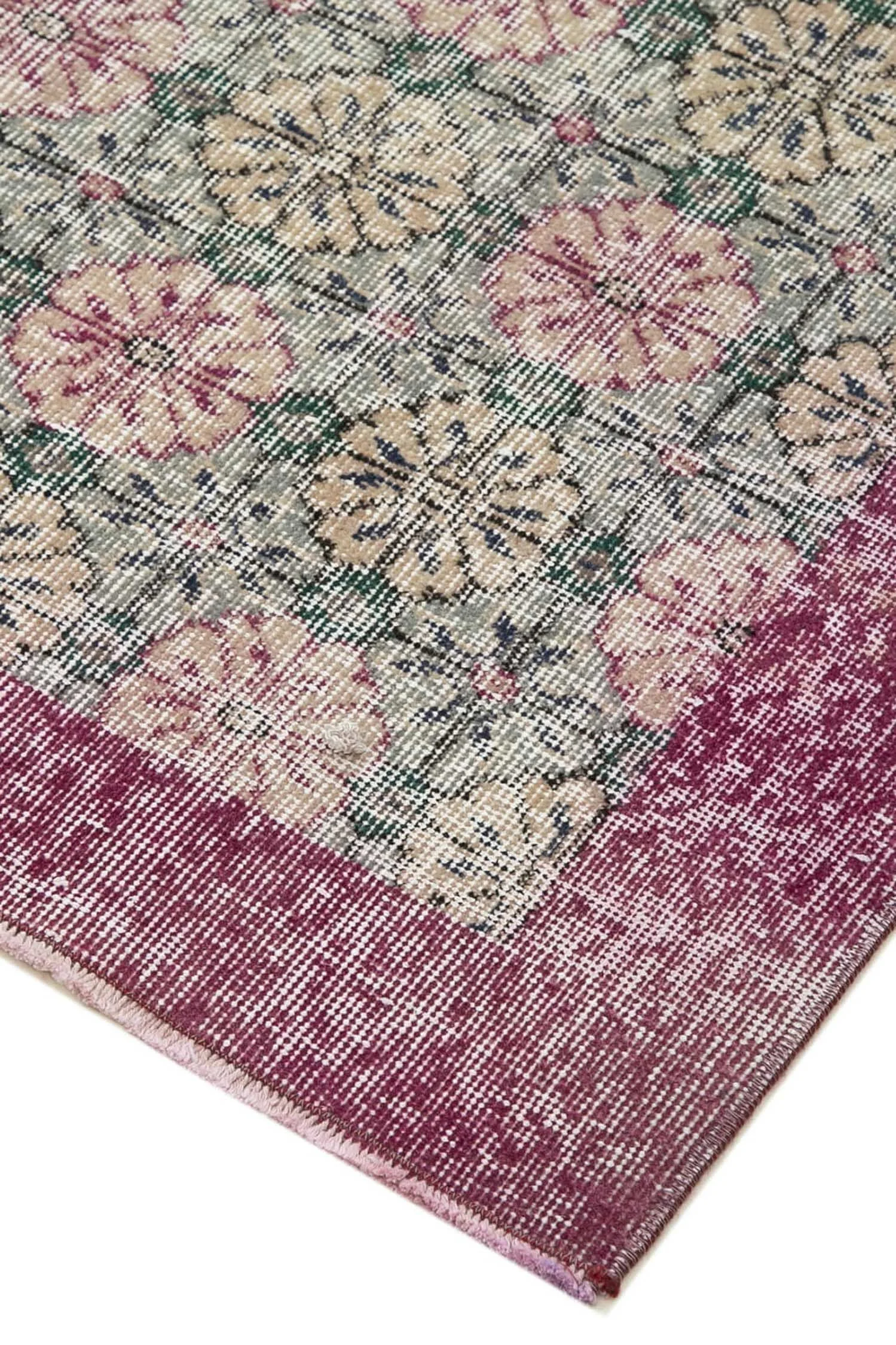
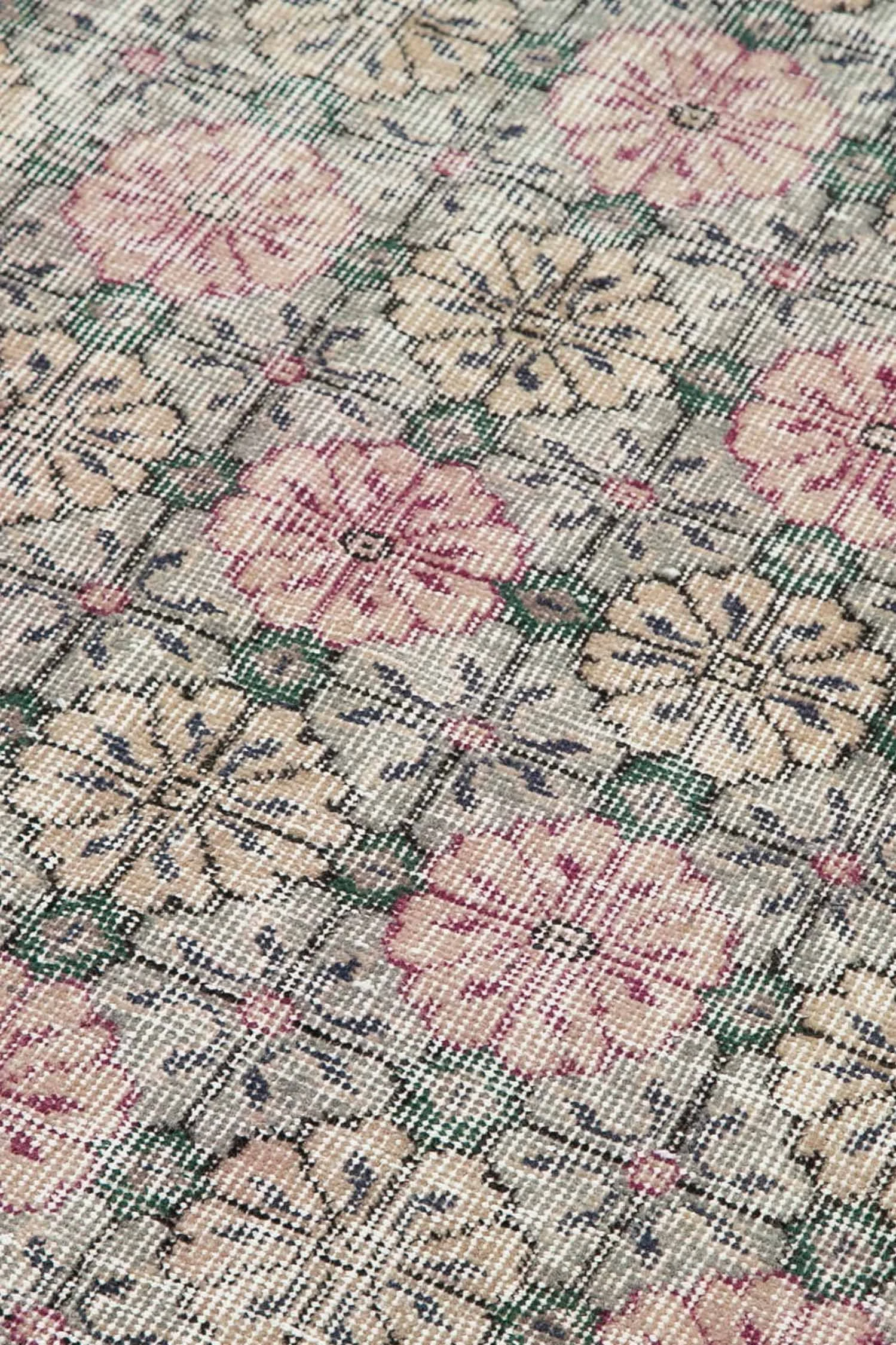
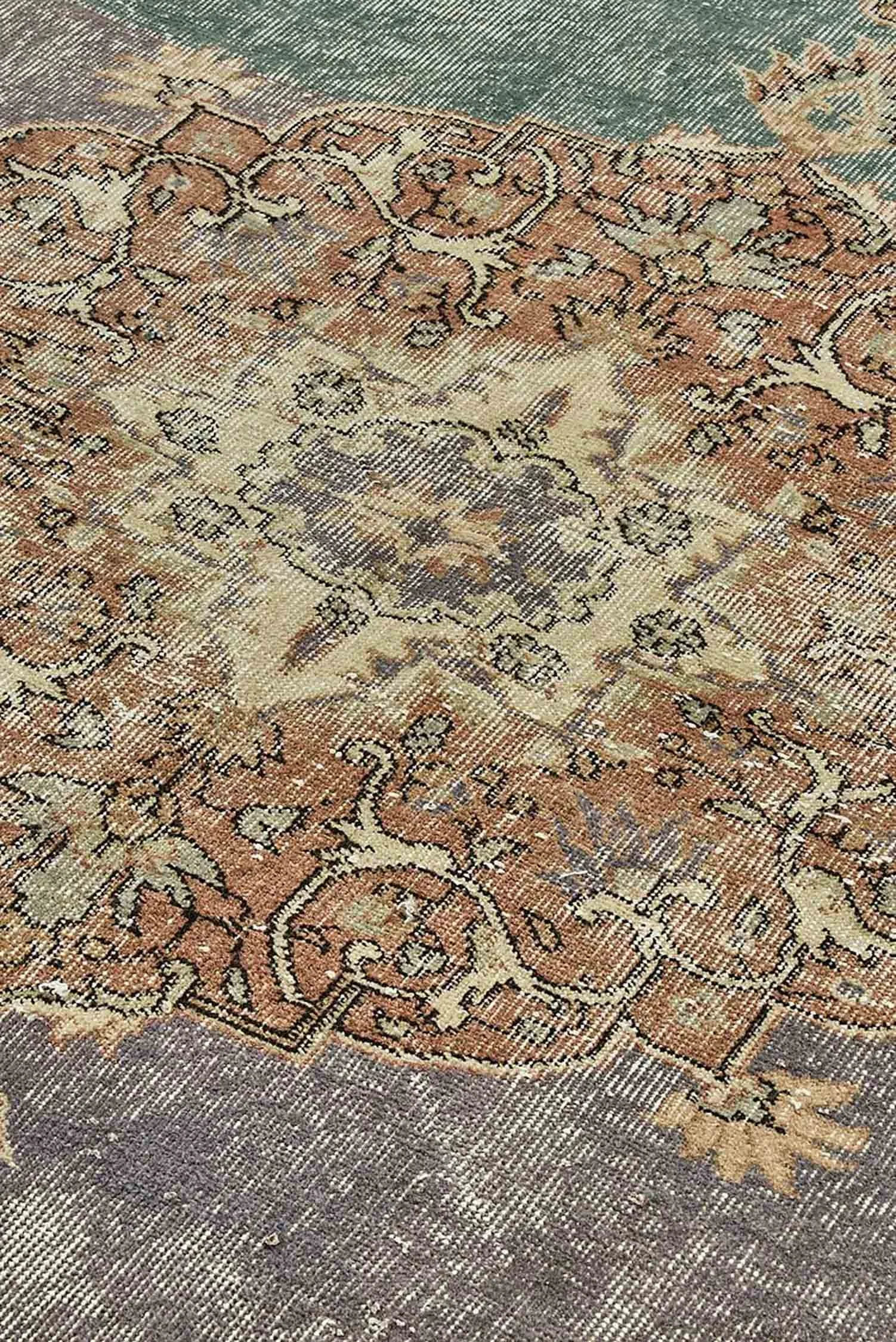
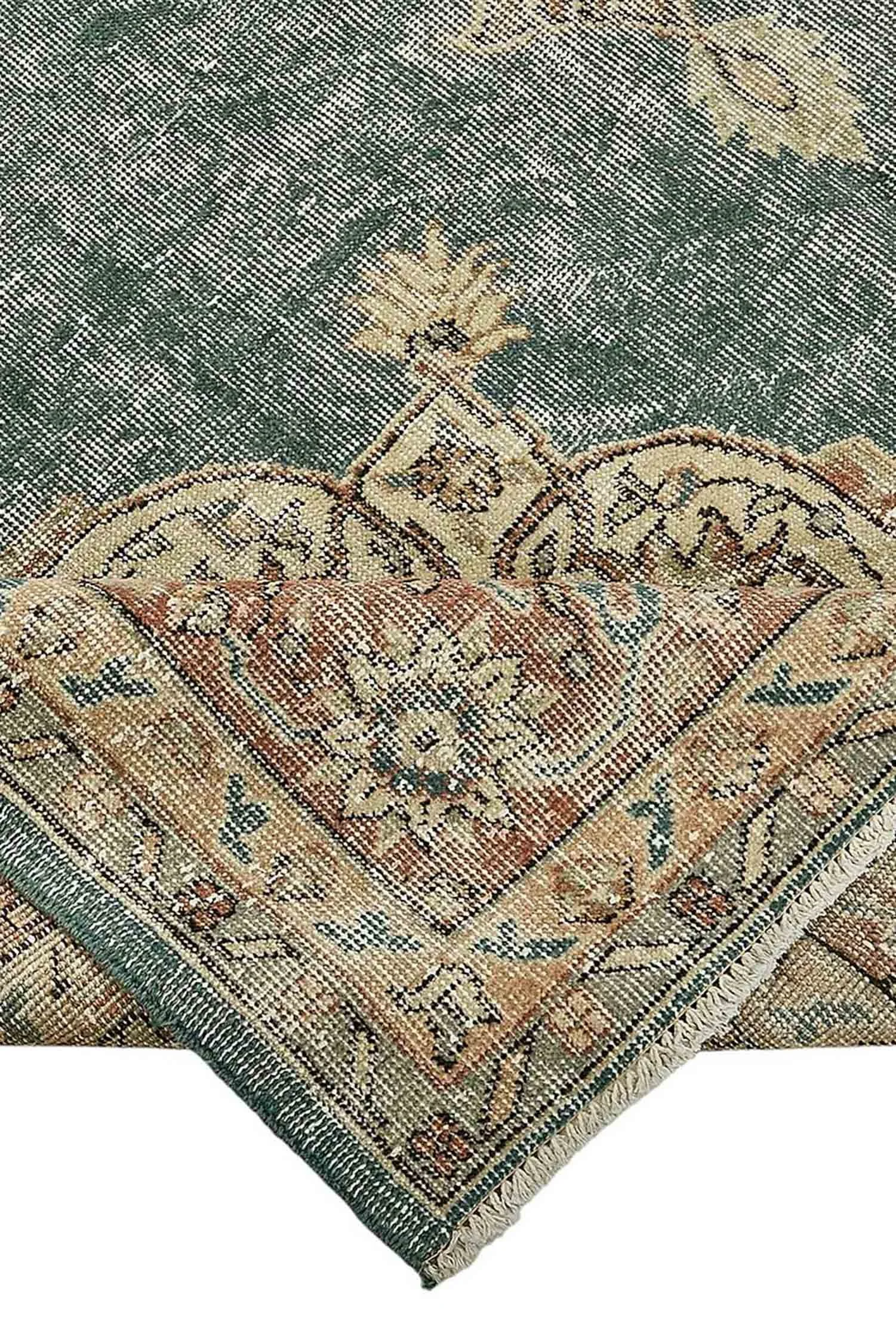
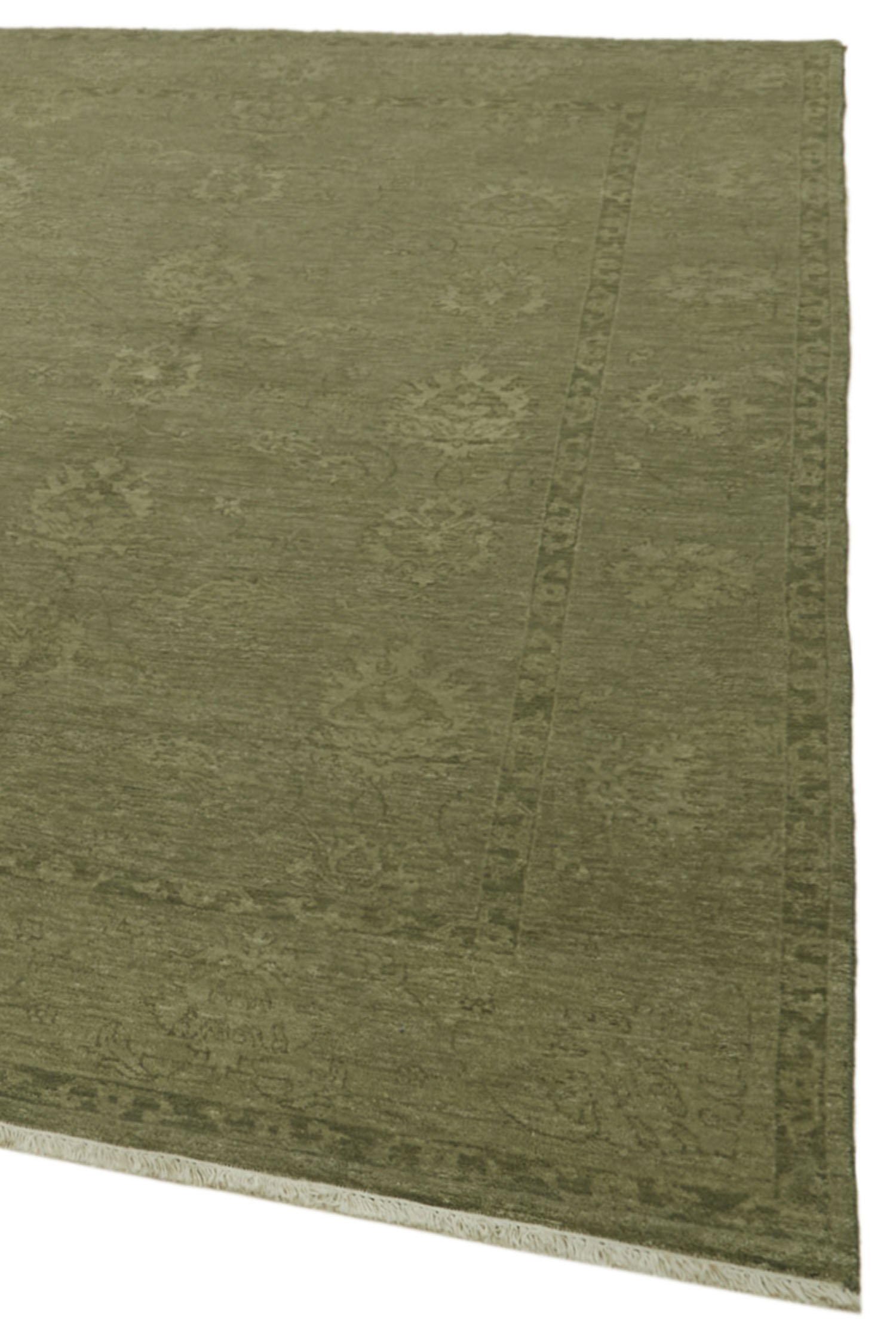
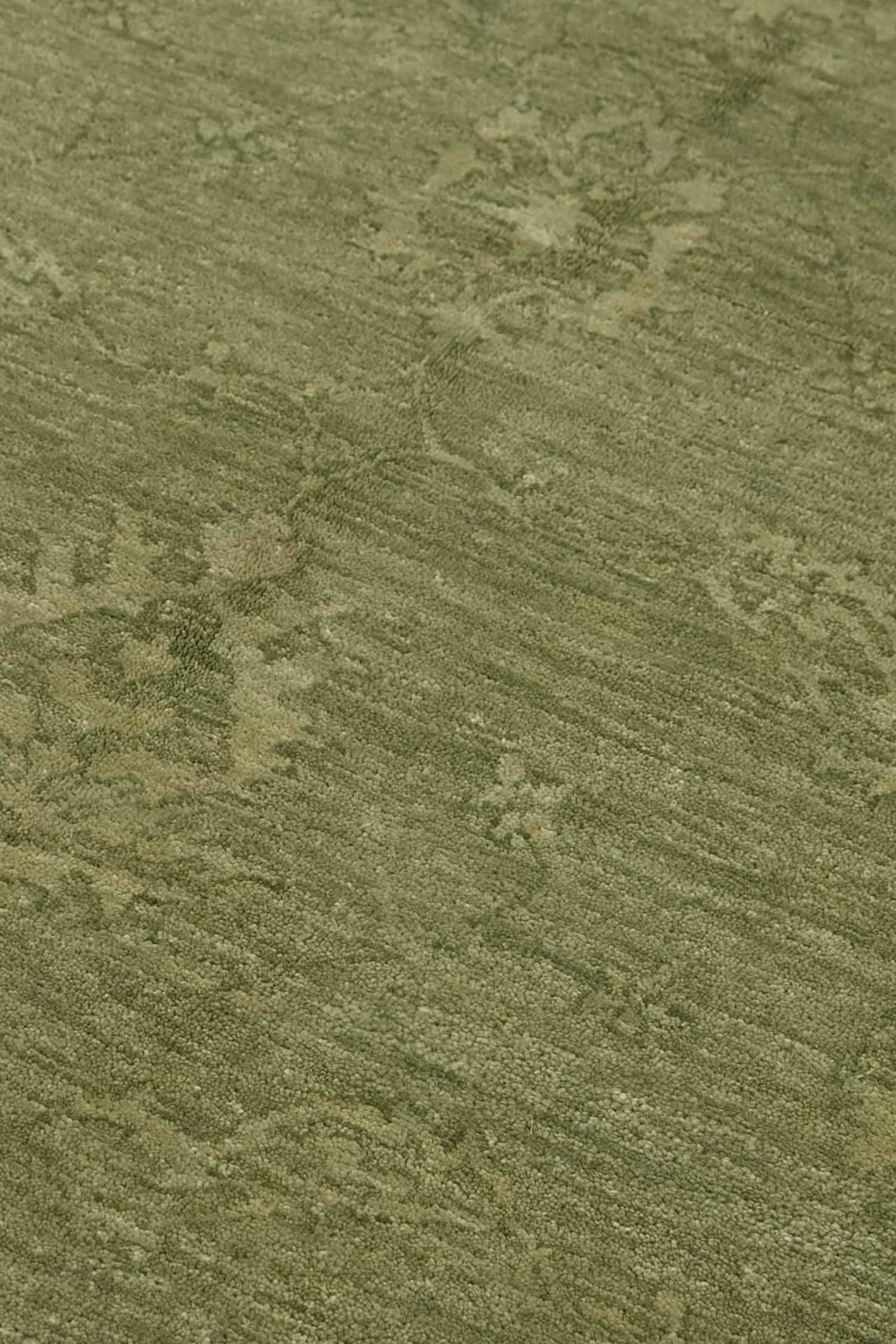
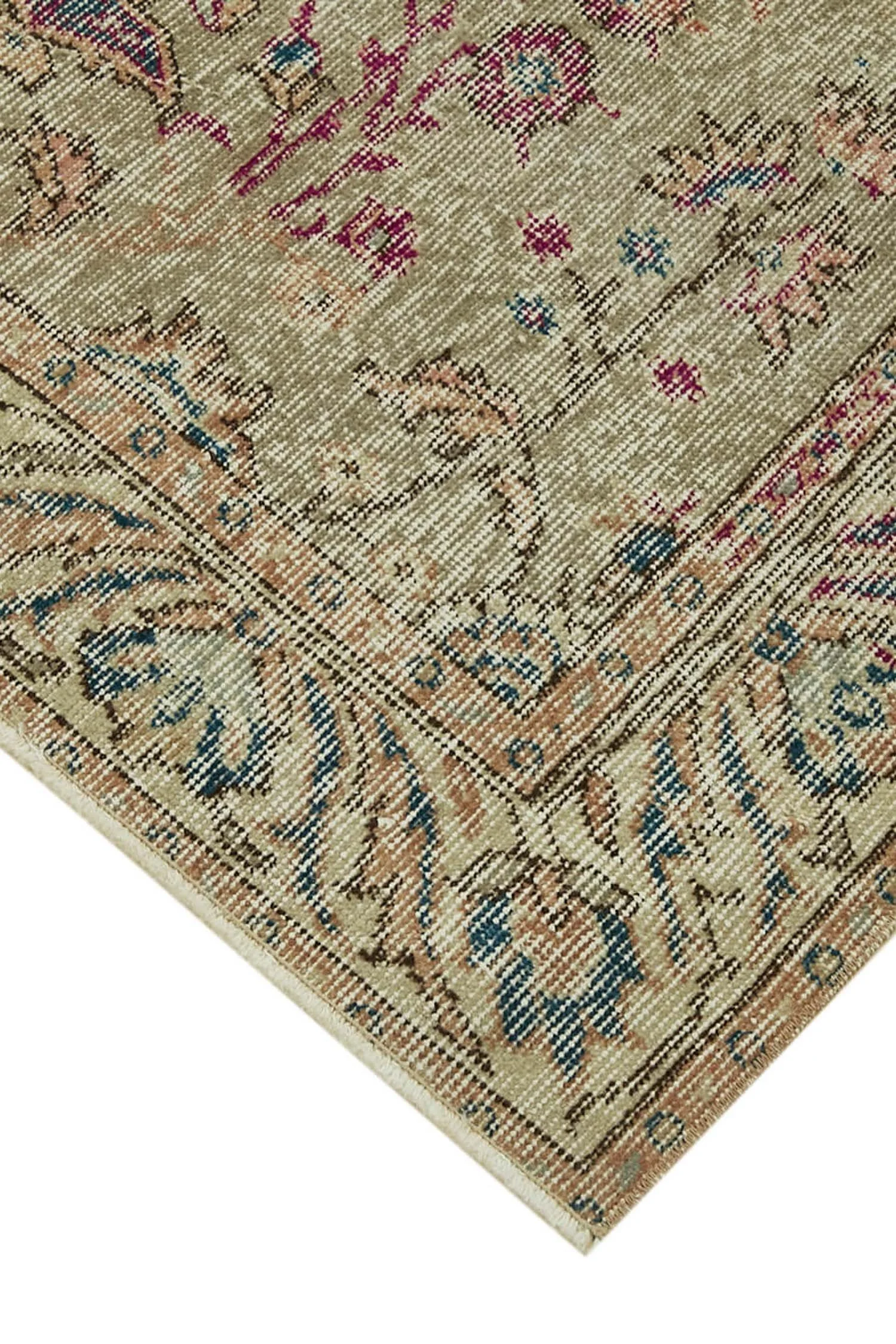
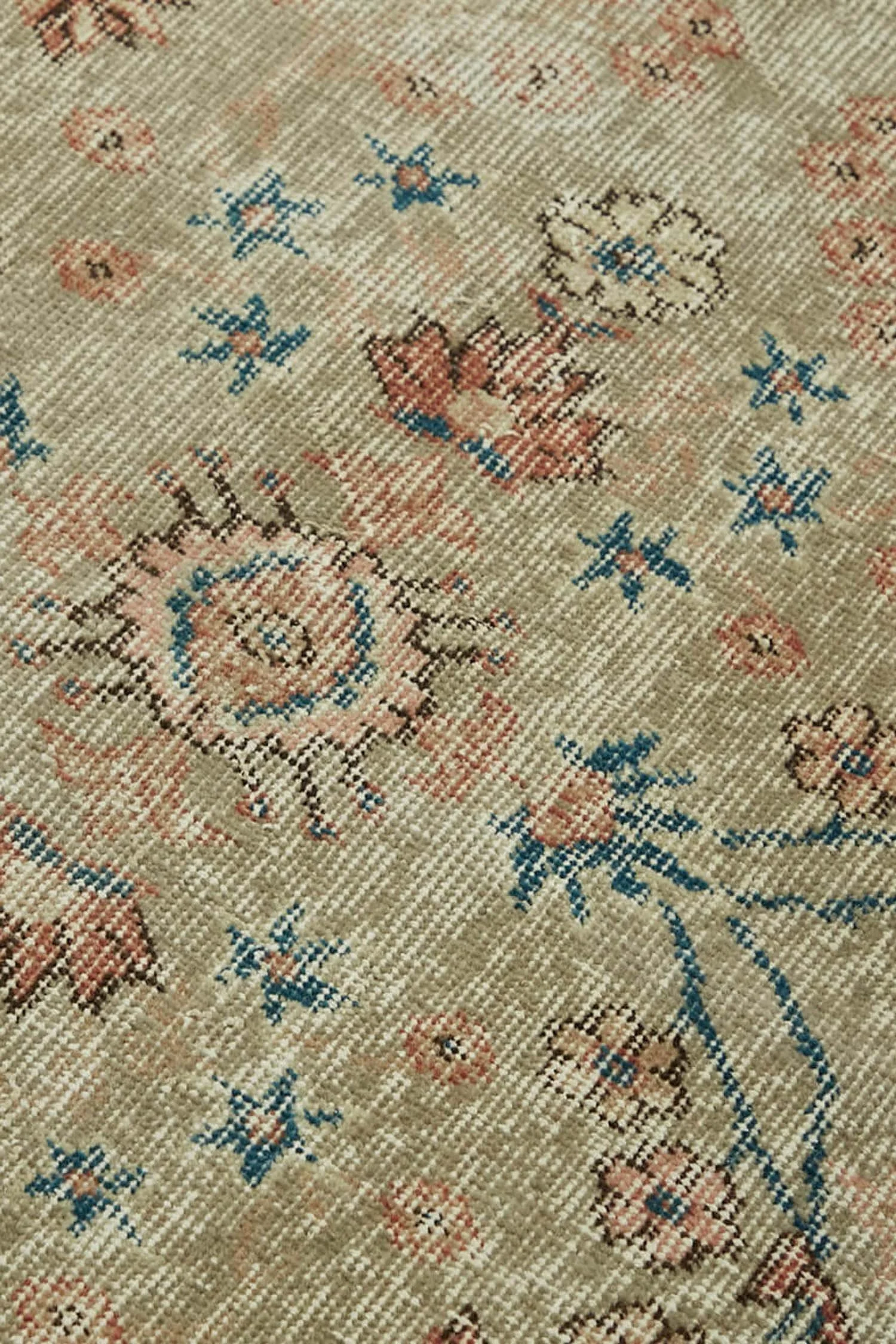
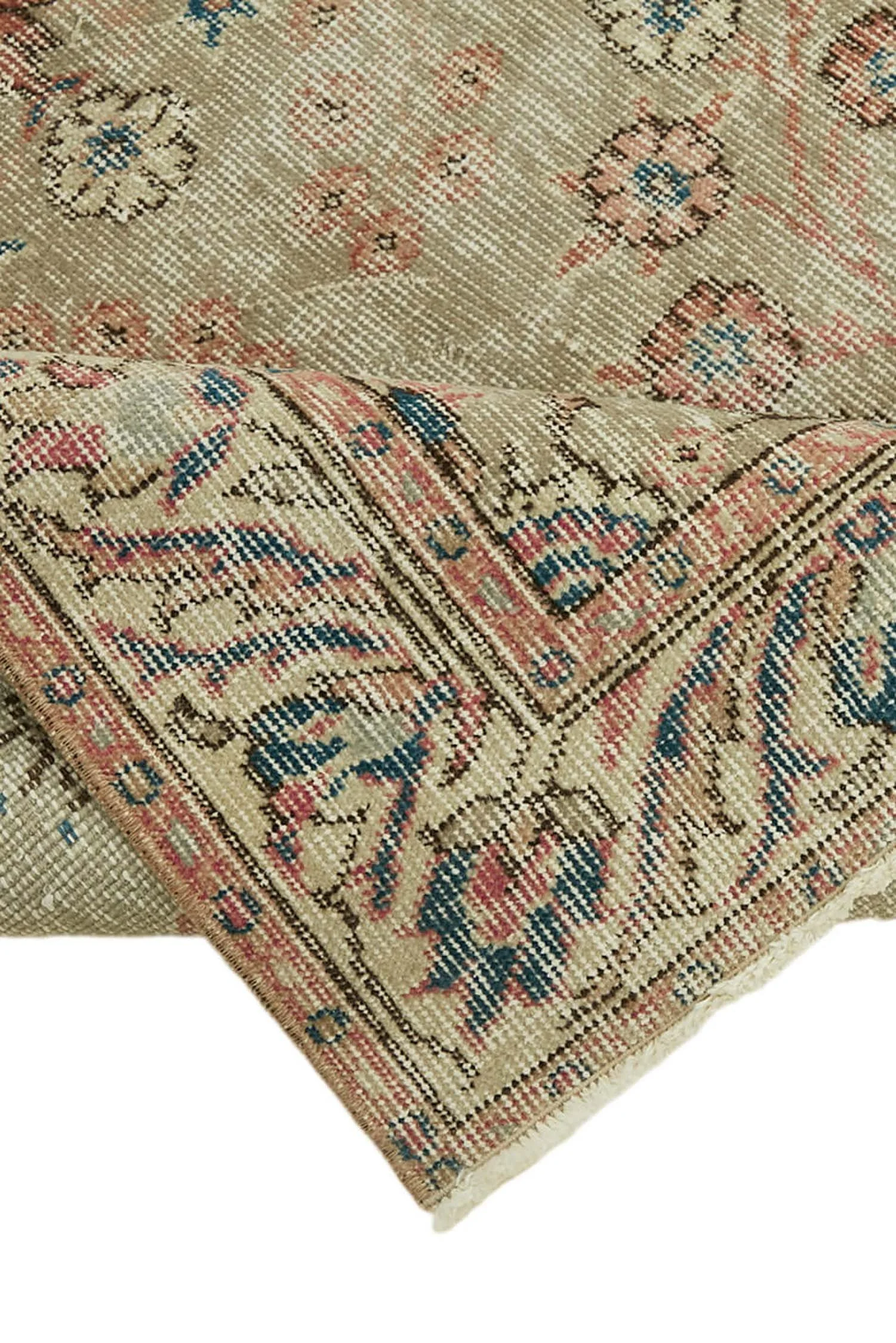
 Image 1 of 5
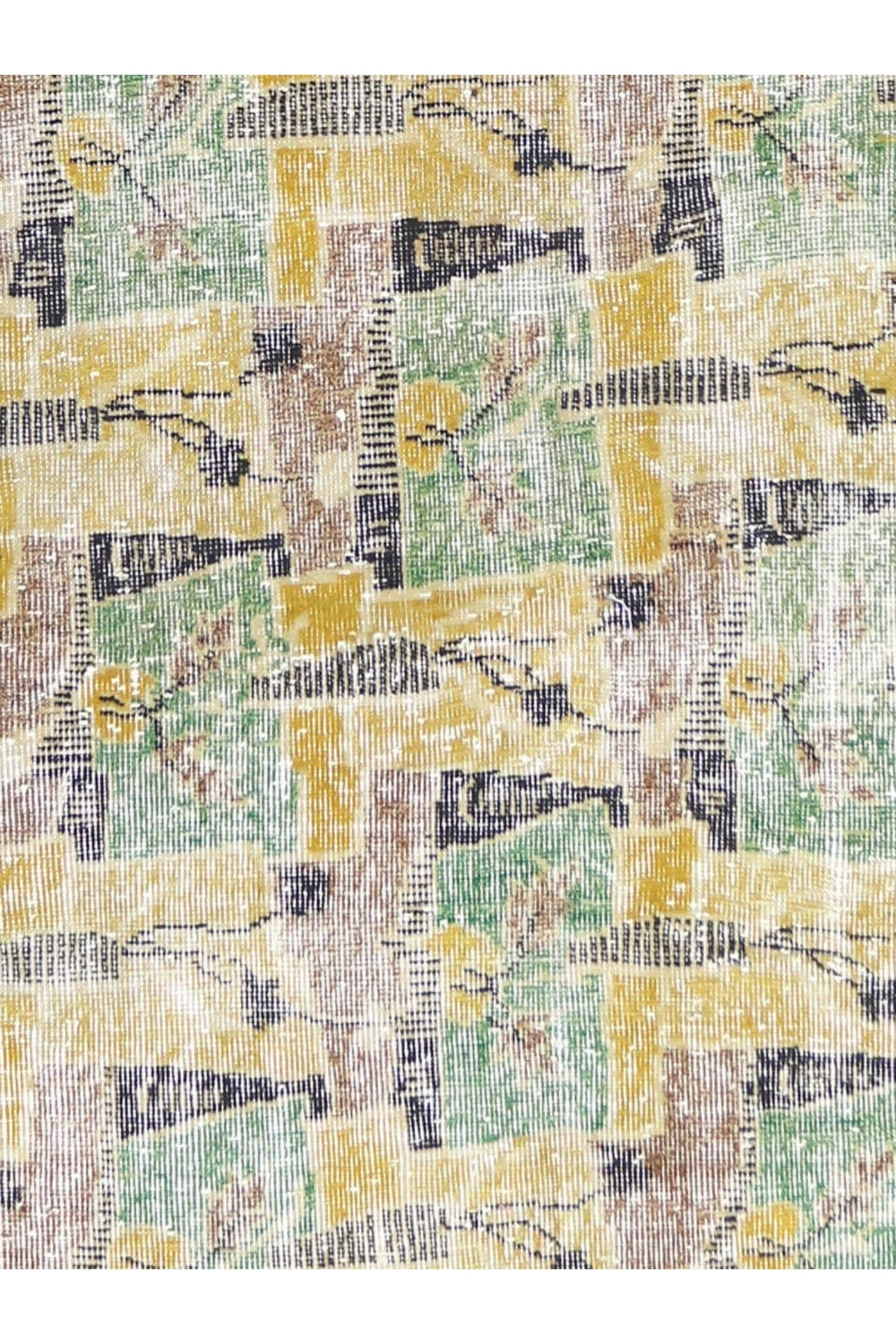 Image 2 of 5
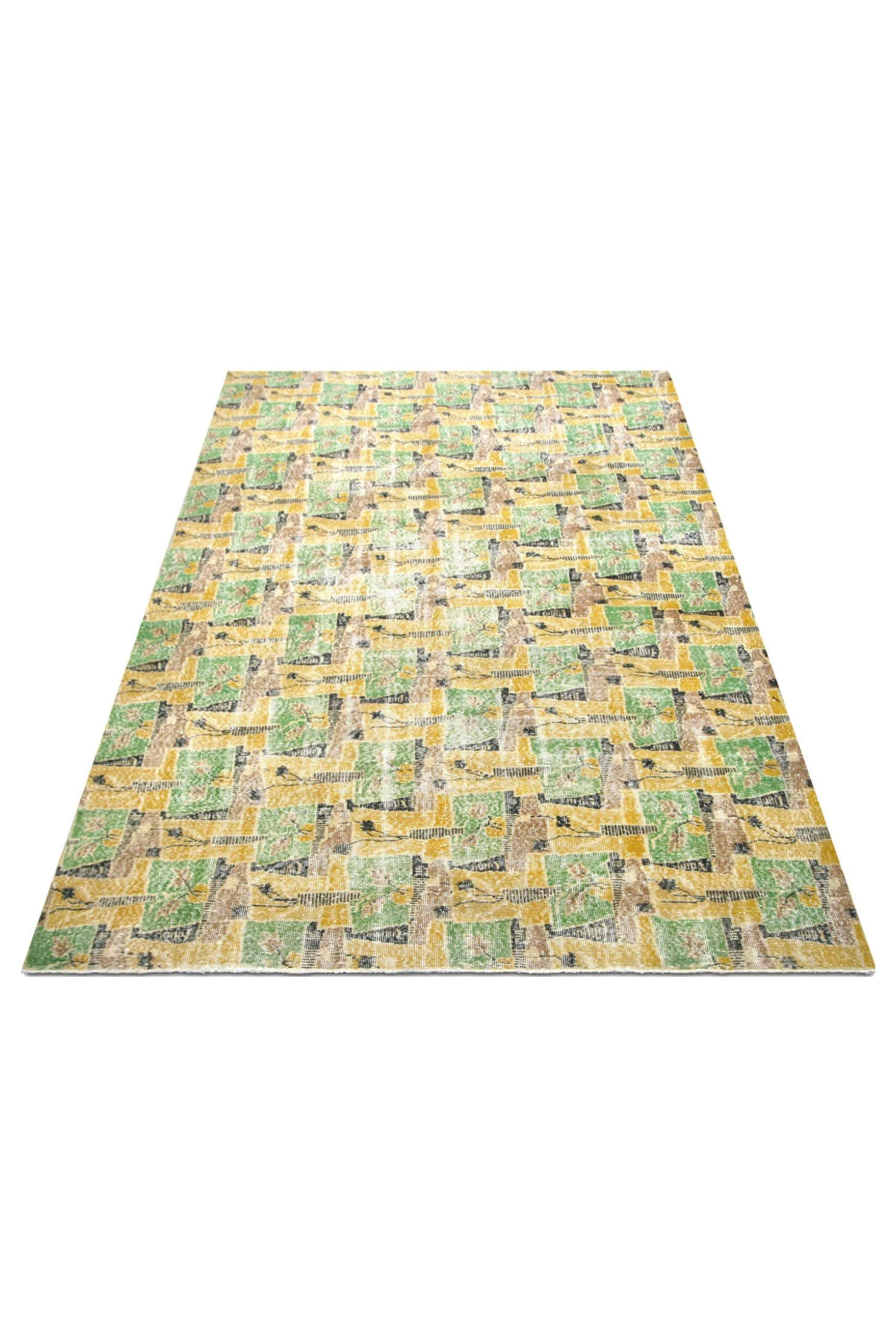 Image 3 of 5
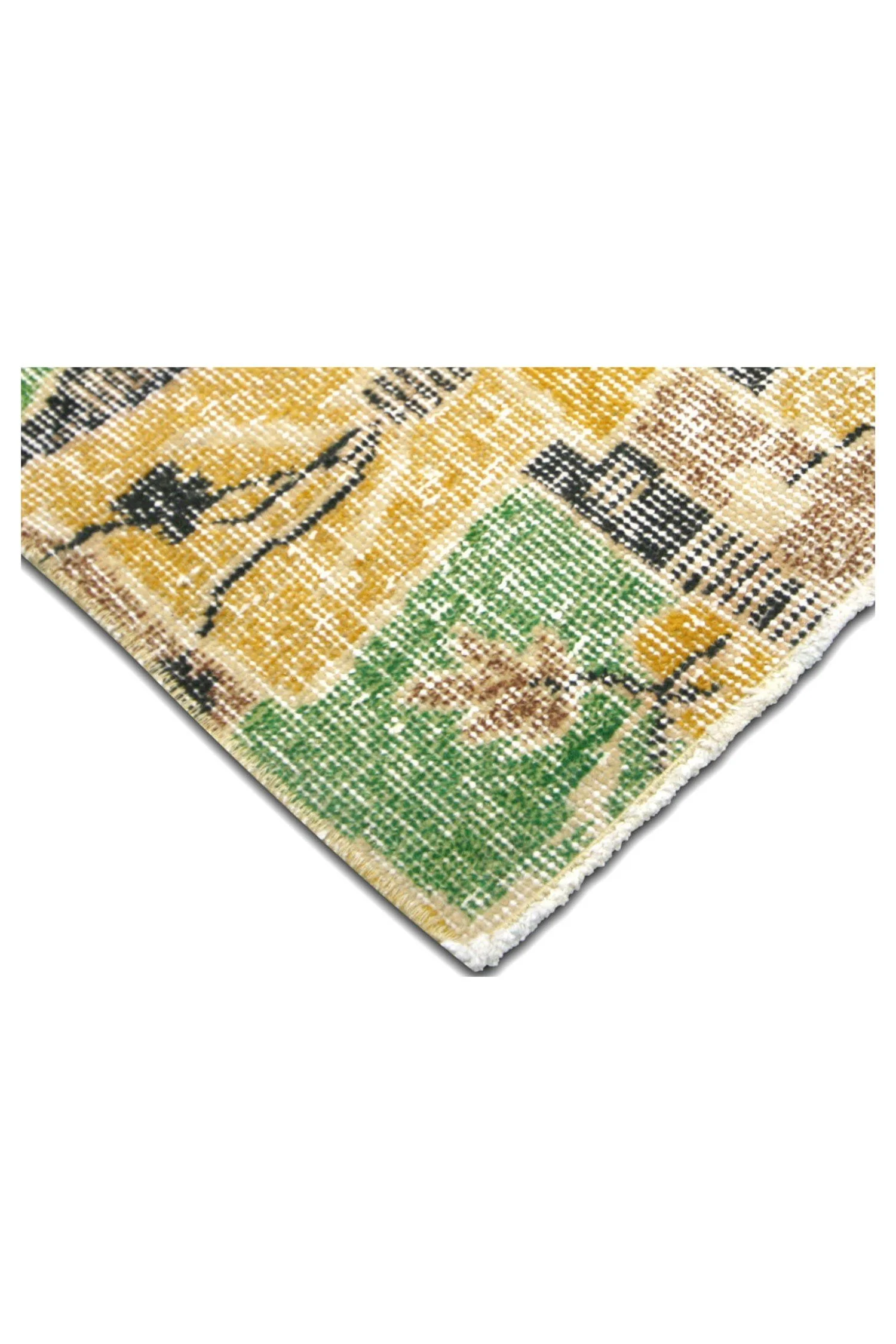 Image 4 of 5
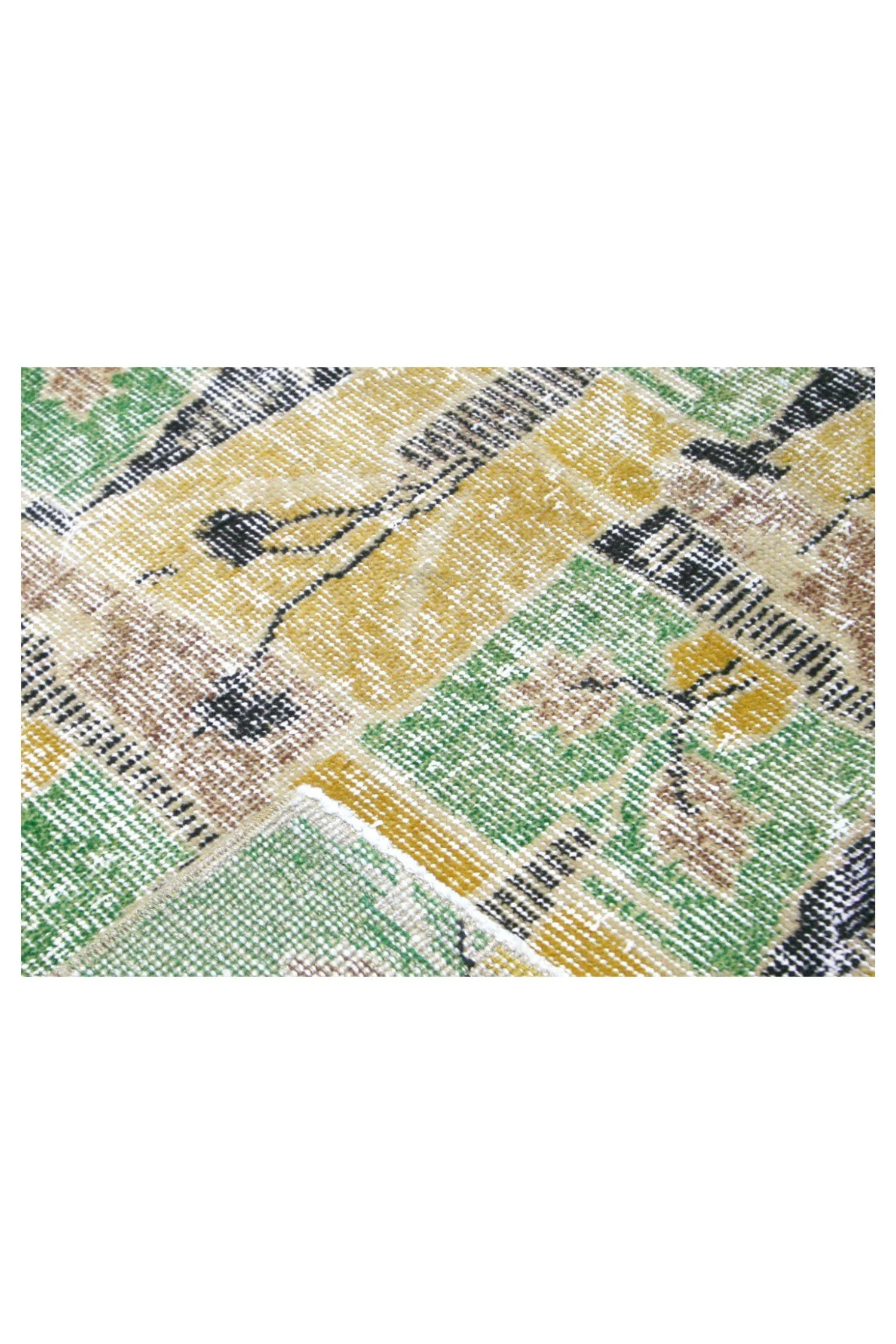 Image 5 of 5
Heritage and Craftsmanship
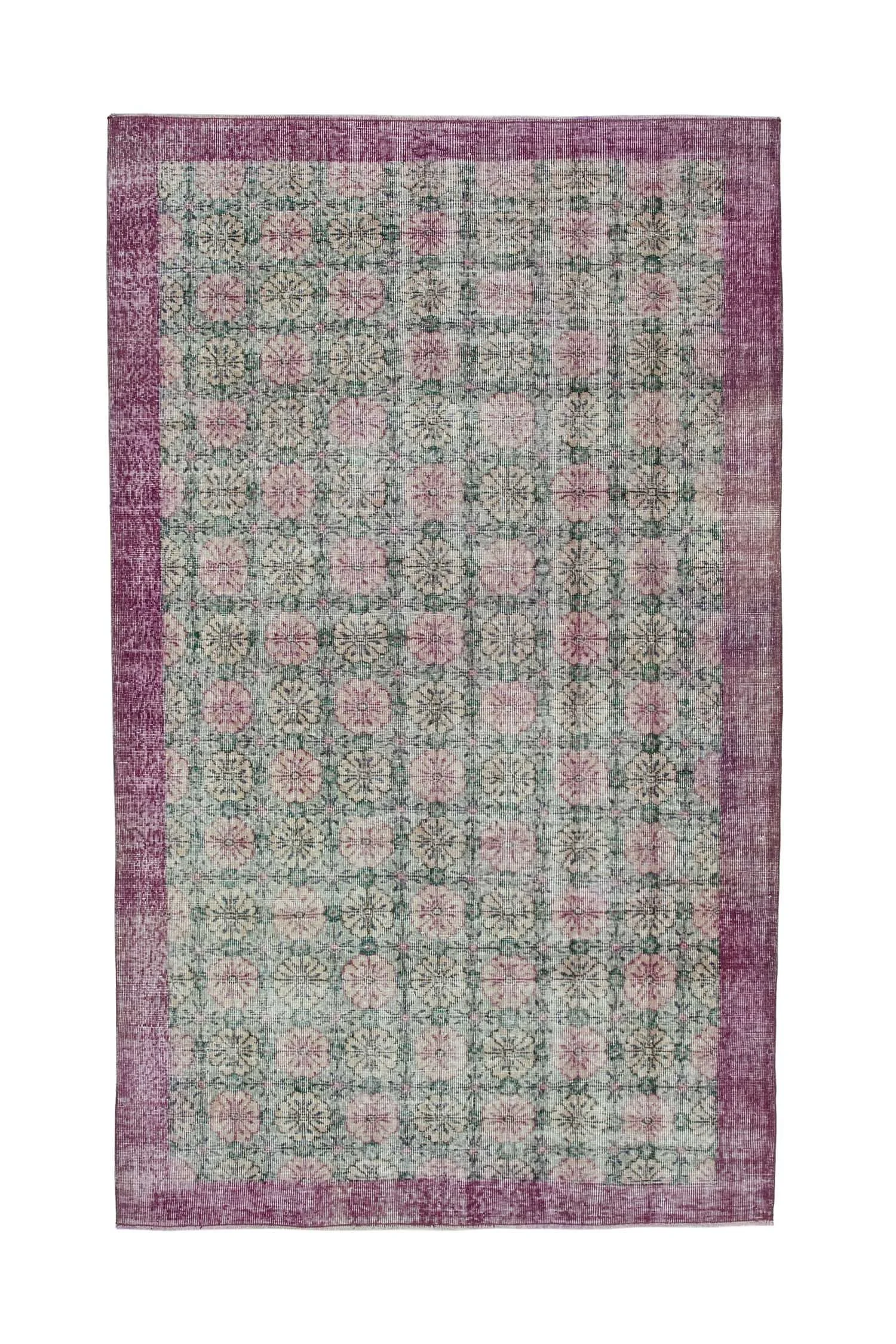
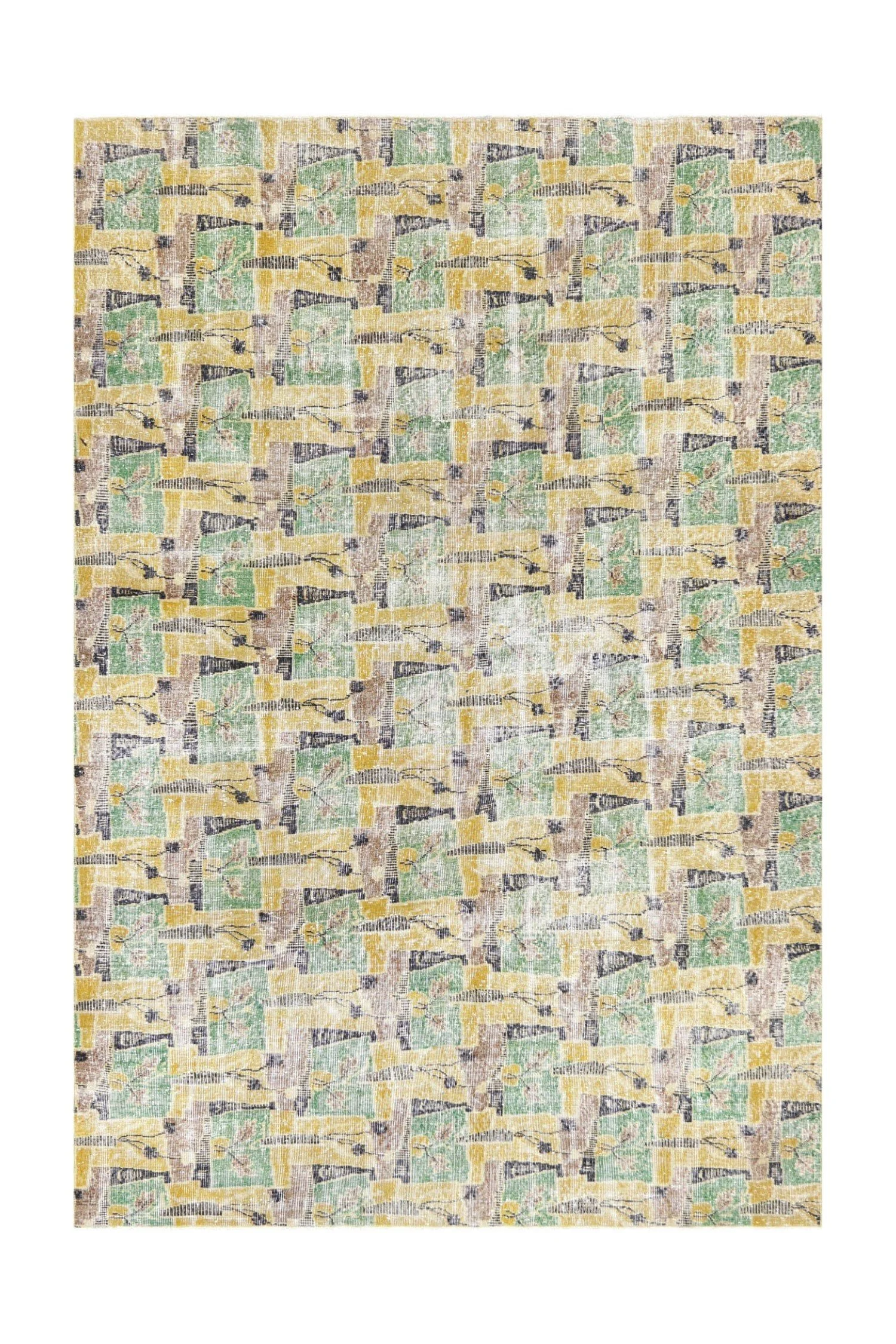
Isparta workshops in the 1960s embraced geometric abstraction with particular enthusiasm, creating rugs that aligned with international modernist design movements. The interlocking rectangular forms seen here reflect influences from Bauhaus principles, mid-century graphics, and contemporary textile design happening across Europe and North America.
Weavers working on these geometric compositions faced different technical challenges than those creating traditional florals. The clean lines and color blocks required precise transitions between hues and consistent tension to maintain crisp edges. Any unevenness in the weaving would disrupt the geometric clarity that defined the design's success.
The lively color palette, particularly the combination of mustard and sage, represents the period's embrace of bolder, more saturated tones. Earlier Turkish rugs typically used more muted colors, but the 1960s saw workshops experimenting with vibrant combinations that reflected contemporary tastes in interior design and fashion.
Design Elements
The interlocking rectangular forms create a repeating pattern that organizes the field through geometric relationships. Each block connects to adjacent shapes, creating visual continuity across the surface. The pattern reads as intentionally structured rather than random or improvised.
Mustard and sage blocks alternate in a rhythm that prevents monotony while maintaining overall coherence. The soft brown and charcoal accents provide definition and prevent the color transitions from feeling too abrupt. The composition balances visual energy with order.
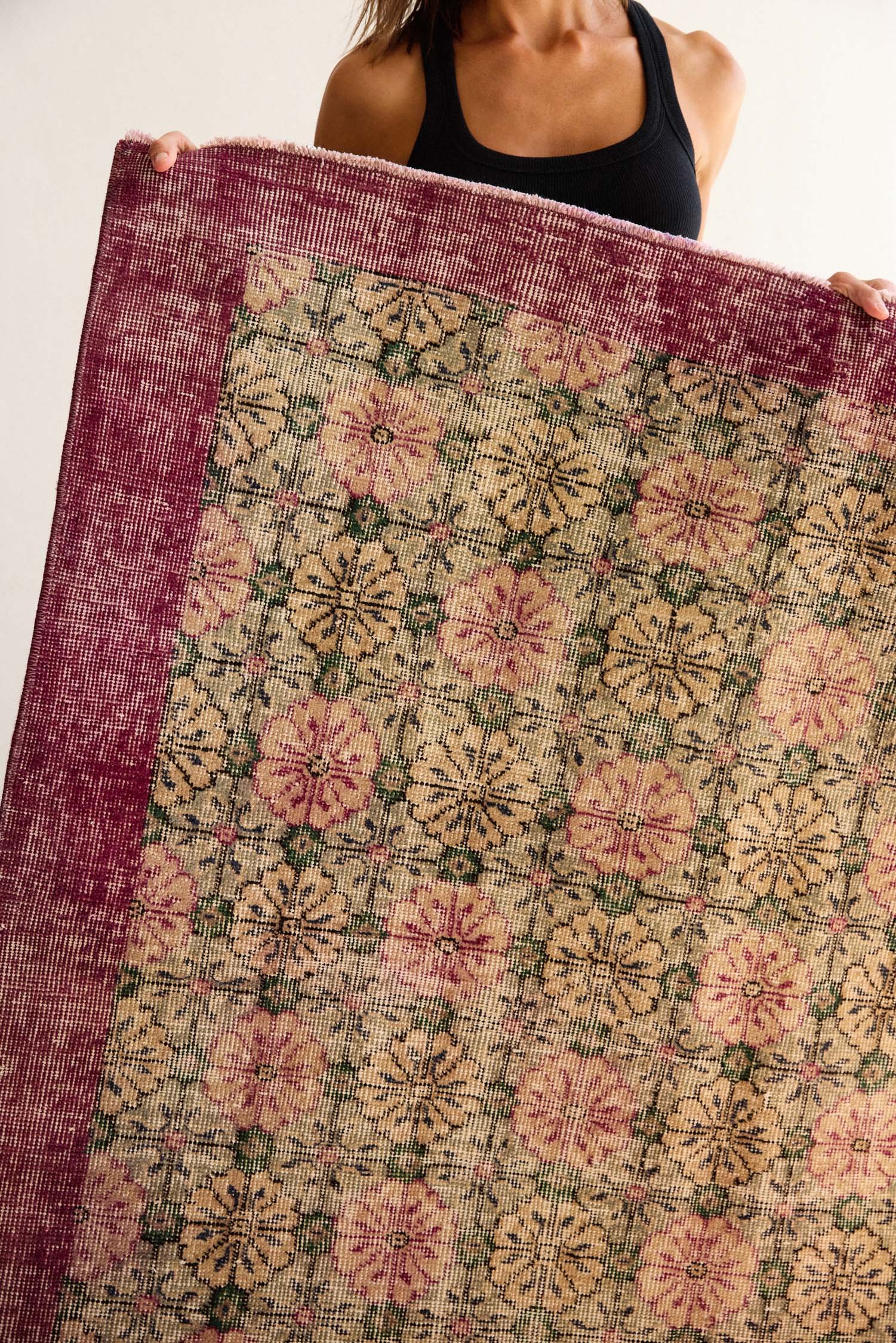
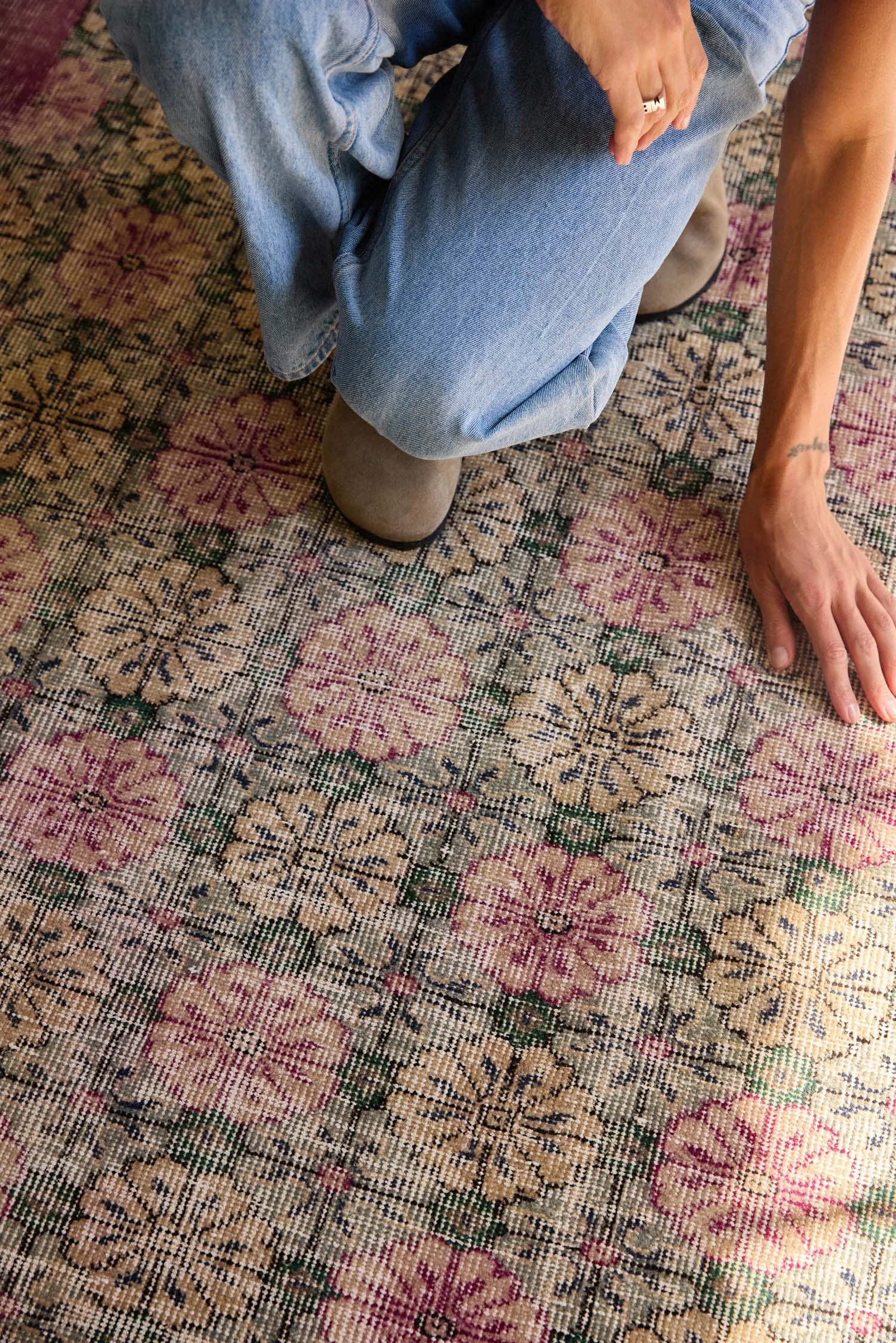
The playful modern cadence comes from the way forms intersect and overlap. The pattern creates movement through shape relationships rather than through elaborate decoration or traditional motif development. The textile texture adds subtle dimensionality to what could otherwise read as flat graphic design.
Placement
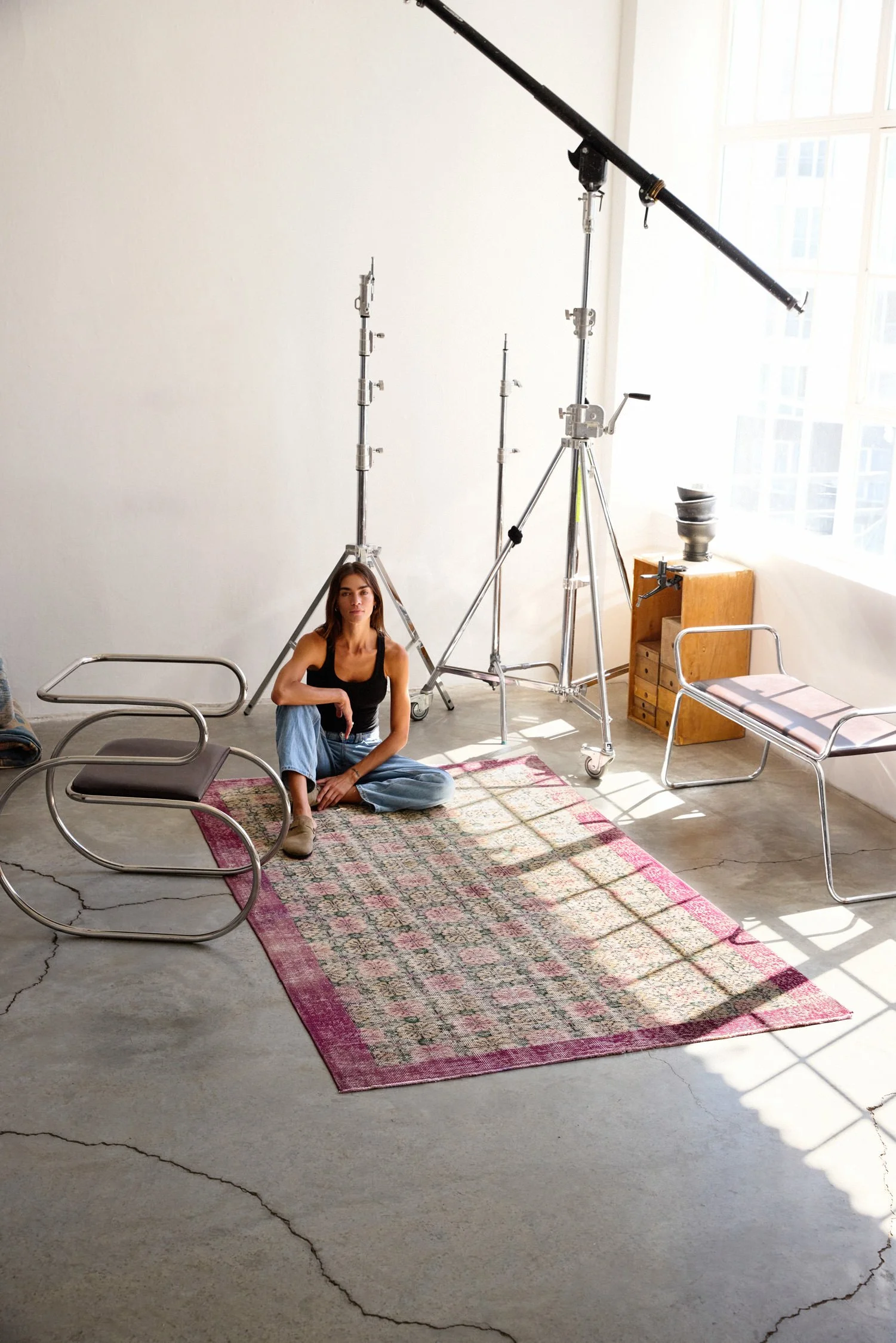
At 7' x 10'5", this fits in living rooms where you want to anchor seating areas with color and pattern. Dining rooms work well with tables that seat six to eight. Bedrooms benefit from the playful energy, particularly in spaces styled with midcentury or contemporary furnishings.
The mustard and sage palette brings bold color to interiors, working particularly well in spaces with neutral walls and furnishings where the rug can serve as a focal point. The geometric clarity suits contemporary and midcentury modern settings naturally. The playful quality also works in eclectic spaces that mix periods and styles with confidence.
Care Recommendations
To preserve the rug's beauty:
Rotate periodically for even wear
Vacuum regularly using a suction-only setting
Address spills immediately by blotting, never rubbing
Professional cleaning recommended annually
Avoid direct sunlight to maintain color integrity
Turkish weavers in the 1960s proved that geometric abstraction could be bold and playful at the same time.