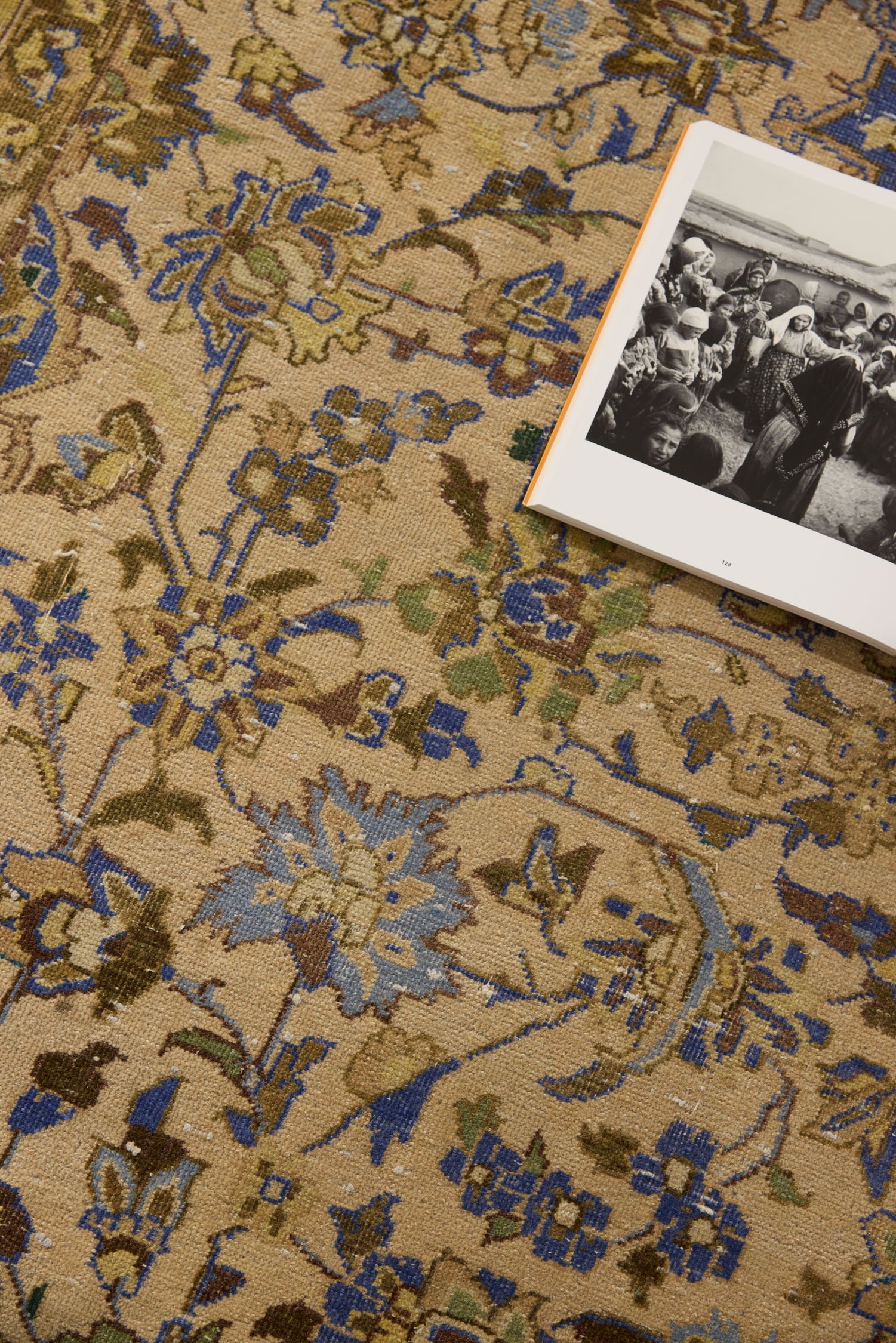
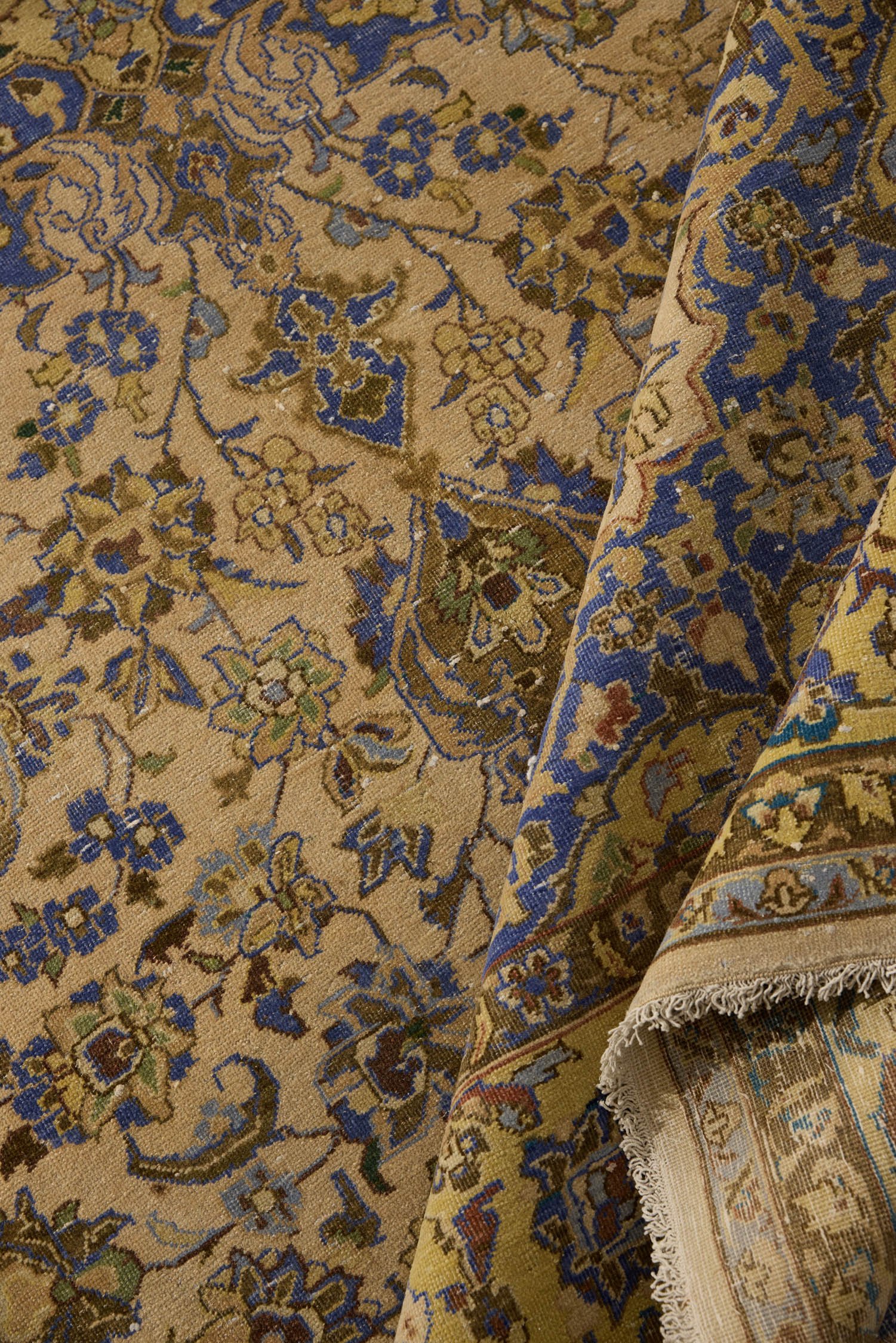
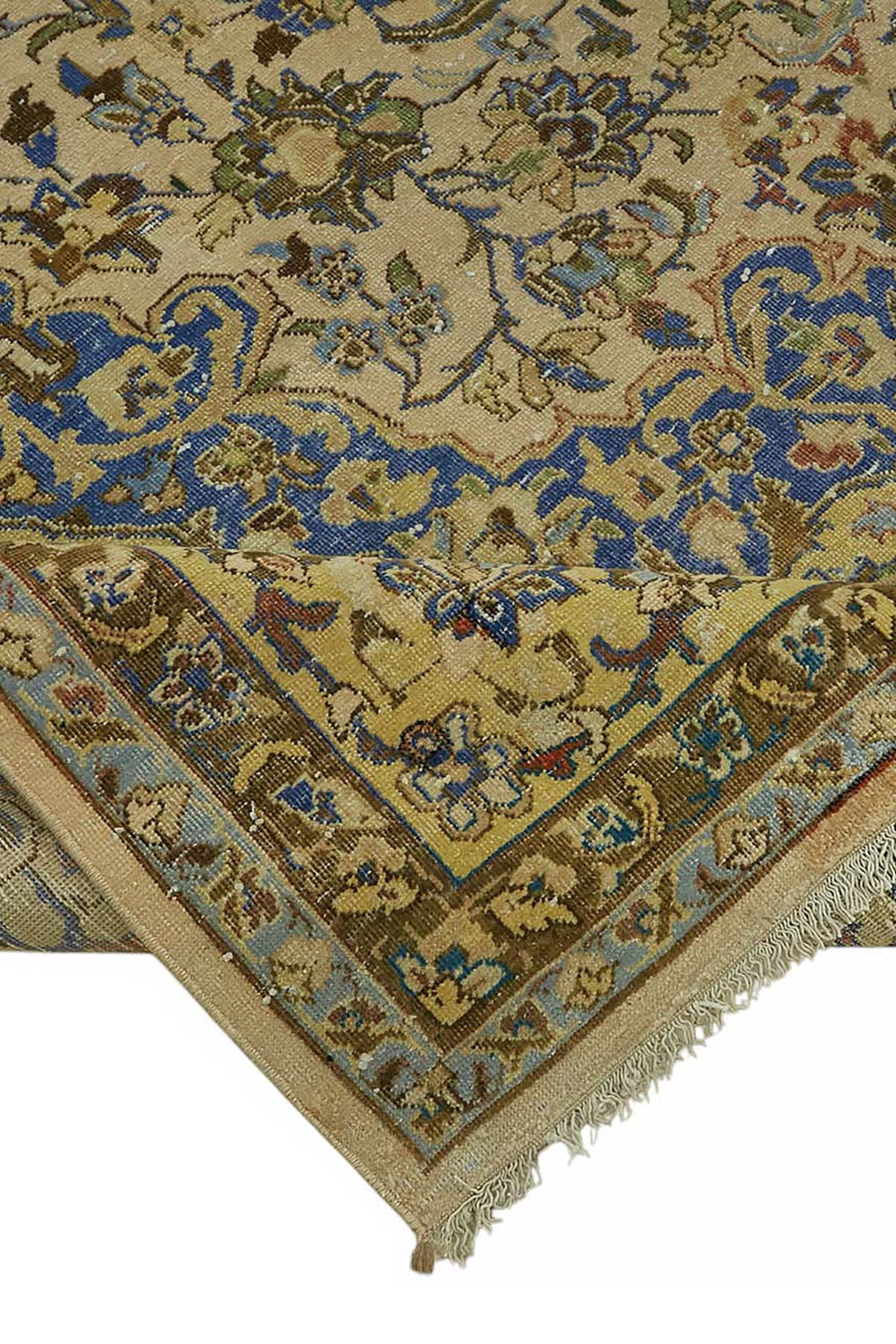
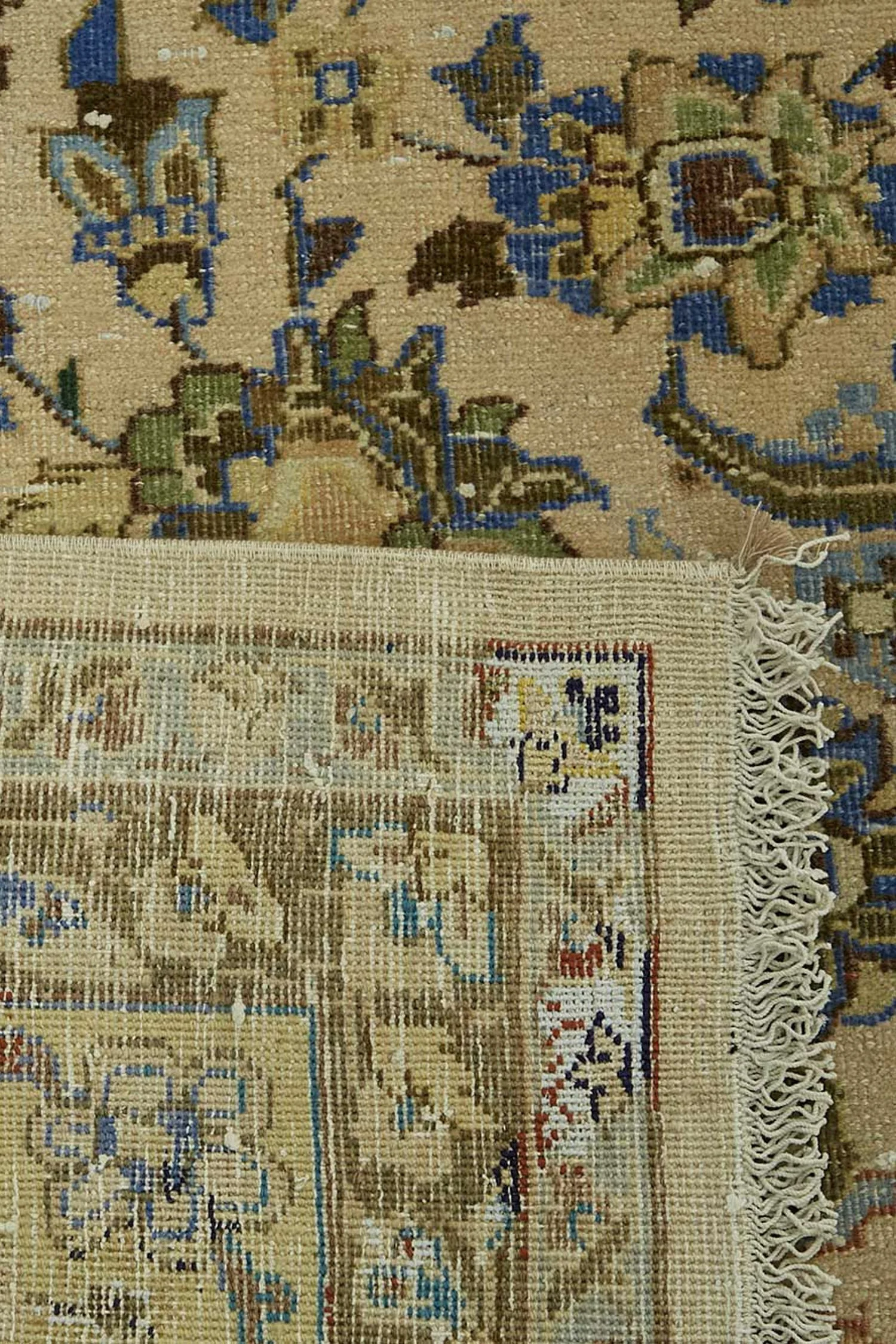
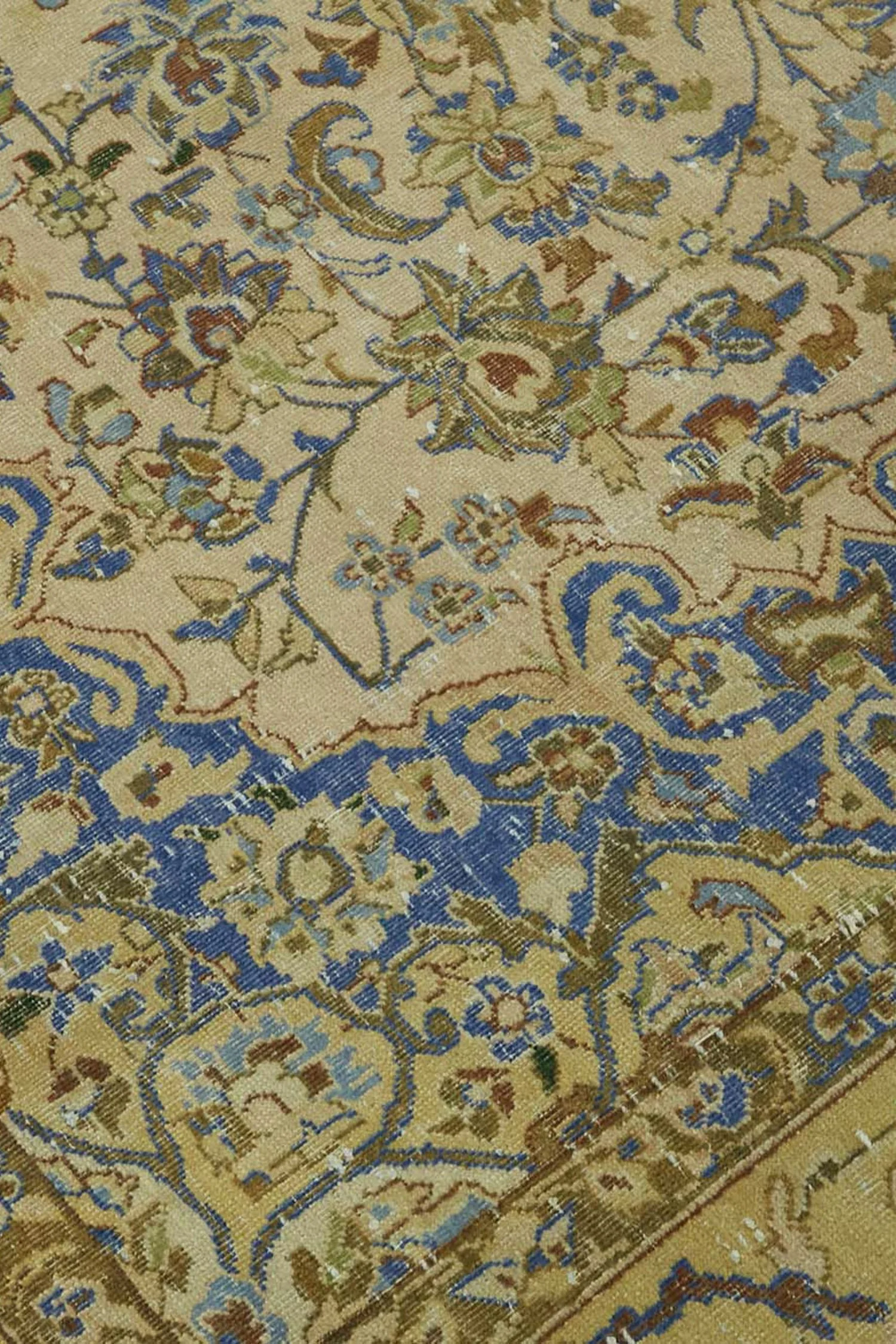
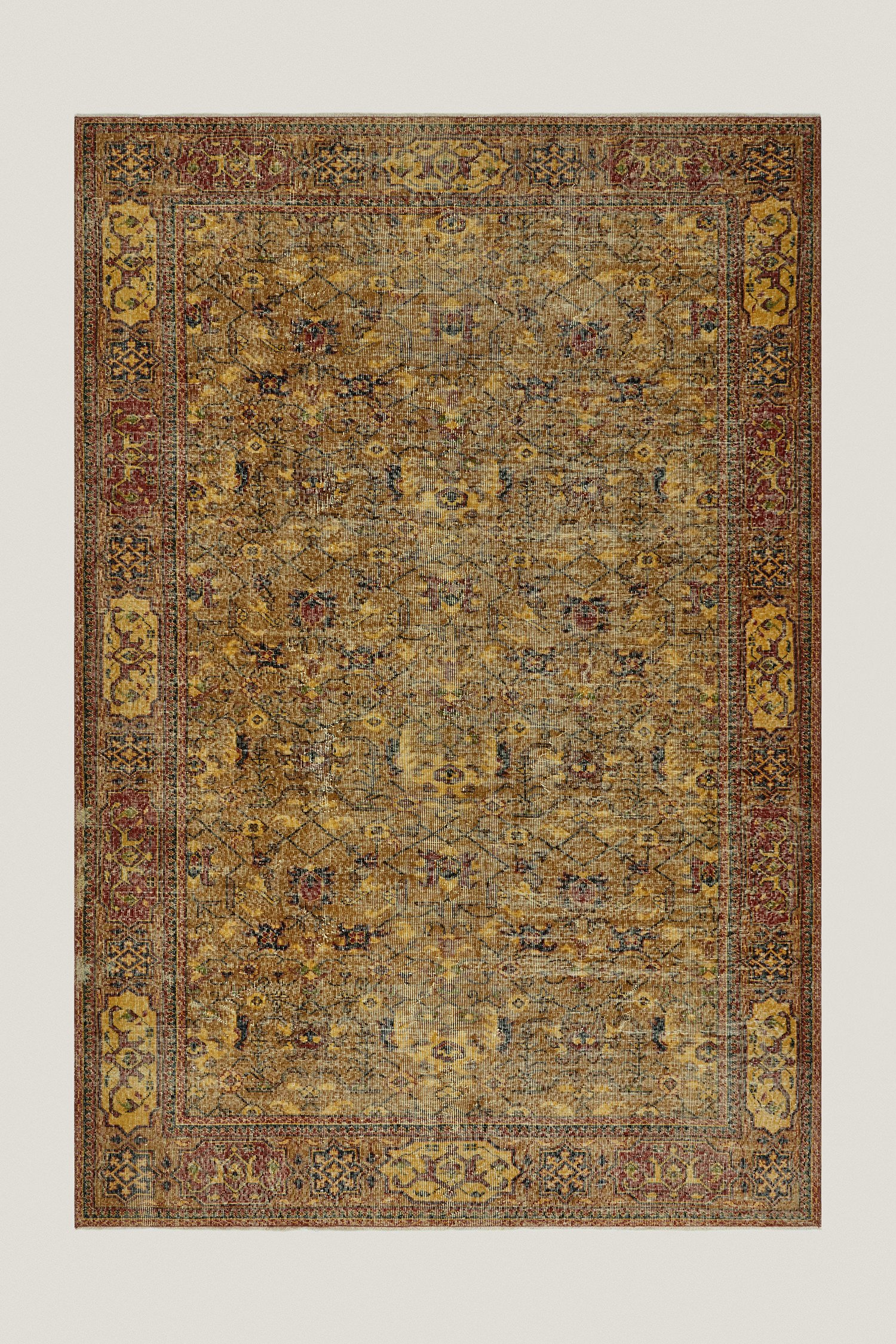
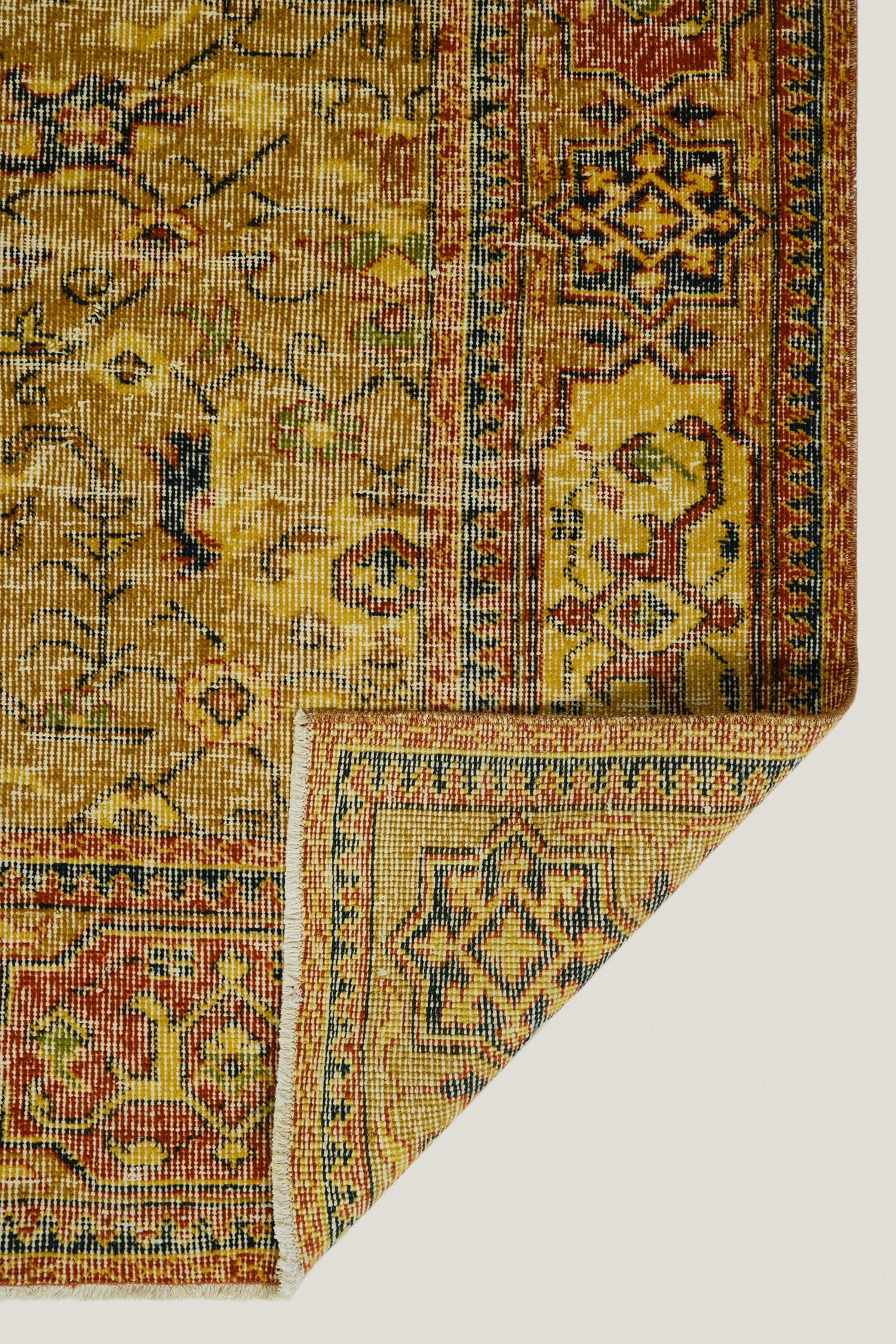
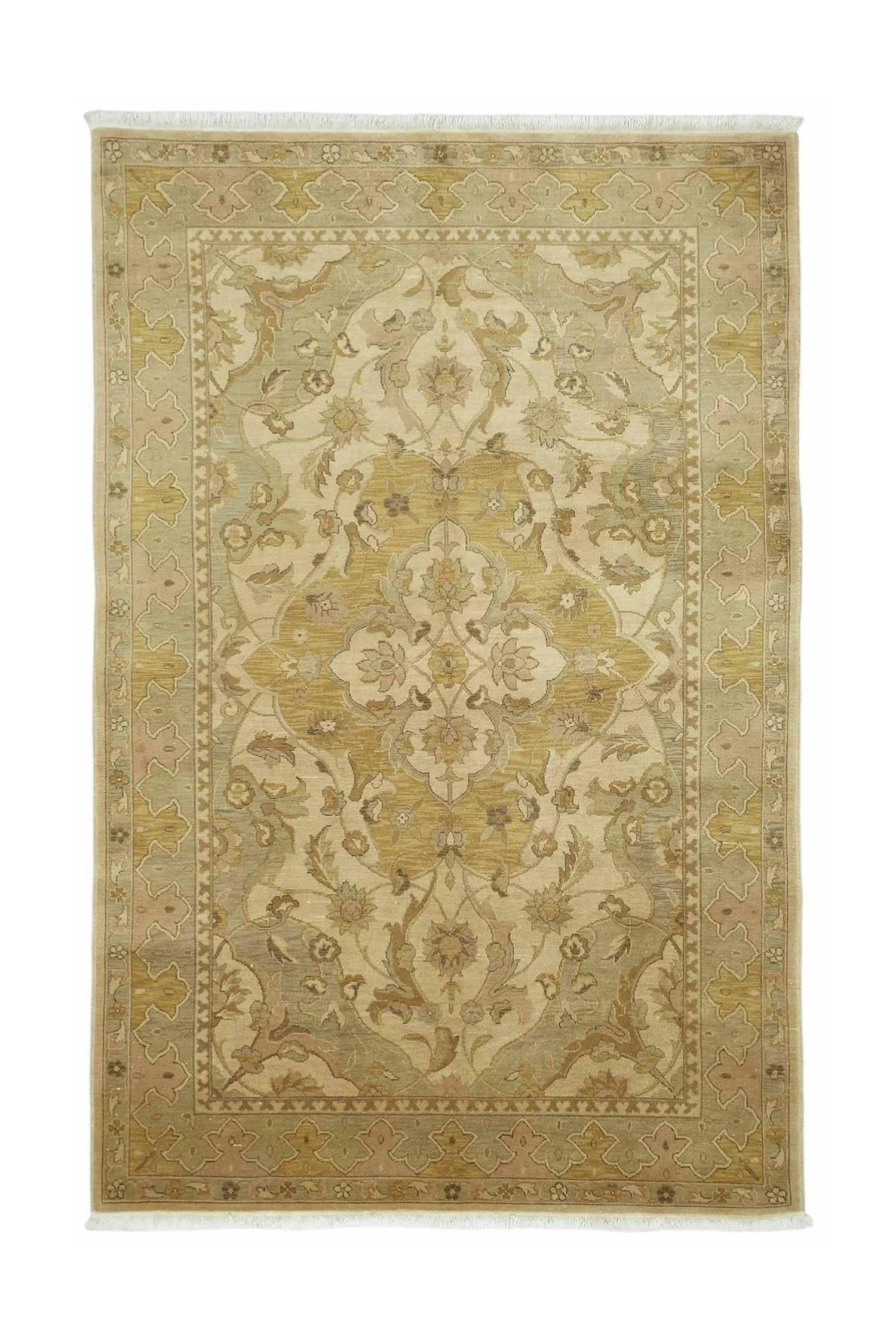
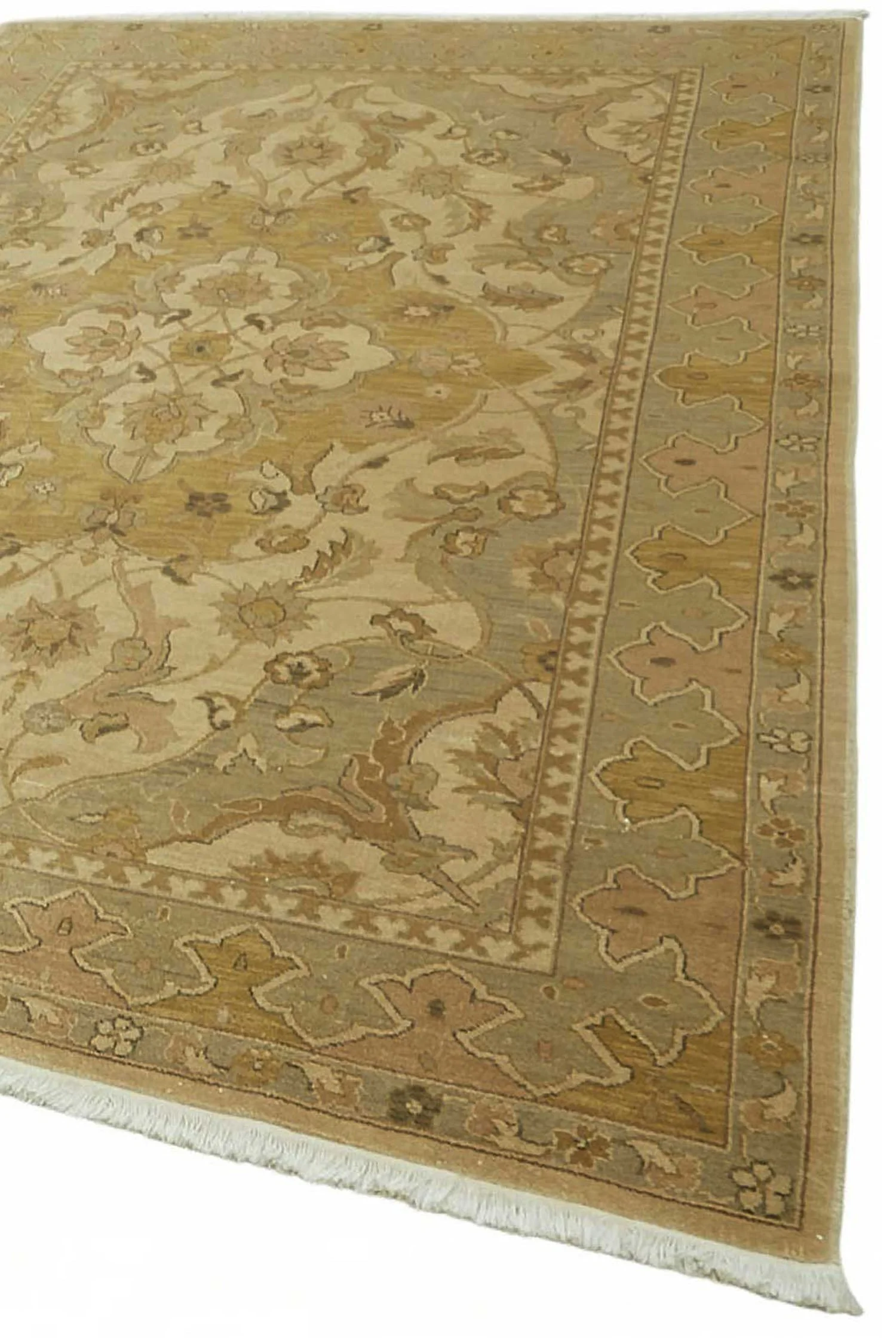
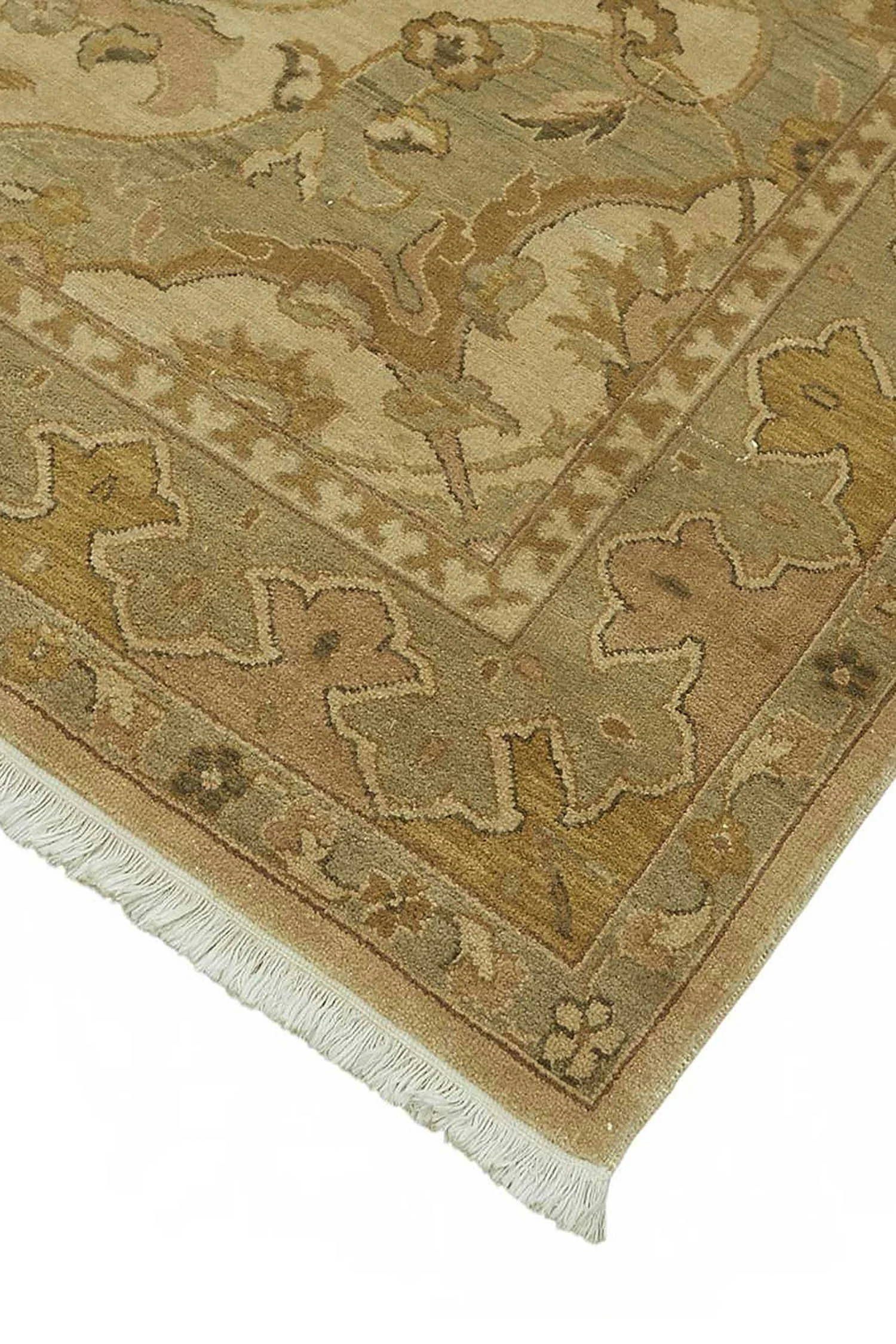
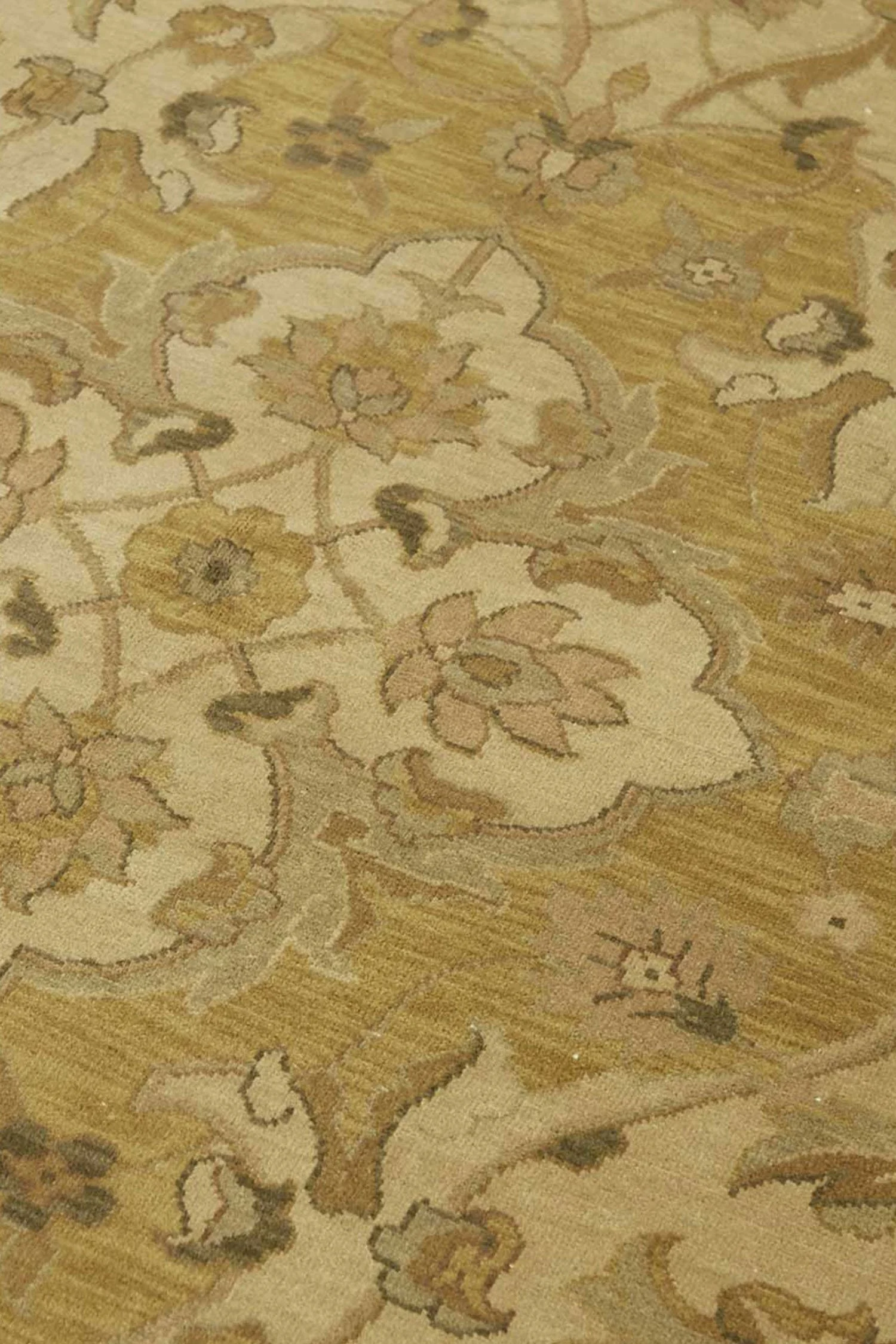
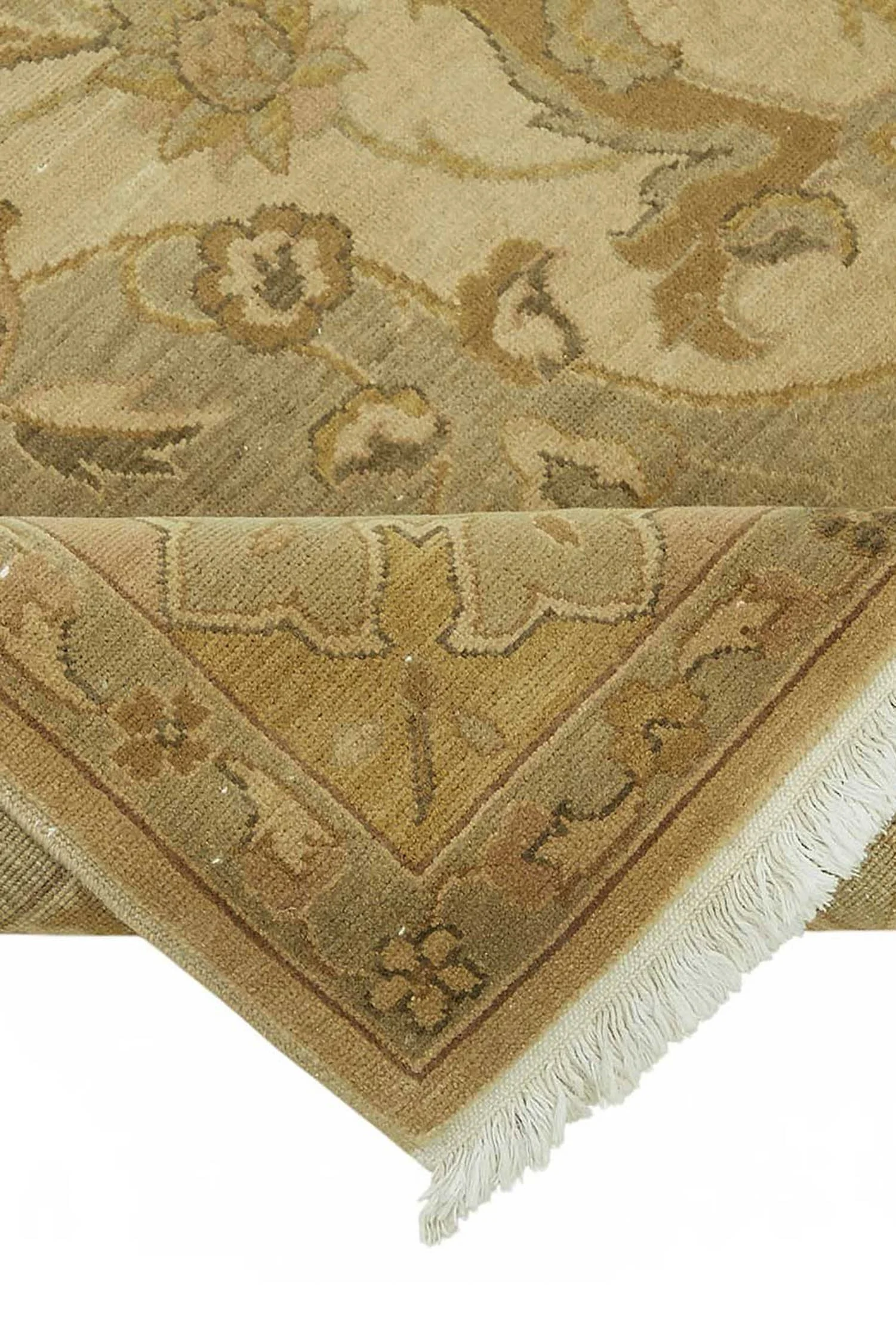
 Image 1 of 5
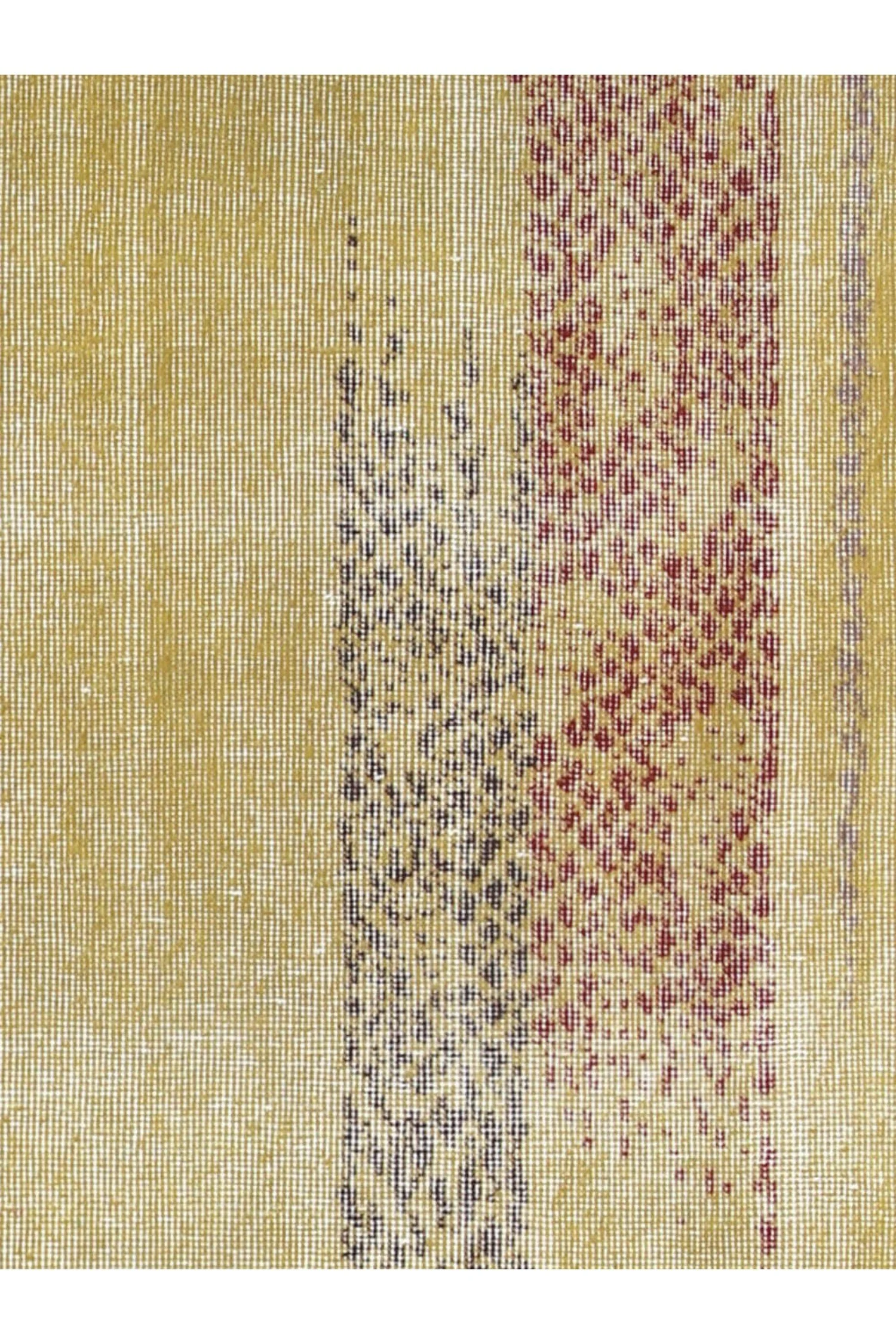 Image 2 of 5
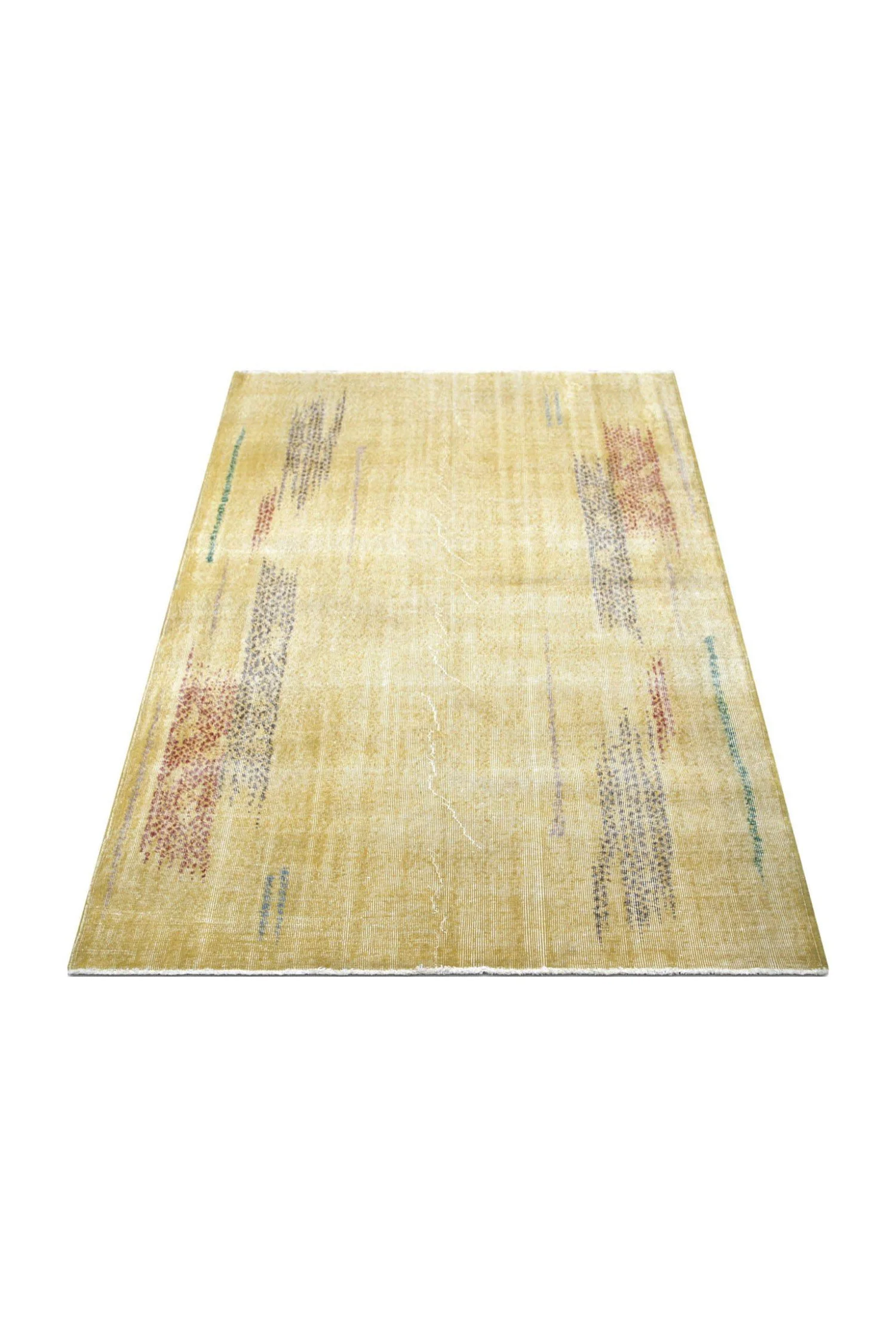 Image 3 of 5
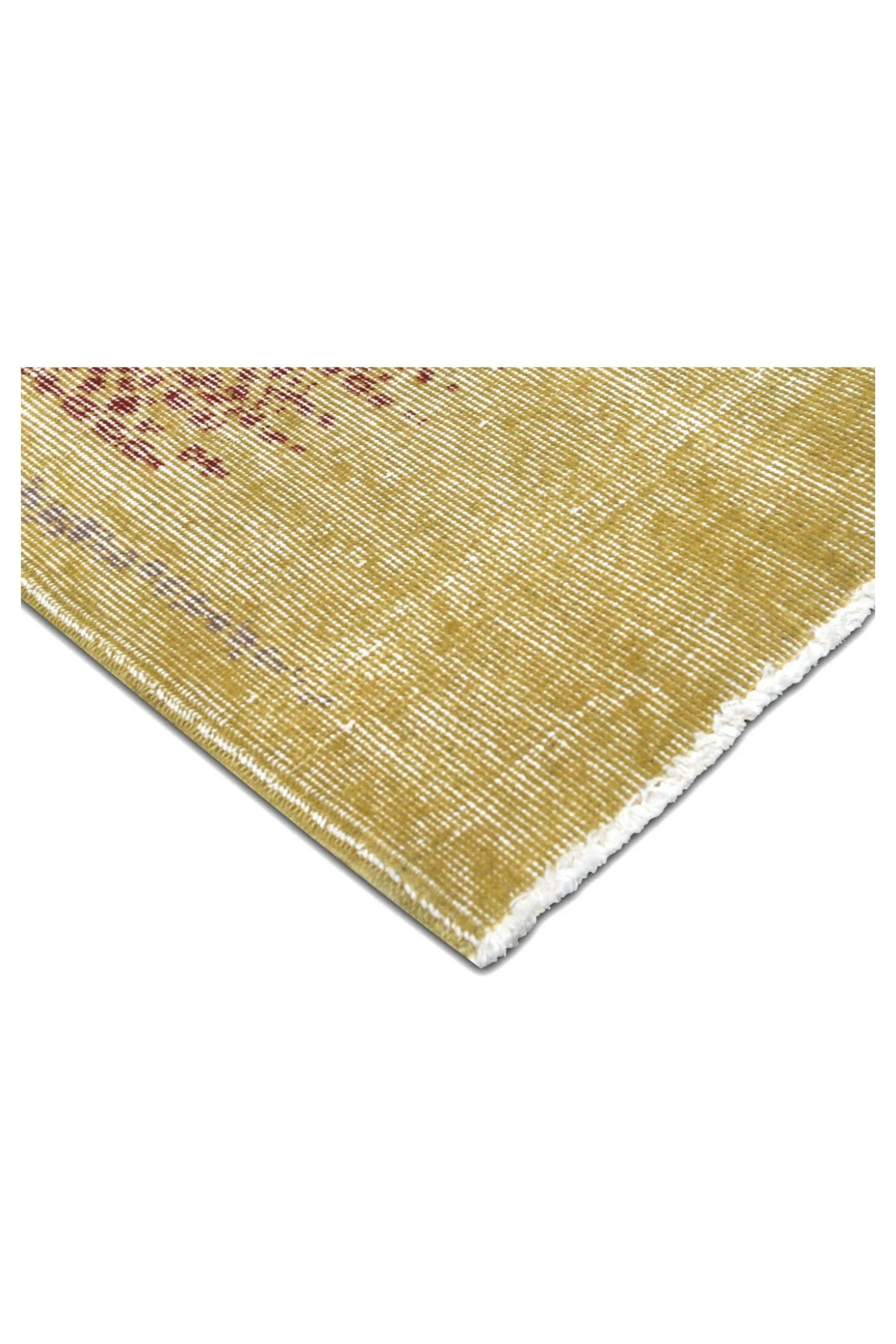 Image 4 of 5
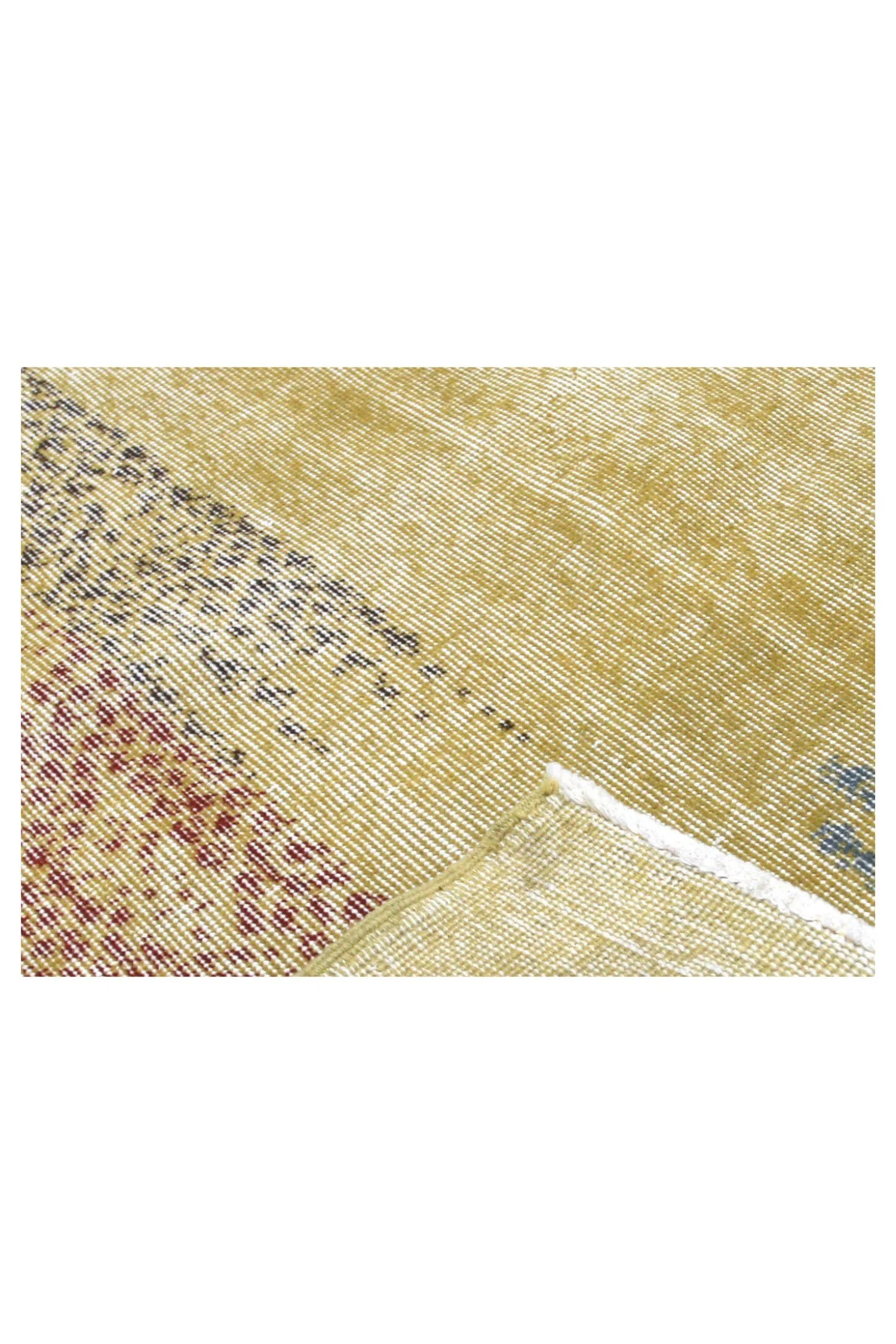 Image 5 of 5
Heritage and Craftsmanship
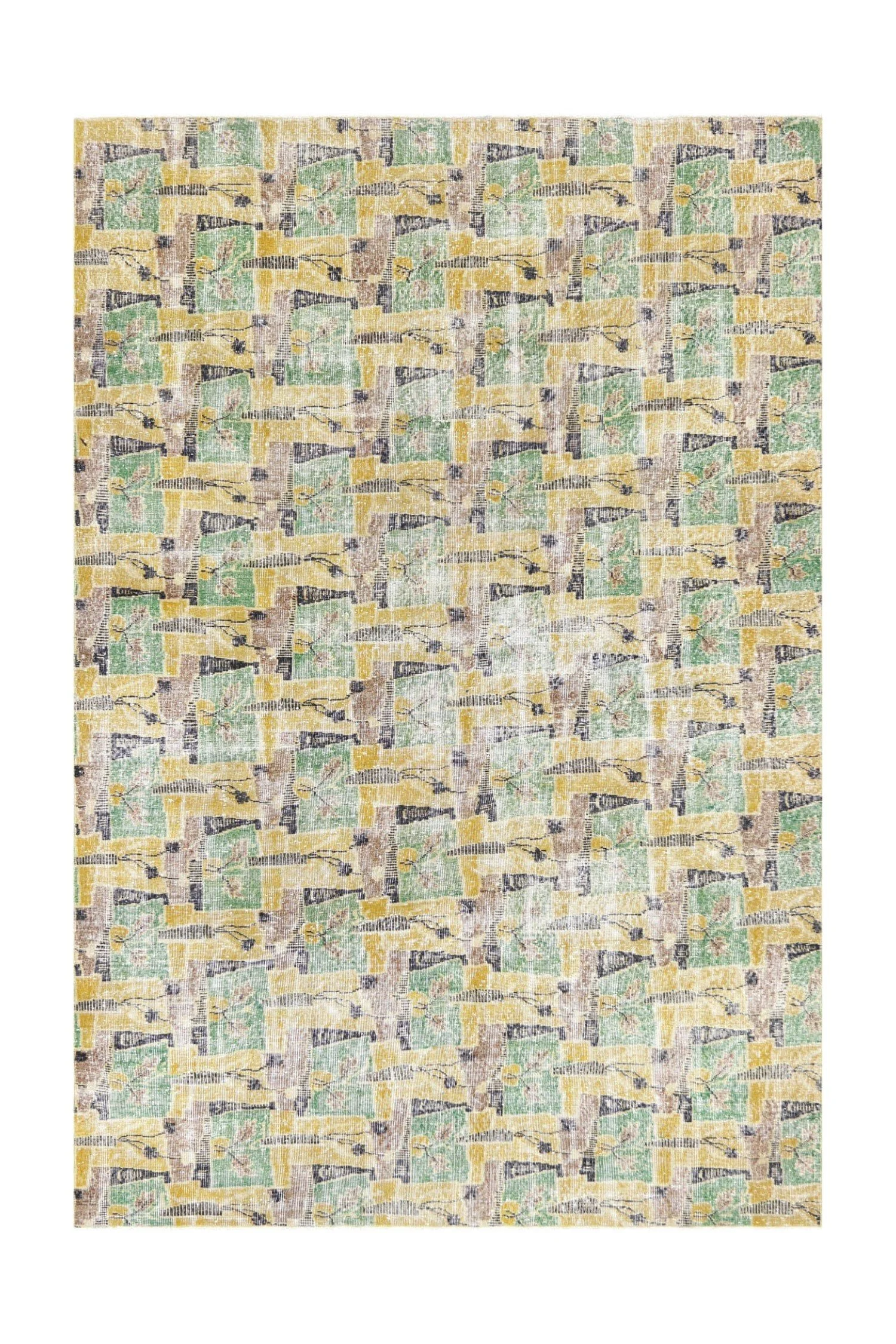
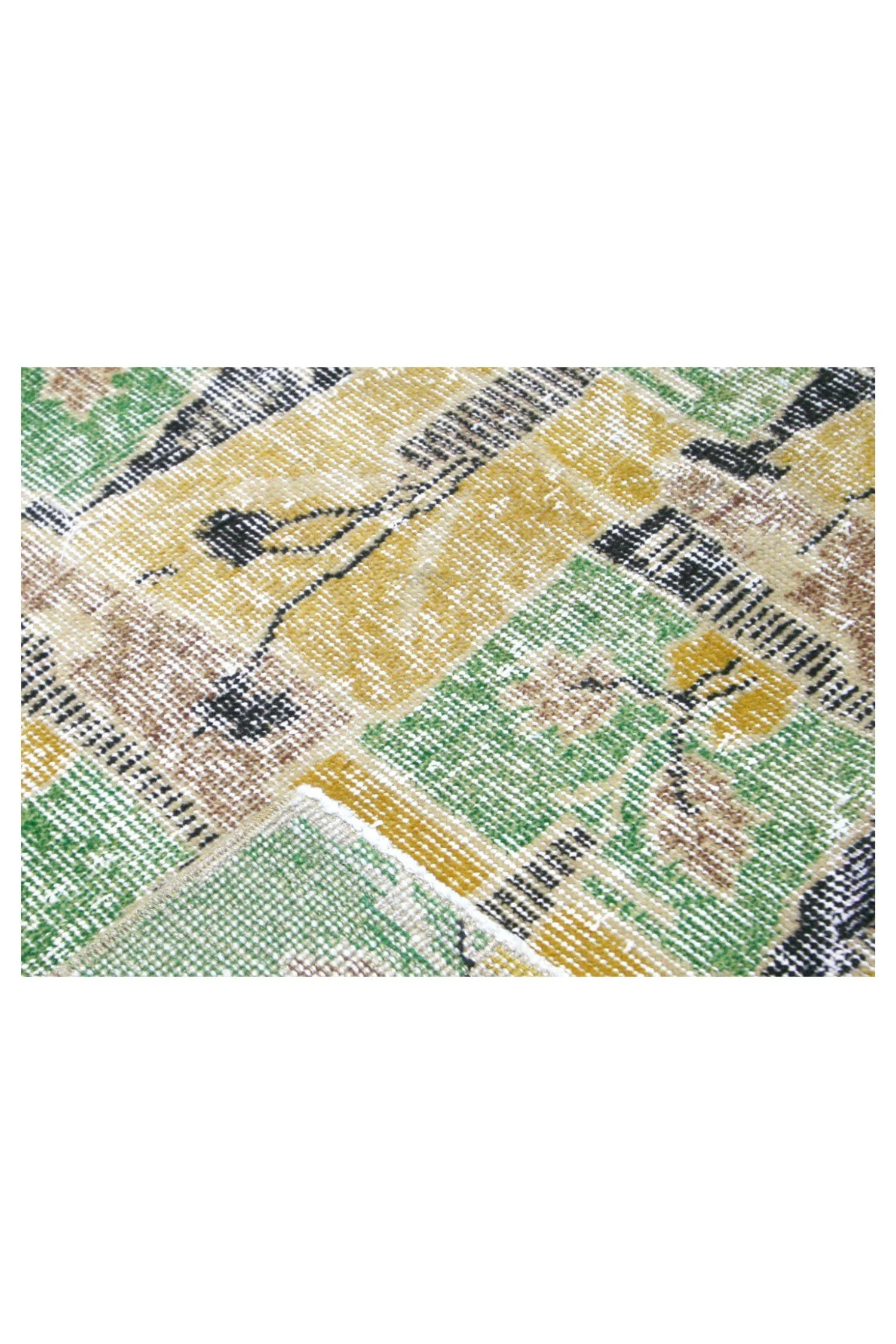
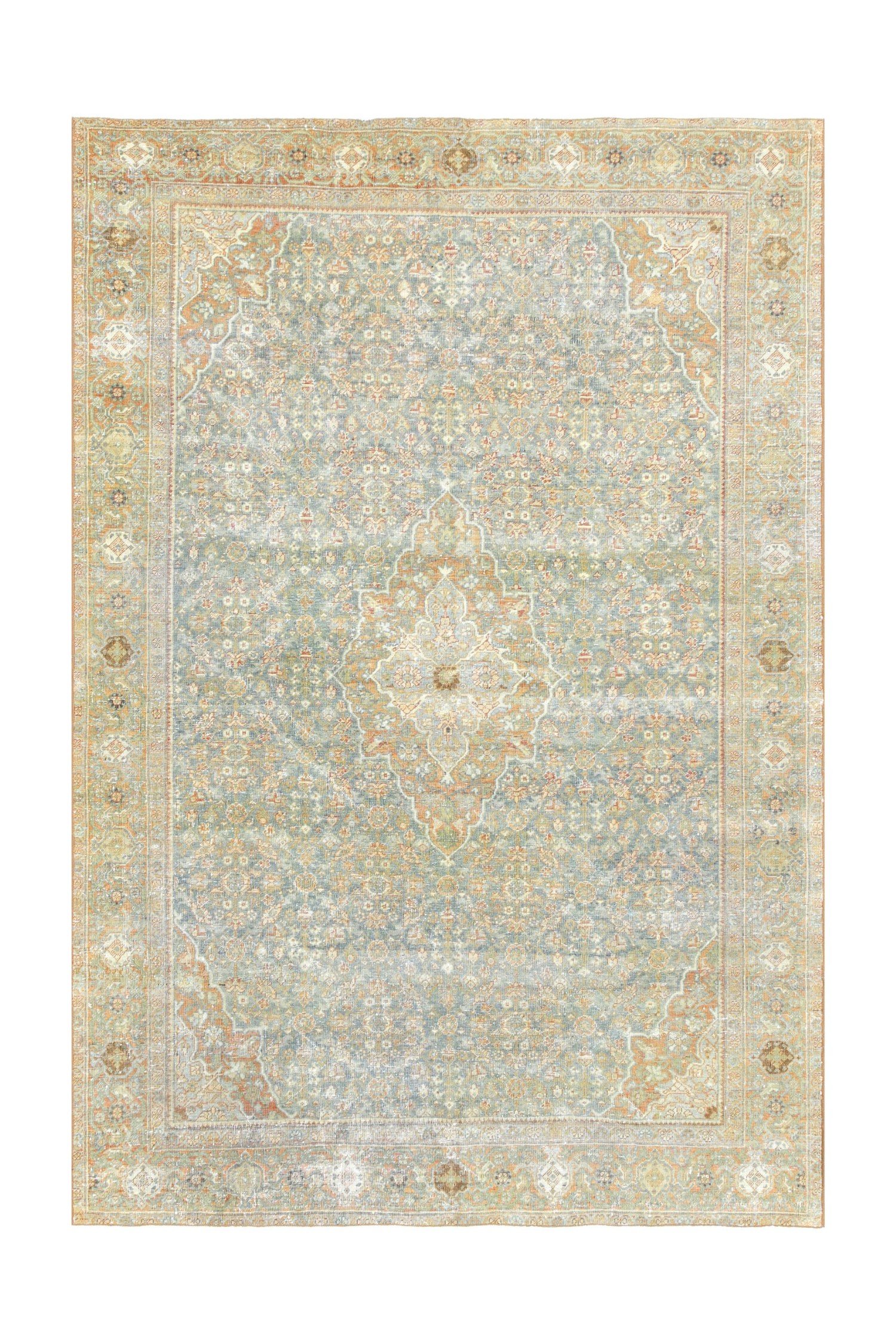
Isparta workshops in the midcentury period produced some of the most experimental Turkish rugs, pushing beyond both traditional Ottoman patterns and the conventional oriental rug formats that dominated Western markets. The abstract compositions from this era reflected influences from contemporary art and design movements happening internationally.
Weavers creating these minimal layouts had to work without the established formulas that guided traditional rug making. No medallion structure to anchor the composition, no border conventions to frame it, no inherited motif vocabulary to draw from. This required different decision-making at the loom, based on visual judgment and aesthetic intent rather than pattern replication.
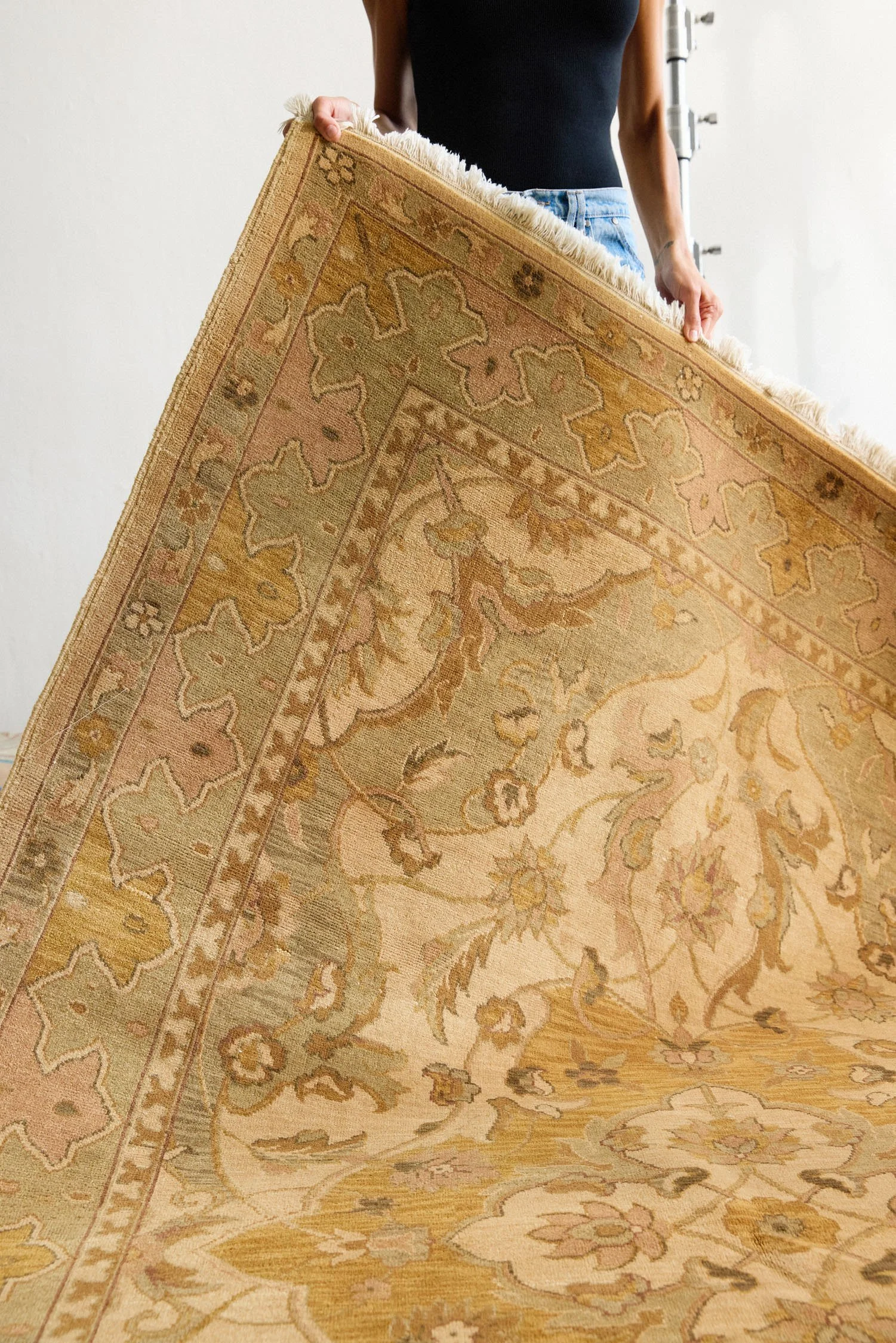
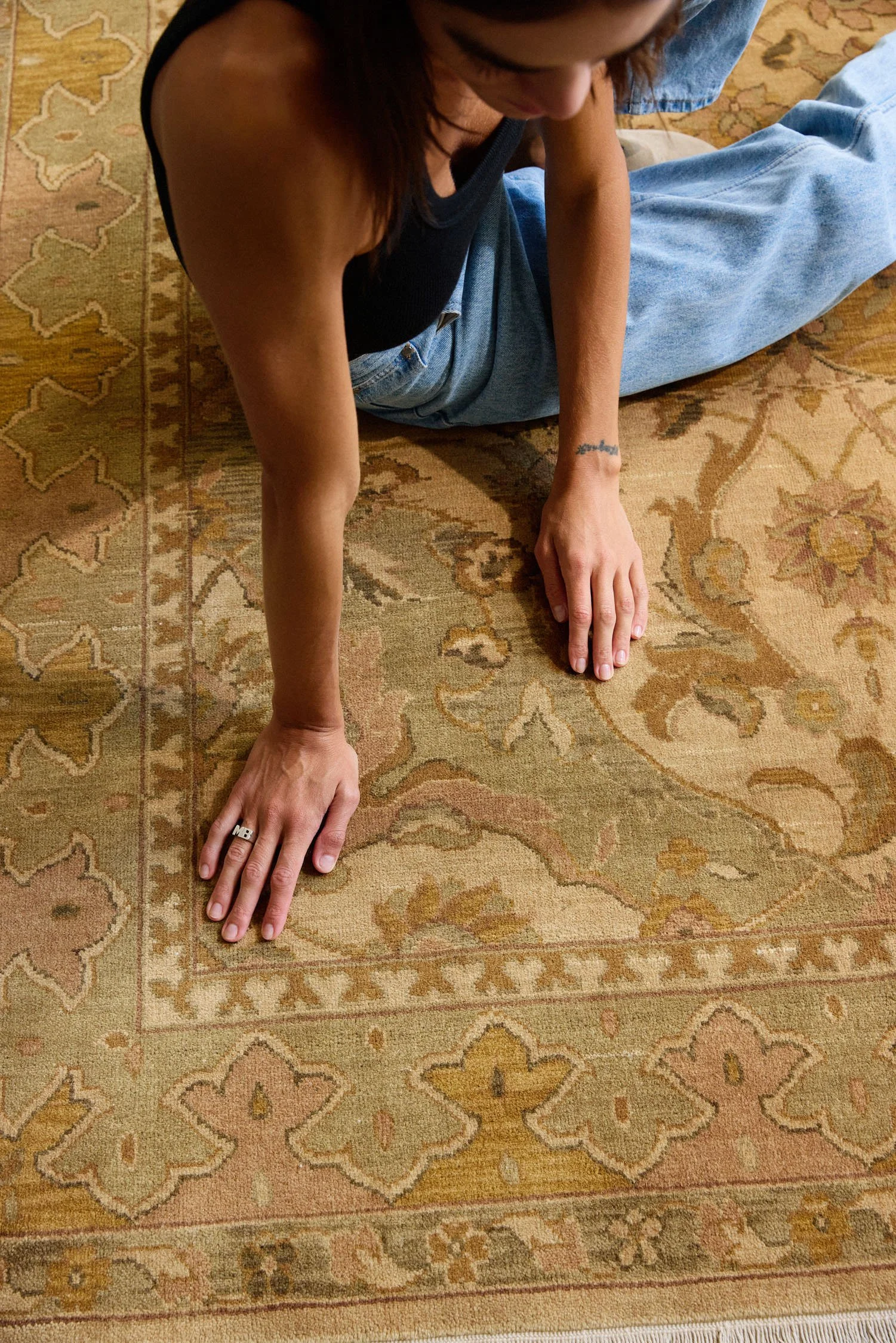
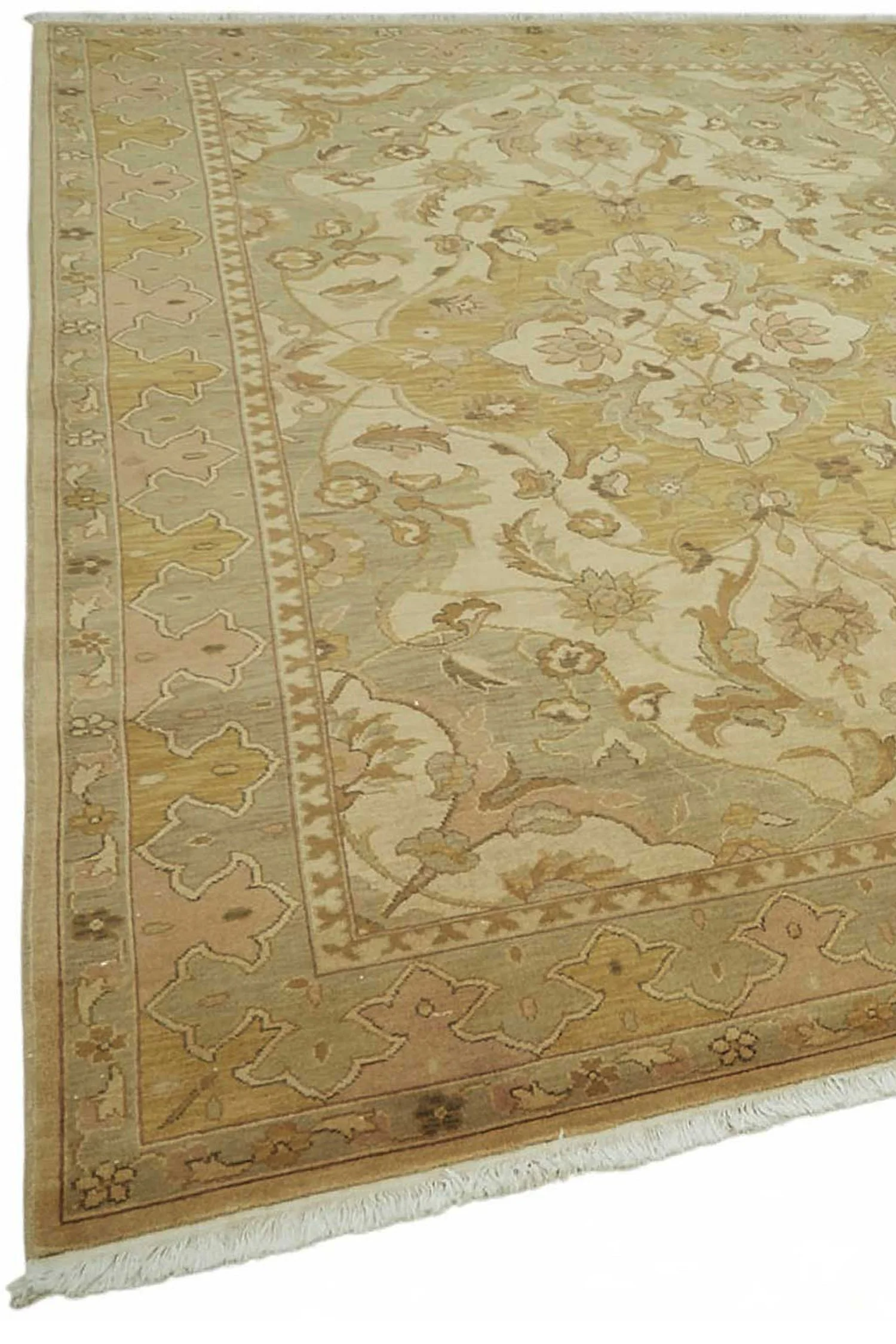
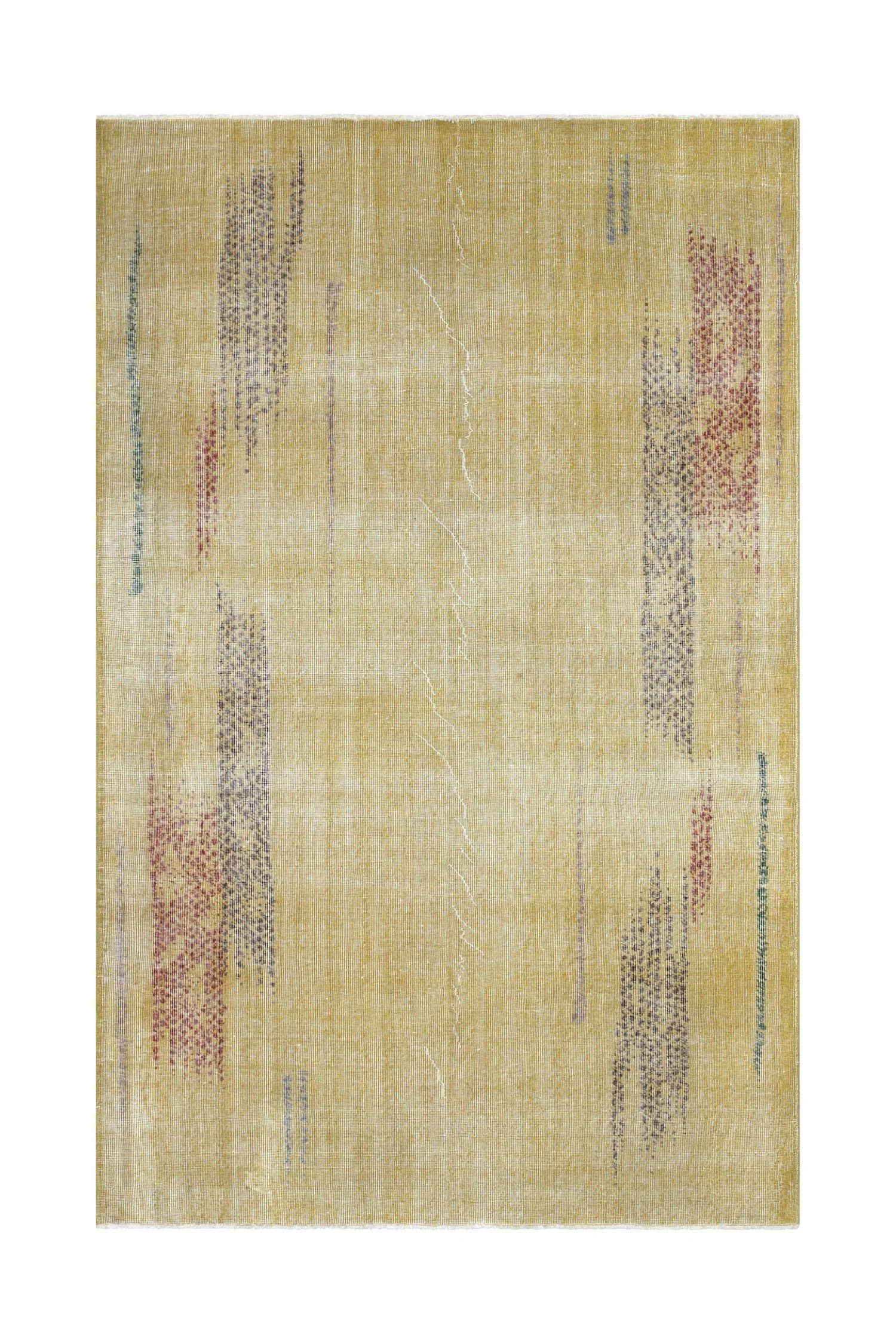
The mustard ground color represents a departure from the neutral creams and grays more common in modernist Turkish rugs. Achieving this warm golden tone across the field required specific dye formulations and consistent application to wool that could vary in its ability to accept color.
Design Elements
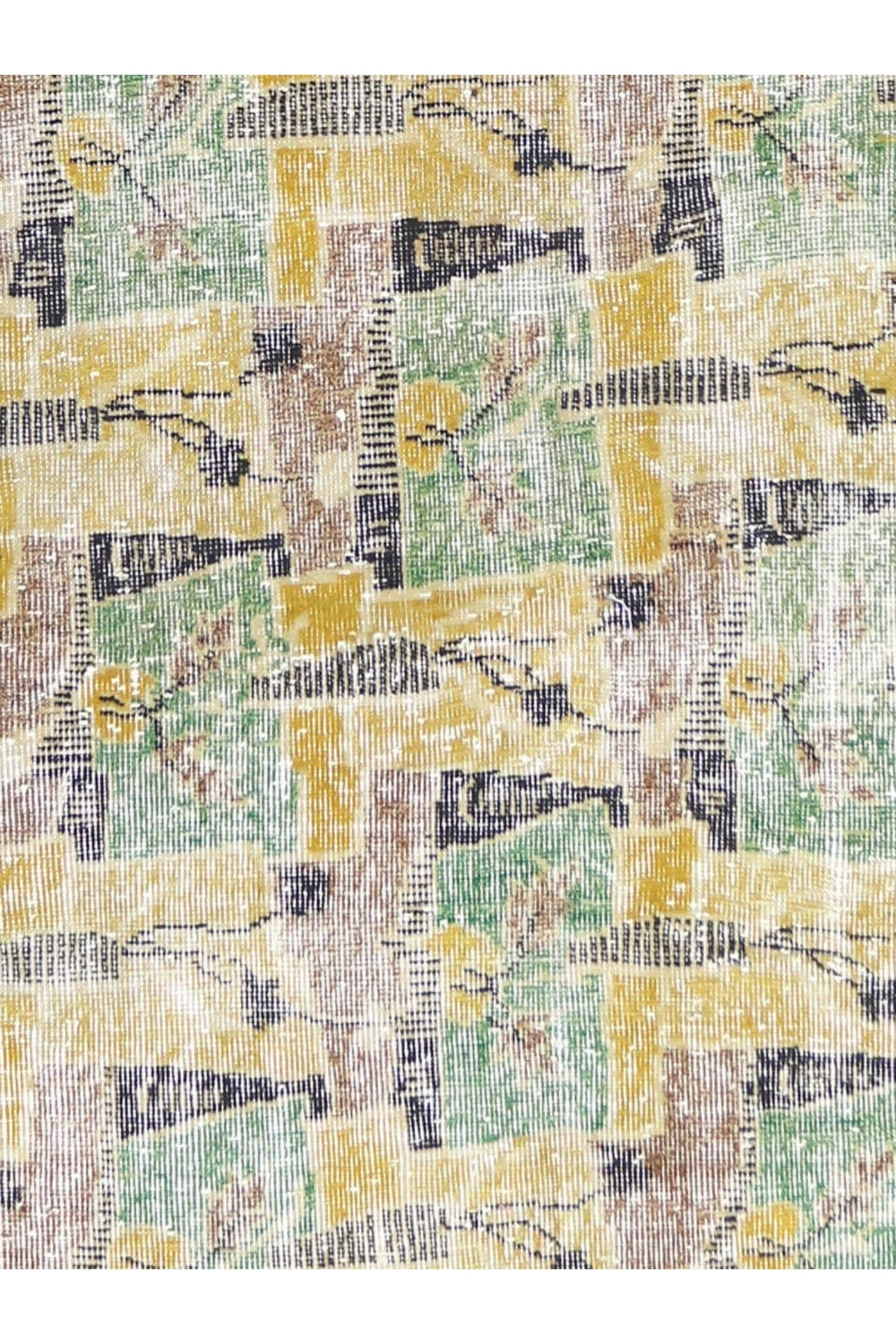
The vertical marks organize themselves loosely across the field, creating visual movement through placement rather than repetition. Each mark differs slightly from the others in length, thickness, or color intensity. This variation gives the composition an improvised quality that feels more aligned with painting than with traditional weaving.
The sparse placement allows the mustard ground to function as more than background. It becomes an active part of the composition, with the negative space contributing as much to the overall effect as the marked areas. The restraint prevents the surface from feeling busy or fragmented.
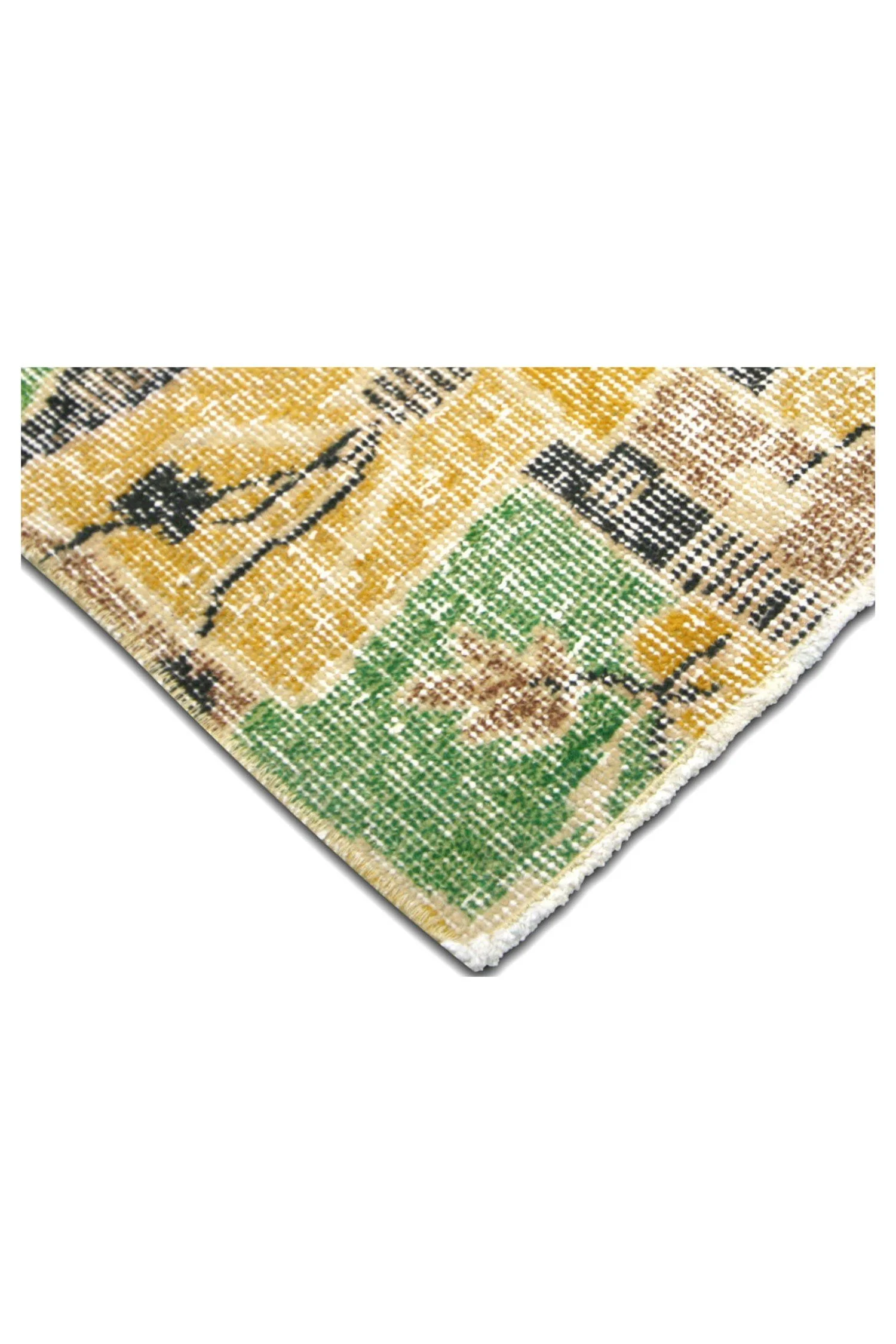
The minimal approach extends to the edges, where the field transitions to the border without elaborate framing. This keeps the focus on the abstract composition itself rather than on decorative containment.
Placement
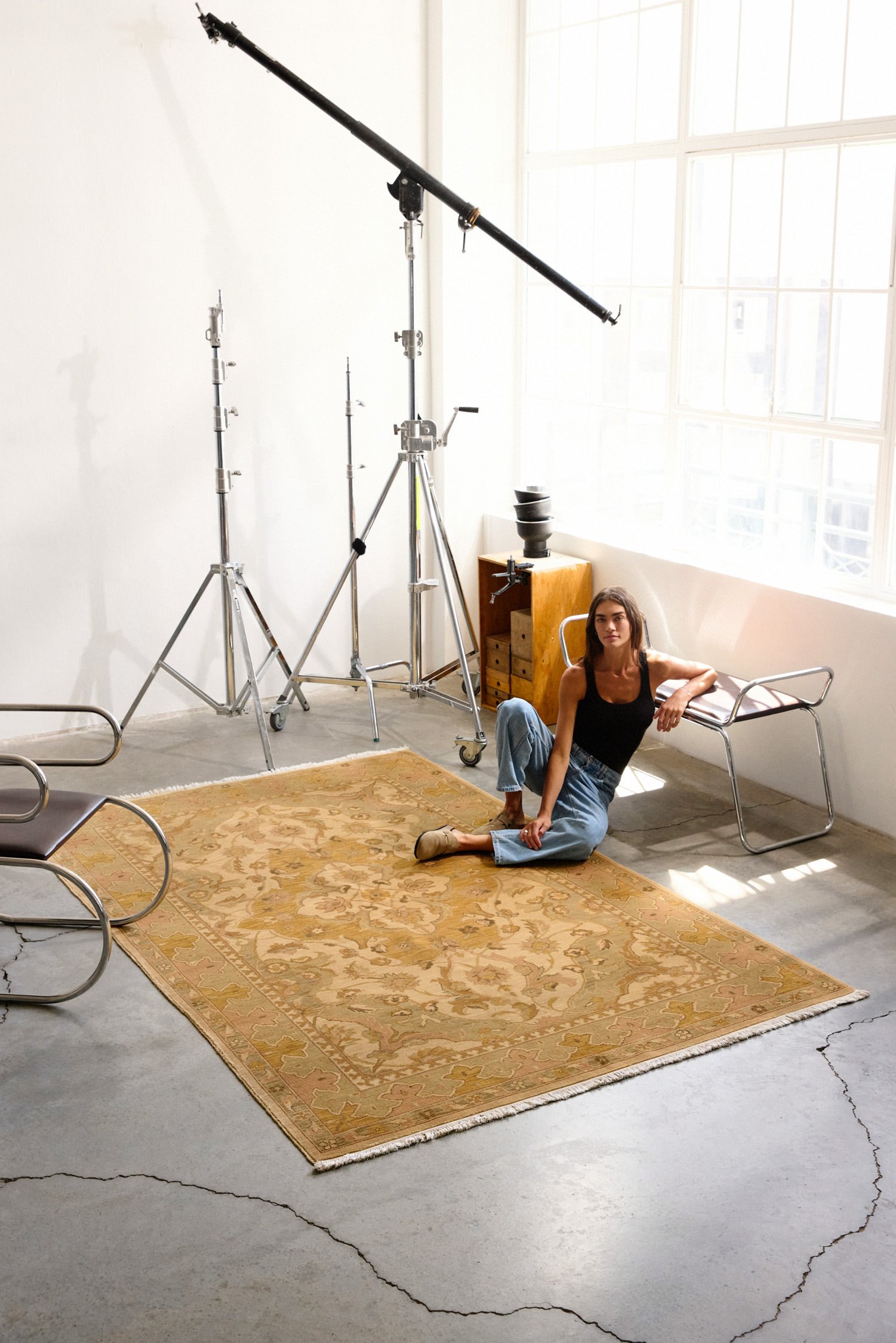
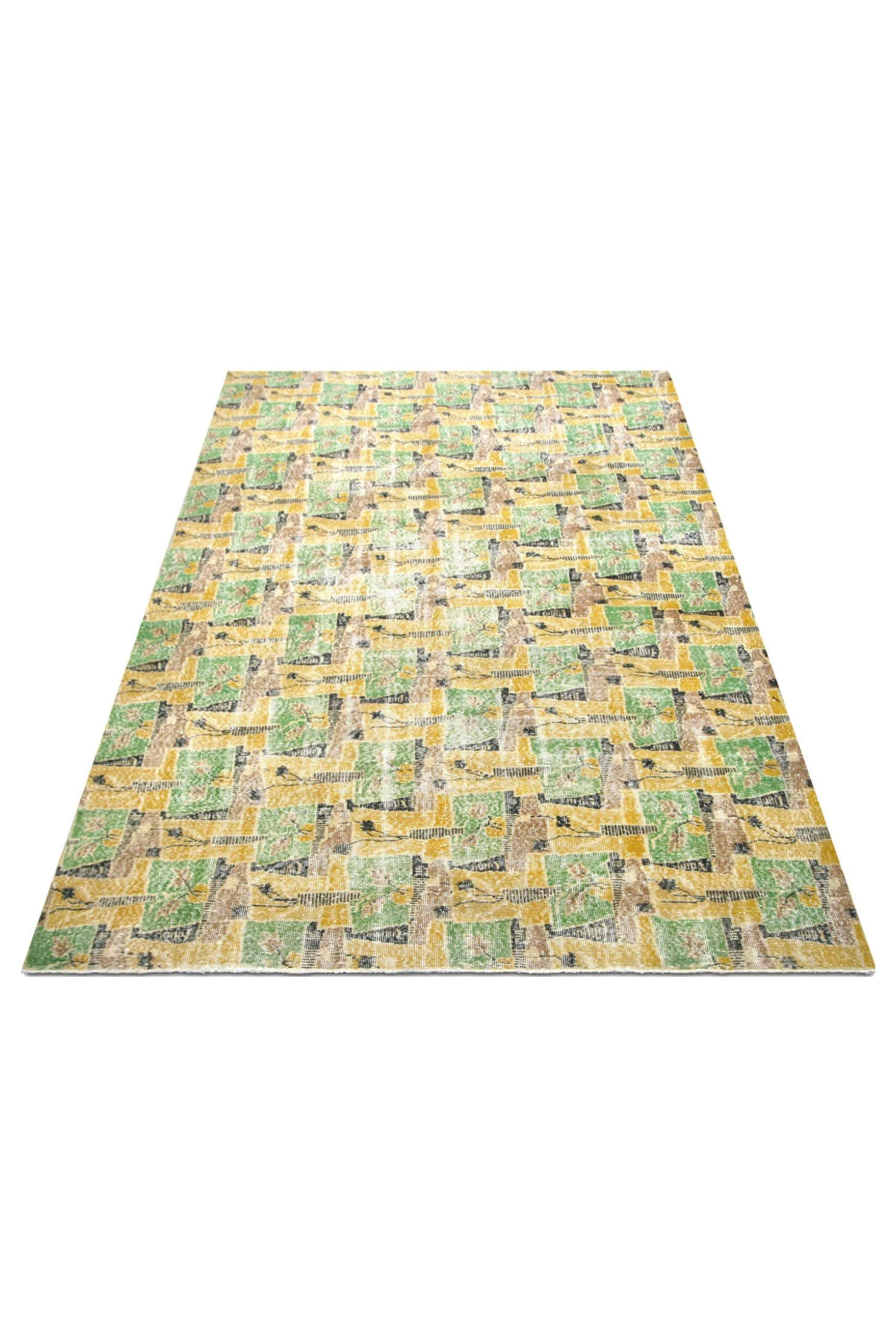
At 5'5" x 8'7", this fits in smaller living rooms, home offices, bedrooms at the foot of the bed, or dining areas under smaller tables. The size works well in spaces where you want color and visual interest without the scale of a larger area rug.
The warm mustard ground brings energy to contemporary interiors, particularly those with neutral furnishings, where the rug can introduce color without overwhelming. The abstract composition suits midcentury modern settings naturally, but also works in eclectic spaces that mix periods and styles. The minimal layout functions as art for the floor.
Care Recommendations
To preserve the rug's beauty:
Rotate periodically for even wear
Vacuum regularly using a suction-only setting
Address spills immediately by blotting, never rubbing
Professional cleaning recommended annually
Avoid direct sunlight to maintain color integrity
Midcentury Turkish weavers who made rugs like this were painting with knots instead of brushes.