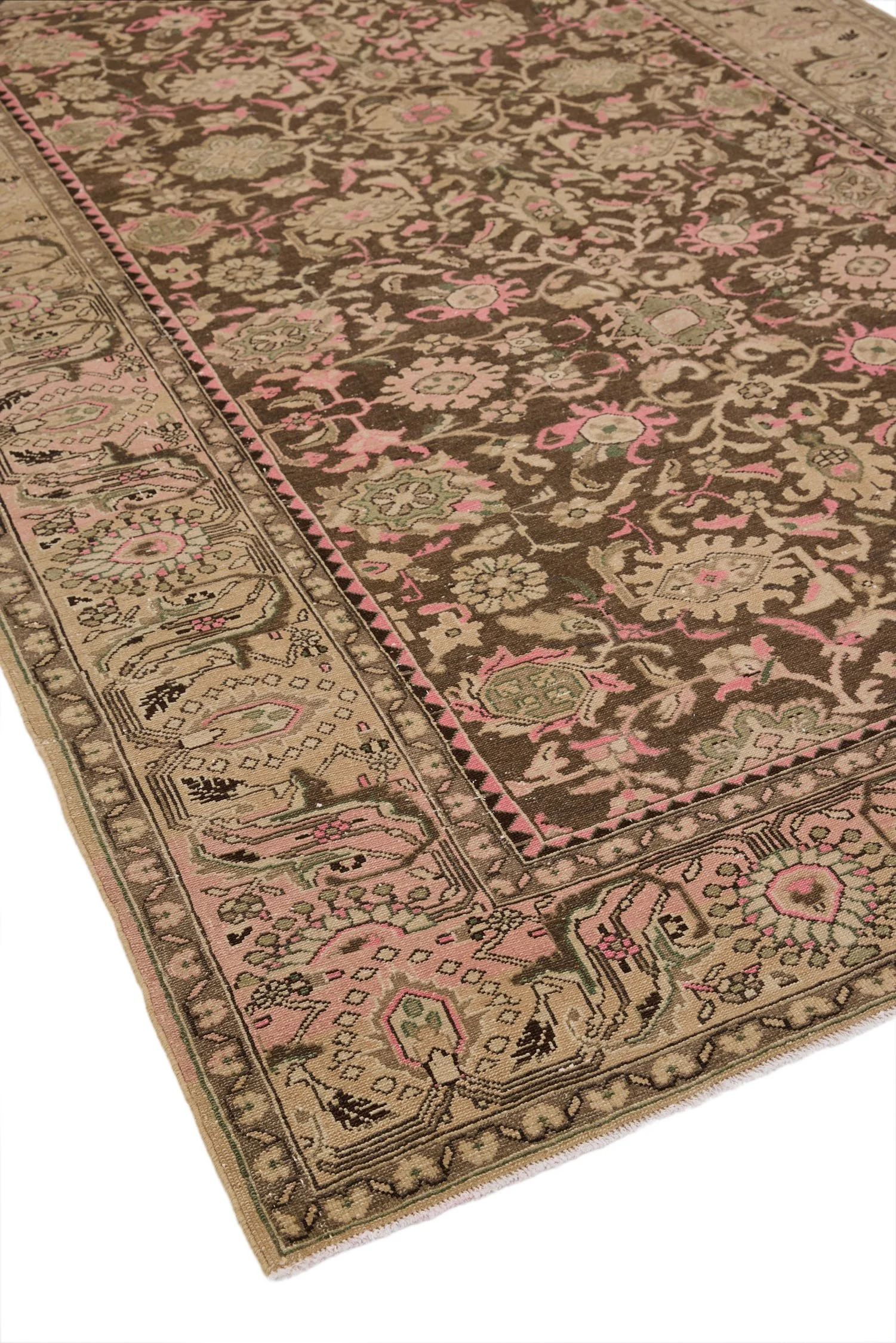
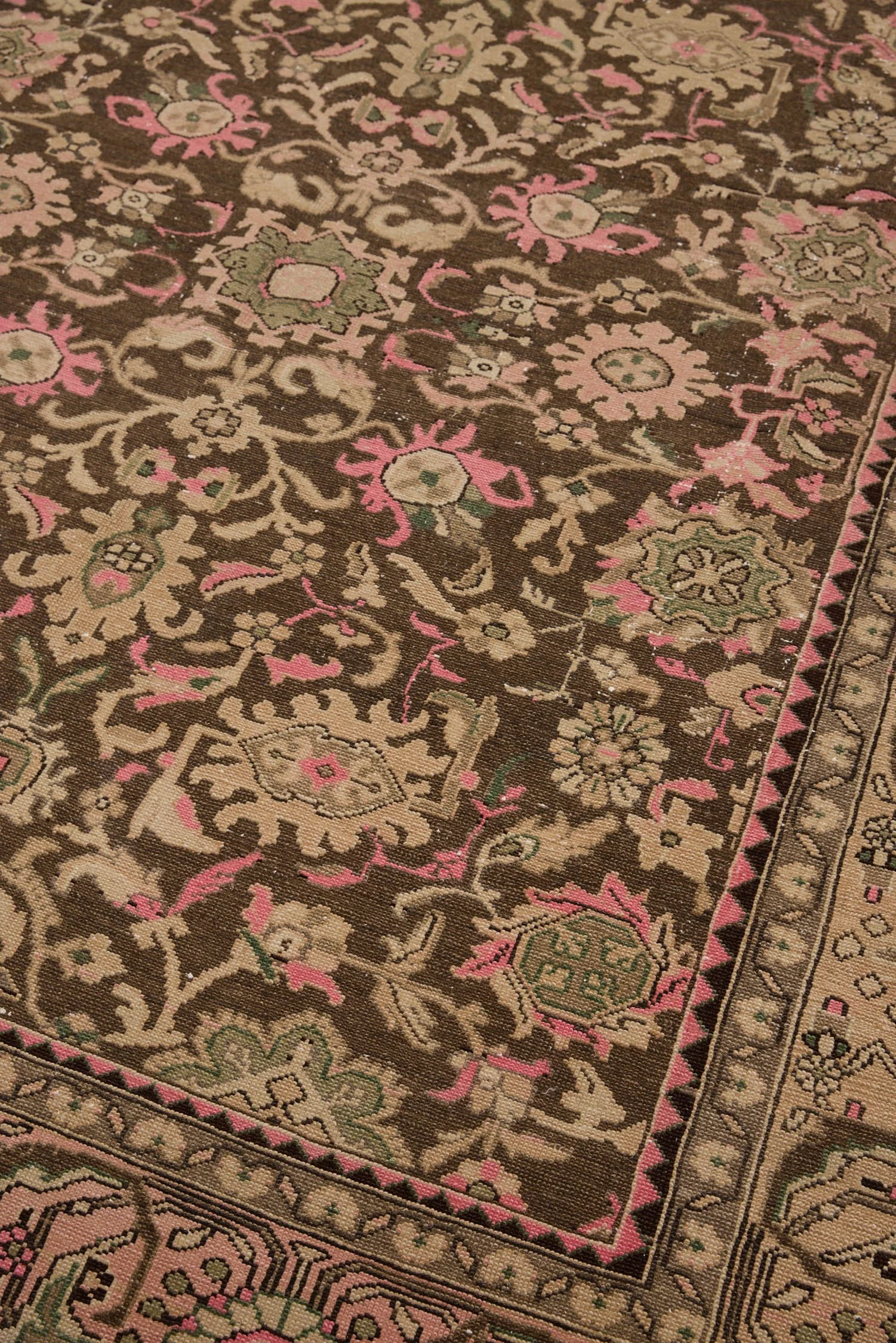
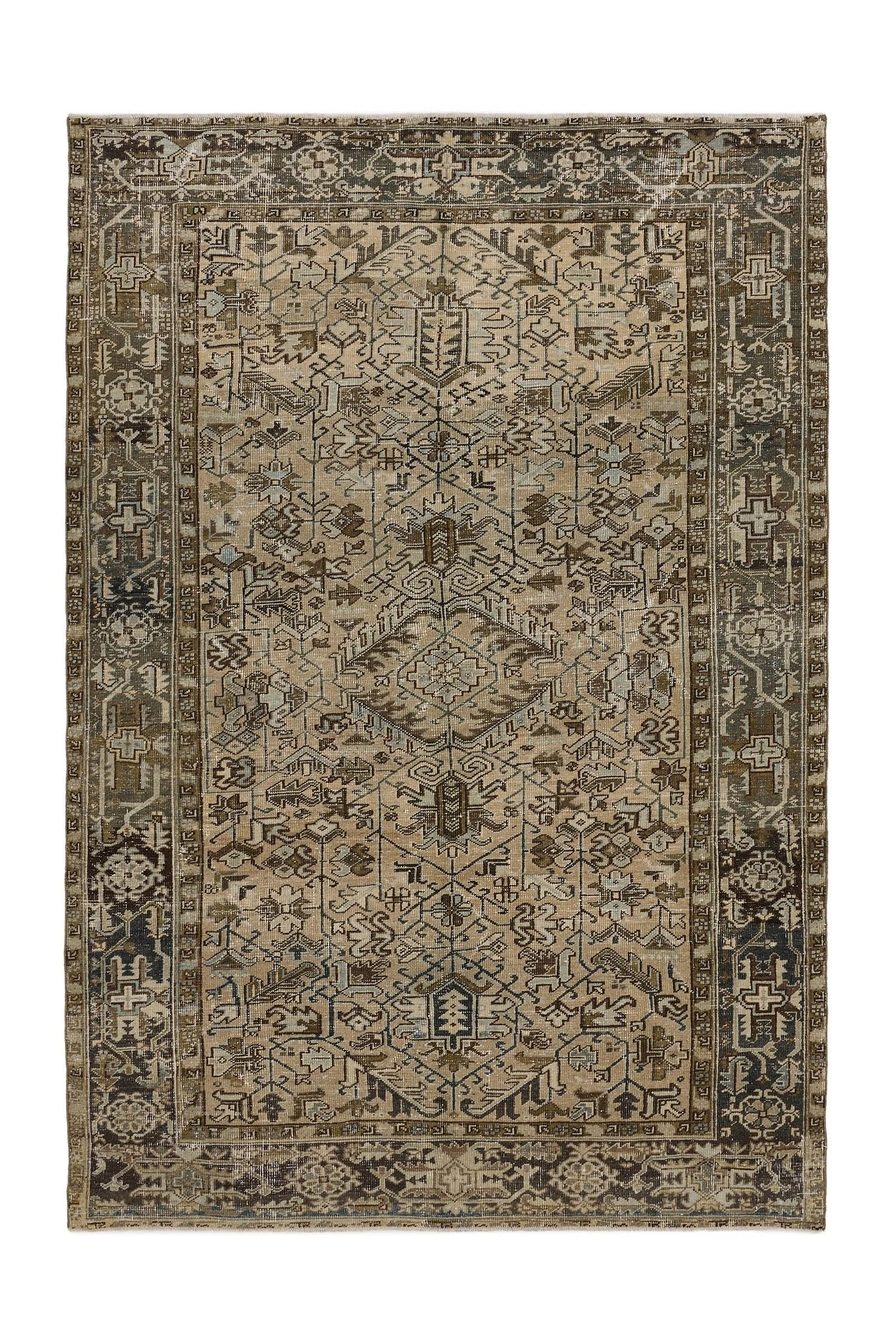
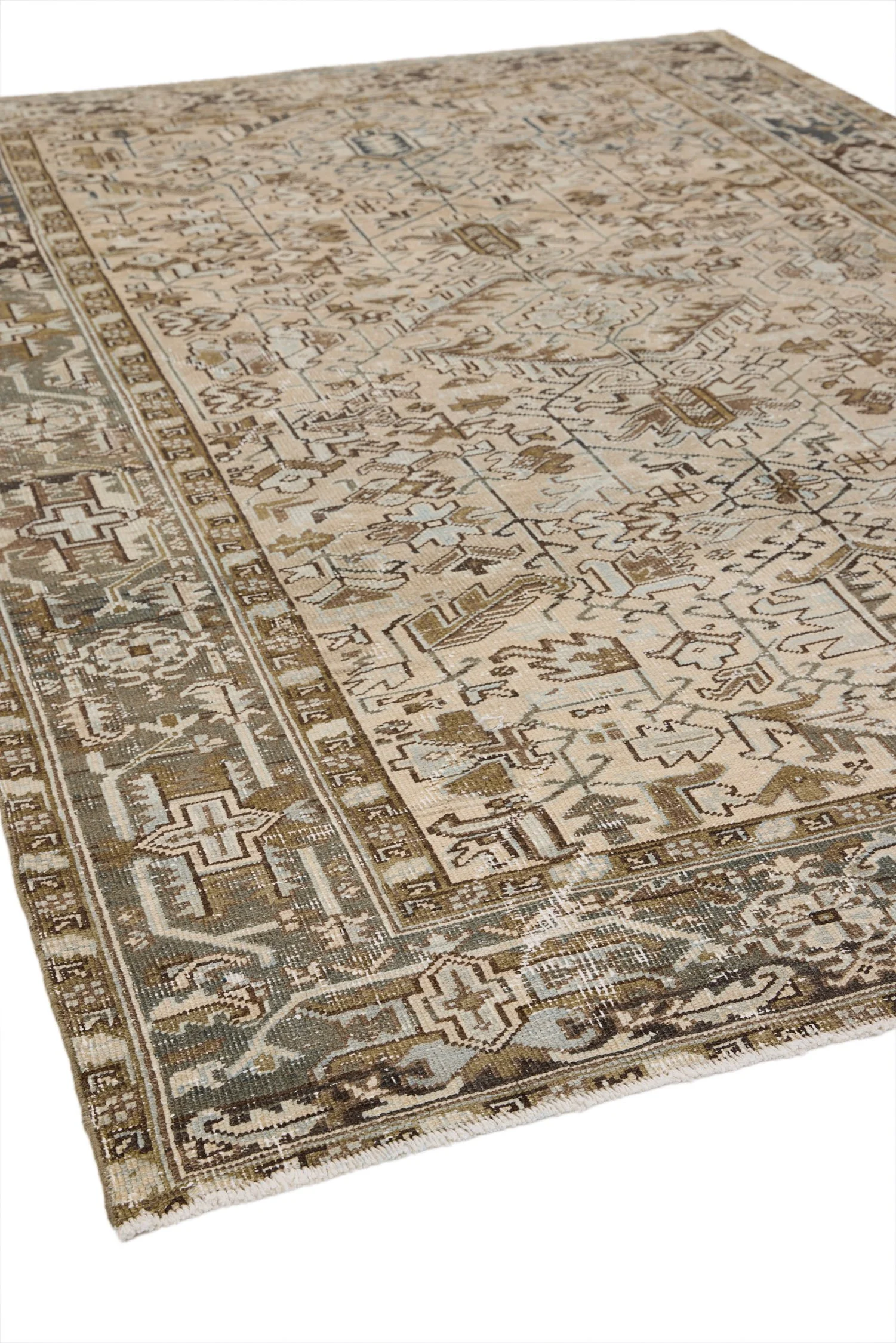
 Image 1 of 6
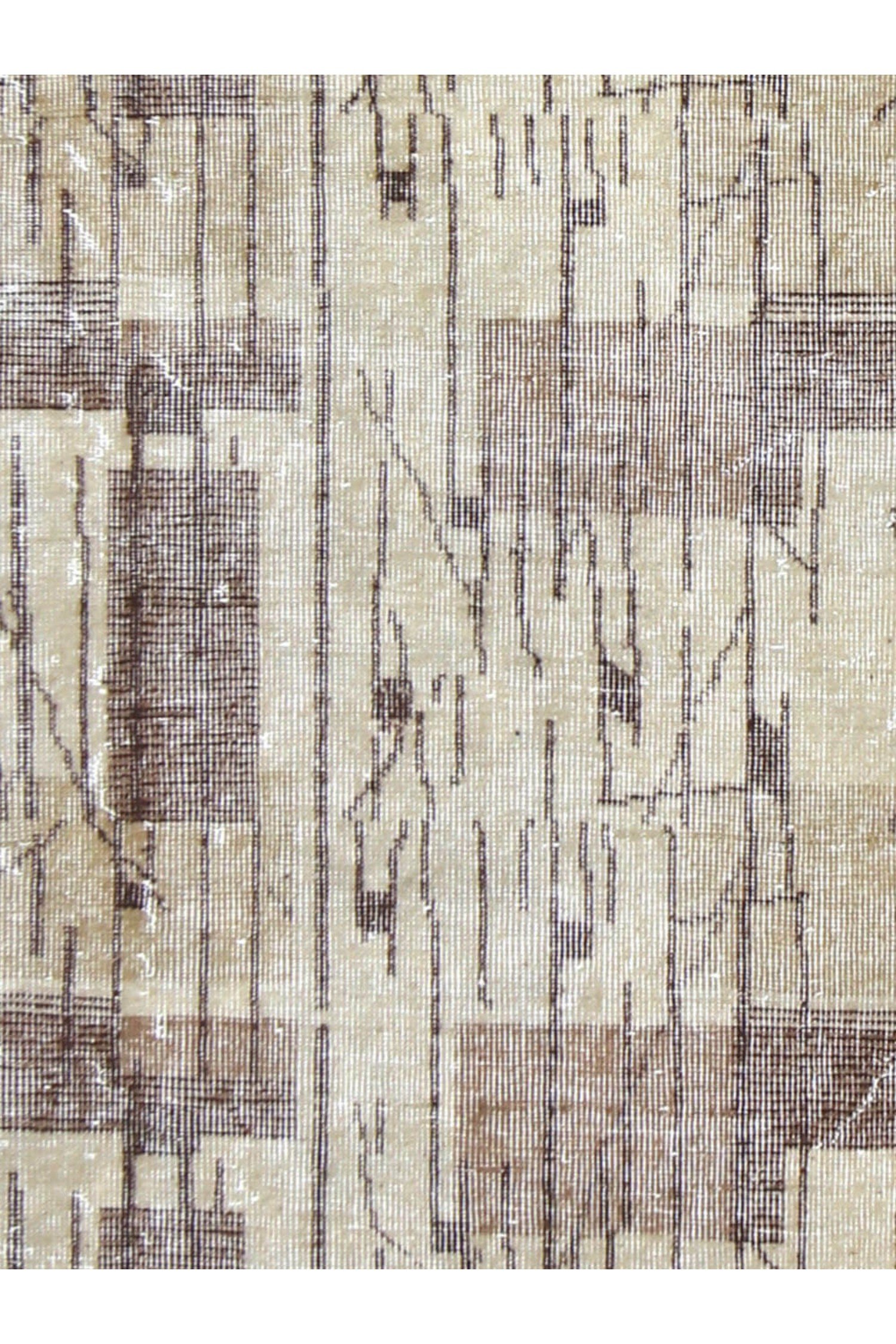 Image 2 of 6
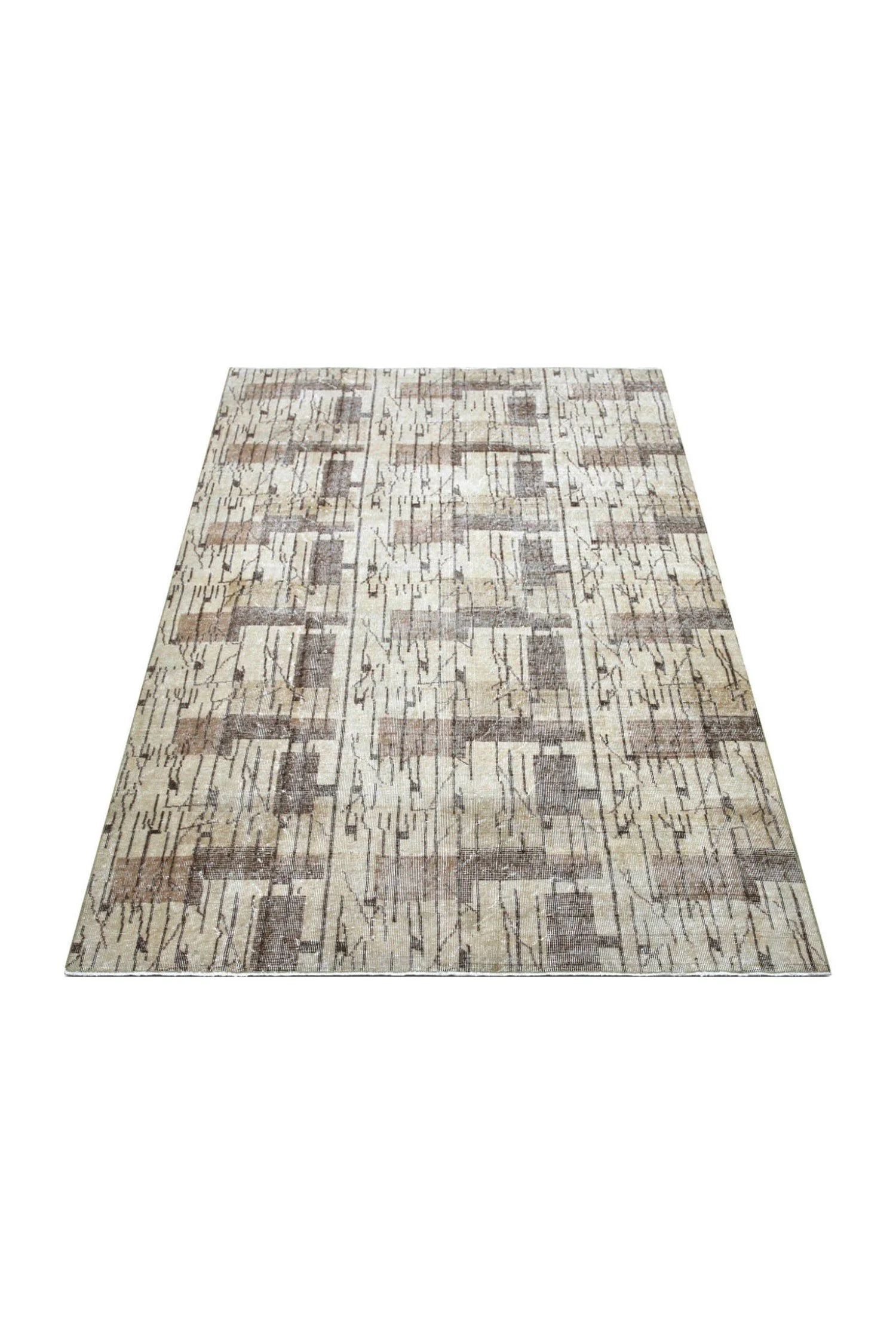 Image 3 of 6
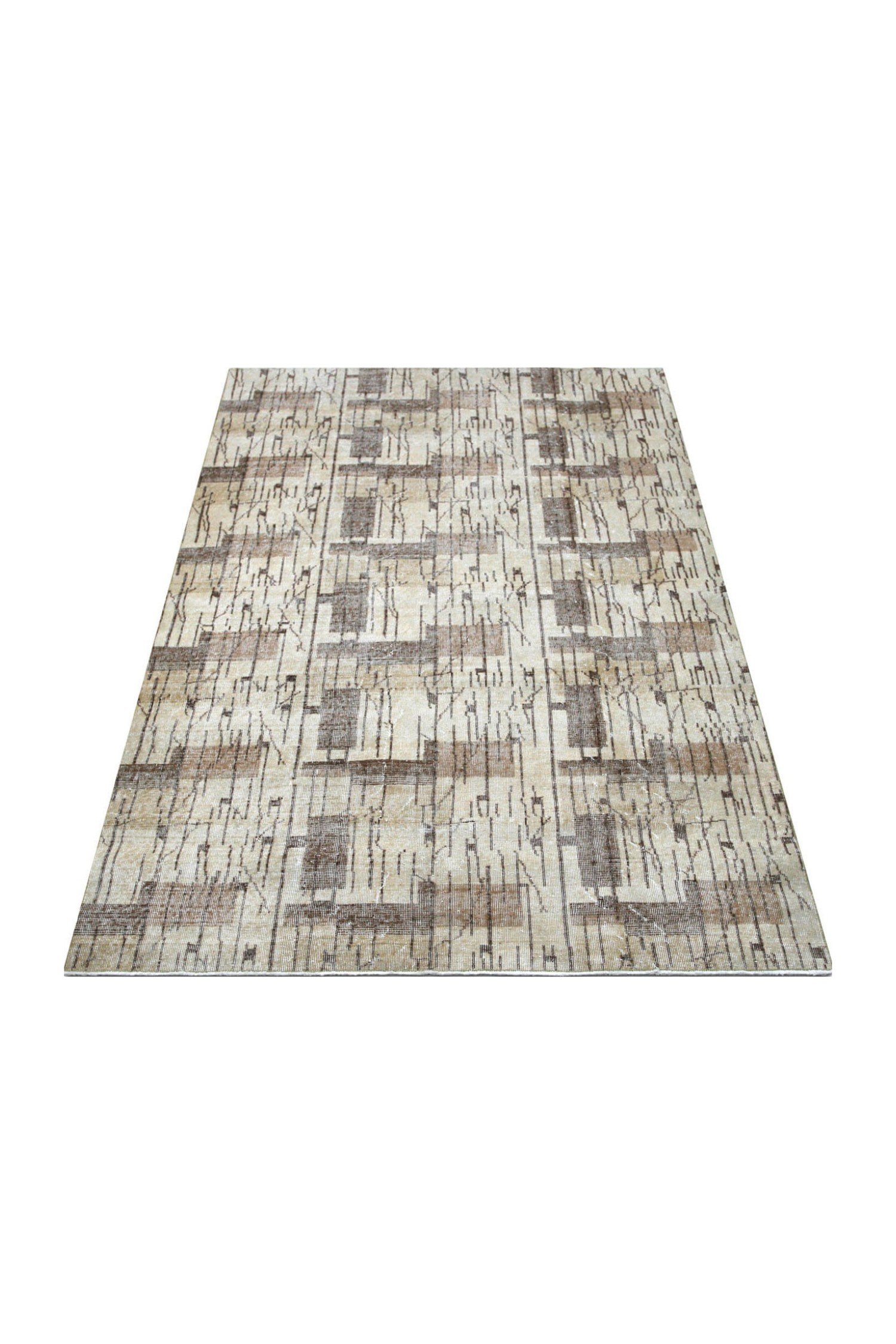 Image 4 of 6
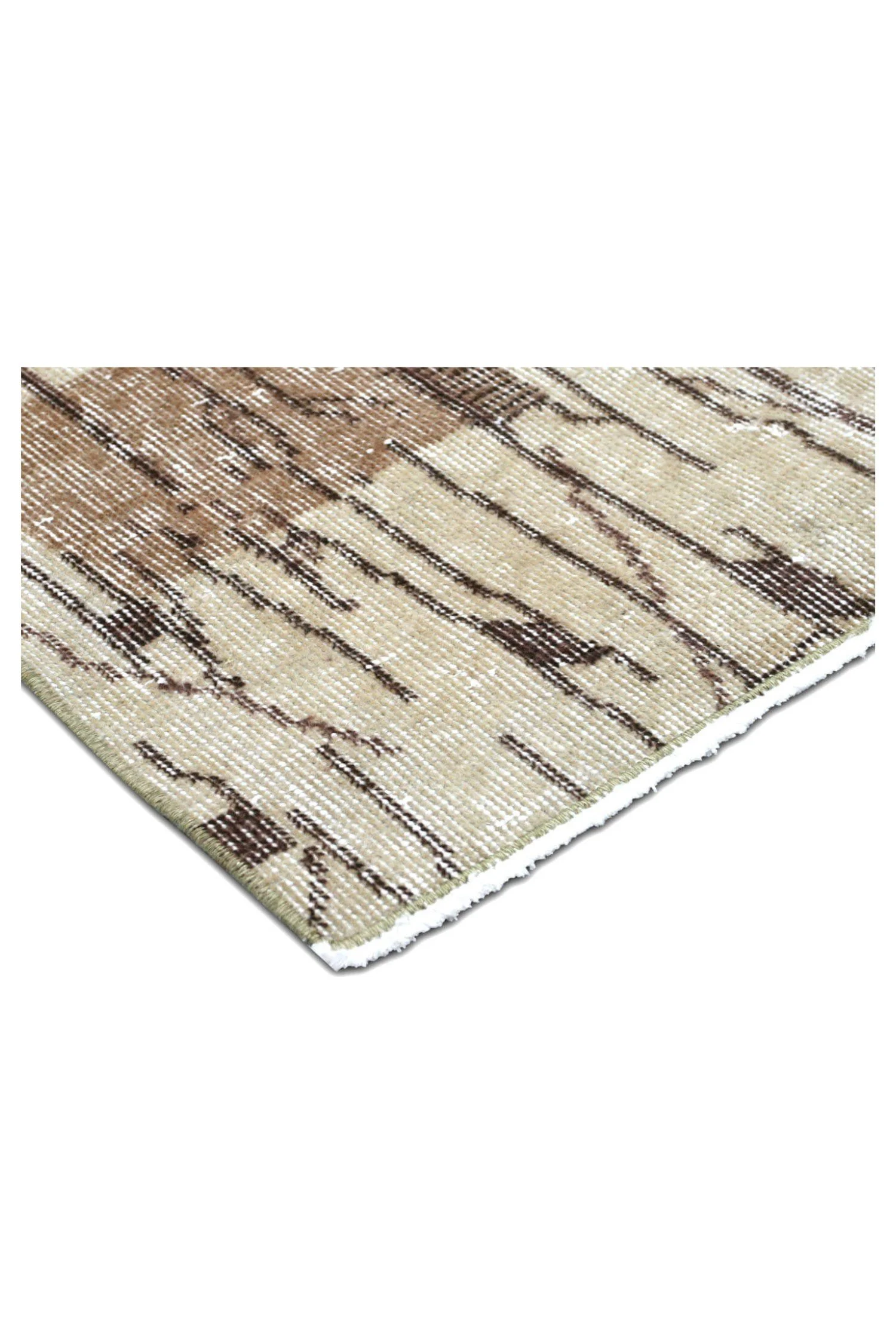 Image 5 of 6
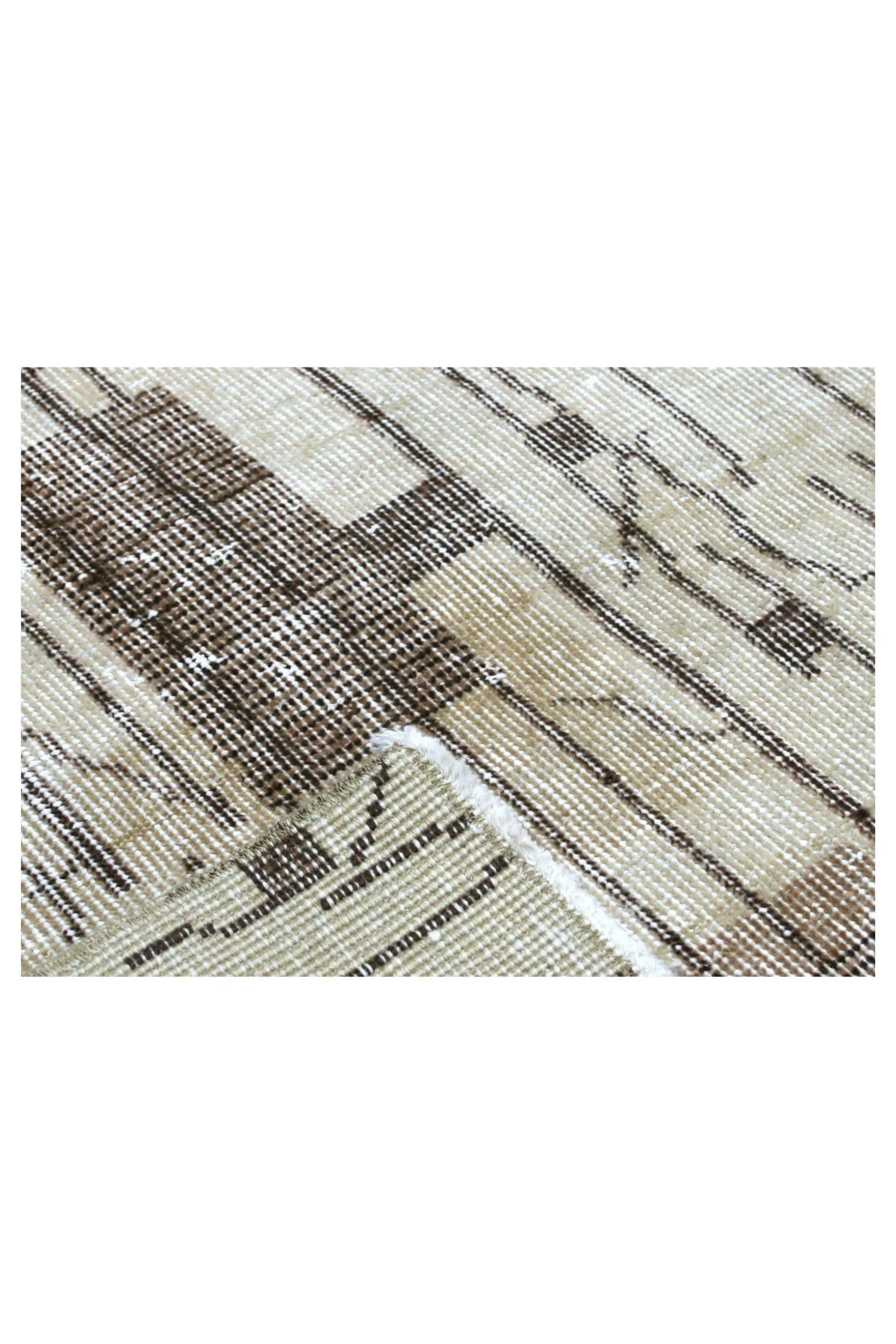 Image 6 of 6
Heritage and Craftsmanship
Isparta workshops in the 1960s and 1970s produced rugs that bridged traditional Turkish weaving techniques with modernist design principles. This period saw deliberate experimentation with geometric abstraction, influenced by international design trends and the growing Western market for contemporary-looking textiles.
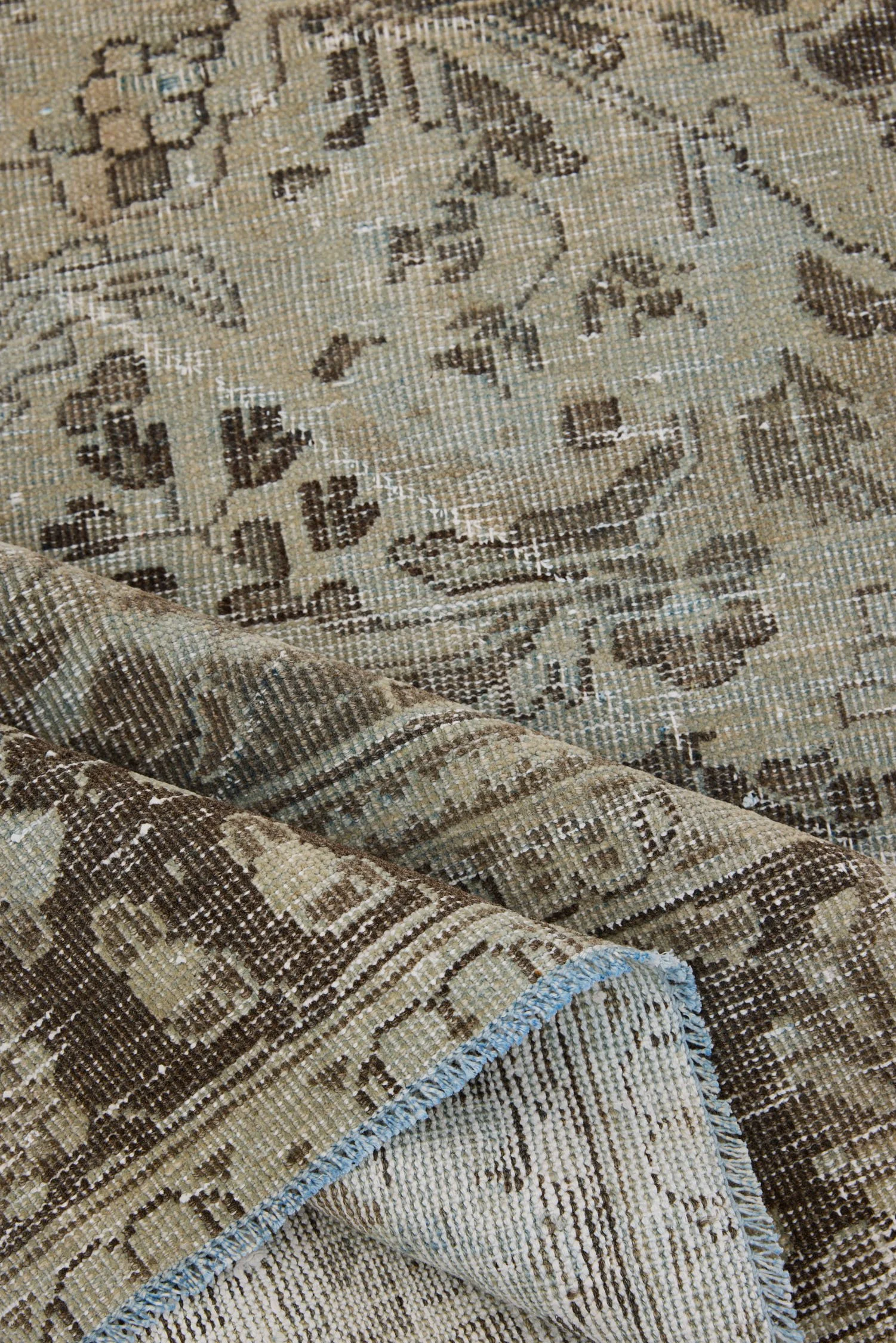
Weavers working on these modern compositions still used traditional vertical looms and hand-knotting methods, but they worked from cartoons that looked nothing like classical Turkish patterns. The geometric grids required precise counting and consistent tension to maintain clean lines and proportional relationships across the field.
The neutral palette seen here reflected midcentury preferences for understated color schemes that worked in minimalist interiors. Achieving even tones across large areas required quality wool and careful dye management, skills that Isparta workshops had developed through decades of commercial production.
Design Elements
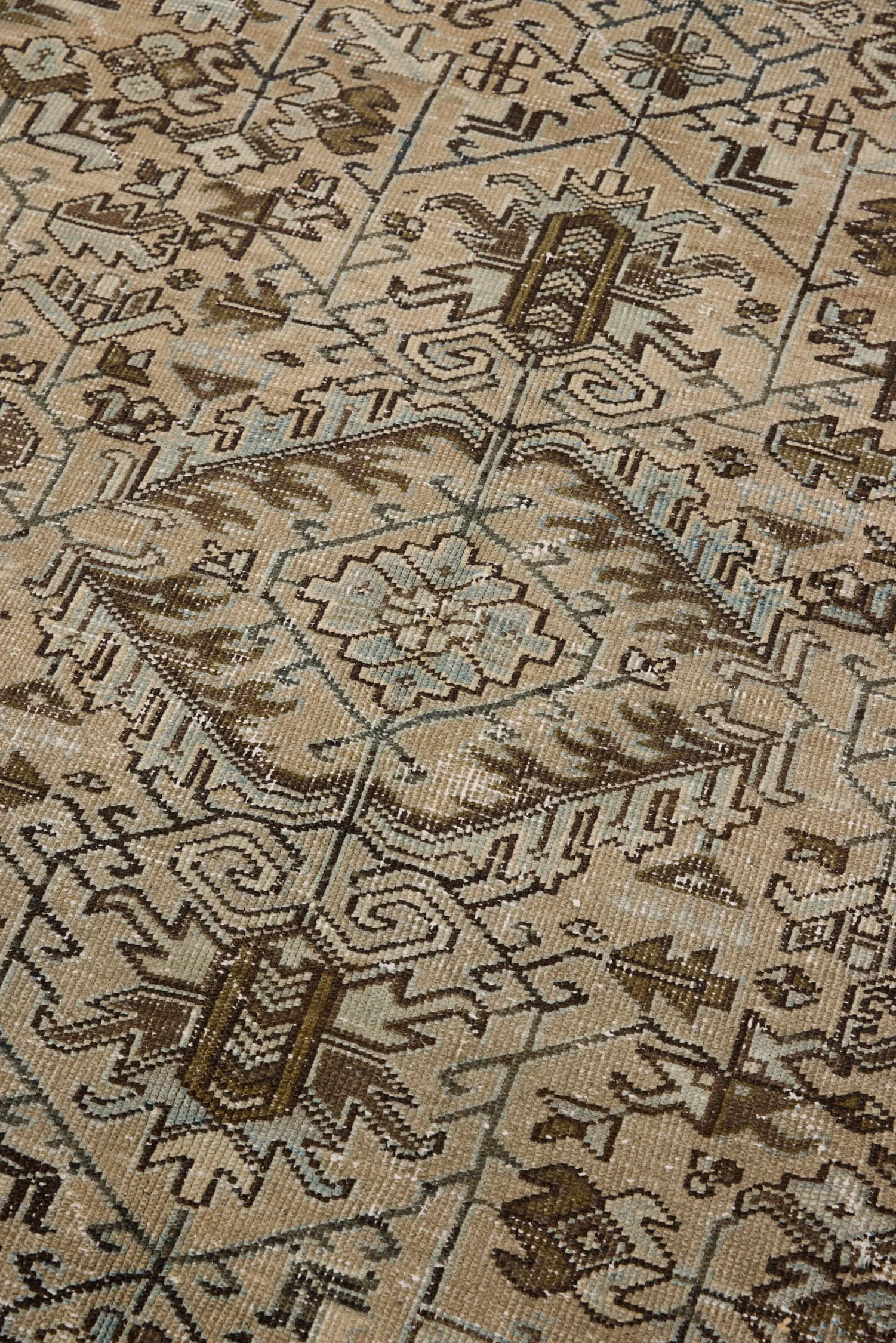
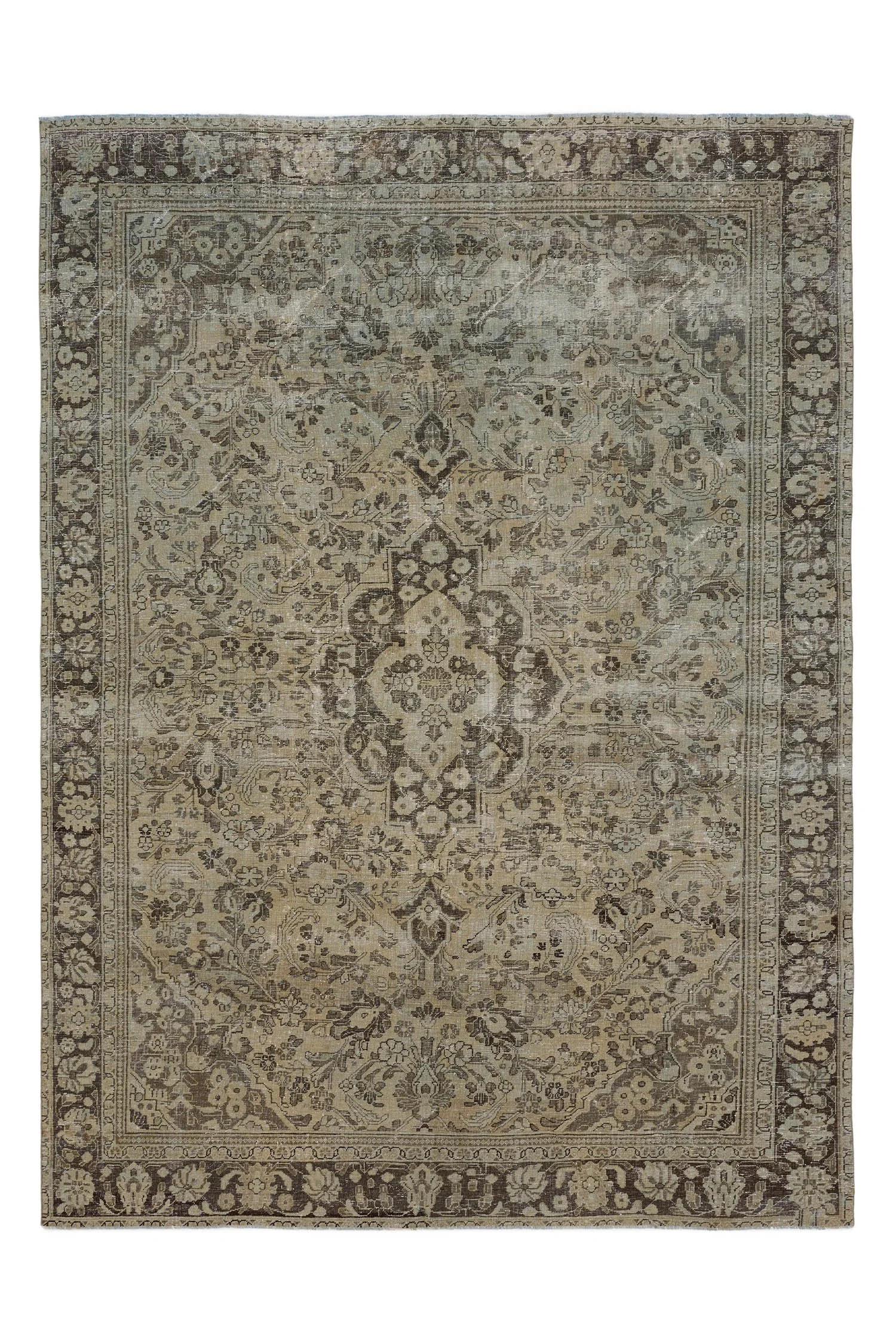
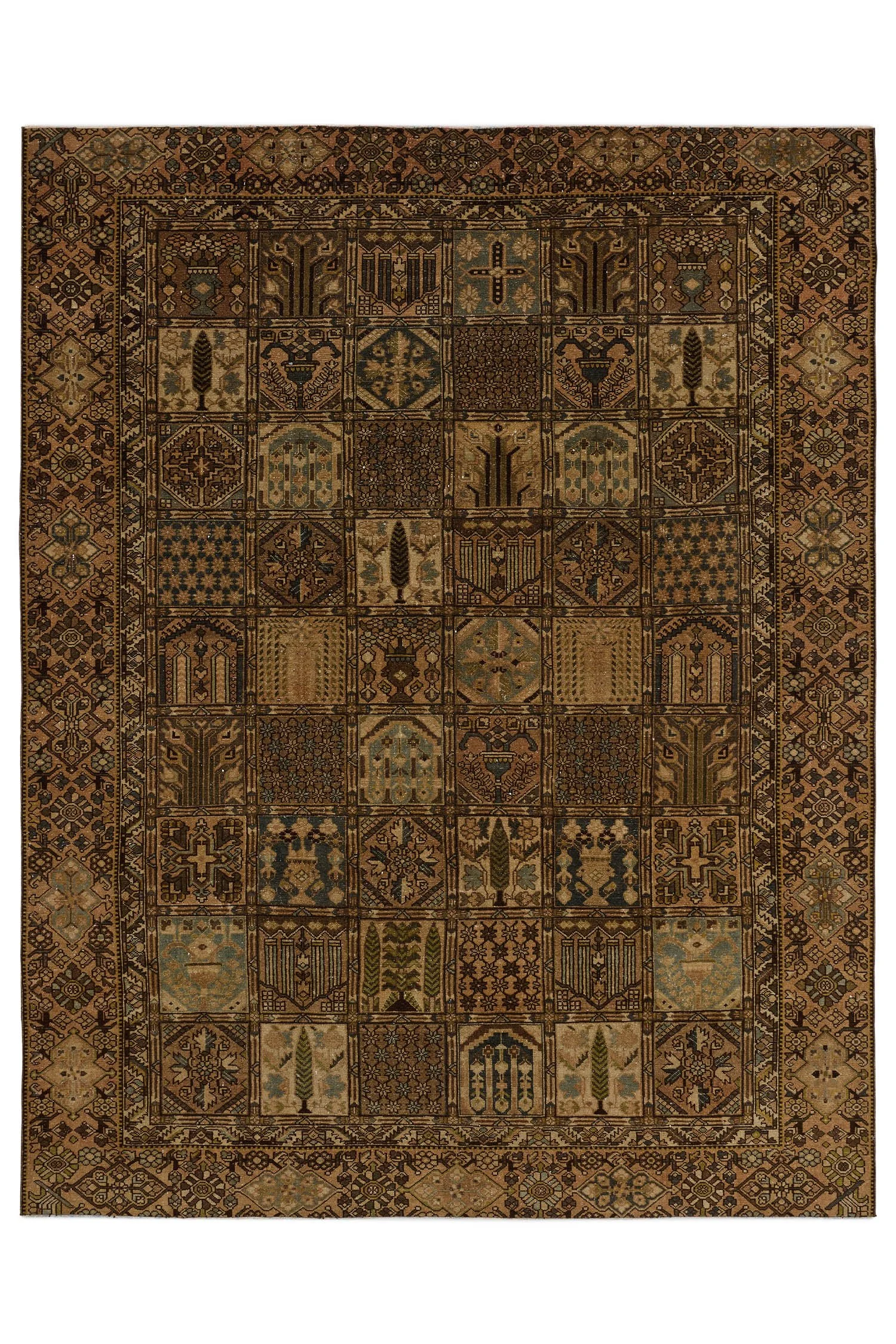
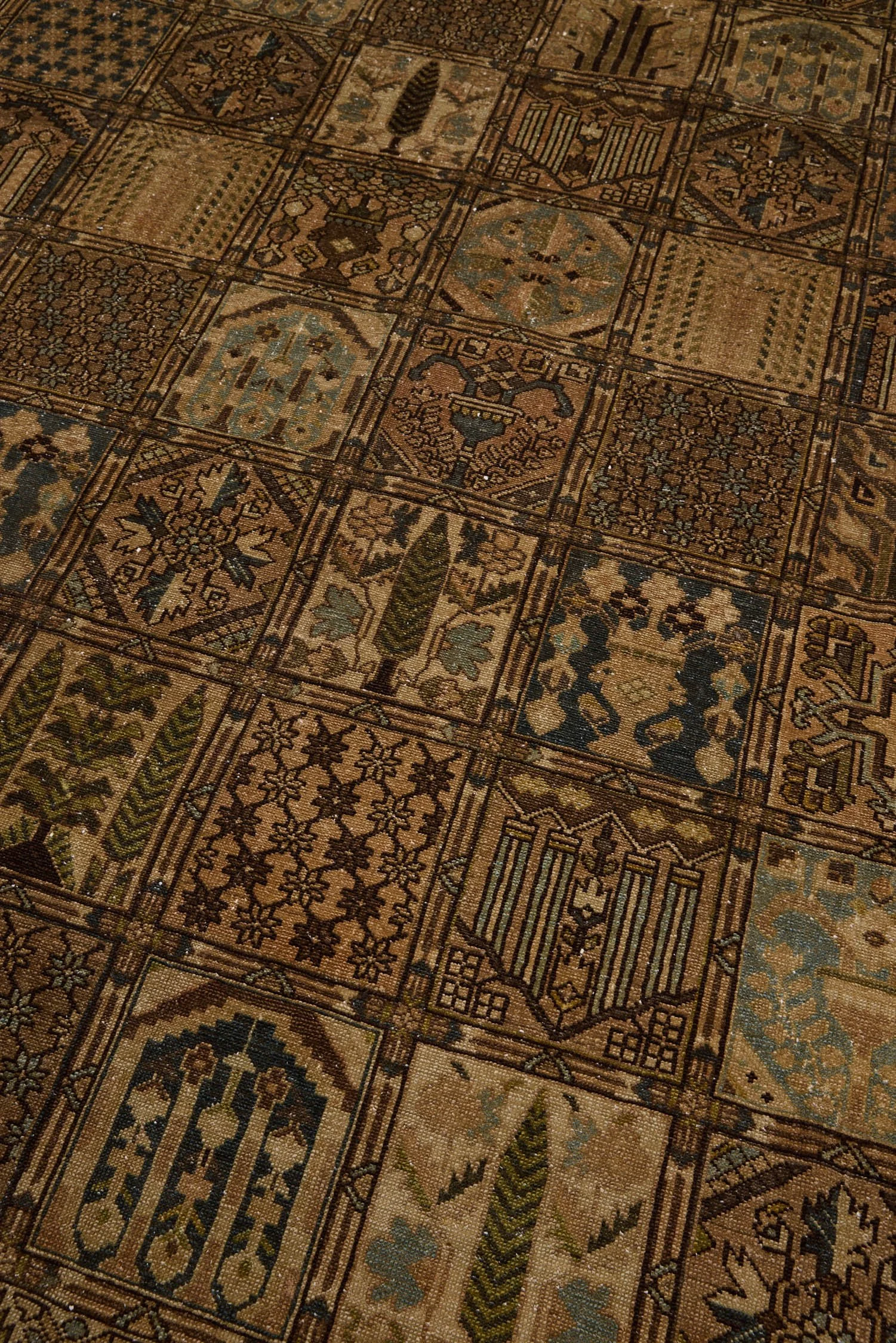
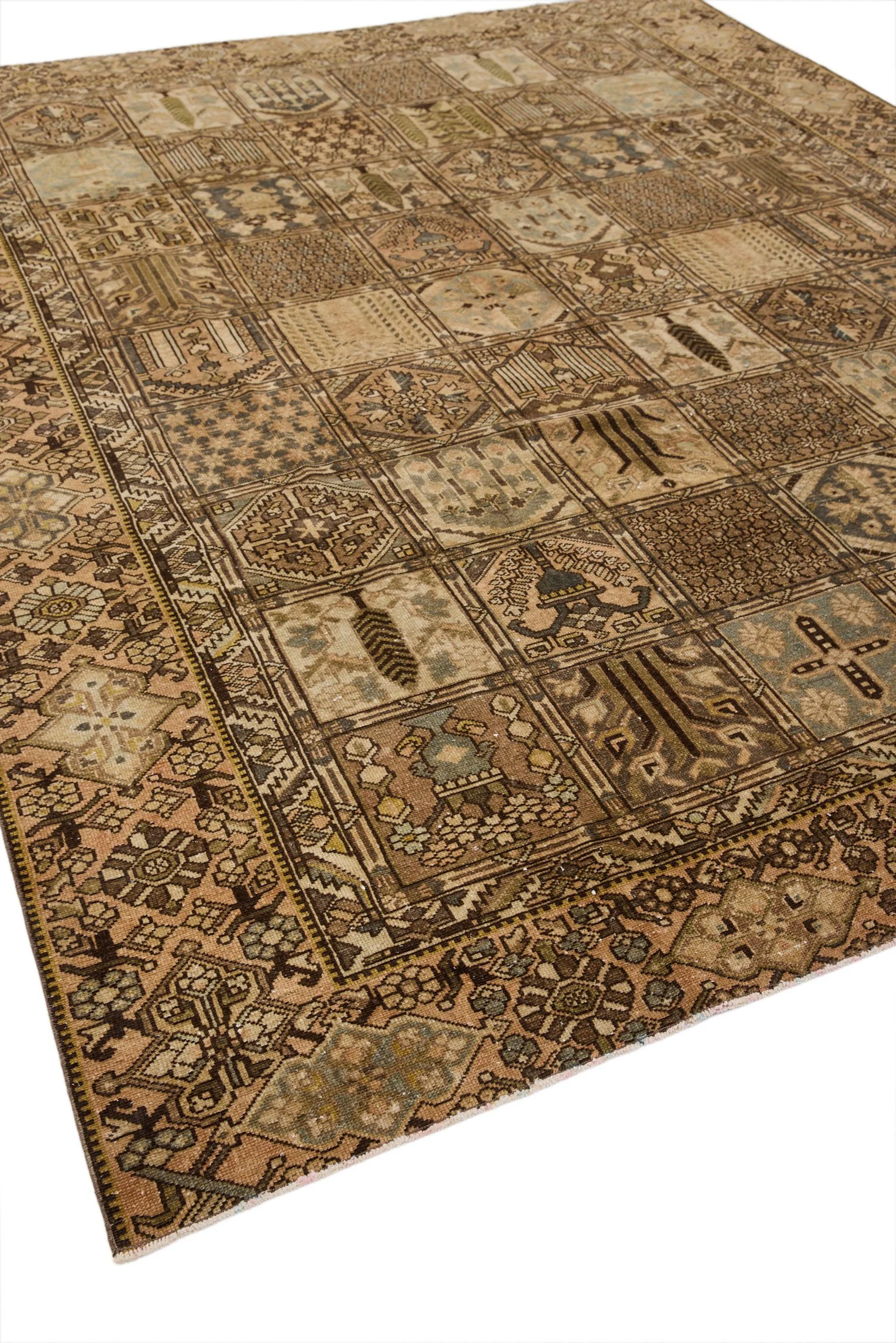
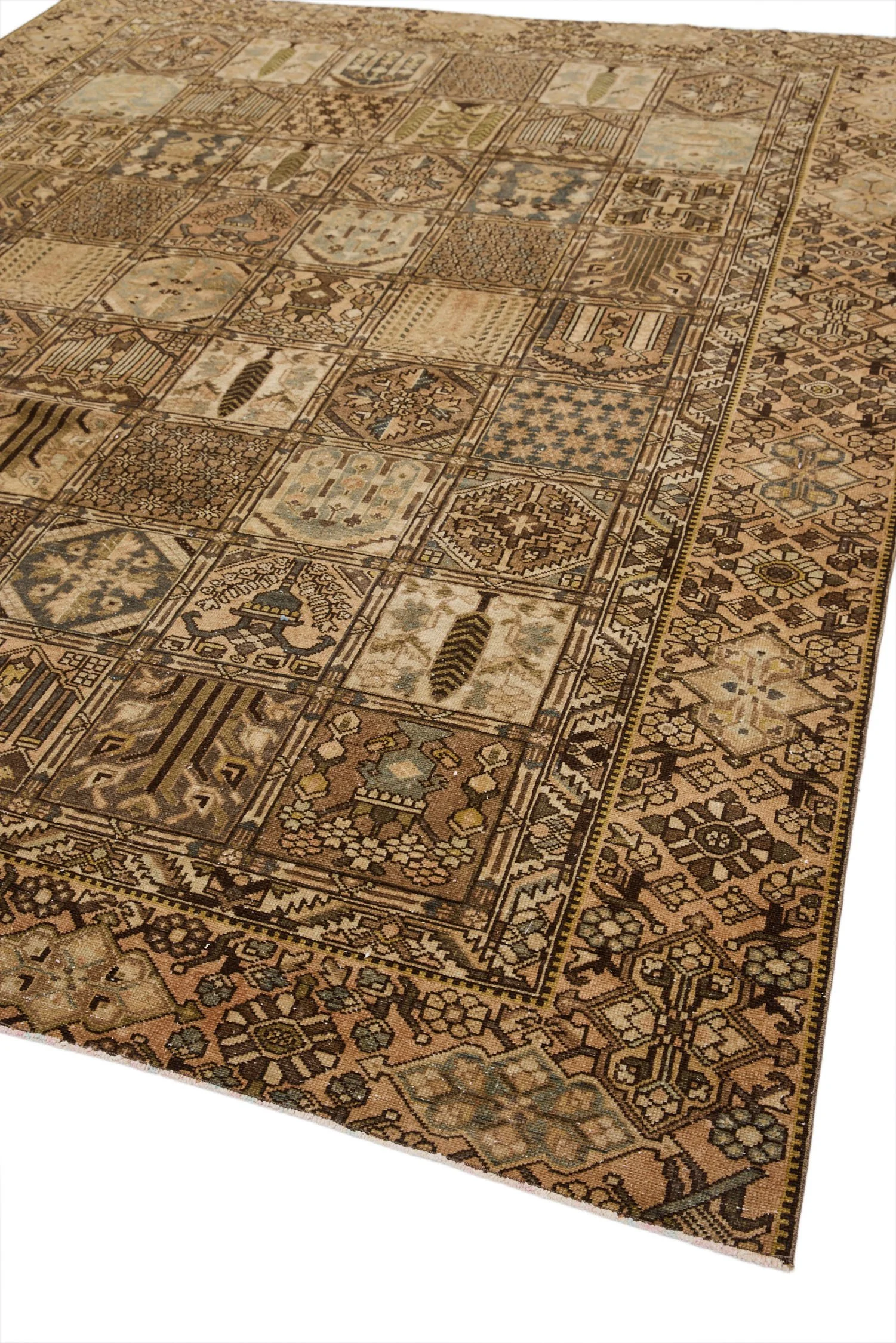
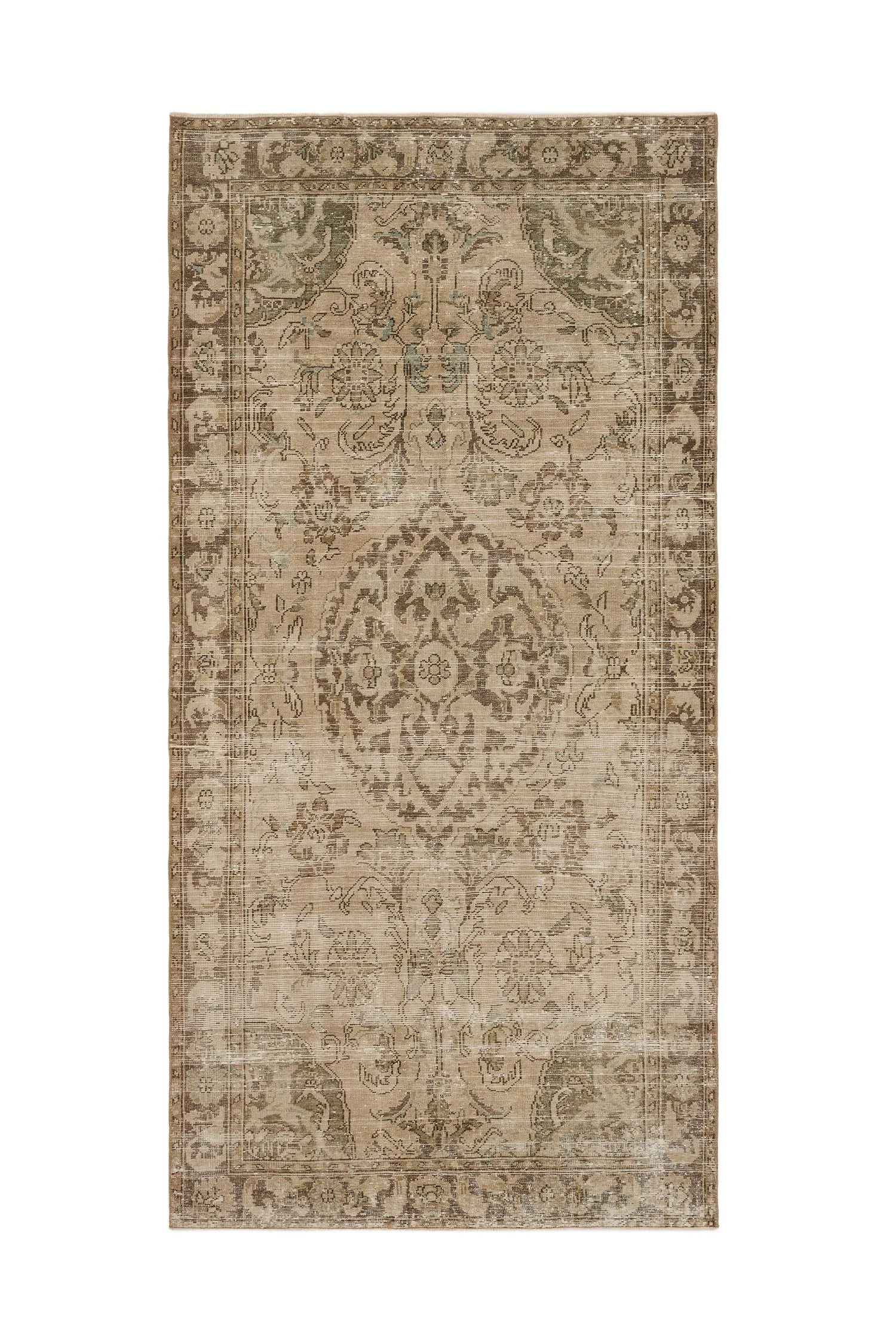
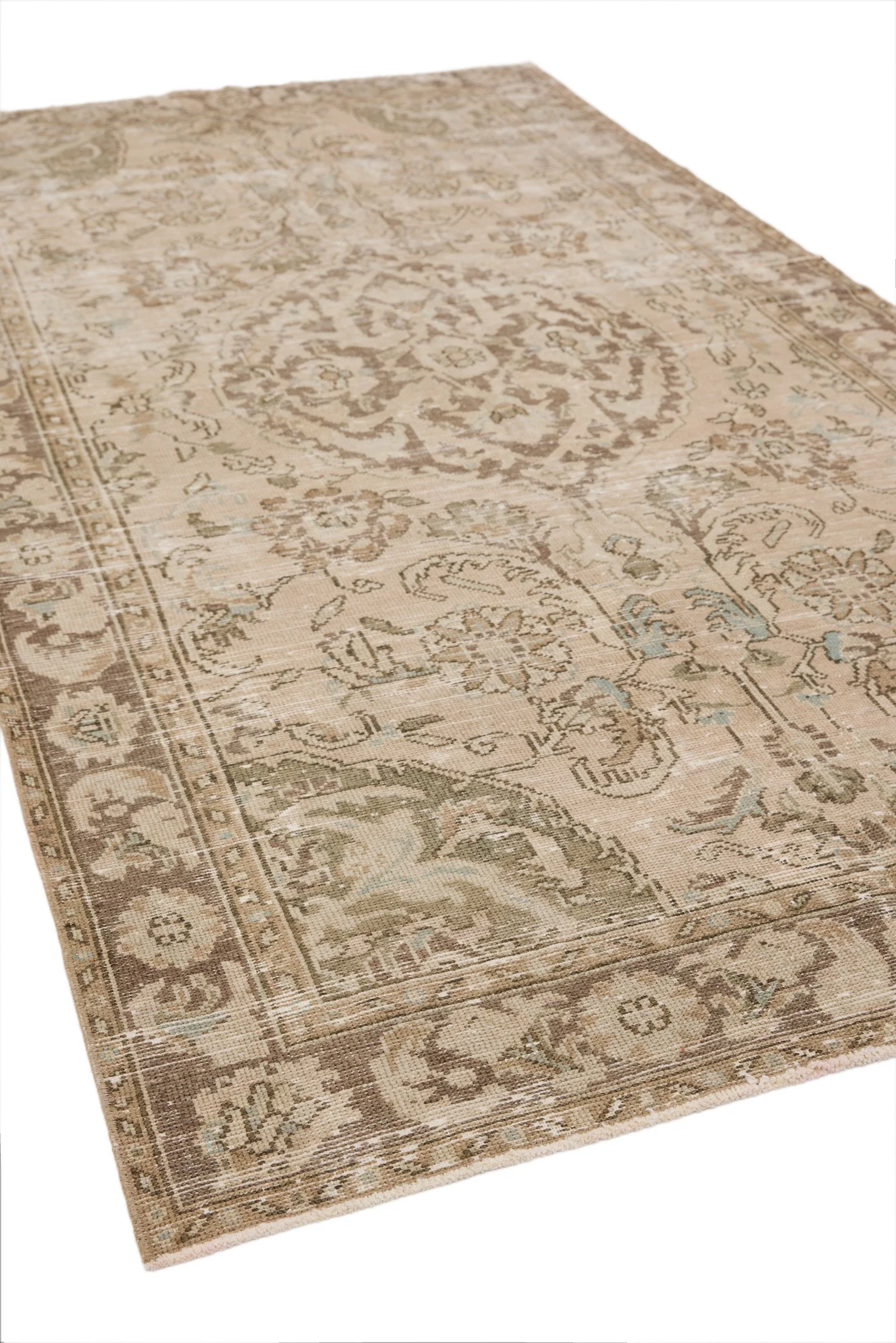
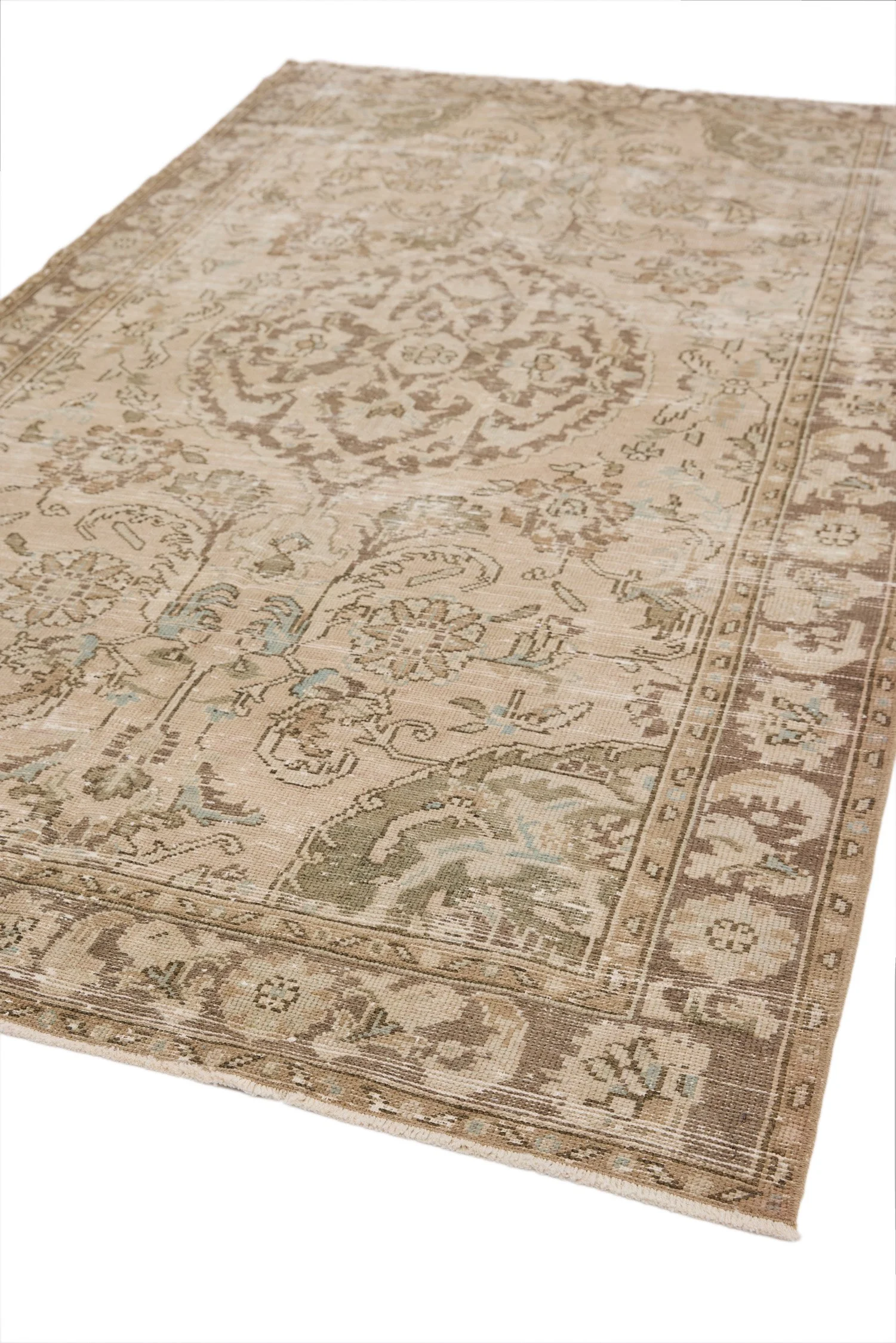
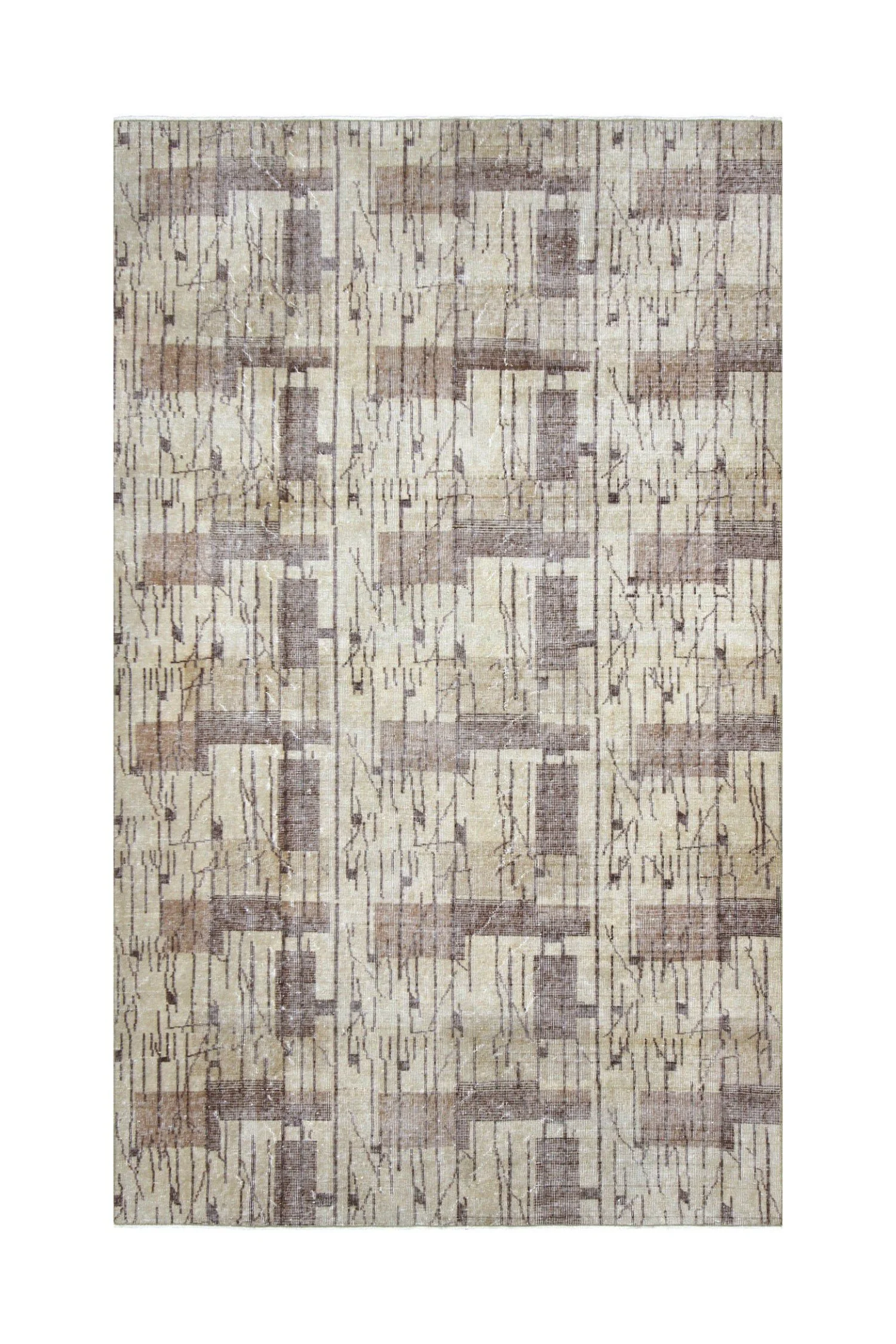
The geometric grid organizes the field into a repeating pattern of blocks and lines. The architectural quality comes from the precision of the linear elements and the proportional relationships between forms. Each section relates to the others through consistent spacing and scale.
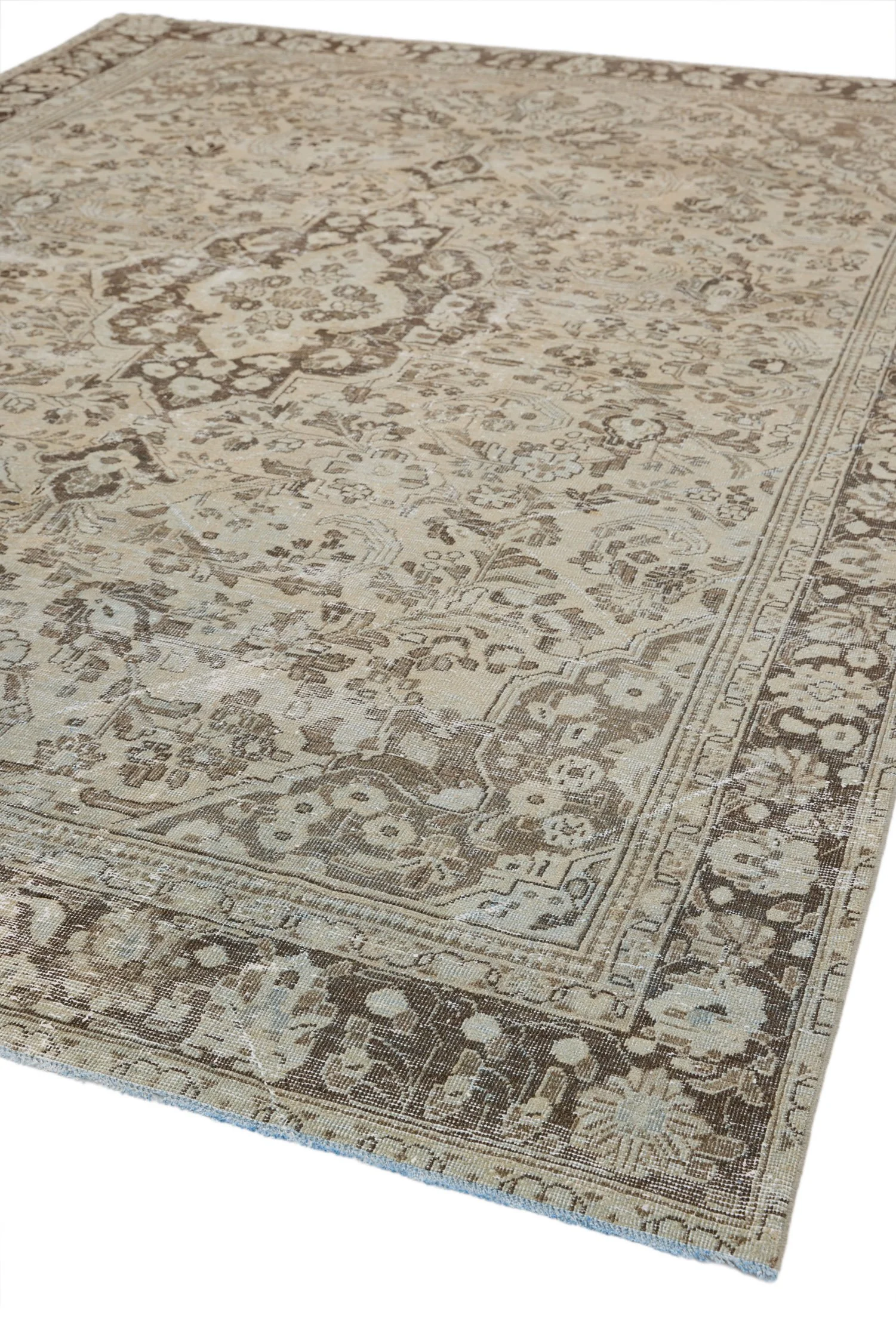
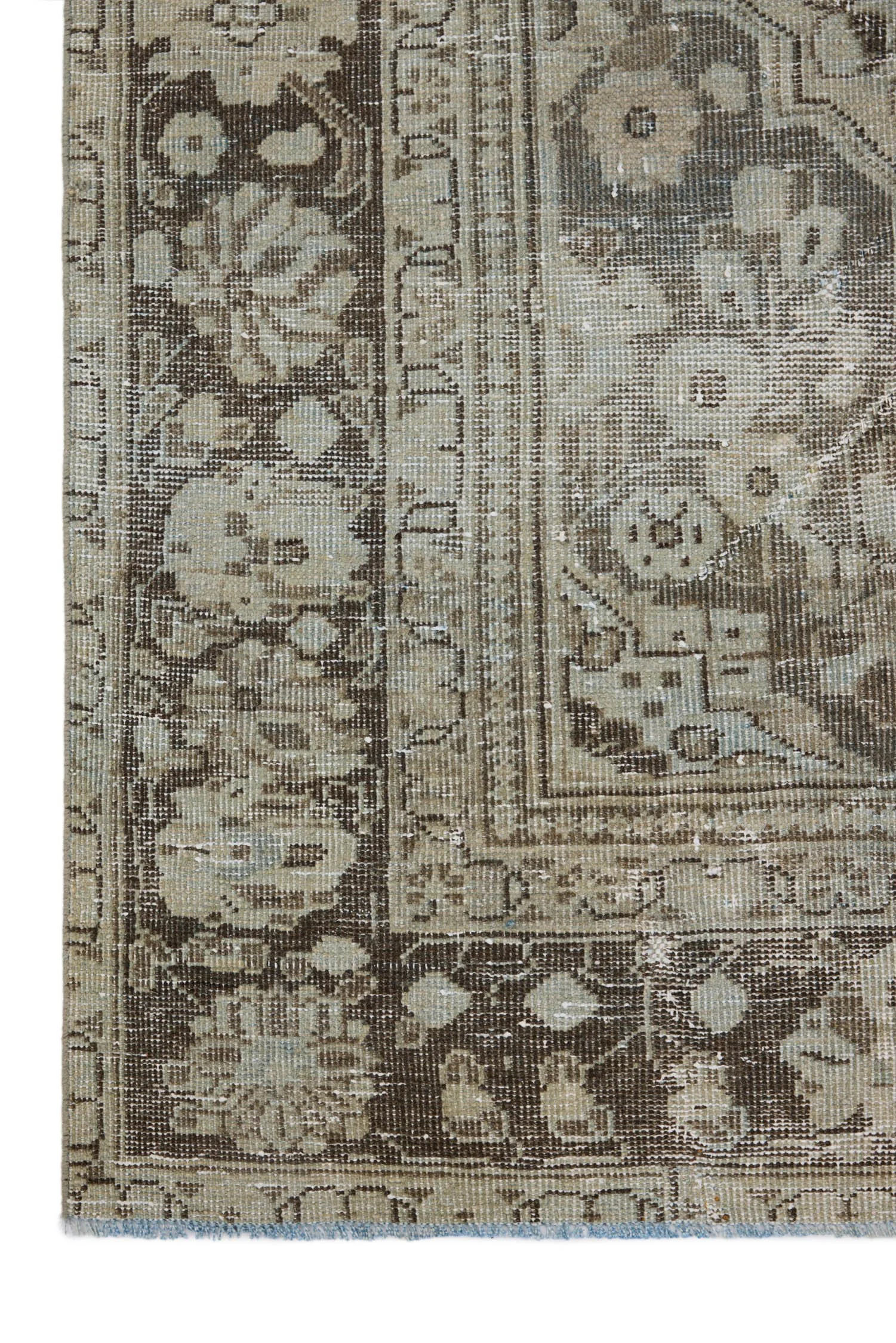
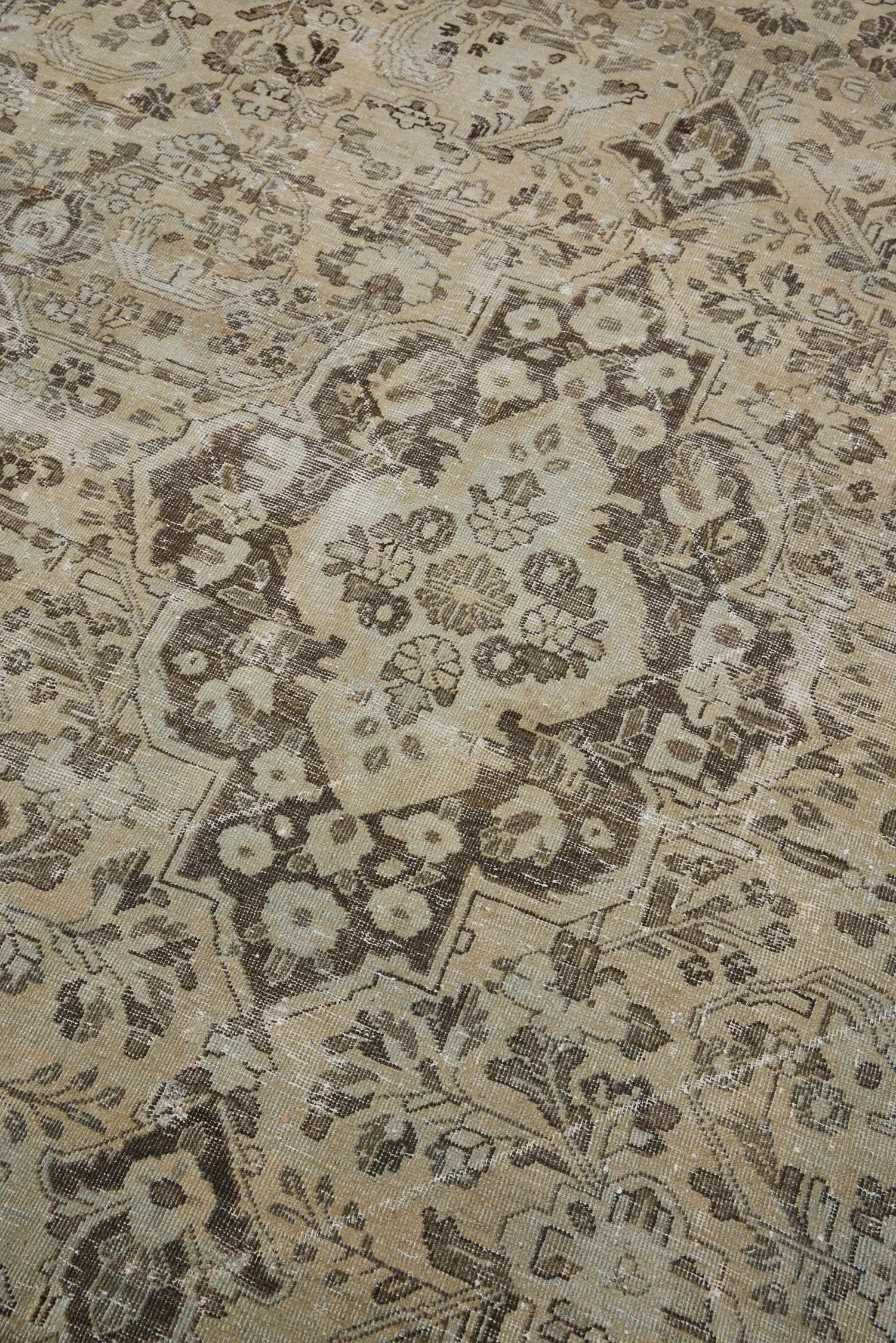
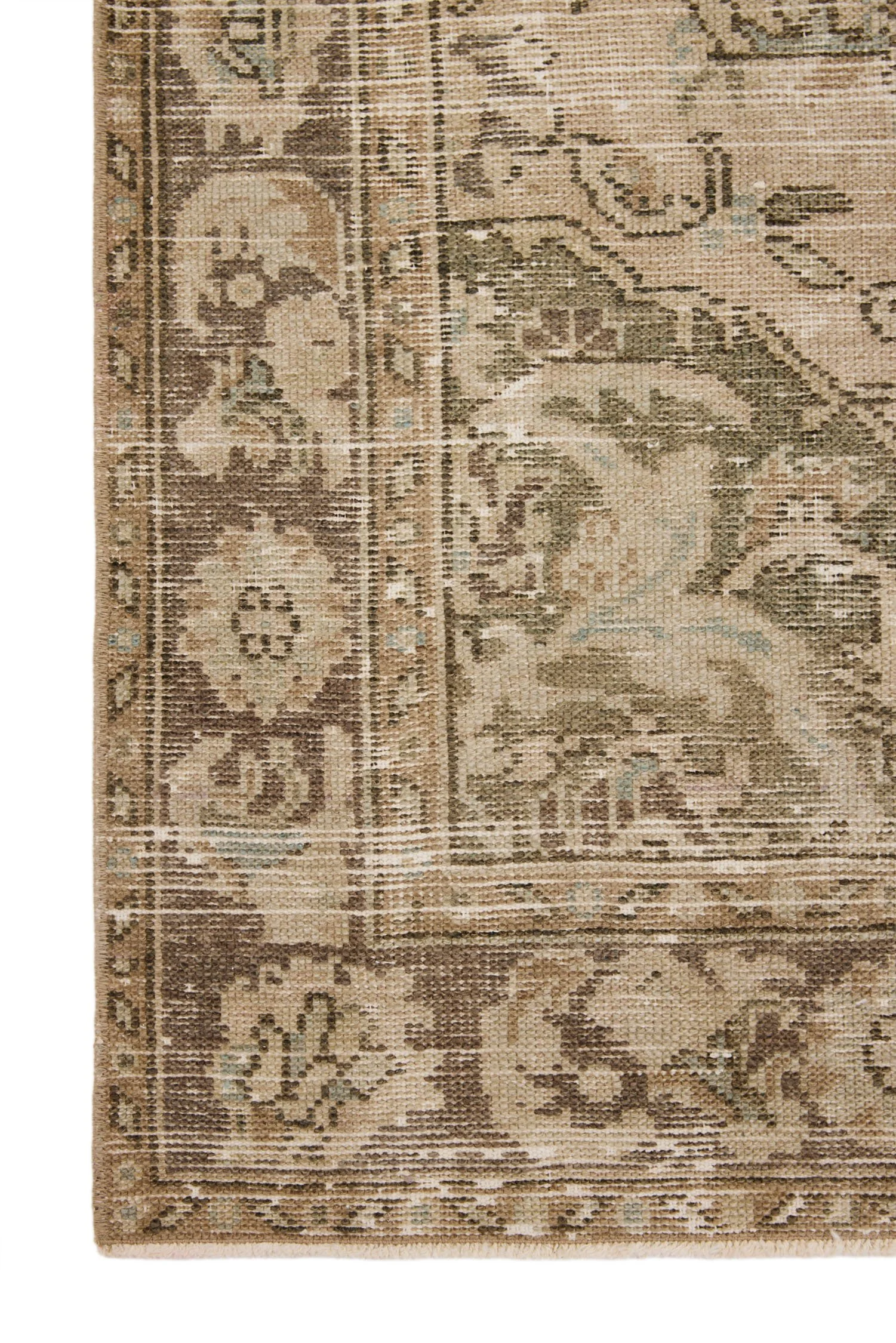
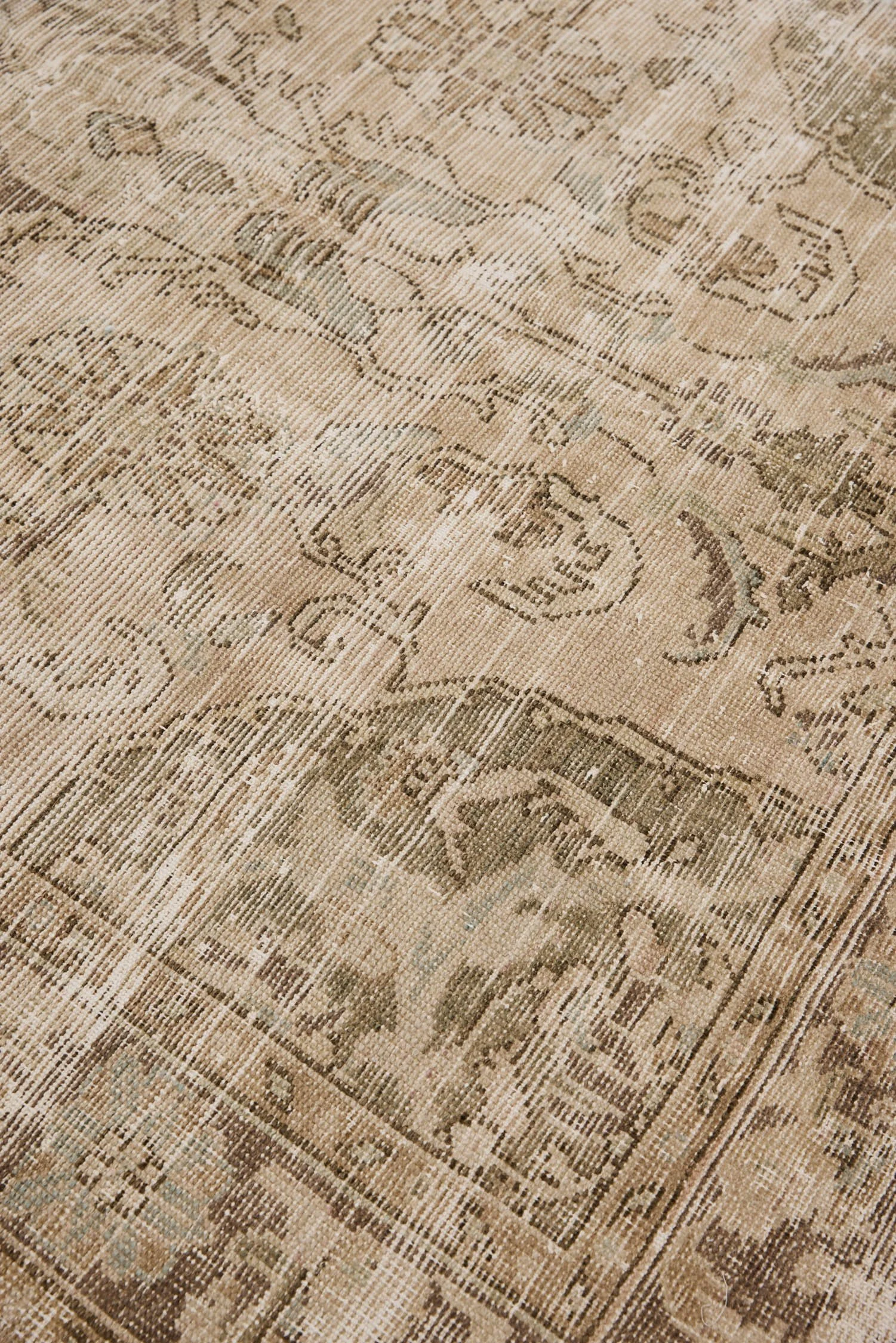
The warm beige and taupe blocks create zones within the grid without fragmenting the overall composition. The soft brown lines provide structure, defining edges and creating visual pathways across the surface. The abstraction reads as textured and dimensional despite working with minimal color variation.
The lack of traditional border framing reinforces the modern sensibility. The pattern extends to the edges simply, without elaborate decorative frames. This allows the geometric composition to function as a complete statement rather than a centered design requiring ornamental containment.
Placement
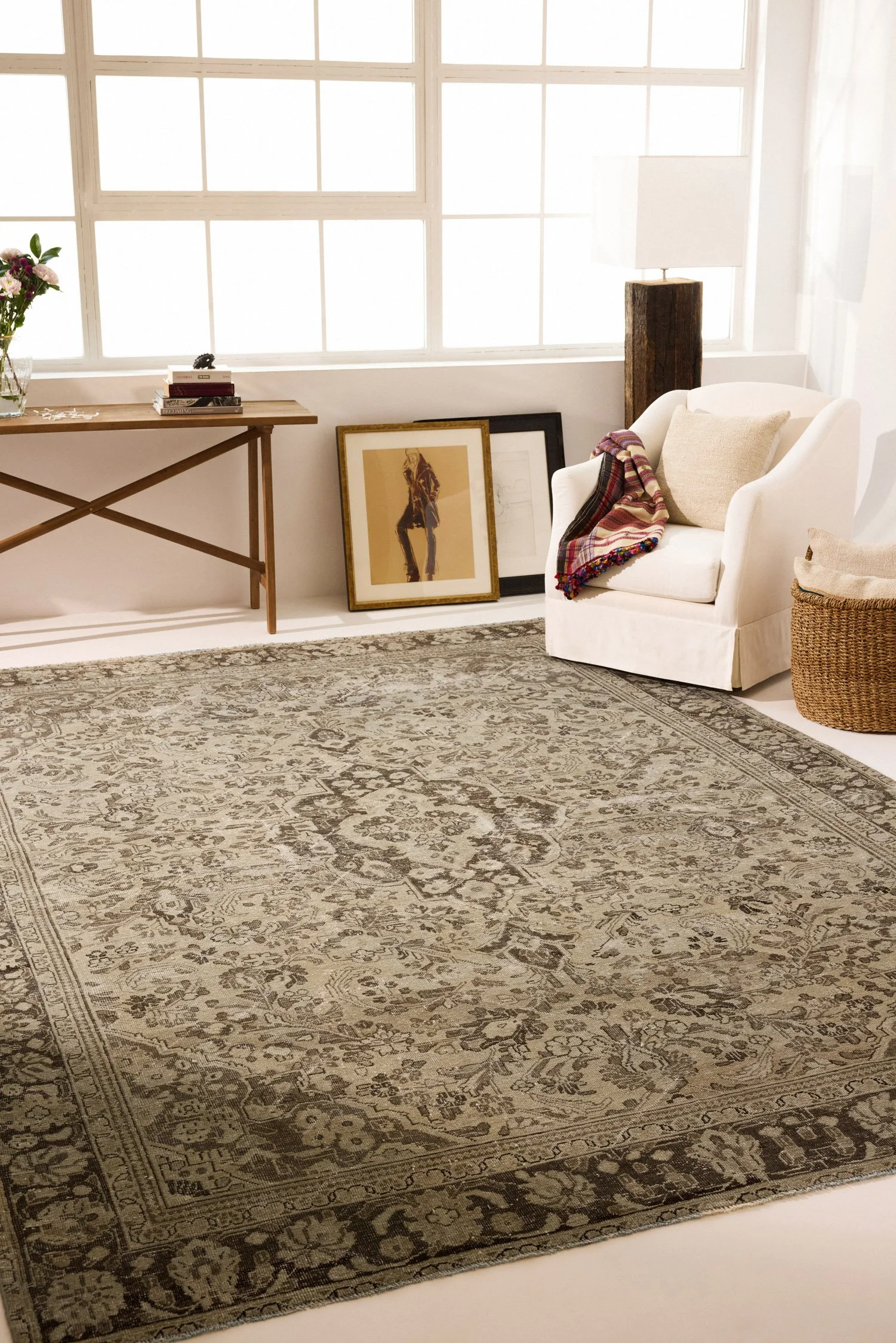
At 5'8" x 9'5", this works in smaller living rooms, dining areas under four-person tables, bedrooms at the foot of the bed, or home offices. The proportions suit spaces where you want substantial floor coverage without the scale of a full area rug.
The neutral palette and geometric abstraction fit naturally in contemporary interiors. The warm beige and taupe tones work with both cool and warm color schemes. The architectural quality also suits transitional spaces that mix modern and traditional elements, or midcentury modern settings where the rug's origin period aligns with the furniture style.
Care Recommendations
To preserve the rug's beauty:
Rotate periodically for even wear
Vacuum regularly using a suction-only setting
Address spills immediately by blotting, never rubbing
Professional cleaning recommended annually
Avoid direct sunlight to maintain color integrity
Geometric abstraction in Turkish rugs wasn't abandoning tradition; it was tradition learning a new language.