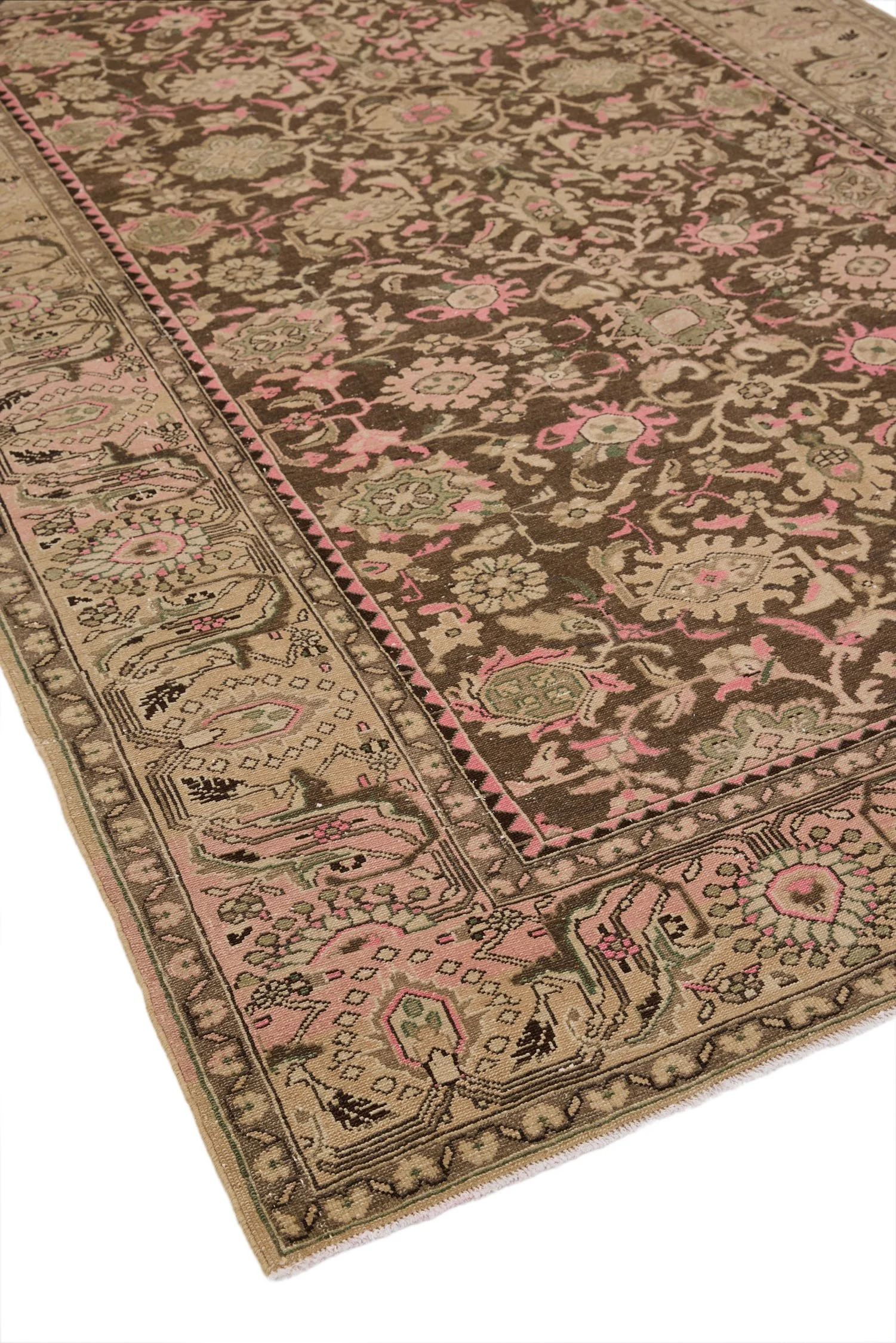
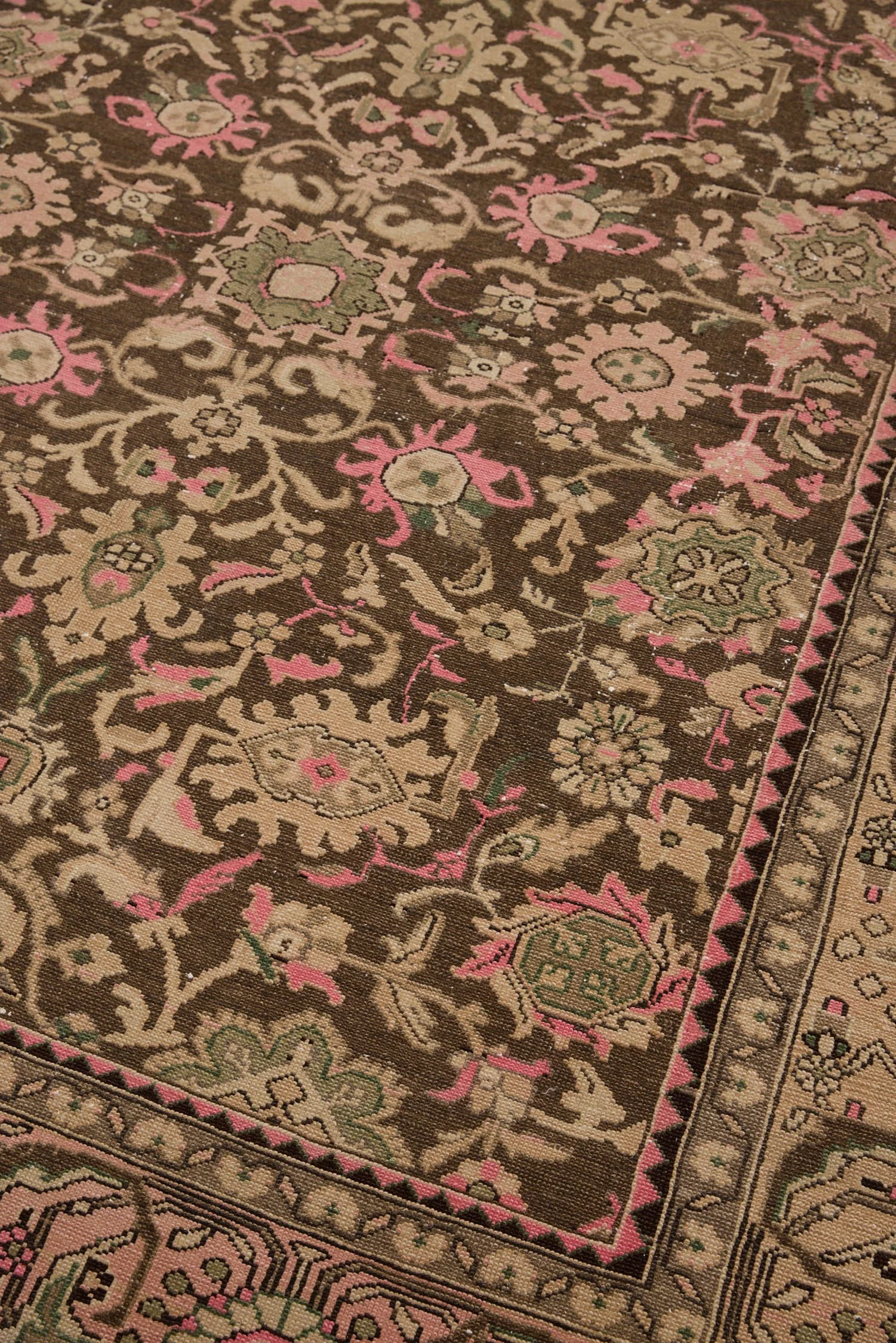
 Image 1 of 5
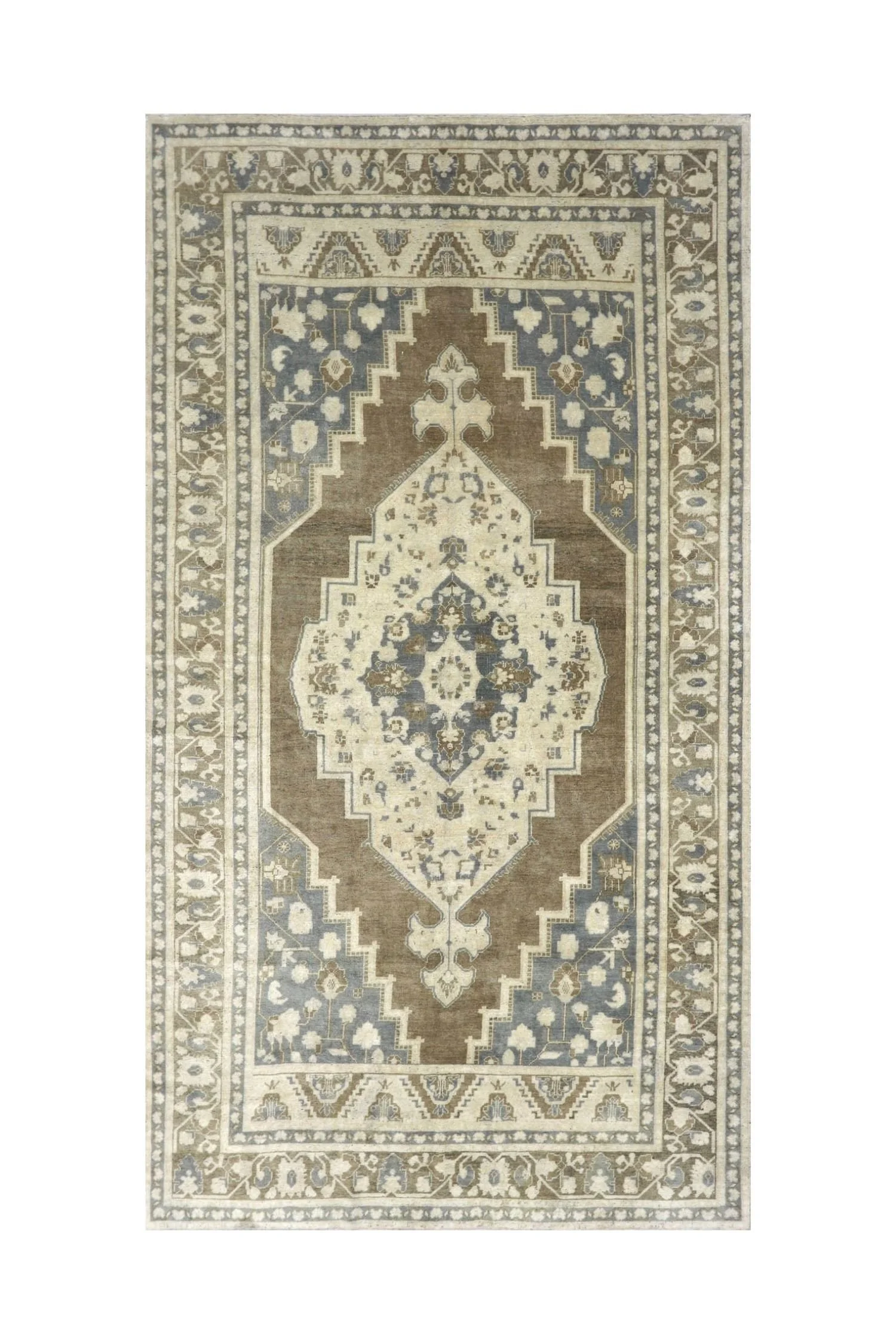
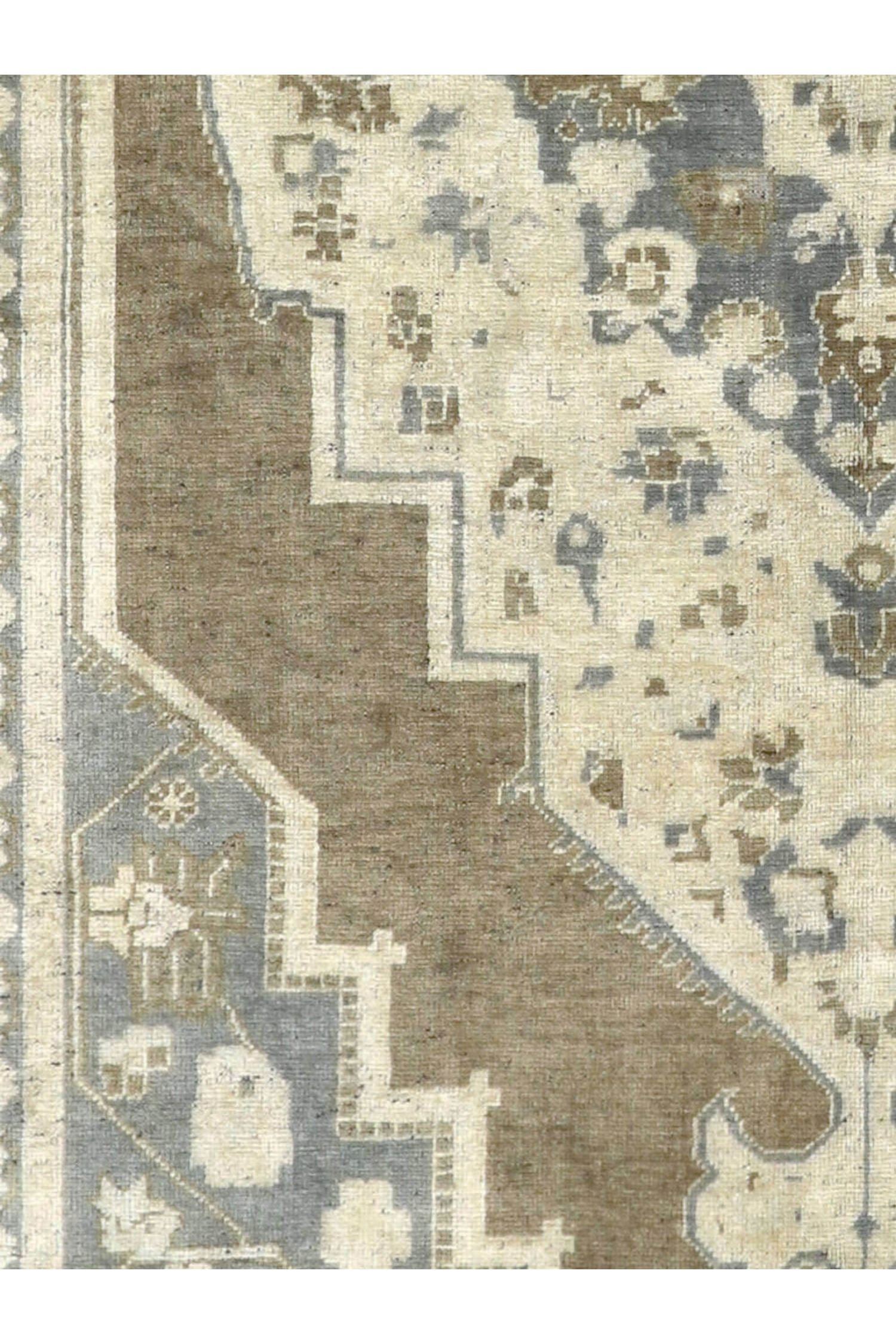 Image 2 of 5
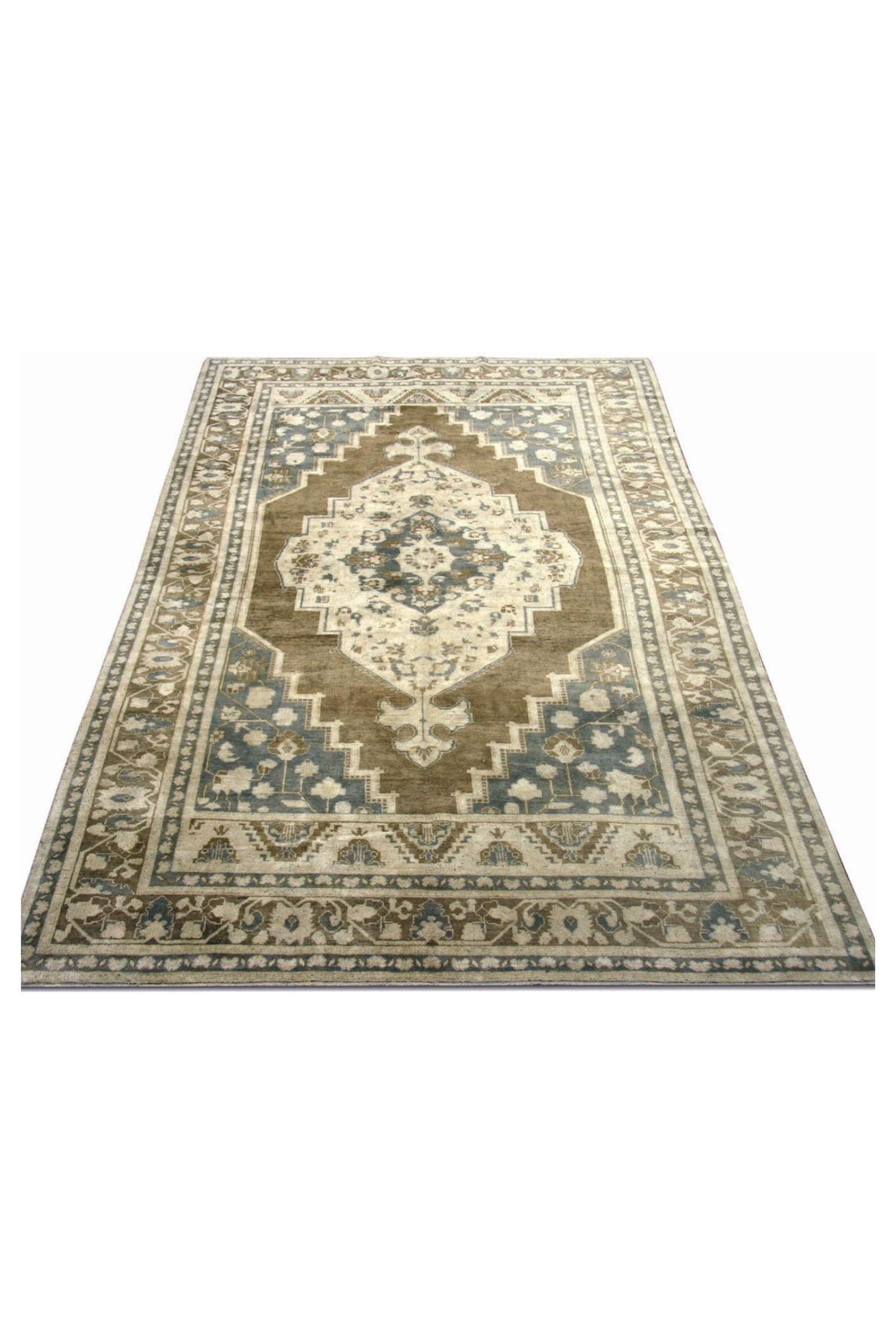 Image 3 of 5
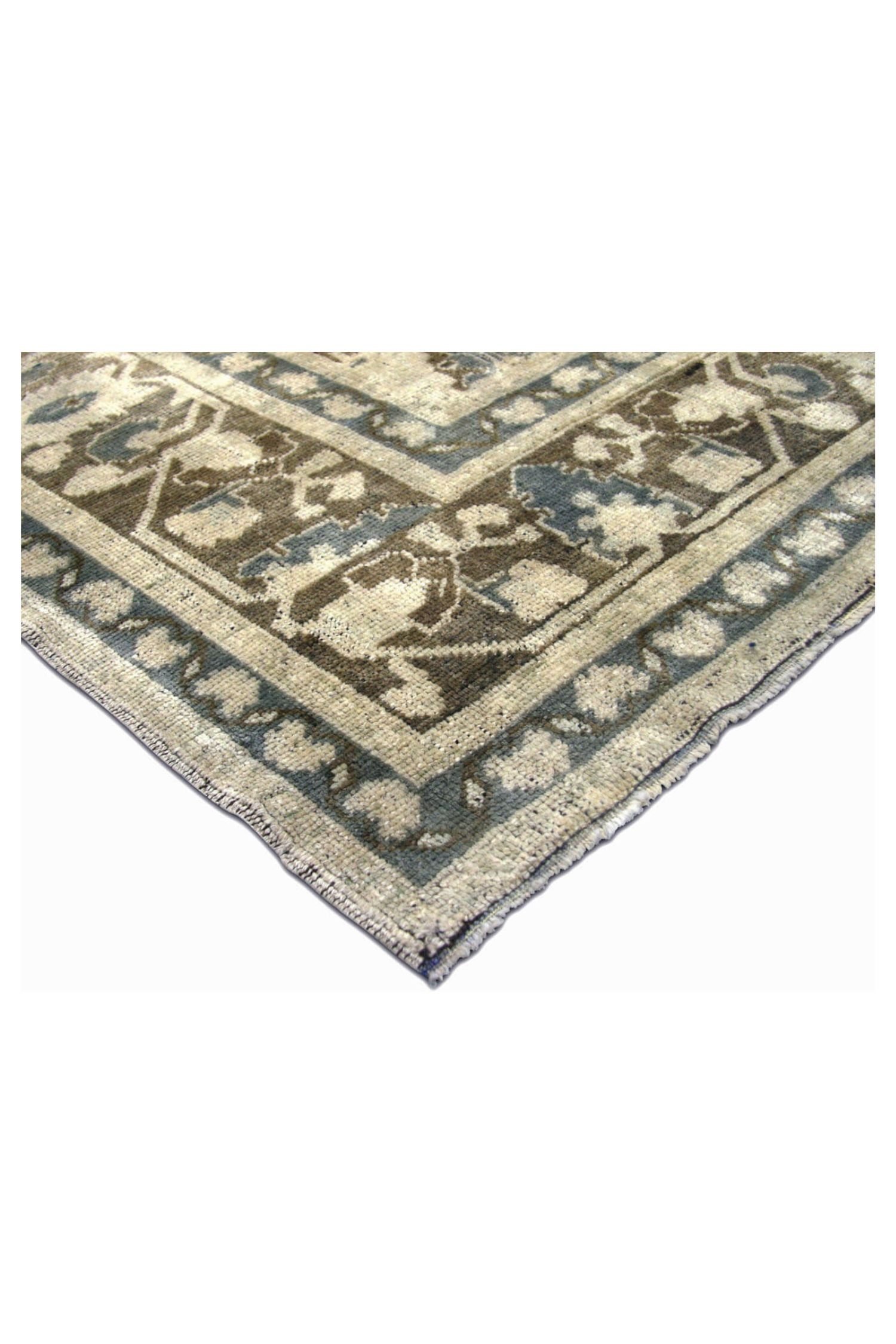 Image 4 of 5
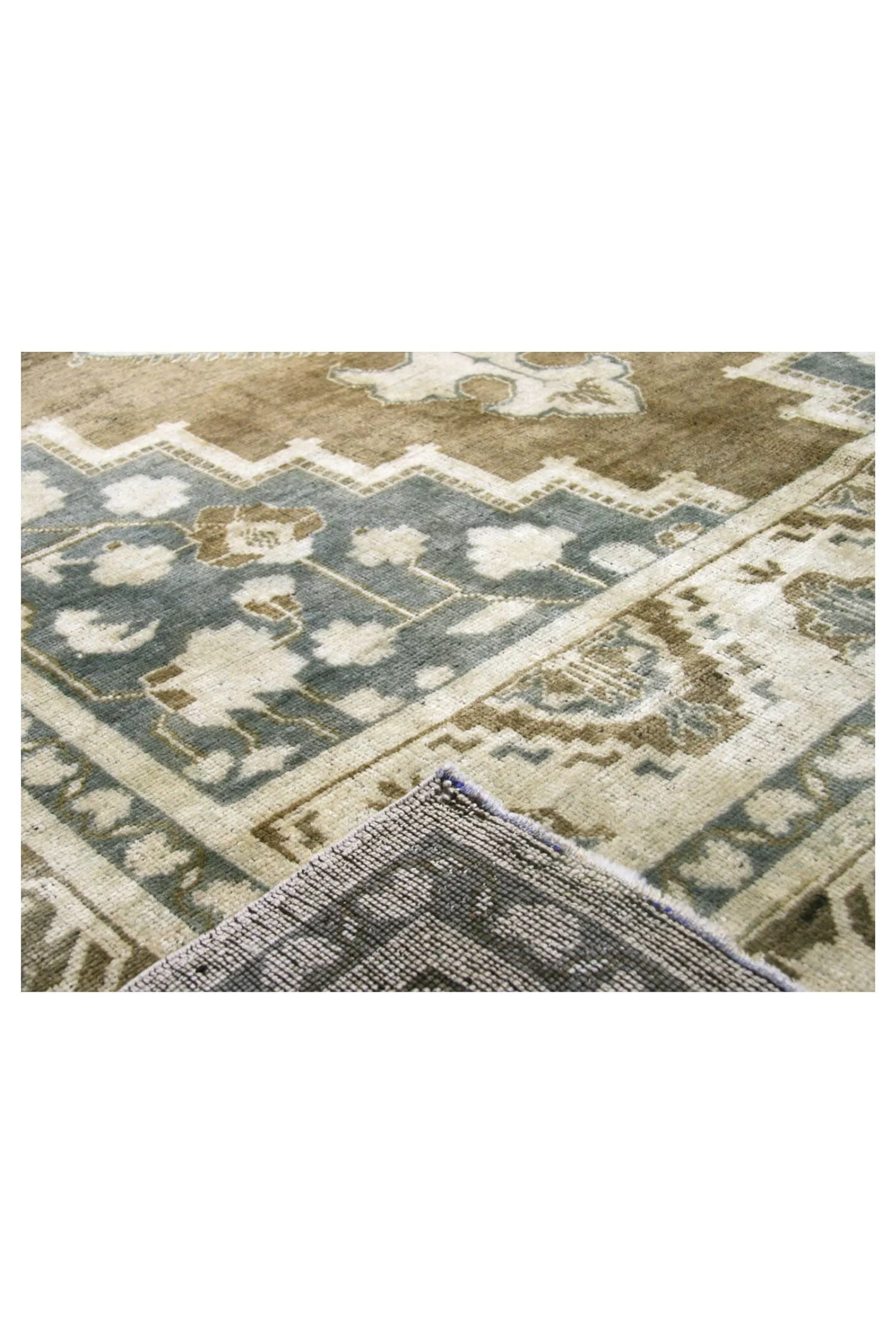 Image 5 of 5
Heritage and Craftsmanship
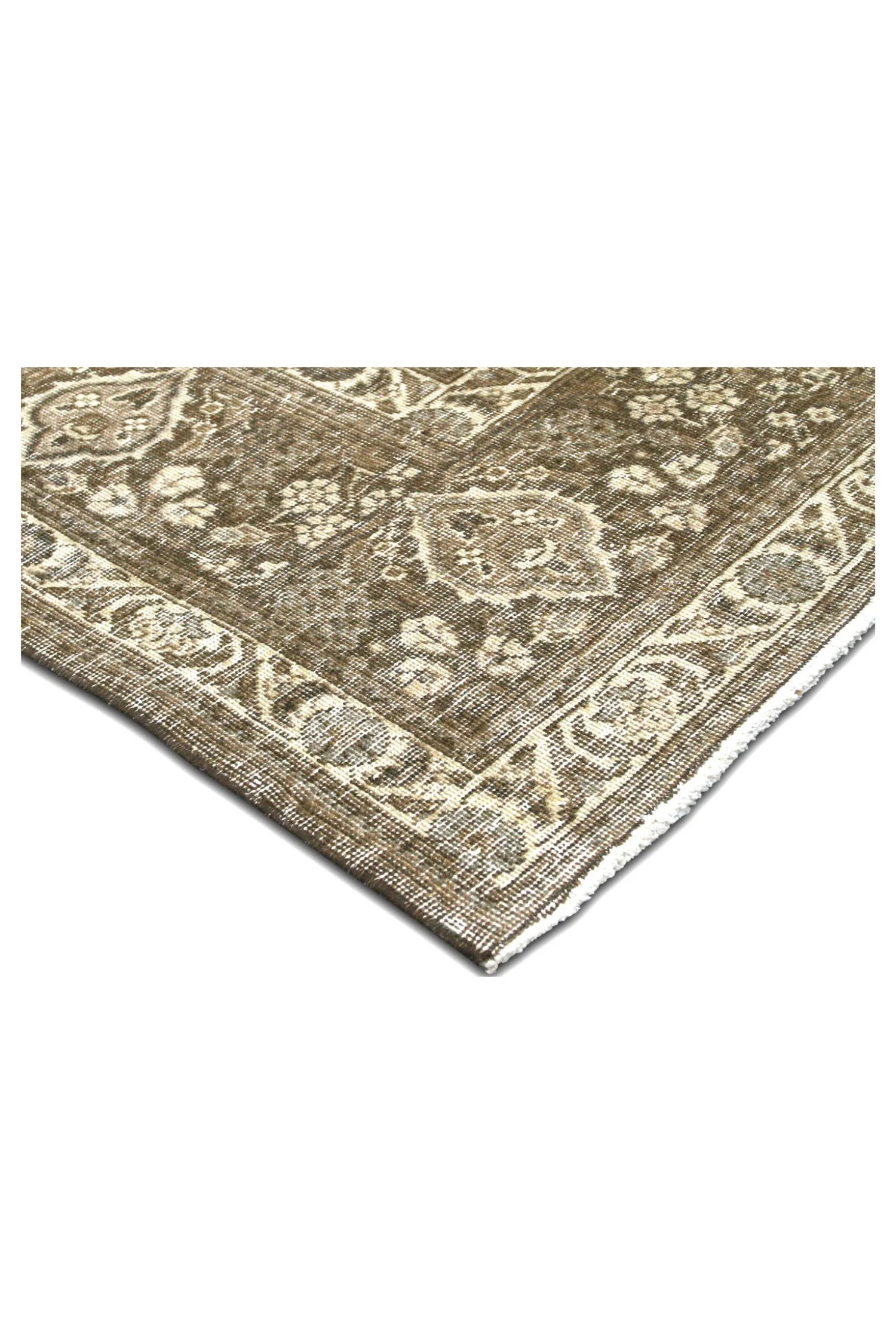
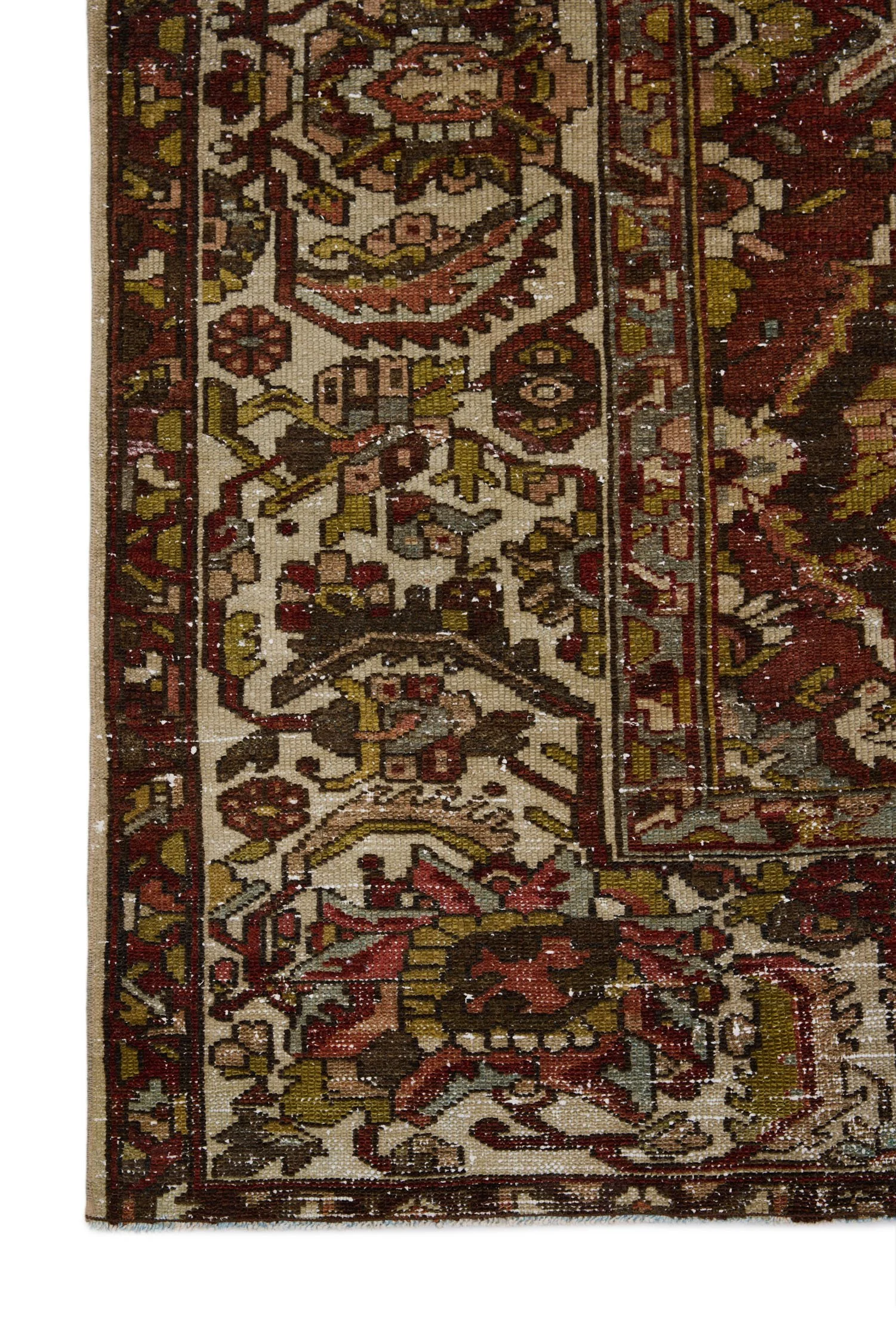
Anatolian weaving in the 1940s maintained design traditions that had been in use for generations. The stepped medallion format seen here appears across centuries of Turkish rug making, its popularity stemming from both aesthetic appeal and practical construction.
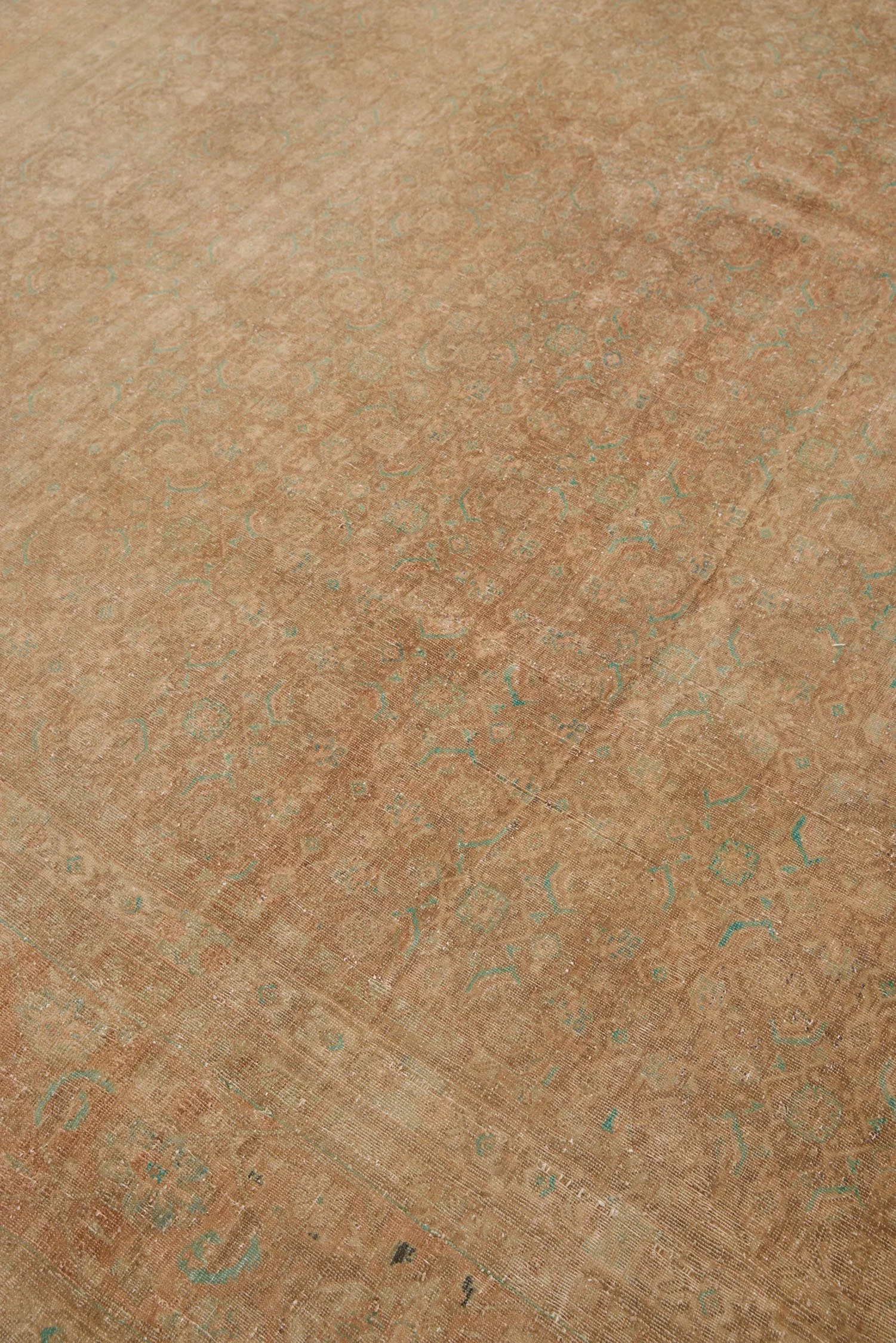
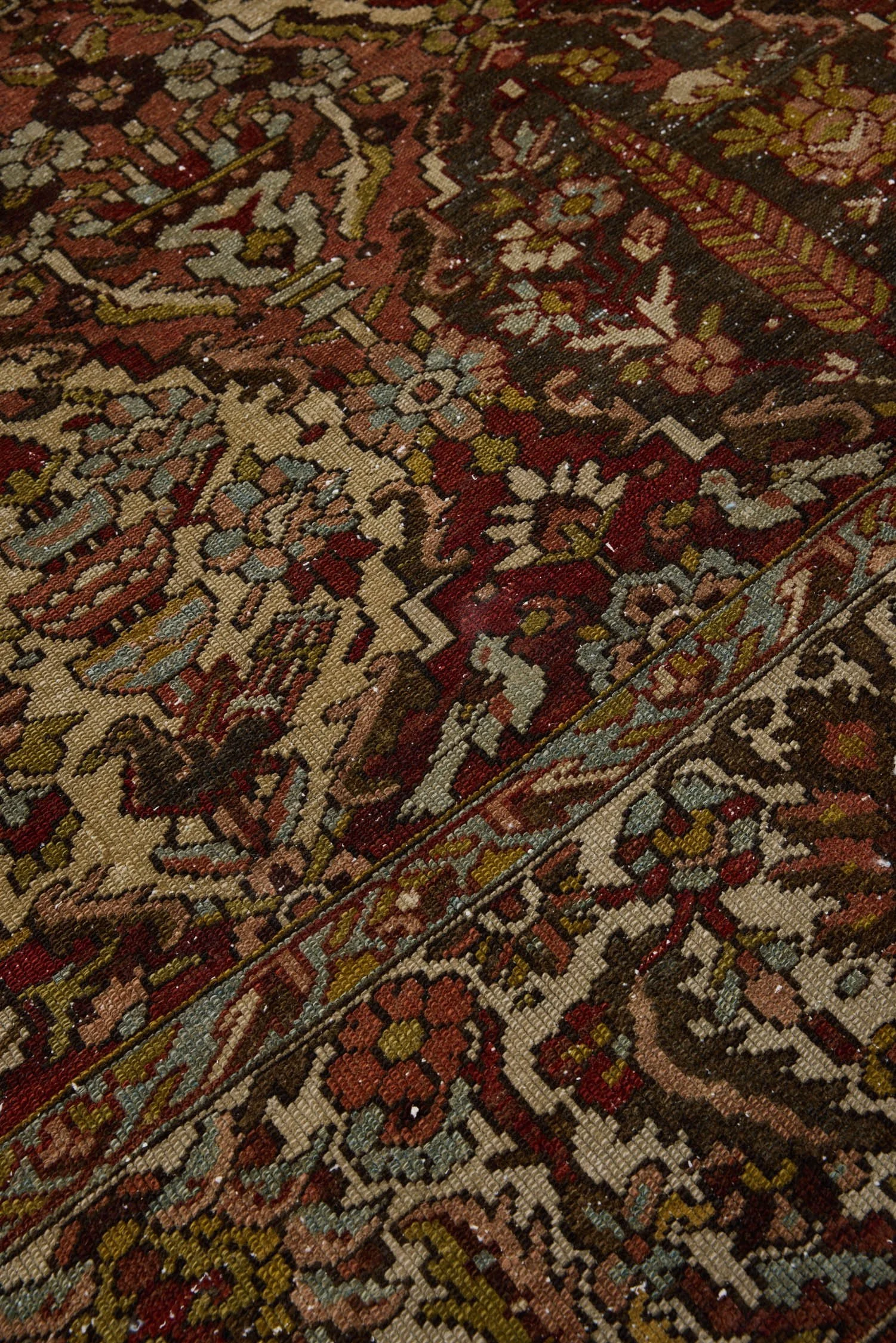
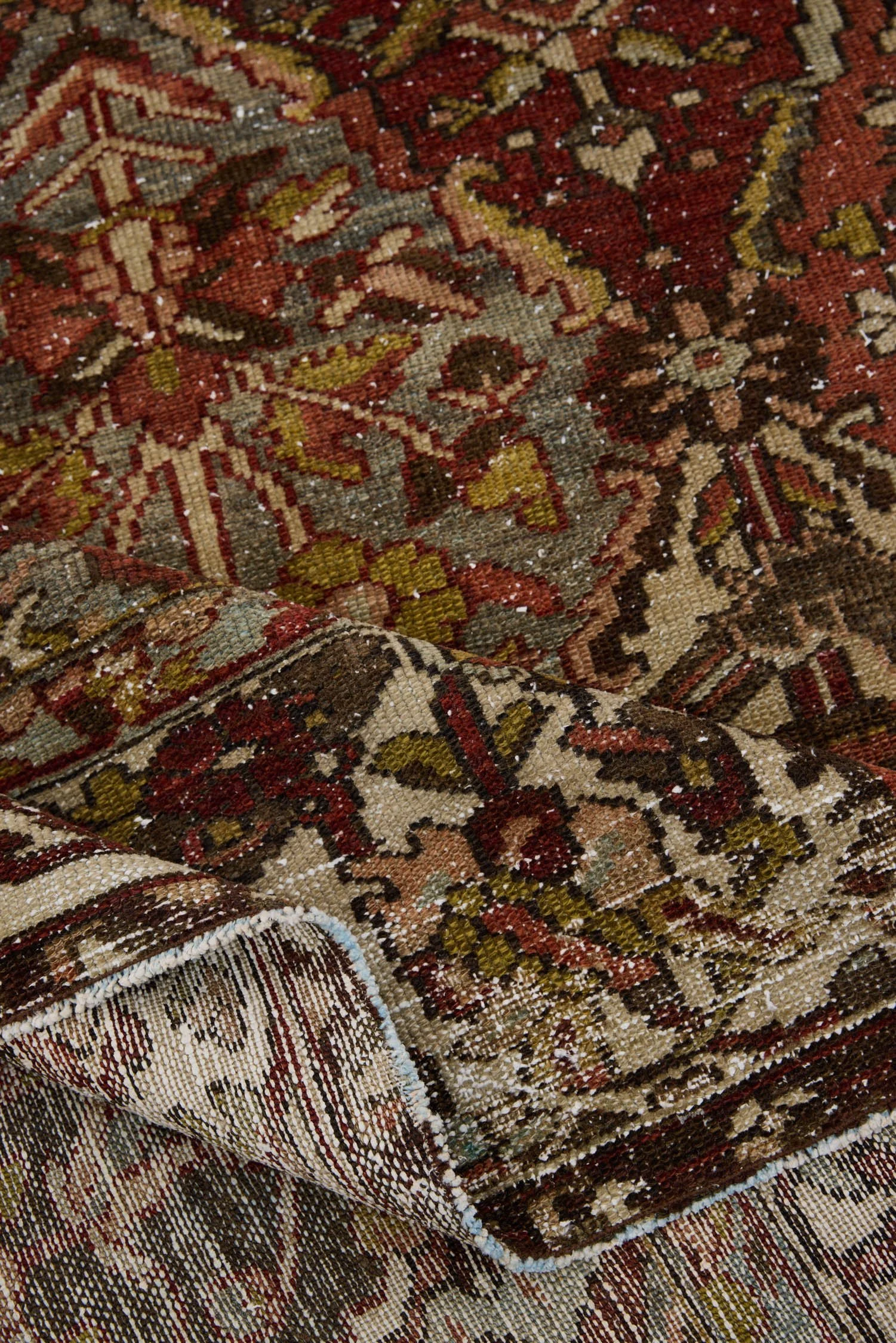
Weavers working in this period used locally sourced wool and natural dyes that had been refined over time. The warm brown came from walnut husks or madder root depending on the desired shade. Slate blue required indigo, a more costly material that weavers used strategically in areas where they wanted visual impact.
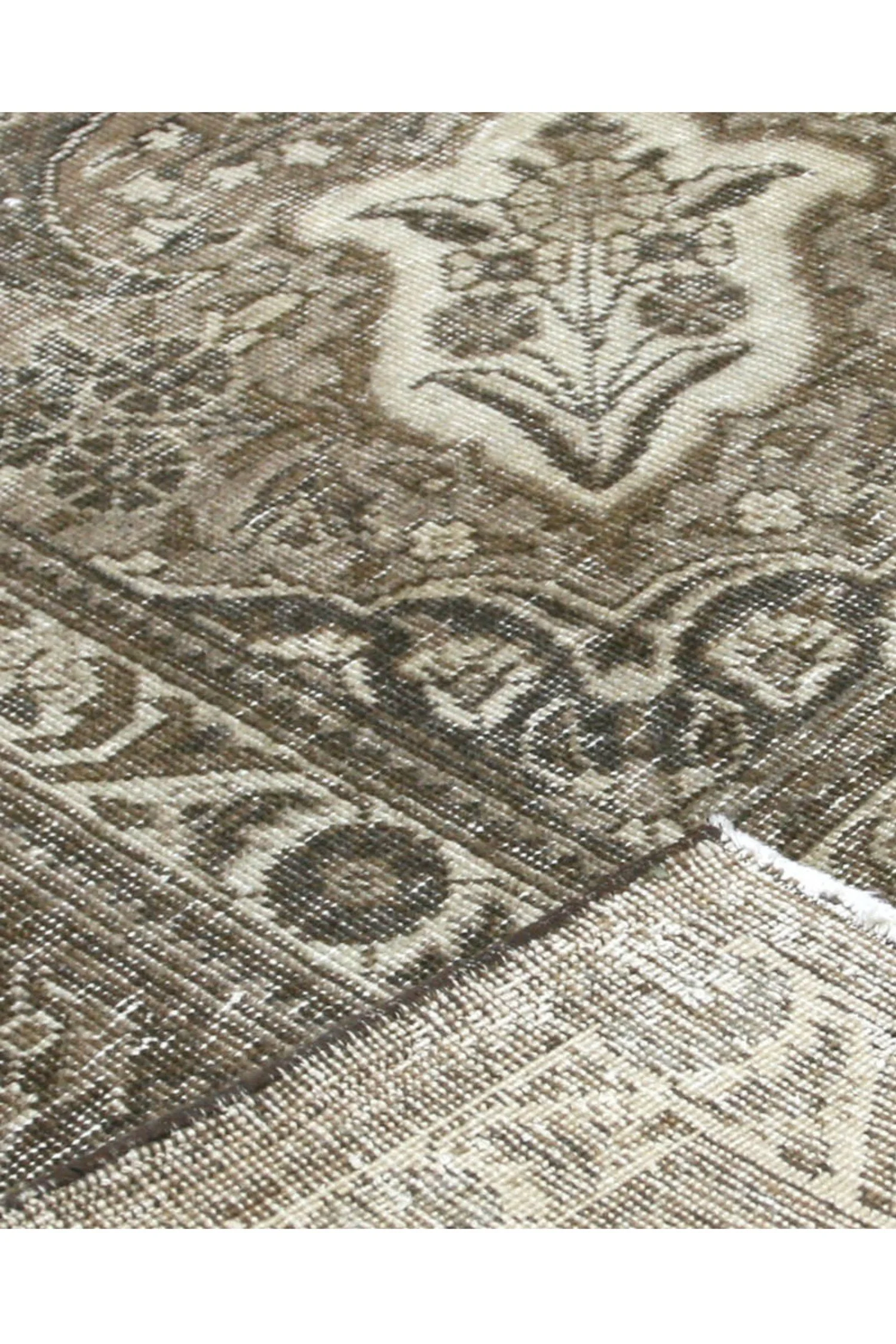
These mid-sized pieces served multiple purposes in Turkish homes, valued for their durability and versatility. The tight weave and quality wool meant they could withstand daily use while maintaining their structure and color.
Design Elements
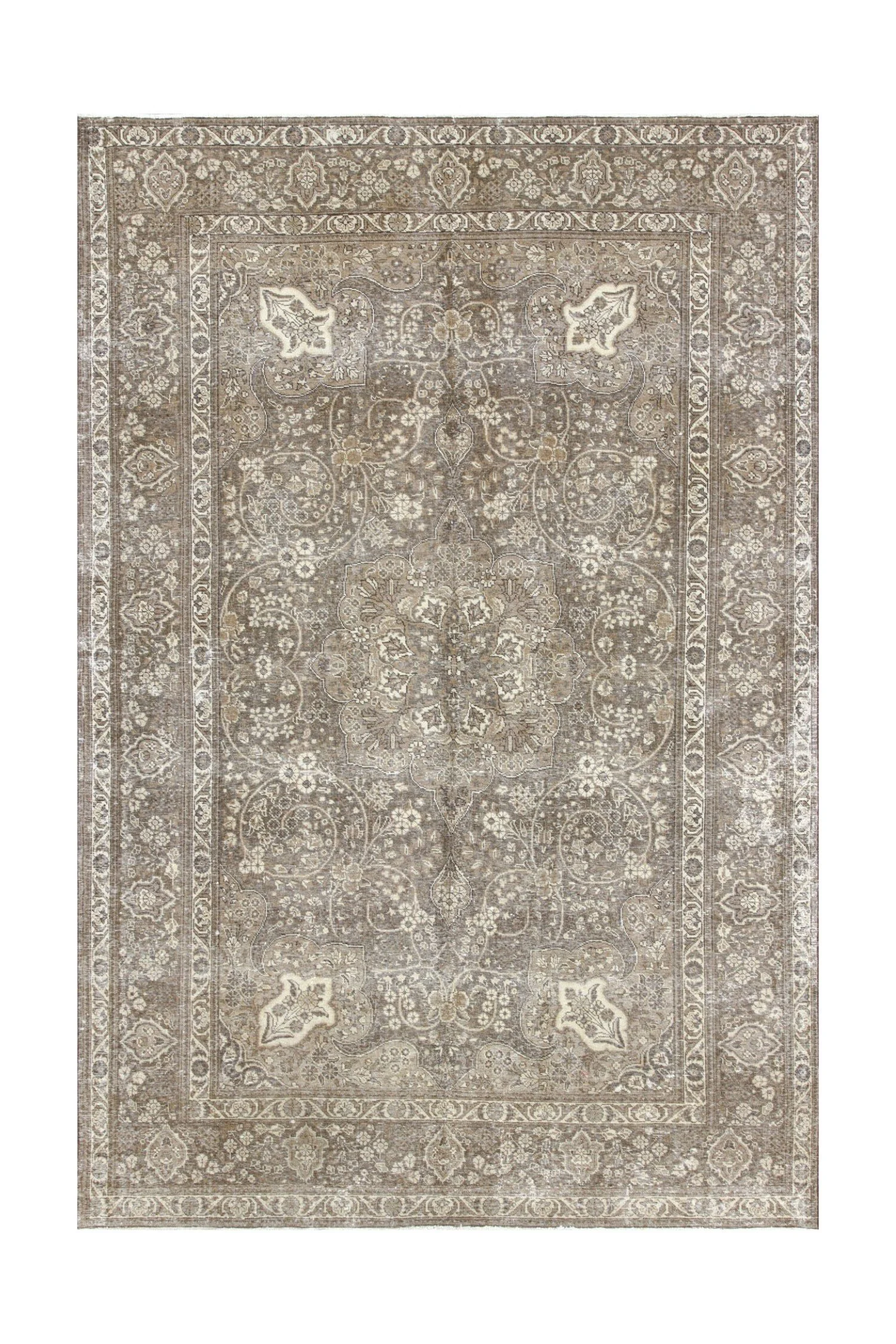
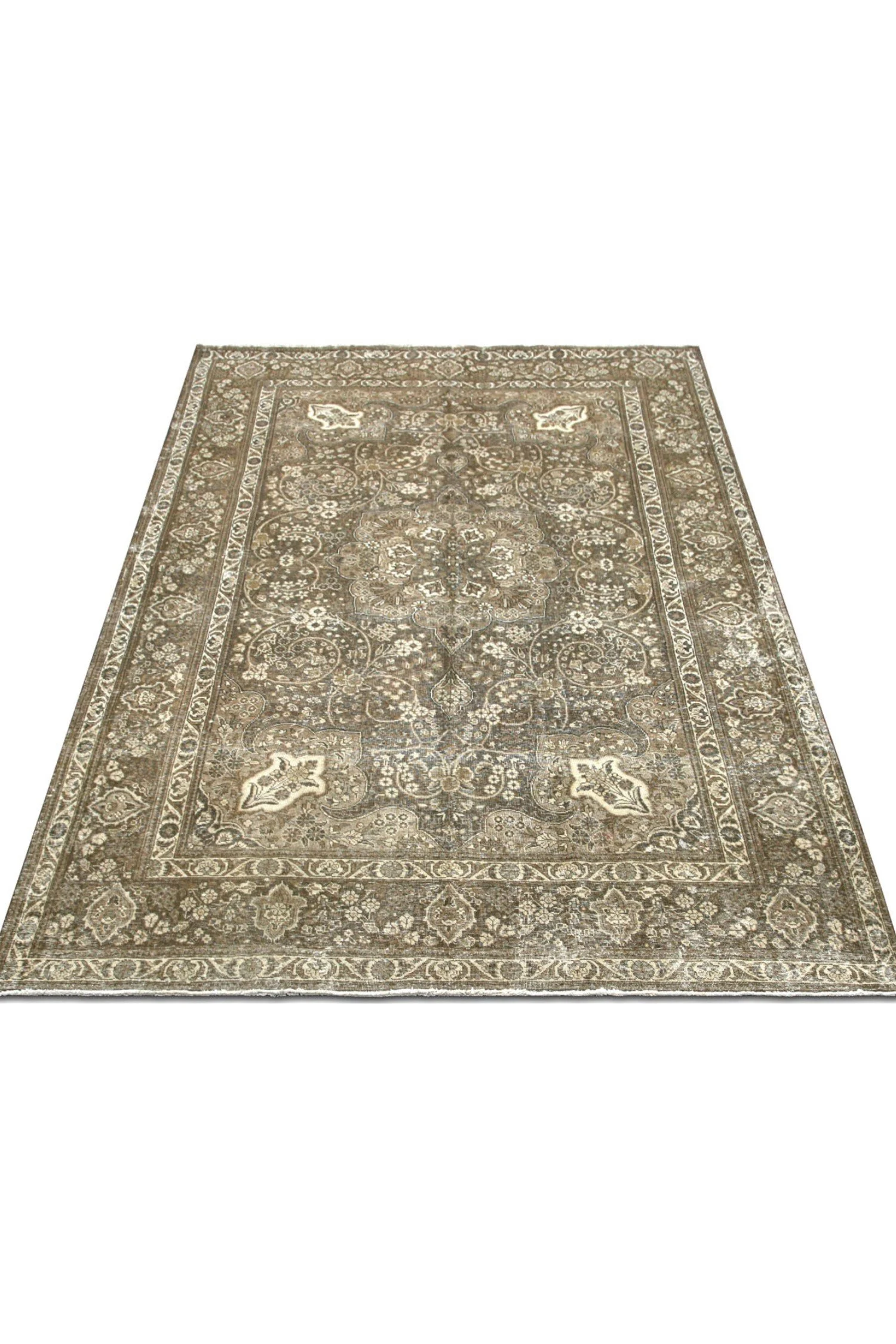
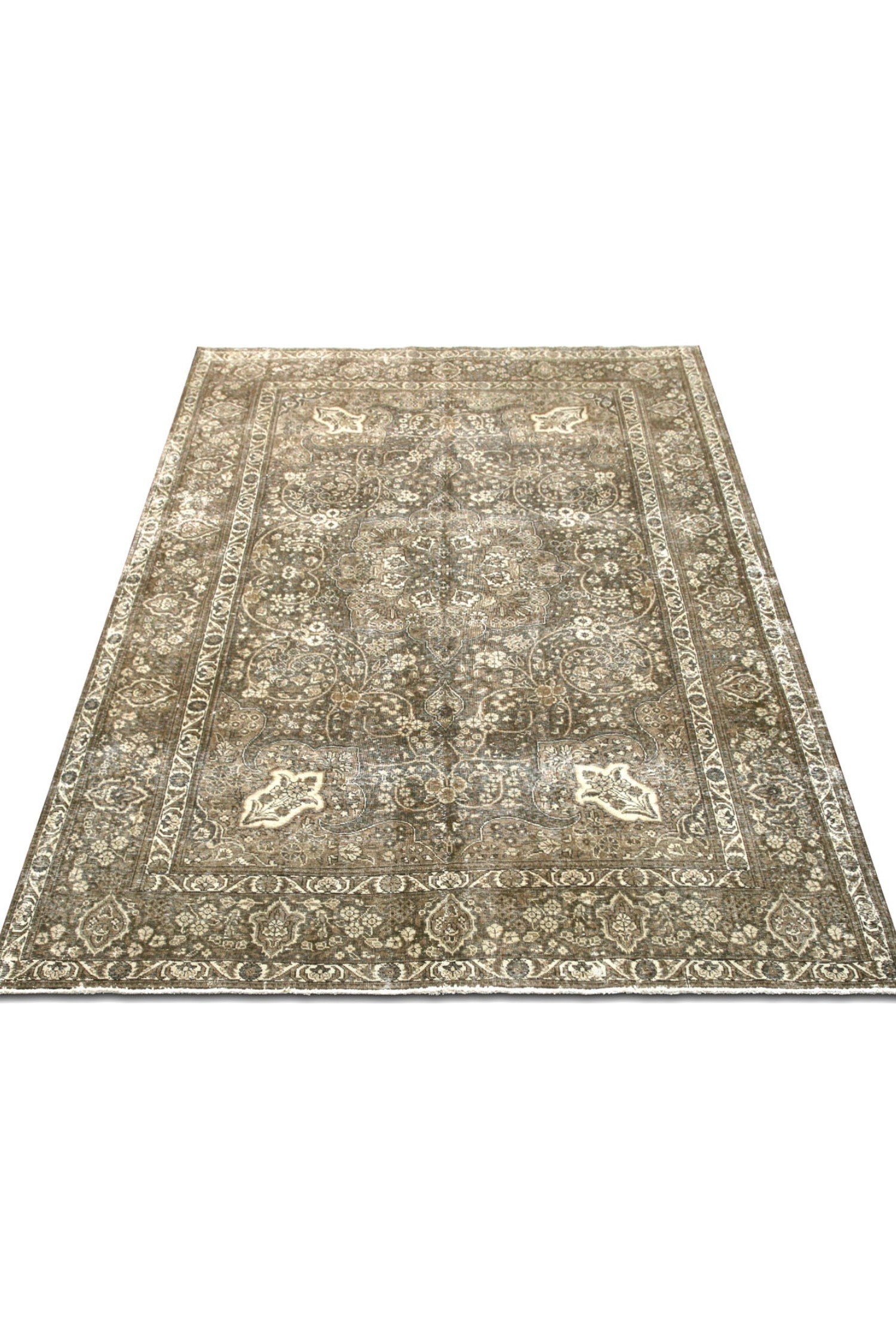
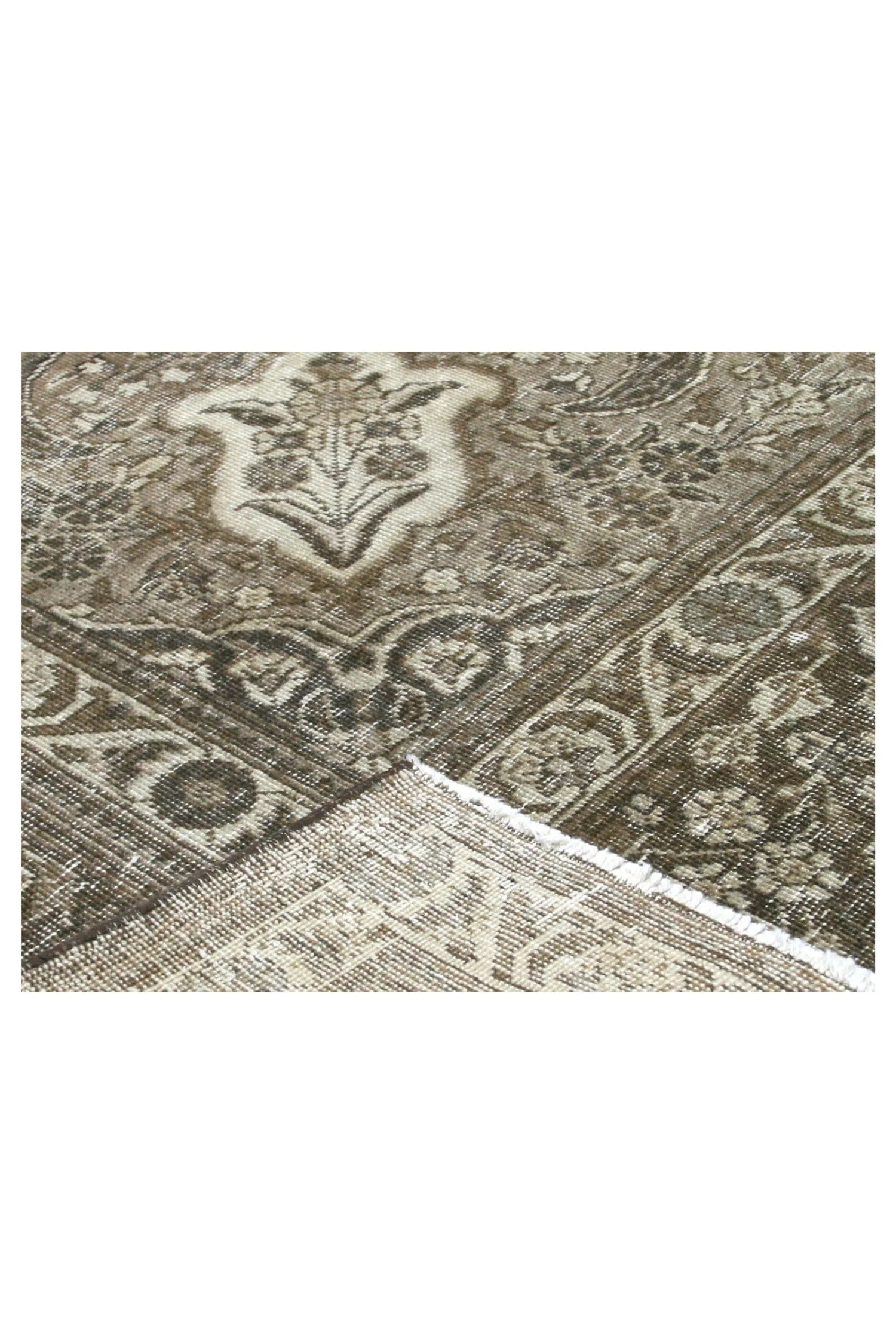
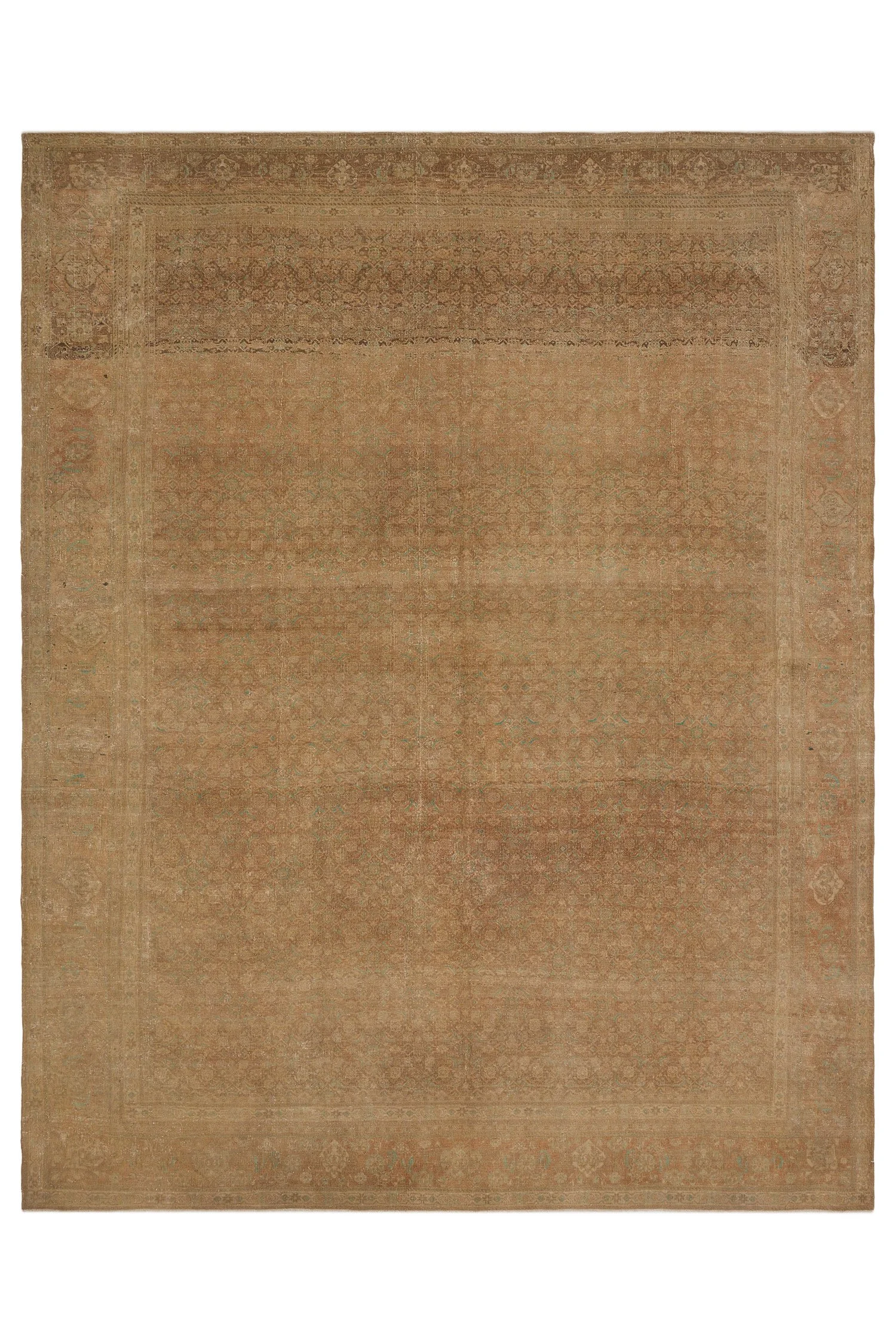
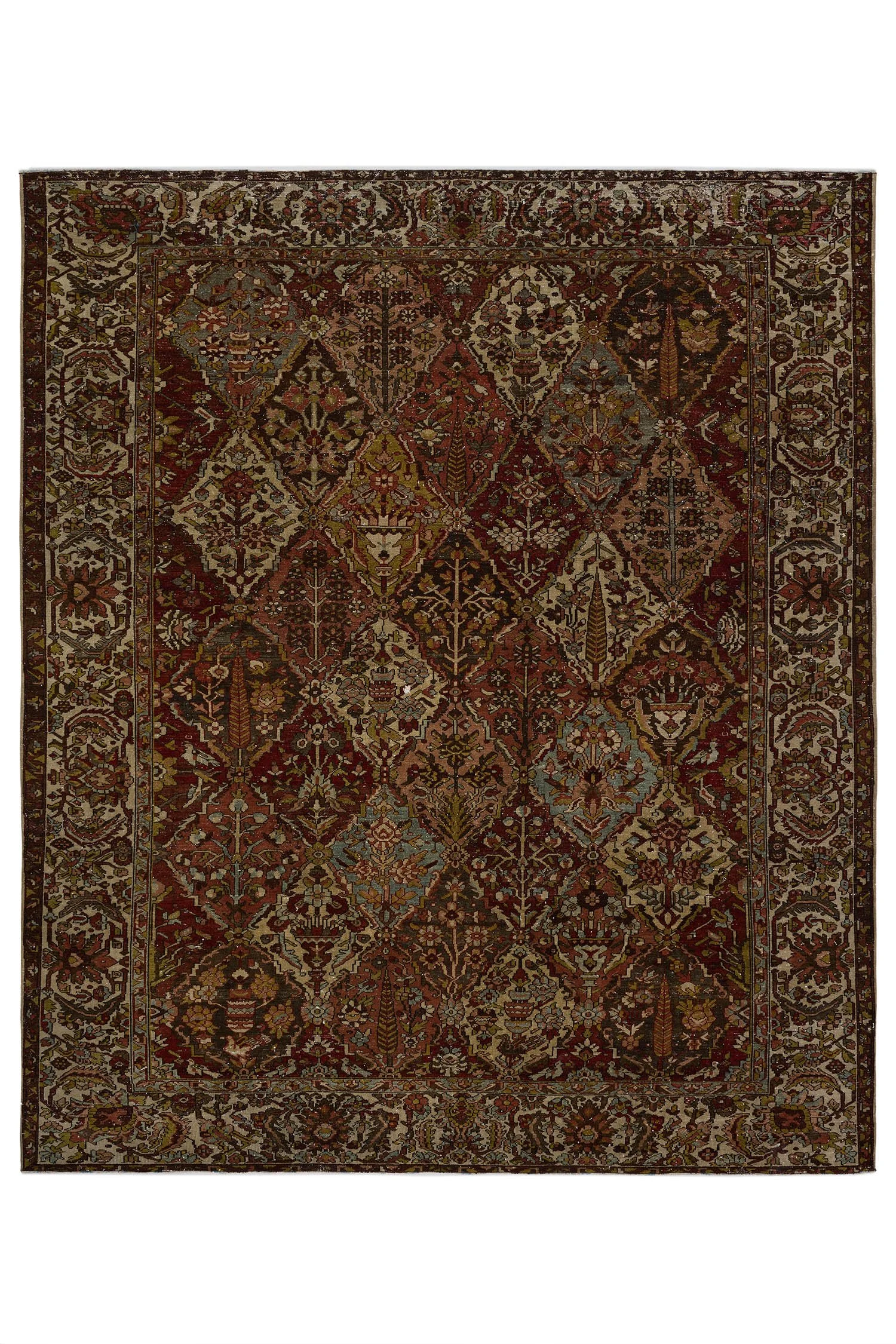
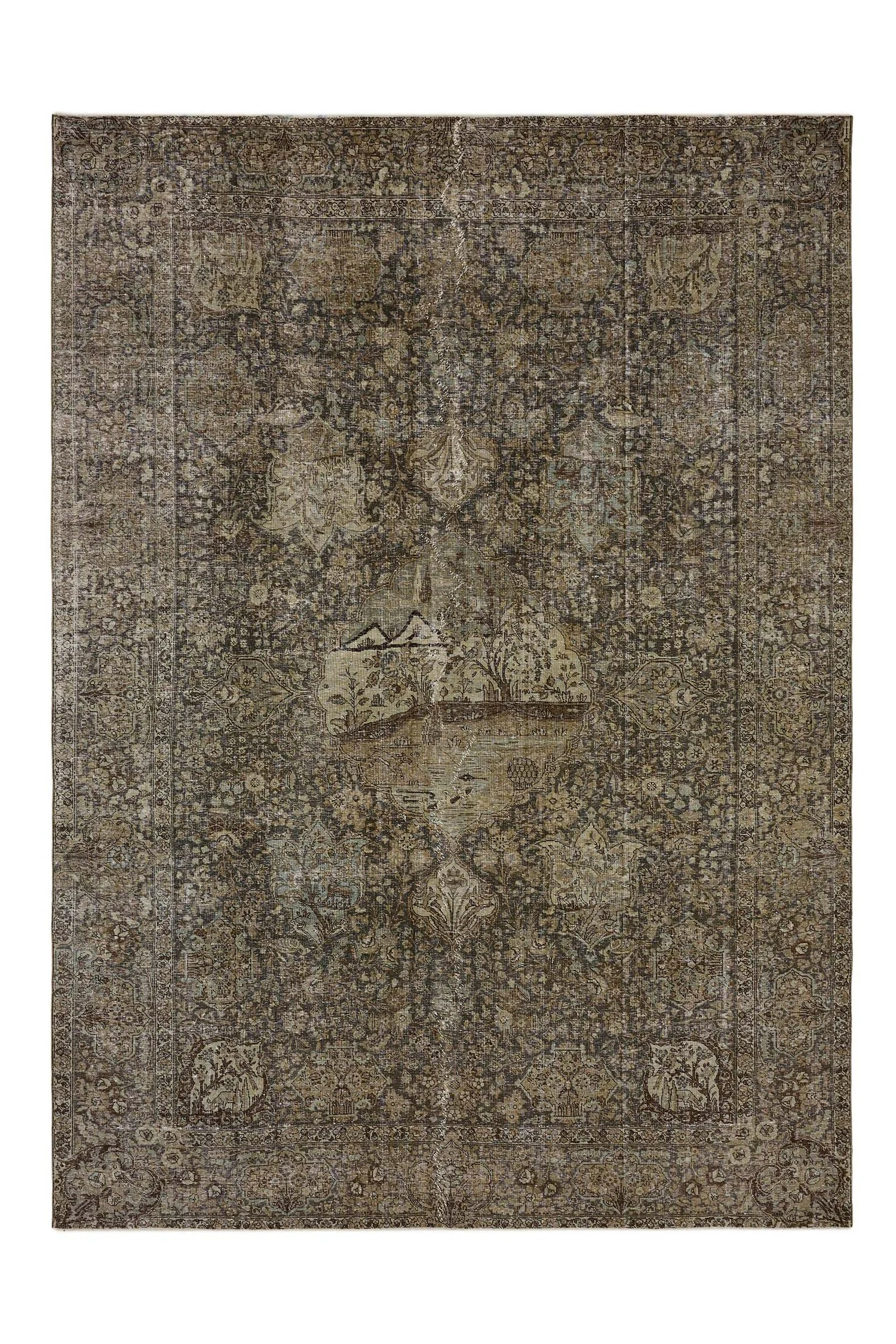
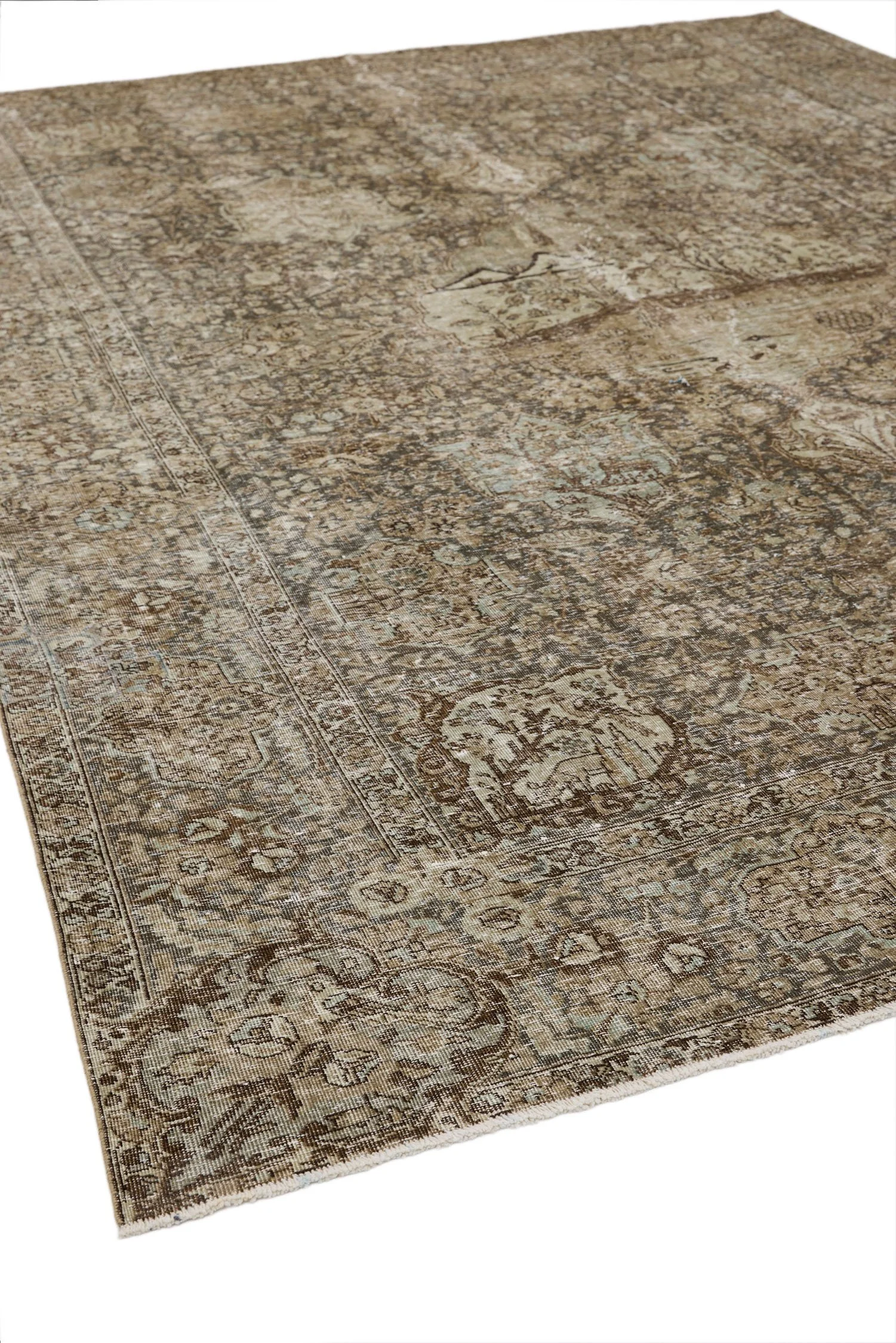
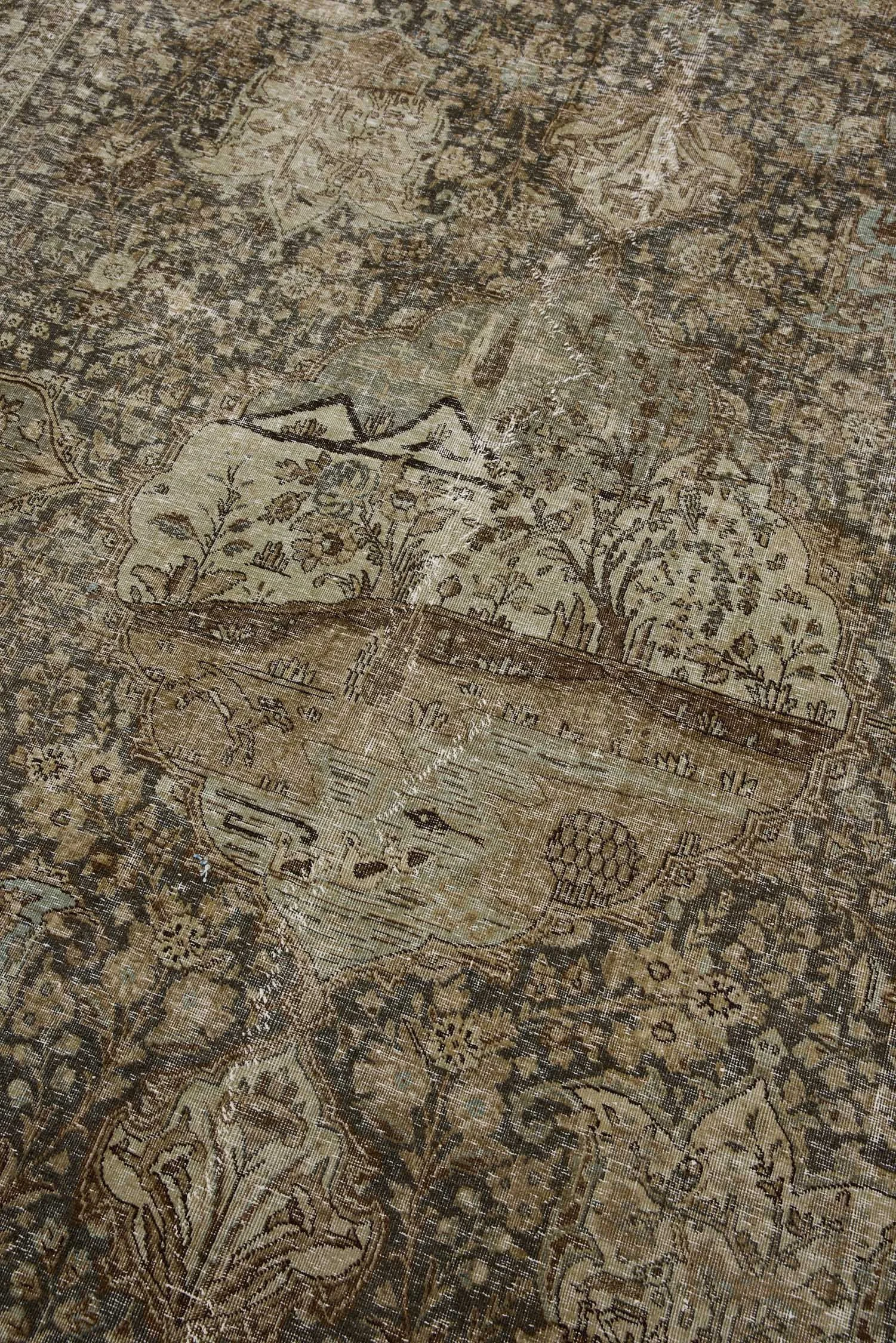
The stepped medallion creates a strong central axis that organizes the entire composition. Its geometric edges and internal divisions show the precision possible in Anatolian weaving. Angular floral forms surround the medallion, their stylized interpretation fitting the geometric vocabulary.
The slate blue panels on either side of the medallion create color zones that add visual interest across the field. This breaks up what could otherwise be a uniform expanse, giving the eye multiple points to settle on.
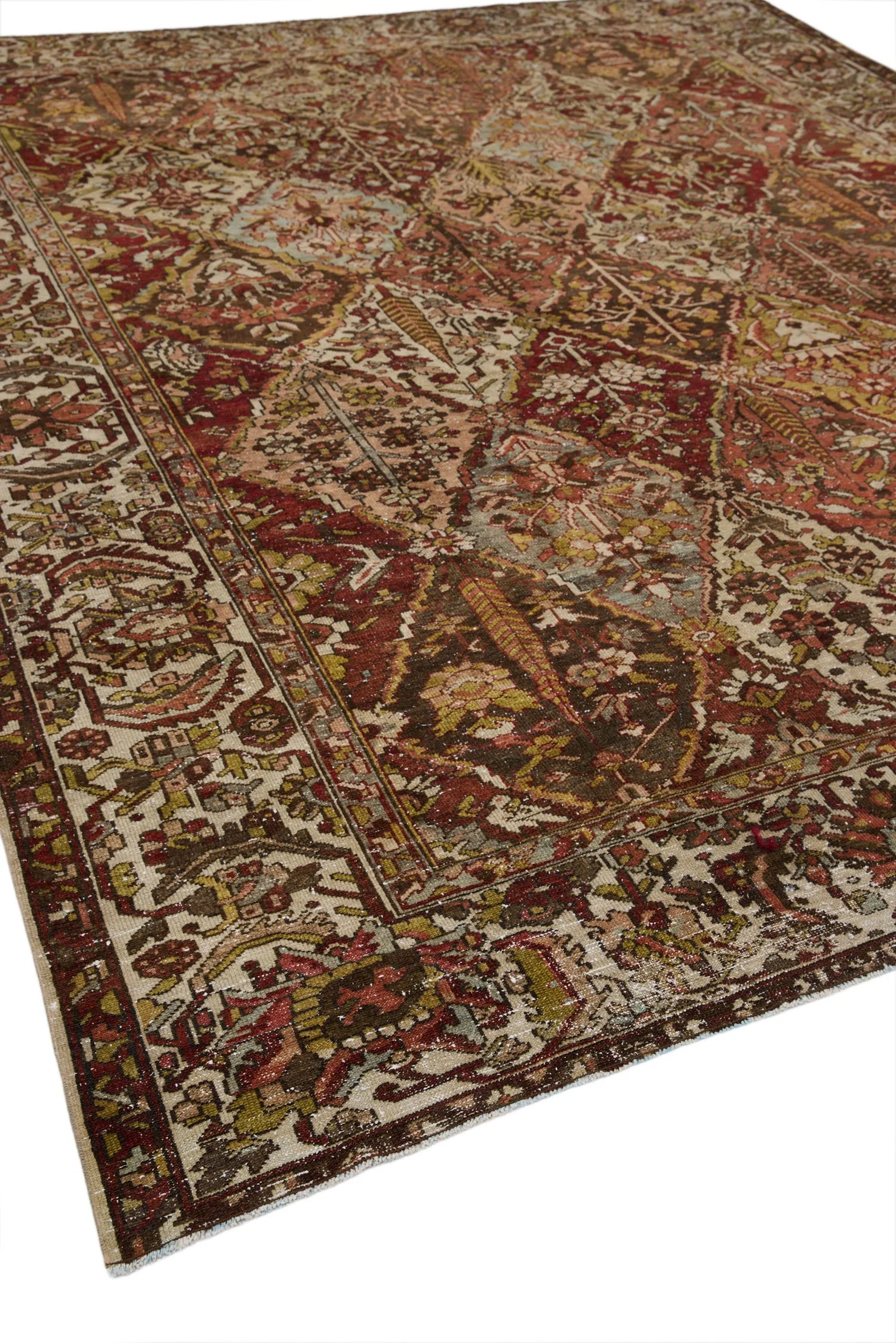
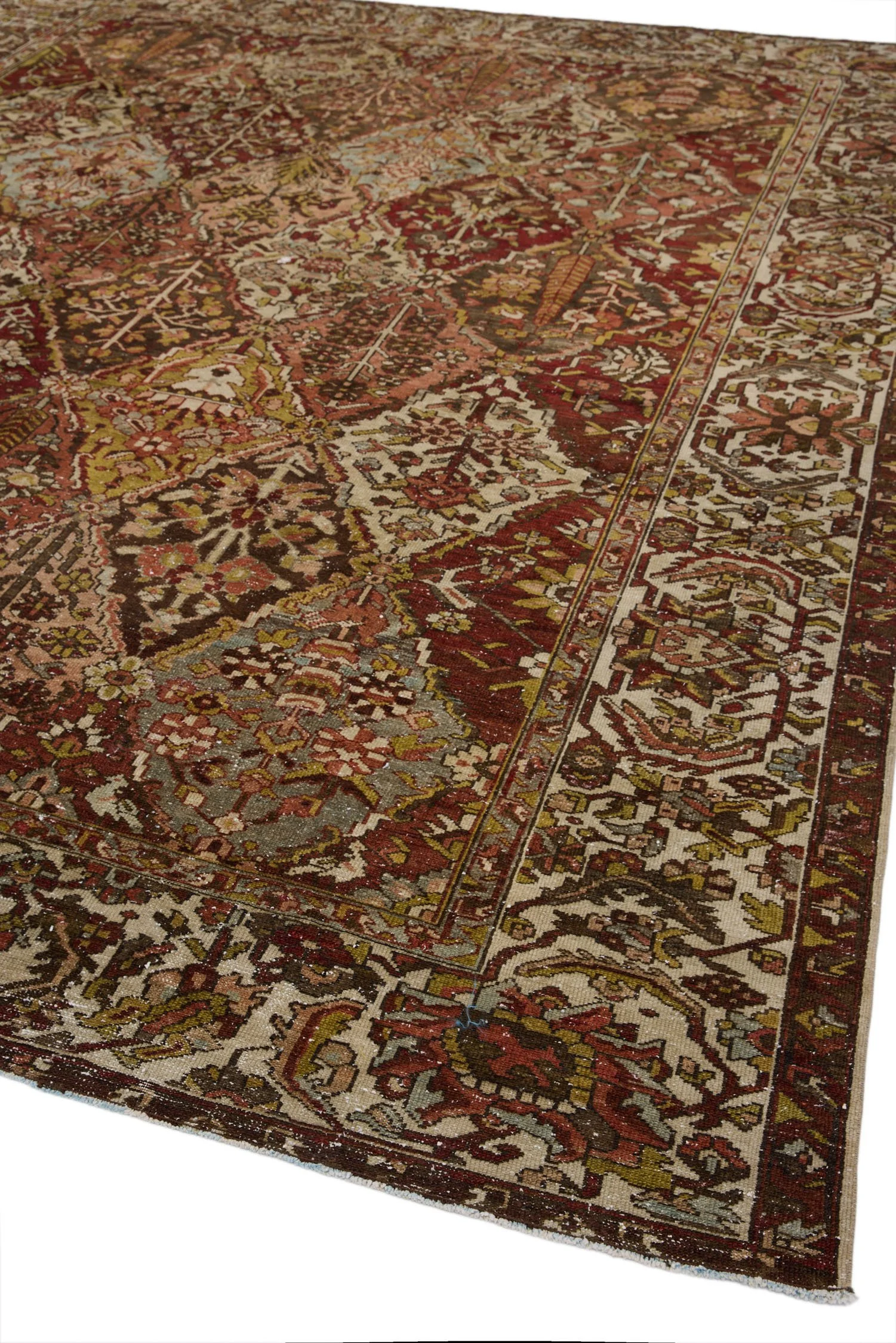
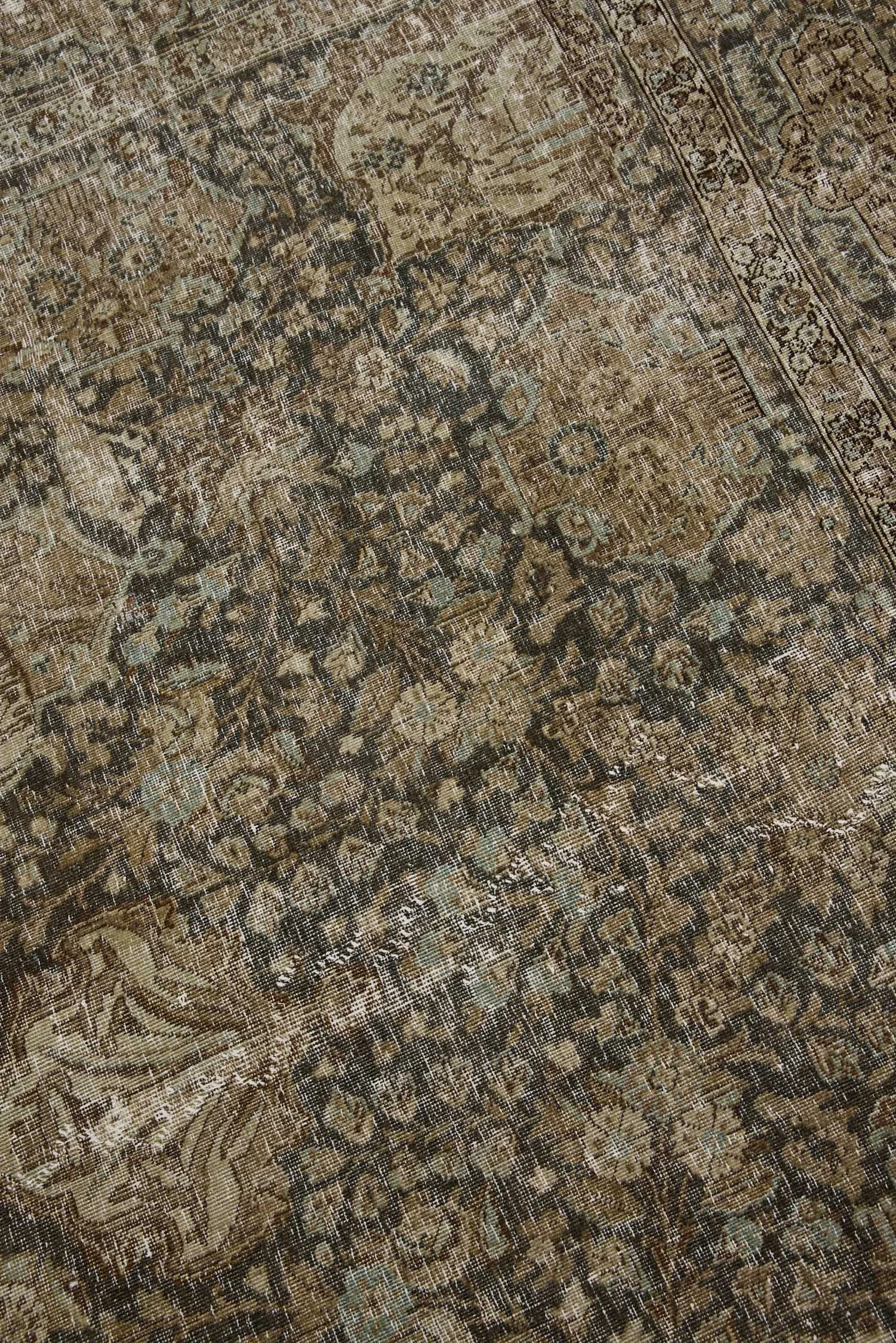
Multiple borders build outward from the field, each with distinct patterns. The layering creates depth and frames the central composition with increasing detail as you move toward the edges. The outermost border grounds the piece, its darker tones creating visual weight.
Placement
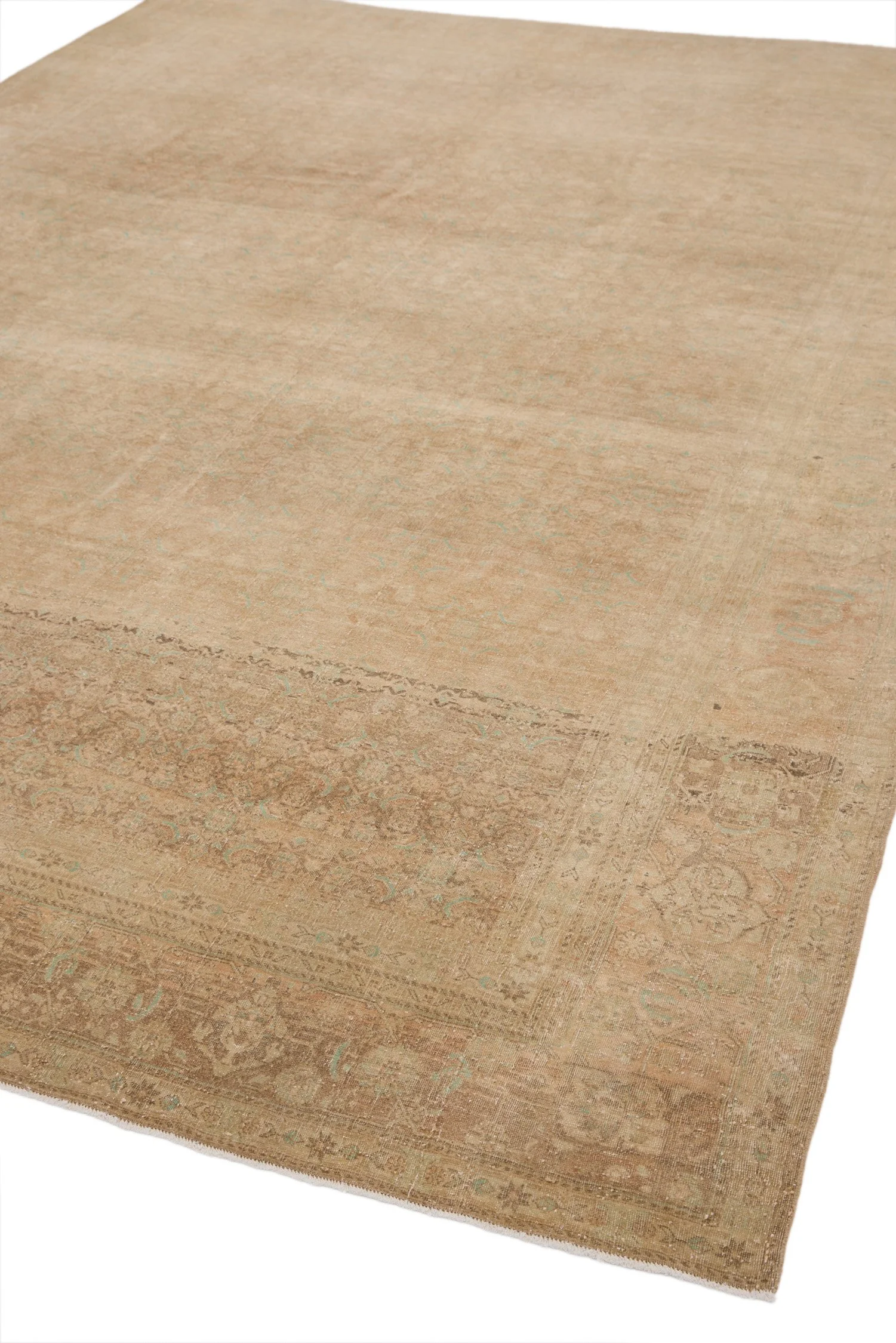
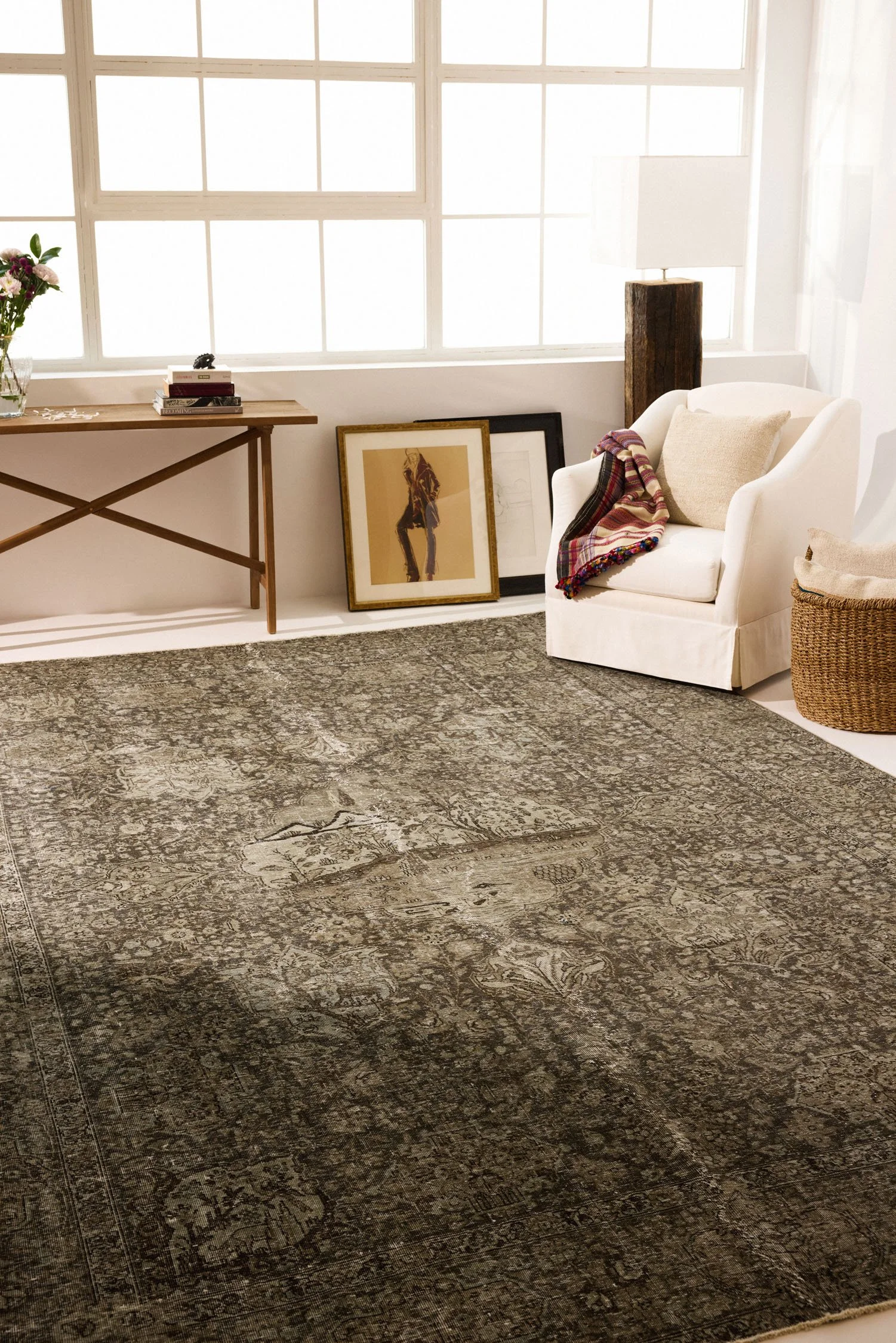
At six by eleven and a half feet, this size offers versatility across different room types. Dining rooms can accommodate it under tables that seat six to eight. Living rooms benefit from placement in front of sofas or defining seating areas. Primary bedrooms work well with this size, whether placed at the foot of the bed or extending along one side.
Wide hallways and entryways can use this proportionally, though the size also suits dedicated room usage where you want substantial coverage. Home offices, sitting rooms, and guest bedrooms all work with these dimensions.
The warm brown and slate blue palette fits traditional interiors where you want pattern with substance. The geometric clarity also works in transitional spaces that bridge historical and contemporary aesthetics. The strong pattern makes this suitable for areas where you want the rug to be a focal point rather than a neutral foundation.
Care Recommendations
To preserve the rug's beauty:
Rotate periodically for even wear
Vacuum regularly using a suction-only setting
Address spills immediately by blotting, never rubbing
Professional cleaning recommended annually
Avoid direct sunlight to maintain color integrity
Geometric medallions endured in Anatolian design because they solved problems of composition that simpler patterns couldn't.