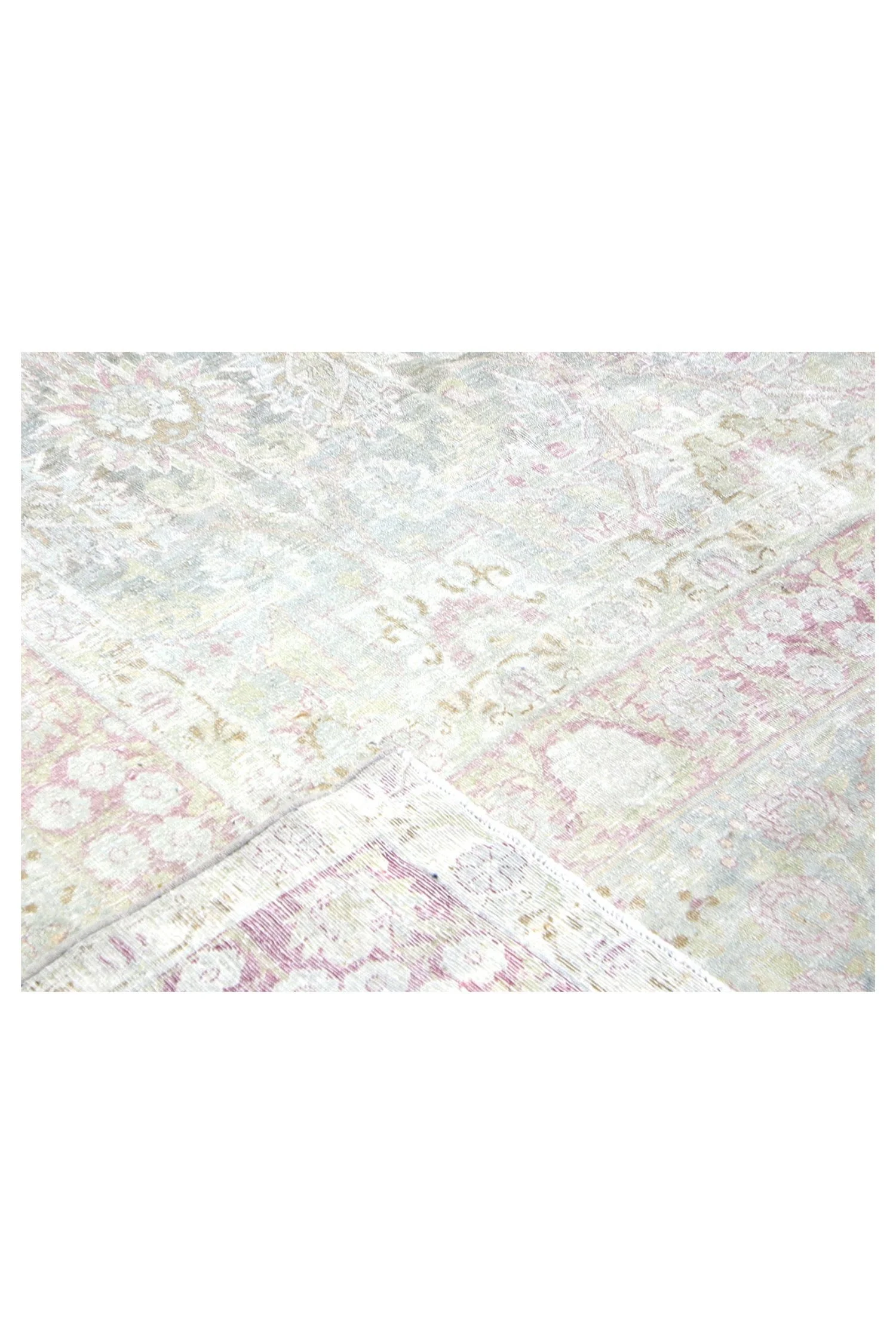
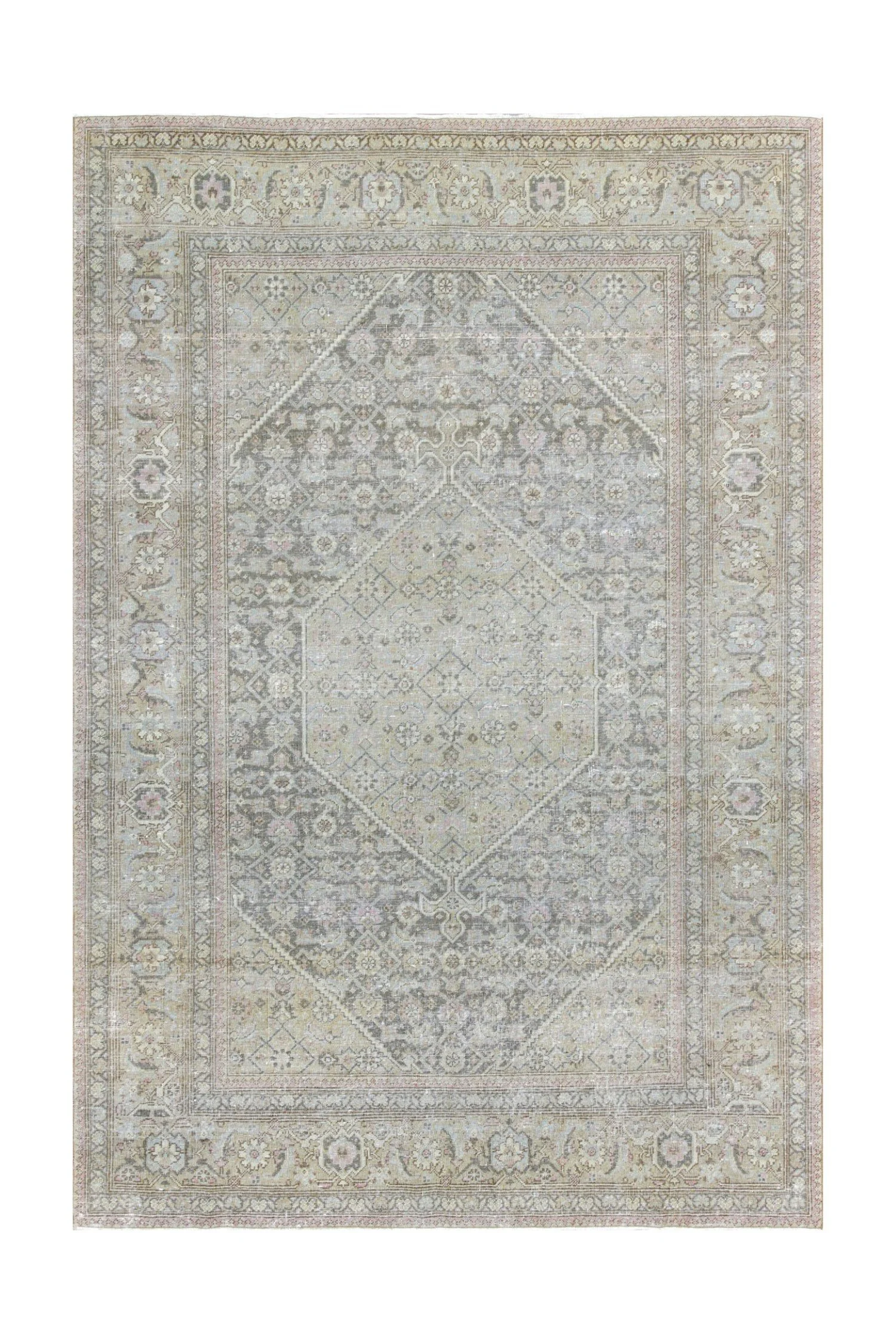
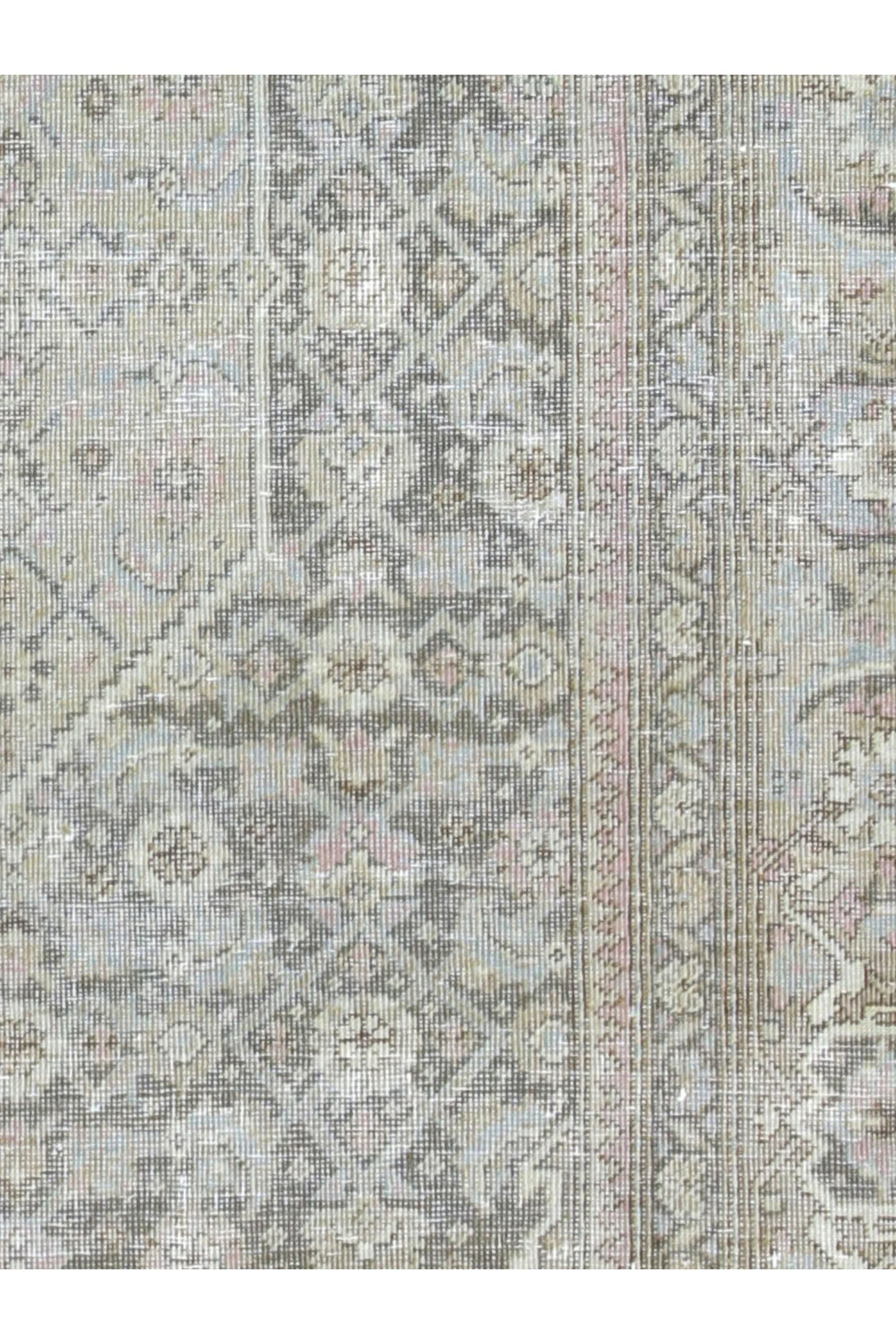
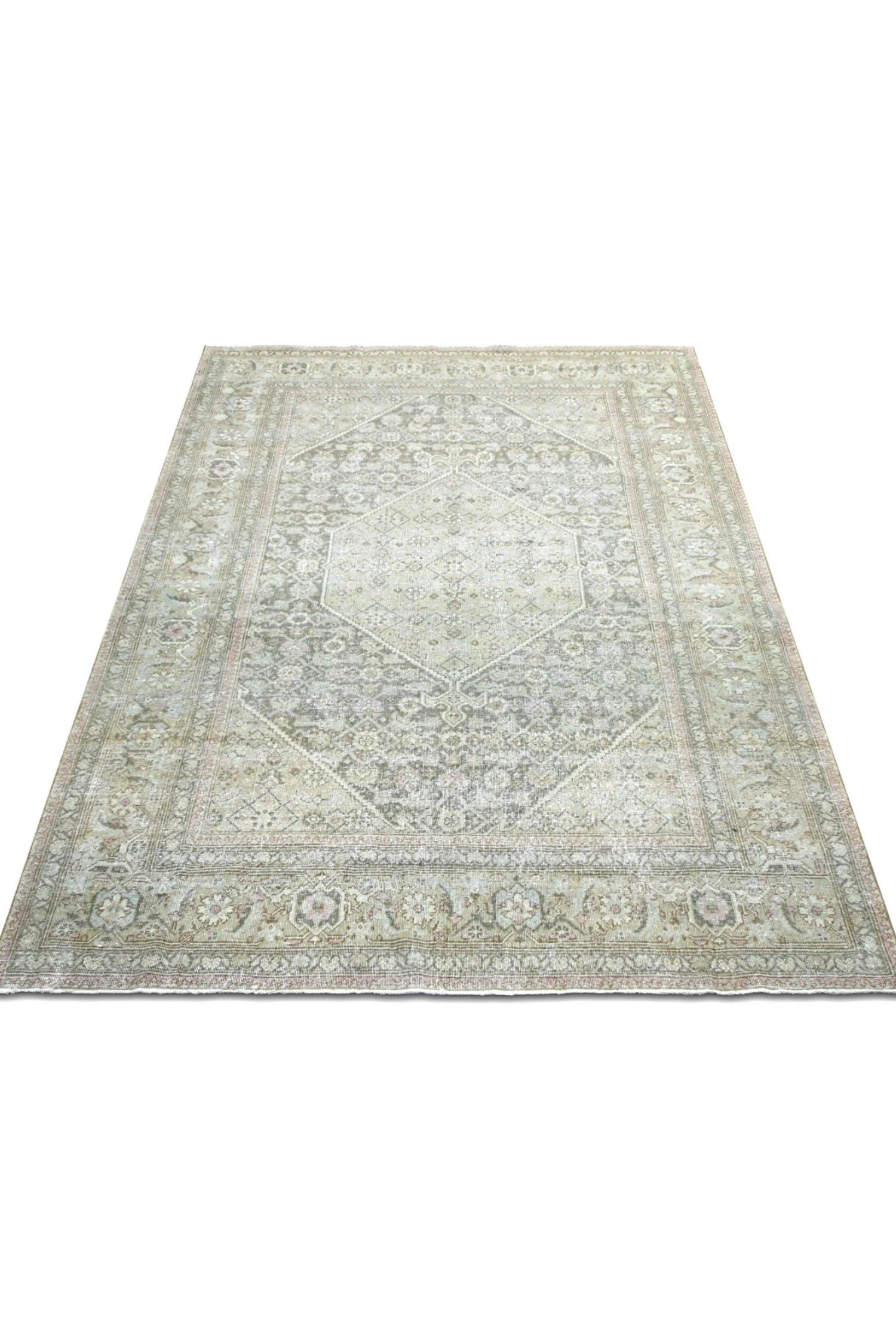
 Image 1 of 6
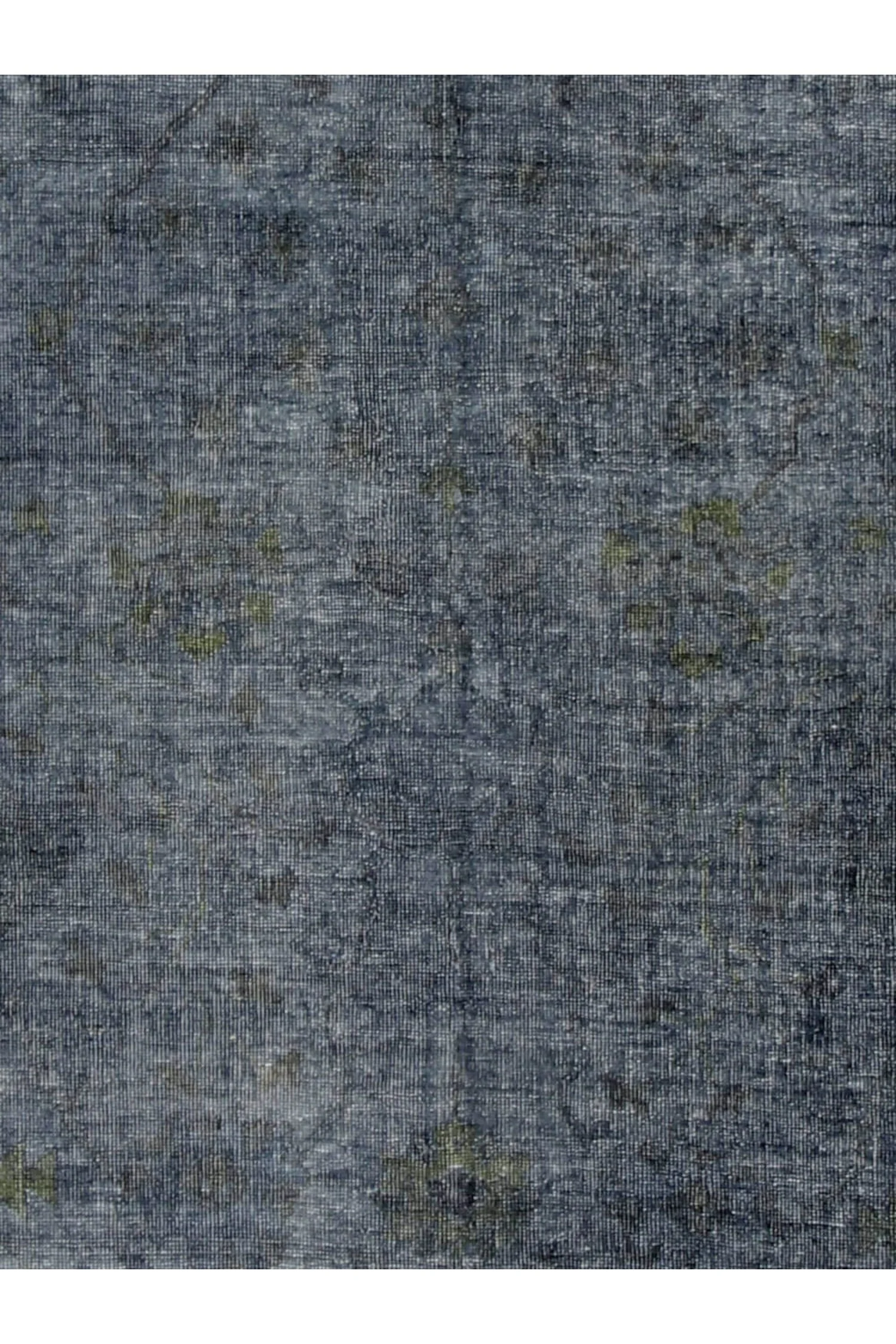 Image 2 of 6
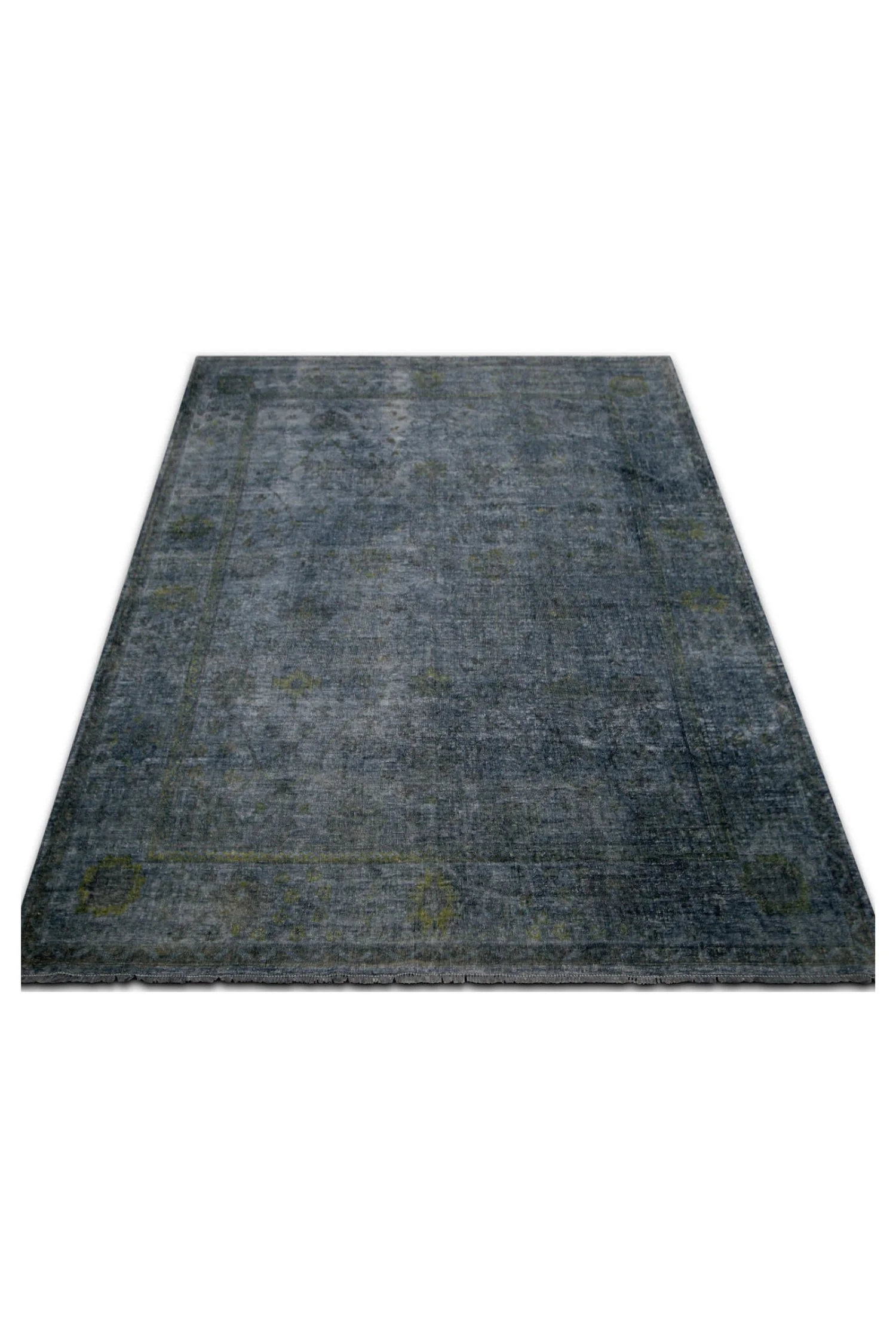 Image 3 of 6
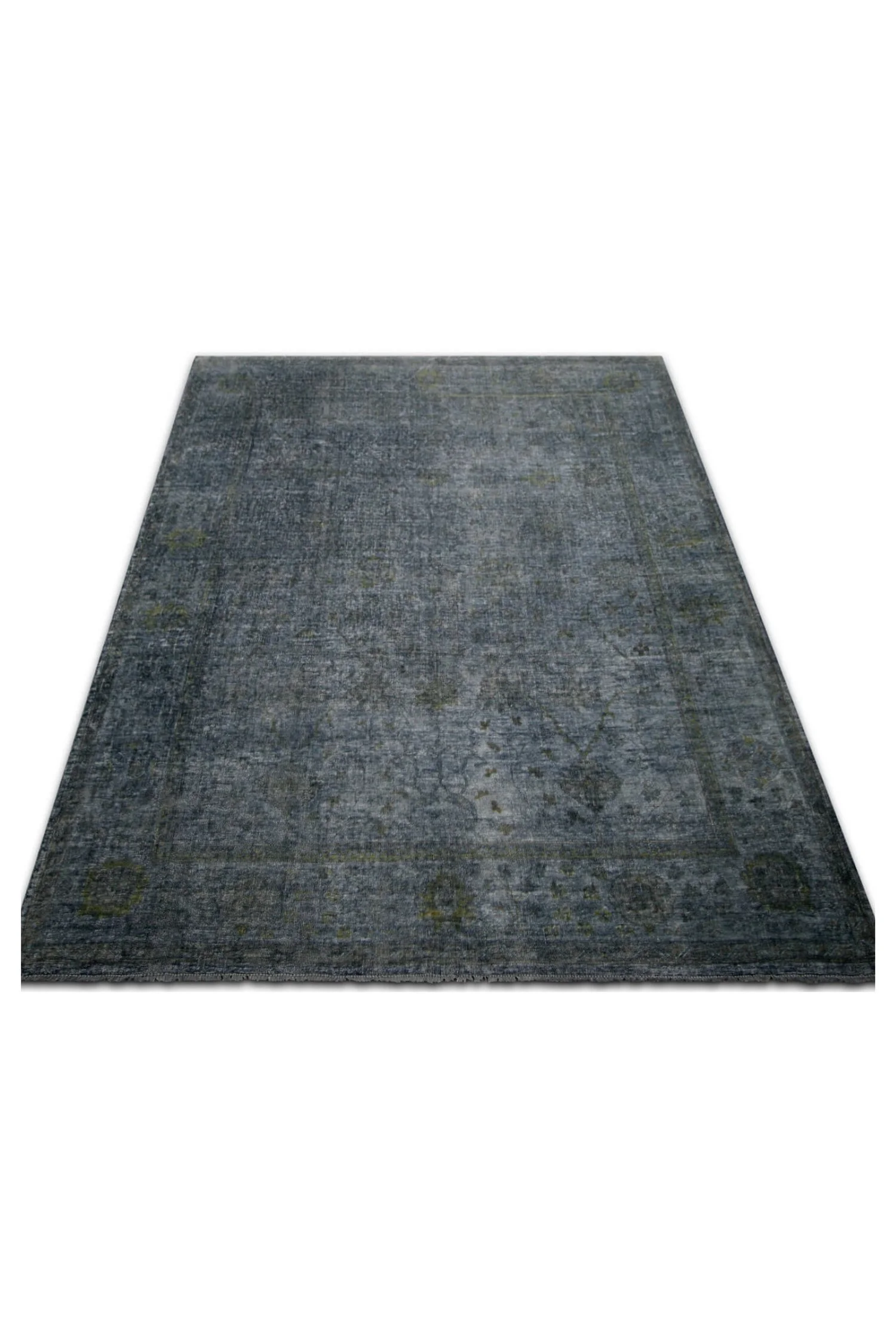 Image 4 of 6
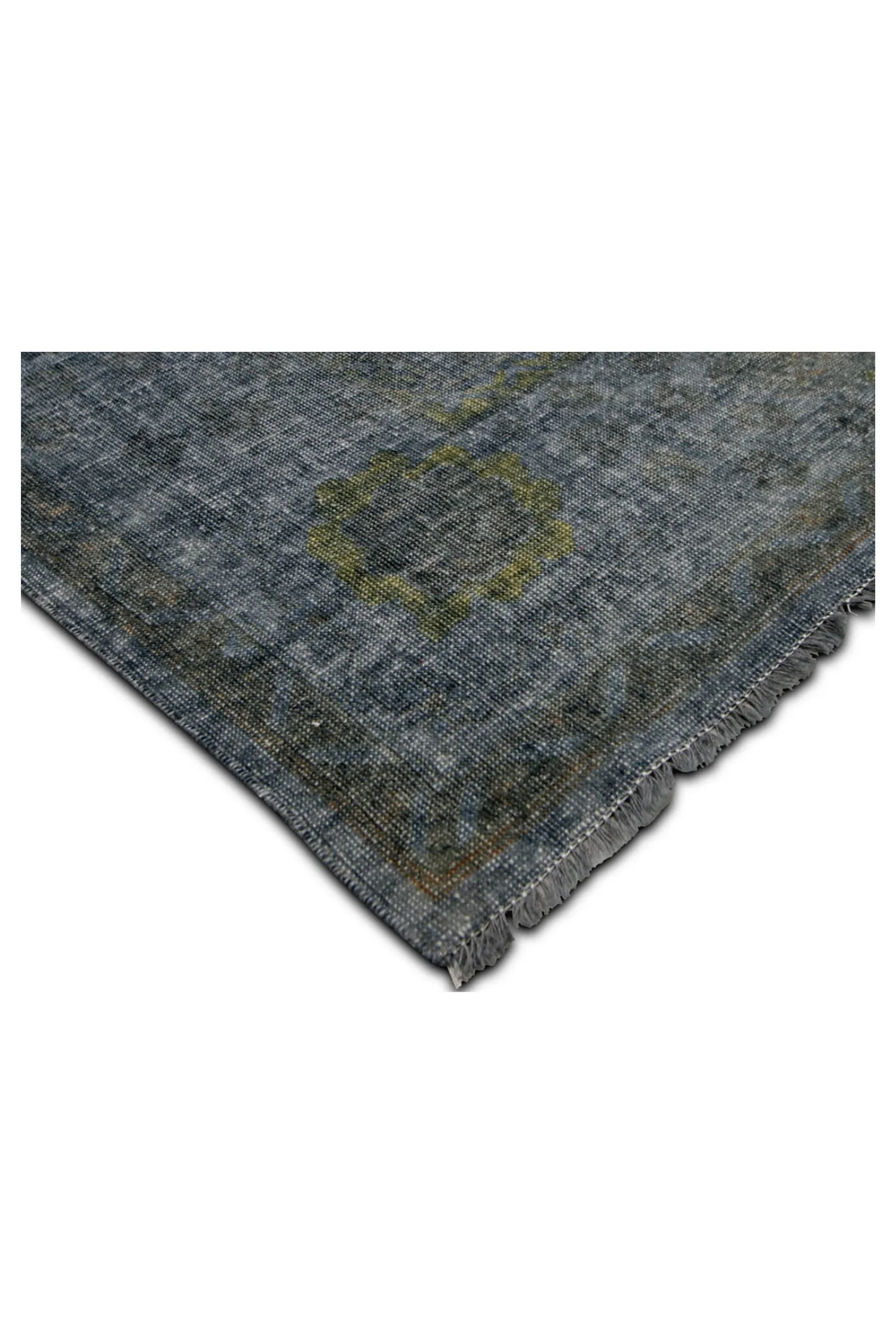 Image 5 of 6
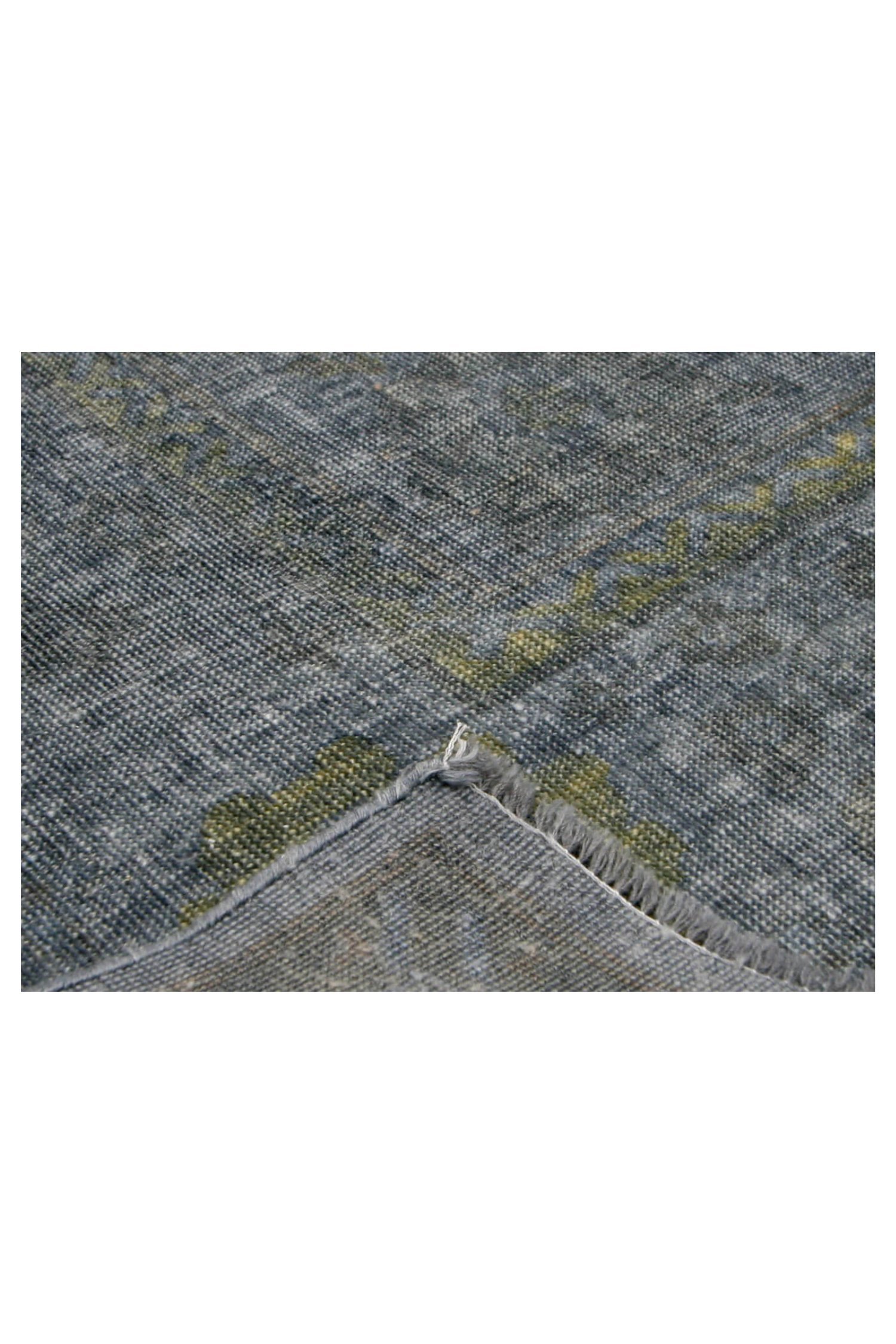 Image 6 of 6
Heritage and Craftsmanship
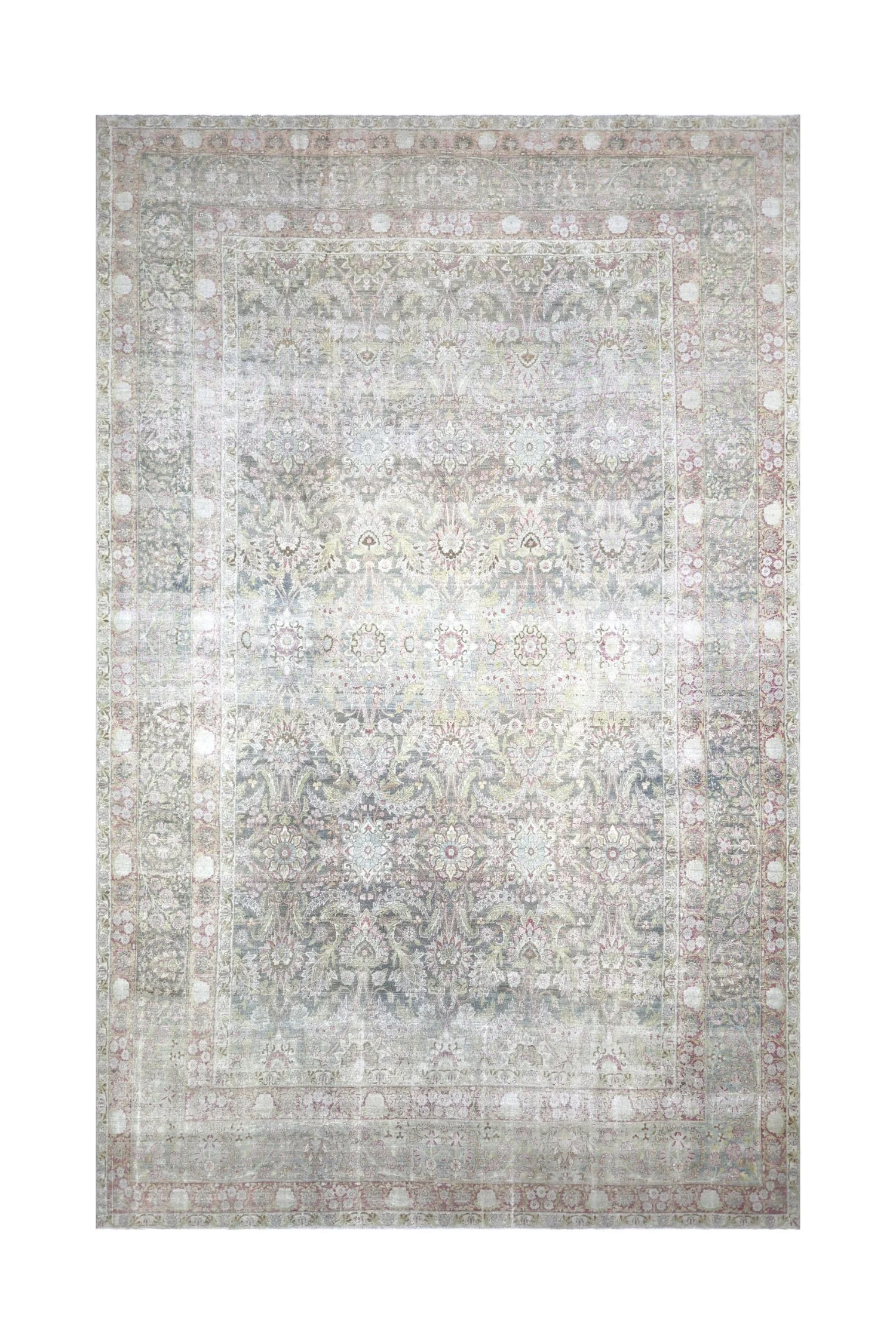
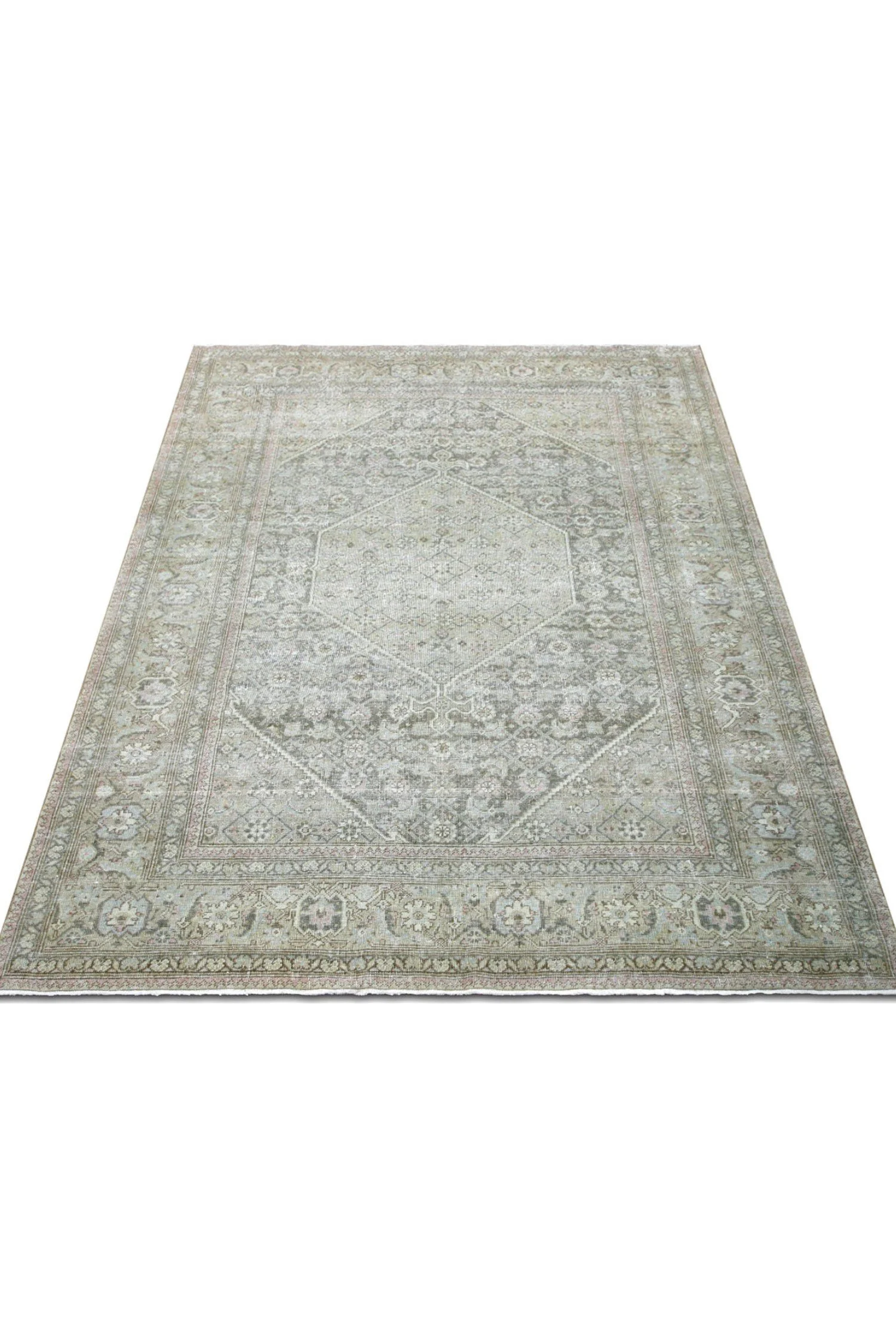
Isparta emerged as a weaving center in the early 20th century, positioned between the established traditions of Oushak and the developing carpet industry serving Western markets. By the 1960s, workshops in the region produced rugs that borrowed design elements from both Persian and Turkish traditions, often working with patterns that combined floral motifs with geometric structure.
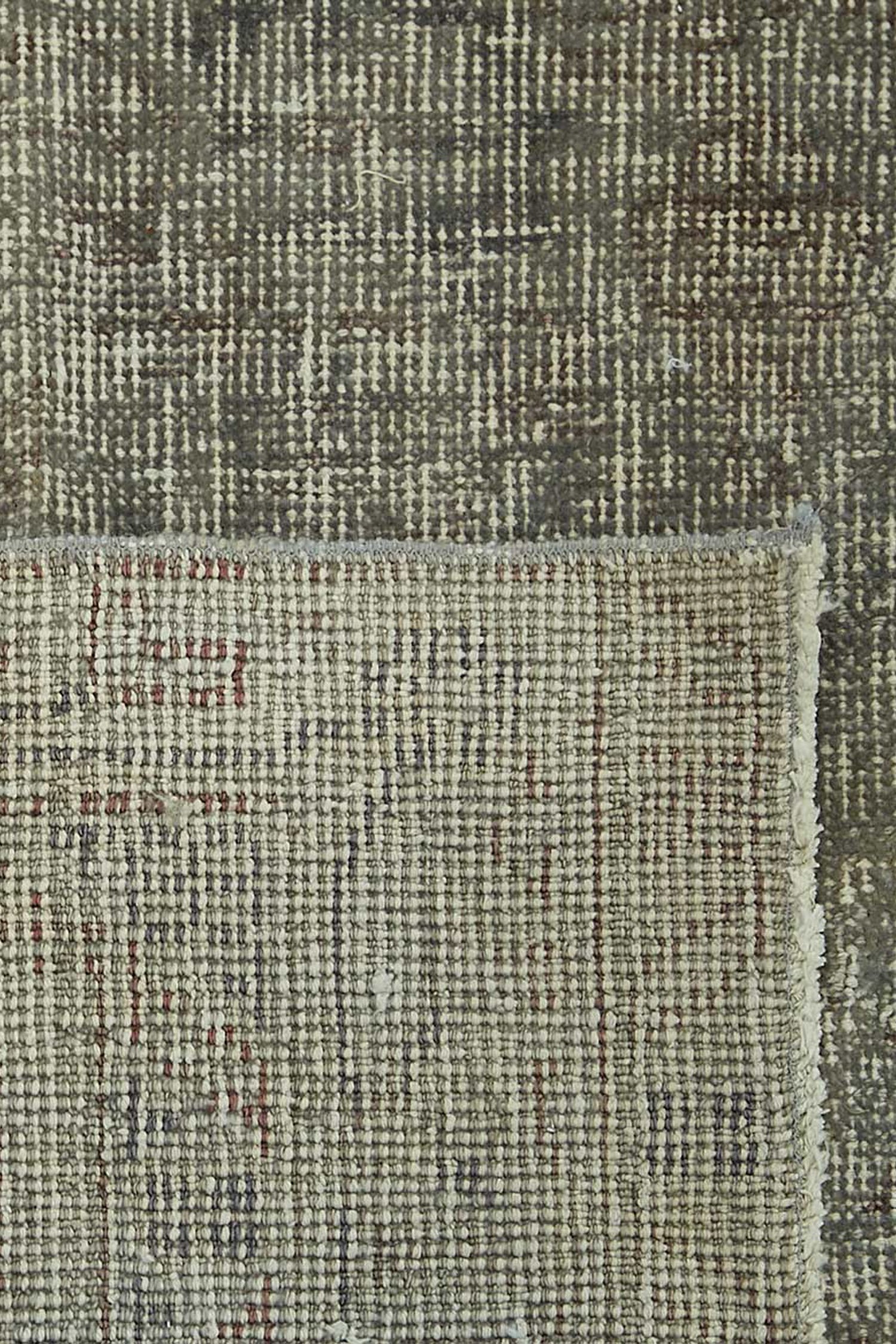
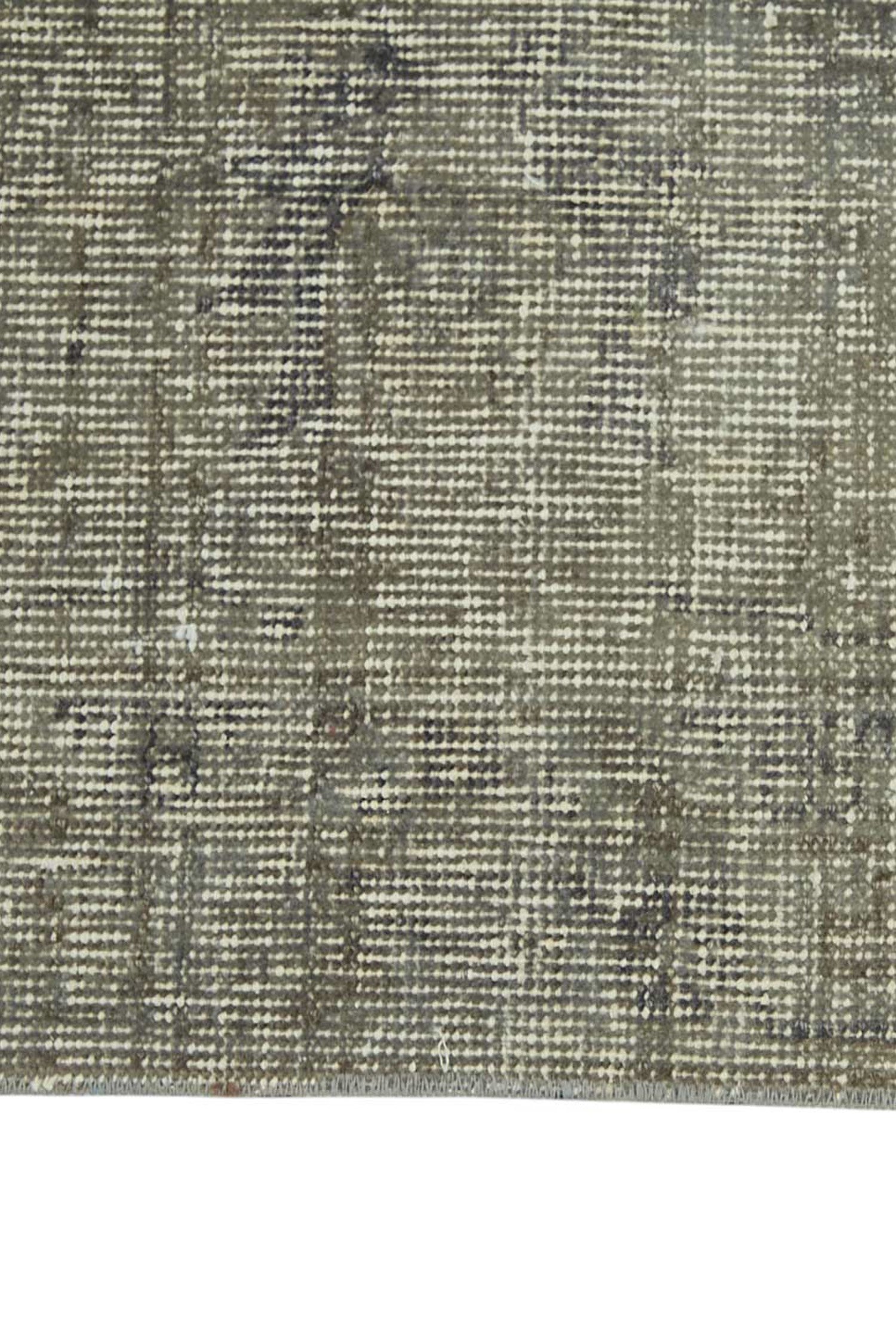
The overdyeing process applied to this rug happened decades after its initial weaving. The technique became widespread in the 1990s and 2000s as a way to modernize vintage rugs for contemporary interiors. Isparta rugs, with their relatively dense weave and durable wool, responded well to the immersion dyeing process.
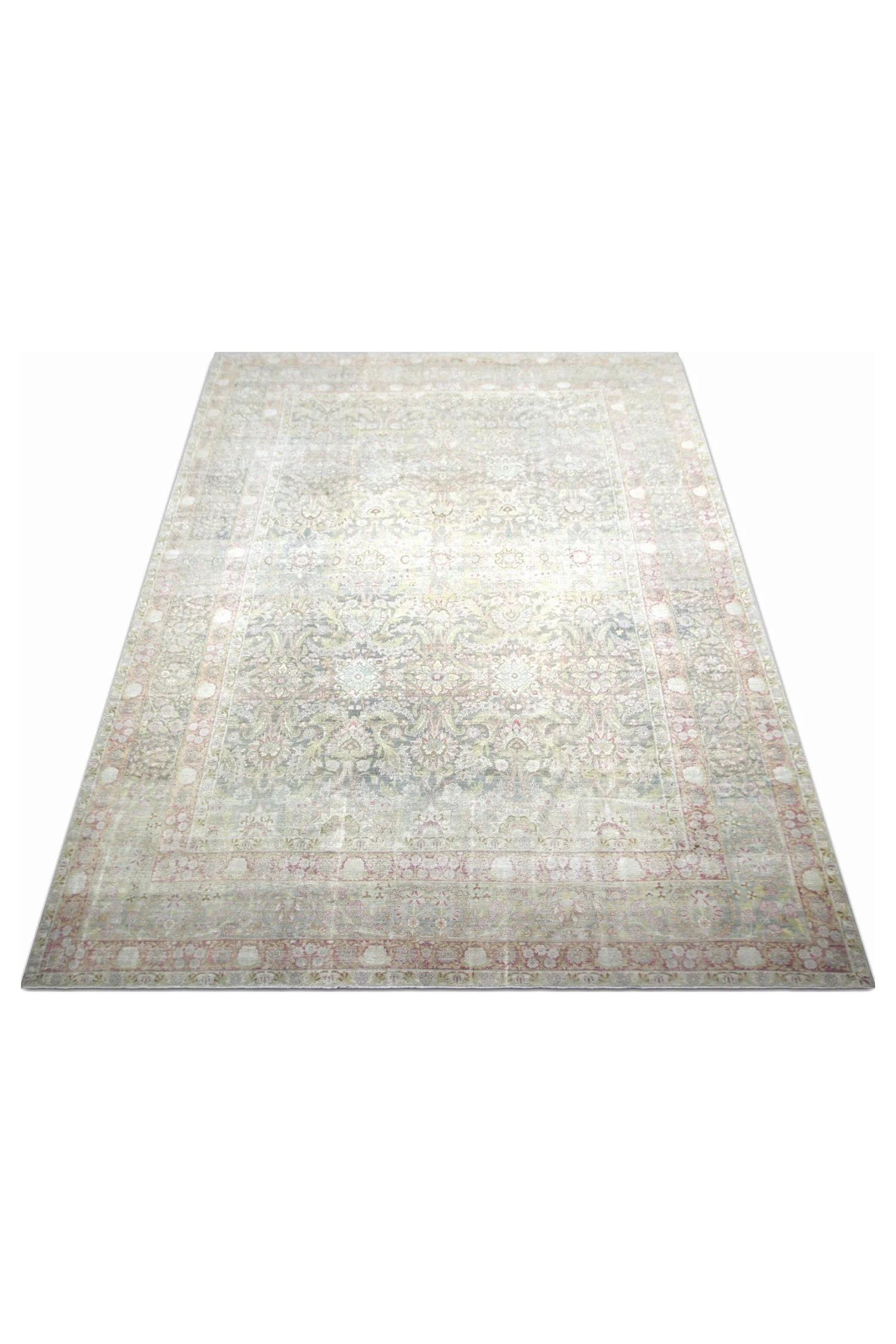
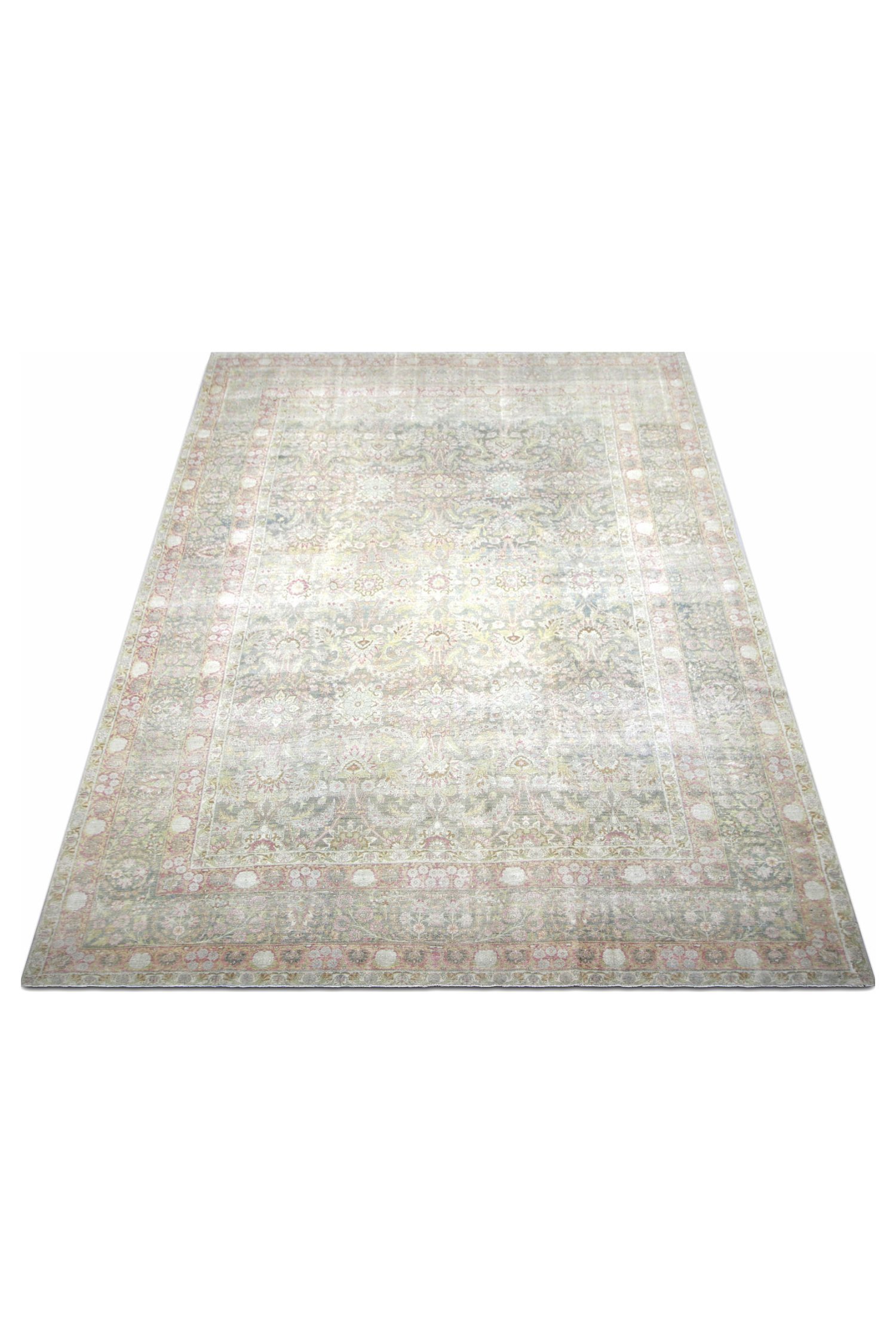
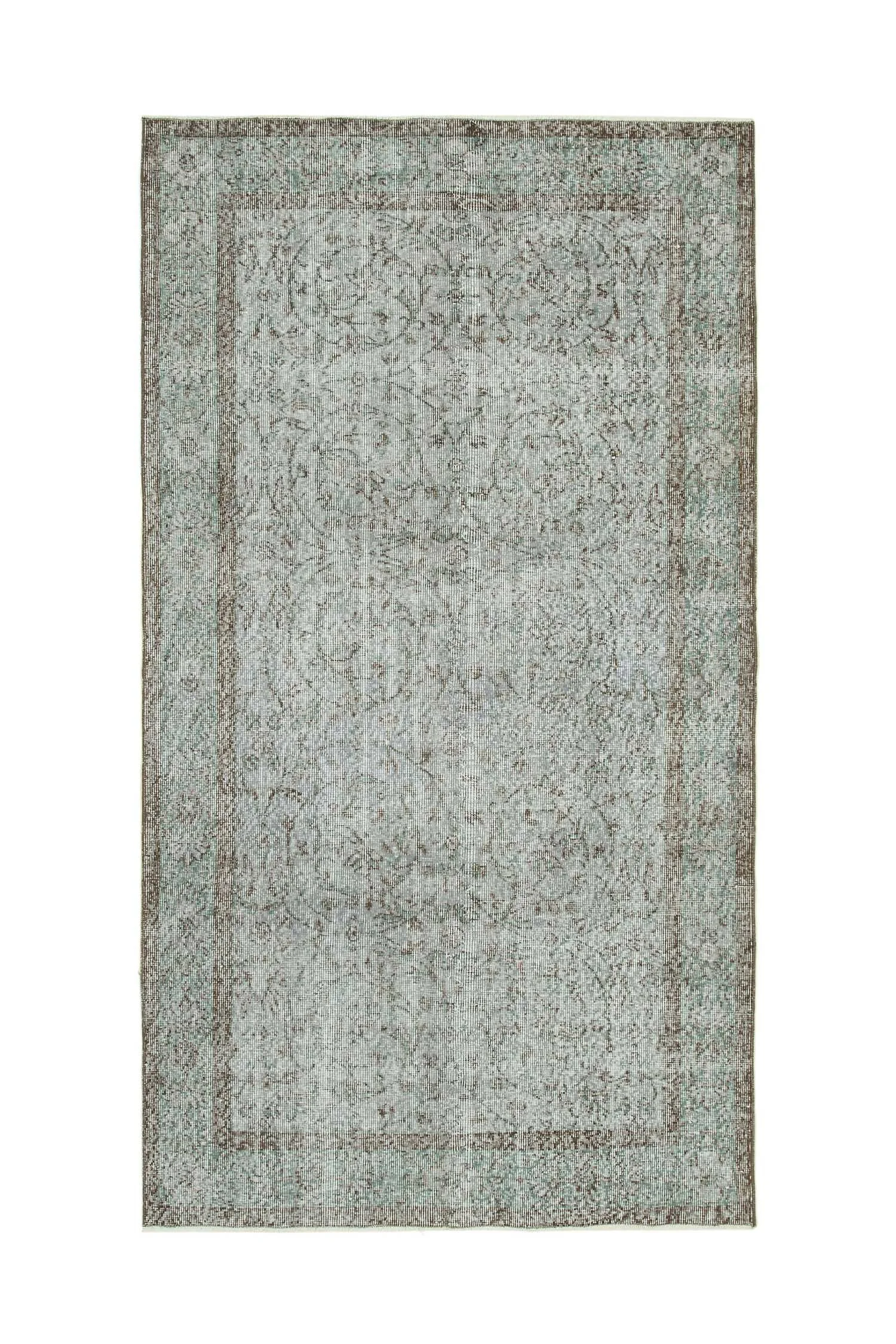
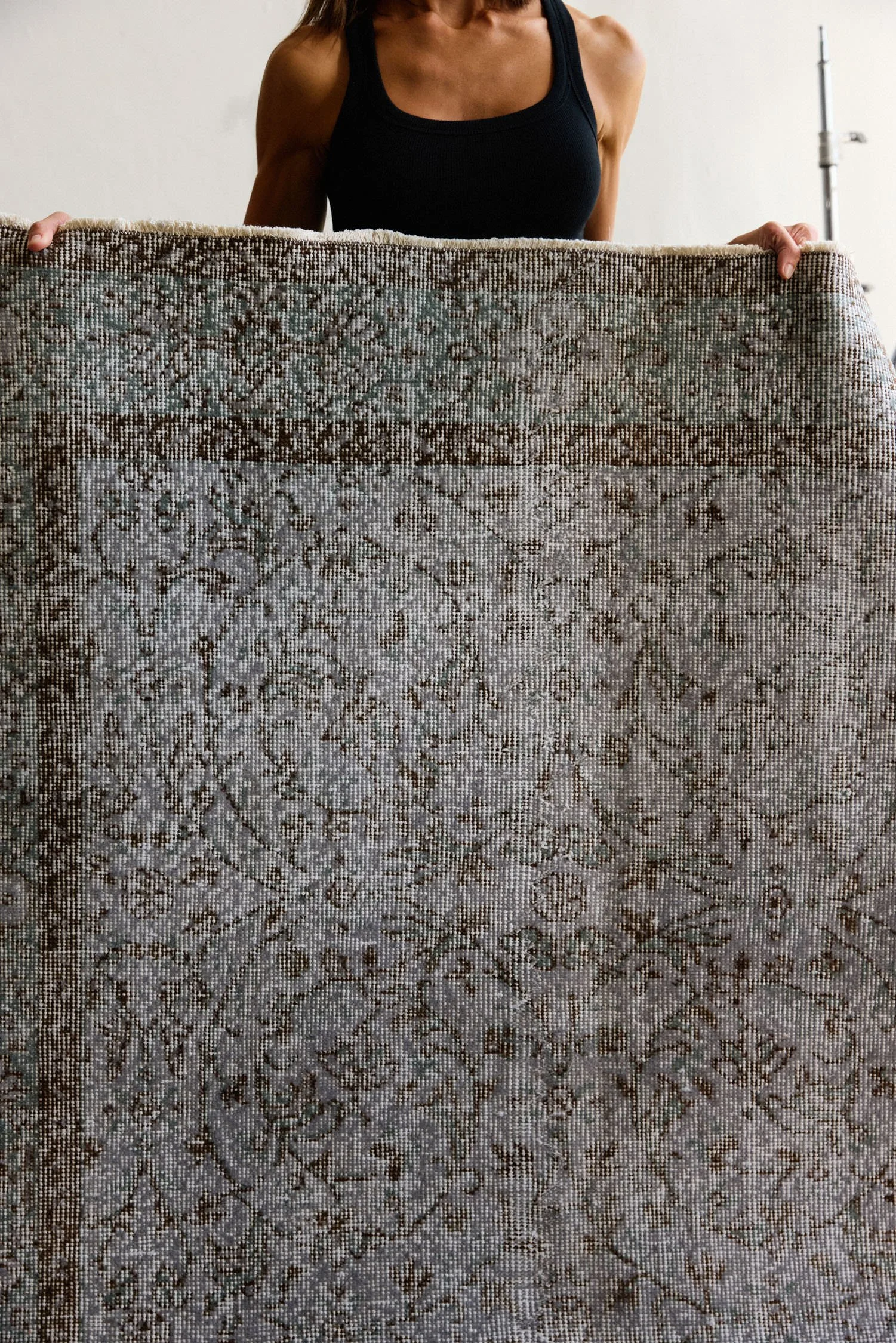
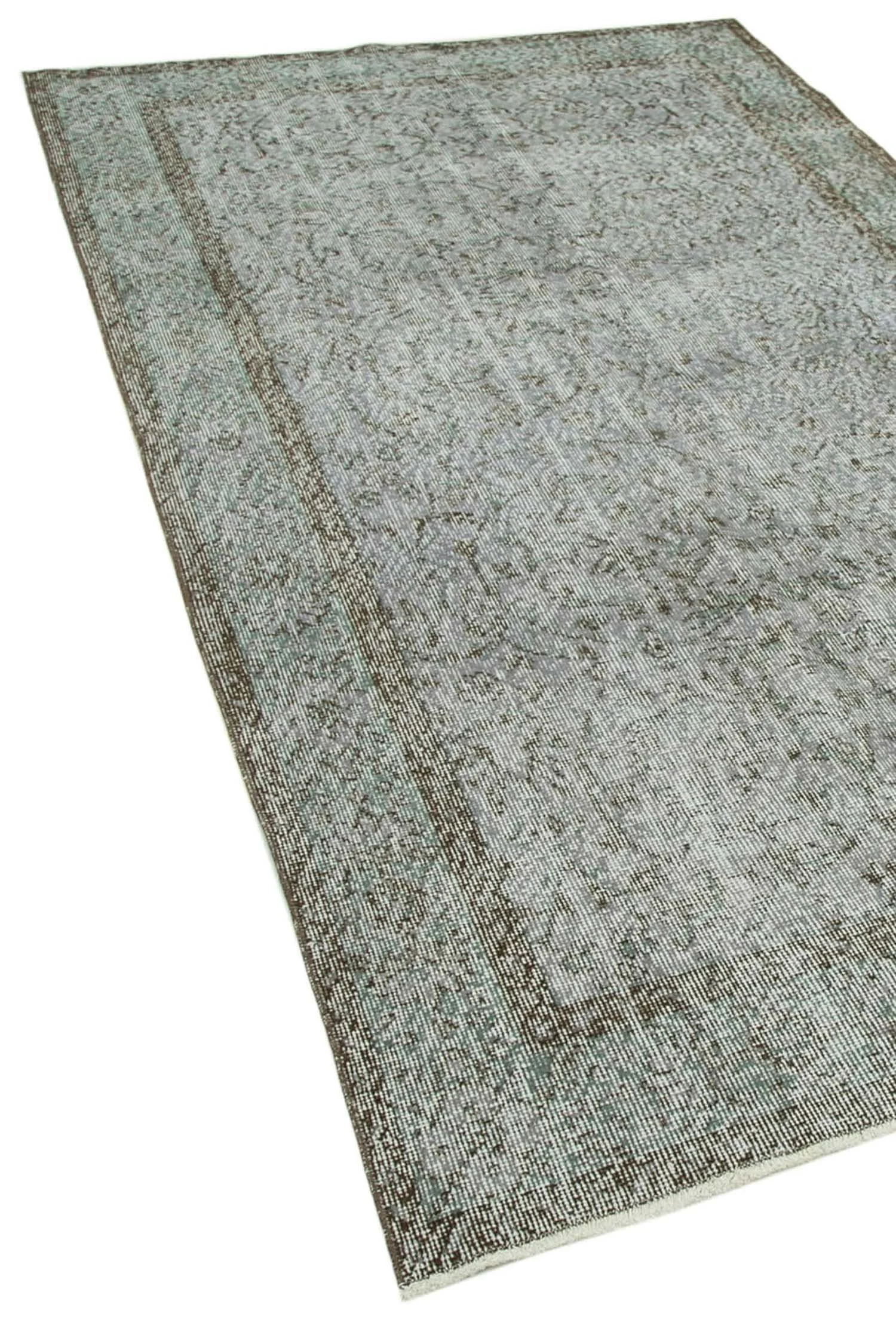
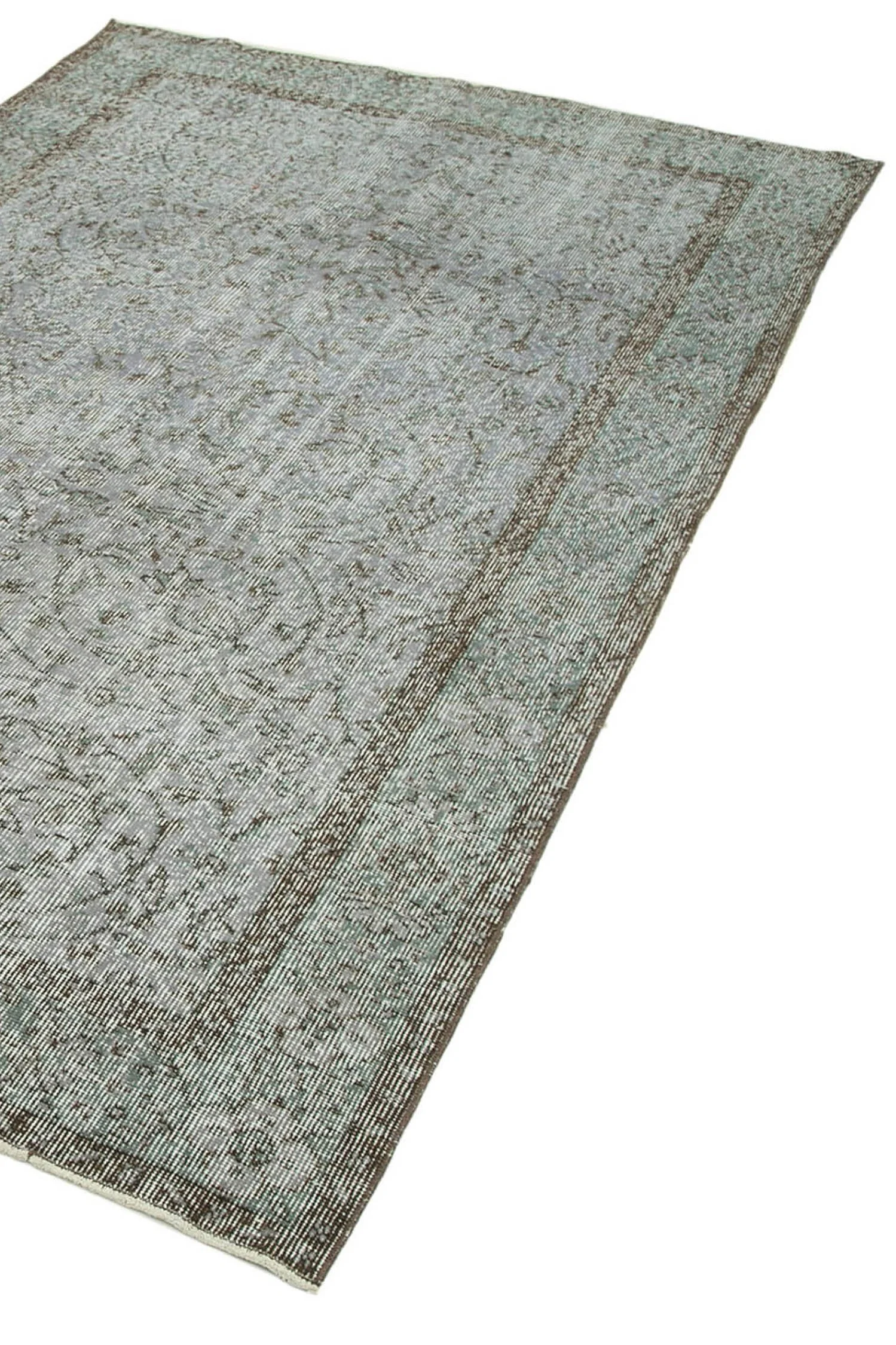
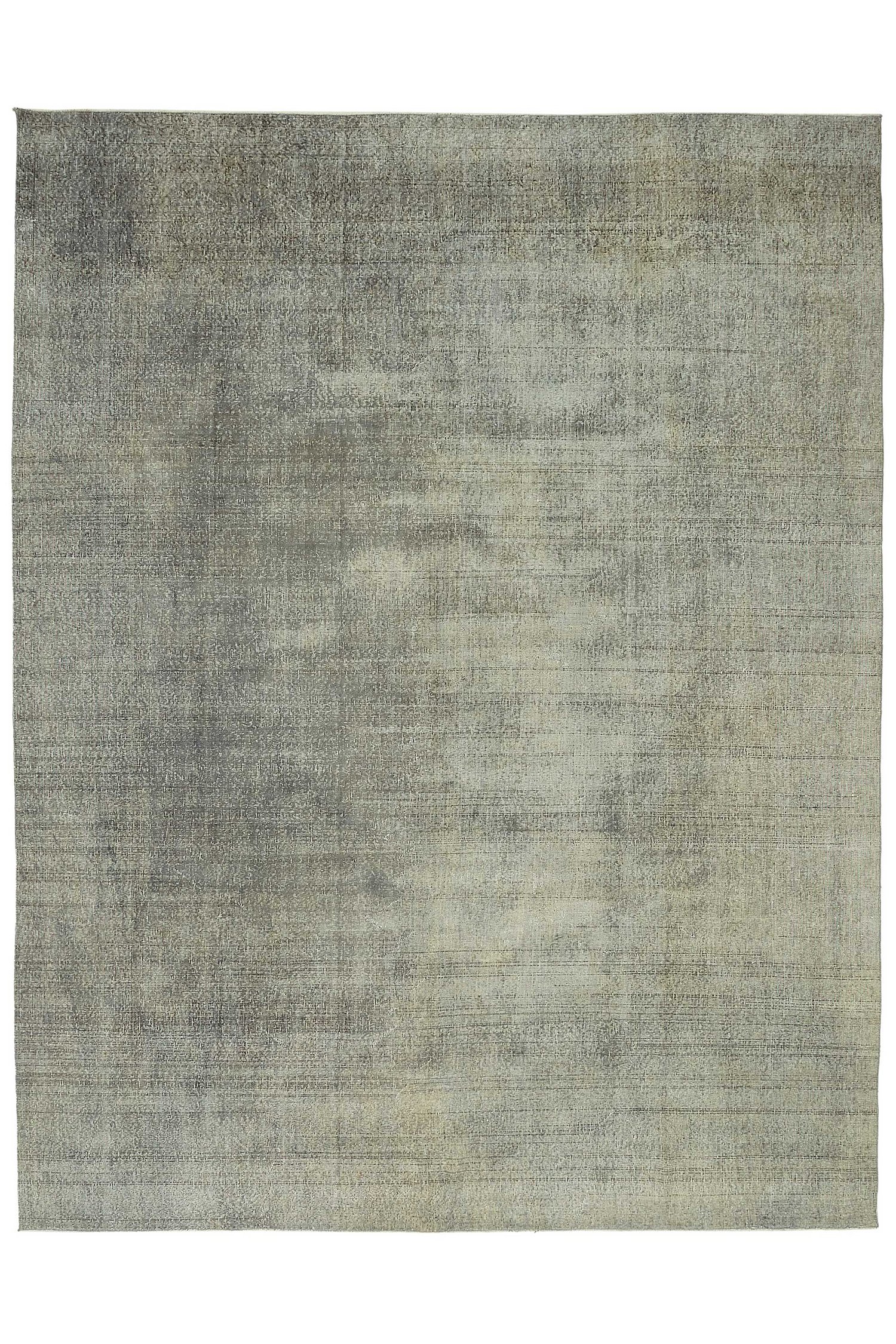
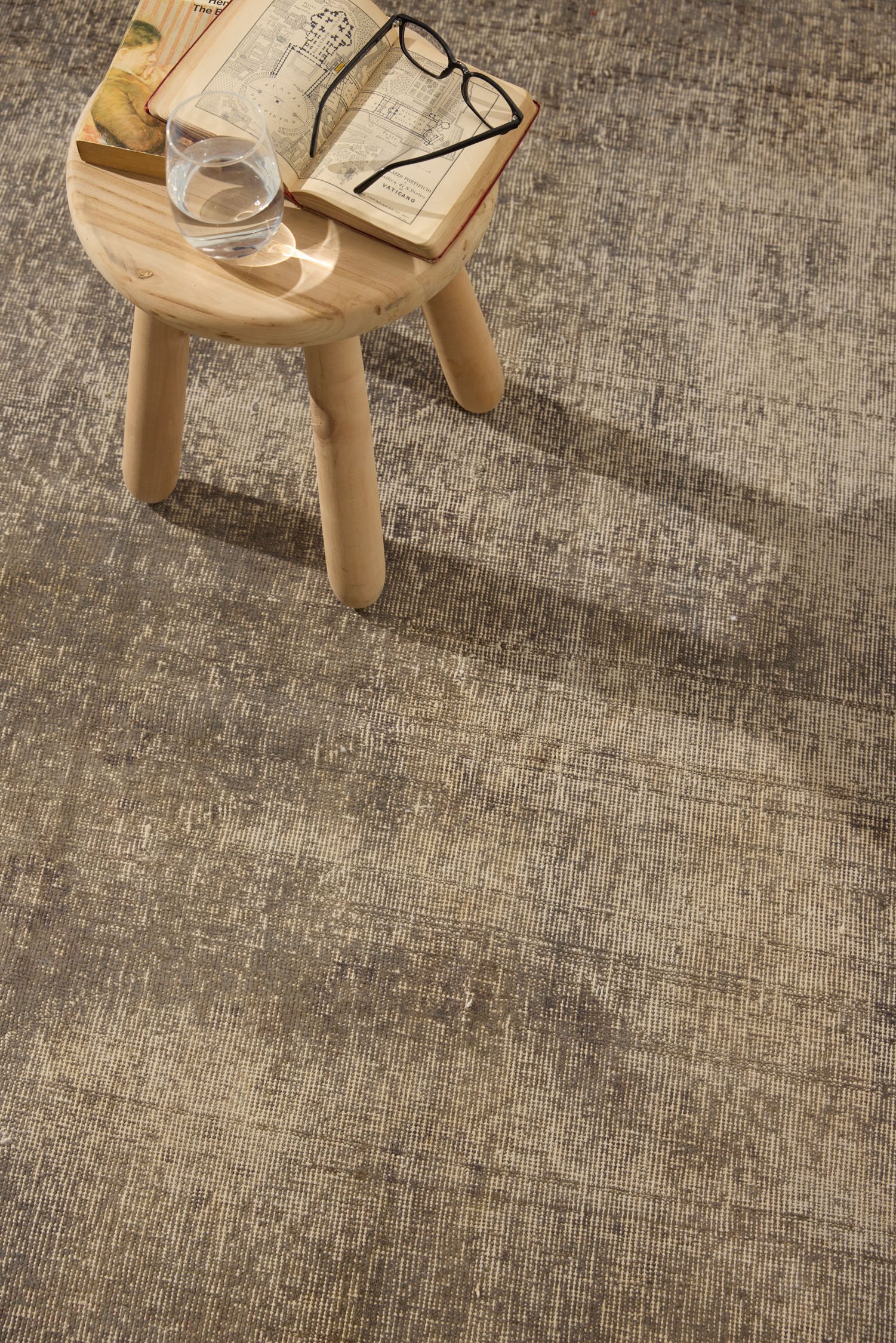
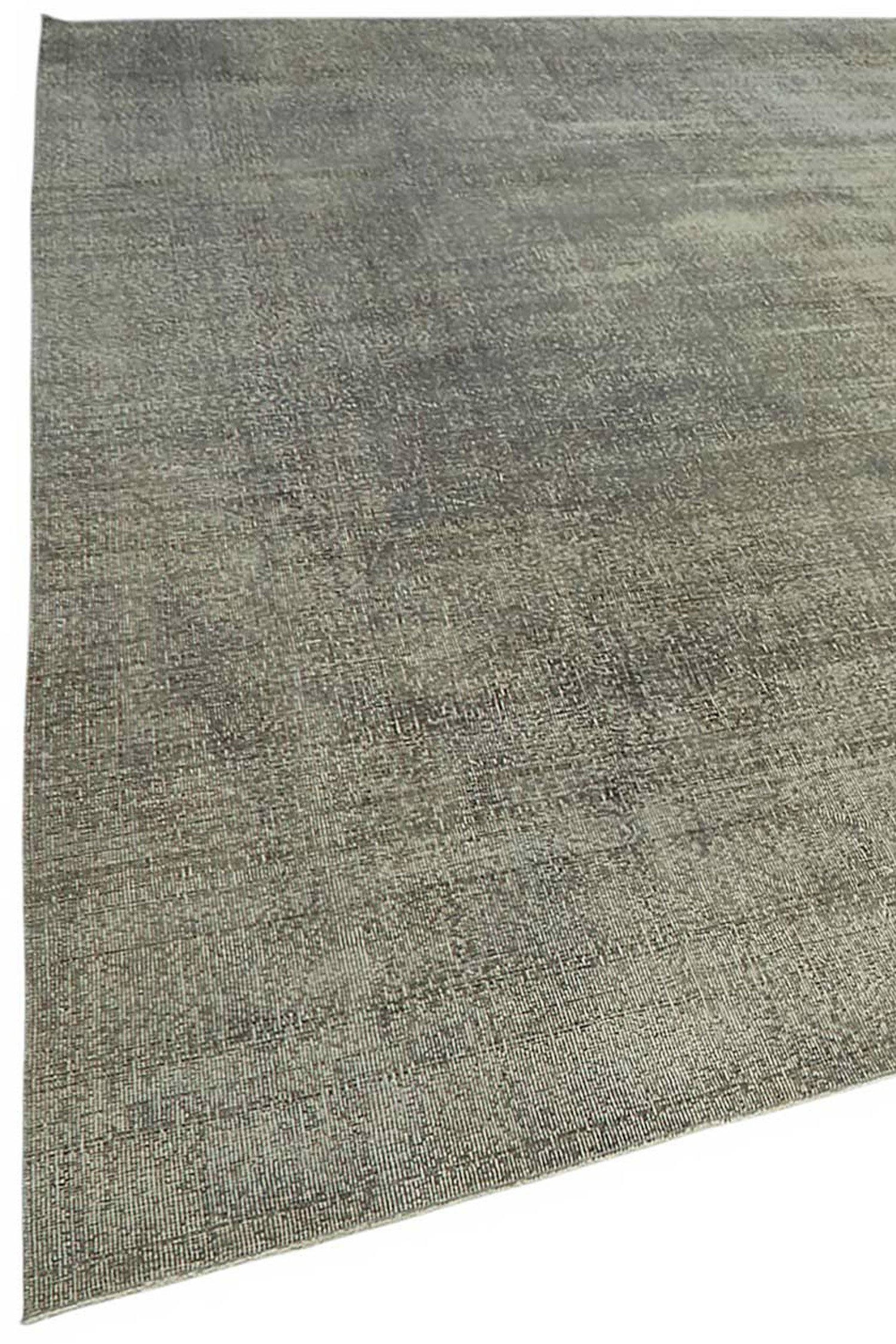
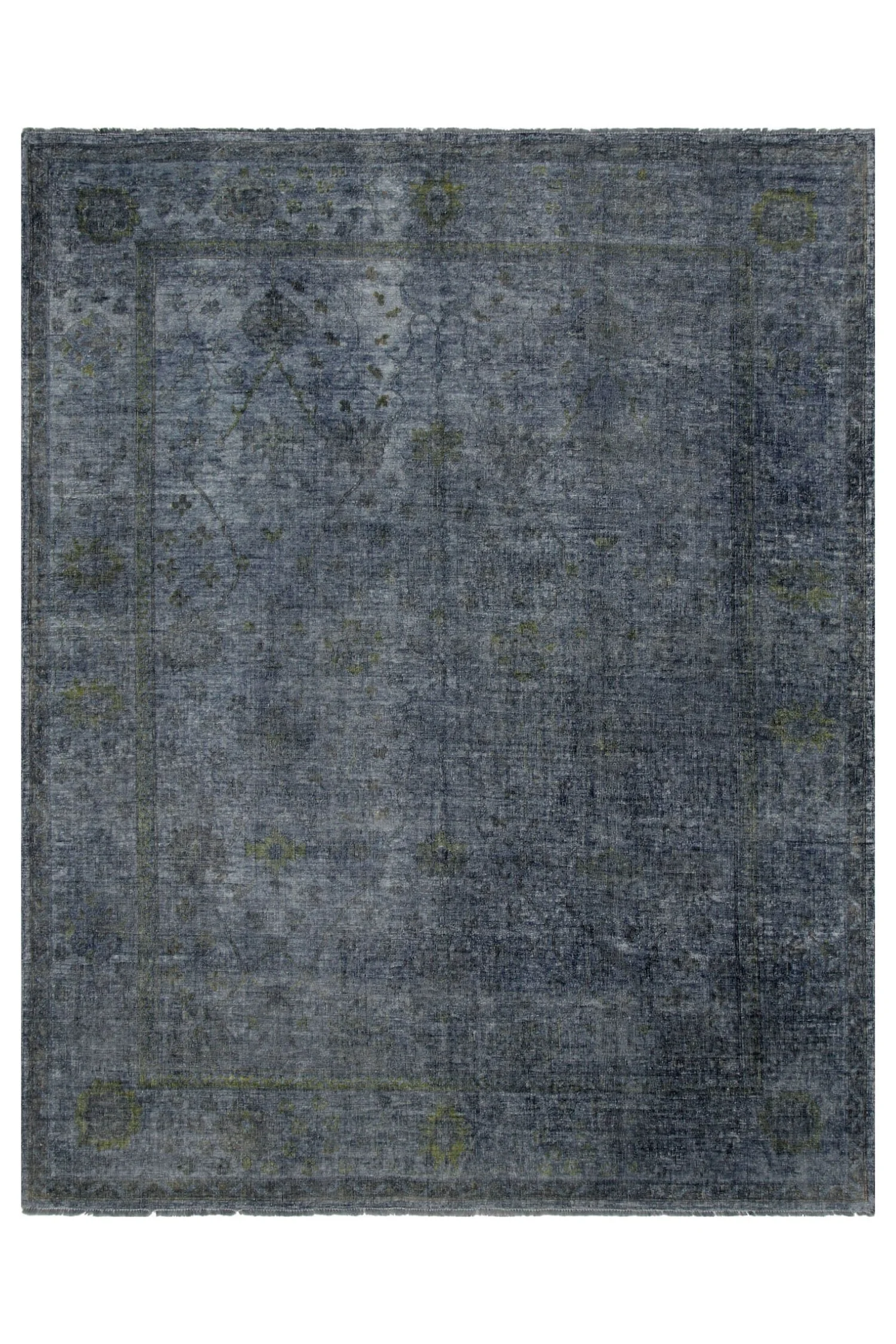
The charcoal and slate tones seen here represent typical color choices for overdyed rugs intended for urban markets. These darker palettes masked wear patterns and uneven fading while creating surfaces that worked in minimalist or industrial-style interiors.
Design Elements
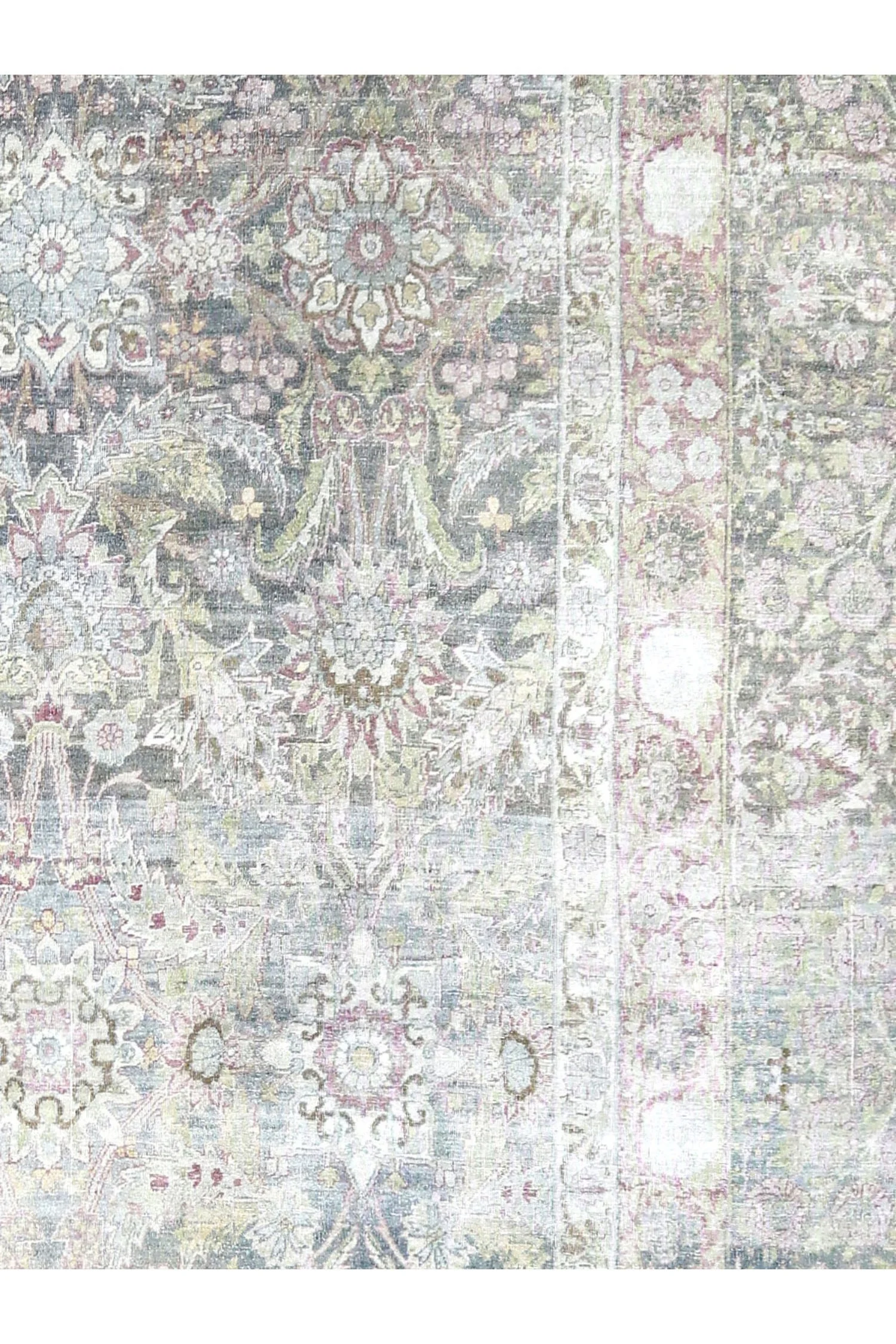
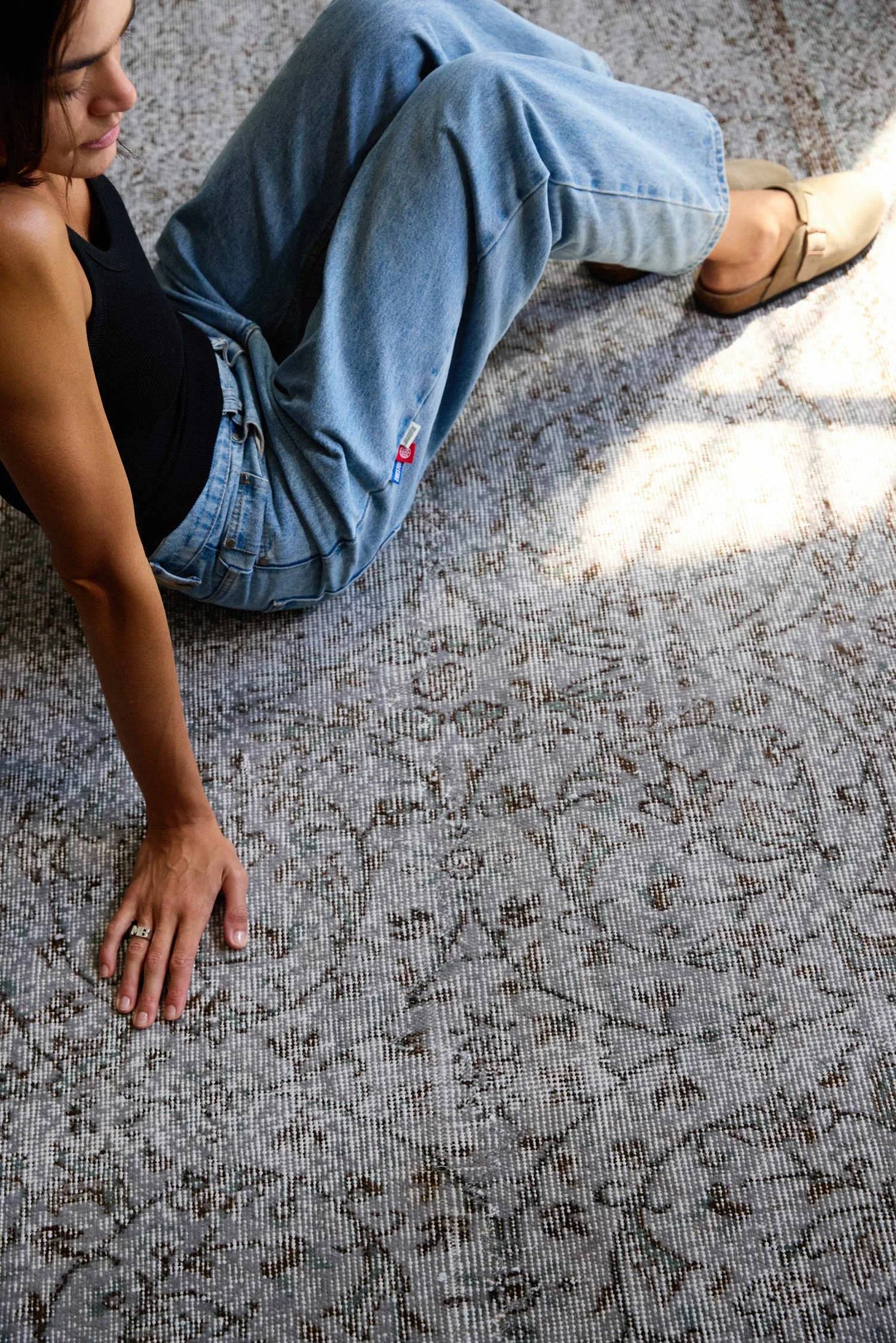
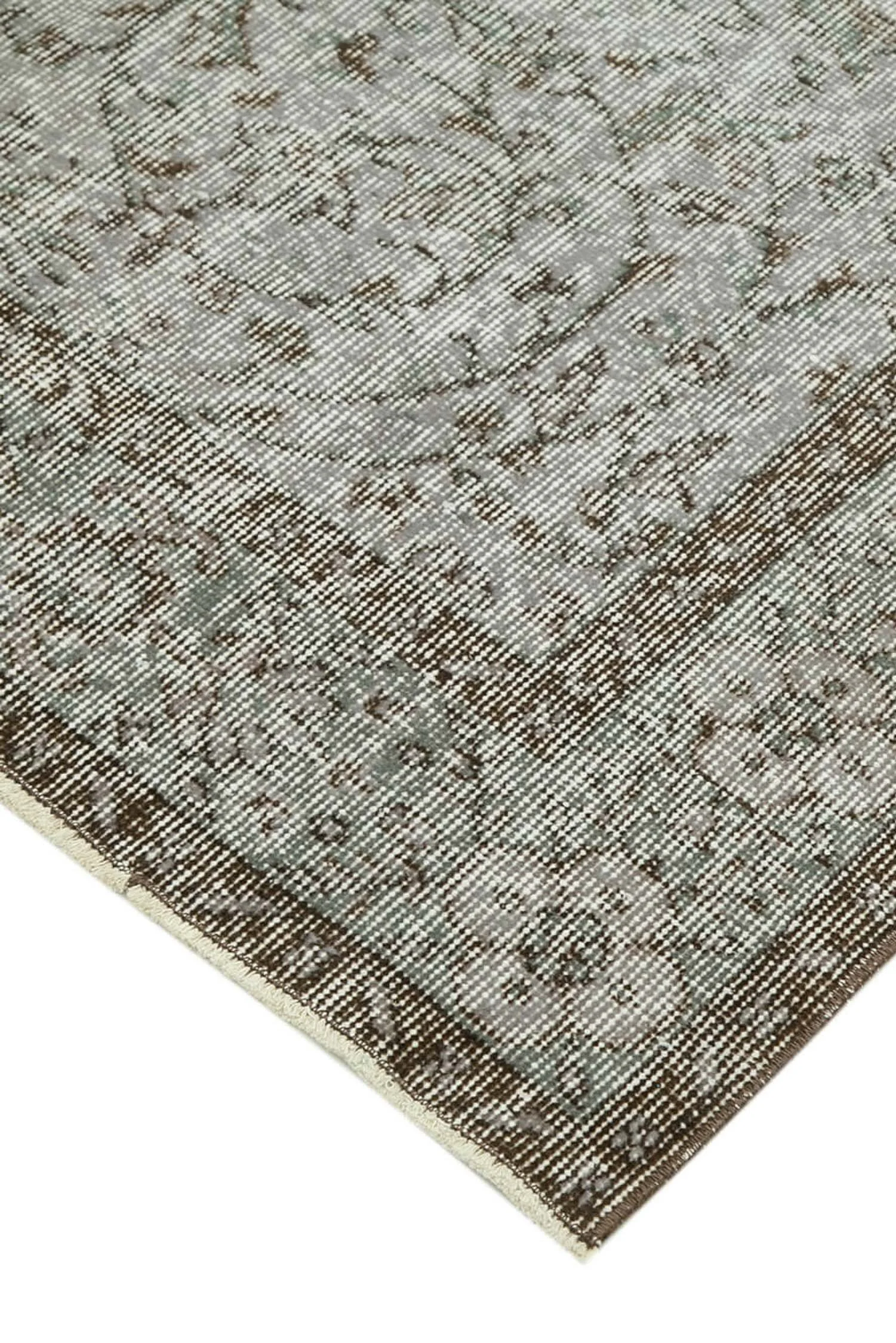
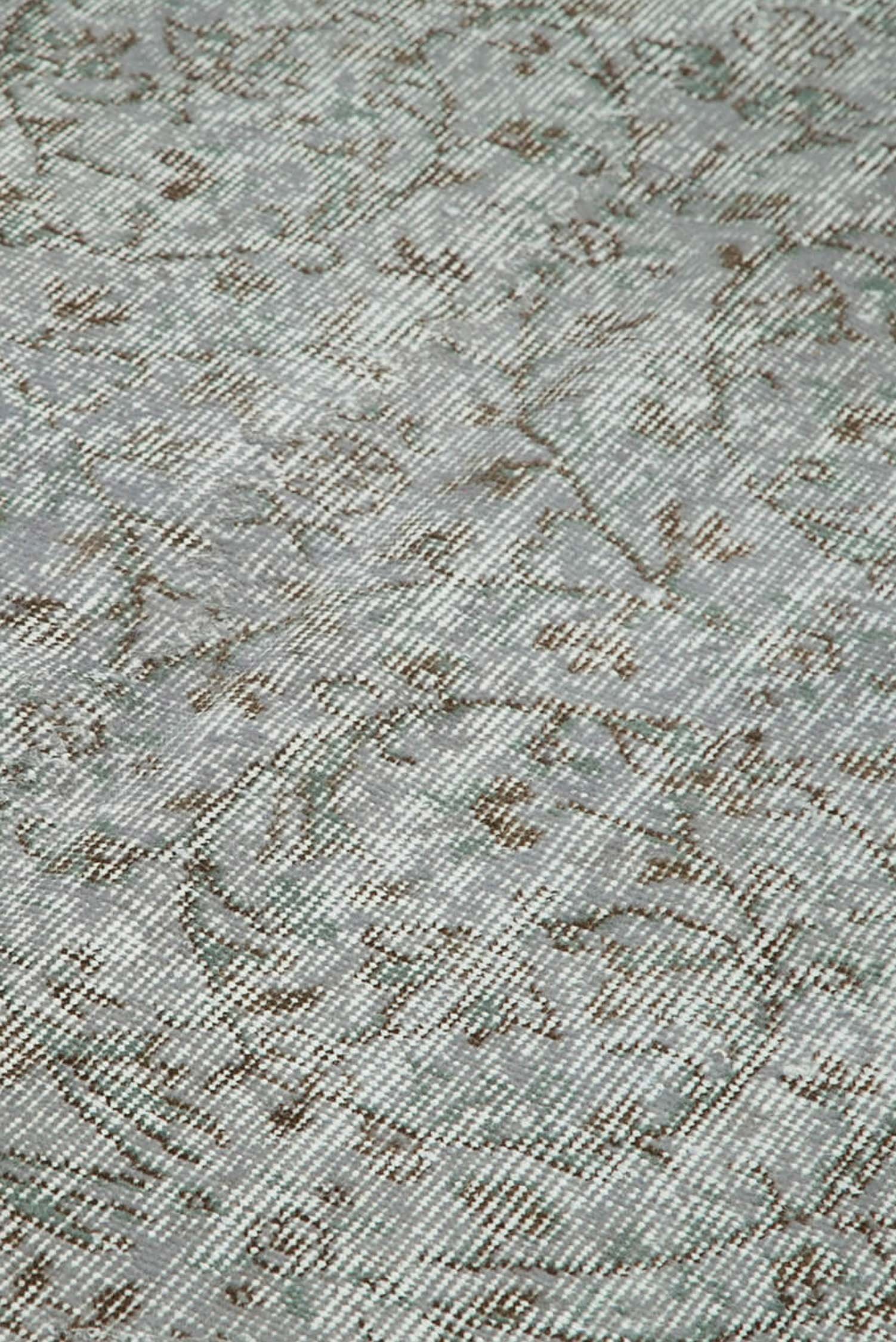
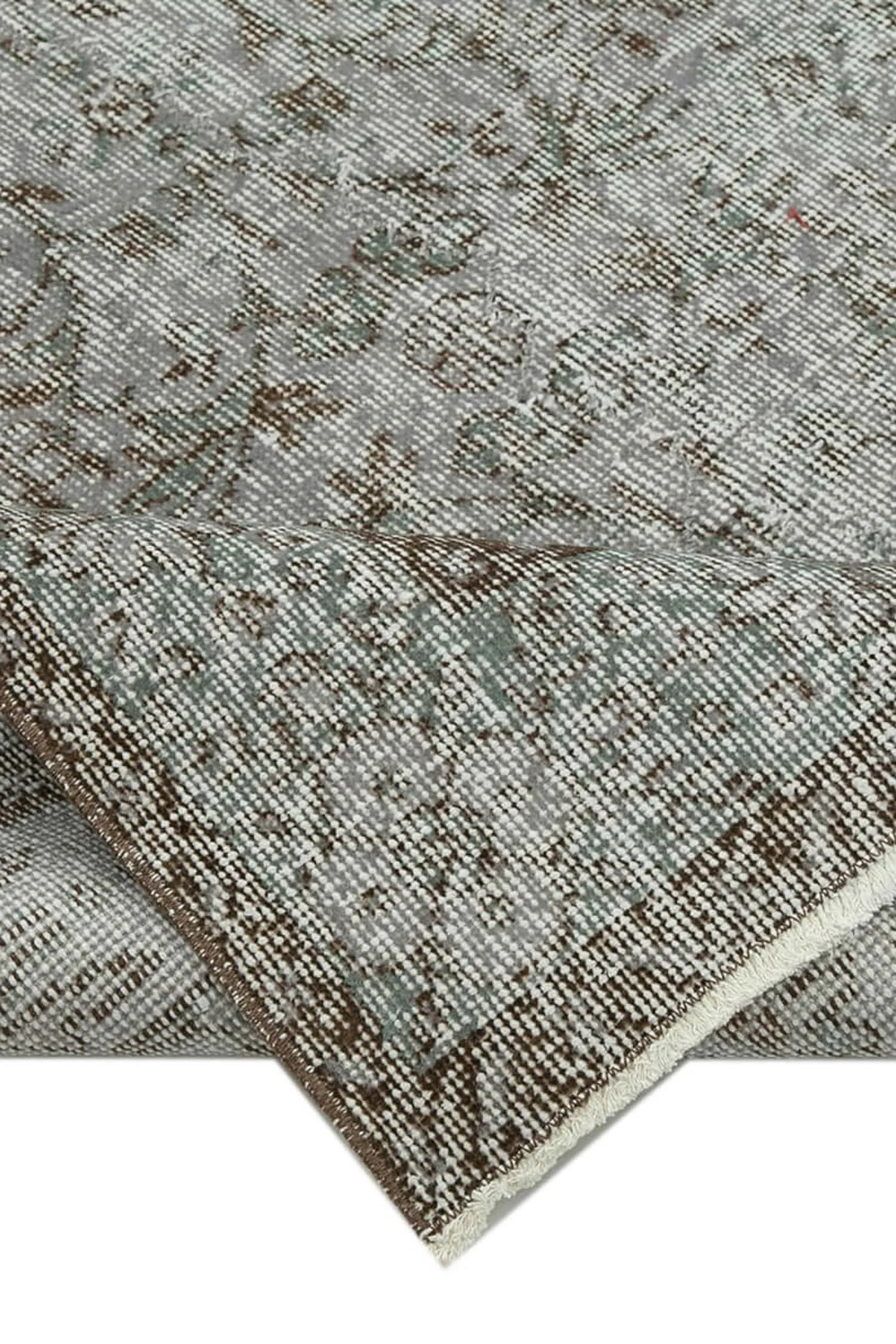
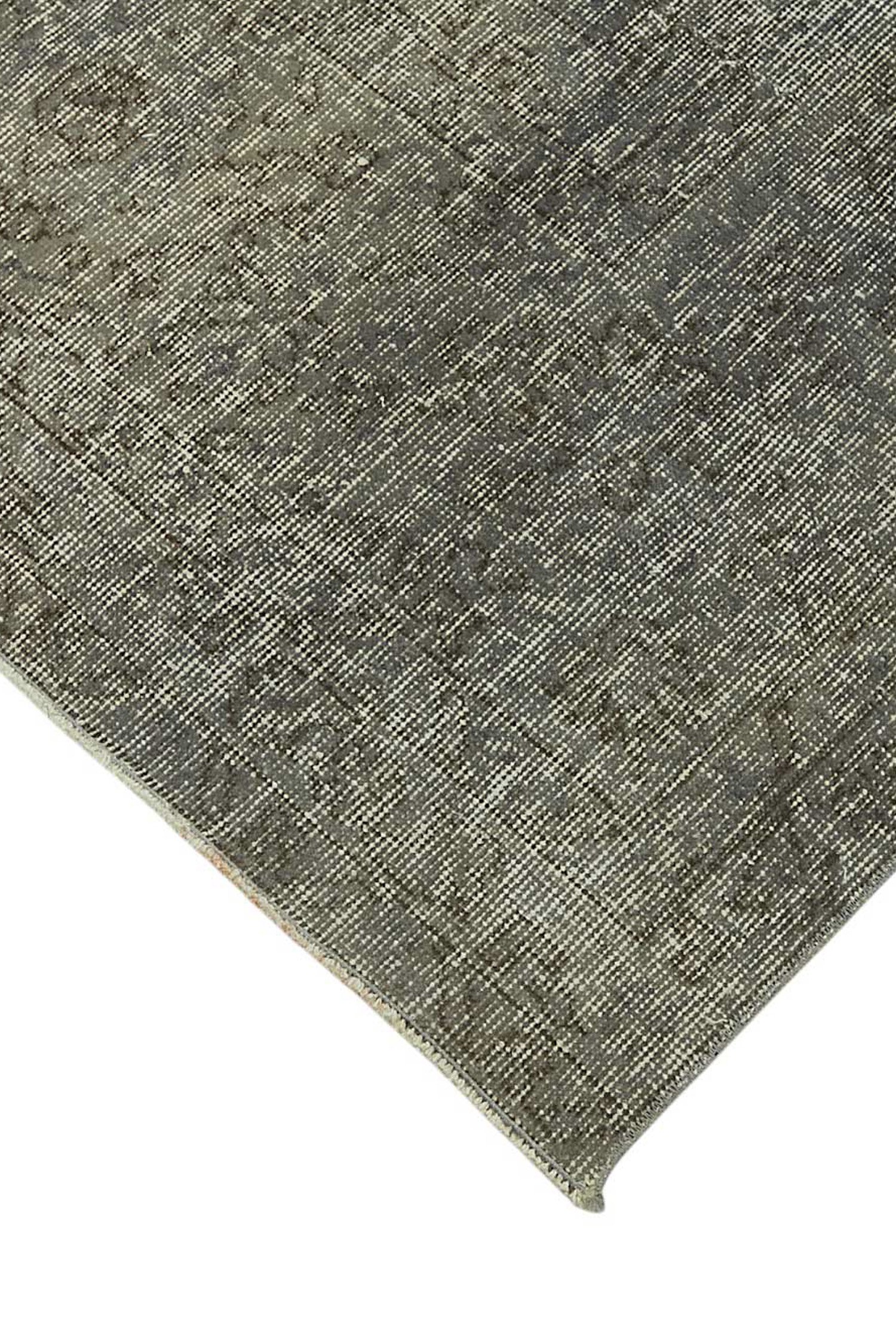
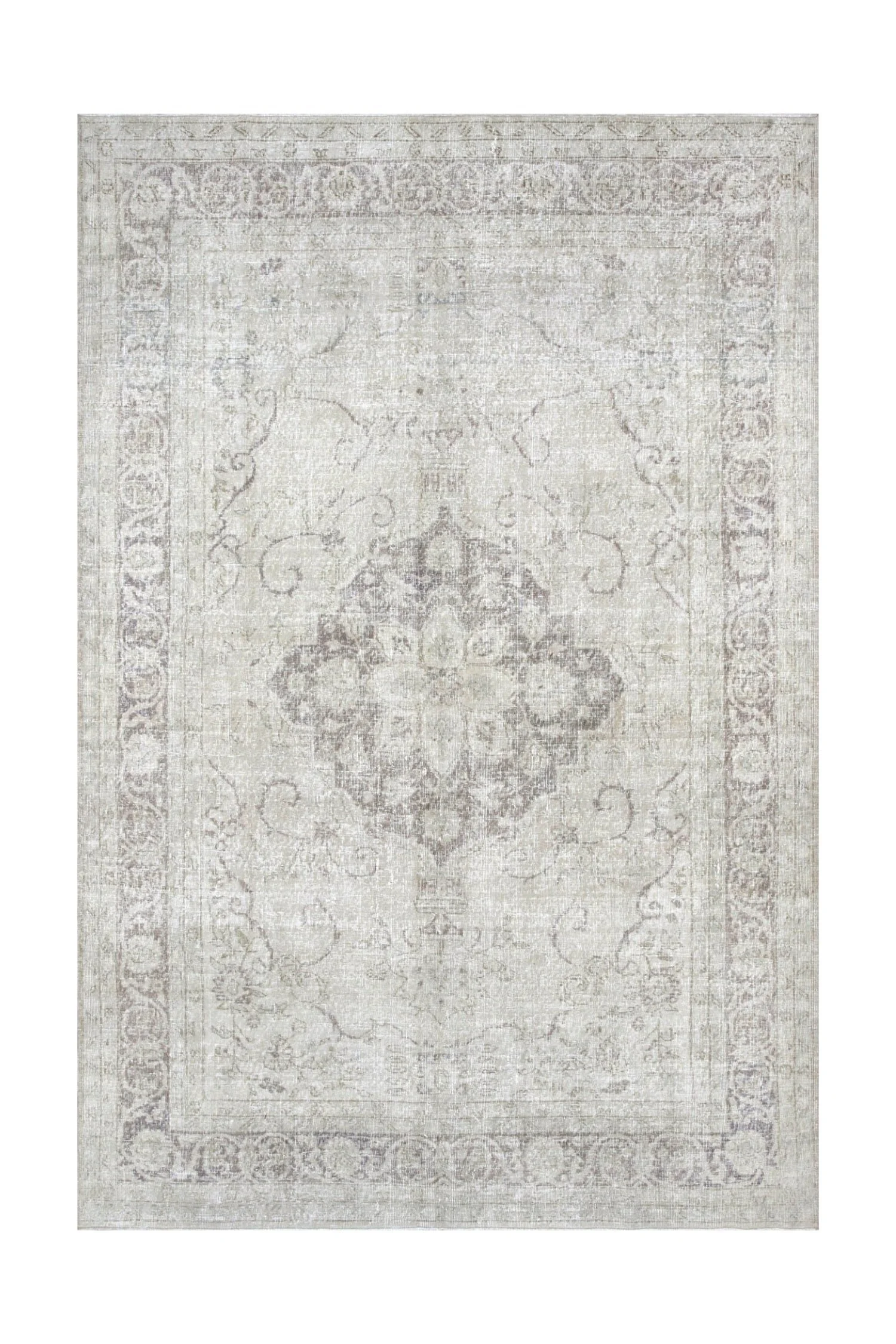
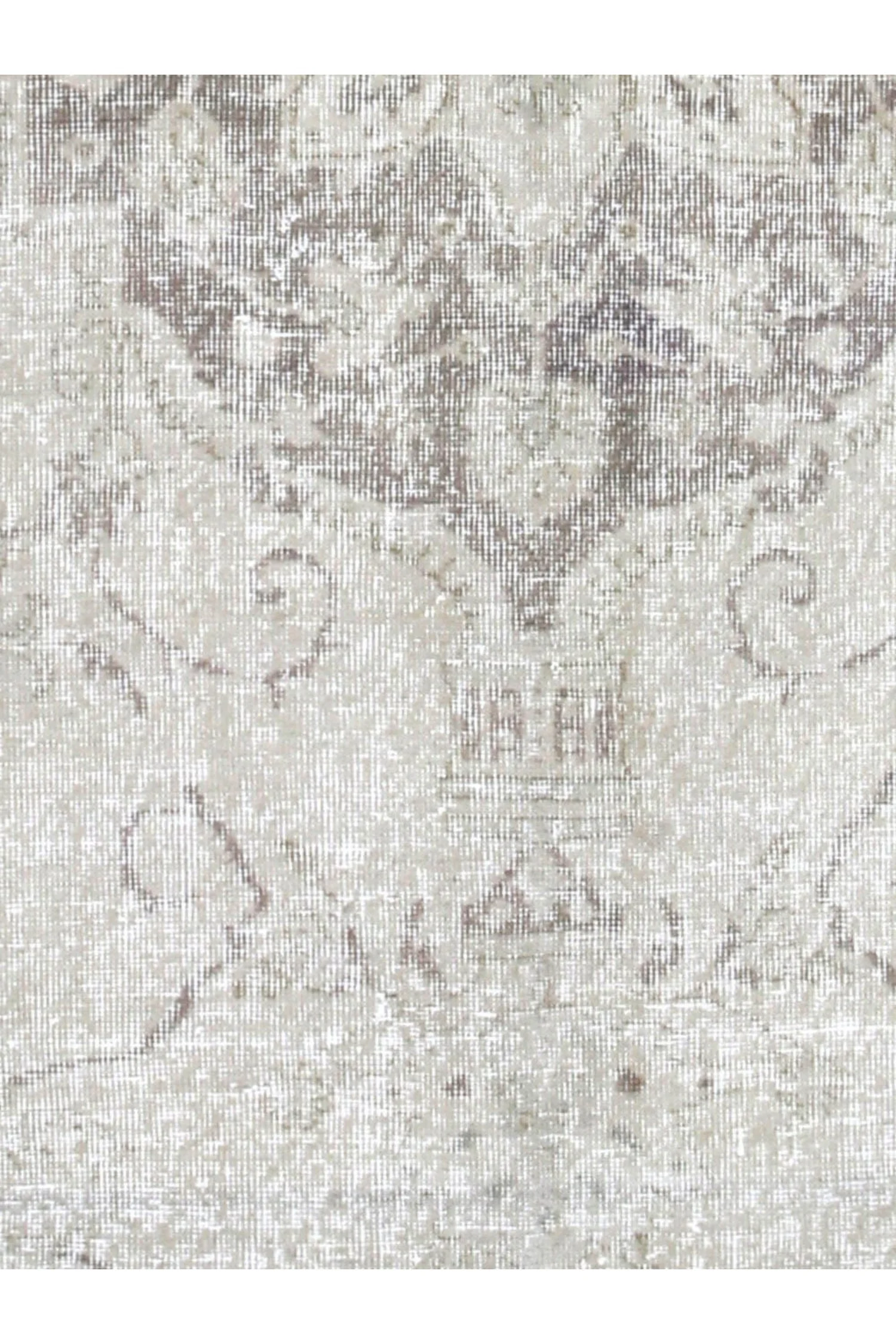
The allover pattern beneath the overdye would have originally featured regularly spaced floral motifs, typical of mid-century Isparta production. The dye saturation reduced these to shadows, visible primarily through variations in texture rather than color.
This abstraction changes how the rug functions visually. Instead of reading as a decorated surface with distinct pattern elements, it presents as a textured monolith. The tonal shifts from charcoal to slate blue create movement without fragmenting the field.
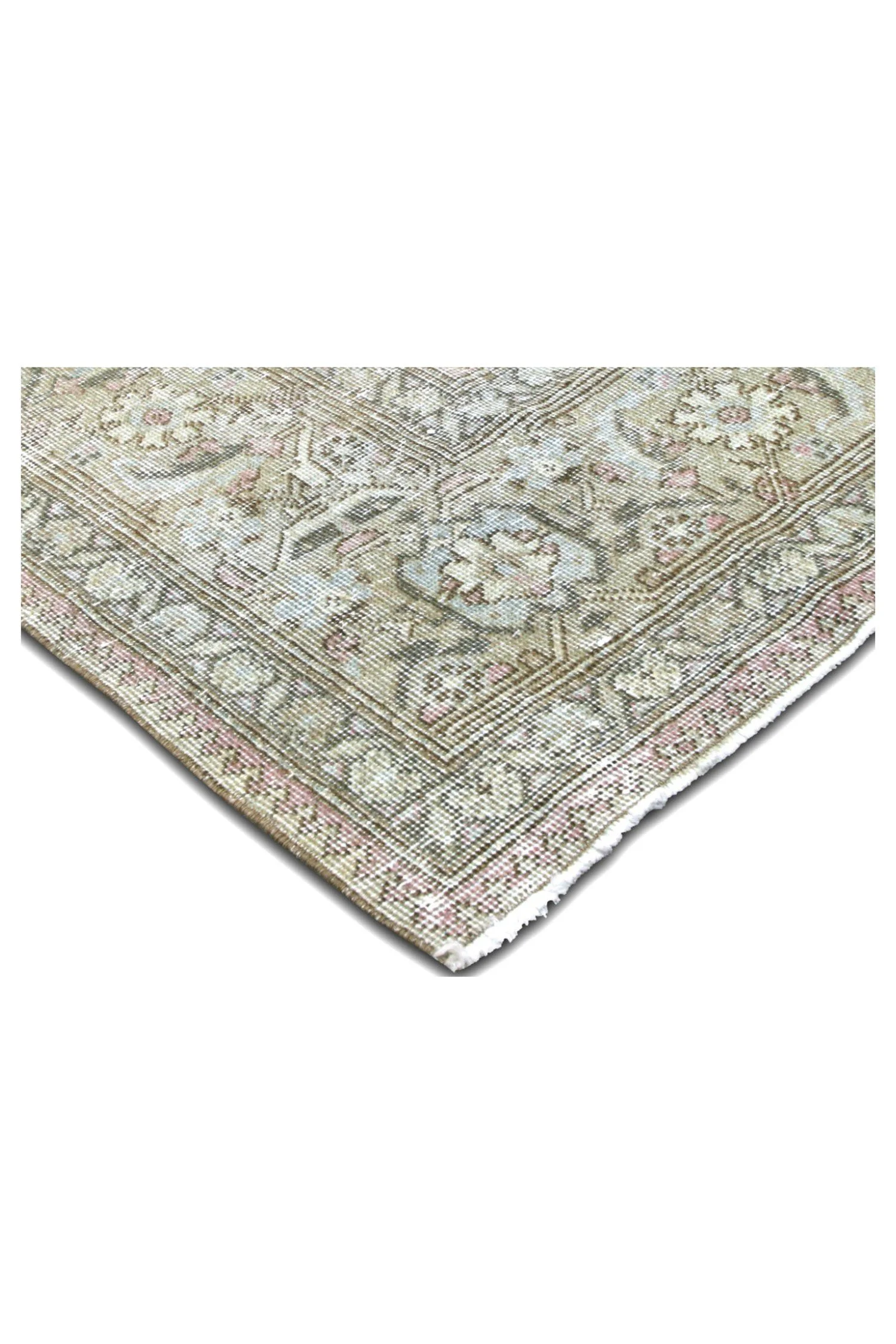
The border frame remains legible as a structural element but doesn't interrupt the visual flow. The dye process unified it with the field enough that the rug maintains continuity from edge to edge.
Placement
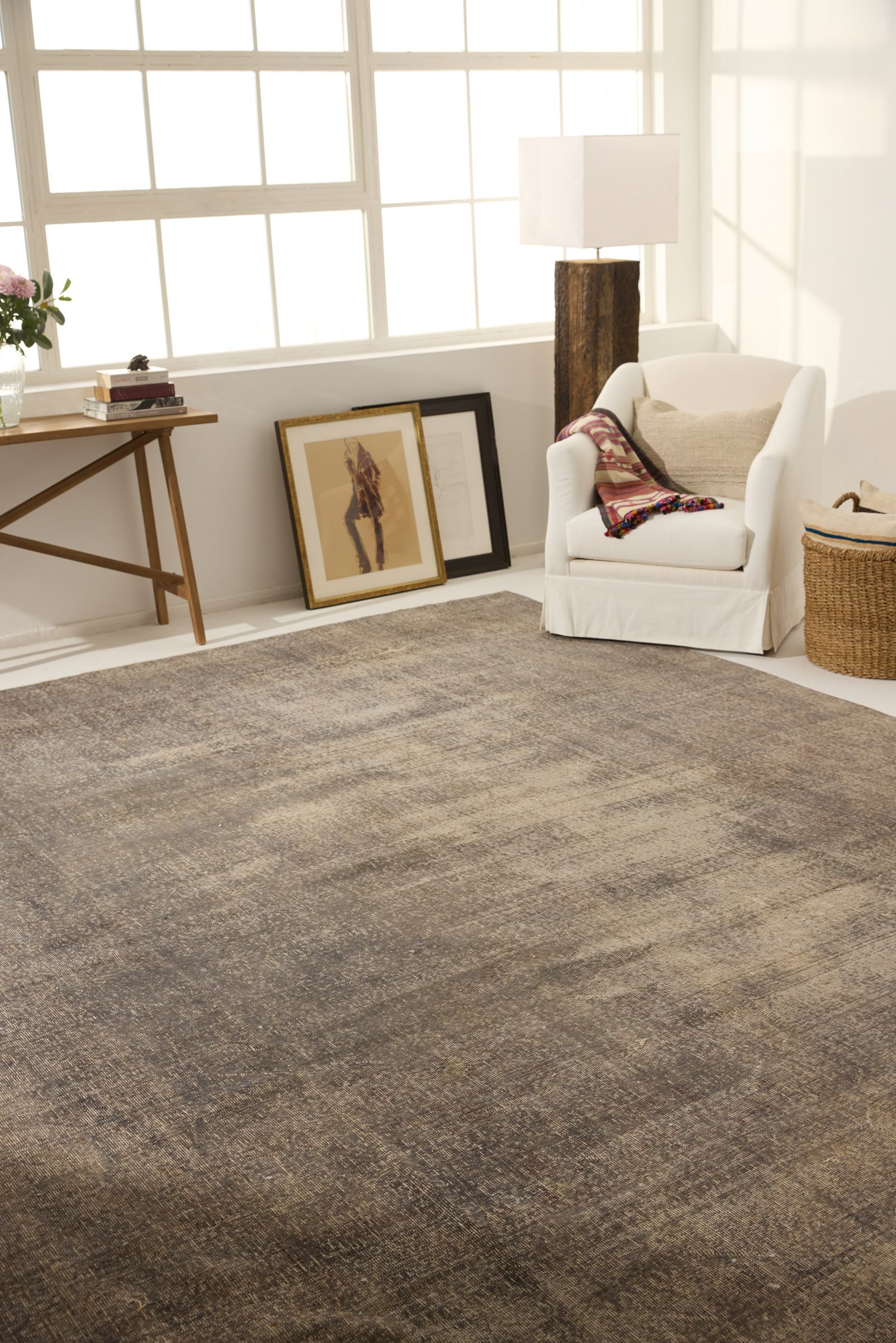
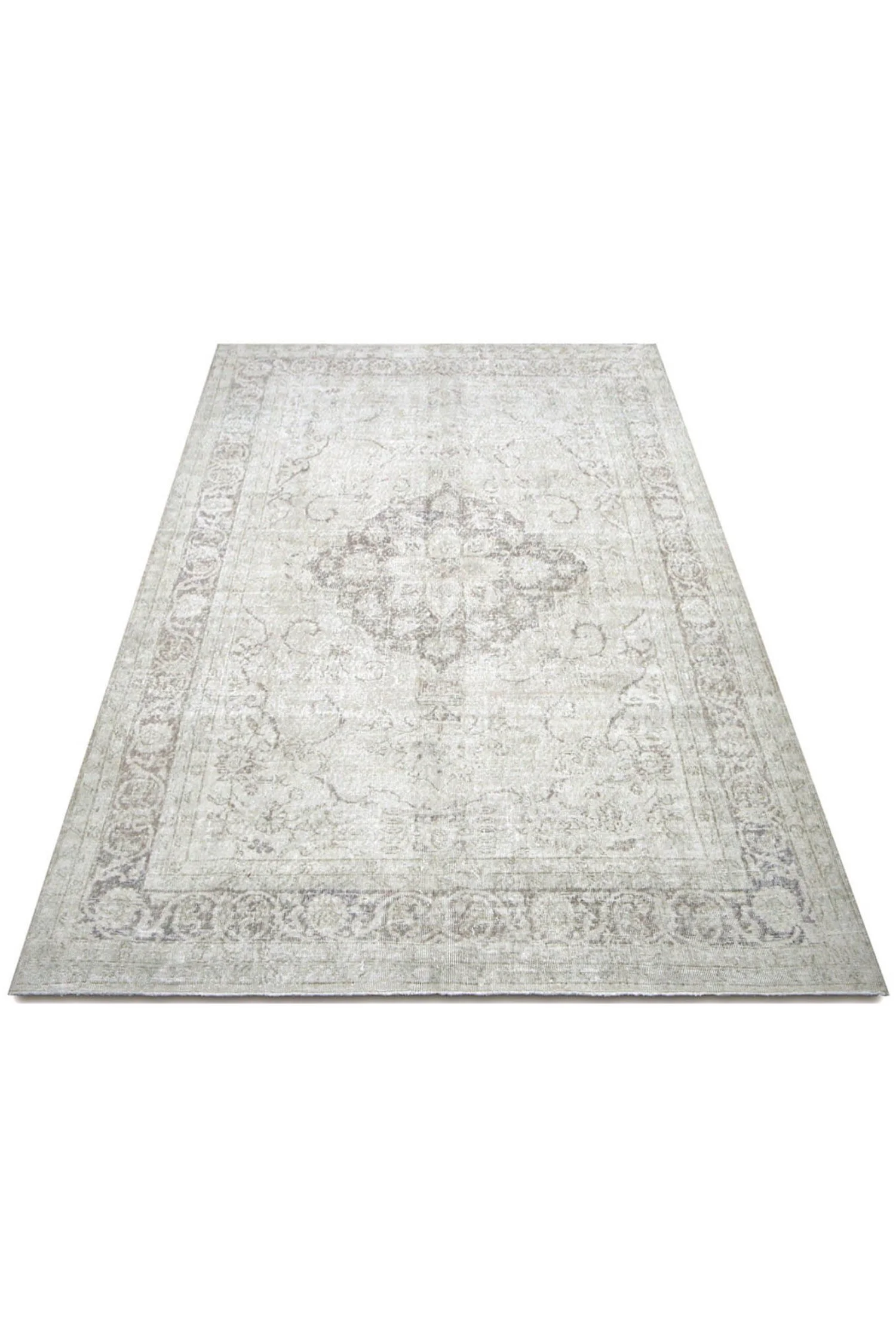
At nine by nearly twelve feet, this works in living rooms where you want to anchor a seating area with substantial coverage. The dimensions suit dining rooms with tables that seat six to eight comfortably. Bedrooms can accommodate this size with the rug extending beyond the bed on three sides.
The dark palette functions well in spaces with significant natural light, where the tonal variations become more apparent. Contemporary interiors appreciate the lack of competing pattern. The charcoal and slate tones also work in transitional settings where you need something substantial without strong color commitment.
Care Recommendations
To preserve the rug's beauty:
Rotate periodically for even wear
Vacuum regularly using a suction-only setting
Address spills immediately by blotting, never rubbing
Professional cleaning recommended annually
Avoid direct sunlight to maintain color integrity
Isparta weavers adapted their work to changing markets for over a century; this rug adapted one more time.