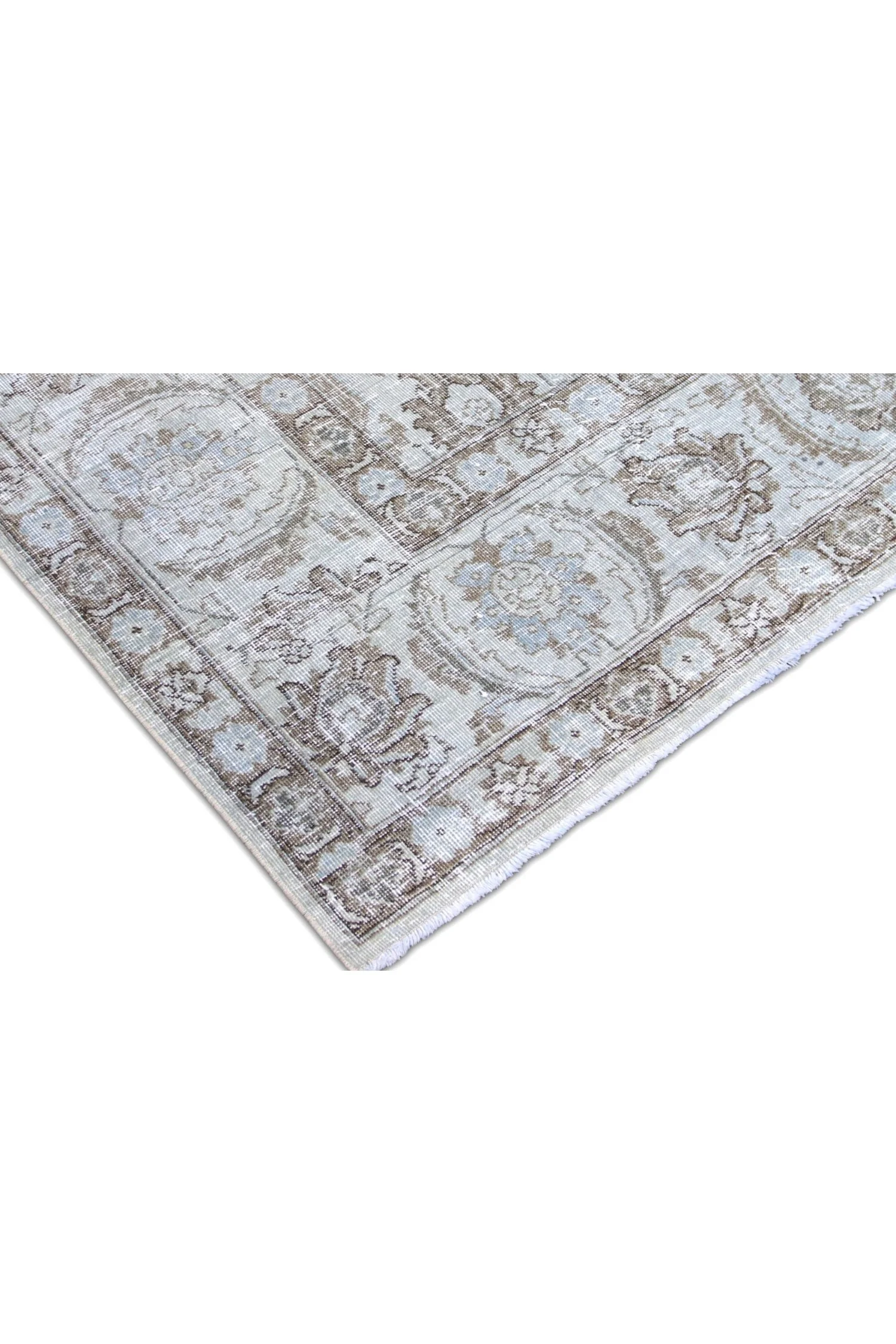
 Image 1 of 6
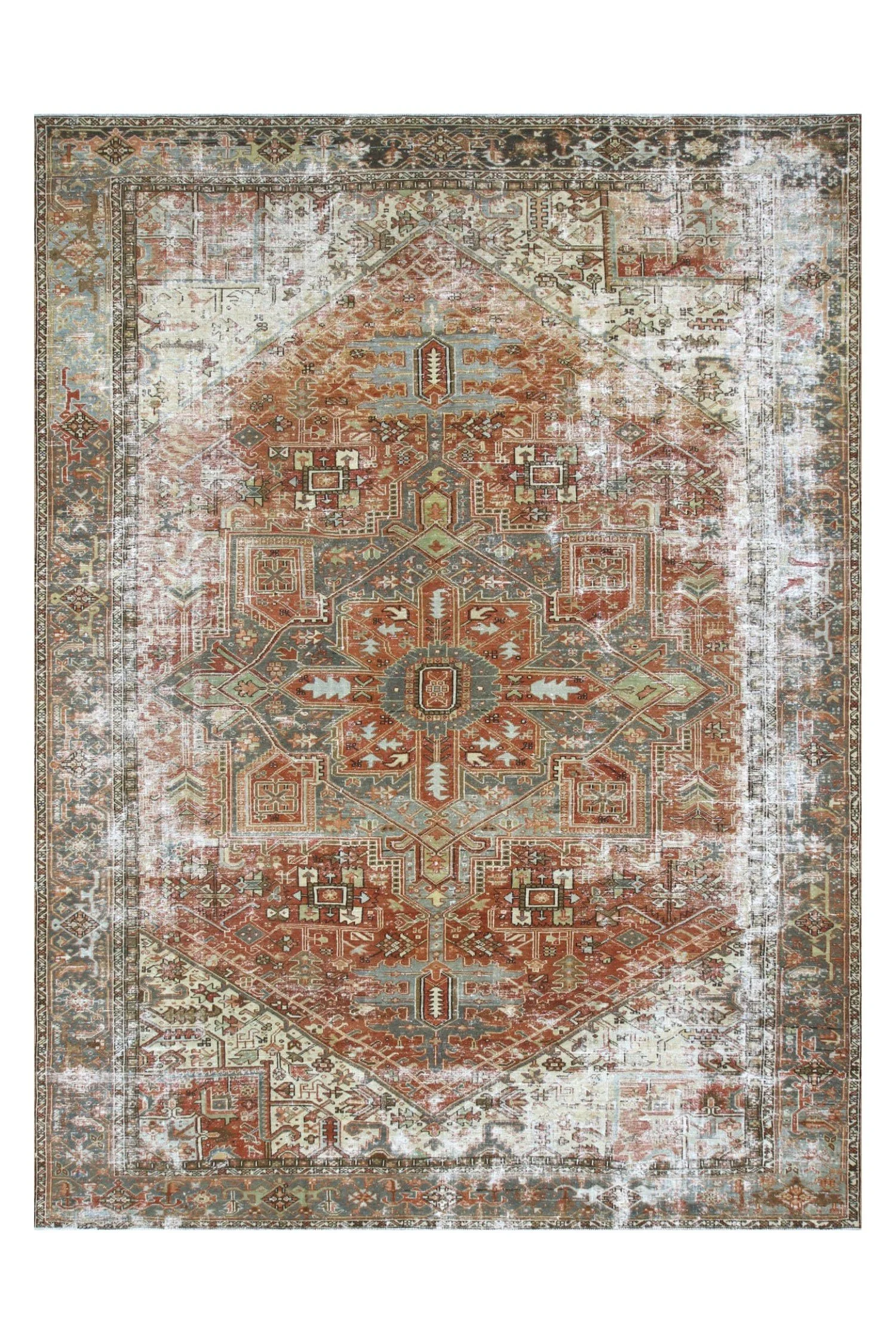
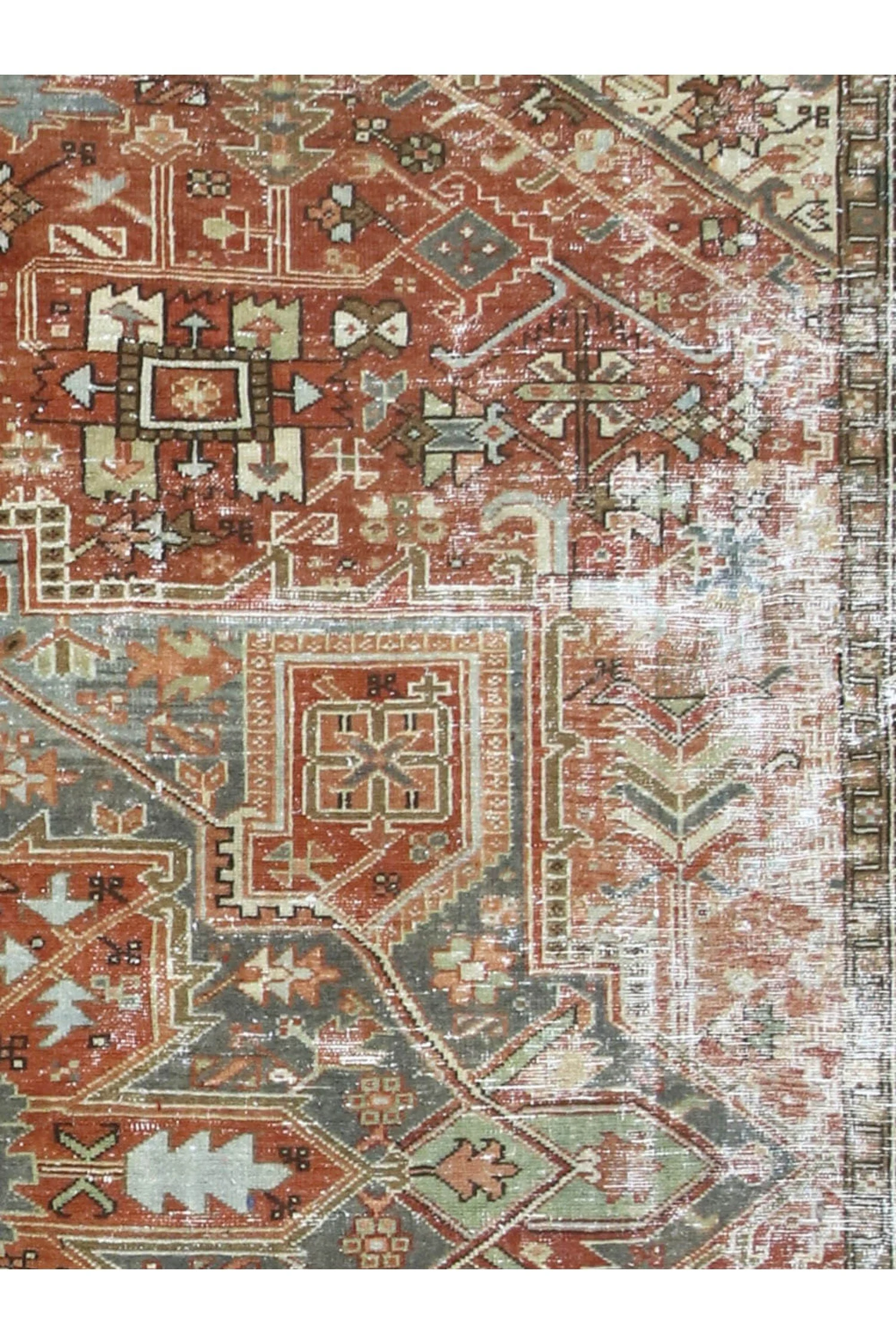 Image 2 of 6
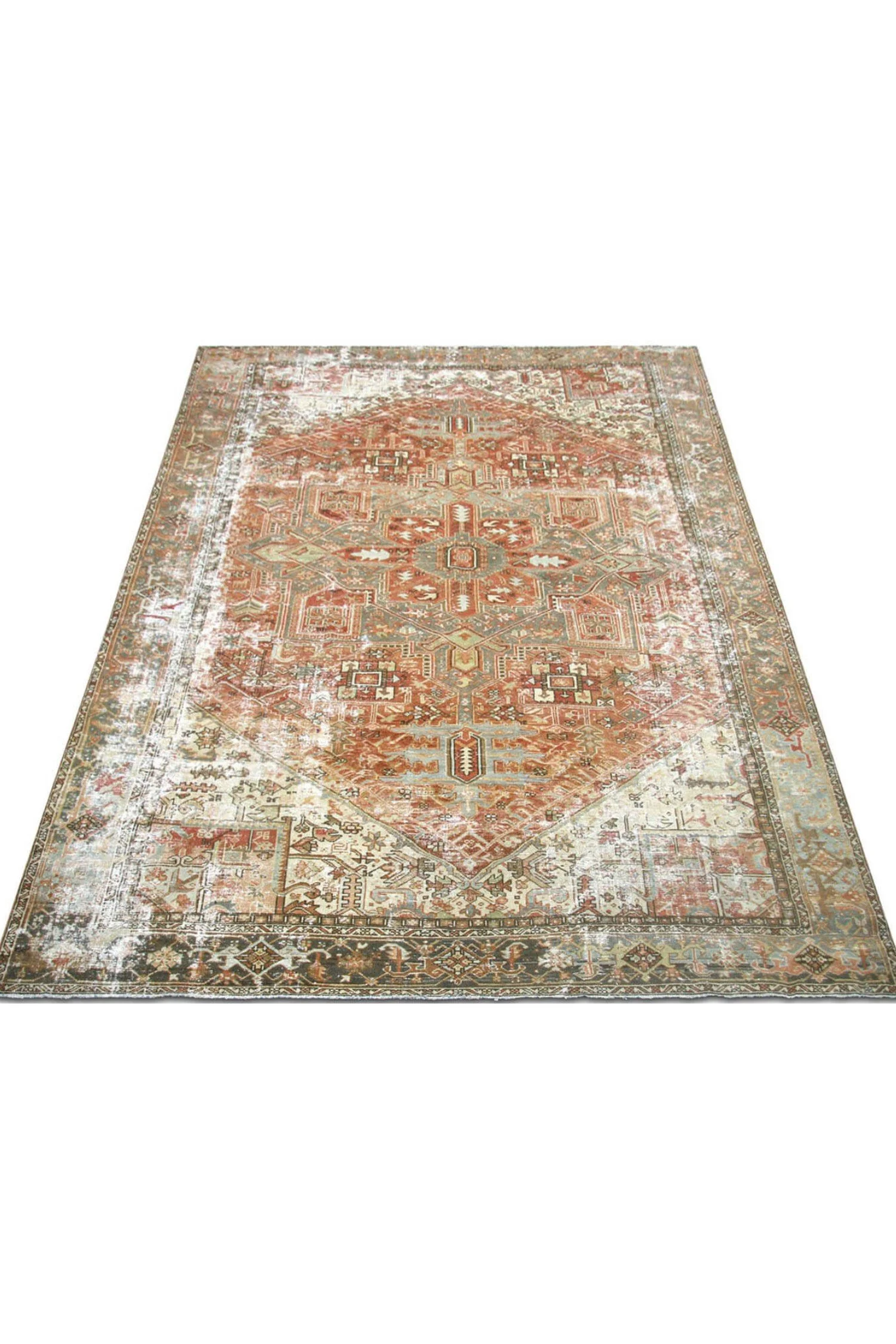 Image 3 of 6
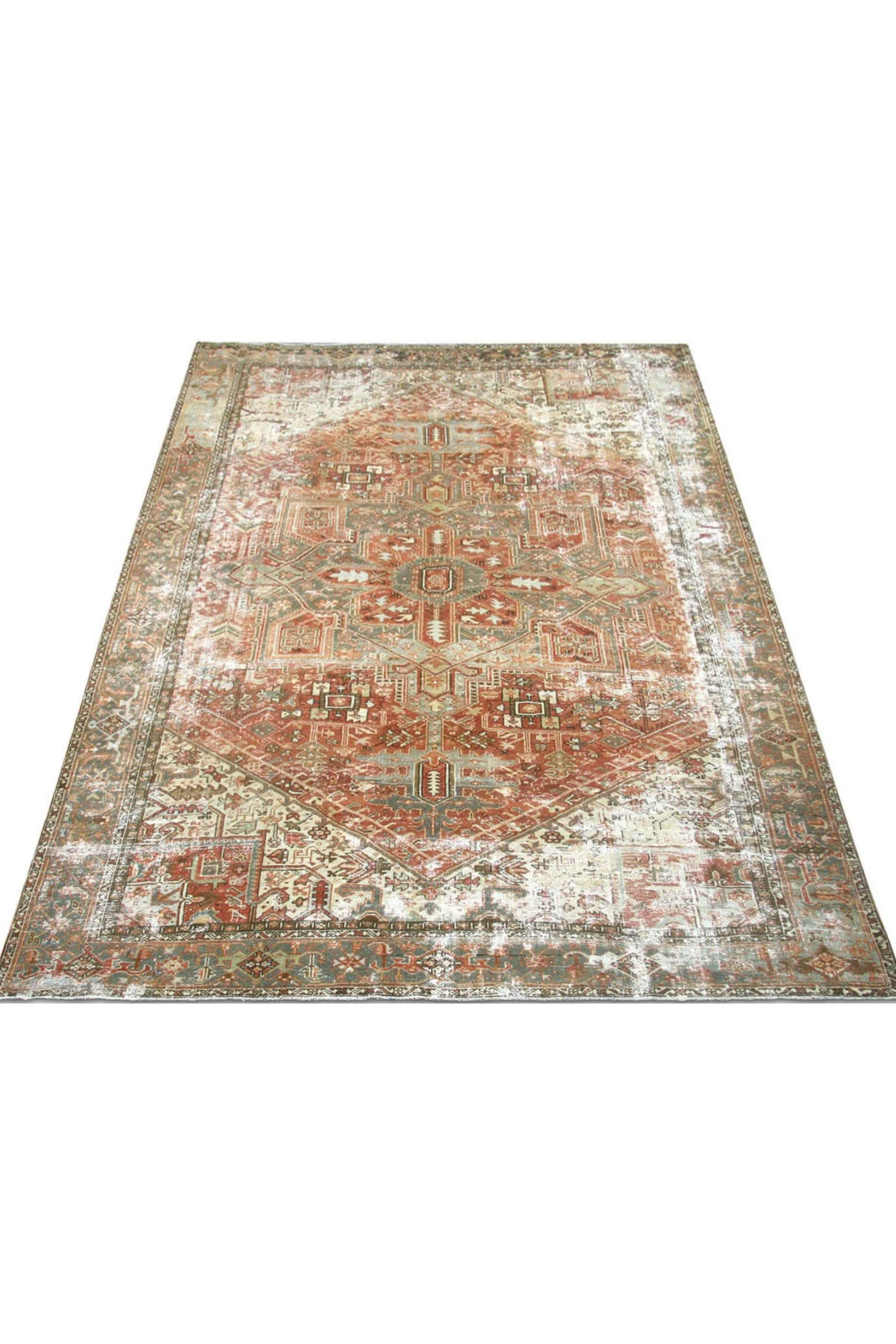 Image 4 of 6
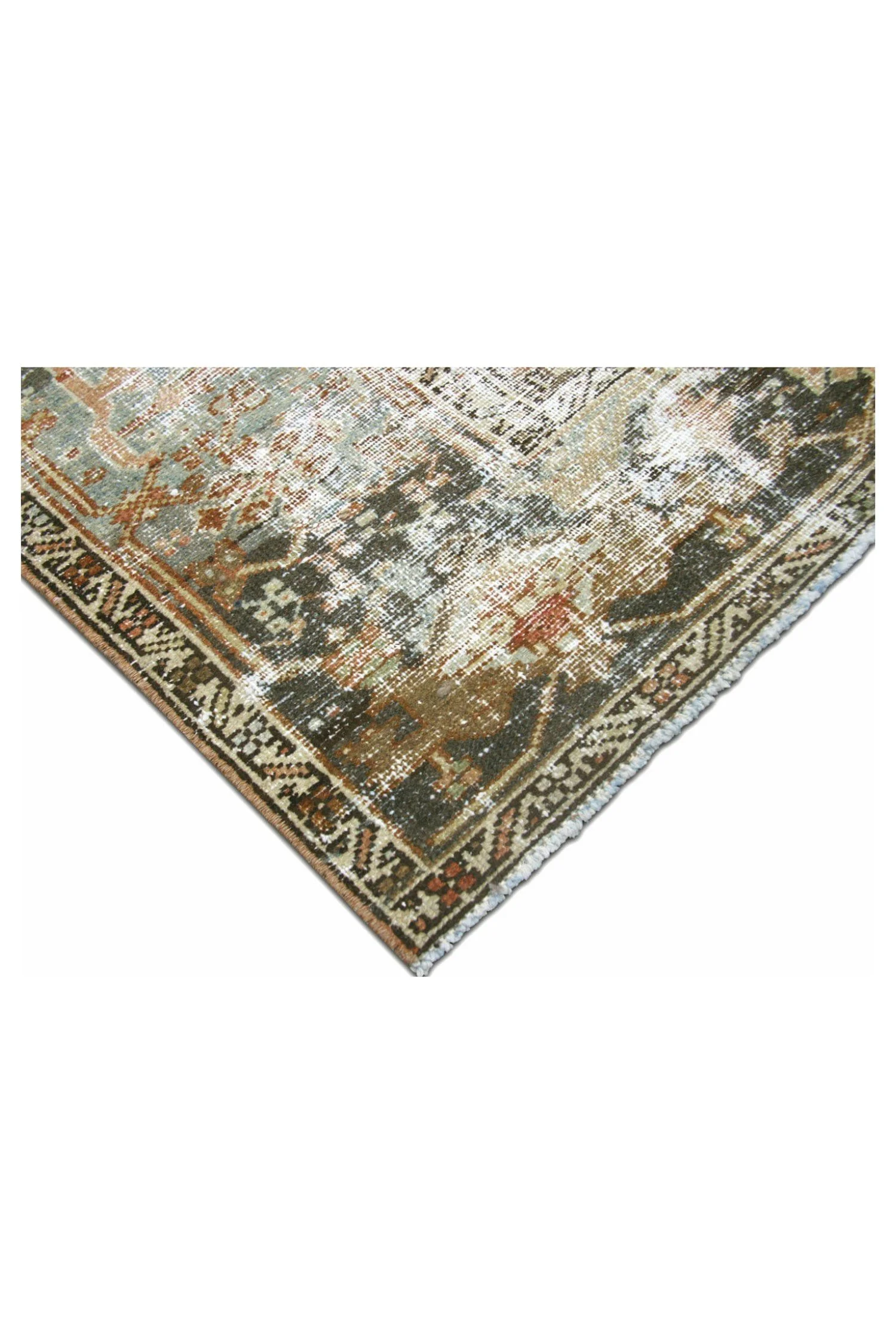 Image 5 of 6
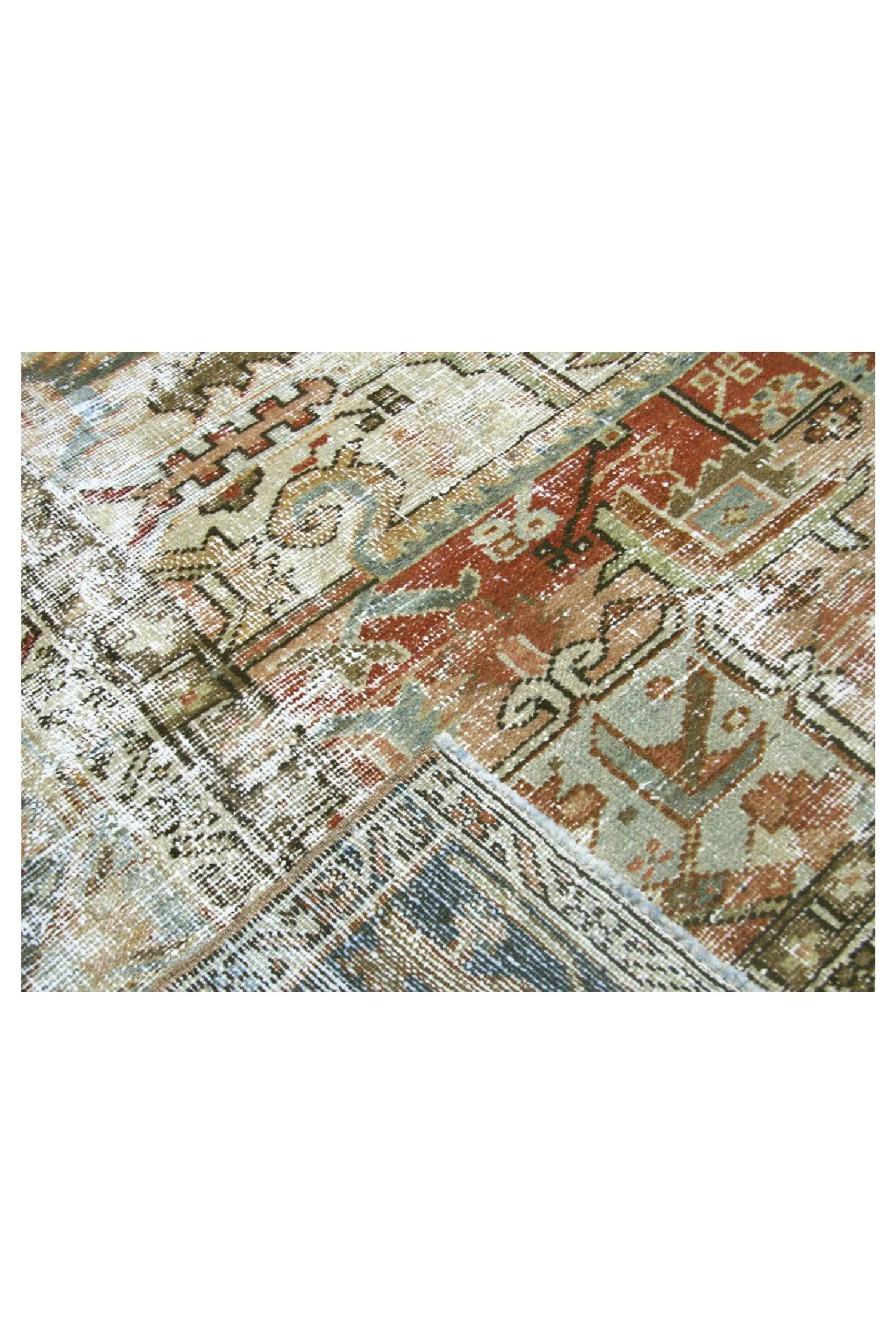 Image 6 of 6
Heritage and Craftsmanship
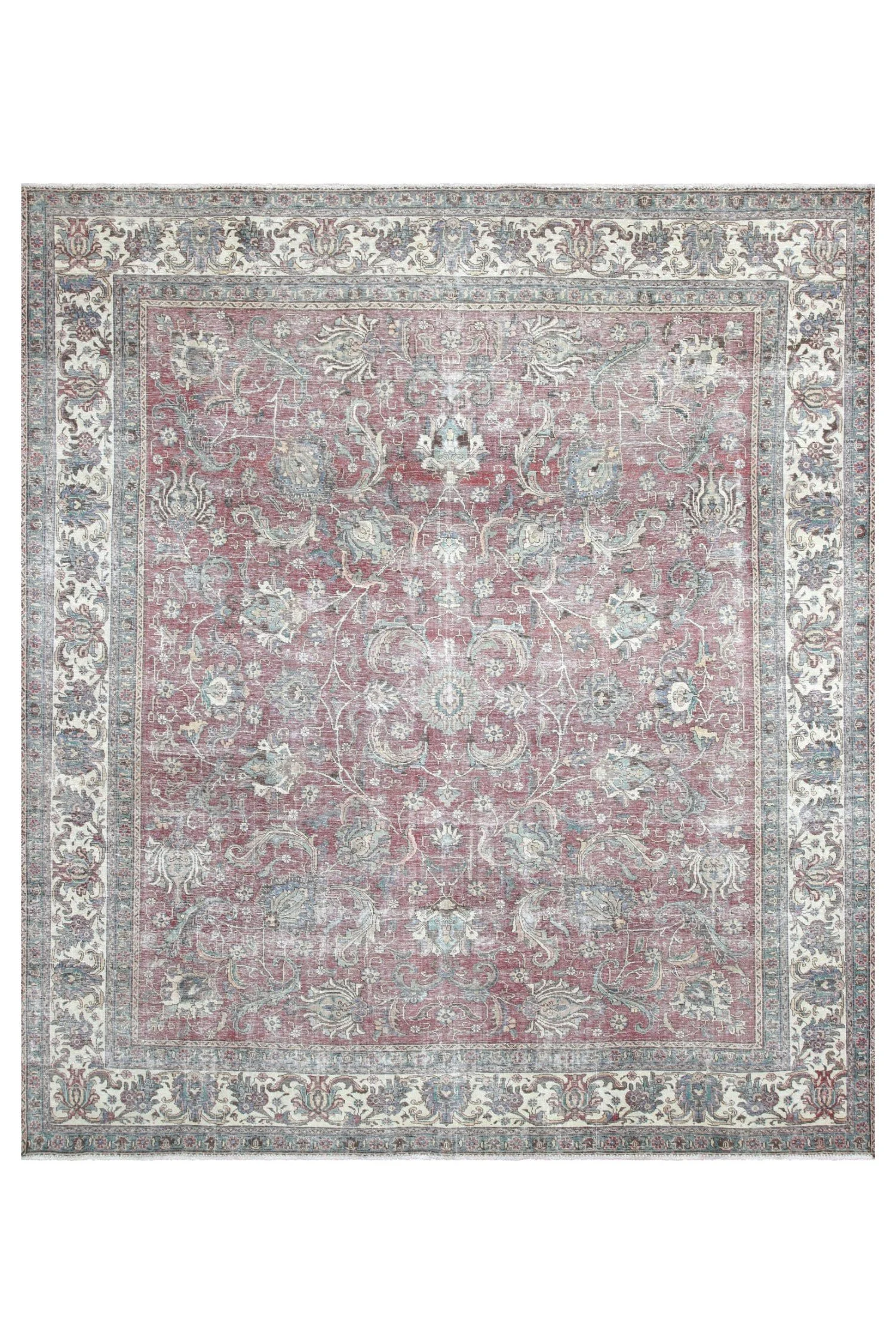
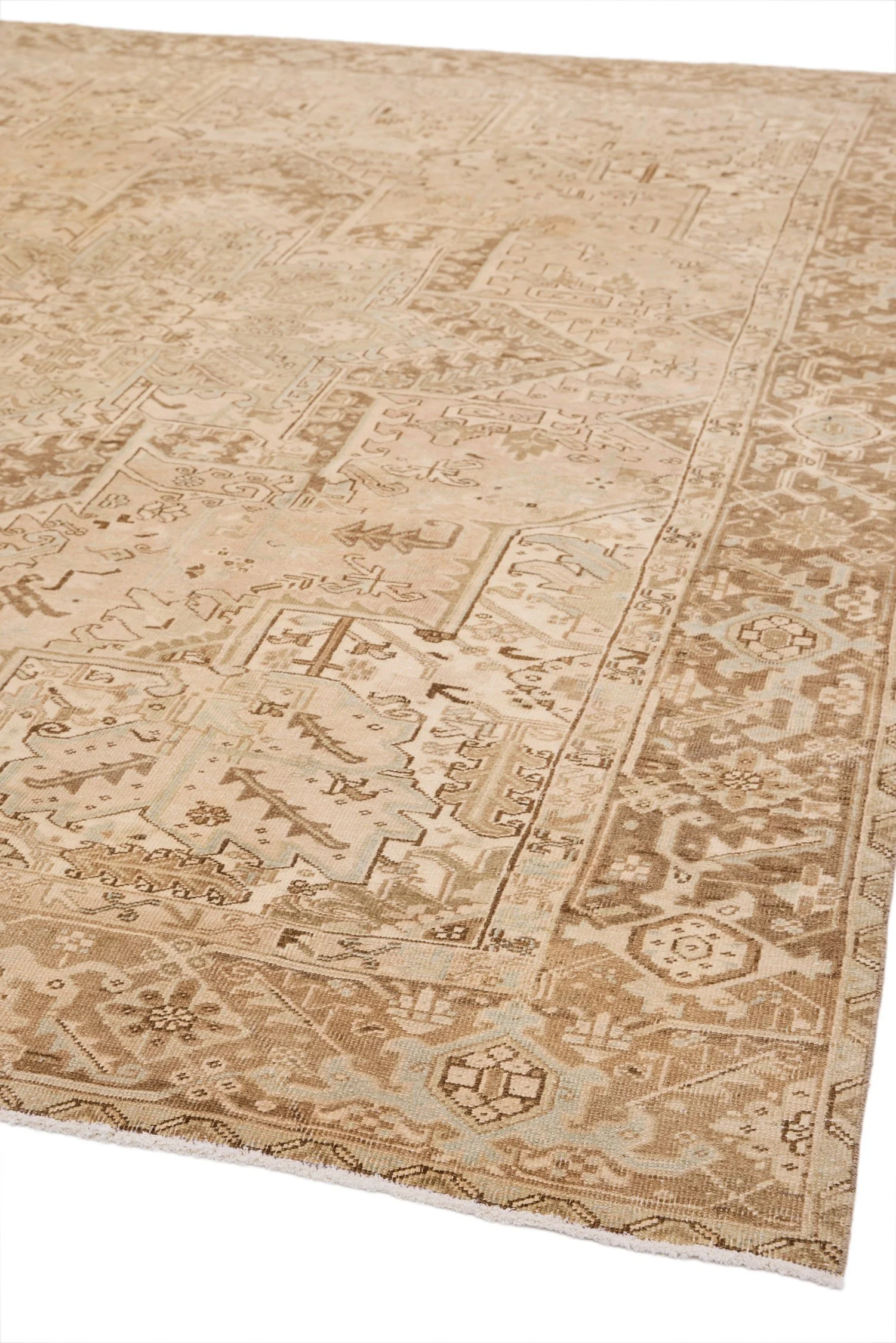
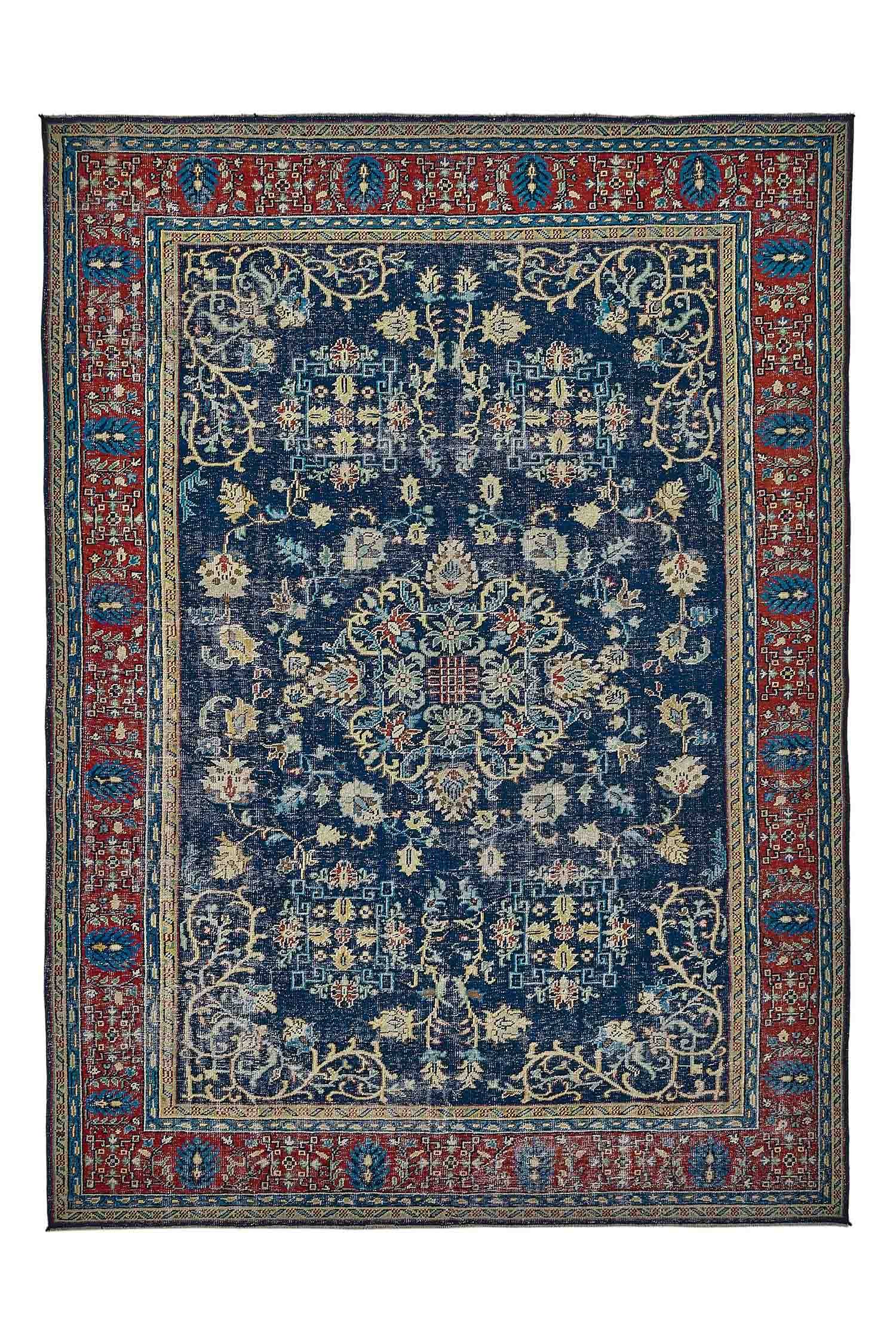
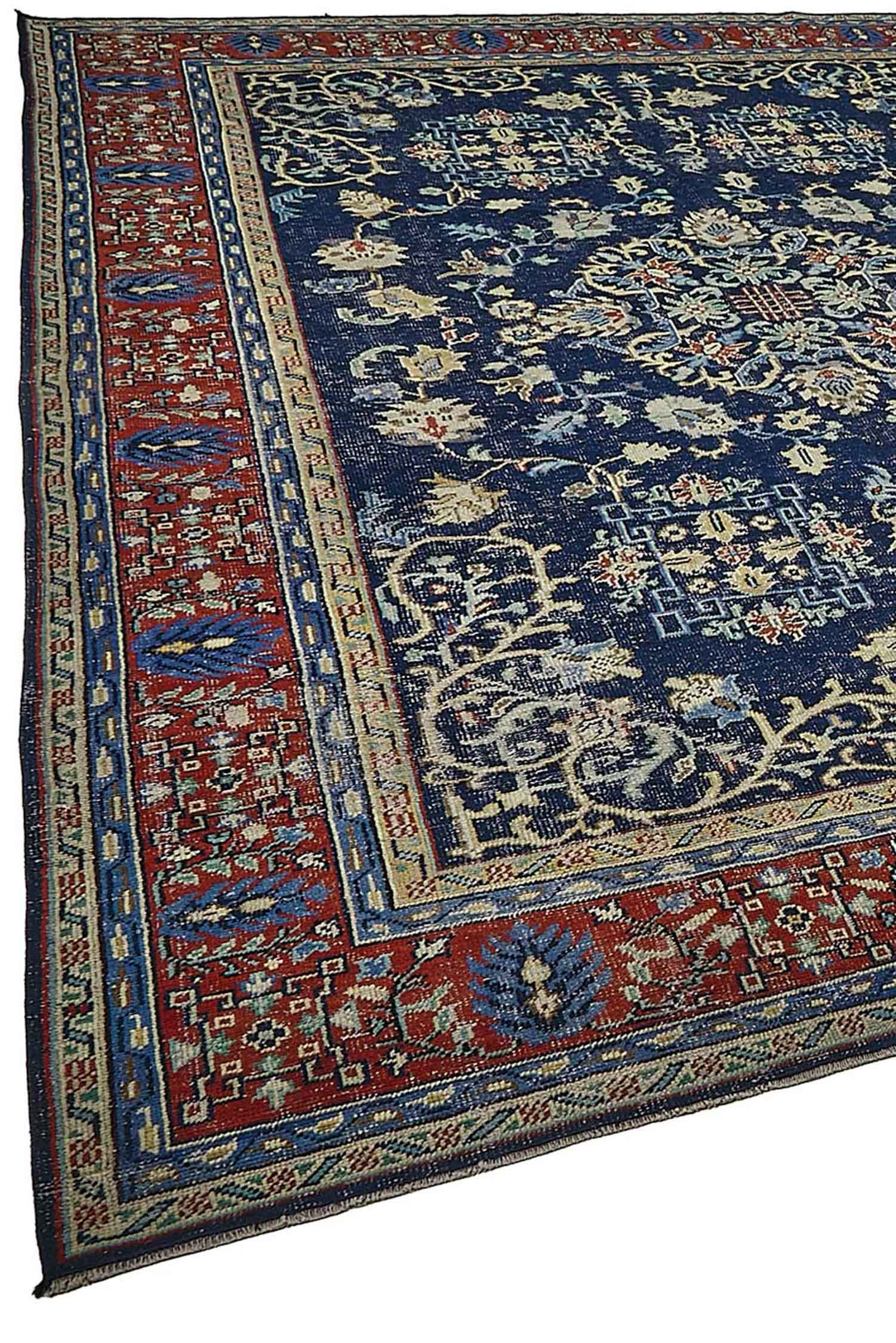
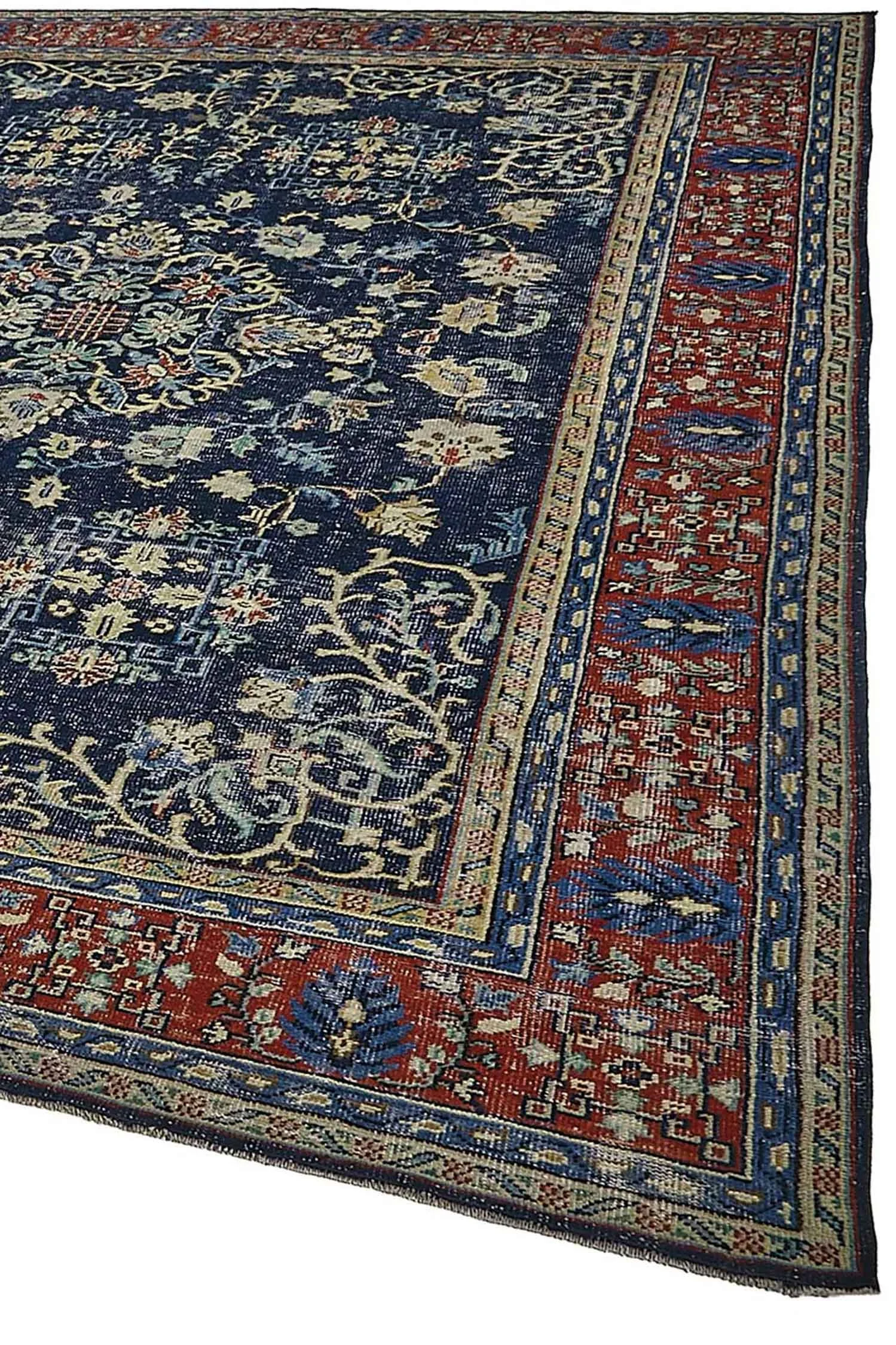
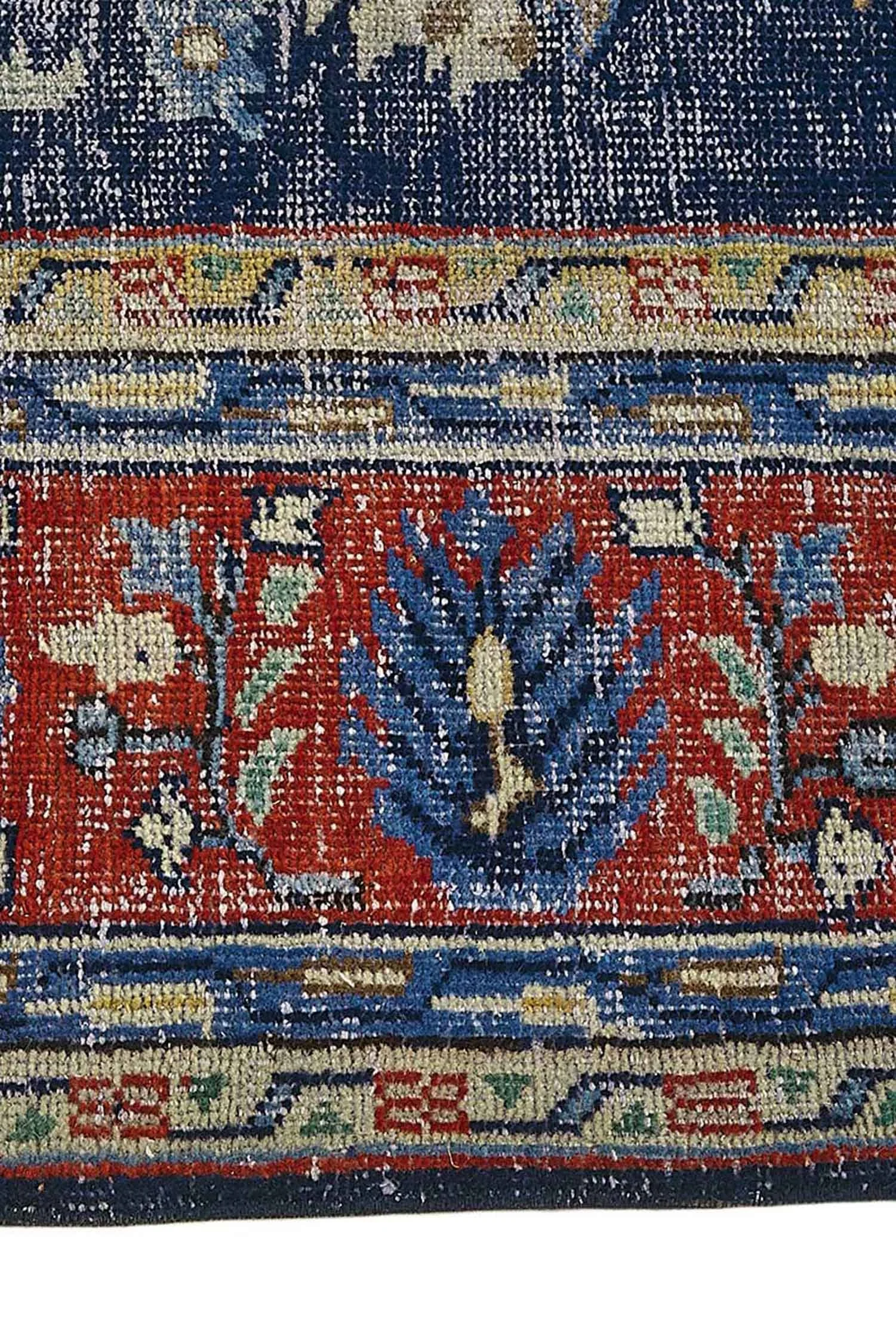
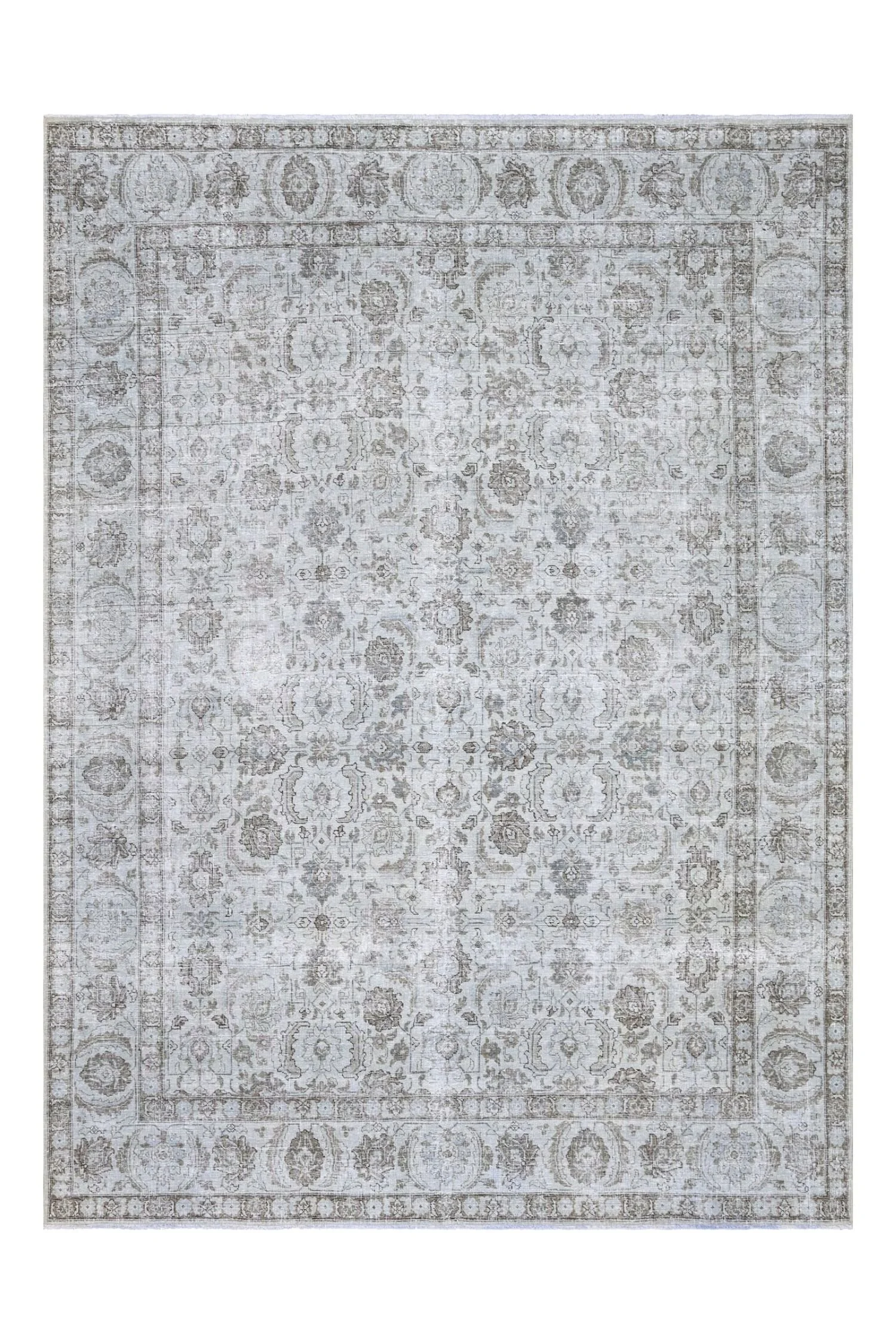
Heriz, a village in northwestern Persia, developed a distinctive weaving style characterized by large angular medallions and bold geometric forms. By the 1940s, Heriz rugs had become recognizable for their graphic clarity and structural strength, qualities that persist even in heavily worn examples.
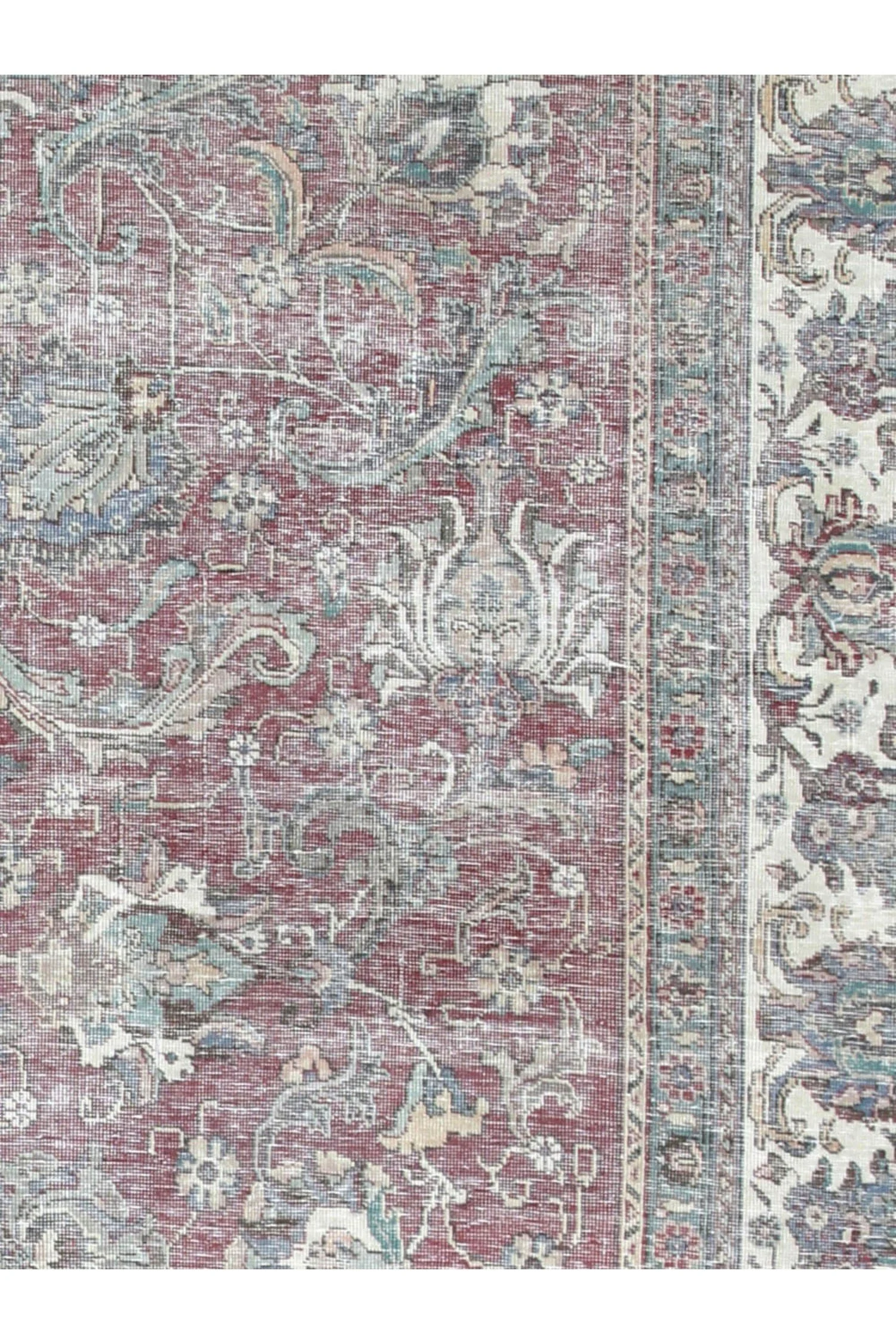
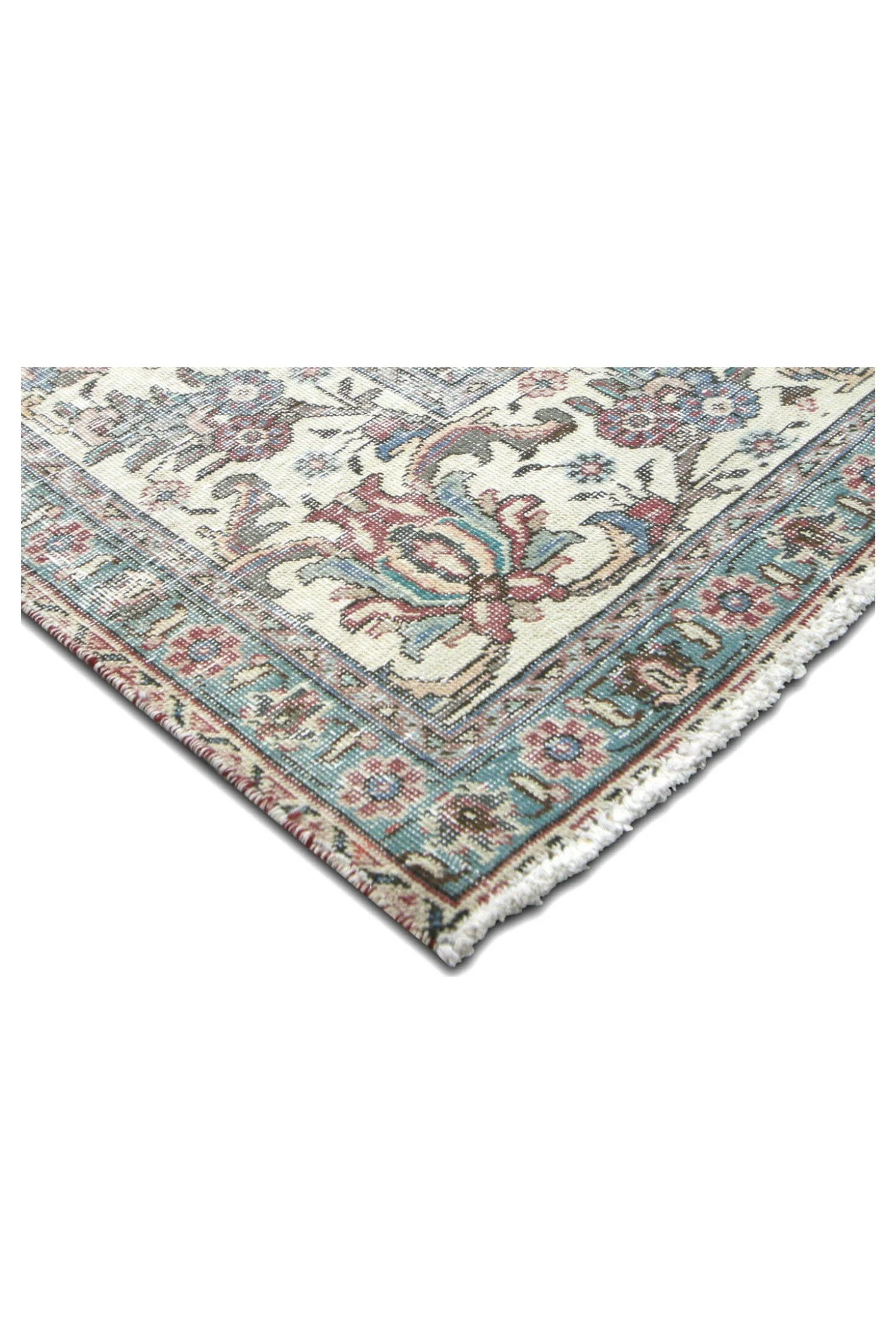
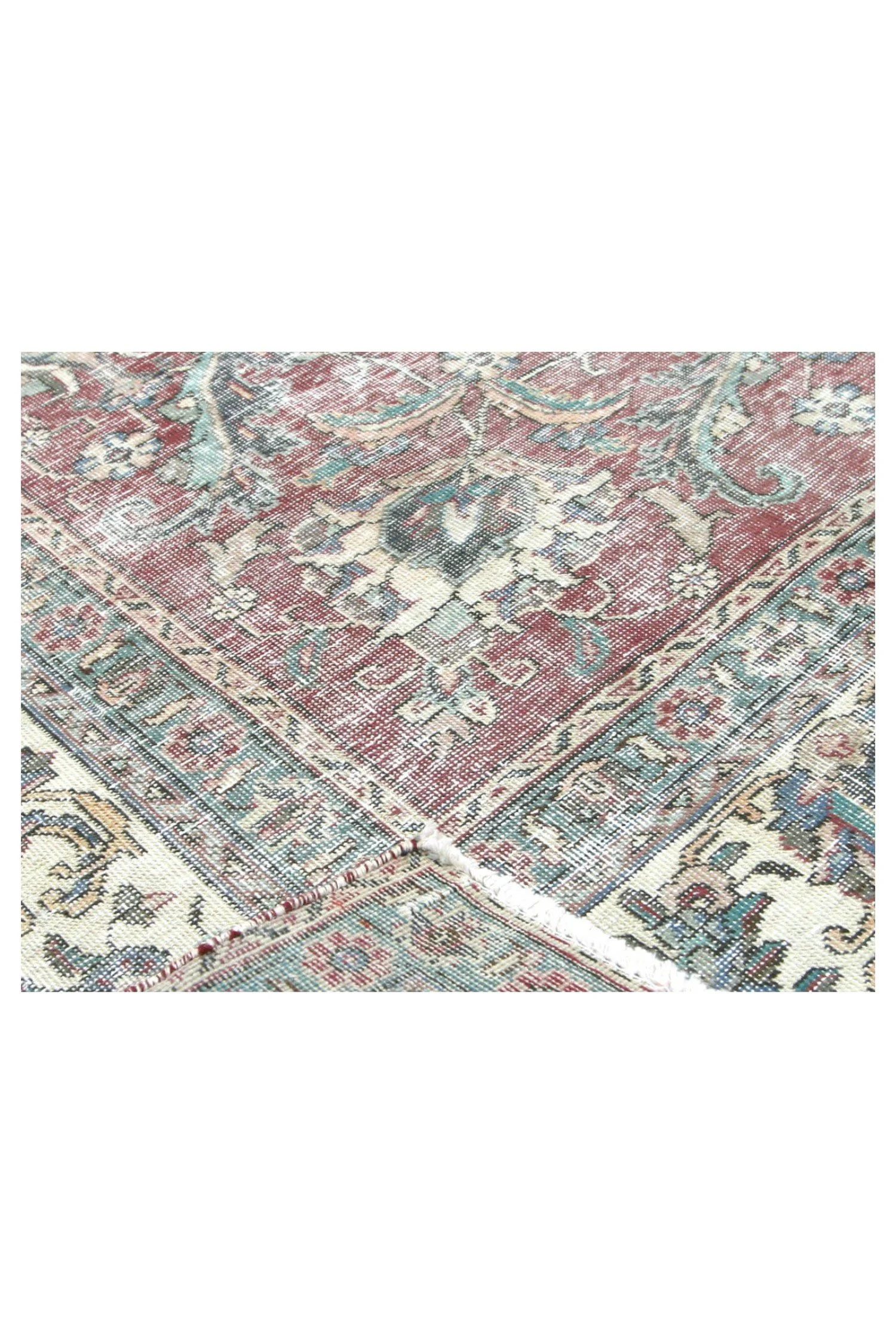
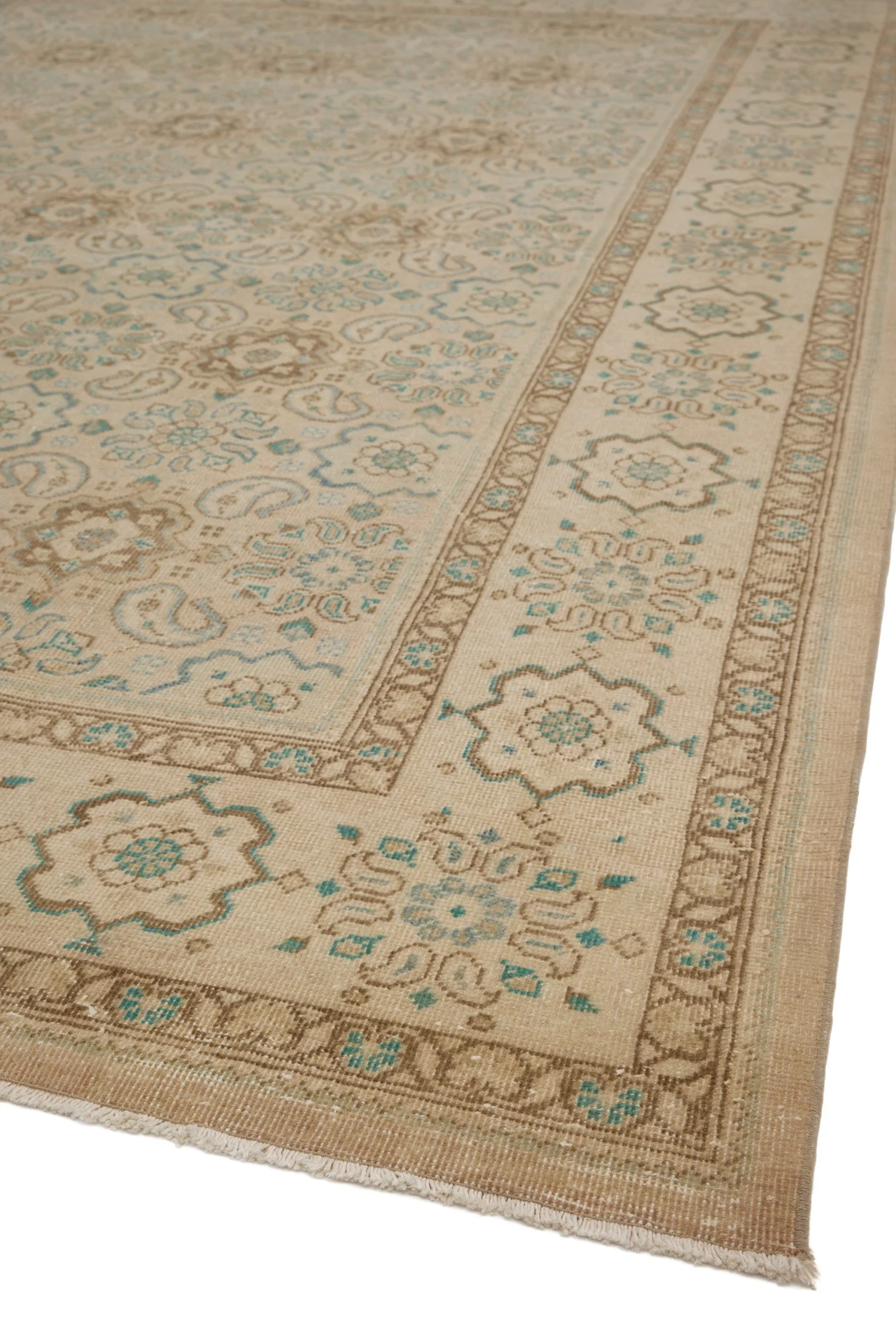
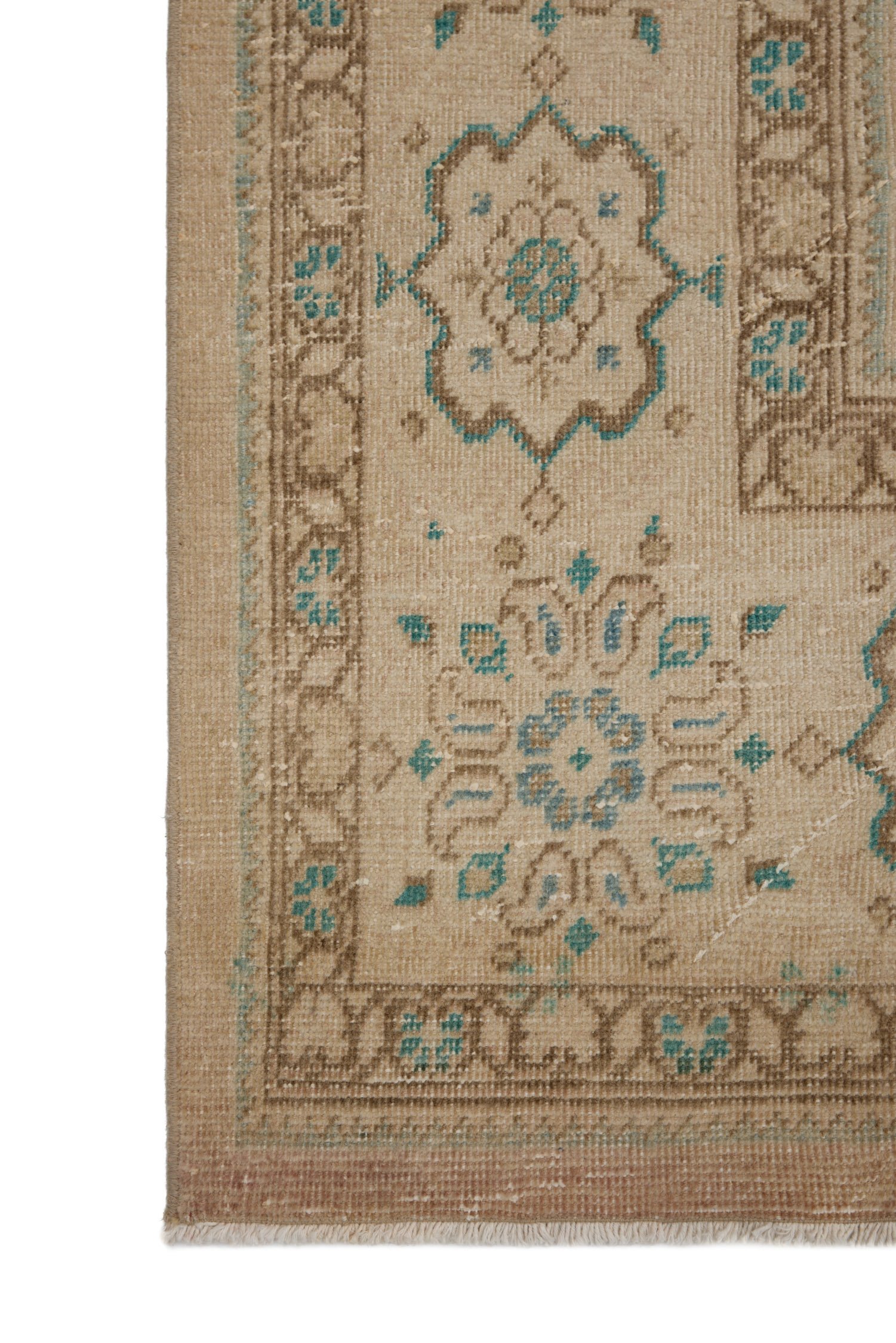
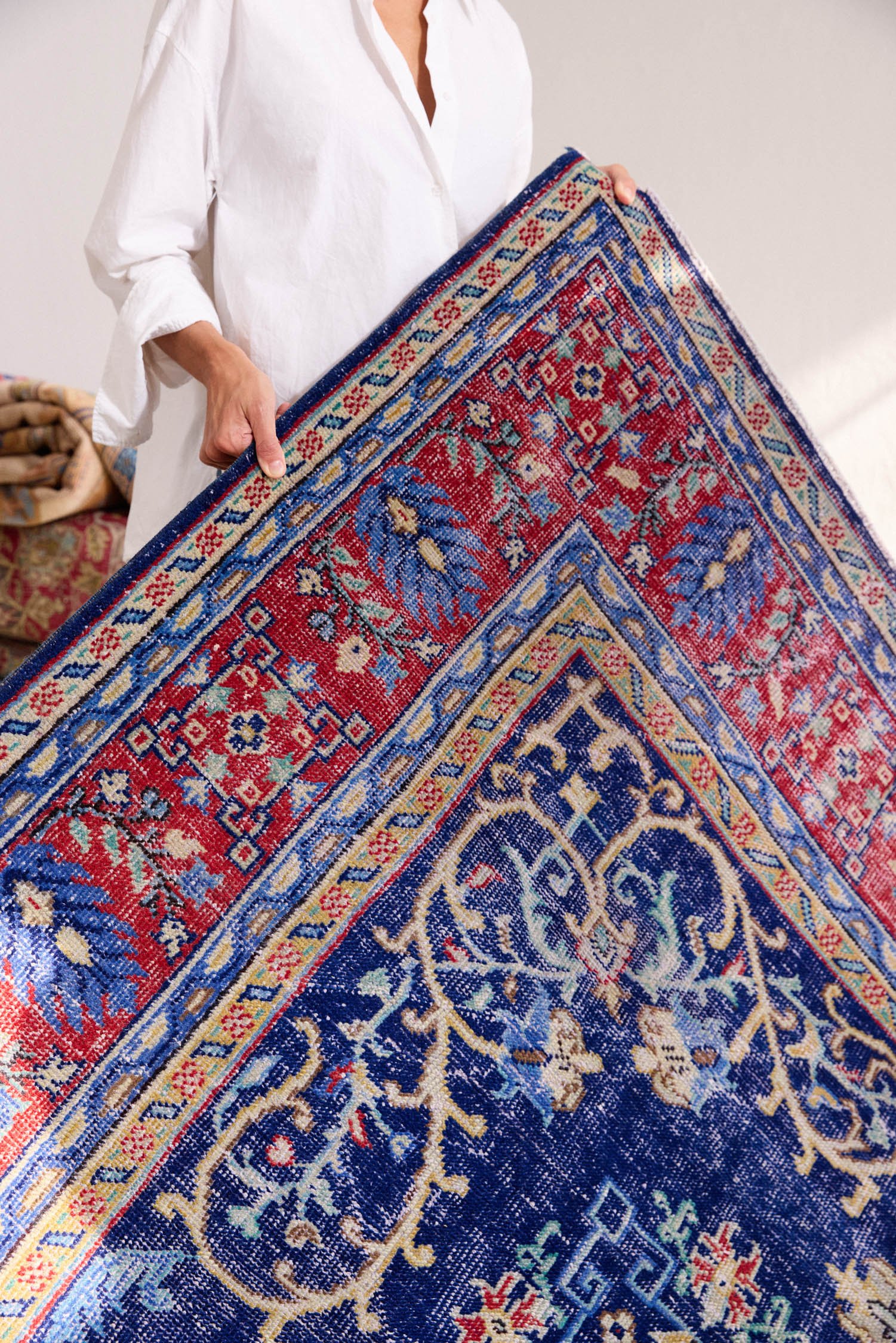
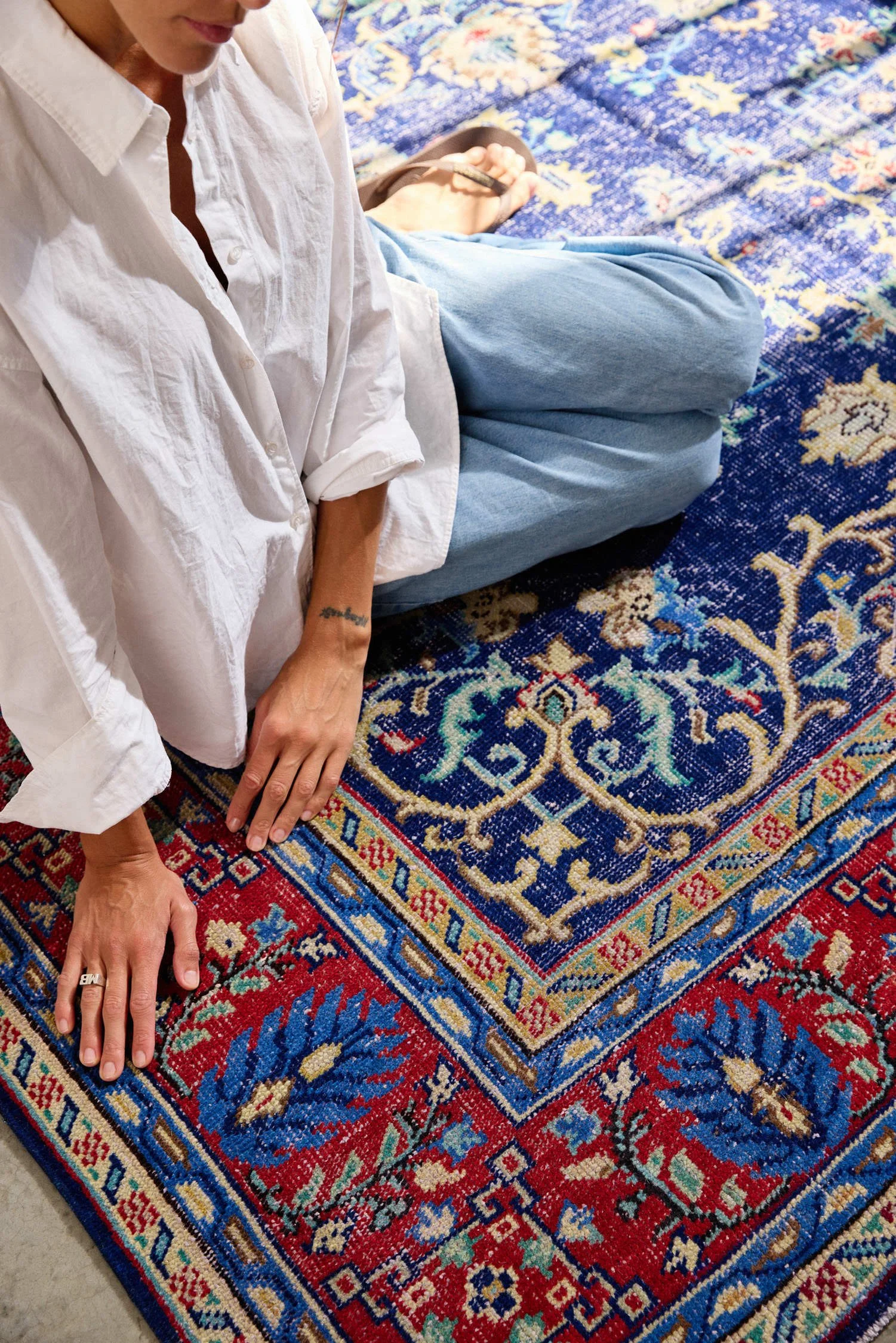
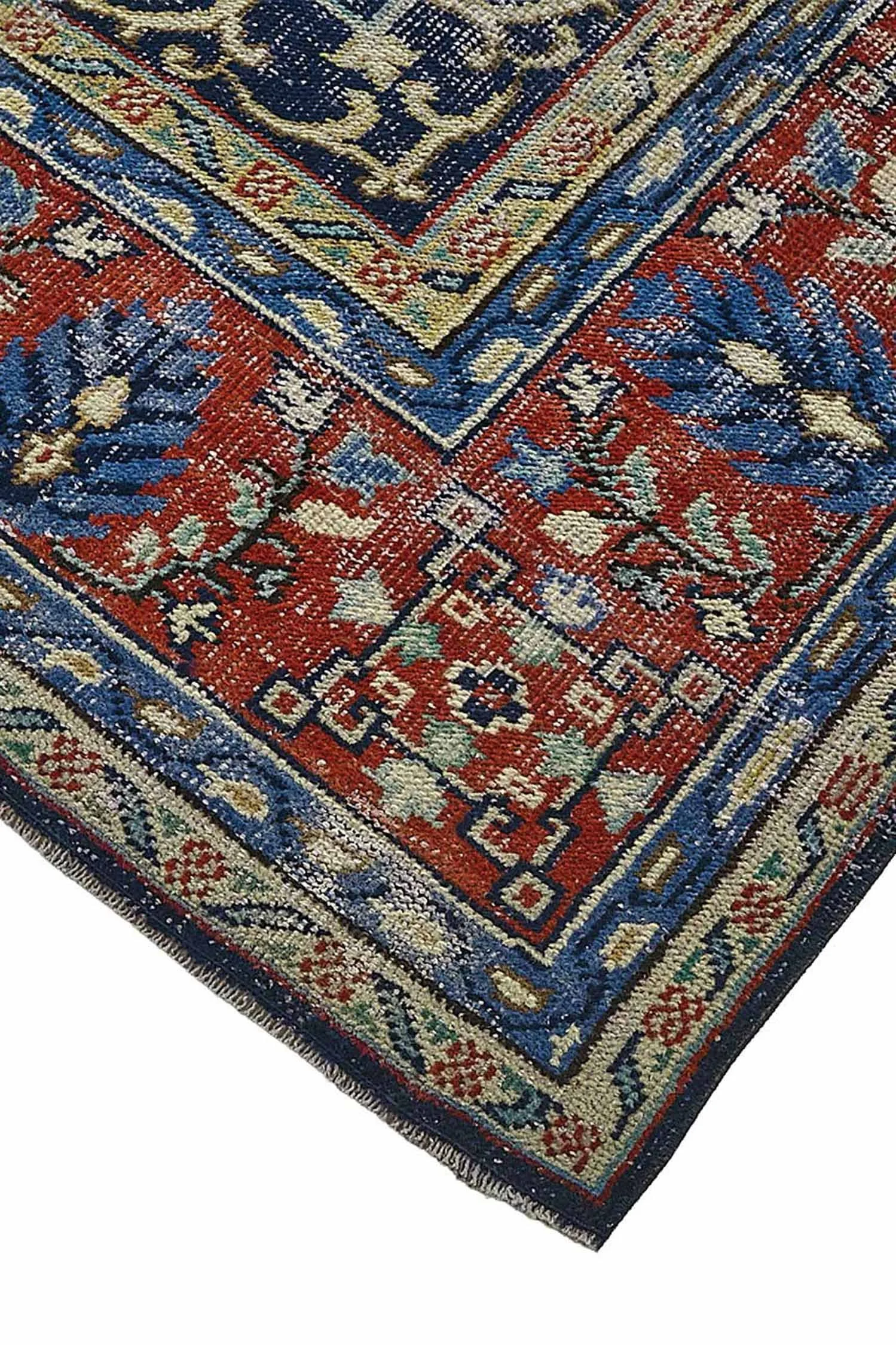
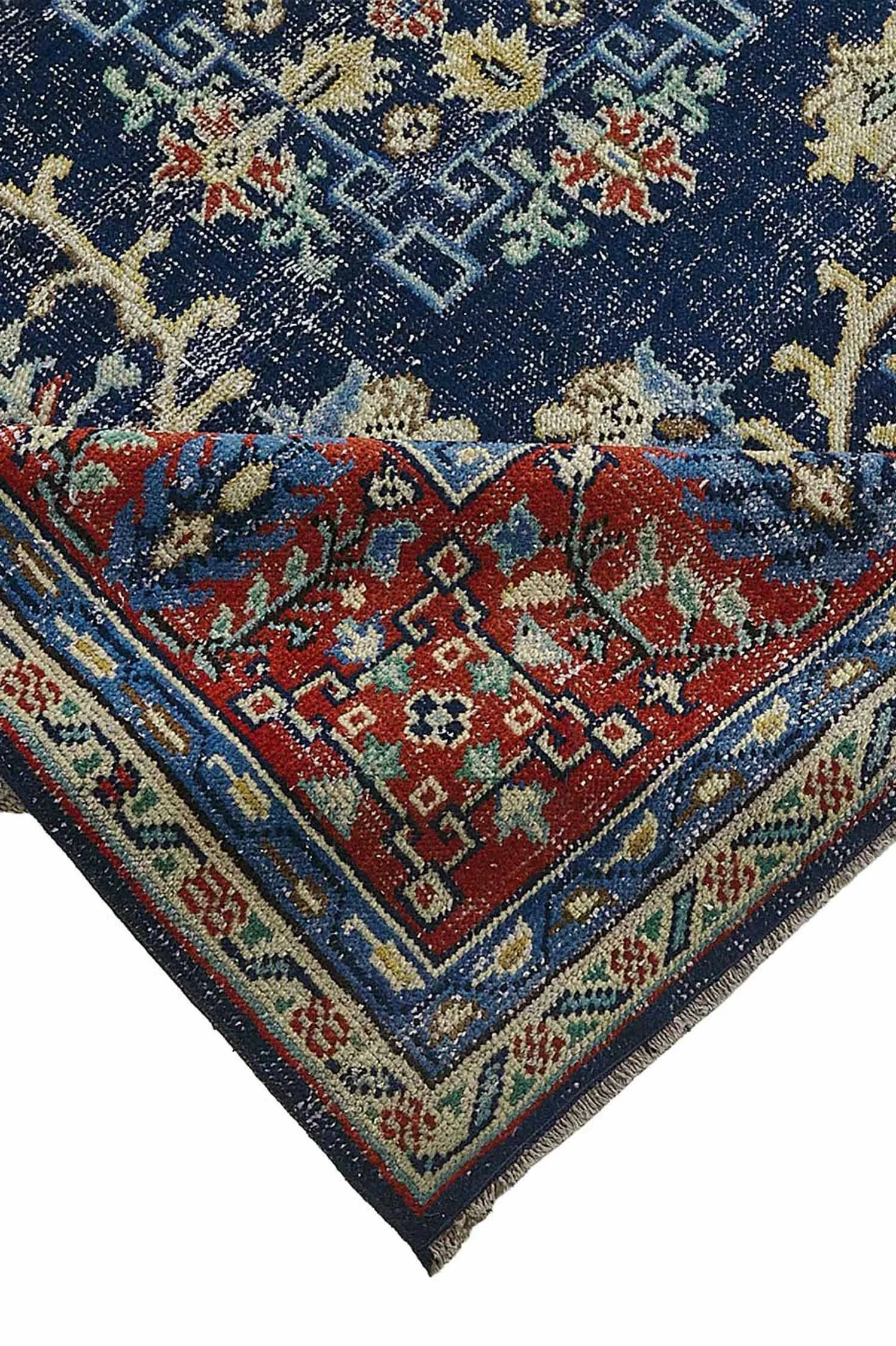
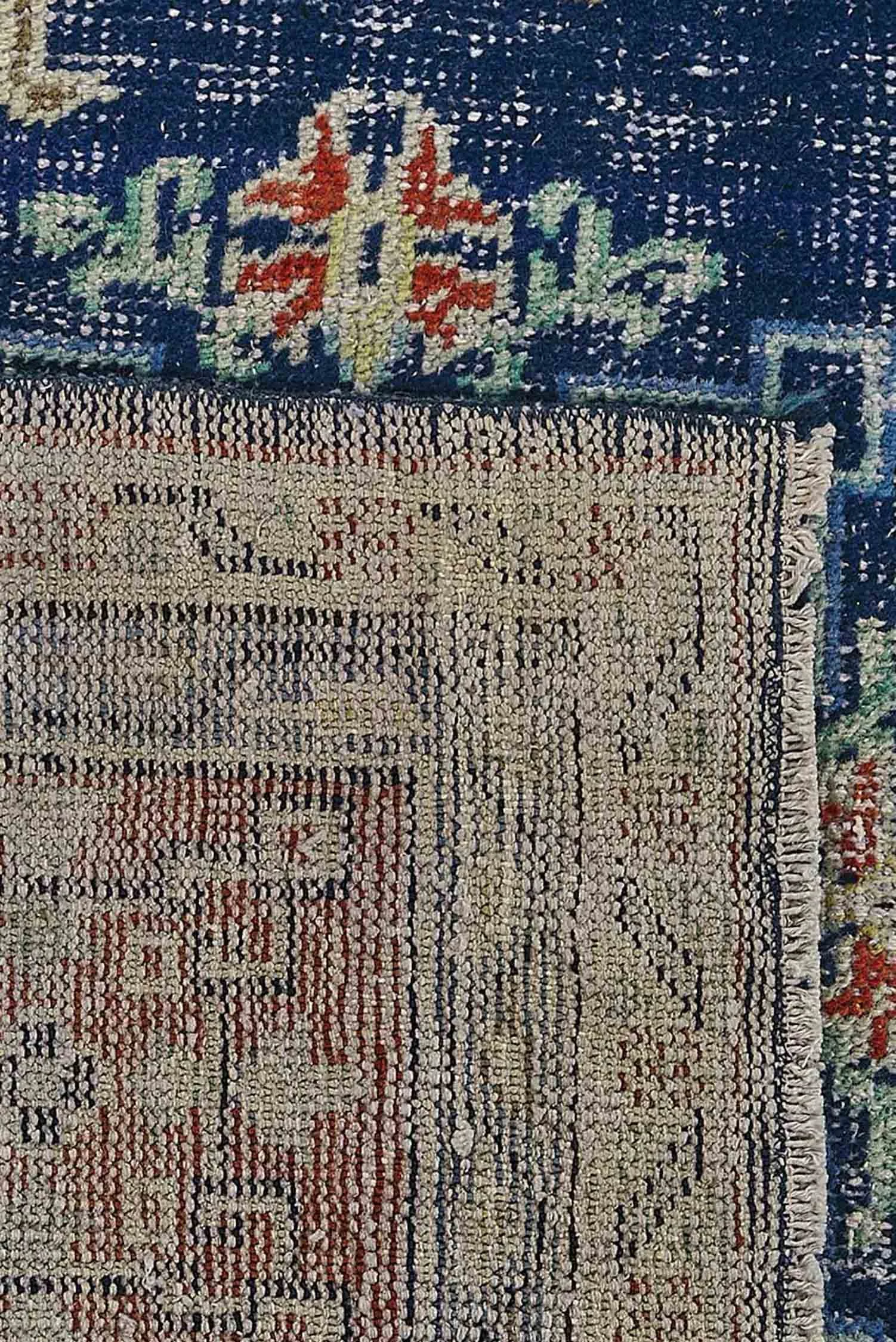
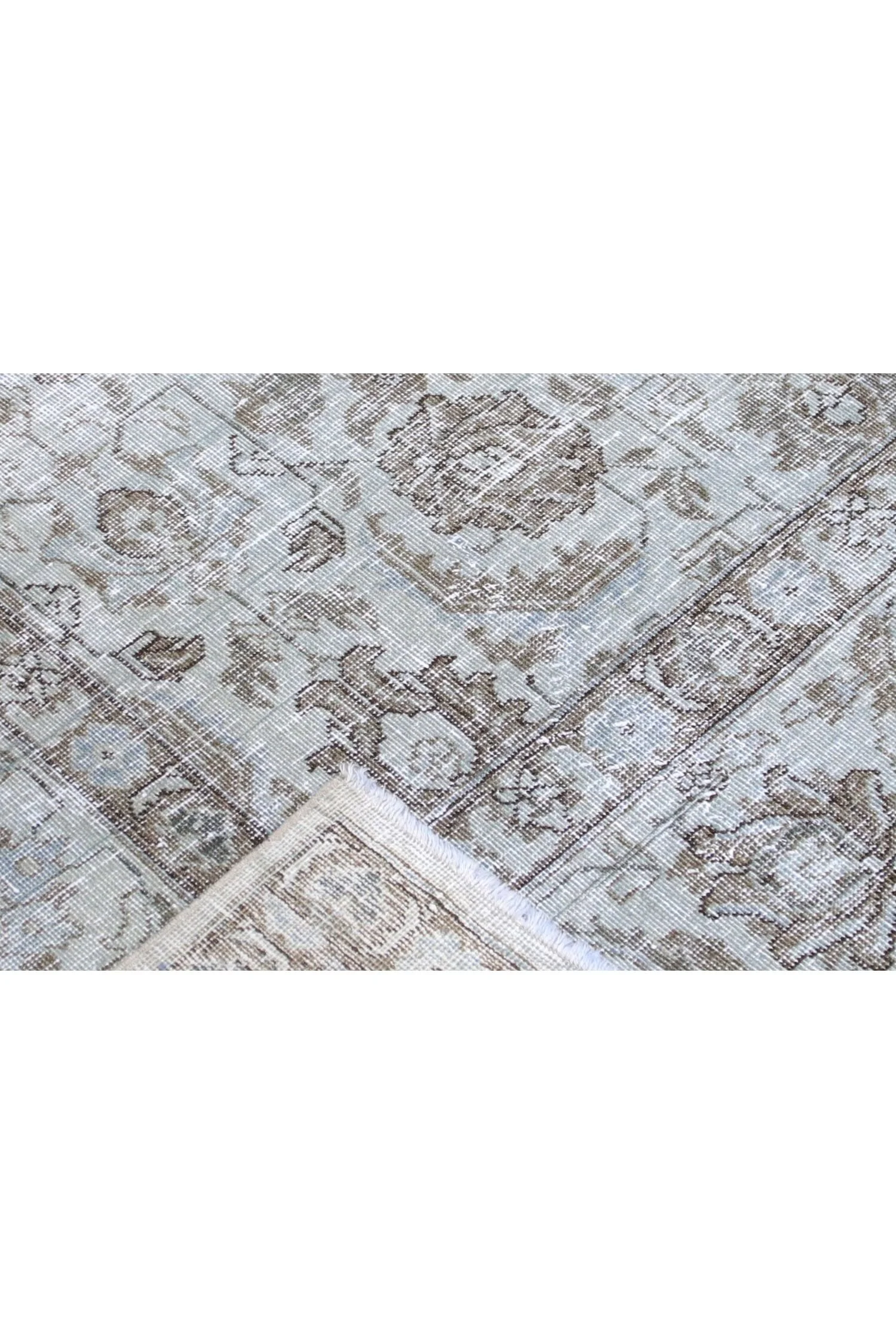
The brick red ground came from madder root dye, a plant-based material that bonded strongly to wool. The muted teal required indigo processing. These natural dyes created the foundation colors visible in areas where the original surface remains intact. Exposed foundation shows where decades of use have worn through to the cotton or wool base structure.
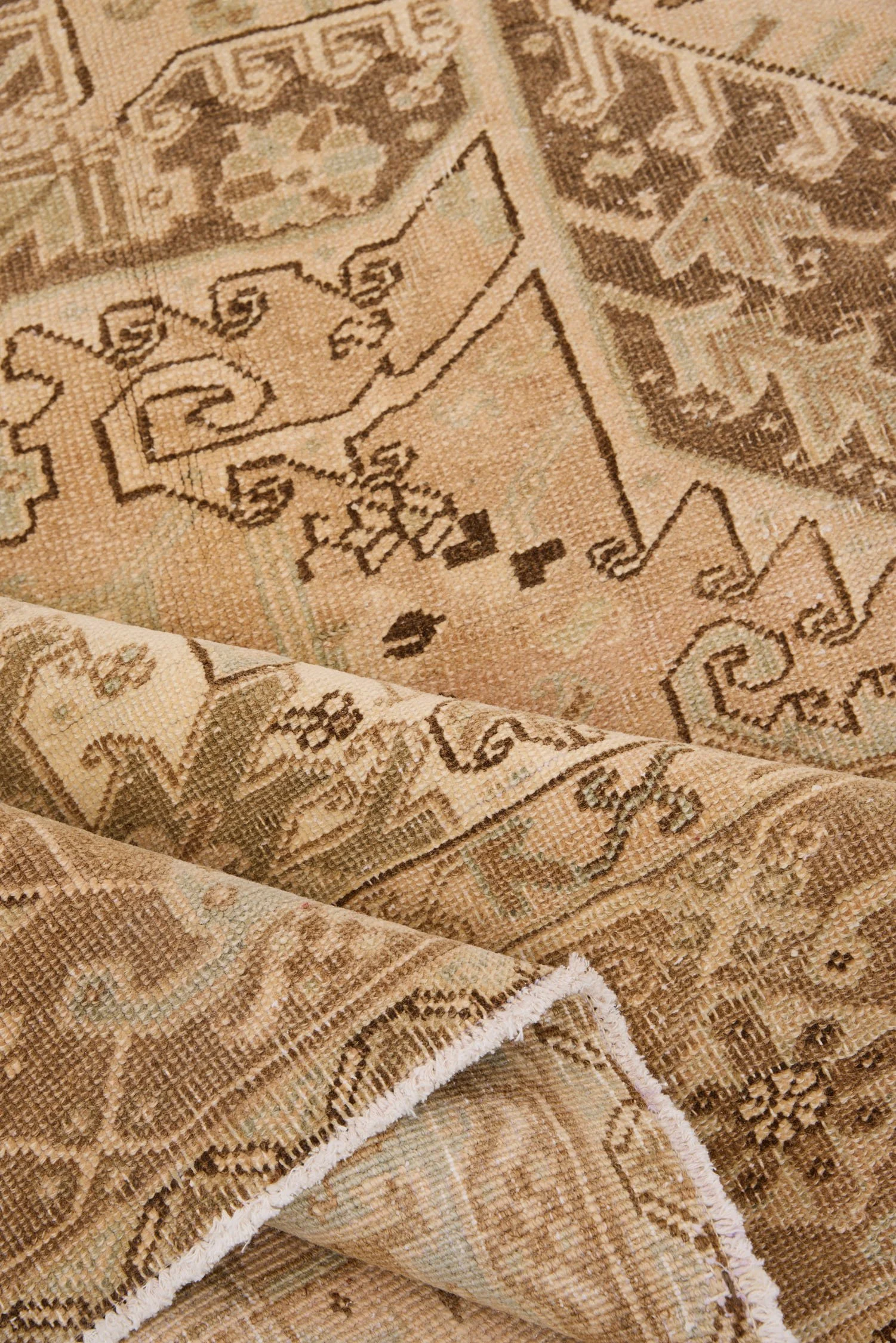
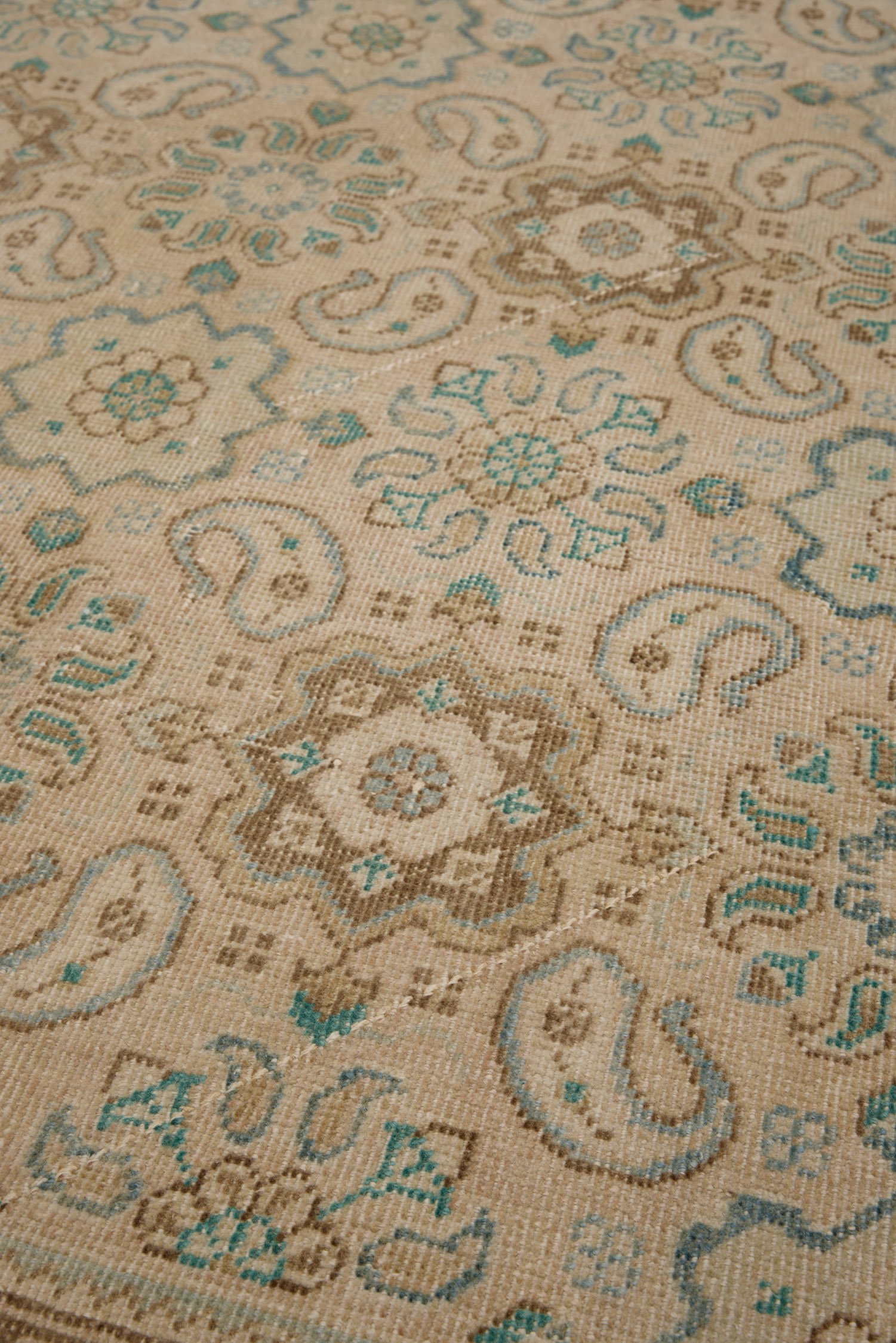
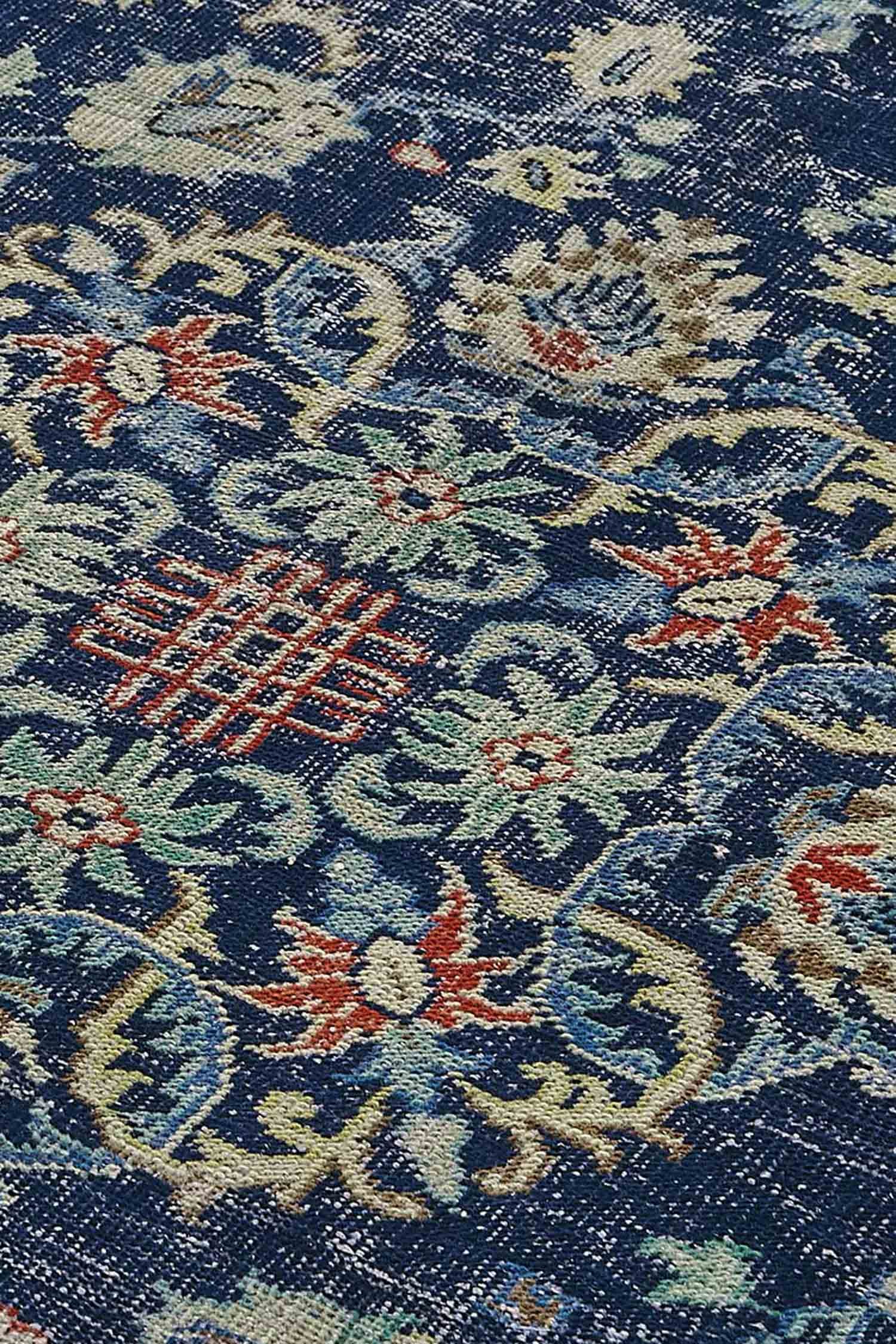
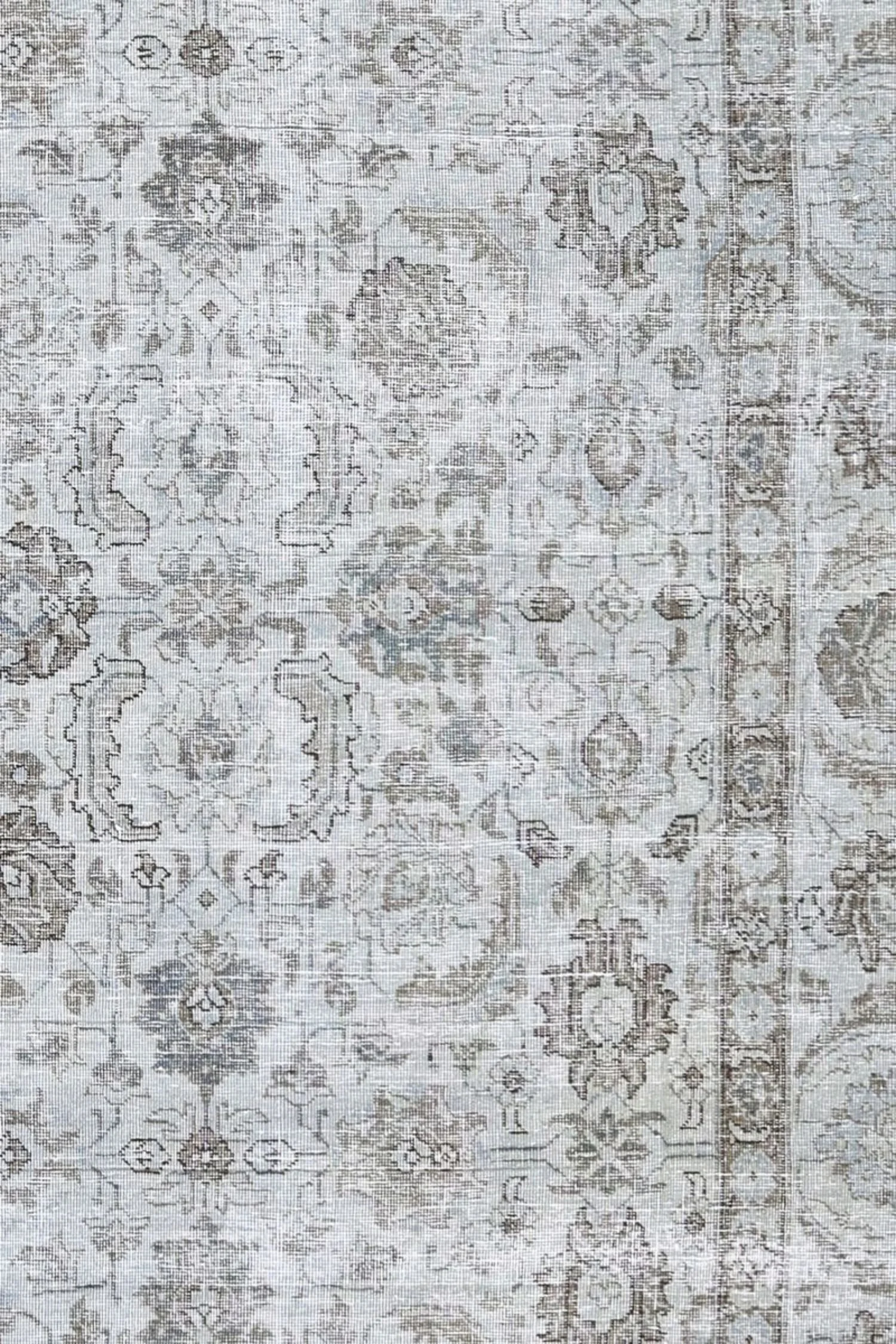
Heriz weavers used a relatively coarse weave compared to those in city workshops, creating rugs with a substantial physical presence. This structural approach meant the geometric forms remained legible even with significant wear. The exposed foundation visible here reveals the weaving construction that typically stays hidden beneath the pile.
Design Elements
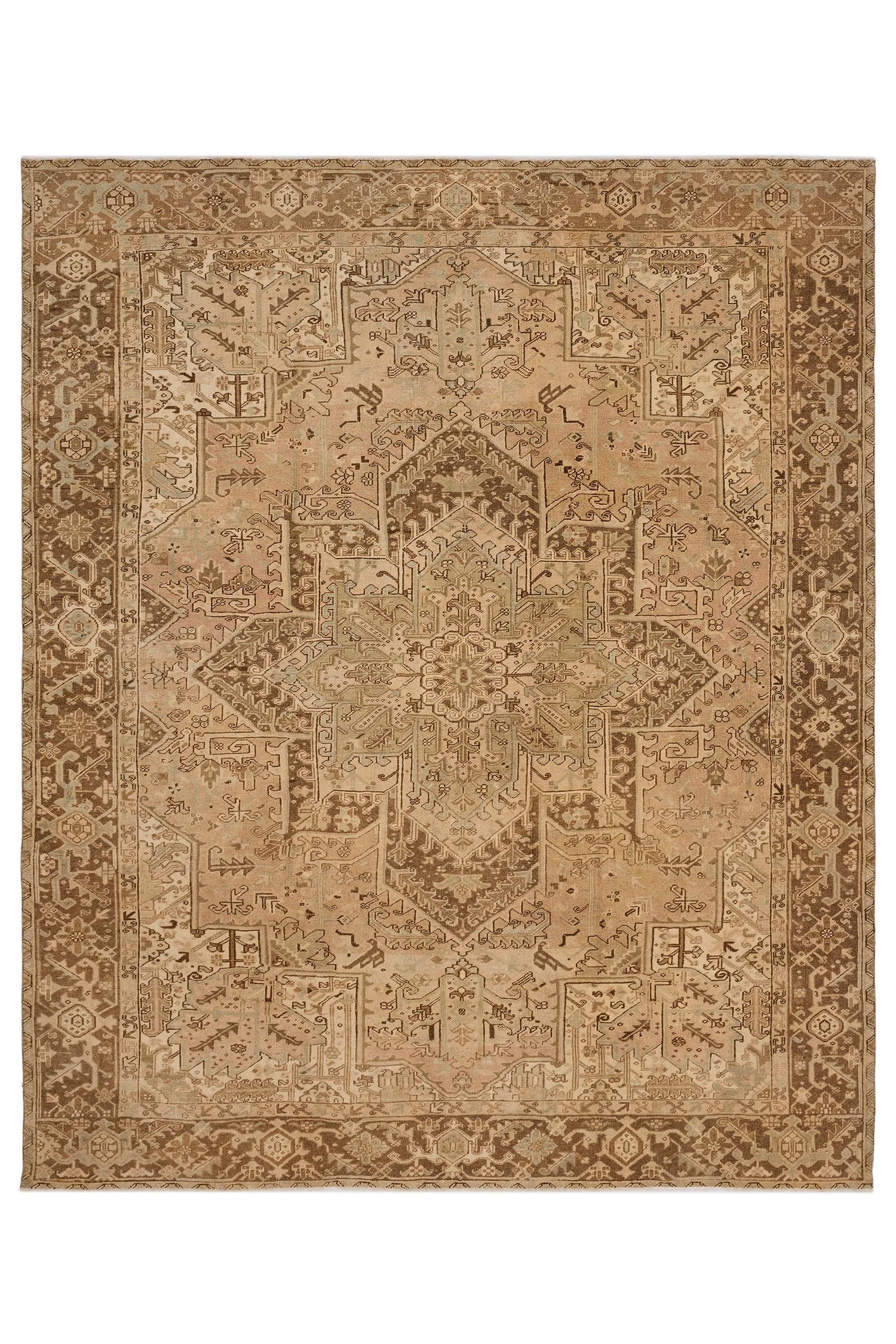
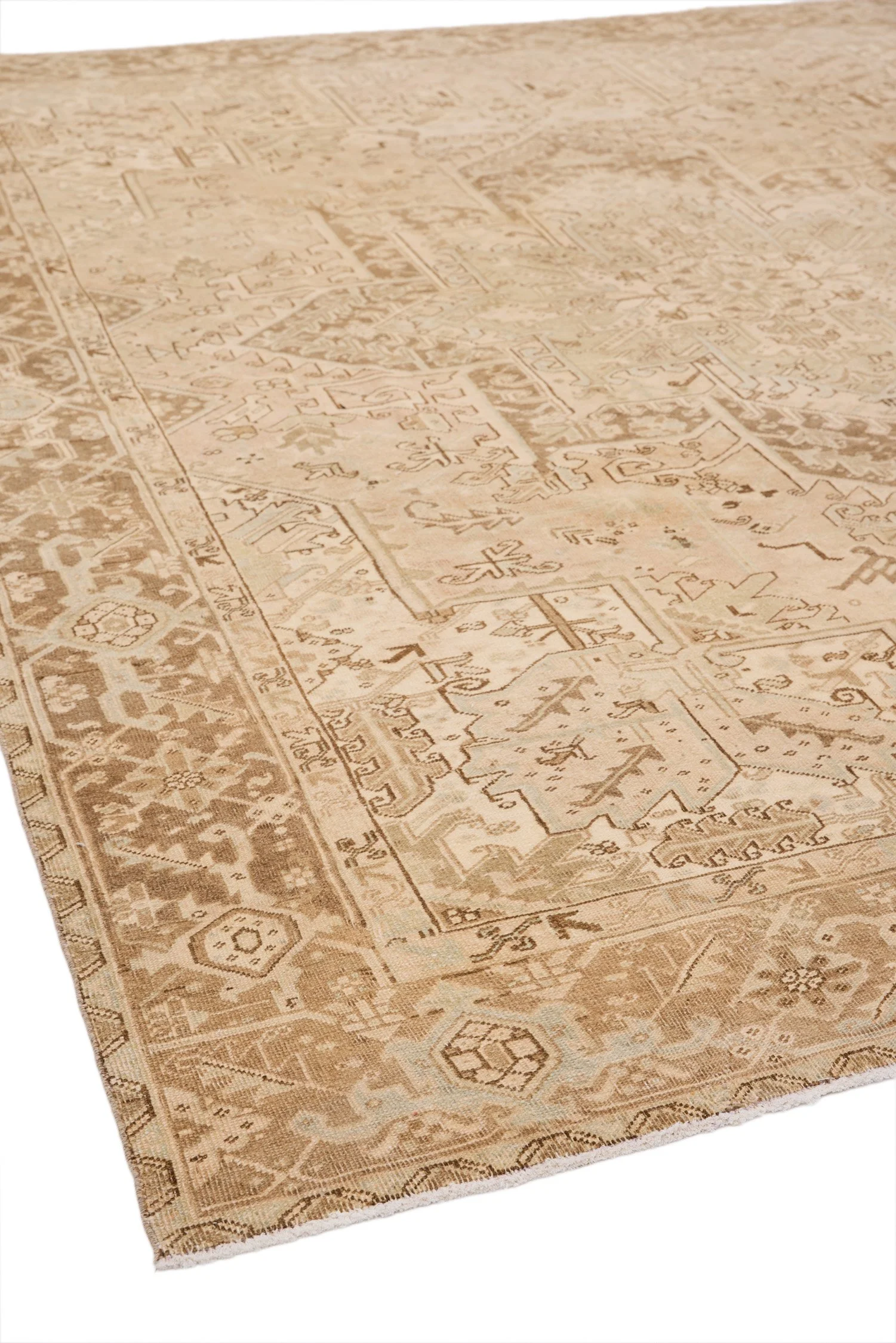
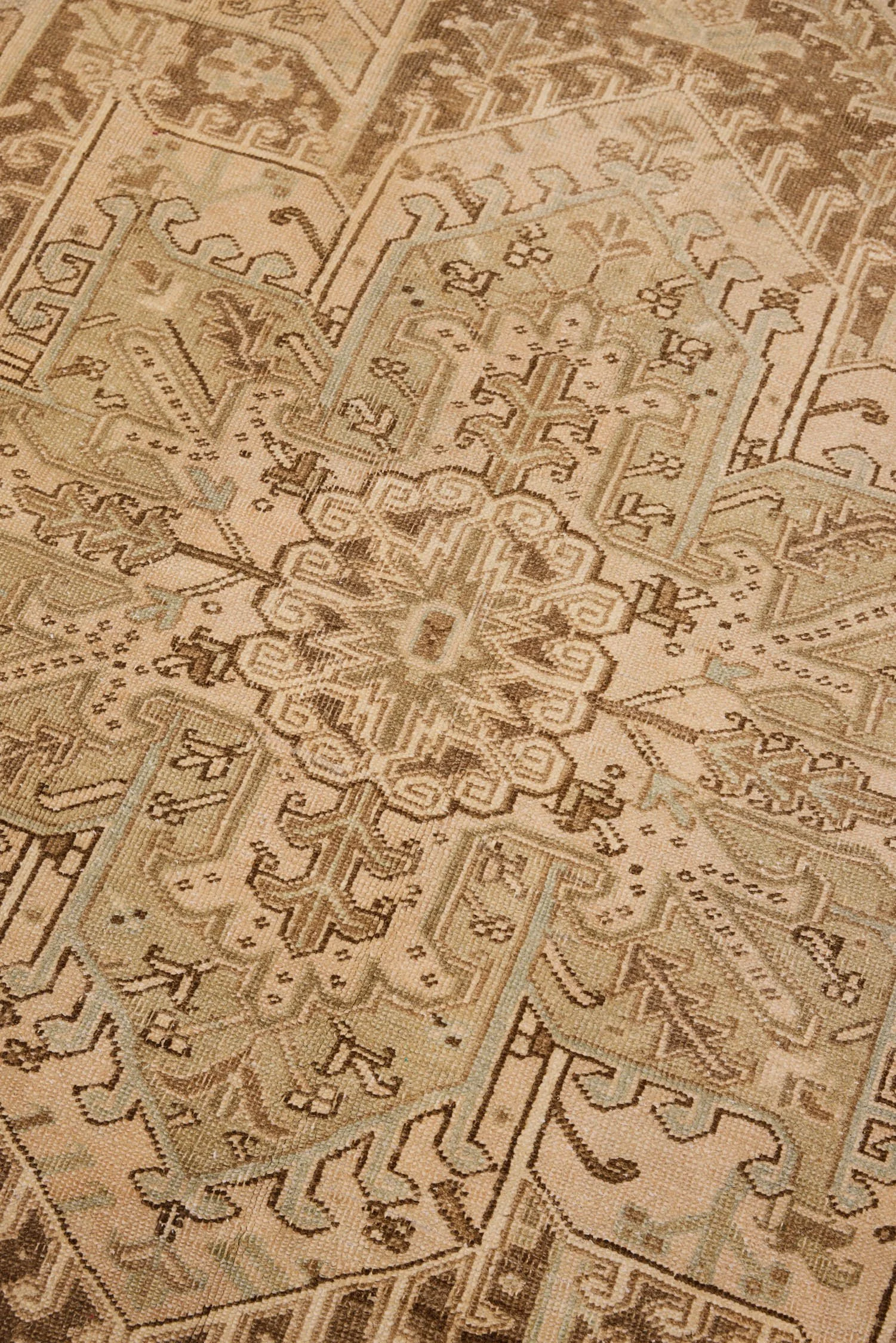
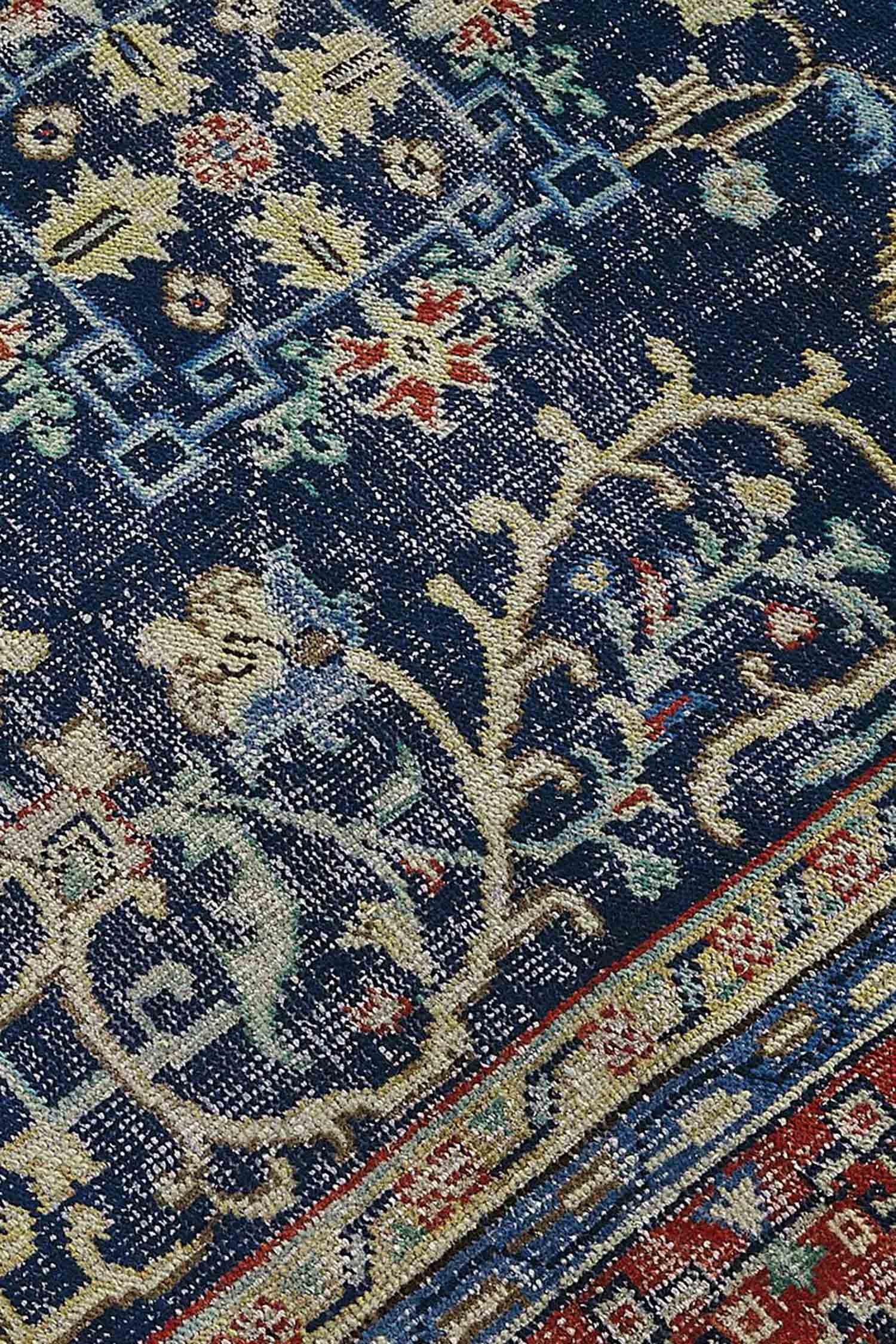
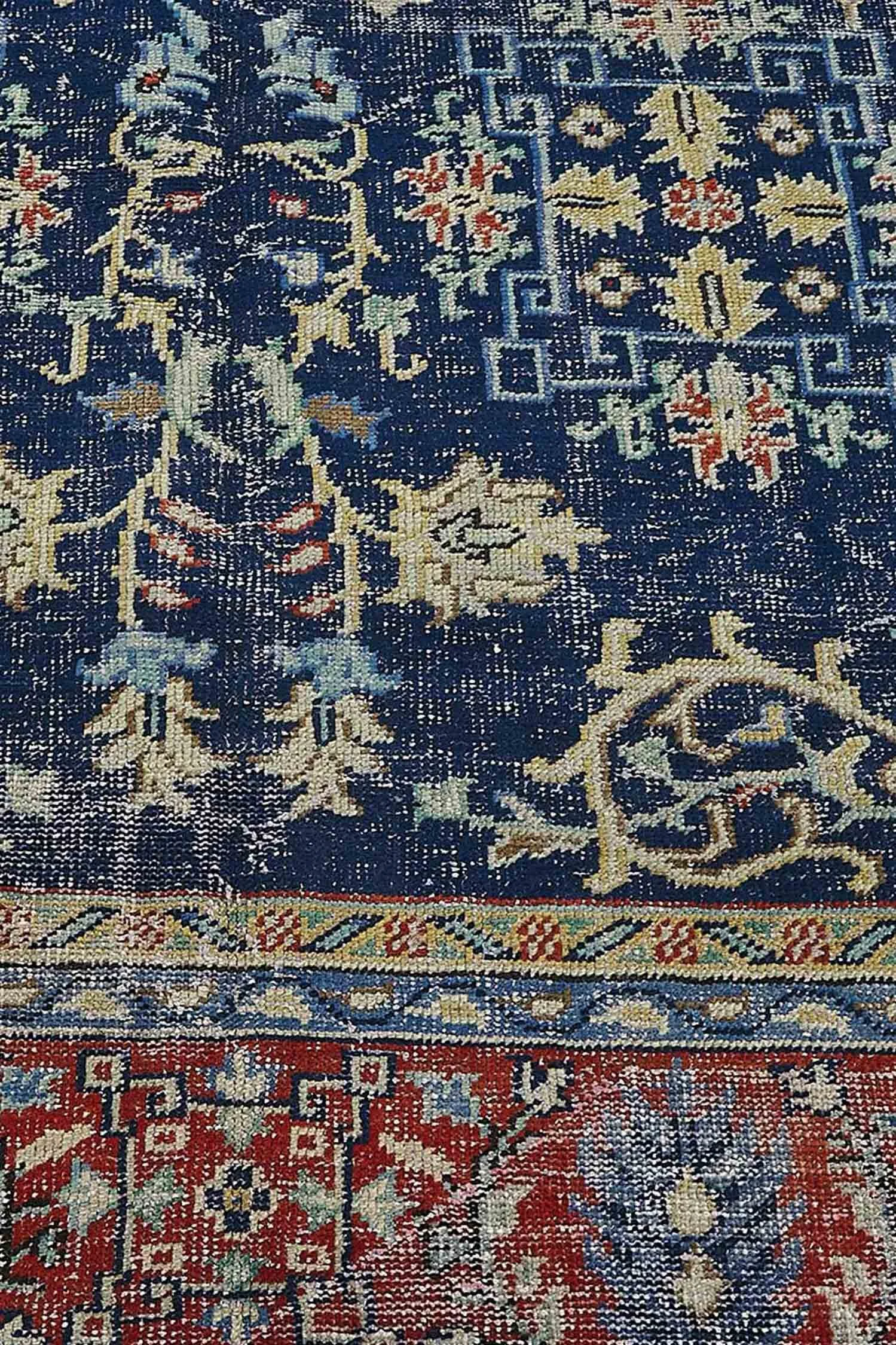
The large angular medallion creates a strong central focus with characteristic Heriz geometry. The medallion's scale and bold edges define the composition even where surface loss has occurred. Geometric elements surrounding the medallion maintain the structural logic despite distress.
Heavy wear has created a textural quality that emphasizes the rug's age and use history. Areas of surface loss reveal different layers of the construction, creating visual complexity through absence rather than presence. The exposed foundation adds a raw dimension to the geometric forms.
The pattern remains legible because Heriz designs work through bold structural relationships rather than fine detail. The graphic clarity of the original composition persists even where color and pile have been lost to time and traffic.
Placement
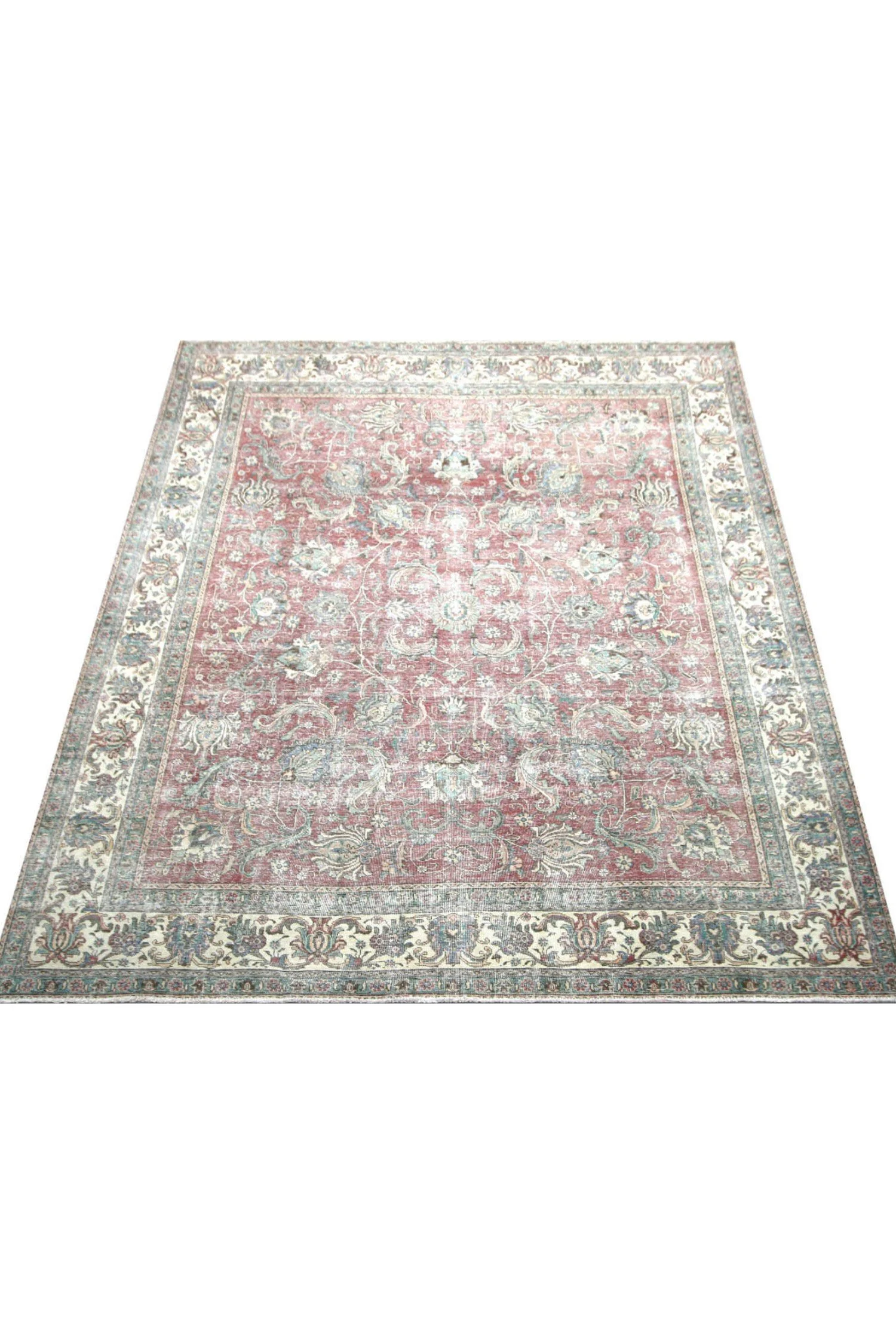
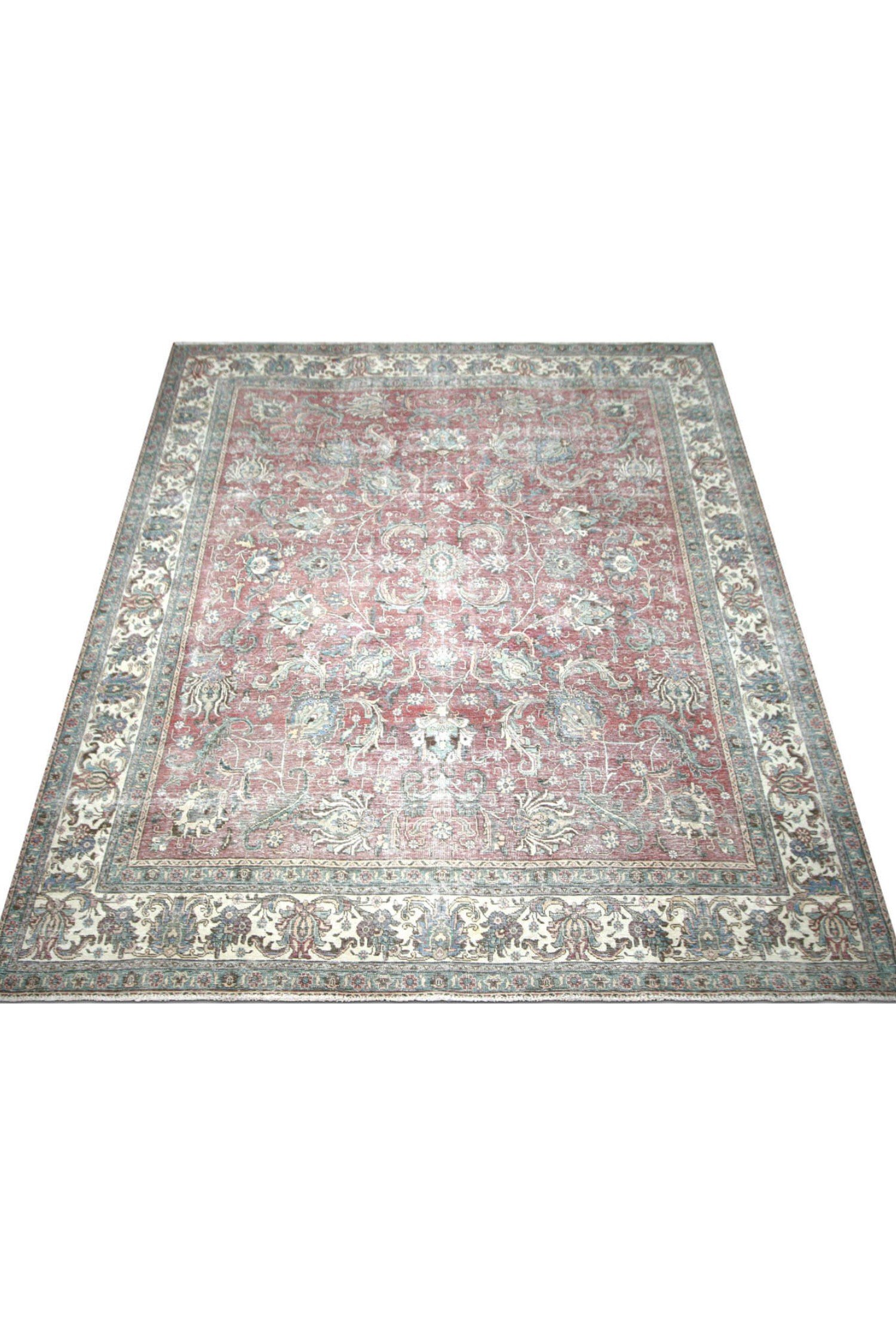
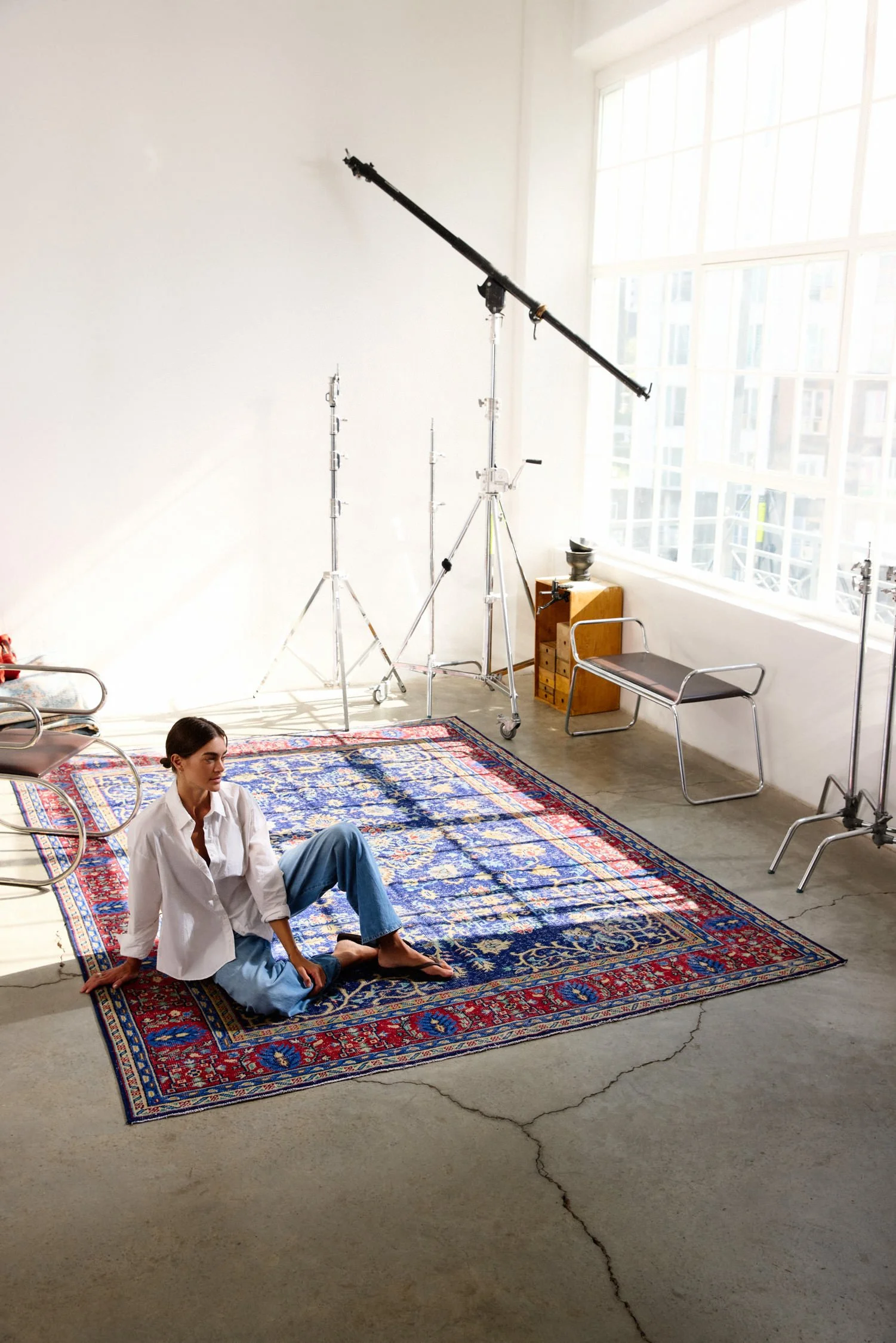
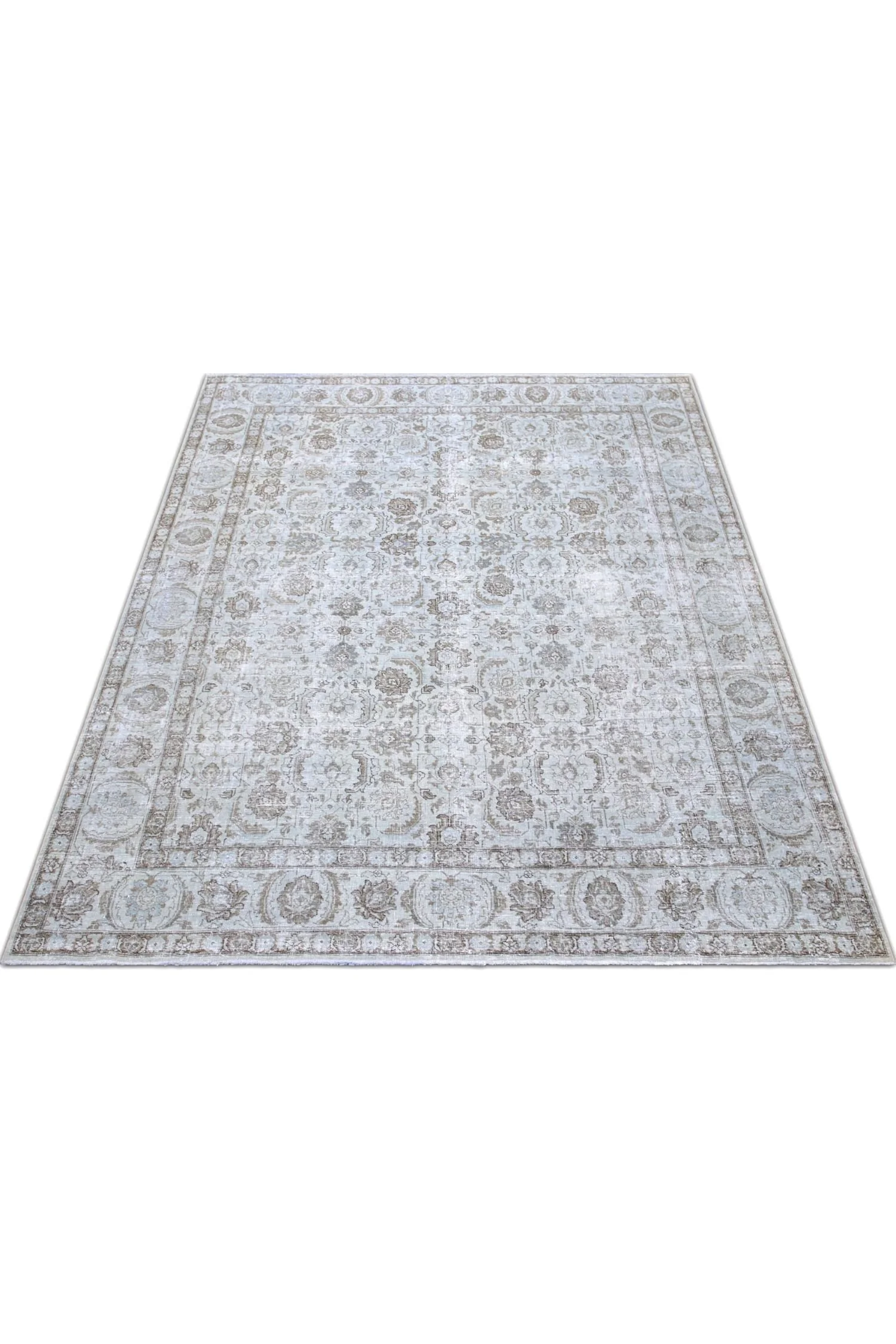
At 9'3" x 12'5", this works in spaces that can accommodate a heavily distressed character. Living rooms styled with industrial or wabi-sabi aesthetics appreciate the raw quality. Dining rooms where the rug's wear becomes part of the room's narrative rather than a flaw to hide.
The heavily distressed surface suits interiors that celebrate age and authentic use. Contemporary spaces can use the textural quality as a grounding element that brings history and imperfection into refined settings. This is not a rug for spaces requiring pristine condition, but for environments where character matters more than perfection.
Care Recommendations
To preserve the rug's beauty:
Rotate periodically for even wear
Vacuum regularly using a suction-only setting
Address spills immediately by blotting, never rubbing
Professional cleaning recommended annually
Avoid direct sunlight to maintain color integrity
Heriz weavers built structure that would outlast surface.